
NEW YORK (AP) — Oil prices plunged below $100 a barrel and Asia markets and U.S. stock futures jumped after the U.S. and Iran agreed to a two-week ceasefire that includes the reopening of the Strait of Hormuz.
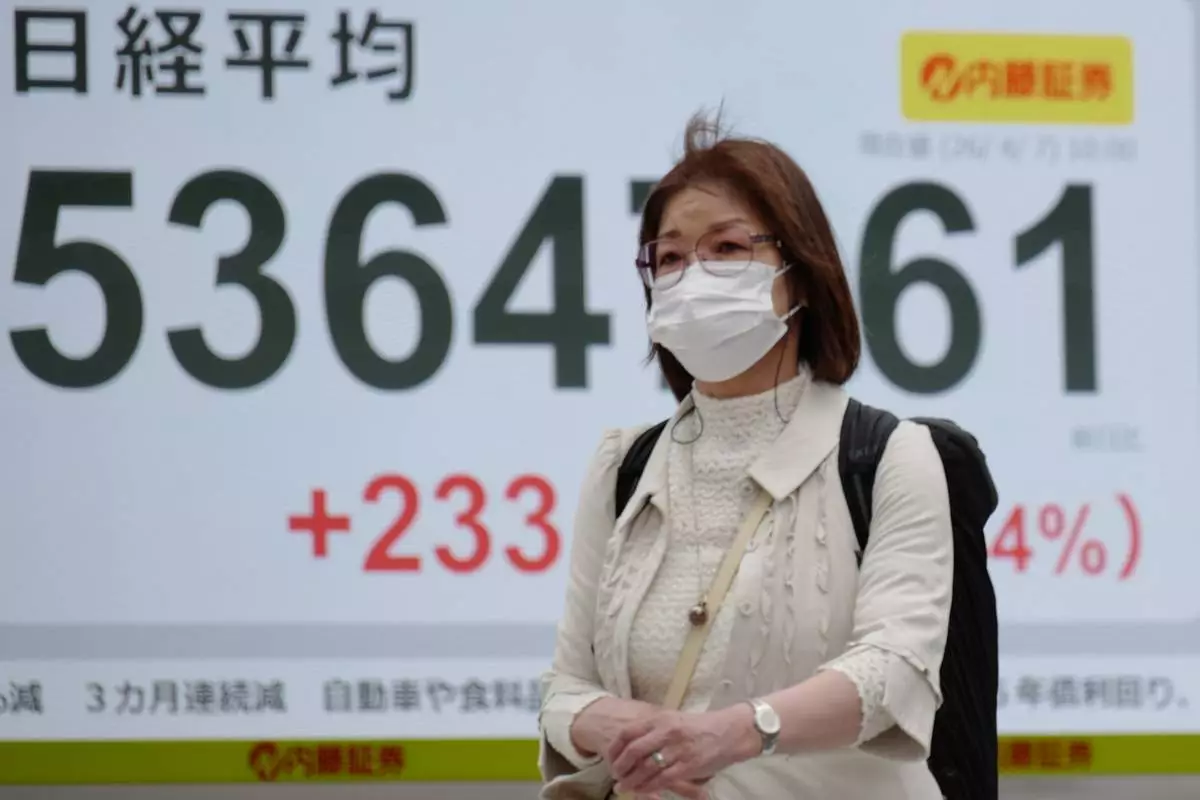
Japan’s benchmark Nikkei 225 rose 4.8% and South Korea’s Kospi gained 5.6%. Futures for the S&P 500 advanced 2.3% as of 9:30 p.m. EDT, while Dow futures rose 2%.
Click to Gallery

John Mauro works on the floor at the New York Stock Exchange in New York, Tuesday, April 7, 2026. (AP Photo/Seth Wenig)

Ed Curran works on the floor at the New York Stock Exchange in New York, Tuesday, April 7, 2026. (AP Photo/Seth Wenig)

People work on the floor at the New York Stock Exchange in New York, Tuesday, March 31, 2026. (AP Photo/Seth Wenig)
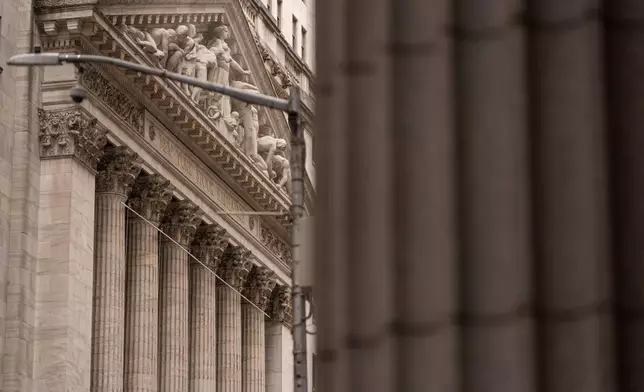
A general view shows the New York Stock Exchange, Friday, March 27, 2026, in New York. (AP Photo/Yuki Iwamura)
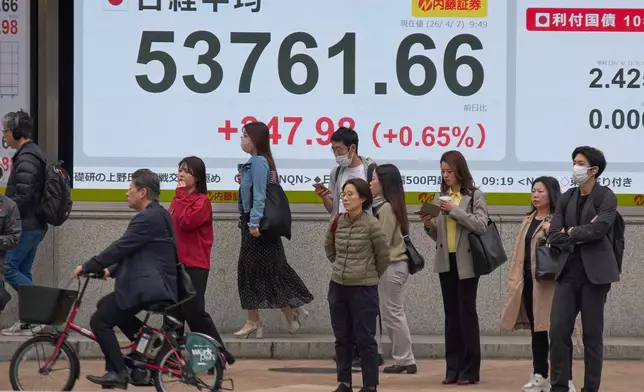
People stand in front of an electronic stock board showing Japan's Nikkei index at a securities firm Tuesday, April 7, 2026, in Tokyo. (AP Photo/Eugene Hoshiko)

A person walks in front of an electronic stock board showing Japan's Nikkei index at a securities firm Tuesday, April 7, 2026, in Tokyo. (AP Photo/Eugene Hoshiko)

Futures for U.S. crude oil sank 14.3% to $96.83 a barrel and Brent crude oil, the international standard, dropped 13.3% to $94.74. Oil prices had spiked because the war snarled the production and transportation of crude in the Persian Gulf. Much of that oil exits the gulf through the Strait of Hormuz to reach customers around the world, but Iran had blocked it to enemies.
Late Tuesday, Trump said he was holding off on his threatened attacks on Iranian bridges, power plants and other civilian targets. Iran’s foreign minister said passage through the strait would be allowed for the next two weeks under Iranian military management.
The dramatic moves in prices are just the latest swings to hit financial markets since late February because of constantly shifting signals about when the conflict may end. Even with word of a ceasefire, neither Iran nor the United States said when it would begin, and attacks took place in Israel, Iran and across the Gulf region early Wednesday.
Earlier, U.S. stocks swung sharply during regular trading as uncertainty about the war with Iran increased after Trump had threatened that a “whole civilization will die tonight, never to be brought back again” if Iran does not meet his deadline at 8 p.m. Eastern time to open the Strait of Hormuz.
The S&P 500 fell as much as 1.2% but stocks rallied at the end of trading after Pakistan’s prime minister urged Trump to extend his deadline for another two weeks and asked Iran to open up the strait for the same amount of time.
The S&P 500 erased all its losses and ended with a modest gain of 0.1%. The Dow Jones Industrial Average dipped 85 points, or 0.2%, and the Nasdaq composite added 0.1%.
They’re the latest swings to hit financial markets since late February because of deep uncertainty about when the fighting may end.
Oil prices were likewise shaky. The price for a barrel of benchmark U.S. crude to be delivered in May briefly climbed above $117 before settling at $112.95.
Oil prices have spiked because the war has snarled the production and transportation of crude in the Persian Gulf. Much of that oil exits the gulf through the Strait of Hormuz to reach customers around the world, but Iran has blocked it to enemies.
The worry in markets has been that a long-term disruption will keep oil prices high for a long time and send a painful wave of inflation crashing through the global economy. Trump kept traders on edge by making a series of threats to blow up Iranian power plants only to delay several times.
The average price for a gallon of regular gasoline across the United States has leaped to $4.14, according to AAA. It was below $3 a couple days before the United States and Israel launched attacks to begin the war in late February.
In the bond market, Treasury yields eased on word of a potential cease-fire. The yield on the 10-year Treasury fell to 4.24% from 4.30% earlier Tuesday.
That’s still well above its 3.97% level from before the war, and the rise has pushed up rates for mortgages and other loans going to U.S. households and businesses, which slows the economy.

John Mauro works on the floor at the New York Stock Exchange in New York, Tuesday, April 7, 2026. (AP Photo/Seth Wenig)

Ed Curran works on the floor at the New York Stock Exchange in New York, Tuesday, April 7, 2026. (AP Photo/Seth Wenig)

People work on the floor at the New York Stock Exchange in New York, Tuesday, March 31, 2026. (AP Photo/Seth Wenig)
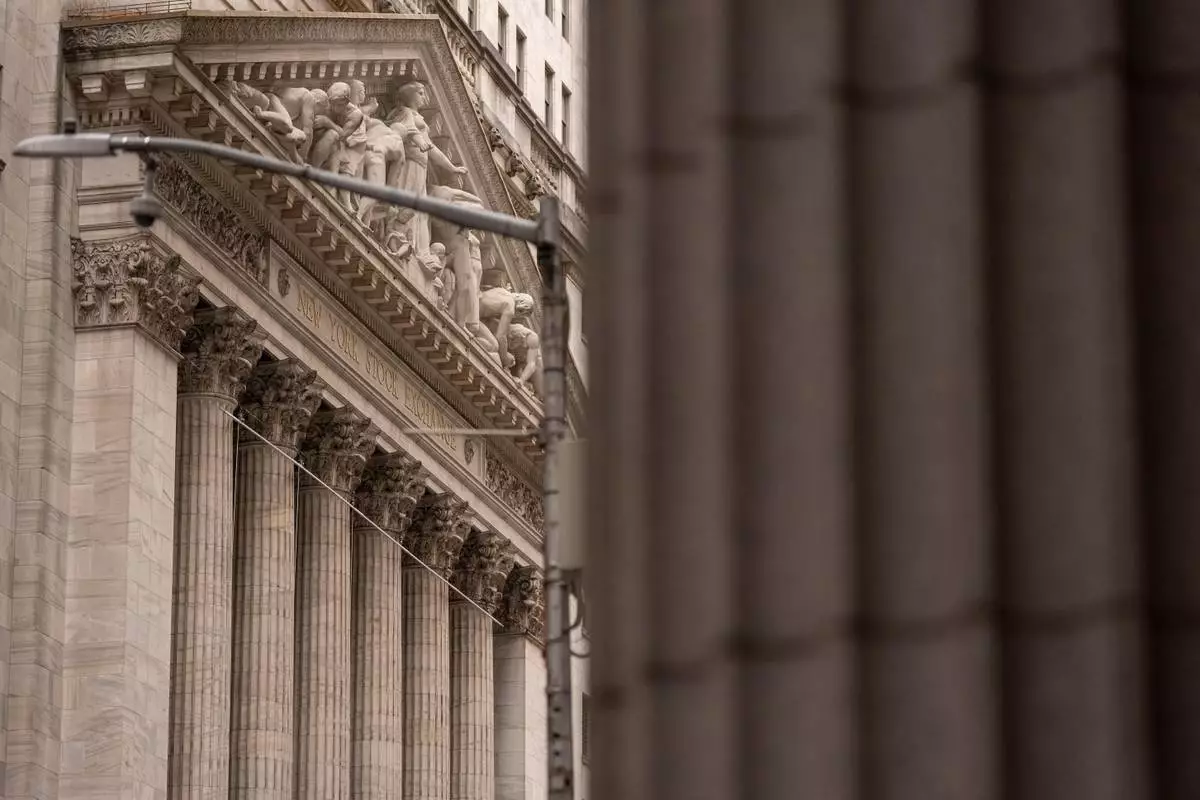
A general view shows the New York Stock Exchange, Friday, March 27, 2026, in New York. (AP Photo/Yuki Iwamura)
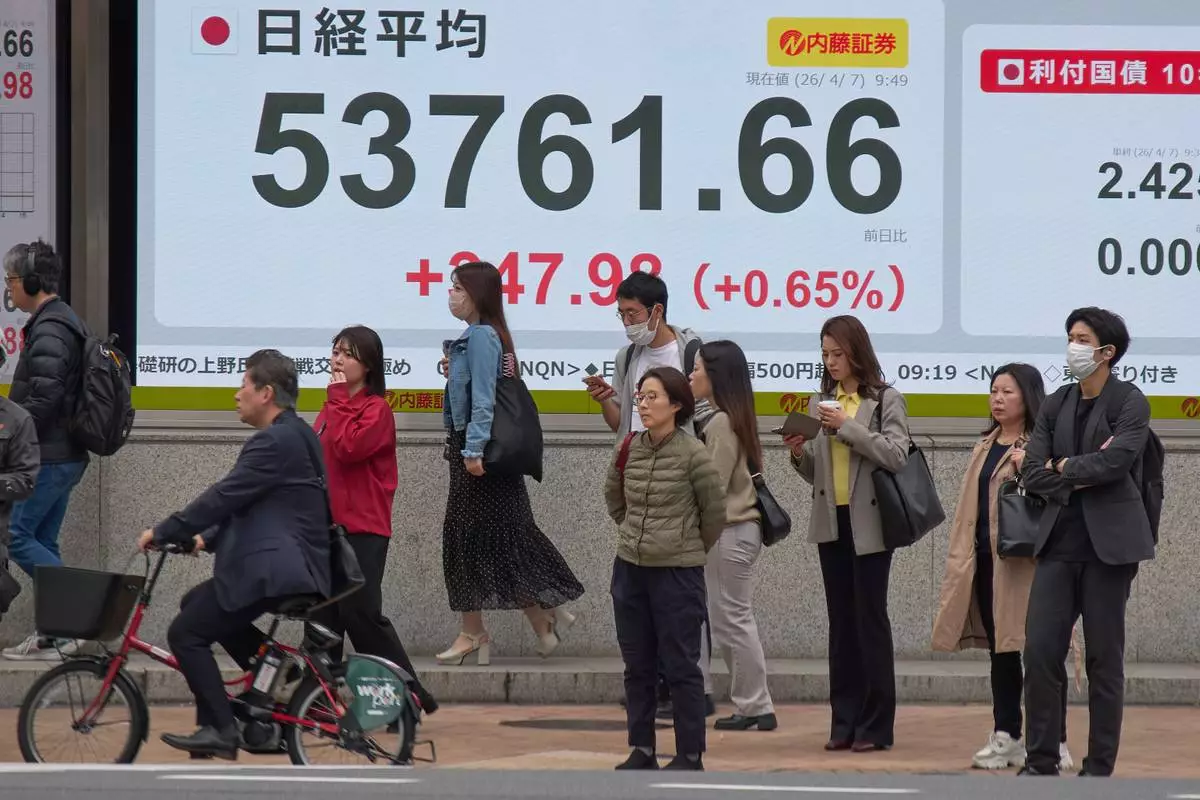
People stand in front of an electronic stock board showing Japan's Nikkei index at a securities firm Tuesday, April 7, 2026, in Tokyo. (AP Photo/Eugene Hoshiko)

A person walks in front of an electronic stock board showing Japan's Nikkei index at a securities firm Tuesday, April 7, 2026, in Tokyo. (AP Photo/Eugene Hoshiko)

MADRID (AP) — Protesters outraged by the eviction of an 87-year-old woman camped overnight in Madrid’s historic Puerta del Sol plaza, where more demonstrators — including multigenerational families — joined them on Sunday for a second day of protests over Spain’s housing crisis.
Tens of thousands marched through Madrid on Saturday to protest the eviction of María del Carmen Abascal from the apartment in the upscale Retiro neighborhood where she had lived for more than seven decades.
The demonstrators are demanding stronger tenant protections, measures to combat fraud and a ban on evictions when alternative housing is unavailable.
Many refused to leave after Saturday’s march and pitched tents in Puerta del Sol for the night.
“The wave of indignation and anger that has been unleashed is now unstoppable,” said Alicia del Río, a spokesperson for the Madrid Tenants’ Union, which led the protests.
“We will remain here” until the government passes new laws, including indefinite rental contracts, and stops evictions like Abascal’s, del Río told journalists at the plaza on Sunday. Spain's Socialist-led government is expected to announce new measures in its weekly cabinet meeting next Tuesday.
On Sept. 23, Abascal was carried from her apartment on a stretcher and placed in an ambulance as supporters — who had tried unsuccessfully to stop the eviction — chanted her nickname, “Maricarmen.”
“I haven’t managed to defend my home, but I have fought so that others can learn to fight for what’s theirs,” Abascal said in a video recorded from her hospital bed after the eviction.
Images of the eviction spread widely across Spain, fueling outrage and criticism of public authorities and real estate investment companies accused of pricing residents out of their homes. Critics often refer to such companies as “vulture funds.”
“Maricarmen has been, in a way, the last straw that sparked this social unrest,” said Simón de la Riva, 43, a teacher who took part in Saturday's protests.
Speaking at a Socialist Party rally in Madrid, Prime Minister Pedro Sánchez addressed Abascal directly: “I have a message for you, Maricarmen: the government is working around the clock to bring a Royal Decree on housing next Tuesday. And I ask parliamentary groups to make one last effort to have it validated in the National Parliament for Maricarmen.”
Abascal has criticized Sánchez and blamed him for her ordeal.
“Does he not realize the quantity of evictions that there are daily?” she asked during an interview with Spain’s state broadcaster RTVE the day before she was forcibly removed from her home. “Does he not realize, or does he not want to realize?”
Spanish media reported that Abascal’s father first rented the apartment in 1956 and that she remained there as a tenant under rent controls after her parents died.
The building changed ownership in 2018, and Abascal was offered the opportunity to buy the apartment but could not afford it, according to the Madrid Tenants’ Union.
Urbagestión, an investment fund that later bought the unit, raised her monthly rent from 500 euros ($570) to 2,650 euros. It subsequently lowered the rent to 1,650 euros, which Abascal still could not afford on her pension, the union said.
Rising costs and a housing shortage are pricing many Spaniards out of the market, despite strong economic growth in Europe’s fourth-largest economy. Incomes have not kept pace with the rising housing costs, and analysts say tourism and immigration-driven population growth in cities have placed further pressure on the limited housing supply.
The Bank of Spain estimated that the country had a shortage of about 550,000 homes last year, with Madrid, Barcelona and Valencia accounting for a substantial share.
The demonstrations in the symbolic Madrid plaza this weekend reminded many in Spain of the historic demonstrations starting May 15, 2011, when members of the “indignados movement” camped for 28 days straight, sparking similar sit-ins across the country and the world. That movement was a reaction to evictions and other issues following a global economic crisis, including unemployment, austerity measures and corruption.
Estefania Molina, a political scientist and columnist, said the stakes of popular frustration are growing. In 2011, "people protested because they couldn’t buy an apartment."
“Today, the protest is about not being able to rent a room in someone else’s home," she told Spanish television.
Spain ranks near the bottom of countries in the Organization for Economic Co-operation and Development for subsidized public rental housing, which represents less than 2% of the country's housing stock. The European Union average is 8%.
Brito reported from Barcelona, Spain. Associated Press journalist Suman Naishadham contributed to this report from Madrid.
People gather during a protest following the eviction last Wednesday of 87-year-old Maricarmen to demand stronger laws to protect renters at Puerta del Sol in Madrid, Spain, Saturday, Sept. 26, 2026. (AP Photo/Manu Fernandez)
A woman holds a flare during a protest following the eviction last Wednesday of 87-year-old Maricarmen to demand stronger laws to protect renters at Puerta del Sol in Madrid, Spain, Saturday, Sept. 26, 2026. (AP Photo/Manu Fernandez)
People gather during a protest following the eviction last Wednesday of 87-year-old Maricarmen to demand stronger laws to protect renters at Sol square in Madrid, Spain, Saturday, Sept. 26, 2026. (AP Photo/Manu Fernandez)
People set up tents during a protest following the eviction last Wednesday of 87-year-old Maricarmen to demand stronger laws to protect renters at Sol square in Madrid, Spain, Saturday, Sept. 26, 2026. (AP Photo/Manu Fernandez)