Bringing together 20,000 professionals from 52 countries to drive innovation, collaboration, and sustainable water solutions
KUALA LUMPUR, Malaysia, April 7, 2026 /PRNewswire/ -- As water security rises on national and global agendas, the 14th edition of ASIAWATER officially opened today at the Kuala Lumpur Convention Centre (KLCC), reinforcing its position as the region's leading platform for water and wastewater solutions in developing Asia.
Officiated by YAB Datuk Amar Haji Fadillah bin Haji Yusof, Deputy Prime Minister and Minister of Energy Transition and Water Transformation, the event brings together policymakers, industry leaders, utilities, and technology providers to address the region's most pressing water challenges.
Organised by Informa Markets Malaysia, ASIAWATER 2026 convenes the global water community under the theme "Building Nations: Leveraging Technology-Driven Water Services for Inclusive Growth."
Held from 7 to 9 April 2026, the event is expected to welcome over 20,000 trade professionals from more than 52 countries, alongside over 1,000 exhibiting brands and companies. Spanning approximately 16,000 square metres, the exhibition showcases end-to-end solutions across water treatment, wastewater management, smart water technologies, and sustainable infrastructure.
In his officiating address, Fadillah underscored the urgency of water security. "Water is the foundation upon which human civilisation is built. Reliable water supply and effective wastewater management underpin public health, sustain industries, safeguard our ecosystems, and enhance the resilience of our communities."
Highlighting Malaysia's priorities, he emphasised the need to address Non-Revenue Water (NRW), strengthen infrastructure resilience, and advance sustainable water management practices. Malaysia recorded a national NRW rate of 37.1% in 2023, resulting in the loss of over 7 billion litres of treated water daily and more than RM2 billion annually, underscoring the scale of the challenge.
"Addressing NRW requires more than technical solutions alone. It calls for sustainable financing models, effective governance, and close coordination between the Federal and State Governments, as well as industry stakeholders," he said.
Malaysia is working towards a revised national target of 28.8% by 2030, supported by infrastructure upgrades, policy reforms, and enhanced implementation programmes. At the same time, the Government continues to advance integrated river basin management, water reuse, and circular water economy initiatives, while aligning water transformation with the nation's broader energy transition agenda.
In his welcome address, Tan Sri Abdul Rahman Mamat, Chairman of Informa Markets Malaysia, highlighted the growing complexity of water challenges. "We meet at a time when water is no longer viewed solely as an infrastructure issue, but as a national and strategic priority."
He emphasised the need for coordinated, cross-sector action. "These challenges cannot be addressed in isolation. They require coordinated action across governments, industry, technology providers, and the research community.
Reinforcing the role of ASIAWATER, he noted that the platform continues to support informed decision-making, accelerate the adoption of proven technologies, and strengthen collaboration across the water ecosystem.
A defining strength of ASIAWATER 2026 lies in its comprehensive knowledge platforms, featuring over 60 conferences, forums, and technical sessions designed to bridge policy, innovation, and real-world implementation.
The 14th ASIAWATER Conference convenes policymakers, utilities, and industry leaders to address key priorities, including digital transformation, infrastructure resilience, financing, and governance. Complementing this, the Technology Seminars deliver practical, solution-driven insights, enabling participants to evaluate technologies based on performance, implementation feasibility, and lifecycle value.
Specialised platforms further enhance engagement through targeted discussions, including the Smart Water Networks Forum on digitalisation and smart monitoring systems, the ASTRICE-IWK Seminar on wastewater management and operational efficiency, and the Regional Water Expert Dialogue, which brings together stakeholders for high-level regional collaboration.
The International Conference on Water and Environment for Sustainability (ICWES 2026) strengthens collaboration between academia and industry, ensuring that research and innovation are translated into practical, real-world applications.
Fadillah emphasised the importance of such platforms in driving regional progress. "Platforms such as ASIAWATER play an important role in positioning Malaysia as a regional hub for water innovation, knowledge exchange, and industry collaboration."
As Southeast Asia faces increasing pressures from climate change, urbanisation, and rising water demand, ASIAWATER 2026 serves as a critical platform for partnership and progress.
"By working together across governments, industries, research institutions, and communities, we can build water systems that are more resilient, efficient, and future ready," said Fadillah.
A key highlight of this year's edition includes the upcoming launch of the Incubator Hub by the National Water Services Commission (SPAN), aimed at fostering innovation, collaboration, and sustainable growth within the water and wastewater sector.
Our industry partner, Gamuda Berhad, said: "Our priority is to strengthen water resilience for long-term economic and social progress. We provide end-to-end water solutions, spanning large-scale infrastructure and advanced treatment to distribution and urban renewal. We enhance delivery through the Gamuda Digital Operating System (GDOS), developed in collaboration with Autodesk Construction Cloud and Building Information Modelling (BIM). By ensuring dependable, high-quality water supply, we enable socio-economic growth.
With its scale, depth, and strong alignment with national and regional priorities, ASIAWATER 2026 continues to play a pivotal role in shaping the future of water management across Asia.
ASIAWATER 2026 takes place from 7 to 9 April 2026 at the Kuala Lumpur Convention Centre (KLCC), Malaysia. Industry professionals are invited to be part of this leading regional platform to explore innovations, exchange knowledge, and build strategic partnerships shaping the future of water.
For registration, exhibition opportunities, and full event details, visit: https://www.asiawater.org/
END
Notes to Editors
About ASIAWATER Expo & Forum
ASIAWATER is Asia's leading platform for the water and wastewater industry, serving as a trusted marketplace and knowledge hub for developing Asia. The event brings together policymakers, regulators, utilities, industry leaders, and solution providers to address critical water challenges and advance sustainable, technology-driven water services. Held biennially in Kuala Lumpur, ASIAWATER showcases the full water and wastewater value chain, including water treatment and purification, wastewater and sludge management, non-revenue water reduction, flood mitigation and drainage, digital water and smart utility systems, automation, membranes, filtration, desalination, and energy efficient, low-carbon technologies. Recognised for its strong government and regulatory engagement, high-quality conferences, and buyer-focused exhibition format, ASIAWATER provides a neutral platform for collaboration, innovation, and business exchange.
About Informa Markets
Informa Markets creates platforms for industries and specialist markets to trade, innovate, and grow. Our portfolio comprises more than 450 international B2B events and brands across markets, including Healthcare & Pharmaceuticals, Infrastructure, Construction & Real Estate, Fashion & Apparel, Hospitality, Food & Beverage, and Health & Nutrition. We provide customers and partners around the globe with opportunities to engage, experience, and do business through face-to-face exhibitions, specialist digital content, and actionable data solutions. As the world's leading exhibition organiser, we bring a diverse range of specialist markets to life, unlocking opportunities and helping them thrive 365 days a year. For more information, please visit www.informamarkets.com.
** This press release is distributed by PR Newswire through automated distribution system, for which the client assumes full responsibility. **

ASIAWATER 2026 OPENS, UNITING GLOBAL WATER INDUSTRY TO ADVANCE RESILIENT, TECHNOLOGY-DRIVEN NATIONS
|
Turing Award winner Yann LeCun joins as Chief Science Advisor to the AI Alliance and Project Tapestry, a new open-source platform designed to enable globally federated development of frontier open models while preserving sovereignty, local control, and long-term independence.
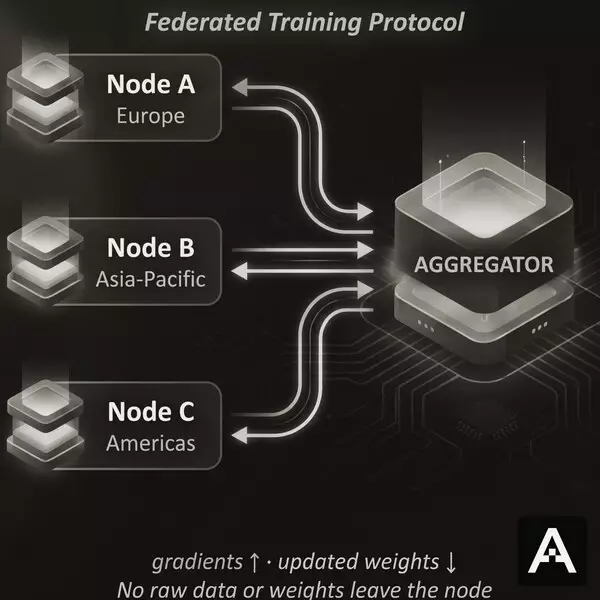
NEW YORK, April 8, 2026 /PRNewswire/ -- Today the AI Alliance, a non-profit AI research and open-source technology coalition with more than 200 member organizations, launched Project Tapestry to empower open and sovereign AI development globally. Project Tapestry will build a new open-source platform to enable distributed, globally federated training of frontier open models.
With Project Tapestry, the AI Alliance aims to create a new path for advanced AI development, one in which institutions, industries, and nations can join together to contribute to build more capable open base models, while retaining control of their data and the ability to build on the base to produce sovereign derivative models aligned to their own priorities, industries, culture, laws, and values.
Alongside Project Tapestry, the AI Alliance announced that Yann LeCun, Turing Award laureate, Chairman of AMI Labs, and one of the most influential figures in modern artificial intelligence, will join as Chief Science Advisor to the AI Alliance. In that role, LeCun will help guide the scientific direction of the AI Alliance focusing on Project Tapestry as it advances from initial architecture into technical implementation and global collaboration.
"As AI is fast becoming part of the common infrastructure, there is a need for foundation models to be open so as to enable sovereignty and cultural diversity. As a key component of our information and knowledge infrastructure, AI should not be controlled by a handful of private entities through proprietary products. Some of the most important advances in science and technology have come from open science, open-source software, and open technology platforms at a broad scale. Project Tapestry is an ambitious effort to bring that model to AI — to create the conditions for open, distributed progress on systems of real capability." – Dr. Yann LeCun, Chairman of AMI Labs, Professor at NYU, and Chief Science Advisor to the AI Alliance
Frontier Open Models without Centralizing Data and Compute
Today, the development of the most capable AI models is increasingly concentrated within a small number of companies and regions. Open-weight models have expanded access, but core decisions about training data, model objectives, architecture, and evaluation typically remain concentrated within the institutions that originate them. At the same time, many sovereign AI model efforts face steep barriers in compute, funding, data access, and specialized talent.
Project Tapestry offers a more powerful alternative: a collaborative approach to AI model development in which participants can help build a shared open foundation without surrendering their data, strategic autonomy, or downstream control. Its long-term vision is to develop an open global model — a shared open source base foundation model that can draw on broader pools of expertise, compute, and domain knowledge than any single organization can typically assemble alone — while enabling participants to create sovereign derivative models tailored to their own societal, industrial, scientific, or mission-specific needs, and aligned to their own governance frameworks, languages, values, and priorities.
"Until now, many sovereign and sector-specific AI efforts have faced steep barriers in compute, data access, funding, and specialized talent," said Dr. Christopher Nguyen, Chief Architect of Project Tapestry, Board Member of the AI Alliance, and CEO & Co-Founder of Aitomatic. "Project Tapestry is designed to overcome that constraint through federated collaboration. The idea is simple but powerful: build a shared global base openly, then enable each participant to extend it in ways they fully own and control."
From Launch to Global Technical Mobilization
Over time, the Alliance expects Project Tapestry to foster a vibrant and enduring ecosystem of collaborative, sovereignty-preserving model and application development. The AI Alliance's 501(c)(3) nonprofit research organization will serve as the community home for Project Tapestry. It will host and support the Tapestry platform and open source technical assets including models that the AI Alliance develops with the platform. Project Tapestry will be governed by a board of representatives from major contributing organizations globally.
The AI Alliance is convening a workshop in Paris on May 7-8, bringing together technical leaders from around the world to define Project Tapestry's architecture, roadmap and model development priorities. Additional announcements are expected over the coming months.
"The AI Alliance was founded on the principle that open innovation can produce AI that is more capable, more accountable, and more broadly beneficial," said Dr. Anthony Annunziata, Chairman of the AI Alliance and Director of AI Open Innovation at IBM. "Project Tapestry is an ambitious step toward making that principle real in infrastructure form: a path for the world to build the most advanced and capable AI collaboratively, but without giving up sovereignty."
Learn more: https://events.thealliance.ai/tapestry
About the AI Alliance
The AI Alliance is a global nonprofit research and technology organization dedicated to advancing open, safe, and responsible AI through innovation, collaboration, and advocacy. Operating through both a 501(c)(3) public-benefit organization and a 501(c)(6) industry association, the Alliance brings together more than 200 collaborating organizations across 29 countries spanning industry, academia, startups, research, and government.
The Alliance supports open initiatives across AI data, models, agents, safety, and governance. Its technical projects and community collaborations provide part of the foundation on which Project Tapestry is being developed.
Logo - https://mma.prnasia.com/media2/2951194/5903988/AI_Alliance__logo.jpg?p=medium600
Photo - https://mma.prnasia.com/media2/2951195/AI_Alliance__Yann_Lecun.jpg?p=medium600
Photo - https://mma.prnasia.com/media2/2951256/AI_Alliance__Project_Tapestry_Architecture.jpg?p=medium600
Turing Award winner Yann LeCun joins as Chief Science Advisor to the AI Alliance and Project Tapestry, a new open-source platform designed to enable globally federated development of frontier open models while preserving sovereignty, local control, and long-term independence.
NEW YORK, April 8, 2026 /PRNewswire/ -- Today the AI Alliance, a non-profit AI research and open-source technology coalition with more than 200 member organizations, launched Project Tapestry to empower open and sovereign AI development globally. Project Tapestry will build a new open-source platform to enable distributed, globally federated training of frontier open models.
With Project Tapestry, the AI Alliance aims to create a new path for advanced AI development, one in which institutions, industries, and nations can join together to contribute to build more capable open base models, while retaining control of their data and the ability to build on the base to produce sovereign derivative models aligned to their own priorities, industries, culture, laws, and values.
Alongside Project Tapestry, the AI Alliance announced that Yann LeCun, Turing Award laureate, Chairman of AMI Labs, and one of the most influential figures in modern artificial intelligence, will join as Chief Science Advisor to the AI Alliance. In that role, LeCun will help guide the scientific direction of the AI Alliance focusing on Project Tapestry as it advances from initial architecture into technical implementation and global collaboration.
"As AI is fast becoming part of the common infrastructure, there is a need for foundation models to be open so as to enable sovereignty and cultural diversity. As a key component of our information and knowledge infrastructure, AI should not be controlled by a handful of private entities through proprietary products. Some of the most important advances in science and technology have come from open science, open-source software, and open technology platforms at a broad scale. Project Tapestry is an ambitious effort to bring that model to AI — to create the conditions for open, distributed progress on systems of real capability." – Dr. Yann LeCun, Chairman of AMI Labs, Professor at NYU, and Chief Science Advisor to the AI Alliance
Frontier Open Models without Centralizing Data and Compute
Today, the development of the most capable AI models is increasingly concentrated within a small number of companies and regions. Open-weight models have expanded access, but core decisions about training data, model objectives, architecture, and evaluation typically remain concentrated within the institutions that originate them. At the same time, many sovereign AI model efforts face steep barriers in compute, funding, data access, and specialized talent.
Project Tapestry offers a more powerful alternative: a collaborative approach to AI model development in which participants can help build a shared open foundation without surrendering their data, strategic autonomy, or downstream control. Its long-term vision is to develop an open global model — a shared open source base foundation model that can draw on broader pools of expertise, compute, and domain knowledge than any single organization can typically assemble alone — while enabling participants to create sovereign derivative models tailored to their own societal, industrial, scientific, or mission-specific needs, and aligned to their own governance frameworks, languages, values, and priorities.
"Until now, many sovereign and sector-specific AI efforts have faced steep barriers in compute, data access, funding, and specialized talent," said Dr. Christopher Nguyen, Chief Architect of Project Tapestry, Board Member of the AI Alliance, and CEO & Co-Founder of Aitomatic. "Project Tapestry is designed to overcome that constraint through federated collaboration. The idea is simple but powerful: build a shared global base openly, then enable each participant to extend it in ways they fully own and control."
From Launch to Global Technical Mobilization
Over time, the Alliance expects Project Tapestry to foster a vibrant and enduring ecosystem of collaborative, sovereignty-preserving model and application development. The AI Alliance's 501(c)(3) nonprofit research organization will serve as the community home for Project Tapestry. It will host and support the Tapestry platform and open source technical assets including models that the AI Alliance develops with the platform. Project Tapestry will be governed by a board of representatives from major contributing organizations globally.
The AI Alliance is convening a workshop in Paris on May 7-8, bringing together technical leaders from around the world to define Project Tapestry's architecture, roadmap and model development priorities. Additional announcements are expected over the coming months.
"The AI Alliance was founded on the principle that open innovation can produce AI that is more capable, more accountable, and more broadly beneficial," said Dr. Anthony Annunziata, Chairman of the AI Alliance and Director of AI Open Innovation at IBM. "Project Tapestry is an ambitious step toward making that principle real in infrastructure form: a path for the world to build the most advanced and capable AI collaboratively, but without giving up sovereignty."
Learn more: https://events.thealliance.ai/tapestry
About the AI Alliance
The AI Alliance is a global nonprofit research and technology organization dedicated to advancing open, safe, and responsible AI through innovation, collaboration, and advocacy. Operating through both a 501(c)(3) public-benefit organization and a 501(c)(6) industry association, the Alliance brings together more than 200 collaborating organizations across 29 countries spanning industry, academia, startups, research, and government.
The Alliance supports open initiatives across AI data, models, agents, safety, and governance. Its technical projects and community collaborations provide part of the foundation on which Project Tapestry is being developed.
Logo - https://mma.prnasia.com/media2/2951194/5903988/AI_Alliance__logo.jpg?p=medium600
Photo - https://mma.prnasia.com/media2/2951195/AI_Alliance__Yann_Lecun.jpg?p=medium600
Photo - https://mma.prnasia.com/media2/2951256/AI_Alliance__Project_Tapestry_Architecture.jpg?p=medium600
** This press release is distributed by PR Newswire through automated distribution system, for which the client assumes full responsibility. **
AI Alliance Launches Project Tapestry to Build a Collaborative Foundation for Open and Sovereign AI

AI Alliance Launches Project Tapestry to Build a Collaborative Foundation for Open and Sovereign AI