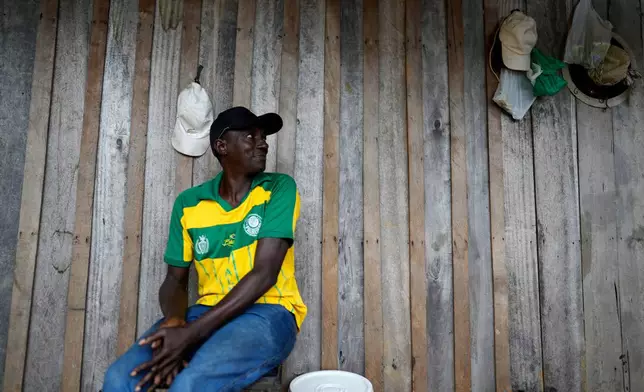
OIAPOQUE, Brazil (AP) — On a recent morning, Reginaldo Nunes Fonseca smoked cigarettes from the porch of his friend's wooden shack, watching the rain come down hard in an area now known as Nova Conquista — New Conquest — where pristine rainforest in Brazil's Amazon stood a year ago.
The rain meant he couldn't work on building his own house or do odd jobs for others in the area, but the weather wasn't the only thing holding him back. Like thousands of others who have moved to the small city of Oiapoque, in Brazil’s northern state of Amapa, Fonseca is waiting for an economic boom that may or may not come.
Click to Gallery
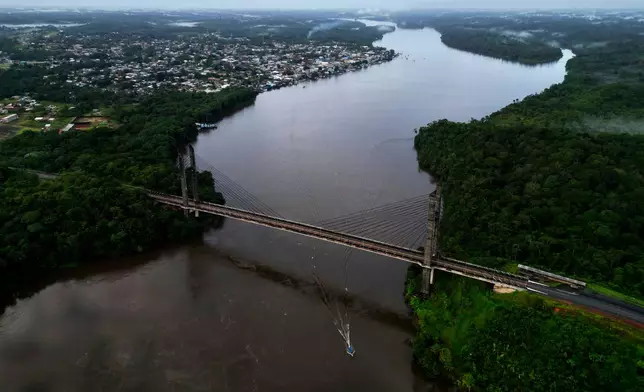
View of the Franco-Brazilian Binational Bridge, over the Oiapoque River, connecting the city of Oiapoque, in the background, with French Guiana, during sunrise in the city of Oiapoque, Amapa state, Brazil, Tuesday, March 10, 2026. (AP Photo/Eraldo Peres)
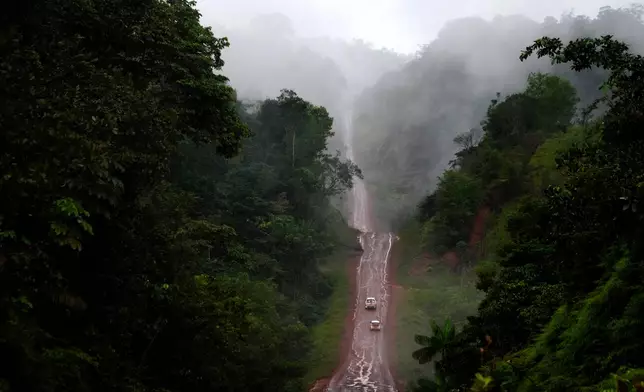
Vehicles move on an unpaved part of the BR-156 highway that connects the state capital Macapa with the city of Oiapoque, Amapa state, Brazil, Friday, March 13, 2026. (AP Photo/Eraldo Peres)
Renata Lod, Galibi representative on Oiapoque's Indigenous council, at her home on Galibi indigenous land, in Oiapoque, Amapa state, Brazil, Thursday, March 12, 2026. (AP Photo/Eraldo Peres)
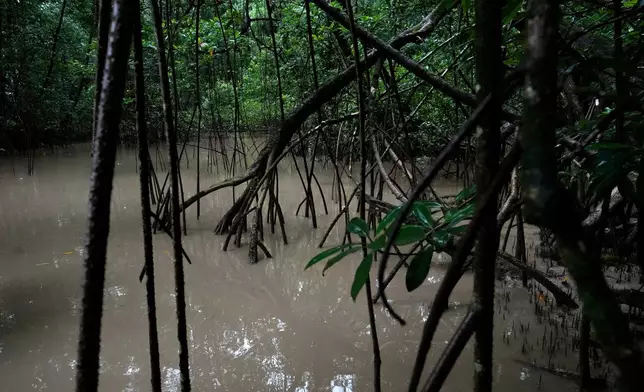
Mangrove area in the biodiversity conservation area of Cabo Orange, in Oiapoque, Amapa state, Brazil, Thursday, March 12, 2026. (AP Photo/Eraldo Peres)
A fisherman's boat sails at the mouth of the Uaca River, in the Uaca Indigenous Territory region, near the mangrove and biodiversity conservation area of Cabo Orange, in Oiapoque, Amapa state, Brazil, Thursday, March 12, 2026. (AP Photo/Eraldo Peres)
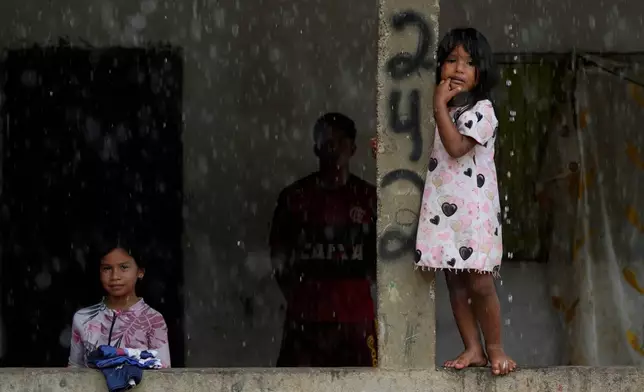
Children watch from the balcony of their house in an area known as Nova Conquista or New Conquest where families are building houses near the center of Oiapoque, Amapa state, Brazil, Tuesday, March 10, 2026. (AP Photo/Eraldo Peres)
Construction is visible in an area known as Nova Conquista or New Conquest where families are building houses near the center of Oiapoque, Amapa state, Brazil, Wednesday, March 11, 2026. (AP Photo/Eraldo Peres)
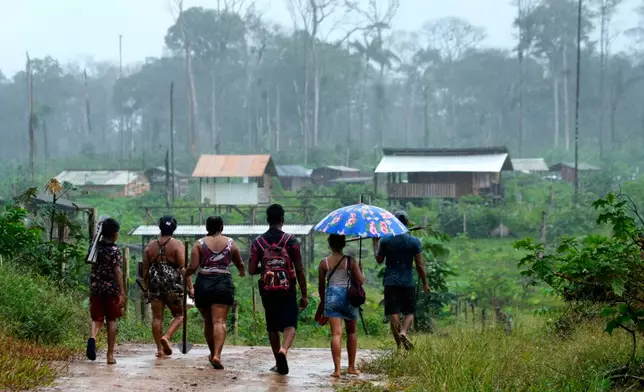
A family walks carrying tools toward an area known as Nova Conquista or New Conquest where families are building houses near the center of Oiapoque, Amapa state, Brazil, Tuesday, March 10, 2026. (AP Photo/Eraldo Peres)
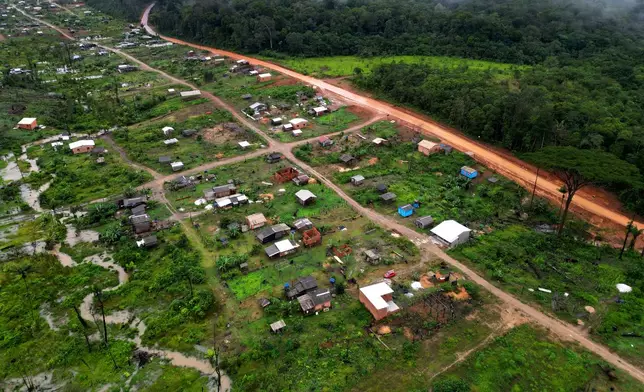
Trees line a cleared area known as Nova Conquista or New Conquest where families are building houses near the center of Oiapoque, Amapa state, Brazil, Wednesday, March 11, 2026. (AP Photo/Eraldo Peres)
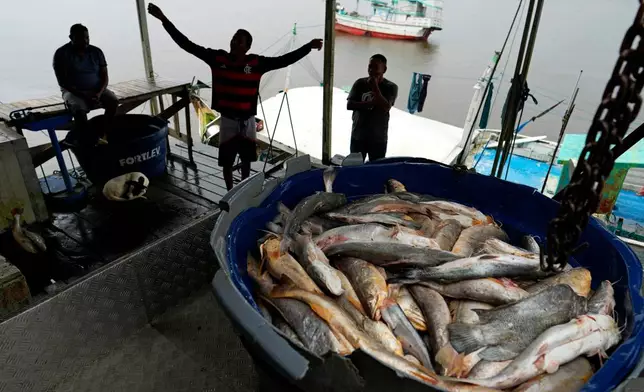
Fishers unload their catch from a boat at a trading port on the banks of the Oiapoque River in the city of Oiapoque, Amapa state, Brazil, Tuesday, March 10, 2026. (AP Photo/Eraldo Peres)
Workers load a vehicle with supplies in front of a wall with an image of the French and Brazilian flags, representing the commercial relationship established along the Oiapoque River between French Guiana and the city of Oiapoque, Amapa state, Brazil, Wednesday, March 11, 2026. (AP Photo/Eraldo Peres)
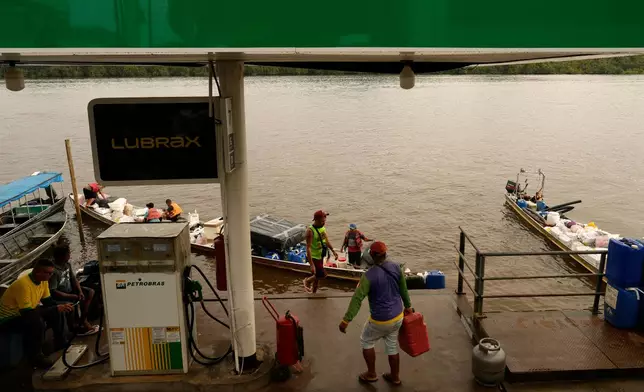
Boatmen operating Catraia, a traditional boat used on the Oiapoque River, prepare for the crossing with a load of gasoline canisters filled at a Petrobras gas station in a port in the city of Oiapoque, Amapa state, Brazil, Tuesday, March 10, 2026. (AP Photo/Eraldo Peres)
Reginaldo Nunes Fonseca sits on a balcony of the house he occupies in an area known as Nova Conquista or "new conquest" in Oiapoque, Amapa state, Brazil, Wednesday, March 11, 2026. (AP Photo/Eraldo Peres)
View of the Franco-Brazilian Binational Bridge, over the Oiapoque River, connecting the city of Oiapoque, in the background, with French Guiana, during sunrise in the city of Oiapoque, Amapa state, Brazil, Tuesday, March 10, 2026. (AP Photo/Eraldo Peres)
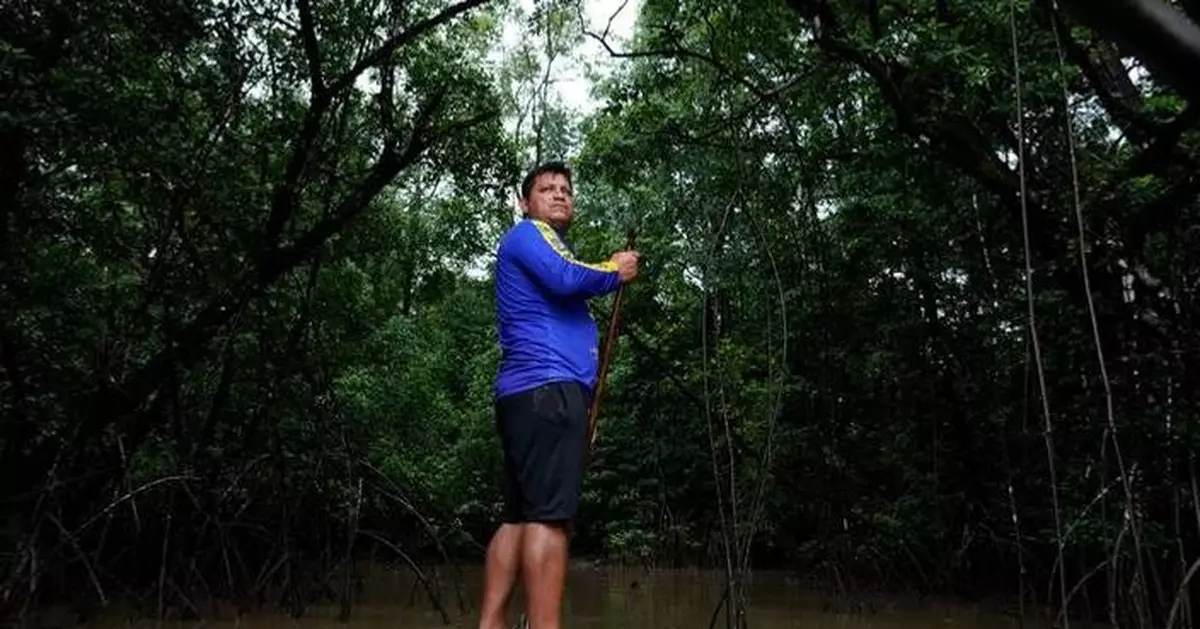
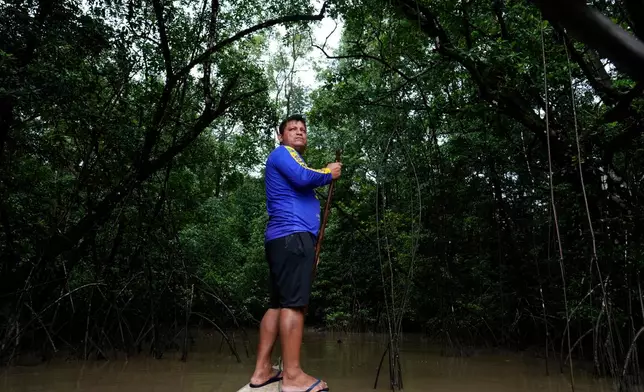
Edervan Forte dos Santos, from the Galibi Kali'na community, steers his boat toward mangroves in the biodiversity conservation area of Cabo Orange, in Oiapoque, Amapa state, Brazil, Thursday, March 12, 2026. (AP Photo/Eraldo Peres)
The area is experiencing a rush of migrants since Petrobras, Brazil’s state-run oil company, last year secured environmental licensing for offshore drilling in the Equatorial Margin near the mouth of the Amazon River, about 180 kilometers (112 miles) off Amapa’s coast.
“I thought, well, that’s good — the city is going to grow, there will be a lot of job opportunities," said Fonseca, who saw a television report about the licensing in January and decided to move from the northeastern state of Maranhao. "So I started calling friends and said: ‘I’m going there because here I’m unemployed and not doing anything.'”
Amapa is one of Brazil’s poorest and underdeveloped states. Oiapoque’s economy relies on fishing, illegal gold mining and visitors from neighboring French Guiana, who cross daily and spend euros, which hold their value better than the Brazilian real. While the prospect of economic opportunities is bringing hope, the impacts of unplanned urban growth in a city with already poor infrastructure are being felt.
The oil-fueled optimism highlights a broader dilemma for developing countries: how to curb their emissions of greenhouse gases like carbon dioxide, which are released from the burning of oil and cause climate change, while relying on such revenue to transform local economies.
It also raises questions about President Luiz Inácio Lula da Silva's campaign commitment to protecting the environment. He has made stopping deforestation an important part of his government and last year Brazil hosted the U.N. climate summit known as COP30.
“We don’t want to pollute a single millimeter of water, but no one can stop us from lifting Amapa out of poverty if there is oil here,” Lula said last year during a visit to Amapa.
On March 10, about 2 miles (3.2 kilometers) from Fonseca's home, Petrobras met with politicians, business owners and community leaders to present its operation plans.
Company representatives said drilling for an exploratory well began in October and would last about five months. If large quantities of oil are found and the company wants to begin extracting it, that would require further government permits, a process that can take months or even years.
Environmental and Indigenous groups have sued the Brazilian government and Petrobras to halt exploration, arguing the licensing process failed to properly consult traditional communities, underestimated spill risks and did not adequately assess climate impacts. Federal prosecutors also asked IBAMA to annul or suspend the environmental license, arguing that Petrobras’ studies are insufficient and that the company is concealing the full extent of the environmental impact. No ruling has been issued.
During the meeting, officials also said Oiapoque was serving mostly as a helicopter base for offshore crews, as it's the closest land point. Administrative operations related to the drilling were based out of Belem, a major city in the neighboring state of Para.
Despite open questions about future extraction and Oiapoque's limited role in Petrobras' operations, speculation has already reshaped the city.
The city’s population was 27,482 in 2022, according to census data, but a new count has yet to be taken, so it’s unclear how many people there are.
“In the past 18 months, Oiapoque has seen significant population growth," said Tiago Vieira Araújo, an Oiapoque councilman who stood up and voiced concerns during the meeting. "There are already seven new neighborhoods, and social problems have come with them.”
Urban infrastructure in Oiapoque is already precarious. Less than 2% of households have adequate sewage systems, and only 0.2% are on properly structured streets, according to Brazilian Institute of Geography and Statistics.
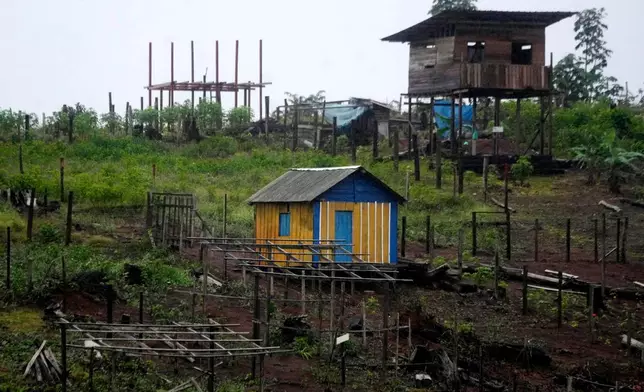
In the new settlements — known locally as “invasions” — conditions are worse. Residents have cleared public rainforest, creating informal plots and erecting makeshift homes. Freshly cut tree stumps, wooden stakes and rough shacks rise from mud and have only the basics: a kitchen, a bed and a rudimentary bathroom.
“We know it’s not right to clear the forest. Everyone knows it’s wrong,” Fonseca said. “But space is limited.”
Yuri Alesi, 34, a lawyer who advocates for land rights in new settlements and a former city councilman, is running for vice mayor in a special election set for April. He envisions Oiapoque as an “Amazonian Dubai,” fueled by oil revenues.
“Dubai is in the middle of a desert, an unlikely place to grow,” he said. “The industry that drove its development was oil.”
Brazil’s offshore Equatorial Margin, from the Suriname border to the country's northeast, is believed to hold significant oil and gas reserves. Preliminary estimates suggest they could hold up to 10 billion barrels, with a potential value of about 3.8 trillion reais ($719.7 billion). Alesi said royalties could generate roughly 100 million reais ($19 million) a month for Oiapoque, about the equivalent of the city's total goods and services produced each year, according to Brazil's statistics institute.
The Amazon, which is crucial to regulating the global climate because forests store carbon dioxide, is constantly under pressure from deforestation driven by agriculture, cattle ranching and mining. That pressure has been less intense in Amapa, where about 82% of the land remains forested, according to MapBiomas, a nonprofit that tracks land use.
The state’s isolation, bordered by rivers and the sea and lacking road connections to the rest of Brazil, has helped protect it from the deforestation seen in the southern Amazon.
While some point to Dubai as a model for Oiapoque’s future, nearby cities that once benefited from oil offer a warning for Oiapoque.
Petrobras has explored oil and gas in the state of Coari, also part of the Amazon, since the 1980s. Yet the city ranks among Brazil’s poorest, with about 72% of its residents living in extreme poverty, according to a recent study by Agenda Publica, a nonprofit focused on public policy.
Other cities in Amapa have also seen boom and decline cycles tied to mining. Pedra Branca, about 280 miles from Oiapoque, grew between 2007 and 2014 during an iron ore boom.
Prosperity in Pedra Branca drew Selma Soares, 46, who moved from Maranhao to Amapa in 2008 and opened a grocery store.
In 2013, a collapse at a port operated by mining company Anglo American killed six workers and disrupted iron ore production. India’s Zamin Ferrous later took over the mine and suspended operations.
“People who had shopped with us for years struggled to eat,” Soares said.
In the past few years, she heard growing rumors that Oiapoque was booming. After visiting the city last year, she moved with her husband and son. The family now runs a small supermarket on the outskirts of town. Soares said many others have followed.
“People are waiting for drilling to begin,” she said. “They believe everything will improve.”
At the river separating Oiapoque from French Guiana, a small port hums with boats linking Brazil, its neighbor and nearby communities. Green-and-yellow stickers read: “Oil yes! Development yes!,” a message promoted by local politicians.
Just 20 minutes away by boat, members of the Indigenous Galibi Kali’na community are wary. Some see economic opportunity, but leaders oppose exploration, warning of environmental risks and threats to their way of life.
“Petrobras arrived with strong political backing, promising progress as if we would go to sleep one way and wake up like Dubai,” said Renata Lod, a representative on Oiapoque’s Indigenous council. “But what we have actually seen is completely disorganized population growth, invasions of Indigenous lands."
Lod listed several frequent complaints among Oiapoque residents, both Indigenous and non-Indigenous, including overcrowded schools and the city’s only hospital operating at full capacity.
There is also fear of potential oil spills.
“Most Indigenous lands are flooded wetlands. How do you clean a wetland? Once oil enters the rivers, there’s no way to remove it," Lod said.
An oil spill could quickly carry pollutants to nearby coasts and rivers, threatening ecosystems and communities that depend on fishing and mangroves. Petrobras said it conducted spill modeling to secure the environmental license and has been deploying drifting devices to monitor ocean currents since it began exploration in October.
In January, Petrobras reported a drilling-fluid leak that briefly halted operations. IBAMA, the environmental regulator, fined the company 2.5 million reais ($470,500).
At the community meeting, Petrobras officials sought to ease concerns, defending the safety of its operations. They also pointed to everyday items, from clothing to air conditioning, to underscore oil’s economic importance.
“People here see Petrobras as an economic remedy,” said Araújo, the city councilman. “But even a remedy has side effects. And we’re already experiencing the side effects before seeing any of the benefits.”
Photographer Eraldo Peres and video journalist Felipe Campos Mello contributed to this report.
The Associated Press’ climate and environmental coverage receives financial support from multiple private foundations. AP is solely responsible for all content. Find AP’s standards for working with philanthropies, a list of supporters and funded coverage areas at AP.org.
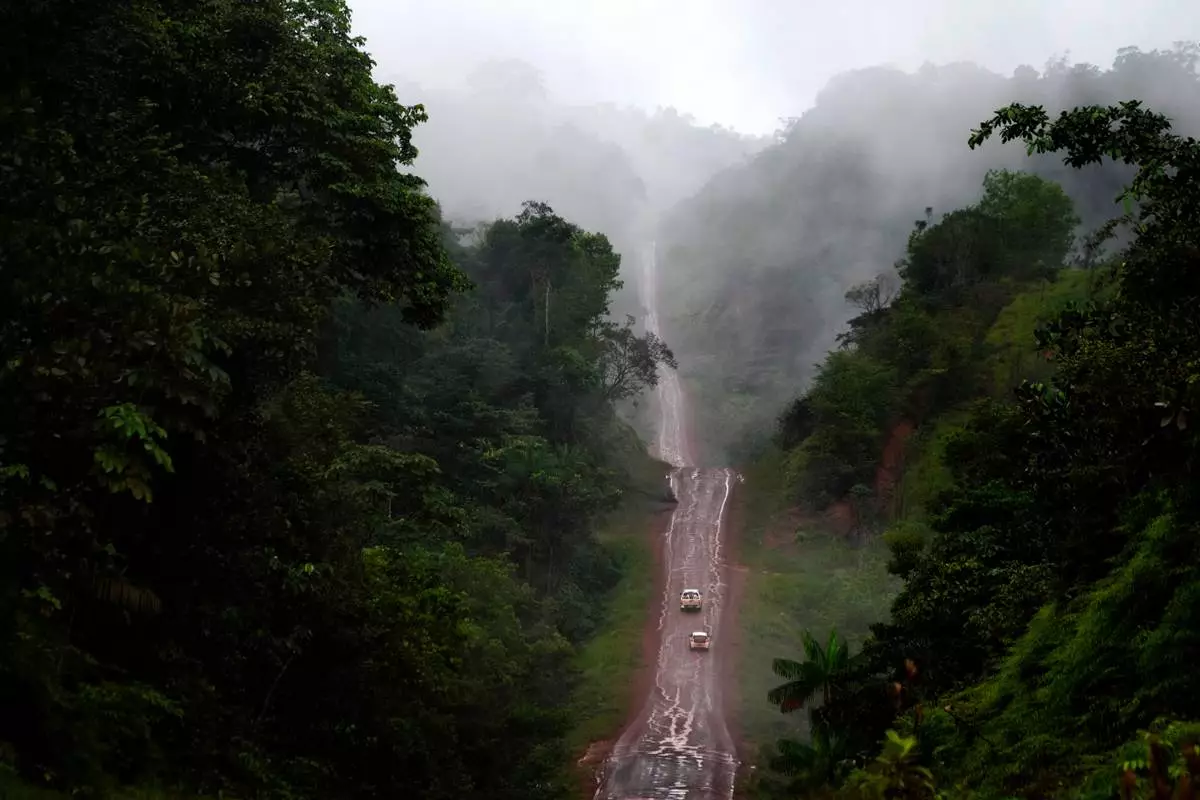
Vehicles move on an unpaved part of the BR-156 highway that connects the state capital Macapa with the city of Oiapoque, Amapa state, Brazil, Friday, March 13, 2026. (AP Photo/Eraldo Peres)
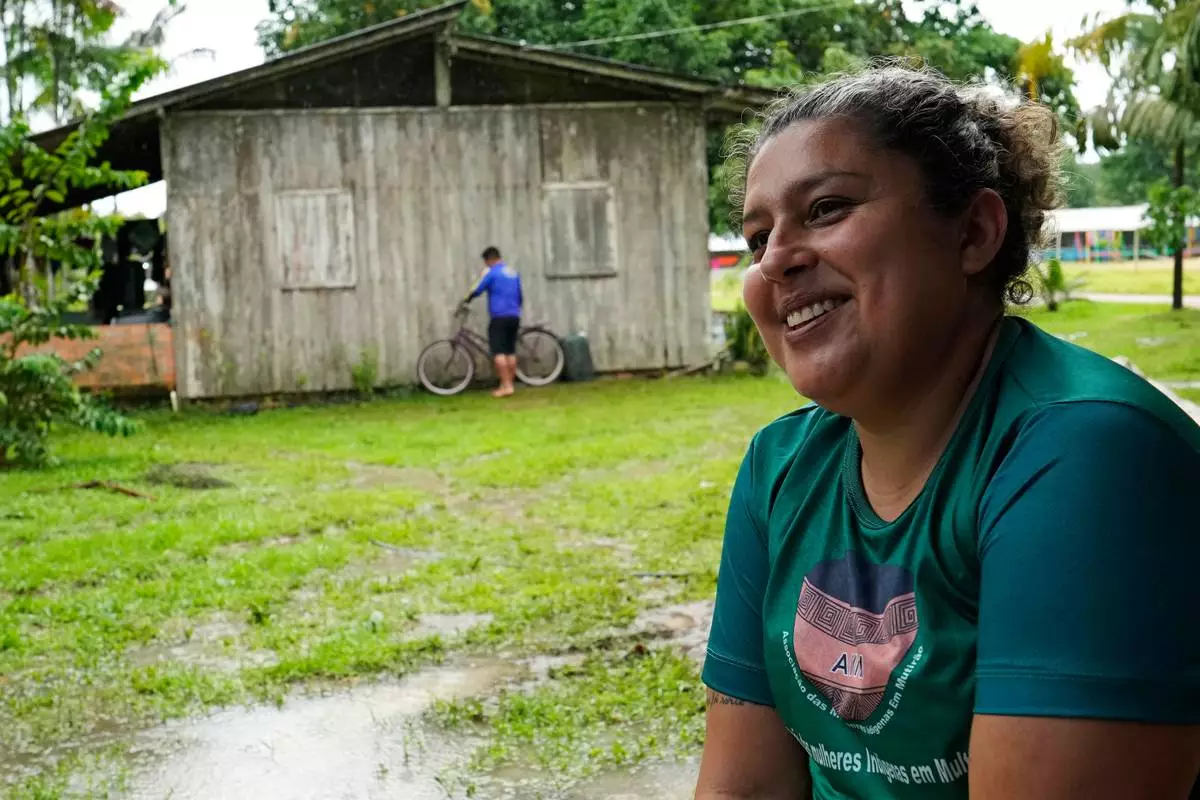
Renata Lod, Galibi representative on Oiapoque's Indigenous council, at her home on Galibi indigenous land, in Oiapoque, Amapa state, Brazil, Thursday, March 12, 2026. (AP Photo/Eraldo Peres)
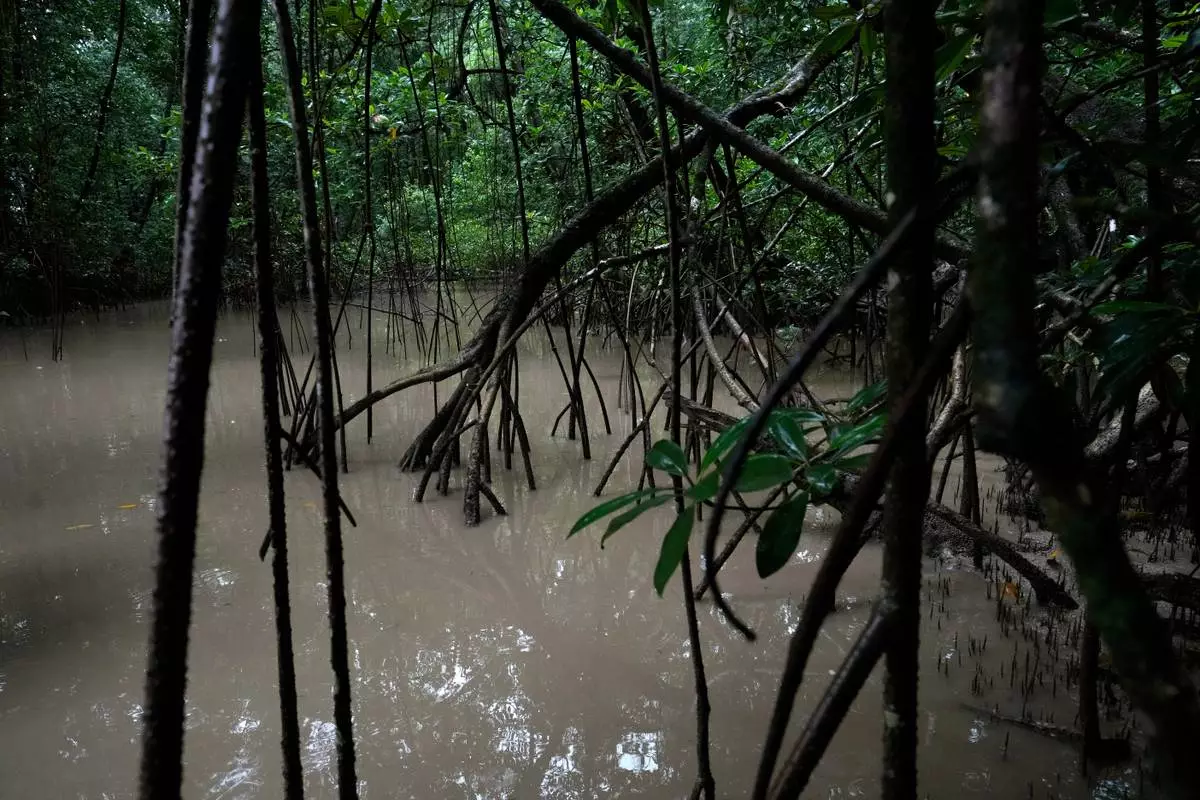
Mangrove area in the biodiversity conservation area of Cabo Orange, in Oiapoque, Amapa state, Brazil, Thursday, March 12, 2026. (AP Photo/Eraldo Peres)

A fisherman's boat sails at the mouth of the Uaca River, in the Uaca Indigenous Territory region, near the mangrove and biodiversity conservation area of Cabo Orange, in Oiapoque, Amapa state, Brazil, Thursday, March 12, 2026. (AP Photo/Eraldo Peres)
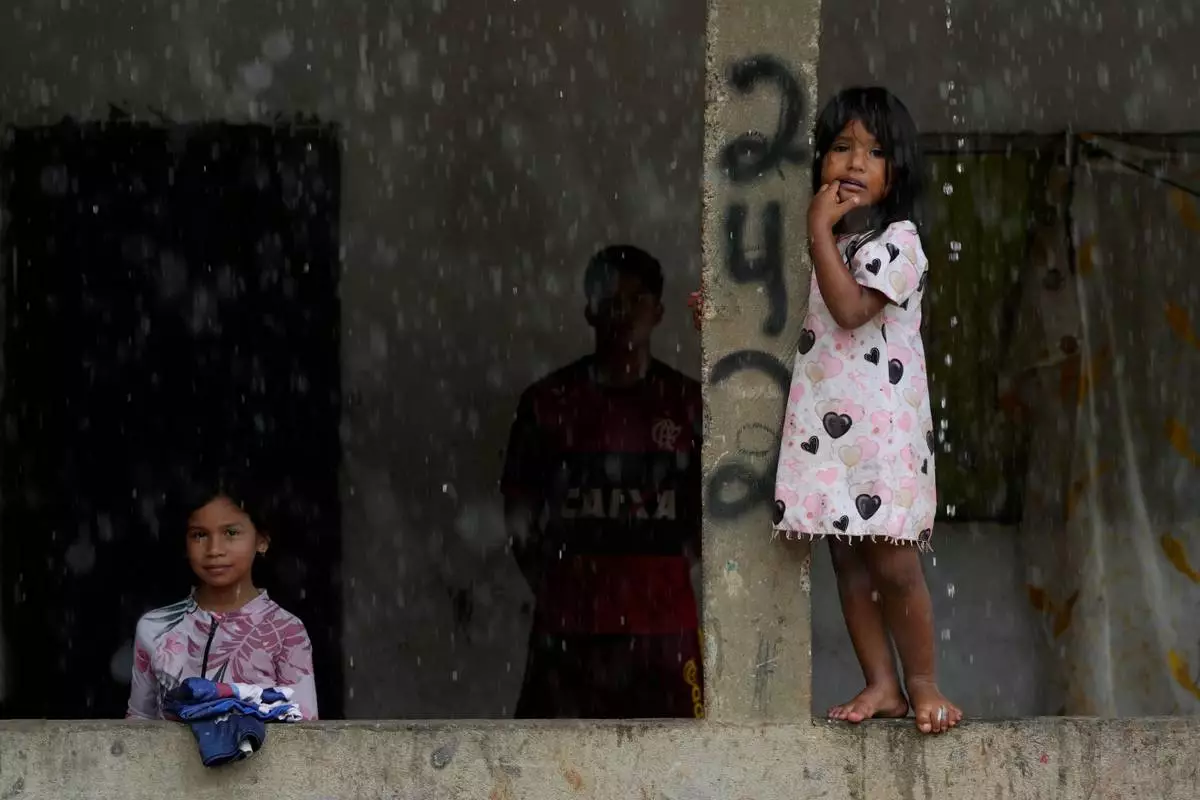
Children watch from the balcony of their house in an area known as Nova Conquista or New Conquest where families are building houses near the center of Oiapoque, Amapa state, Brazil, Tuesday, March 10, 2026. (AP Photo/Eraldo Peres)
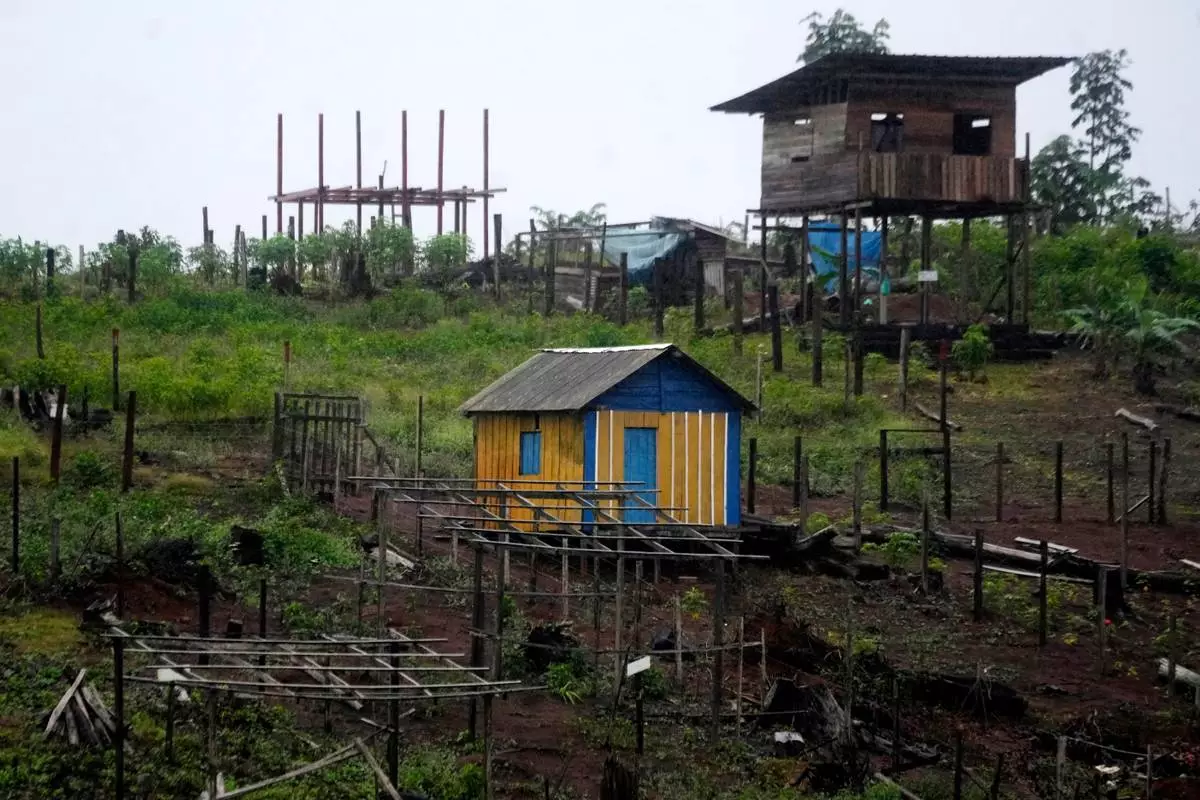
Construction is visible in an area known as Nova Conquista or New Conquest where families are building houses near the center of Oiapoque, Amapa state, Brazil, Wednesday, March 11, 2026. (AP Photo/Eraldo Peres)
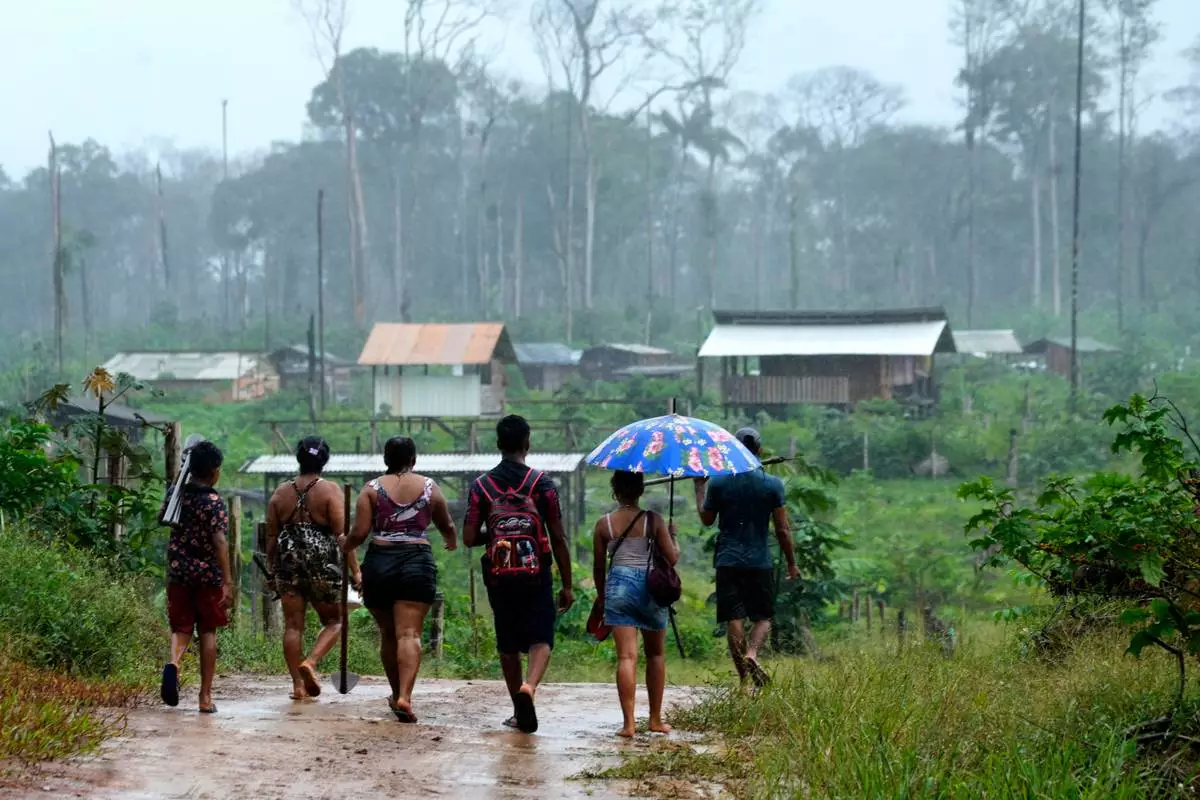
A family walks carrying tools toward an area known as Nova Conquista or New Conquest where families are building houses near the center of Oiapoque, Amapa state, Brazil, Tuesday, March 10, 2026. (AP Photo/Eraldo Peres)
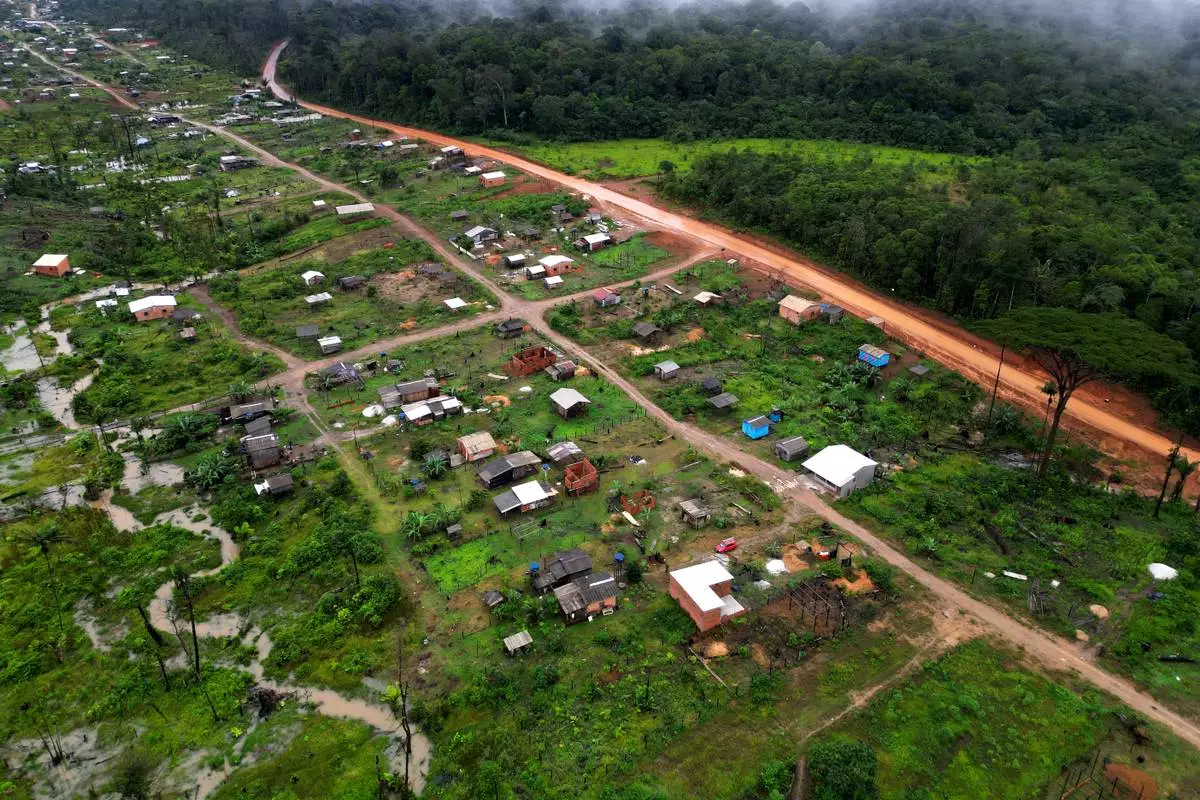
Trees line a cleared area known as Nova Conquista or New Conquest where families are building houses near the center of Oiapoque, Amapa state, Brazil, Wednesday, March 11, 2026. (AP Photo/Eraldo Peres)
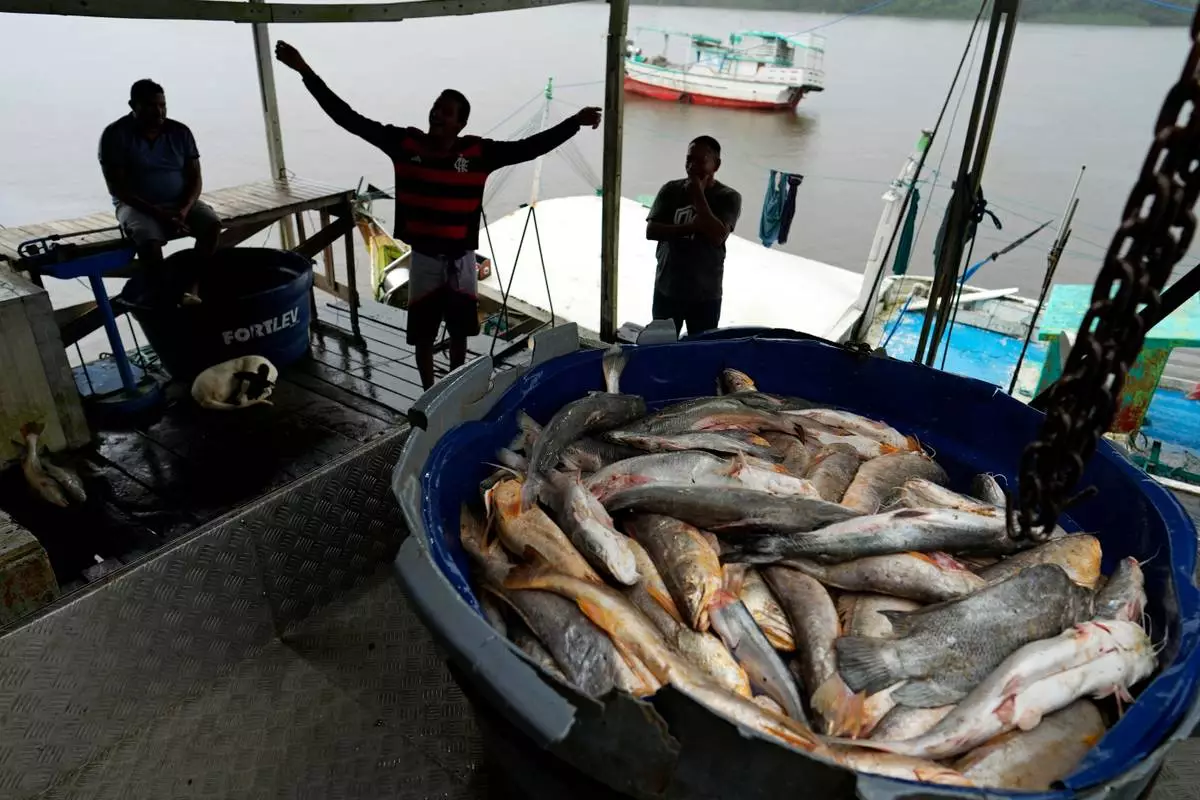
Fishers unload their catch from a boat at a trading port on the banks of the Oiapoque River in the city of Oiapoque, Amapa state, Brazil, Tuesday, March 10, 2026. (AP Photo/Eraldo Peres)

Workers load a vehicle with supplies in front of a wall with an image of the French and Brazilian flags, representing the commercial relationship established along the Oiapoque River between French Guiana and the city of Oiapoque, Amapa state, Brazil, Wednesday, March 11, 2026. (AP Photo/Eraldo Peres)
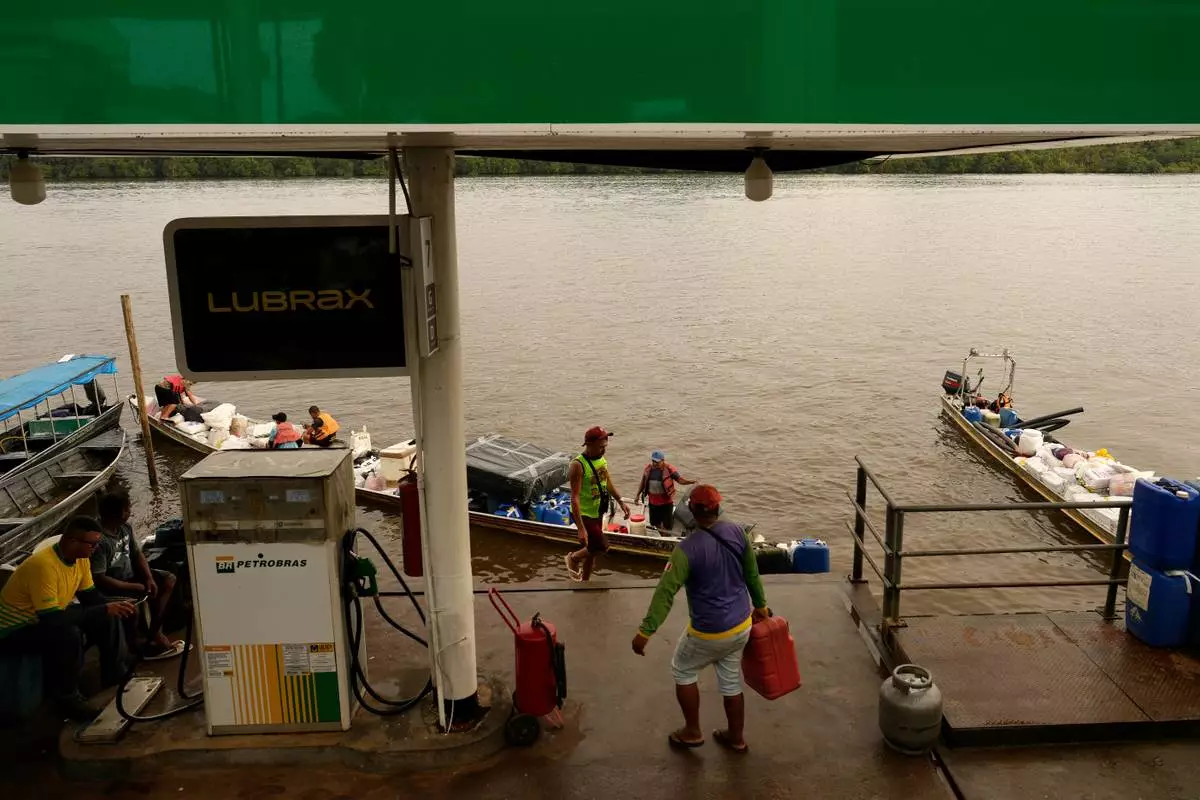
Boatmen operating Catraia, a traditional boat used on the Oiapoque River, prepare for the crossing with a load of gasoline canisters filled at a Petrobras gas station in a port in the city of Oiapoque, Amapa state, Brazil, Tuesday, March 10, 2026. (AP Photo/Eraldo Peres)
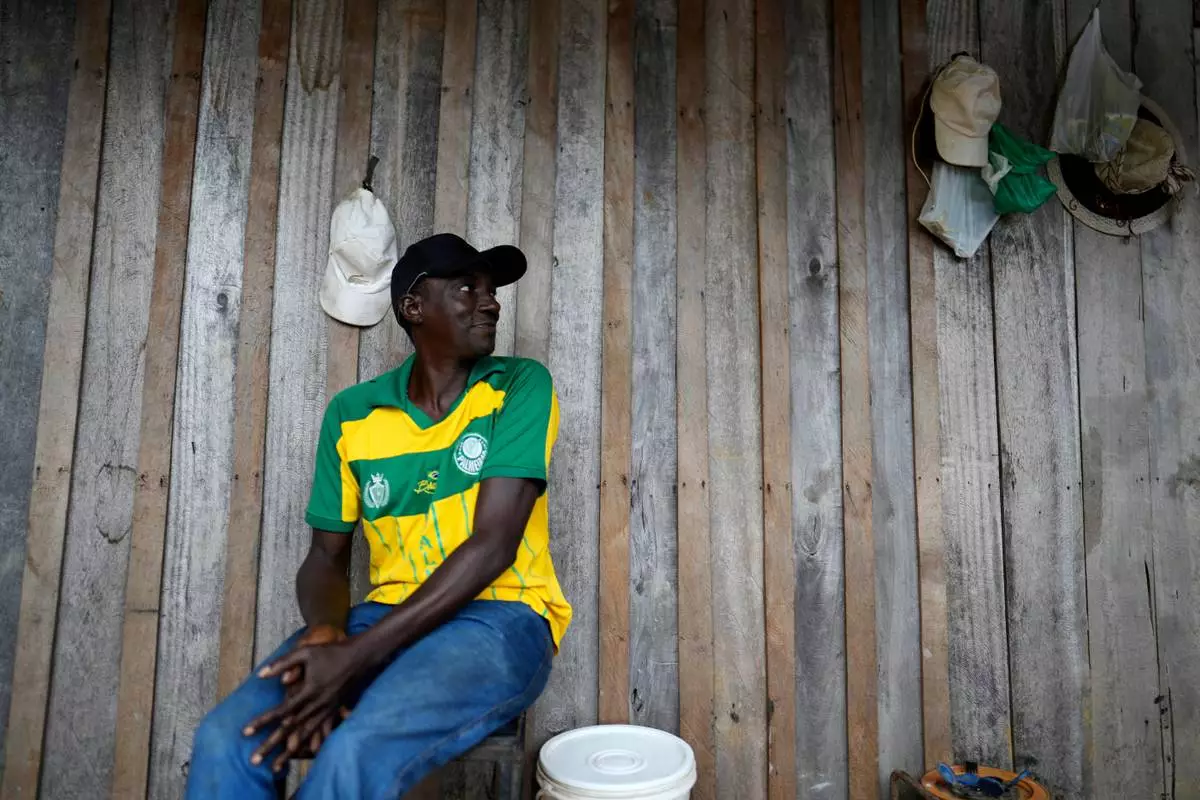
Reginaldo Nunes Fonseca sits on a balcony of the house he occupies in an area known as Nova Conquista or "new conquest" in Oiapoque, Amapa state, Brazil, Wednesday, March 11, 2026. (AP Photo/Eraldo Peres)
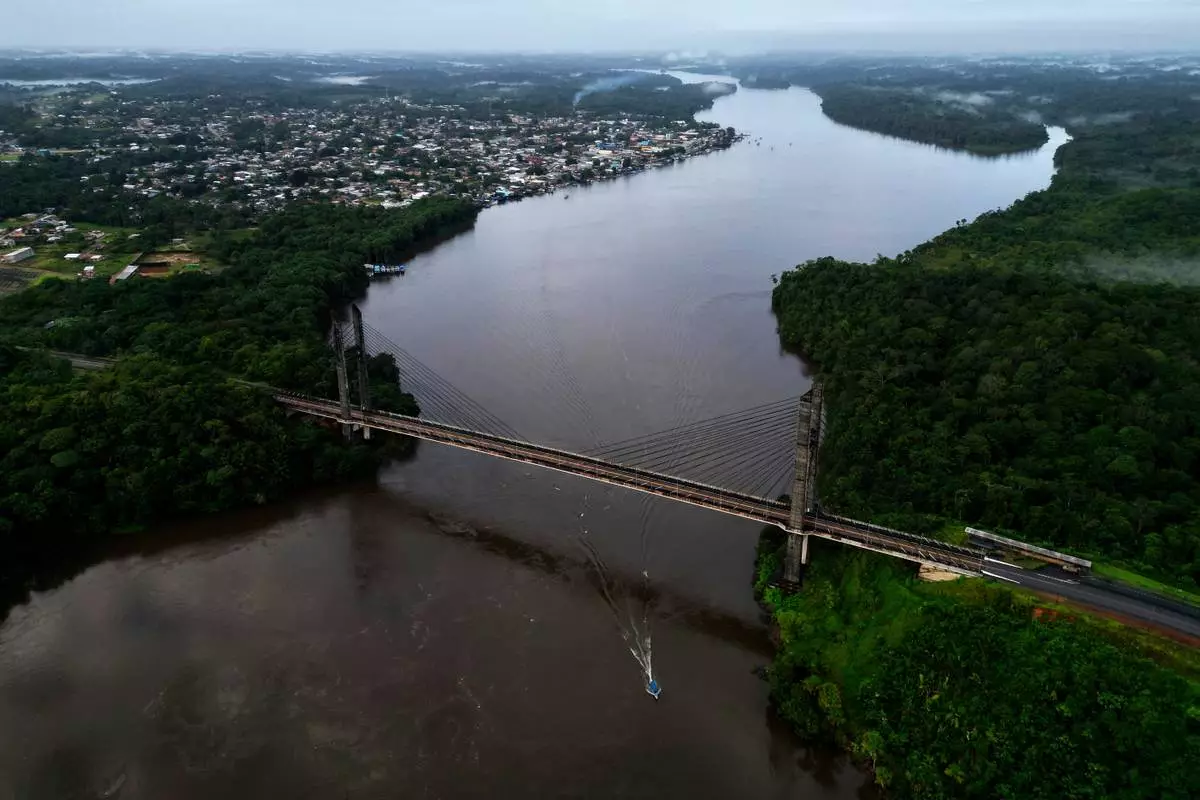
View of the Franco-Brazilian Binational Bridge, over the Oiapoque River, connecting the city of Oiapoque, in the background, with French Guiana, during sunrise in the city of Oiapoque, Amapa state, Brazil, Tuesday, March 10, 2026. (AP Photo/Eraldo Peres)
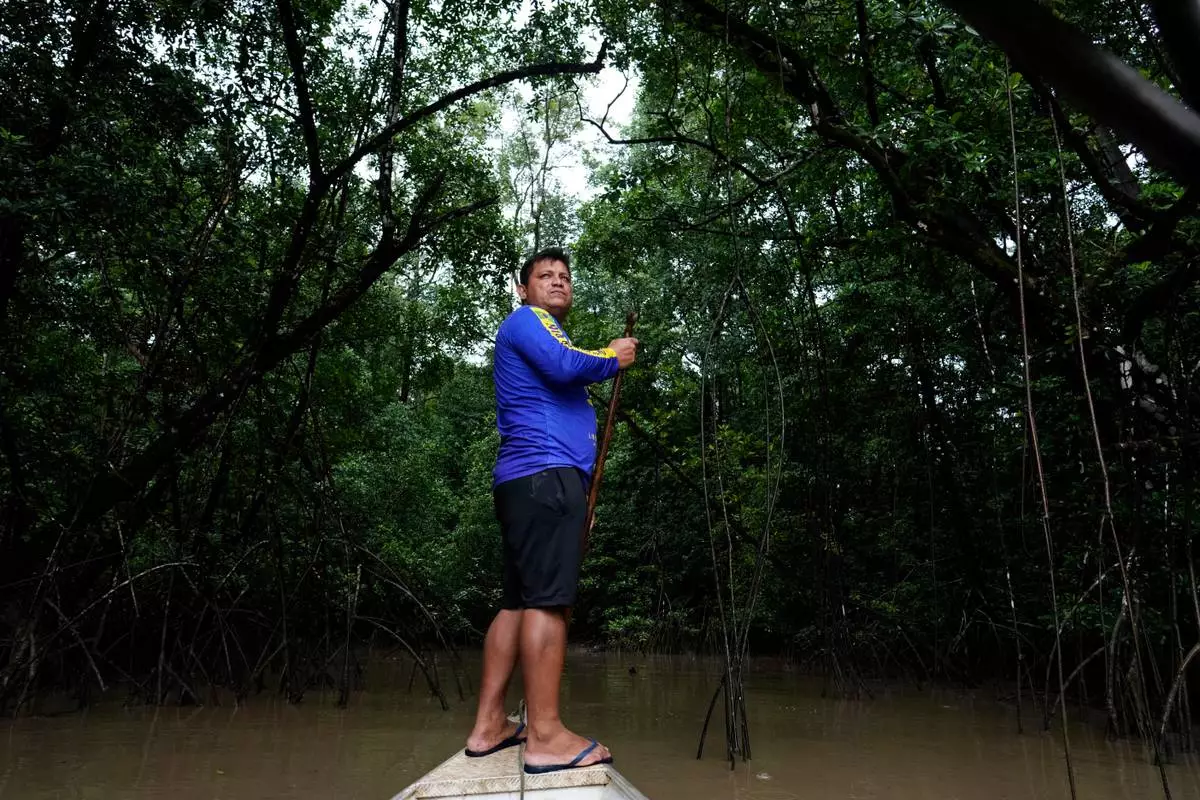
Edervan Forte dos Santos, from the Galibi Kali'na community, steers his boat toward mangroves in the biodiversity conservation area of Cabo Orange, in Oiapoque, Amapa state, Brazil, Thursday, March 12, 2026. (AP Photo/Eraldo Peres)
Iran, the United States and Israel agreed to a two-week ceasefire on Tuesday, an 11th-hour deal that allowed U.S. President Donald Trump to pull back from his threats to unleash a bombing campaign that would destroy Iranian civilization. But attacks in Iran and Gulf Arab countries were reported on Wednesday, throwing the deal into question.
Global leaders on Wednesday welcomed the ceasefire announcement and subsequent reopening of the strait. Israeli Prime Minister Benjamin Netanyahu’s office said it supports Trump’s decision to suspend strikes against Iran for two weeks, but that it doesn’t include the war with Hezbollah in Lebanon.
The plan also includes allowing both Iran and Oman to charge fees on ships transiting through the Strait of Hormuz, a regional official said Wednesday on condition of anonymity to discuss internal deliberations. The strait is in the territorial waters of both Oman and Iran. The world had considered the passage an international waterway and never paid tolls before.
Here is the latest:
Stock markets are surging worldwide, and oil prices are plunging back toward $90 per barrel after President Donald Trump pulled back from his threat to force a “whole civilization” to die in the war with Iran.
The S&P 500 leaped 2.7% after Trump, Iran and Israel agreed to a two-week ceasefire, just hours before a deadline the U.S. president had set for Iran to open the Strait of Hormuz and allow oil to flow freely again from the Persian Gulf to customers worldwide.
The Dow Jones Industrial Average jumped 1,350 points, and the Nasdaq composite surged 3.4% following even bigger gains in European and Asian markets.
Morocco on Wednesday welcomed the ceasefire and backed upcoming negotiations in Pakistan, the foreign ministry said, adding it hopes the talks will serve “the higher interest of the brotherly Arab countries in the Gulf.”
The North African country, one of Washington’s closest allies in the region, also stressed the importance of keeping the Strait of Hormuz open. Its closure has pushed fuel prices in the country up by more than 30%.
The Pentagon chief did not offer any details about whether Iran had agreed to Trump’s statement that the U.S. would work with them to “dig up” the buried material.
However, Hegseth said Iran will “give it to us voluntarily,” or the U.S. might do “something like” its strikes last summer with Israel hitting Iran’s nuclear sites.
“We reserve that opportunity,” Hegseth said.
The defense ministry said 28 drones were fired at the oil-rich country on Wednesday morning, in what it described as a “large-scale series of Iranian attacks.”
Col. Saud Al-Atwan, the ministry spokesman, said the attacks, which came after the ceasefire announcement, reflect “clear determination to persist in targeting the country’s security and vital capabilities.”
Gen. Dan Caine, the chairman of the Joint Chiefs of Staff, said more than 13,000 targets have been struck in operations against Iran, destroying 80% of Iran’s air defense systems and attacking 90% of its weapons factories.
Caine told reporters at a Pentagon briefing that more than 90% of Iran’s regular naval fleet has been sunk, “including all major surface combatants” with 150 ships now “at the bottom of the ocean.”
Caine added that the operation included the consumption of “more than 6 million meals, and by my estimate, more than 950,000 gallons of coffee, 2 million energy drinks and a lot of nicotine.”
“We own their skies,” Hegseth told reporters Wednesday, even though Iranian forces shot down two U.S. military jets on Friday.
Largely repeating his claims that Iran had been badly defeated, Hegseth said the U.S. and Israel had achieved a “capital ‘V’ military victory” and said Iran’s military no longer poses a significant threat to U.S. forces or the region.
Gen. Dan Caine, chairman of the Joint Chiefs of Staff, said U.S. strikes have significantly set back Iran’s military and defense industrial base, but also said the military would stand ready to resume strikes if the ceasefire fails.
The Pentagon “for now, for now, has done its part,” Defense Secretary Pete Hegseth said Wednesday during a news conference. “We stand ready in the background to ensure Iran upholds every reasonable term.”
Hegseth praised the “bravery and sheer guts” of the U.S. military and said the operation had hobbled Iran’s regime. He said nobody makes a better deal than Trump.
The Israeli military chief of staff said on Wednesday that Israel will continue to “utilize every operational opportunity” to strike Hezbollah after the military said it struck more than 100 targets within 10 minutes across Lebanon, the largest wave of strikes since March 1.
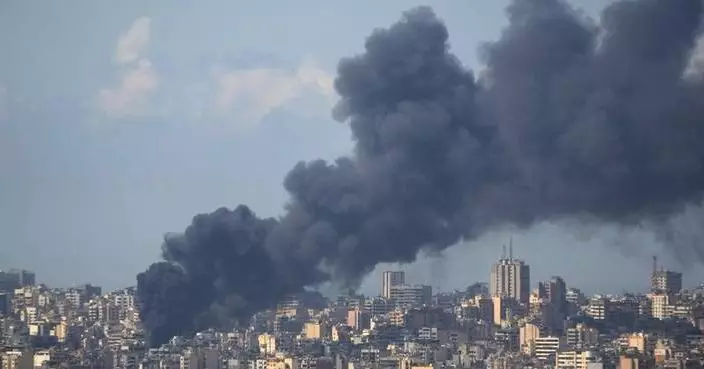
Lt Gen. Eyal Zamir said Israel will continue striking Hezbollah to protect Israel’s northern residents, who have come under heavy fire from Hezbollah. The Israeli strikes caused panic during Lebanon’s afternoon rush hour as plumes of black smoke rose over several neighborhoods across the capital.
Dan Caine, chairman of the Joint Chiefs of Staff, said in a news conference at the Pentagon Wednesday that the U.S. military had three objectives in Iran: to destroy Iran’s ballistic missile and drone capabilities, to destroy its navy, and to destroy its defense industrial base.
The president and members of his administration have offered varying objectives throughout the 5 1/2-week war and have shifted them throughout, despite claiming they have not changed.
Trump has at times named five objectives, but has changed them.
Other objectives have included eliminating Iran’s air force, blocking Iran’s path to a nuclear weapon, cutting off support for its proxy groups and protecting allies in the Middle East.
A series of Israeli airstrikes hit at least five different neighborhoods in the heart and along the coast of Beirut on Wednesday, Lebanon’s National News Agency reported.
The simultaneous strikes during rush hour caused panic around the capital.
Two French former detainees in Iran who were allowed to return to France on Wednesday described years “under constant threat” in Tehran’s Evin prison, where many dissidents are held.
Cécile Kohler, 41, and Jacques Paris, 72, had been staying in French diplomatic premises in Tehran since their release in November after more than three years in detention on spying charges, which Paris called unfounded.
The two were received by President Emmanuel Macron in Paris hours after arriving. French authorities said the pair left Iran by road into neighboring Azerbaijan on Tuesday before flying to Paris.
Kohler thanked those who helped secure their release “from the hell of Evin, where we experienced daily horror,” adding: “We realize how narrowly we escaped, because it could have been much worse.”
“We were under constant threat,” Paris said. “We had no right to read or write. Whenever we left our cell, we were blindfolded.”
“We are not broken,” he added. “We will bear witness … and we will enjoy life again.”
The White House says “nothing is final” over plans for in-person talks over Iran.
In response to questions about whether U.S. Vice President JD Vance would be participating in U.S.-Iran talks expected to be held later this week in Pakistan, White House press secretary Karoline Leavitt said in a statement, “There are discussions about in person talks, but nothing is final until announced by the President or the White House.”
The vice president was in Hungary, where he was supporting. Prime Minister Viktor Orbán ahead of upcoming elections.
“As we have seen in Gaza and Lebanon, ceasefires have often been violated unilaterally. Hopefully, this time they will remain committed, the ceasefire will hold, and our people will stay steadfast until we achieve final results,” said Ezzat Papar, a Tehran resident.
“When dialogue and negotiation are possible, we should pursue our demands that way,” said Alireza Khoddami, a 60-year-old taxi driver in Tehran.
“How long have we been under sanctions, and what progress have we truly made? In my view, it is the people and the country who continue to suffer. This is a valuable opportunity. We are in a strong position and have the upper hand,” Khoddami said.
The World Health Organization said it welcomed the two-week ceasefire between the U.S. and Iran, but warned an additional ceasefire is needed between Israel and Hezbollah as more than 1 in 5 Lebanese have been displaced.
“Further violence and displacement will continue to devastate the Lebanese health system and disproportionately impact the most vulnerable—including people with chronic conditions, the elderly and children,” said Dr. Hanan Balkhy, the WHO regional director.
Balkhy spoke at a news conference describing the organization’s emergency response across the Middle East.
He added that regional hospitals and health facilities are operating under intense strain, especially in Iran, where more than 33,000 are injured and more than 2,300 have been killed.
Financial markets see the two-week ceasefire reached between the U.S. and Iran as reducing the threats to global energy supplies, with the global benchmark for crude oil falling roughly 14% to $94 a barrel in Wednesday morning trading.
But oil prices are still higher than before the start of the Iran war, a sign that uncertainty persists about the conflict and the flow of tankers through the Strait of Hormuz, which now appears to be under Iran’s control.
Brent crude oil futures were trading at $72.29 a barrel before the war began.
Israel’s military said it struck more than 100 Hezbollah targets within a space of 10 minutes in Beirut, southern Lebanon and the Beqaa region, calling it the largest coordinated strike in the current war.
The military noted the targets included missile launchers, command centers and intelligence infrastructure.
Many were located within civilian areas and Israel accused Hezbollah of using civilians as human shields.
“The State of Lebanon and its civilians must refuse Hezbollah’s entrenchment in civilian areas and its weapons build-up capabilities,” Israel’s military said.
A series of Israeli strikes hit several areas in central Beirut Wednesday without warning, the state-run National News Agency reported.
Loud booms could be heard throughout the city and smoke was rising from several points.
It was not immediately clear what was targeted, but several of the strikes were in busy commercial locations.
Since the outbreak of the latest Israel-Hezbollah war on March 2, Israel has regularly struck southern and eastern Lebanon and Beirut’s southern suburbs but rarely in the center of Beirut.
There was no immediate report on the number of casualties.
The strikes came hours after a ceasefire was announced in the U.S.-Israeli war with Iran. Israel has said the agreement does not extend to Lebanon, although mediator Pakistan said it does.
U.S. President Donald Trump said Wednesday the U.S. will work with Iran to “dig up and remove” its enriched uranium that was buried under joint U.S-Israeli strikes last summer.
Trump said on social media, “There will be no enrichment of Uranium,” and that none of the material had been touched since the June attacks.
He previously said the U.S. would retrieve the deeply buried material, which is expected to be an intensive undertaking, if it struck an agreement with Iran.
“We are, and will be, talking Tariff and Sanctions relief with Iran,” Trump said.
Although Trump had said on Tuesday the U.S. found a 10-point ceasefire proposal from Iran “workable,” the president on Wednesday suggested many of the points in his 15-point plan, which Iran had rejected, had been agreed to.
Iran has neither said that nor confirmed it would work with the U.S. to retrieve the buried uranium.
The government in Europe’s biggest economy is calling for “realistic expectations” after the ceasefire announcement.
German officials say their country doesn’t have a supply problem but point to the effect of the closure of the Strait of Hormuz on the global market.
Government spokesperson Sebastian Hille noted “significant setbacks” are possible at any time in the peace process, damaged production facilities need to be repaired, reopening the strait will take time, and ships will take weeks to make their journeys.
He said it will take time for significant price reductions to show up.
During a call Wednesday with Iranian Foreign Minister Abbas Araghchi, Turkish Foreign Minister Hakan Fidan expressed Turkey’s satisfaction with the planned two-week pause in fighting.
He also stated Turkey, which has been involved in efforts to end the war, would keep working toward a permanent peace.
Turkish President Recep Tayyip Erdogan said the ceasefire should be implemented fully and shielded from possible “provocations and sabotage.”
“It is our genuine wish that our geography, which has suffered greatly from war, conflict, tension, and oppression, will soon achieve peace, tranquility, and stability,” Erdogan said in a message posted on X.
Speaking about the ceasefire agreement between the U.S. and Iran, Kremlin spokesman Dmitry Peskov said Russia “from the very beginning spoke about the need for swiftly shifting this escalation onto a peaceful track, onto a track of political and diplomatic contacts, negotiations.”
Peskov said that “given yesterday’s rather harsh statements from different sides, which elicited a lot of emotions around the world,” Moscow welcomed the news.
“We welcome the decision not to follow the path of military escalation further, not to carry out strikes on civilian targets,” Peskov said. “We consider this to be very important.”
The Kremlin spokesman expressed hope that “each side will be able to defend its interests not through armed intervention, but at the negotiating table.”
At the end of his weekly general audience Wednesday, Pope Leo XIV called the ceasefire a “sign of true hope” and repeated a call for the faithful to join him in a peace prayer vigil Saturday in St. Peter’s Basilica. The previous day, the pope condemned U.S. President Donald Trump’s threat to destroy Iranian civilization as “truly unacceptable” and said that any attacks on civilian infrastructure would violate international law. Meanwhile, Italy’s foreign minister welcomed the ceasefire as a positive sign for both peace in the Mideast and the Italian economy. Foreign Minister Antonio Tajani wrote on social media: “Iran cannot be allowed to possess nuclear weapons, and it is right that the U.S. does not bomb the civilian population.”
A Hezbollah official says the militant group backed by Iran is giving a chance for mediators to secure a ceasefire in Lebanon.
In the meantime, the official said, “We have not announced our adherence to the ceasefire since the Israelis are not adhering to it.”
He spoke on condition of anonymity because he was not authorized to comment publicly.
Israel has said the agreement reached to halt the U.S.-Israeli war with Iran does not extend to its war against Hezbollah in Lebanon, although Pakistan, which mediated the agreement, said the two-week cessation of hostilities included Lebanon.
The Hezbollah official said the group will not accept a return to the pre-March 2 status quo, when Israel carried out near-daily strikes in Lebanon despite a ceasefire being nominally in place since the last full-blown Israel-Hezbollah war ended in November 2024.
“We will not accept for the Israelis to continue behaving as they did before this war with regards to attacks,” he said. “We do not want this phase to continue.”
Authorities in the United Arab Emirates said police have detained 375 people across the capital, Abu Dhabi, over the course of the war.
Abu Dhabi police said the people are from various countries and were detained for filming and “disseminating false information” on social media.
It said the cases have been referred to prosecutors for allegations of violating the UAE’s laws aimed at “protecting the society.”
Gulf countries have cracked down on people who have filmed impacted sites throughout the war, with hundreds detained, including migrant workers.
Lebanon President Joseph Aoun said he hopes the two-week agreement is a “first step” toward final and comprehensive agreements for regional crises.
Israel and the Hezbollah militant group are at war in Lebanon and Israel denies they are part of the agreement, while mediators Pakistan and Egypt, as well as France, say Lebanon is included.
“The President affirmed the Lebanese state’s ongoing efforts to ensure regional peace encompasses Lebanon in a sustainable manner, based on the principles agreed upon by the Lebanese people,” Auon’s statement said.
He called on Israeli forces to withdraw from Lebanese territory and for Hezbollah and other non-state groups to disarm.
“The complete sovereignty of the state over all its territory, its liberation from any occupying presence, and the exclusive right to declare war and peace and to use legitimate force, solely in the hands of its constitutional institutions.”
Separately, Kuwait said it hopes the ceasefire will lead to a “comprehensive and permanent settlement.”
The foreign ministry in Kuwait, which is one of the nations that has been most impacted by Iranian attacks, called for adhering to the ceasefire to pave the way for dialogue between the warring parties, according to the state-run Kuwait News Agency.
Pakistan Prime Minister Shehbaz Sharif said Wednesday that Iran has confirmed it will attend talks with the United States on Friday in Islamabad.
It was not immediately clear who would represent Tehran at the negotiations.
Sharif’s office said he spoke for more than 45 minutes with Iranian President Masoud Pezeshkian, thanking Iran’s leadership for agreeing to a ceasefire and accepting Pakistan’s offer to host the talks.
Pezeshkian thanked Pakistan for its efforts and conveyed his best wishes to the country’s people, the office said.
Saudi Arabia welcomed the ceasefire deal between the U.S. and Iran and called for the unrestricted opening of the Strait of Hormuz.
The Saudi Foreign Ministry said in a statement that Riyadh supports efforts to achieve a permanent deal that addresses “all issues that have resulted in instability and insecurity over the past decades.”
The statement called for keeping the Strait of Hormuz open according to U.N. agreements governing international waterways “without any restrictions.”
An oil refinery on Iran’s Lavan Island came under attack Wednesday, hours after a ceasefire in the war was announced, Iranian state television reported.
The report said the attack came at 10 a.m.
It added that firefighters were working to contain the blaze but no one had been hurt.
It did not say who launched the attack.
U.S. Vice President JD Vance called the ceasefire agreement “a fragile truce” but offered no details
The vice president, who was speaking at an event in Hungary, said the deal that the U.S. struck with Iran was being misrepresented within Iran, though he didn’t offer details beyond saying the agreement included a ceasefire, plans to negotiate and the opening of the Strait of Hormuz.
“You have people who are lying about even the fragile truce that we’ve already struck,” Vance said.
Vance did not address speculation about whether he might travel to Pakistan to personally participate in talks with Iran. Vance’s office has not commented.
Vance said Trump told U.S. representatives who will be negotiating with Iran to do so in “good faith” but warned that Trump is “impatient to make progress.”
The U.S. is prepared to use “extraordinary economic leverage,” but Trump has instructed us “not to use those tools.”
“He’s told us to come to the negotiating table. But if the Iranians don’t do the exact same thing, they’re going to find out that the president of the United States is not one to mess around,” Vance said.
Vance said of Iran: “I think if they negotiate in good faith, we will be able to find a deal. That’s a big if. And ultimately, it’s up to the Iranians how they negotiate. I hope they make the right decision.”
Kuwait’s military said it has responded to an “extensive wave” of drone attacks targeting oil and power facilities despite the ceasefire announcement.
The military said it engaged 31 drones that targeted the oil-rich country since 8 a.m. Wednesday.
The attacks caused significant damage to oil and power facilities and water desalination plants.
The United Arab Emirates said Wednesday afternoon its air defenses were firing at an incoming Iranian missile barrage.
The UAE did not elaborate on where the attack was happening.
The announcement came hours after Iran, the U.S. and Israel reached a two-week ceasefire in the war.
Hezbollah legislator Ibrahim Al-Moussawi has warned of a response from Iran and its allies if Israel “does not adhere to a ceasefire.”
His comment to local television channel Al-Jadeed is the first from the militant group in Lebanon after the U.S. and Iran reached a ceasefire agreement mediated by Pakistan.
Iran-backed Hezbollah joined the war after firing rockets toward Israel on March 2 in solidarity with Tehran. Hezbollah has not issued an official statement since the ceasefire, but also has not yet claimed any strikes on Israel.
Israel has denied Lebanon’s inclusion in the agreement and said it will continue strikes against the small country. Pakistan, France and Egypt, which helped mediate the deal, all have confirmed Lebanon’s inclusion.
“The agreement includes Lebanon, according to its terms, and Iran insisted on this inclusion,” Al-Moussawi said.
Iran’s allies elsewhere, notably the Iraqi umbrella group the Islamic Resistance, announced it would halt its attacks.
French President Emmanuel Macron said the ceasefire agreement between the U.S., Israel and Iran “fully includes Lebanon,” which is in opposition to the stance taken by Israel as it continues an offensive there against the militant group Hezbollah.
Macron said the inclusion of Lebanon in the deal is “a good and even essential thing.”
“What we are witnessing today, both from what we have seen with the strikes and the occupation of southern Lebanon, cannot be a long-term solution, we know that,” Macron said.
Macron unsuccessfully backed Beirut’s earlier efforts to de-escalate and push back against an Israeli ground invasion that has displaced more than 1 million people.
Ukrainian President Volodymyr Zelenskyy used the ceasefire in the Middle East to again call for a halt to fighting in Ukraine.
“A ceasefire is the right decision that leads to ending the war,” Zelenskyy said in a post on X, adding that an agreement which “paves the way for diplomatic efforts” would save lives and stop the destruction of cities.
“Security must be guaranteed, and the interests of every nation must be taken into account when defining post-war arrangements,” Zelenskyy said, calling for freedom of navigation in the Strait of Hormuz.
Ukraine has “always called for a ceasefire” in the war with Russia and Kyiv would respond in kind if Moscow stops its strikes, he said.
Ceasefire efforts in Ukraine have yielded no results, with both sides continuing long-range strikes.
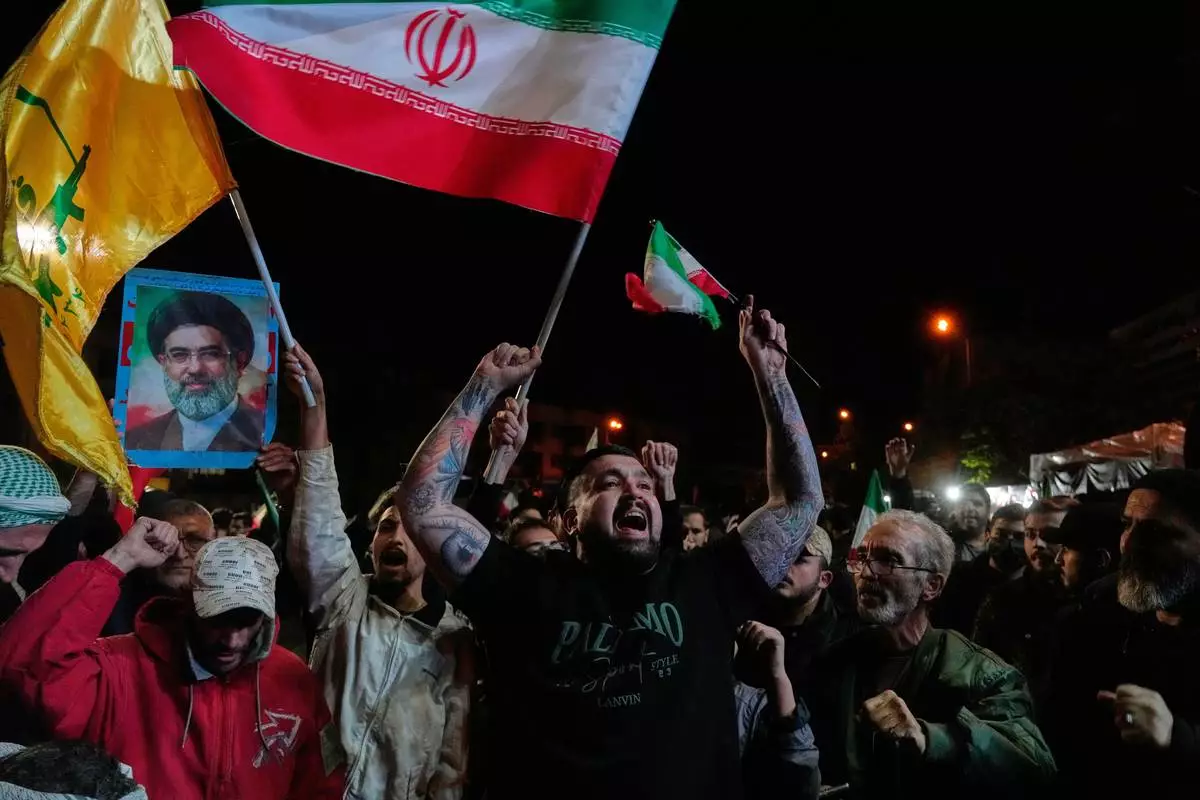
Pro-government demonstrators chant slogans as they hold Iranian flags and a poster of the Supreme Leader Ayatollah Mojtaba Khamenei in a gathering after announcement of a two-week ceasefire in the war with the United States and Israel, at the Enqelab-e-Eslami, or Islamic Revolution, Square, in Tehran, Iran, Wednesday, April 8, 2026. (AP Photo/Vahid Salemi)

Mourners carry the flag-draped bodies of three members of the Gershovich family, killed when an Iranian missile struck their building, during their funeral in Haifa, Israel, Tuesday, April 7, 2026. (AP Photo/Ariel Schalit)

Men carry the coffins with the bodies of Pierre Mouawad, an official with the anti-Hezbollah Lebanese Forces party, and his wife during their funeral in Yahshush, Lebanon, Tuesday, April 7, 2026. (AP Photo/Emilio Morenatti)

Iranian pro-government demonstrators burn the U.S. and Israeli flags during a gathering after announcement of a two-week ceasefire in the war with the United States and Israel, at the Enqelab-e-Eslami, or Islamic Revolution, Square, in Tehran, Iran, Wednesday, April 8, 2026. (AP Photo/Vahid Salemi)