Skip to Content Facebook Feature Image

Global Cinema Federation Releases Data from its Most Recent Moviegoer Survey

News

Global Cinema Federation Releases Data from its Most Recent Moviegoer Survey
News

News

Global Cinema Federation Releases Data from its Most Recent Moviegoer Survey

2026-04-08 22:17 Last Updated At:22:30

LOS ANGELES--(BUSINESS WIRE)--Apr 8, 2026--

The Global Cinema Federation, whose members include the world’s top exhibitors and trade bodies, representing roughly 70% of global box office, today released results from its annual global moviegoer survey. The results offer an in‑depth look at theatrical moviegoing consumption and engagement worldwide amid ongoing shifts in the media and entertainment landscape. Overall findings illustrate that customers derive significant value from global cinema experiences and are highly anticipating 2026’s compelling slate of upcoming releases. Results also reflect positive trends in younger moviegoer behavior as well as global industry pressure associated with shortened theatrical windows.

More Images
Figure 7

Figure 7

Figure 6

Figure 6

Figure 5

Figure 5

Figure 4

Figure 4

Figure 3

Figure 3

Figure 2

Figure 2

Figure 1

Figure 1

This press release features multimedia. View the full release here: https://www.businesswire.com/news/home/20260407238576/en/

Click here for the fully formatted report

Consumers continue to find significant value in big-screen cinema experiences with a high propensity to recommend them to others

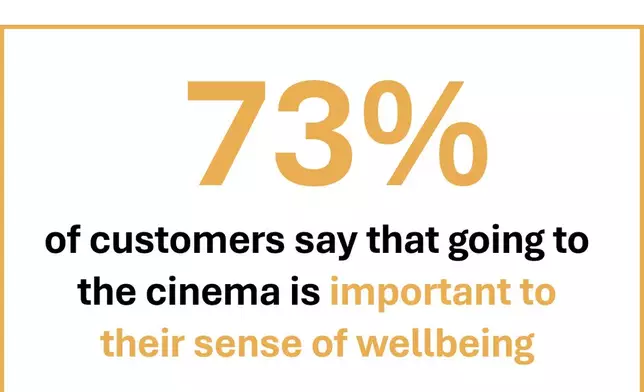
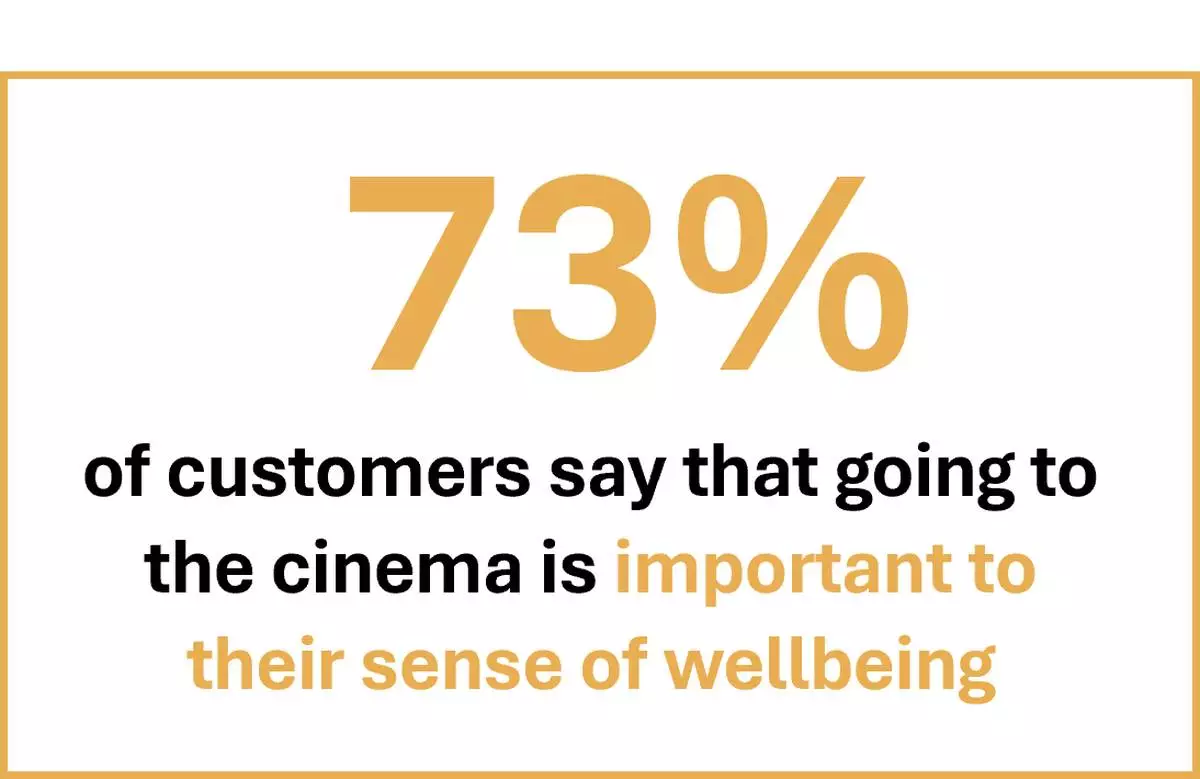
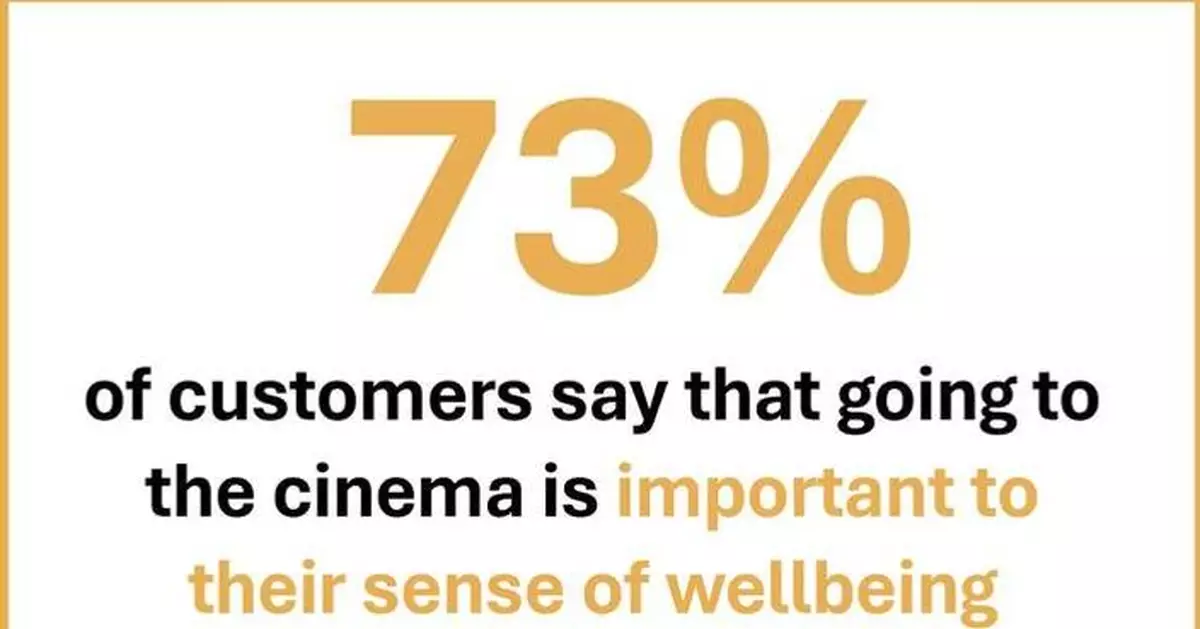
Global movie theaters deliver captivating, shared entertainment that encourages strong word-of-mouth with 52% of customers stating they are highly likely to recommend cinema experiences to others. The emotional and social value of these experiences is also evident in the data, as nearly three-quarters of audiences (73%) say that going to the movies in theaters is important to their sense of wellbeing, with one-third describing it as very important [ Figure 1 ].

Furthermore, customers express an overwhelming preference for viewing movies in cinemas with only 7% of respondents preferring to watch films at home. These findings reinforce what the exhibition industry has long understood about the enduring appeal of moviegoing: global cinemas are meaningful cultural and communal epicenters that offer consumers distinct value through opportunities to step away from daily pressures, become deeply immersed in compelling stories and connect with others.

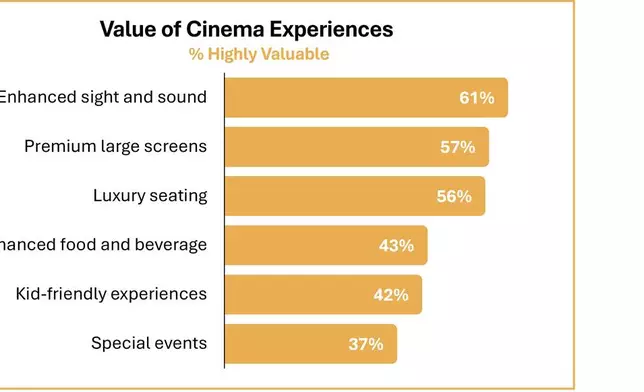
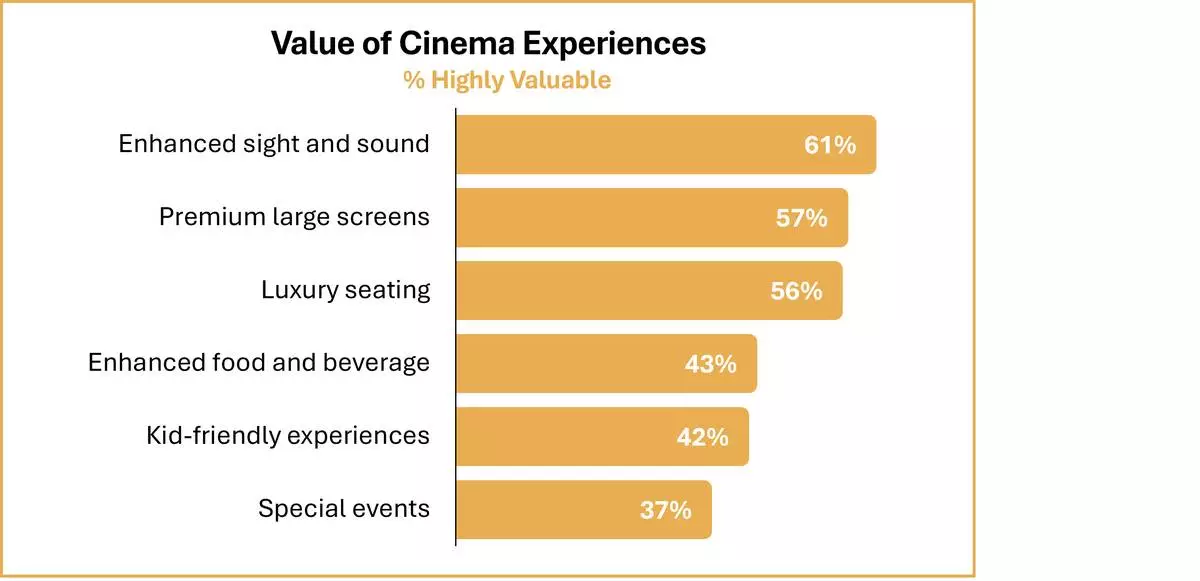
Even amid heightened competition for consumer discretionary time, the cinema continues to stand out as a priority entertainment destination. The survey found that over the past six months, respondents’ net change of watching movies in cinemas is 1.5 to 2 times more favorable than their shifts in other out-of-home leisure activities, including dining out, vacations, concerts and visiting other entertainment venues. Of note, customers express a strong affinity for experiences that differentiate cinemas, including premium amenities such as enhanced sight and sound technology, large screen formats and luxury seating, to name a few [ Figure 2 ].

Excitement for upcoming 2026 releases is high, supported by rising anticipation worldwide, and customers want more movies in cinemas

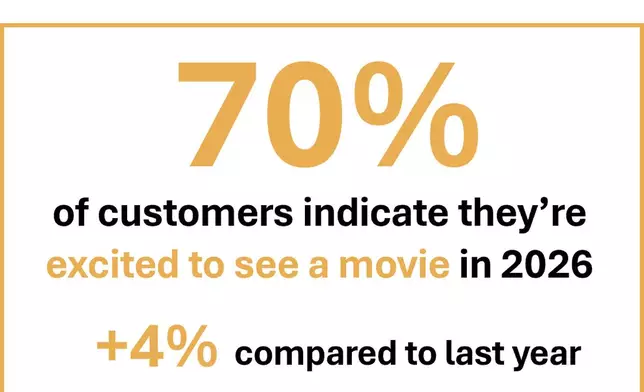
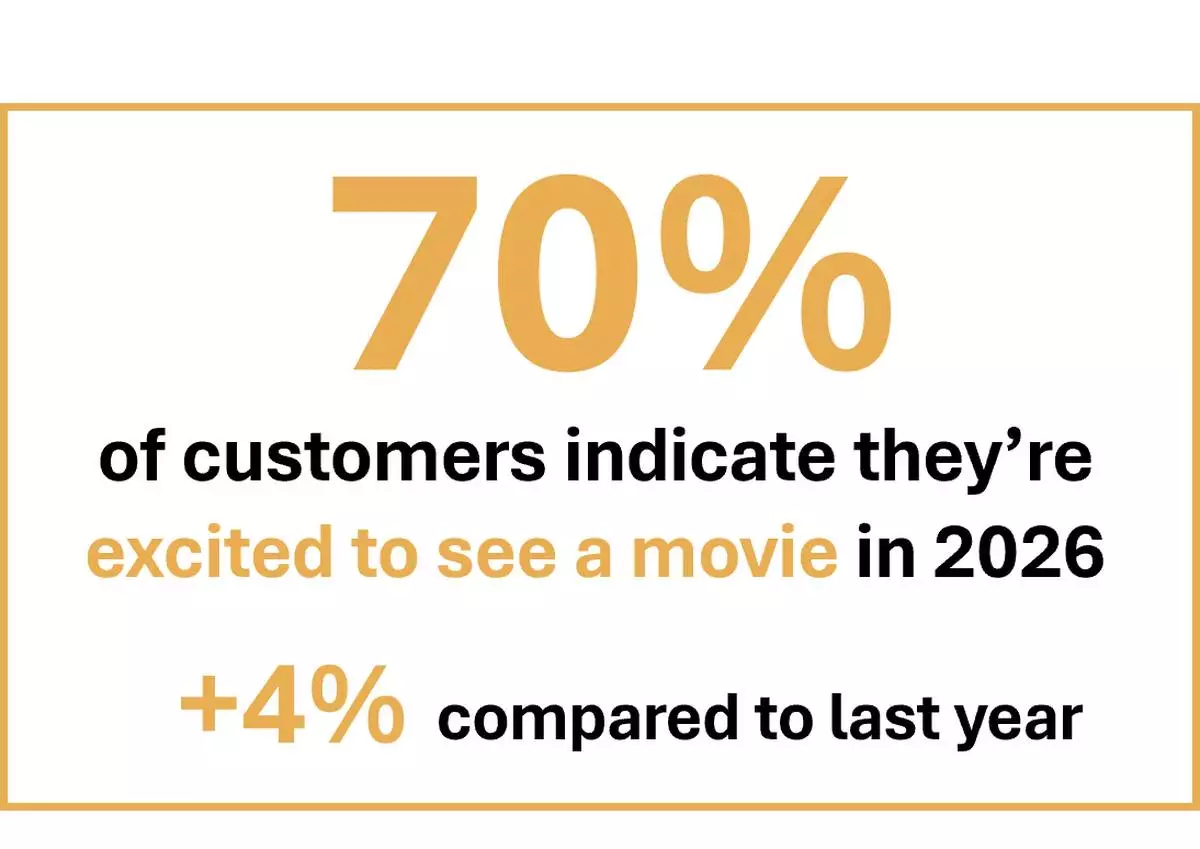
A compelling release calendar in 2026 is garnering considerable interest with 70% of customers indicating they are excited to see a film in cinemas this year [ Figure 3 ]. That response rate represents a four-point increase compared to last year’s survey and reflects a growing enthusiasm for the breadth, scale and overall appeal of 2026’s theatrical slate.

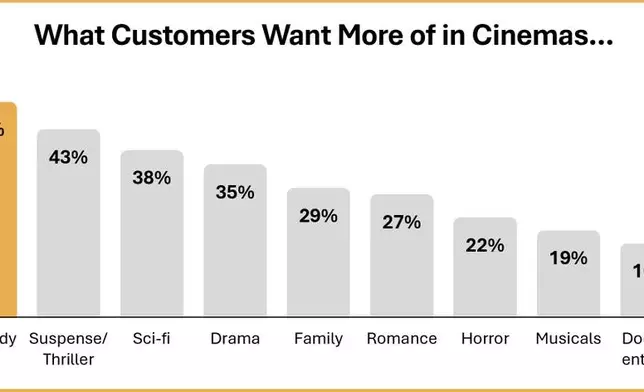
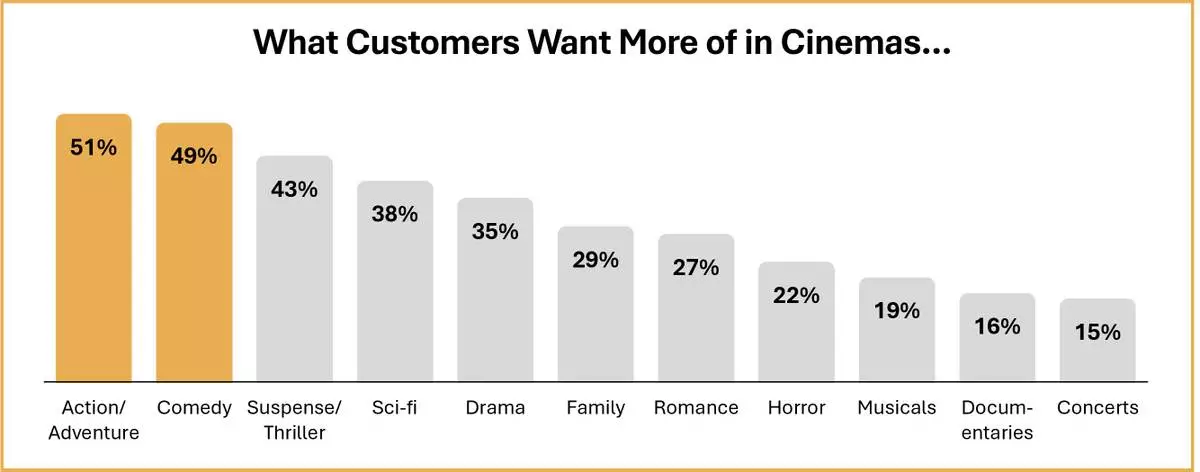
Furthermore, customers continue to express an increased desire for more films in theaters. Half of all respondents would like to see more action/adventure and comedy movies on the big screen, which are genres that have historically driven high levels of theatrical engagement with broad global appeal [ Figure 4 ]. Additionally, male audiences crave more science fiction content and female moviegoers are seeking more romance titles. Altogether, these insights reinforce the importance of a sufficiently robust and well-balanced film slate that serves a wide range of audience segments.

Younger audiences continue to show outsized enthusiasm for theatrical moviegoing, with positive sustained growth trends

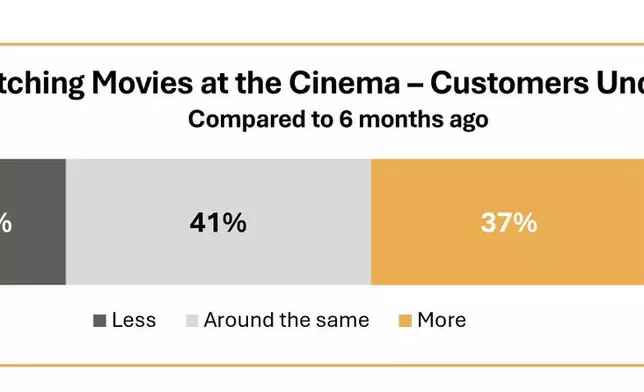
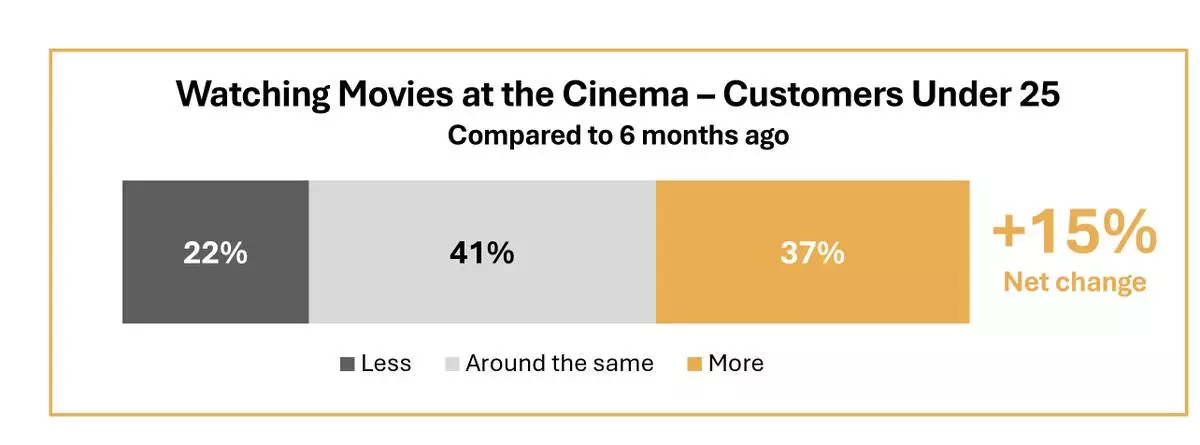
Even with unprecedented access to on-demand digital viewing options at home, younger audiences are increasing their theatrical moviegoing consumption. In fact, 78% of customers under 25 years of age indicate they are watching more or the same number of movies at the cinema compared to 6 months ago, with a net overall increase of 15% [ Figure 5 ].

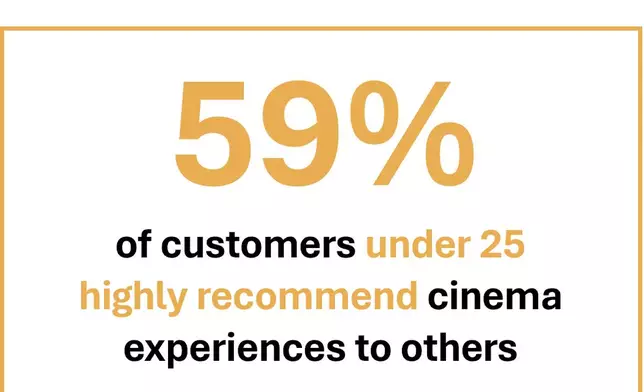
Moreover, in addition to highly valuing theatrical entertainment with an increasing level of consumption, younger audiences tend to be strong ambassadors of cinema experiences. A significant 59% of customers under the age of 25 indicate they would highly recommend a movie theater experience to a friend or colleague [ Figure 6 ]. Collectively, the survey findings underscore how going to the cinema continues to meaningfully resonate with the next generation of consumers.

Despite sustained enthusiasm for cinema experiences, results indicate reduced theatrical windows are contributing to less moviegoing

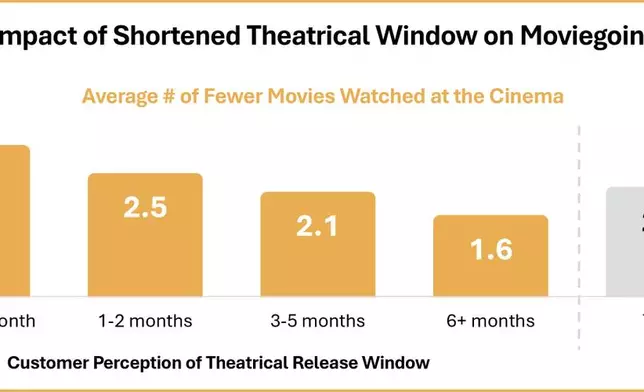
In total, survey respondents say they are viewing considerably more movies at home and watching an average of 2.2 fewer movies in cinemas per year because they are available at home sooner than before [ Figure 7 ]. Results also highlight a relationship between changes in cinema visitation and perception of window length with meaningful variation across markets. In countries where theatrical windows remain longer and have experienced less contraction, such as Japan, France and Switzerland, stated impact on fewer visits to the cinema due to windows is less pronounced.

These findings reflect a global cinema environment characterized by an increasingly diverse set of viewing options and growing variation in theatrical availability across regions. As global viewing choices continue to evolve, improving the clarity, consistency and duration of theatrical windows remains an important consideration in supporting consumer moviegoing frequency and the long-term health of the global cinema ecosystem.

About the Global Cinema Federation

Formed in 2017, the Global Cinema Federation (GCF) advocates on behalf of cinema exhibitors worldwide, addressing policy, business, and technology priorities that support a healthy global cinema industry. The GCF represents the world’s top 12 exhibition companies and two major international industry bodies, with support from 75 exhibition companies and 29 trade associations across the globe. Collectively, its members account for roughly 70% of the worldwide box office and work to ensure the long-term strength and accessibility of the theatrical experience. Learn more at www.globalcinemafederation.org
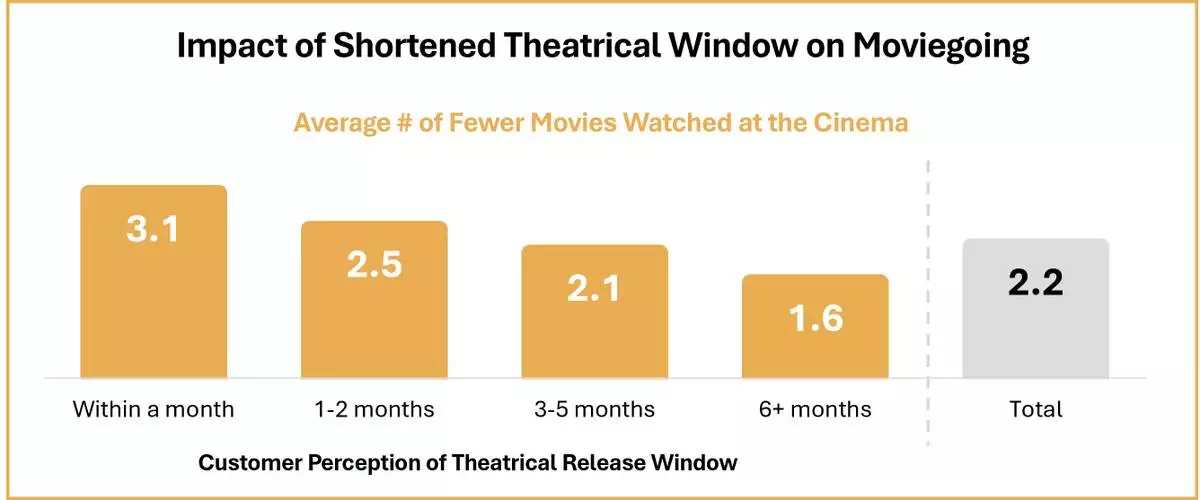
Figure 7
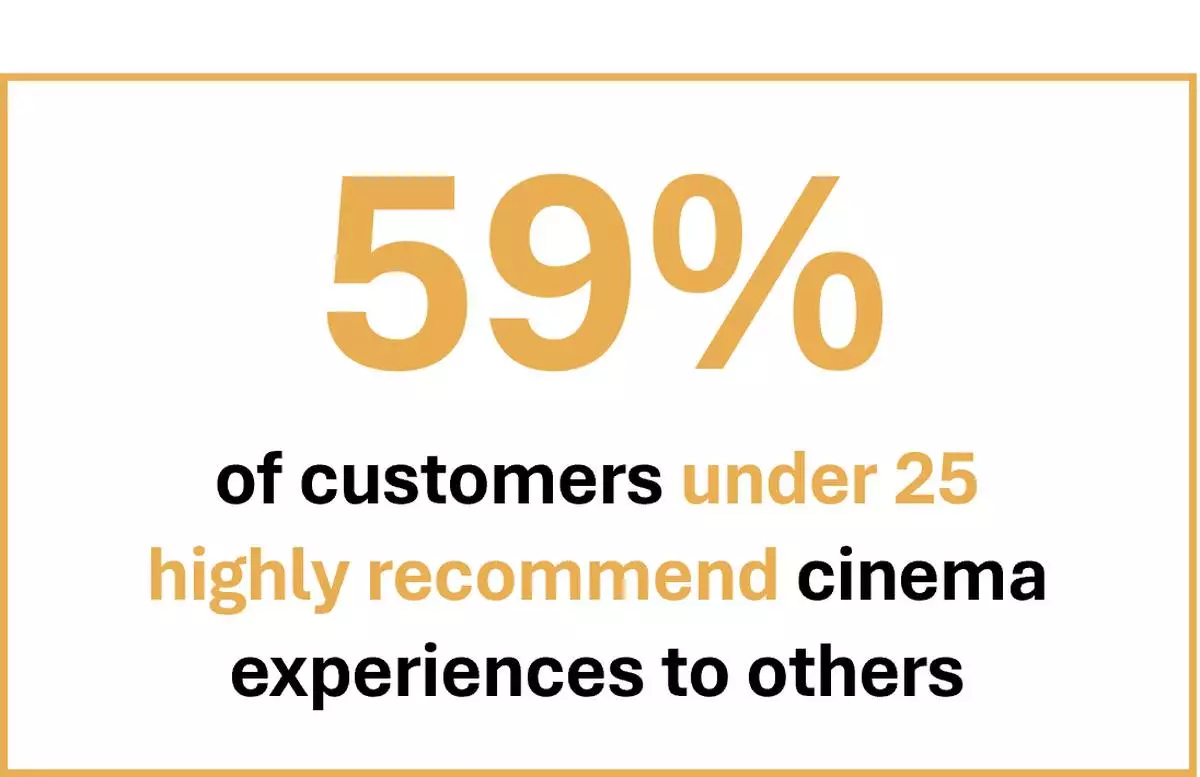
Figure 7

Figure 6

Figure 6

Figure 5

Figure 5

Figure 4

Figure 4

Figure 3

Figure 3

Figure 2

Figure 2

Figure 1

Figure 1

NEW YORK (AP) — Oil prices are plunging back toward $90 per barrel, and stock markets are surging worldwide after President Donald Trump pulled back from his threat to force a “whole civilization” to die in the war with Iran.

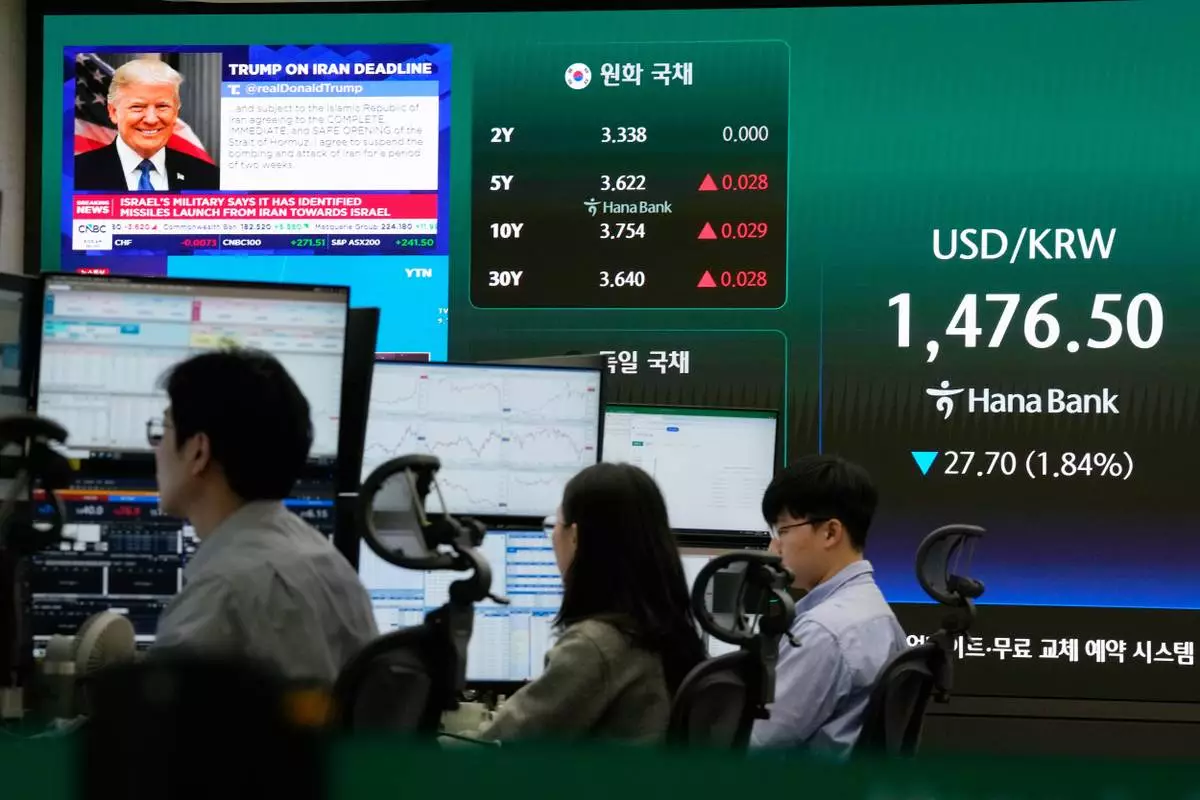
The S&P 500 leaped 2.4% after Trump announced a two-week ceasefire with Iran, less than 90 minutes before a deadline Trump had set for it to open the Strait of Hormuz and allow oil tankers to exit the Persian Gulf and reach customers. The Dow Jones Industrial Average was up 1,332 points, or 2.9%, as of 10 a.m. Eastern time, and the Nasdaq composite was 2.9% higher following even bigger gains in European and Asian stock markets.

To be sure, stock prices are still below where they were before the war. And oil prices are still higher because the threat remains that the war could continue and keep oil produced in the Persian Gulf area blocked in the Middle East.

The average price for a gallon of regular gasoline has already topped $4.16 in the United States, according to AAA. That’s up from less than $3 a couple days before the United States and Israel launched attacks to begin the war in late February. If oil prices stay high for a long time, it would push up the price of nearly everything that’s moved by truck, plane or boat.

“There is a reason to be optimistic, but it is still too early to tell, because, as you know, after all, it is Trump,” said Takashi Hiroki, chief strategist at MONEX.

So far in the war, Trump has set several deadlines for Iran to open the Strait of Hormuz and has threatened big repercussions if Iran doesn’t, only to delay them.

It’s similar to a year ago, when Trump threatened stiff tariffs on imports from other countries on “Liberation Day.” After a couple delays, his administration eventually negotiated lower tariffs with many countries, though they were still higher than from before his second term. That led some investors to allege Trump “always chickens out,” or “TACO,” if financial markets show enough pain.

“Is it just kicking of the can down the road, moving the goalposts, TACO Tuesday, or whatever metaphor we’d like, to only to have tempers flare and bombs drop again?” Brian Jacobsen, chief economic strategist at Annex Wealth Management, asked about the two-week ceasefire with Iran. “Who knows? But it’s good enough for now to elicit a positive response from the markets.”

The price for a barrel of benchmark U.S. crude oil plunged 17.7% to $92.92. Brent crude, the international standard, tumbled 16.1% to $91.68 per barrel. It had briefly topped $119 when worries about the war with Iran were at their highest.

The next moves for oil prices will likely depend on how many oil tankers can start exiting the Strait of Hormuz and how easy their passage is. Iran said the deal would allow it to formalize its new practice of charging ships passing through the Strait of Hormuz, a crucial transit lane for oil, but the terms were not clear.

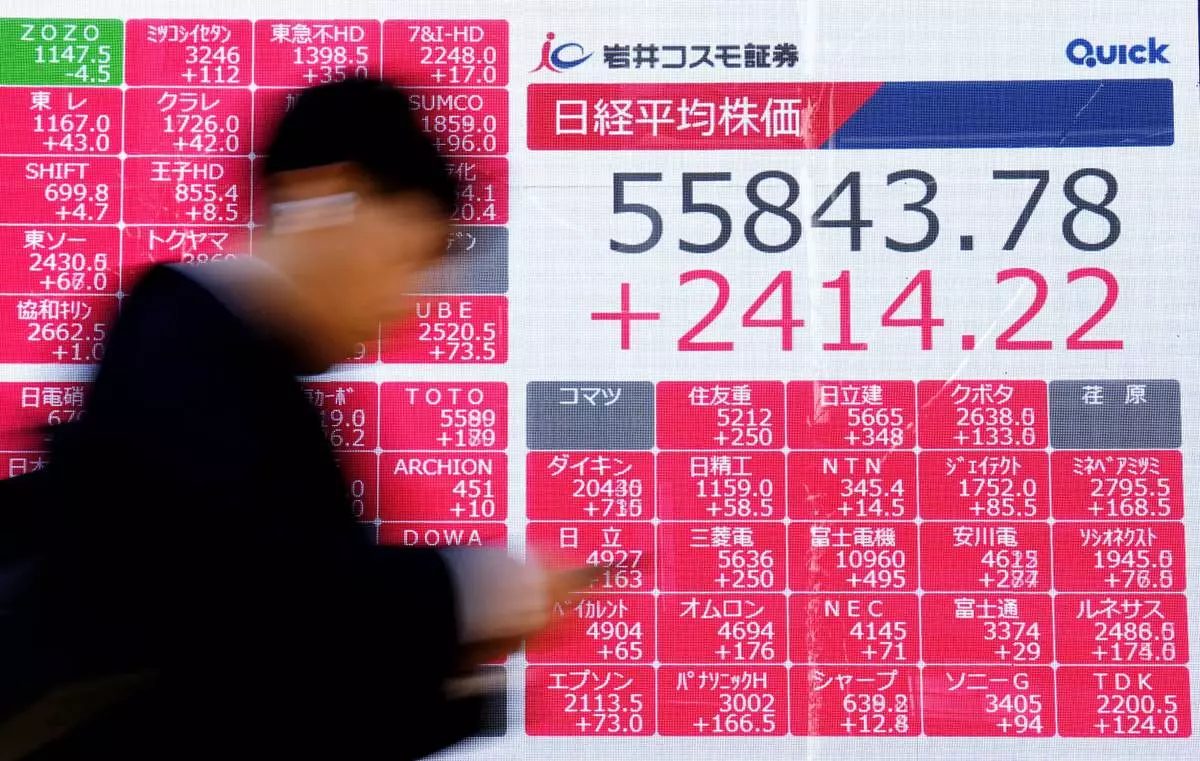
In Asia, where countries are more reliant on oil from the Middle East, South Korea’s Kospi stock index surged 6.9%. Japan’s Nikkei 225 leaped 5.4%, and Hong Kong’s Hang Seng jumped 3.1%.

In Europe, where economies are more dependent on natural gas from the Middle East than the United States is, stock indexes rose nearly as much as in Asia. Germany’s DAX returned 4.9%, and France’s CAC 40 rose 4.7%.

On Wall Street, companies with big fuel bills roared back to trim some of the sharp losses taken on worries about oil prices staying high.

United Airlines soared 12%, which could count as a decent year for the stock. It cut into its loss for the year that came into the day at 20.1%.

Delta Air Lines climbed 8.2% after it also reported a stronger profit for the latest quarter than analysts expected. CEO Ed Bastian said demand for flights remains strong, and it's making moves to make up for higher fuel bills. Delta on Tuesday became the latest airline to raise its fees for checking bags.

Cruise ship operator Carnival climbed 13.7%.

In the bond market, Treasury yields eased as hopes built that an easing of oil prices could let the Federal Reserve resume its cuts to interest rates later this year.

The yield on the 10-year Treasury fell to 4.26% from 4.33% late Tuesday. That’s a notable move for the bond market, and lower Treasury yields give a boost to prices for stocks, bonds and all kinds of other investments. The drop should also help ease some of the quick recent rise in rates for mortgages and other loans taken out by U.S. households and businesses, which have been slowing the economy.

When oil prices were screaming higher because of the war, some traders were betting on the possibility that the Fed would have to raise interest rates to keep a lid on inflation. Now, though, they're seeing a nearly 39% chance that the Fed could resume its cuts to rates in 2026, according to data from CME Group.

AP journalists Yuri Kageyama, Matt Ott, Mayuko Ono and Jon Gambrell contributed to this report.

Currency traders work at the foreign exchange dealing room of the Hana Bank headquarters in Seoul, South Korea, Wednesday, April 8, 2026. (AP Photo/Ahn Young-joon)

Currency traders work at the foreign exchange dealing room of the Hana Bank headquarters in Seoul, South Korea, Wednesday, April 8, 2026. (AP Photo/Ahn Young-joon)

U.S. President Donald Trump is seen on a screen as traders work at the foreign exchange dealing room of the Hana Bank headquarters in Seoul, South Korea, Wednesday, April 8, 2026. (AP Photo/Ahn Young-joon)

U.S. President Donald Trump is seen on a screen as traders work at the foreign exchange dealing room of the Hana Bank headquarters in Seoul, South Korea, Wednesday, April 8, 2026. (AP Photo/Ahn Young-joon)

A person walks by an electronic stock board showing Japan's Nikkei index in Tokyo Wednesday, April 8, 2026. (Yuya Shino/Kyodo News via AP)

A person walks by an electronic stock board showing Japan's Nikkei index in Tokyo Wednesday, April 8, 2026. (Yuya Shino/Kyodo News via AP)

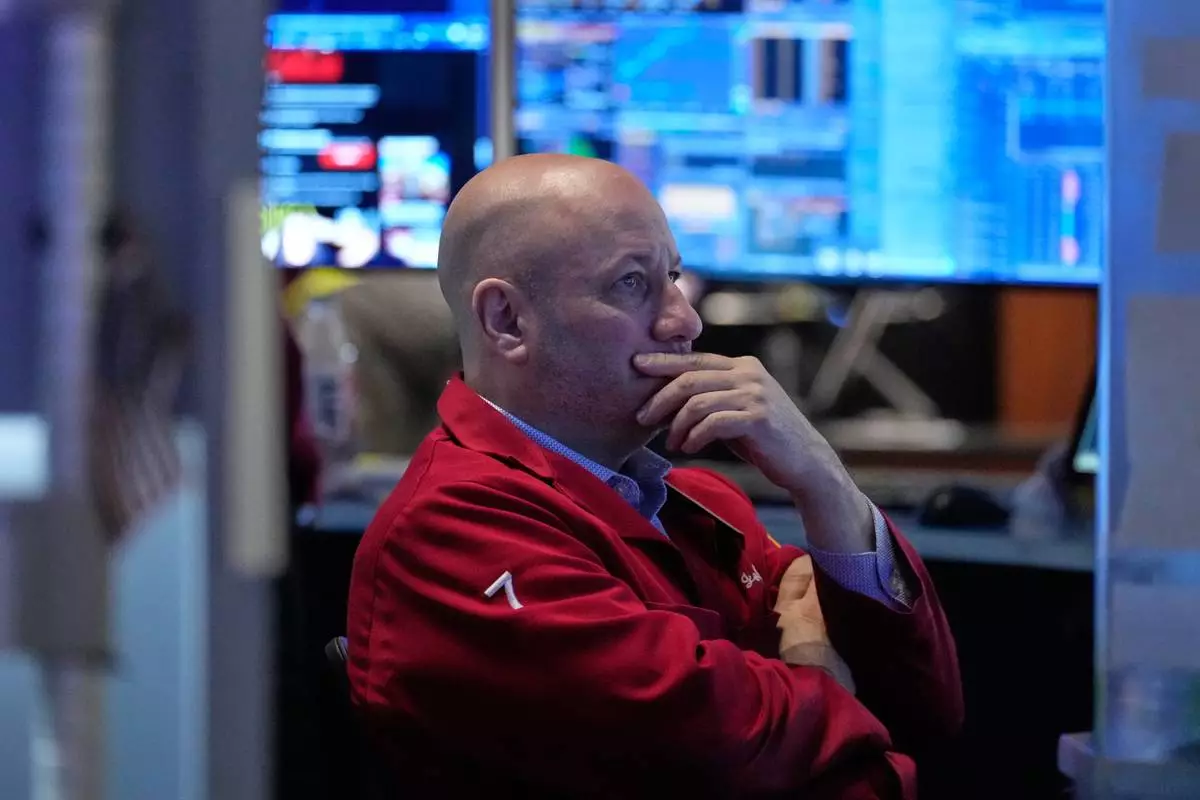
John Mauro works on the floor at the New York Stock Exchange in New York, Tuesday, April 7, 2026. (AP Photo/Seth Wenig)

John Mauro works on the floor at the New York Stock Exchange in New York, Tuesday, April 7, 2026. (AP Photo/Seth Wenig)

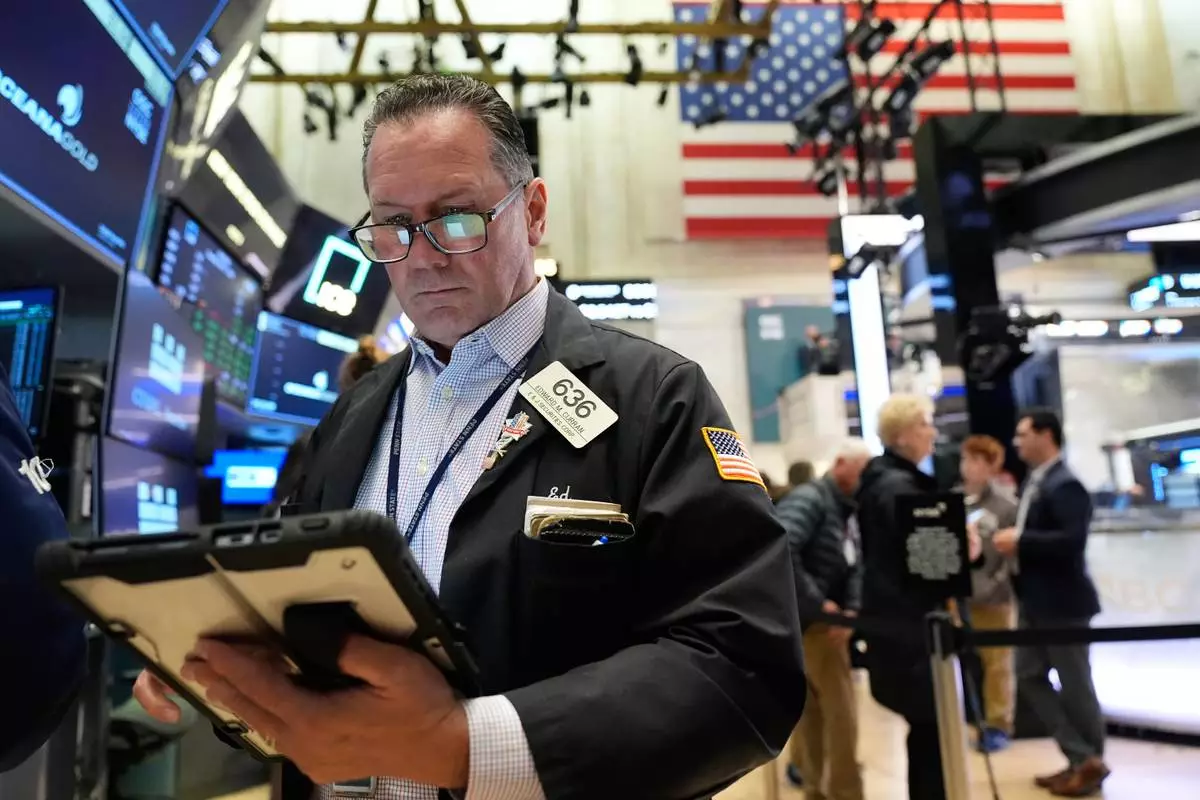
Ed Curran works on the floor at the New York Stock Exchange in New York, Tuesday, April 7, 2026. (AP Photo/Seth Wenig)

Ed Curran works on the floor at the New York Stock Exchange in New York, Tuesday, April 7, 2026. (AP Photo/Seth Wenig)

Recommended Articles