Skip to Content Facebook Feature Image

Carney attracts a 5th Conservative lawmaker to Canada's Liberal Party

News

Carney attracts a 5th Conservative lawmaker to Canada's Liberal Party
News

News

Carney attracts a 5th Conservative lawmaker to Canada's Liberal Party

2026-04-09 03:06 Last Updated At:03:21

TORONTO (AP) — Canadian Prime Minister Mark Carney has attracted another opposition Conservative lawmaker to the Liberal Party, further assuring that he will soon have a majority government.

Ontario Member of Parliament Marilyn Gladu alluded to U.S. President Donald Trump’s threats to Canada’s sovereignty and economy for her decision to defect to the governing Liberals. Trump has talked about making Canada the 51st U.S. state and has applied punishing tariffs on certain key sectors.

More Images
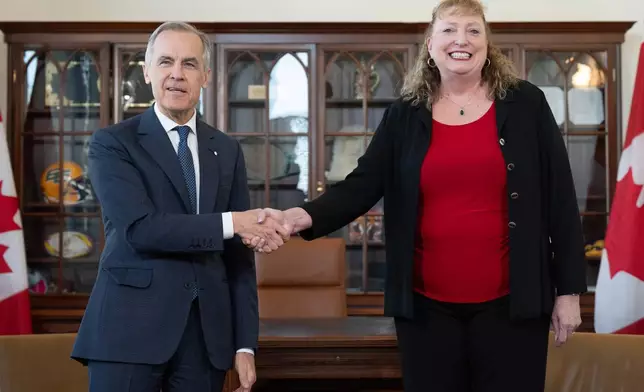
Prime Minister Mark Carney shakes hands with MP for Sarnia-Lambton-Bkejwanong Marilyn Gladu in Ottawa, Wednesday, April 8, 2026. (Adrian Wyld /The Canadian Press via AP)
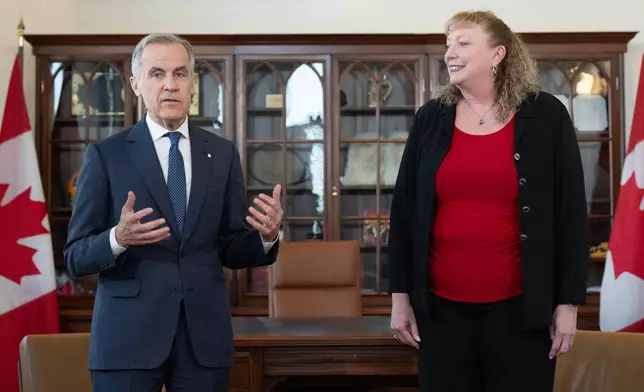
Prime Minister Mark Carney shakes hands with MP for Sarnia-Lambton-Bkejwanong Marilyn Gladu in Ottawa, Wednesday, April 8, 2026. (Adrian Wyld /The Canadian Press via AP)

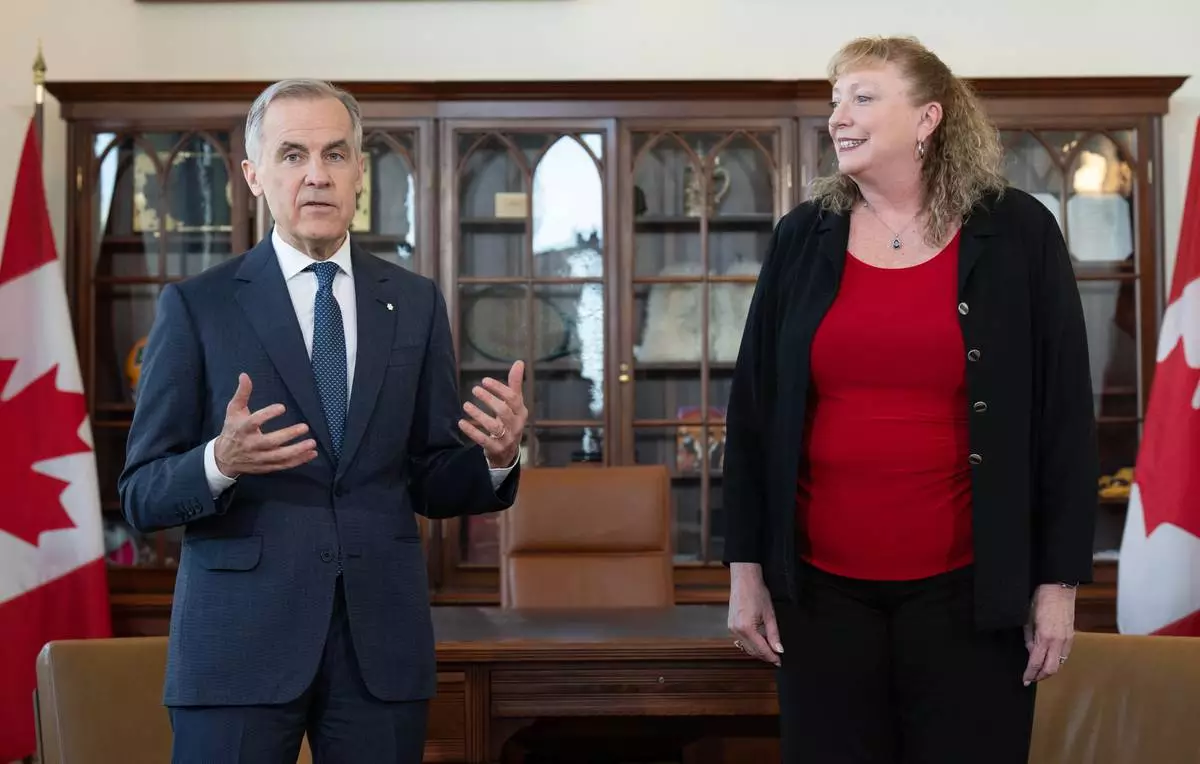
Prime Minister Mark Carney delivers some remarks as MP for Sarnia-Lambton-Bkejwanong Marilyn Gladu looks on during an event in his office in Ottawa, Wednesday, April 8, 2026. (Adrian Wyld /The Canadian Press via AP)
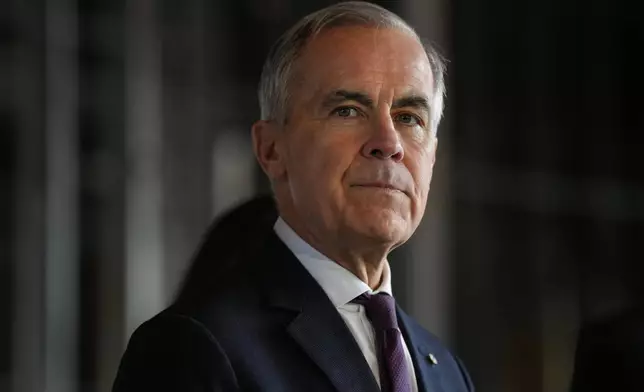
Prime Minister Mark Carney delivers some remarks as MP for Sarnia-Lambton-Bkejwanong Marilyn Gladu looks on during an event in his office in Ottawa, Wednesday, April 8, 2026. (Adrian Wyld /The Canadian Press via AP)

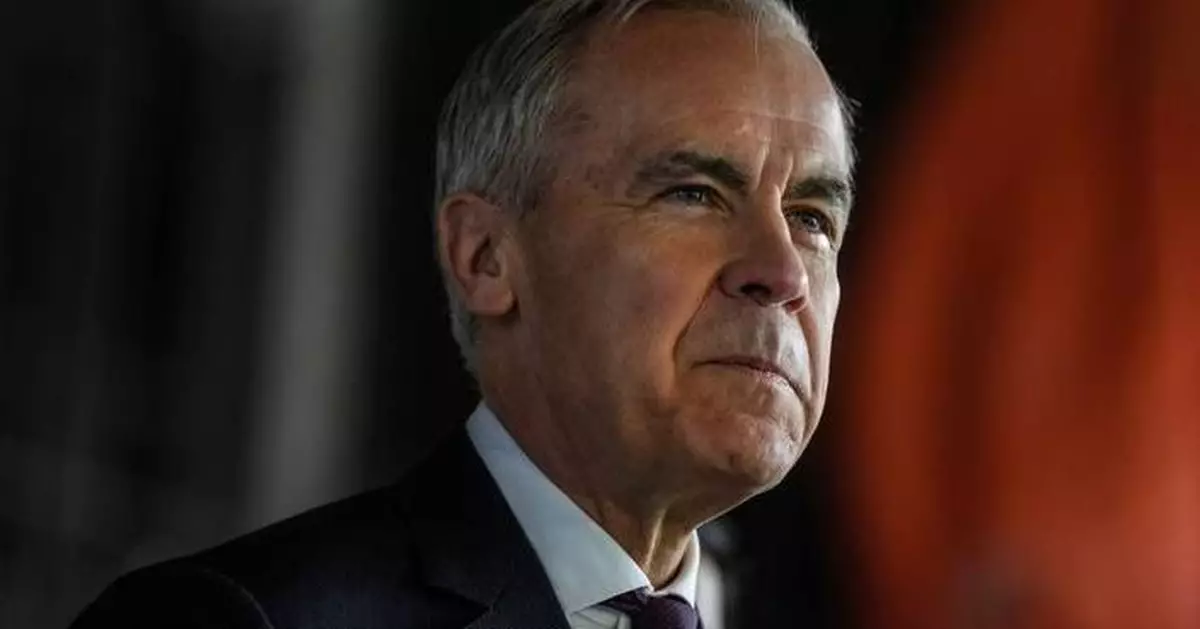
Prime Minister Mark Carney prepares to make an announcement in Brampton, Ont. on Tuesday April 7 2026. (Chris Young /The Canadian Press via AP)
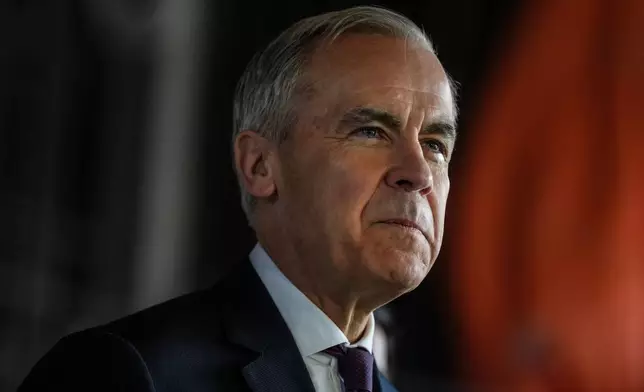
Prime Minister Mark Carney prepares to make an announcement in Brampton, Ont. on Tuesday April 7 2026. (Chris Young /The Canadian Press via AP)

Prime Minister Mark Carney prepares to make an announcement in Brampton, Ont. on Tuesday April 7 2026. T ( Chris Young/The Canadian Press via AP)/The Canadian Press via AP)

Prime Minister Mark Carney prepares to make an announcement in Brampton, Ont. on Tuesday April 7 2026. T ( Chris Young/The Canadian Press via AP)/The Canadian Press via AP)

“We need a serious leader who can address the uncertainty that has arrived due to the unjustified American tariffs,” Gladu said Wednesday, alongside Carney in his office.

“We need a global leader with a plan to make a more resilient Canada, a stronger Canada, a more self-reliant Canada, for this critical moment and that man is our prime minister Mark Carney.”

Gladu is the fifth Canadian lawmaker to defect to Carney and the fourth Conservative. She called it a “large Liberal tent” and said that she'd rather be inside it than outside.

“She is going to be a great member of our team,” Carney said. “This all comes at a time when the country as a whole is uniting.”

Her defection puts the Liberals on the verge of having a majority government and being able to pass any bill without opposition party support.

The Liberals now have 171 Members of Parliament in the House of Commons. They need 172 to secure a majority government, which would allow them to unilaterally pass any bill.

Carney has called special elections for three districts for Monday that would give the Liberals a majority government if his party wins one of them.

The prime minister announced on March 8 that votes will be cast April 13 in the Toronto-area districts of Scarborough Southwest and University-Rosedale, which are considered safe seats for the Liberals, and in the Montreal-area riding of Terrebonne, which is considered a toss-up.

The three other Conservative legislators who defected from their party to join the Liberals in recent months were Chris d’Entremont, Michael Ma and Matt Jeneroux. One member of the leftist New Democrats party, Lori Idlout, also defected to the Liberals.

Jeneroux referenced Carney’s speech at the World Economic Forum in Davos, Switzerland, as helping his decision. In the speech, Carney condemned economic coercion by great powers against smaller countries and received widespread praise and attention for his remarks.

Carney, the former head of the Bank of England as well as Canada's central bank, has moved the Liberals to the center-right since replacing Justin Trudeau as prime minister in 2025 and winning a national election.

Gladu's defection is another blow to Conservative leader Pierre Poilievre, who lost the previous national election last year and even his own seat in Parliament. He has since rejoined the House of Commons.

Poilievre won a party leadership review earlier this year, but continues to have problems controlling his lawmakers.

“Mark Carney is seizing a costly Liberal majority that voters denied him, and doing so through backroom deals,” Poilievre said in a post on social media.

Poilievre said that in January, Gladu said that floor crossers should face voters in a special election to give voters the final say.

“She should honor her word and let voters decide,” he posted.

Gladu, the member of Parliament for Sarnia-Lambton near the U.S. border, served as the Ontario co-chair for Poilievre’s 2022 leadership campaign.

“This is stunning, not only because Gladu is the fourth Conversative member of Parliament to cross the floor to join the Carney Liberal caucus since the fall, but also because she had been a Conservative member of Parliament since 2015 and that she had strongly criticized the Liberals in the past,” said Daniel Béland, a political-science professor at McGill University in Montreal.

“Gladu was not typically seen as one of the most likely Conservative MPs to jump ship at this time so it must be quite shocking for many Conservatives," Béland said.

He said that it will become harder and harder for Poilievre “to hold on, especially because more floor crossings remain possible in the short run. Once the Liberals get a majority government, they could stay in power until 2029 without the need for a new general election.”
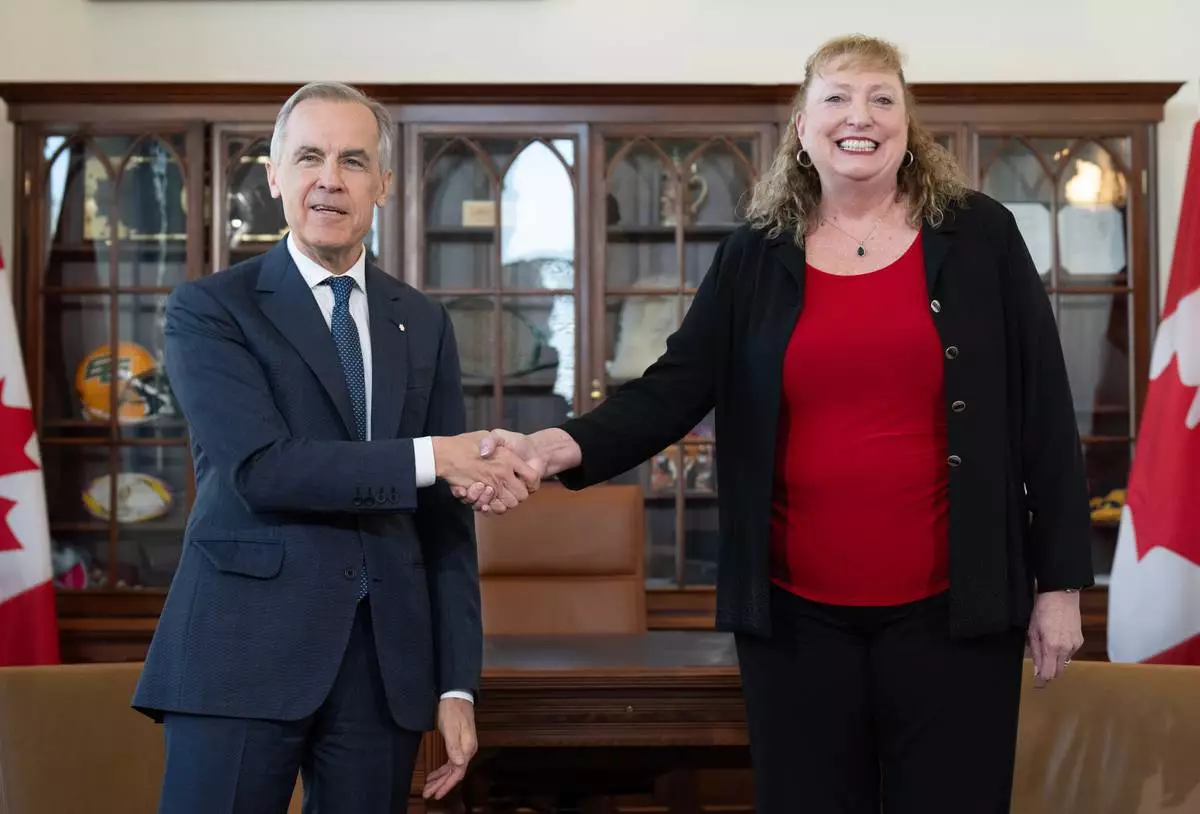
Prime Minister Mark Carney shakes hands with MP for Sarnia-Lambton-Bkejwanong Marilyn Gladu in Ottawa, Wednesday, April 8, 2026. (Adrian Wyld /The Canadian Press via AP)
Prime Minister Mark Carney shakes hands with MP for Sarnia-Lambton-Bkejwanong Marilyn Gladu in Ottawa, Wednesday, April 8, 2026. (Adrian Wyld /The Canadian Press via AP)

Prime Minister Mark Carney delivers some remarks as MP for Sarnia-Lambton-Bkejwanong Marilyn Gladu looks on during an event in his office in Ottawa, Wednesday, April 8, 2026. (Adrian Wyld /The Canadian Press via AP)
Prime Minister Mark Carney delivers some remarks as MP for Sarnia-Lambton-Bkejwanong Marilyn Gladu looks on during an event in his office in Ottawa, Wednesday, April 8, 2026. (Adrian Wyld /The Canadian Press via AP)

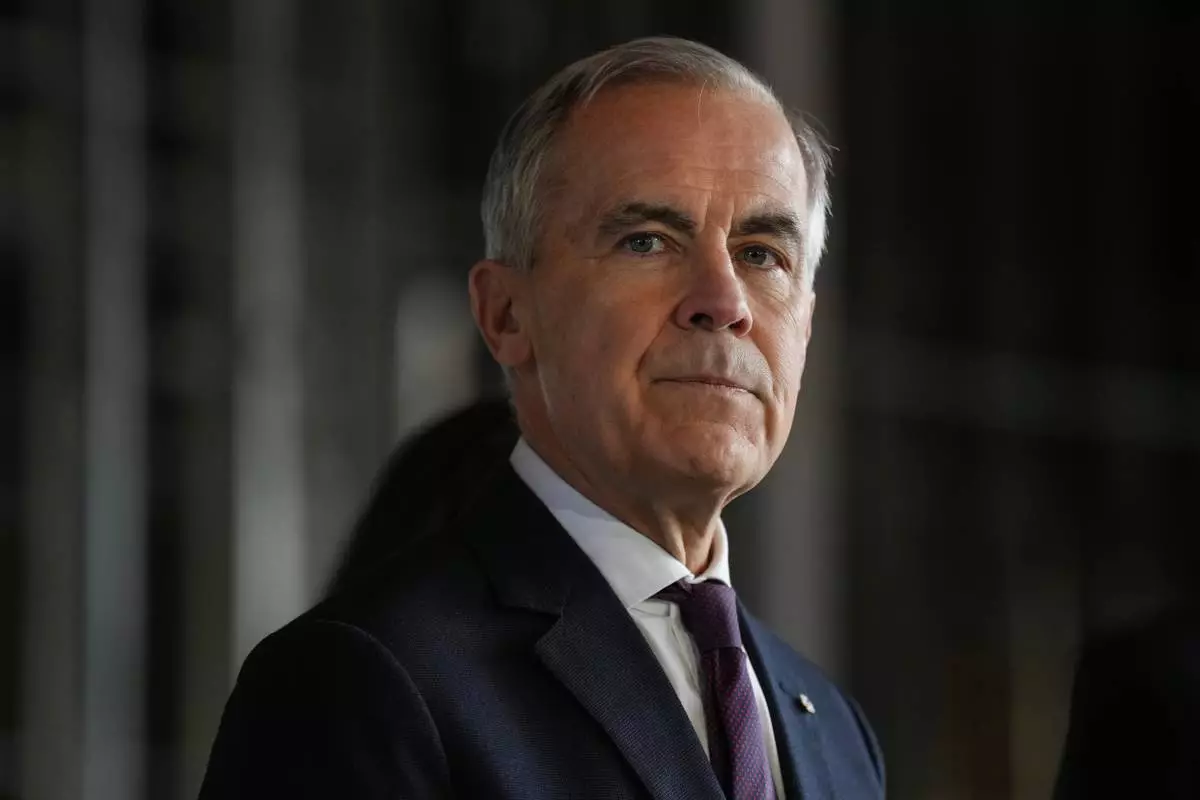
Prime Minister Mark Carney prepares to make an announcement in Brampton, Ont. on Tuesday April 7 2026. (Chris Young /The Canadian Press via AP)
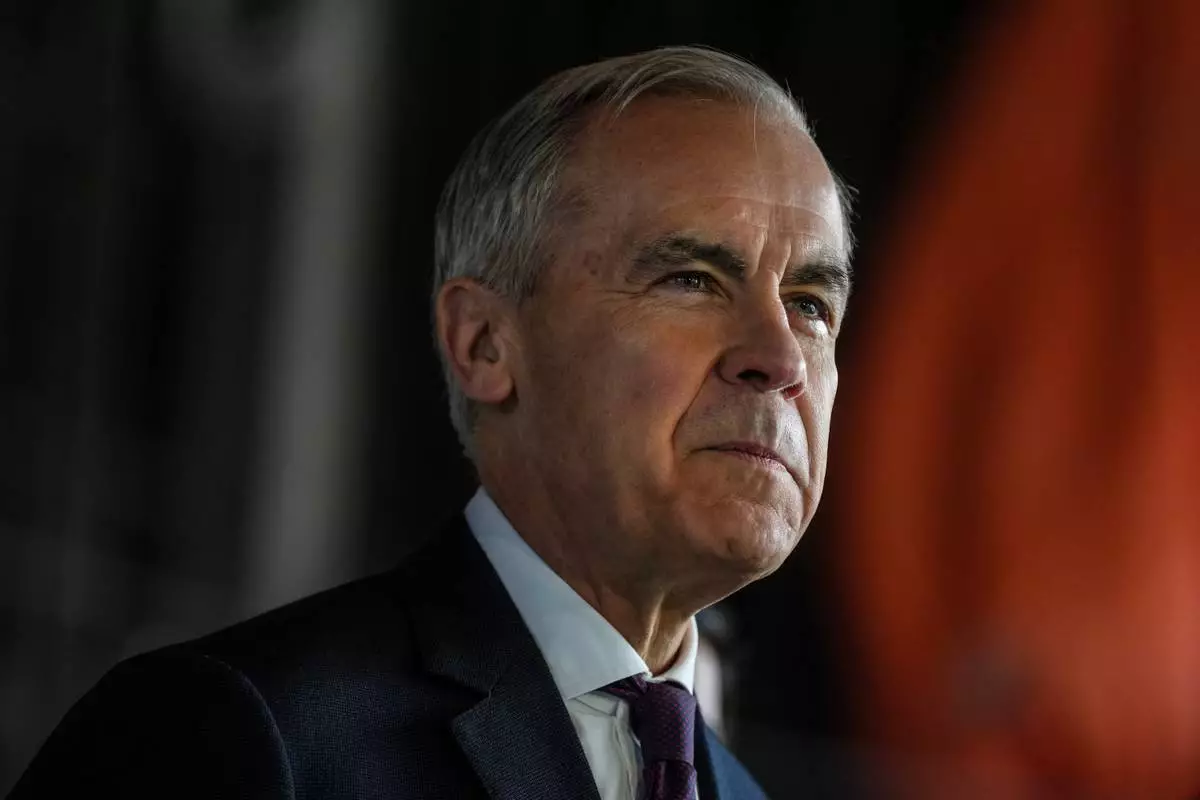
Prime Minister Mark Carney prepares to make an announcement in Brampton, Ont. on Tuesday April 7 2026. (Chris Young /The Canadian Press via AP)

Prime Minister Mark Carney prepares to make an announcement in Brampton, Ont. on Tuesday April 7 2026. T ( Chris Young/The Canadian Press via AP)/The Canadian Press via AP)

Prime Minister Mark Carney prepares to make an announcement in Brampton, Ont. on Tuesday April 7 2026. T ( Chris Young/The Canadian Press via AP)/The Canadian Press via AP)
NEW YORK (AP) — Oil prices plunged below $95 per barrel, and stock markets surged worldwide Wednesday after President Donald Trump pulled back from his threat to force a “whole civilization” to die in the war with Iran.

The S&P 500 leaped 2.1% after Trump announced a two-week ceasefire with Iran, less than 90 minutes before a deadline Trump had set for it to open the Strait of Hormuz and allow oil tankers to exit the Persian Gulf. The Dow Jones Industrial Average was up 1,101 points, or 2.4%, with an hour remaining in trading, and the Nasdaq composite was 2.3% higher following even bigger gains in European and Asian stock markets.

To be sure, stock prices are still below where they were before the war. And oil prices are still significantly higher because the threat remains that the war could continue and keep oil tankers blocked in the Persian Gulf. The ceasefire already looks precarious, with drones and missiles hitting Iran and Gulf Arab countries and Israel intensifying attacks in Lebanon.

Some of the euphoria that fueled financial markets in the morning faded as Wednesday progressed, and financial markets have been prone to sharp and sudden reversals because of deep uncertainty about what will happen next in the war.

“There is a reason to be optimistic, but it is still too early to tell, because, as you know, after all, it is Trump,” said Takashi Hiroki, chief strategist at MONEX.

So far in the war, Trump has set several deadlines for Iran to open the Strait of Hormuz, a main thoroughfare for oil to reach customers worldwide from the Persian Gulf, and has threatened big repercussions if Iran doesn’t, only to delay them.

It’s similar to a year ago, when Trump threatened stiff tariffs on imports from other countries on “Liberation Day.” After a couple delays, his administration eventually negotiated lower tariffs with many countries, though they were still higher than from before his second term. That led some investors to allege Trump “always chickens out,” or “TACO,” if financial markets show enough pain.

“Is it just kicking of the can down the road, moving the goalposts, TACO Tuesday, or whatever metaphor we’d like, to only to have tempers flare and bombs drop again?” Brian Jacobsen, chief economic strategist at Annex Wealth Management, asked about the two-week ceasefire with Iran. “Who knows? But it’s good enough for now to elicit a positive response from the markets.”

The price for a barrel of benchmark U.S. crude oil plunged 16.4% to settle at $94.41 after almost dropping to $91 earlier in the morning.

Brent crude, the international standard, tumbled 13.3% to $94.75 per barrel. It had briefly topped $119 when worries about the war with Iran were at their highest, but it's still above its roughly $70 price from before the war.

The next moves for oil prices will likely depend on how many oil tankers can start exiting the Strait of Hormuz and how easy their passage is. Iran closed the strait again Wednesday in response to Israeli attacks against the Hezbollah militant group in Lebanon.

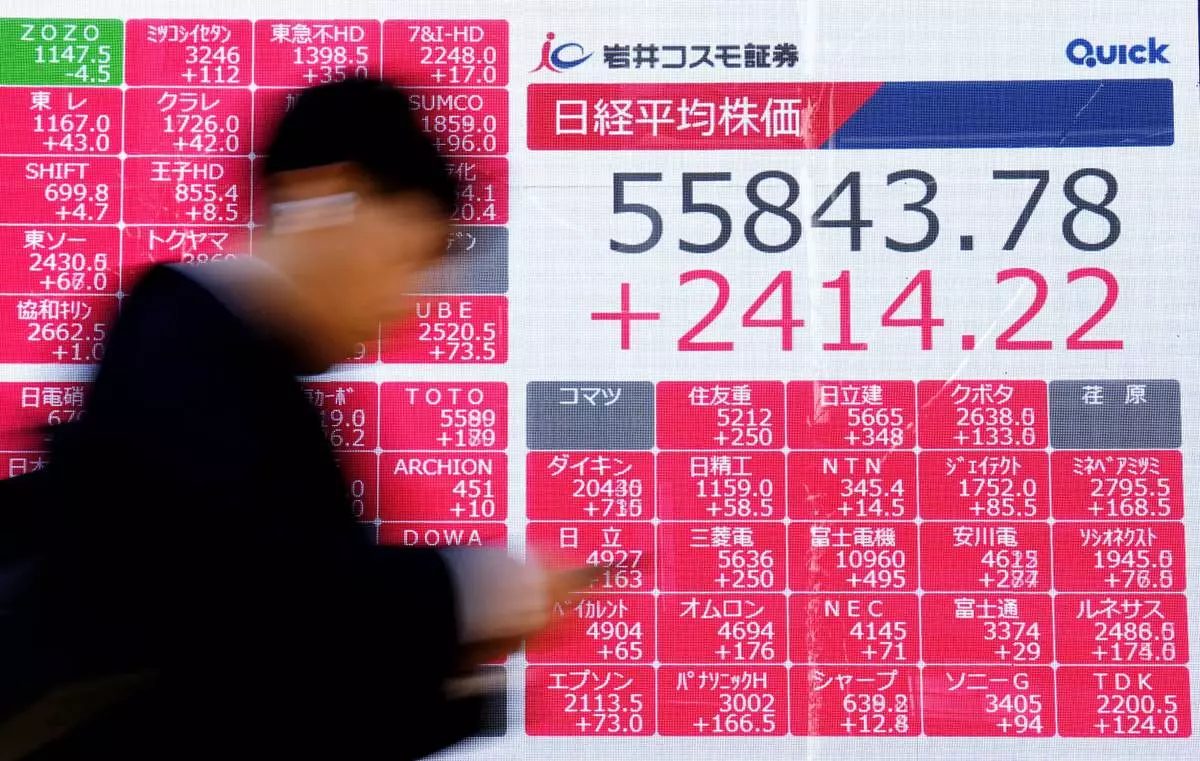
In Asia, where countries are more reliant on oil from the Middle East, South Korea’s Kospi stock index surged 6.9%. Japan’s Nikkei 225 leaped 5.4%, and Hong Kong’s Hang Seng jumped 3.1%.

European stock indexes rose nearly as much. Germany’s DAX returned 5.1%, and France’s CAC 40 rallied 4.5%.

On Wall Street, companies with big fuel bills roared back to trim some of the sharp losses taken on worries about oil prices staying high.

United Airlines soared 7.9% and cut into its loss for the year, which came into the day at 20.1%. Cruise ship operator Carnival climbed 9.6%.

Delta Air Lines rallied 4.2% after it reported stronger results for the latest quarter than analysts expected. CEO Ed Bastian said demand for flights remains strong, and it's making moves to make up for higher fuel bills. Delta on Tuesday became the latest airline to raise its fees for checking bags.

In the bond market, Treasury yields dropped as hopes built that easing oil prices could let the Federal Reserve resume its cuts to interest rates later this year.

The yield on the 10-year Treasury fell to 4.29% from 4.33% late Tuesday. Lower Treasury yields give a boost to prices for stocks, bonds and all kinds of other investments. They should also ease some of the recent rise in rates for mortgages and other loans taken out by U.S. households and businesses.

When oil prices were screaming higher because of the war, some traders were betting on the possibility that the Fed would have to raise interest rates to keep a lid on inflation. Now, they're seeing a nearly 24% chance that the Fed could resume its cuts to rates in 2026, according to data from CME Group.

AP journalists Yuri Kageyama, Matt Ott, Mayuko Ono and Jon Gambrell contributed to this report.

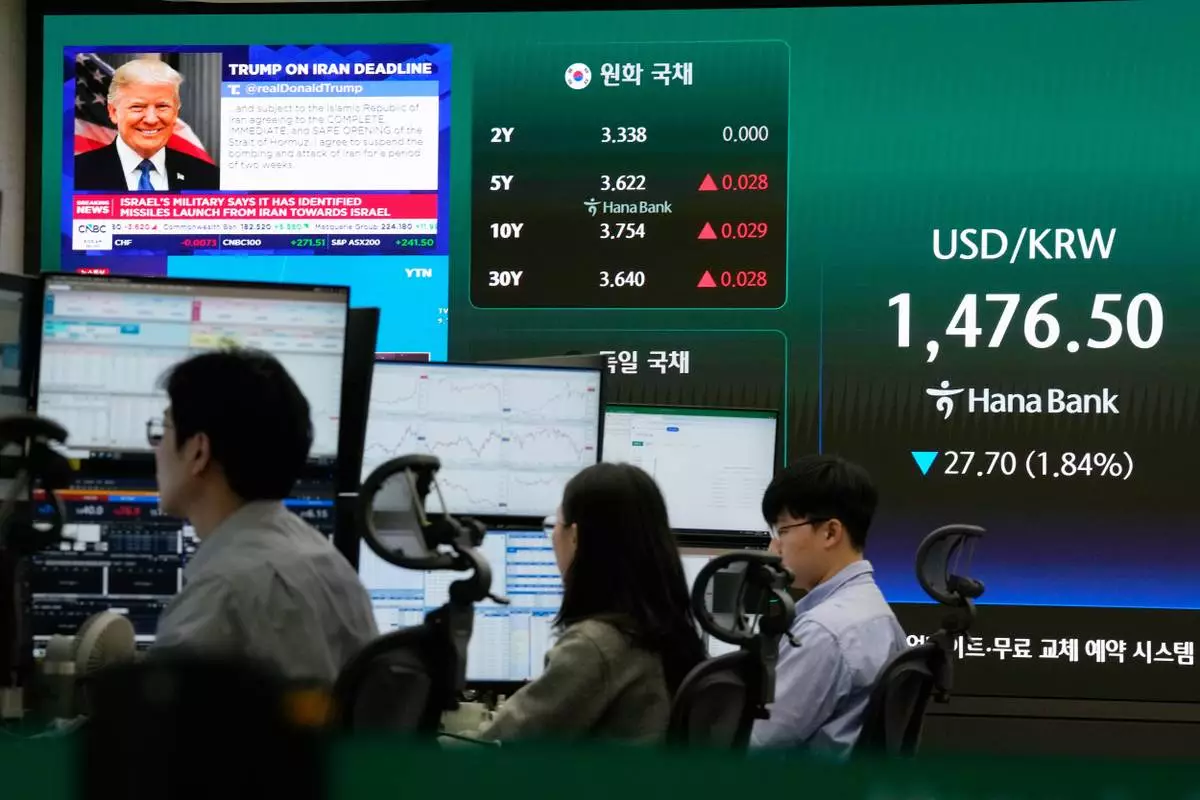
Currency traders work at the foreign exchange dealing room of the Hana Bank headquarters in Seoul, South Korea, Wednesday, April 8, 2026. (AP Photo/Ahn Young-joon)

Currency traders work at the foreign exchange dealing room of the Hana Bank headquarters in Seoul, South Korea, Wednesday, April 8, 2026. (AP Photo/Ahn Young-joon)

U.S. President Donald Trump is seen on a screen as traders work at the foreign exchange dealing room of the Hana Bank headquarters in Seoul, South Korea, Wednesday, April 8, 2026. (AP Photo/Ahn Young-joon)

U.S. President Donald Trump is seen on a screen as traders work at the foreign exchange dealing room of the Hana Bank headquarters in Seoul, South Korea, Wednesday, April 8, 2026. (AP Photo/Ahn Young-joon)

A person walks by an electronic stock board showing Japan's Nikkei index in Tokyo Wednesday, April 8, 2026. (Yuya Shino/Kyodo News via AP)

A person walks by an electronic stock board showing Japan's Nikkei index in Tokyo Wednesday, April 8, 2026. (Yuya Shino/Kyodo News via AP)

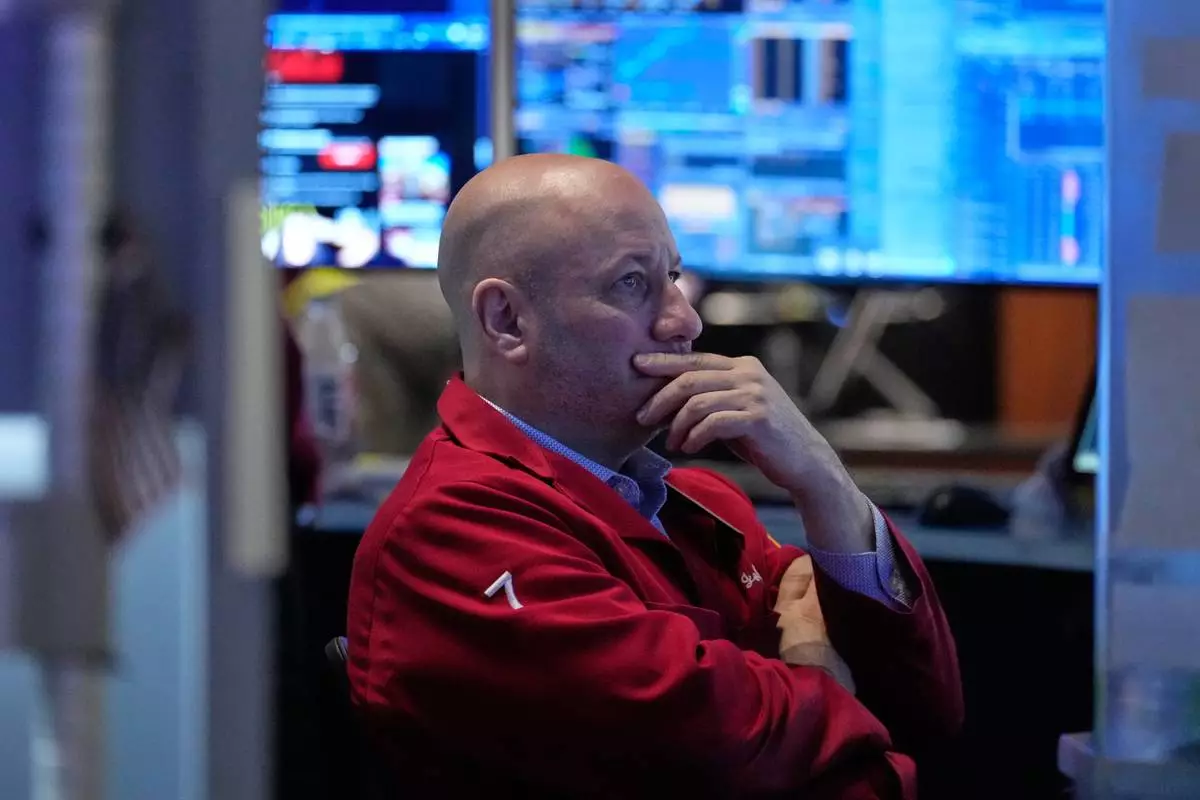
John Mauro works on the floor at the New York Stock Exchange in New York, Tuesday, April 7, 2026. (AP Photo/Seth Wenig)

John Mauro works on the floor at the New York Stock Exchange in New York, Tuesday, April 7, 2026. (AP Photo/Seth Wenig)

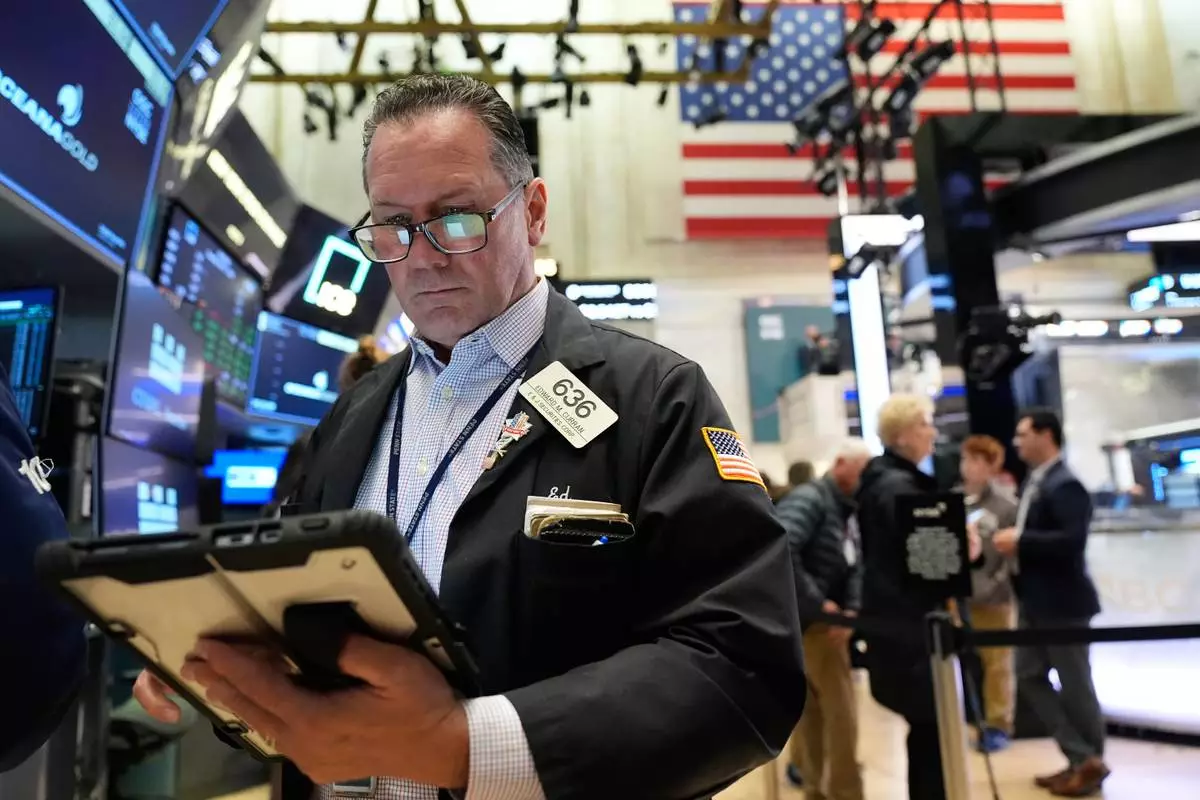
Ed Curran works on the floor at the New York Stock Exchange in New York, Tuesday, April 7, 2026. (AP Photo/Seth Wenig)

Ed Curran works on the floor at the New York Stock Exchange in New York, Tuesday, April 7, 2026. (AP Photo/Seth Wenig)

Recommended Articles