China's aquaculture industry is reshaping production methods by embracing data-driven technologies and scenario-based innovation in accord with the 15th Five-Year (2026–2030) Plan that prioritizes high-quality growth in the maritime economy.
In southern Guangdong Province, intelligent equipment is being deployed in real production settings, accelerating the transformation of traditional fisheries to make their operations smarter and more refined.
An offshore deep-sea aquaculture platform named "Gesheng No.1" in Zhuhai City is pioneering this shift. With a semi-submersible truss designed to stabilize against waves, the 86-meter-long platform houses 30,000 cubic meters of water for fish farming and serves as a "marine laboratory" for testing new technologies.
Among the smart facilities is a sonar device, about the size of a computer mouse, that can monitor fish schools within 100 meters underwater.
Just three such devices are enough to cover a stretch of seawater over 10 meters deep.
It is like an underwater eye that not only sees but also calculates the number of fish schools, according to a fishing specialist working on the platform. The system enables real-time monitoring and intelligent feeding, while also facilitating industry regulation and insurance.
Other innovations include underwater cameras paired with high-pressure cleaning equipment to maintain net cages remotely, replacing risky manual diving. What's more, new harvesting machines using centrifugal and vacuum suction methods allow efficient, gentle capture of live fish, reducing damage and improving product quality.
Together, these technologies, which are capable of monitoring fish, protecting nets and harvesting, demonstrate how aquaculture is moving beyond reliance on human experience.
By embedding data and intelligent equipment directly into production, scenario-driven innovation is reshaping the way marine ranches operate, pushing the industry toward standardization and modernization.
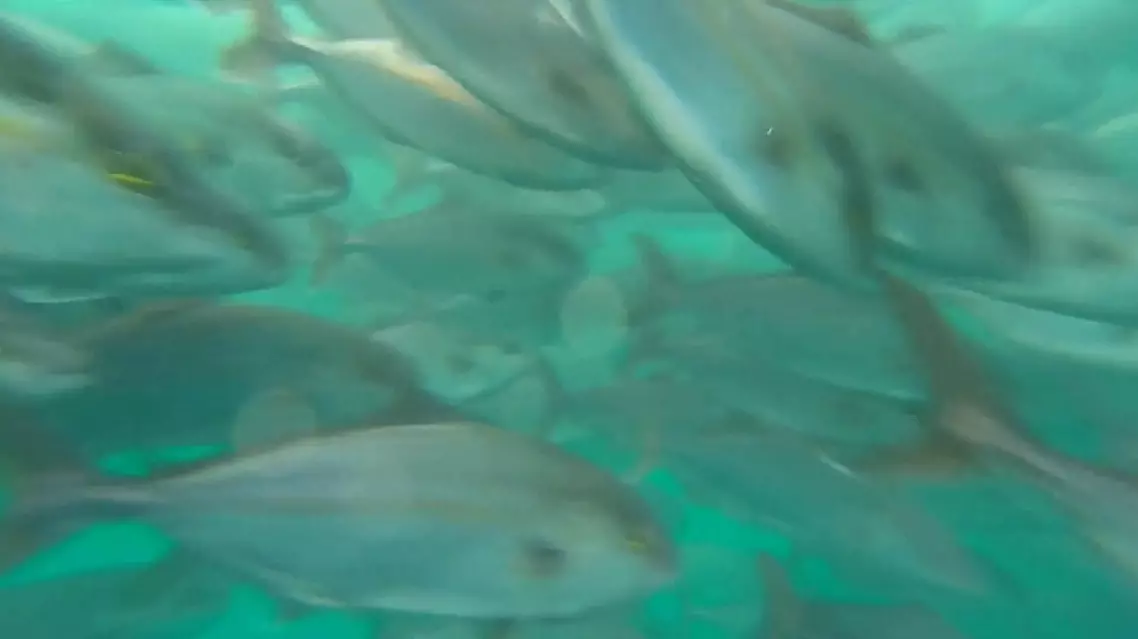
Traditional fish farming shifts to data-driven production through scenario innovation