SANTA FE SPRINGS, Calif.--(BUSINESS WIRE)--Apr 8, 2026--
Blaine Labs, Inc. is voluntarily recalling three (3) lot numbers of Wound Care Gel products, 1 oz. & 3 oz. (0.1% Benzalkonium Chloride) to the consumer level due to microbial contamination.
This press release features multimedia. View the full release here: https://www.businesswire.com/news/home/20260408132768/en/
The affected product has been found to contain Lysinibacillus fusiformis, an environmental organism.
Risk Statement
This voluntary recall has been initiated as a precautionary measure due to the detection of microbial presence. The tested samples identified the presence of Lysinibacillus fusiformis. Lysinibacillus fusiformi s is an environmental, spore-forming bacterium.
While it is generally considered to have low pathogenicity in healthy individuals, it can survive in adverse conditions and may act as an opportunistic organism. Patients with open wounds, compromised skin barriers, or weakened immune systems (e.g., elderly, diabetic, or immunocompromised individuals) may be at increased risk for infection, skin irritation, and / or delayed wound healing. In immunocompromised individuals, including those with poorly controlled diabetes, elderly individuals with immune senescence, and young children with an immature immune system, these infections may become severe and lead to life-threatening complications such as endocarditis or central system infection.
The product is used as a topical antiseptic for first aid to help prevent the risk of infection in minor cuts, scrapes, and burns and is packaged in a 1 oz. bottle and 3 oz. tube . The Revitaderm® Wound Care Gel can be identified by its purple trim and Tridergel™ Wound Care can be identified by its light blue trim. The 1 oz. bottle has two cap configurations, twist and longer pointy cap, and is secured with a shrink / body band. The bottle has the expiration date and lot number printed on the bottom portion of the bottle. The 3 oz. is a tube and contains the lot number and expiration date imprinted along the crimp at the top of the tube. Revitaderm® Wound Care Antiseptic Gel 1 oz. & 3 oz. and Tridergel™ Wound Care 1 oz. was distributed nationwide in the U.S to healthcare providers (doctor’s offices) they were not distributed for retail or internet sales.
To date, Blaine Labs has not received any reports of adverse events related to this recall.
What Customers Should Do
Customers & Healthcare providers should review their inventory for these affected lot number and discontinue use and / or distribution immediately. Immediately stop using the product. Segregate any remaining inventory of these lot numbers and please contact Blaine Labs, Inc to arrange for return.
Blaine Labs, Inc. is notifying its physician clinics by regular mail and by phone, as applicable, and is arranging for the return of undispensed 1 oz. and 3 oz. from lot numbers associated with this recall.
Consumers with questions regarding this recall can contact Blaine Labs, Inc directly by using the contact information listed below Monday through Friday 7:30AM to 4:00PM PDT.
You may also report adverse events or questions regarding this recall directly to Blaine Labs using the contact information below.
Adverse reactions or quality problems experienced with the use of this product may be reported to the FDA's MedWatch Adverse Event Reporting program either online, by regular mail or by fax.
This recall is being conducted with the knowledge of the U.S. Food and Drug Administration.
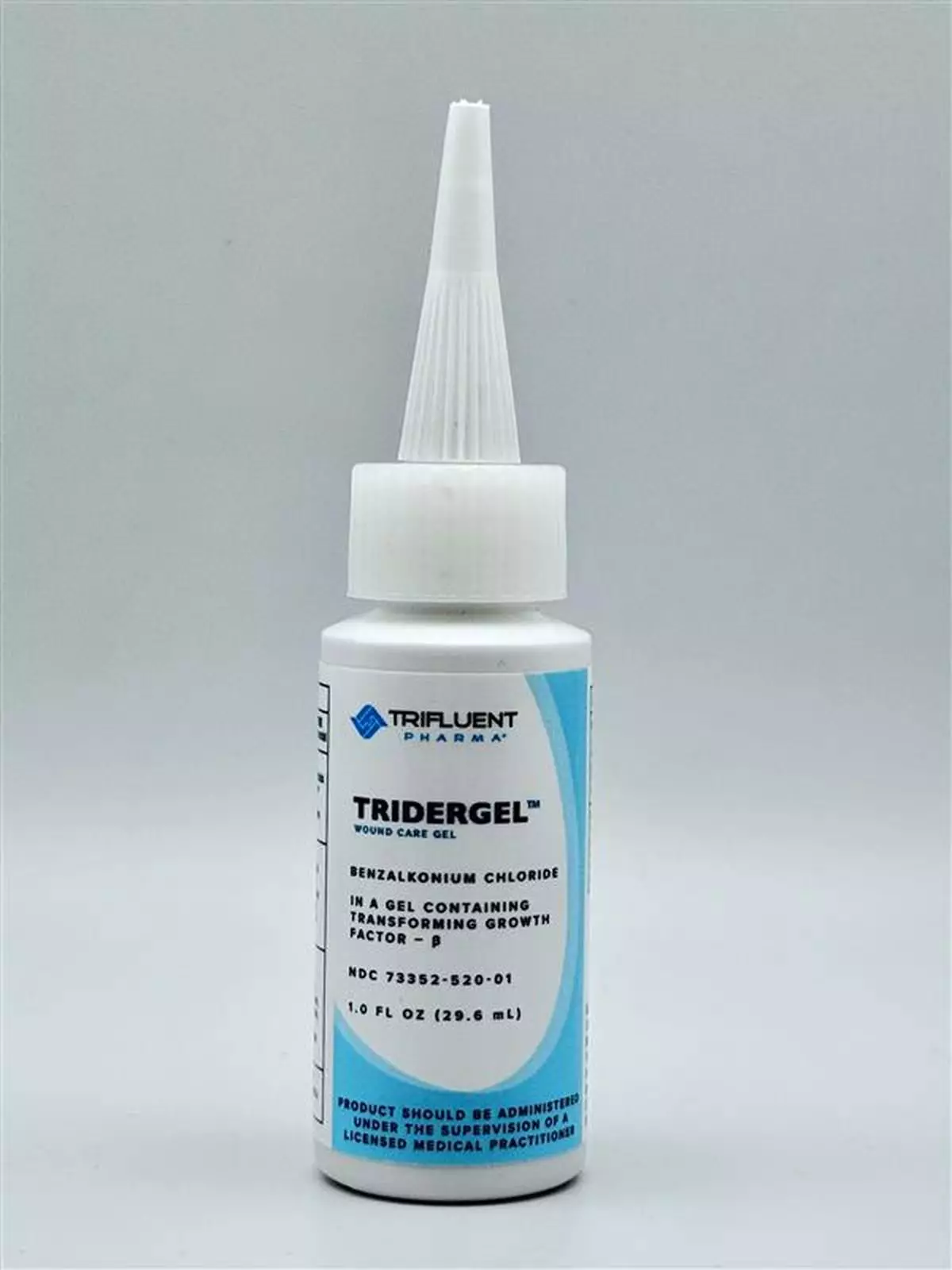
Tridergel™ Wound Care Gel - 1 oz. bottle with Long Pointy Cap
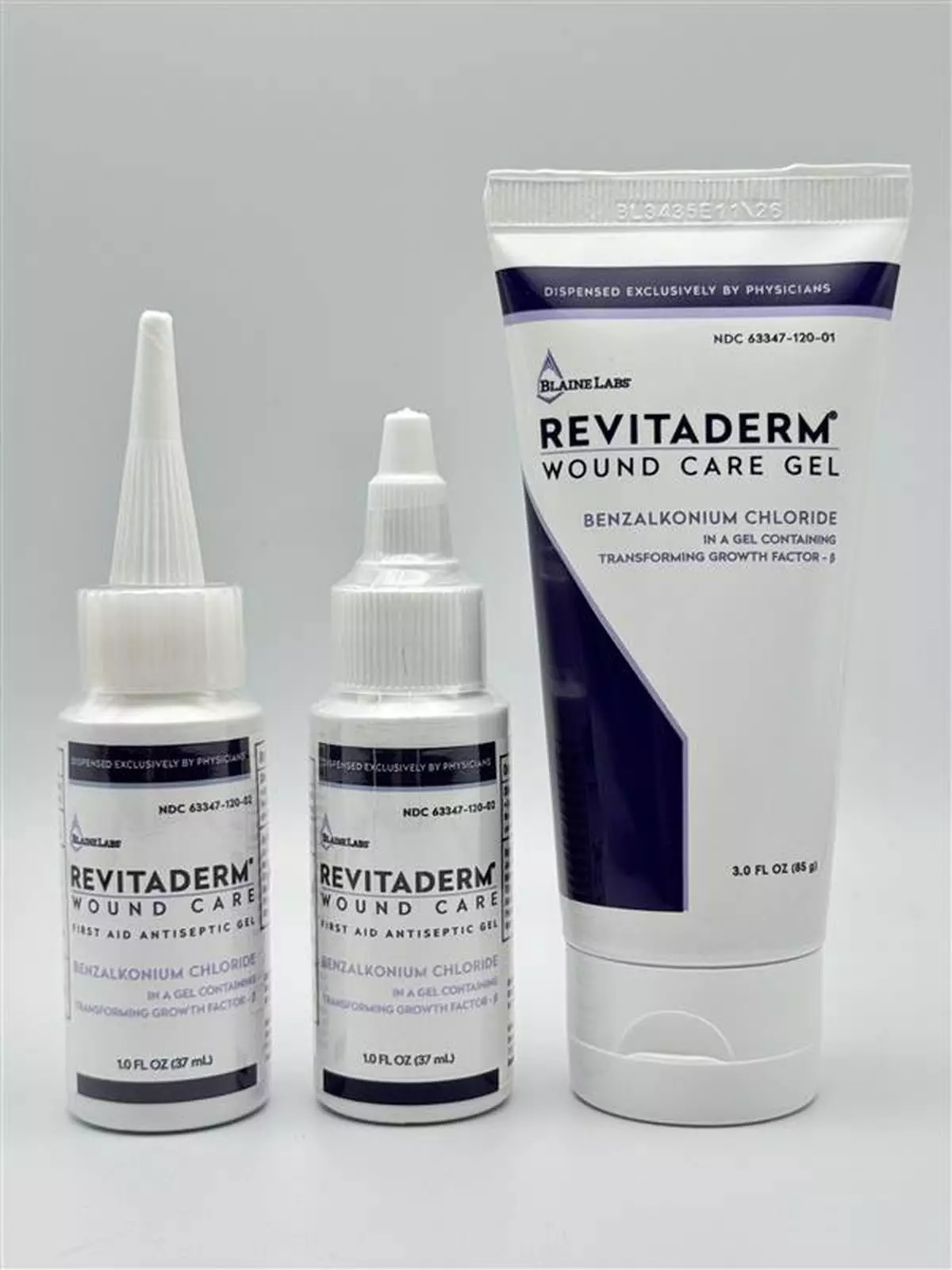
Revitaderm® Wound Care Gel - (From Left to Right) 1 oz. bottle with Long Pointy Cap, 1 oz. bottle with Short Twist Cap, and 3 oz. Tube
WASHINGTON (AP) — March’s persistent unseasonable heat was so intense that the continental United States registered its most abnormally hot month in 132 years of records, according to federal weather data. And the next year or so looks to turn the dial up on global warmth even more, as some forecasts predict a brewing El Niño will reach superstrength.
Not only was it the hottest March on record for the U.S., but the amount it was above normal beat any other month in history for the Lower 48 states. March’s average temperature of 50.85 degrees Fahrenheit (10.47 degrees Celsius) was 9.35 F (5.19 C) above the 20th century normal for March. That easily passed the old record of 8.9 F (4.9 C) set in March 2012 as the most abnormally hot month on record — regardless of the month of the year — according to records released Wednesday by the National Oceanic and Atmospheric Administration.
The average maximum temperature for March was especially high at 11.4 F (6.3 C) above the 20th century average and was almost a degree warmer than the average daytime high for April, NOAA said.
Six of the nation’s top 10 most abnormally hot months have been in the last 10 years. This February, which was 6.57 F (3.65 C) above 20th century normal, was the tenth highest above normal.
“What we experienced in March across the United States was unprecedented,” said Shel Winkley, a meteorologist with Climate Central, a nonprofit science research group.
“One reason that’s so concerning is just the sheer volume of records, all-time records that were set and broken during that time period,” Winkley said. “But also this is coming on the heels of what was the worst snow year. And the hottest winter of record.”
April 2025 to March 2026 was the warmest 12-month period on record in the continental United States, according to NOAA.
On March 20 and 21, about one-third of the nation felt unseasonable heat that would have been virtually impossible without human-caused climate change, Climate Central calculated.
More than 19,800 daily temperature records were broken for heat across the country, according to meteorologist Guy Walton, who analyzes NOAA data. More than 2,000 places set monthly records for heat — harder to break than daily records — Walton calculated. That’s more March heat records set just last month than in entire decades in the past.
All those broken records “tells us that climate change is kicking our butts,” said meteorologist Jeff Masters of Yale Climate Connections.
“January through March period was the driest on record for the contiguous U.S. So not only was it hot, it was record dry as well,” Masters said. “And that’s a bad combination for water availability, for agriculture, for river levels, for navigation.”
The European climate and weather service Copernicus and NOAA are both forecasting a “super” strong El Niño to form in a few months and intensify into the winter. Meteorologists expect that to increase already warm temperatures across the globe, likely pushing past the hottest year mark set by 2024.
An El Niño is a natural temporary and cyclical warming of parts of the central Pacific that alters weather across the planet. An El Niño is formed when a specific part of the ocean is 0.5 degrees Celsius (0.9 F) warmer than normal. It is considered moderate at 1 degree Celsius and strong at 1.5 degrees Celsius. Both NOAA and the Europeans are forecasting this one to be well above 2 degrees Celsius into an area that is informally called super sized and perhaps rivaling records set in 2015 and 2016.
An El Niño releases heat stored in the upper ocean into the air, which causes global temperatures to rise, but with a few months lag time, said Northern Illinois University meteorology professor Victor Gensini.
“A strong El Niño could plausibly push global temperatures to new record levels in late 2026 and into 2027,” Gensini said.
Super-sized El Niños often trigger a “climate regime shift,” which pushes normal conditions into a different pattern for years or decades, according to a study last December in the journal Nature Communications. The study said after the 2015-2016 El Niño, the Gulf of Mexico jumped to a new sustained level of warmth that may have contributed to stronger hurricanes along the Gulf Coast in the years after.
Growing research seems to indicate that a warming world from the burning of coal, oil and natural gas could be making El Niños stronger, but climate scientists said that's not quite a consensus yet.
“Global warming is supercharging El Niños and the atmospheric warming they drive,” said University of Michigan environment dean and climate scientist Jonathan Overpeck. "We saw this in 2016 and more recently in 2023. We’re likely to see another jump in global temperatures if a strong El Niño develops later this year as being predicted.”
El Niños tend to tamp down hurricane activity in the Atlantic, but ramp it up in the Pacific and could help ease the southwestern drought, Masters said.
The Associated Press’ climate and environmental coverage receives financial support from multiple private foundations. AP is solely responsible for all content. Find AP’s standards for working with philanthropies, a list of supporters and funded coverage areas at AP.org.

FILE - Juan Olmedo, left, and his wife Alejandra Delgado use an umbrella to shield from the sun while on a walk at Shoreline Park in Mountain View, Calif., March 16, 2026. (AP Photo/Godofredo A. Vásquez, File)

FILE - A jogger runs past as a man sunbathes on a hot day at Crissy Field in San Francisco, March 17, 2026. (AP Photo/Godofredo A. Vásquez, File)

FILE - A baseball fan tries to shield from the sun during the fourth inning of a spring training baseball game between the Chicago White Sox and the Athletics, March 17, 2026, in Phoenix. (AP Photo/Ross D. Franklin, File)