MODESTO, Calif. (AP) — An attorney for a man shot by U.S. Immigration and Customs Enforcement agents during an arrest in central California said Wednesday that his client did not try to run over officers with his car and disputed claims that he has a warrant out for his arrest in El Salvador.
The Department of Homeland Security said ICE agents fired defensive shots at Carlos Ivan Mendoza Hernandez after he tried to drive into them on Tuesday. DHS said they were conducting an enforcement stop targeting Mendoza, 36, in Patterson, a city about 75 miles (120 kilometers) southeast of San Francisco. Officials described him as a suspected gang member wanted in El Salvador for questioning in connection to a murder.
Attorney Patrick Kolasinski, who is representing Mendoza and his family, said during a news conference that his client has been stopped for minor traffic infractions but has no criminal record in the U.S. and is not the subject of an arrest warrant in El Salvador, where he was acquitted of murder.
Kolasinski said he has found no evidence his client was part of any street gang but he added he has not had the chance to talk to him to confirm that.
“If he was released after being acquitted, with no other holds on him, he cannot have a warrant,” Kolasinski said. “So that information must be either erroneous or completely made up. And only DHS knows what they’re looking at.”
According to a Oct. 25, 2019 court document from a judge in El Salvador, Mendoza, who was 29 at the time, was acquitted after being accused of murder and ordered immediately released. The document lists 10 others who were convicted of various crimes from aggravated robbery to murder, and mentions at least one of them was a member of the 18th Street Gang. But there is no mention of Mendoza belonging to a gang or being accused of carrying out gang activity in the document.
Tuesday's encounter was among a string of shootings that have happened during the Trump administration's aggressive push to detain and deport illegal immigrants in which questions have been raised about the accounts by federal immigration officials.
DHS did not immediately respond to requests for comments about the lawyer's statements.
“He’s a good guy. He’s a hardworking person,” said Mendoza’s fiancée, Cindy, who did not provide her last name out of fear for her safety because of attention of his case. She said the Trump administration’s immigration crackdown is hurting families.
She said in Spanish that Mendoza was recently stopped for a cracked windshield in another town.
Dashcam footage obtained by KCRA-TV shows three officers standing around a vehicle stopped on the side of a road. One of the officers appears to be touching the driver-side window when the car begins to back up and turn, hitting a vehicle behind it. At least two of the agents have weapons drawn, pointing at the car. The driver then pulls forward toward where the men are standing and turns sharply, driving over the roadway median.
The video has no sound and it's unclear when the shots were fired and if words were said.
“He is doing everything he can to not run them over,” the attorney said of his client’s reaction during the arrest. He said he believes his client panicked and tried to flee. DHS said ICE agents were acting as trained.
Mendoza's family and his attorney have not been allowed to see him since he was hospitalized, and his condition was unknown Wednesday, Kolanski said. They were told by a social worker that he is stable.
Kolasinski said Mendoza, a dual citizen of El Salvador and Mexico, came to the U.S. in 2019 but he said he did not know his legal status nor how he arrived to the country and hoped to talk to him to get those details. He said federal officials haven't said if Mendoza has been arrested for a crime or if he's being held by authorities as a victim of a shooting.
Kolasinski said his client works as a laborer to repair fire damage. He has a 2-year-old daughter and is engaged to a U.S. citizen, he said.
Kolasinski said officers endangered everyone by opening the car door when Mendoza tried to flee. “That may well be ICE training, but if it is it’s horrible training," he said.
The Stanislaus County Sheriff’s Office said they were not involved in the incident and the FBI is leading the investigation.
Weber reported from Los Angeles. Associated Press journalist Julie Watson contributed from San Diego.
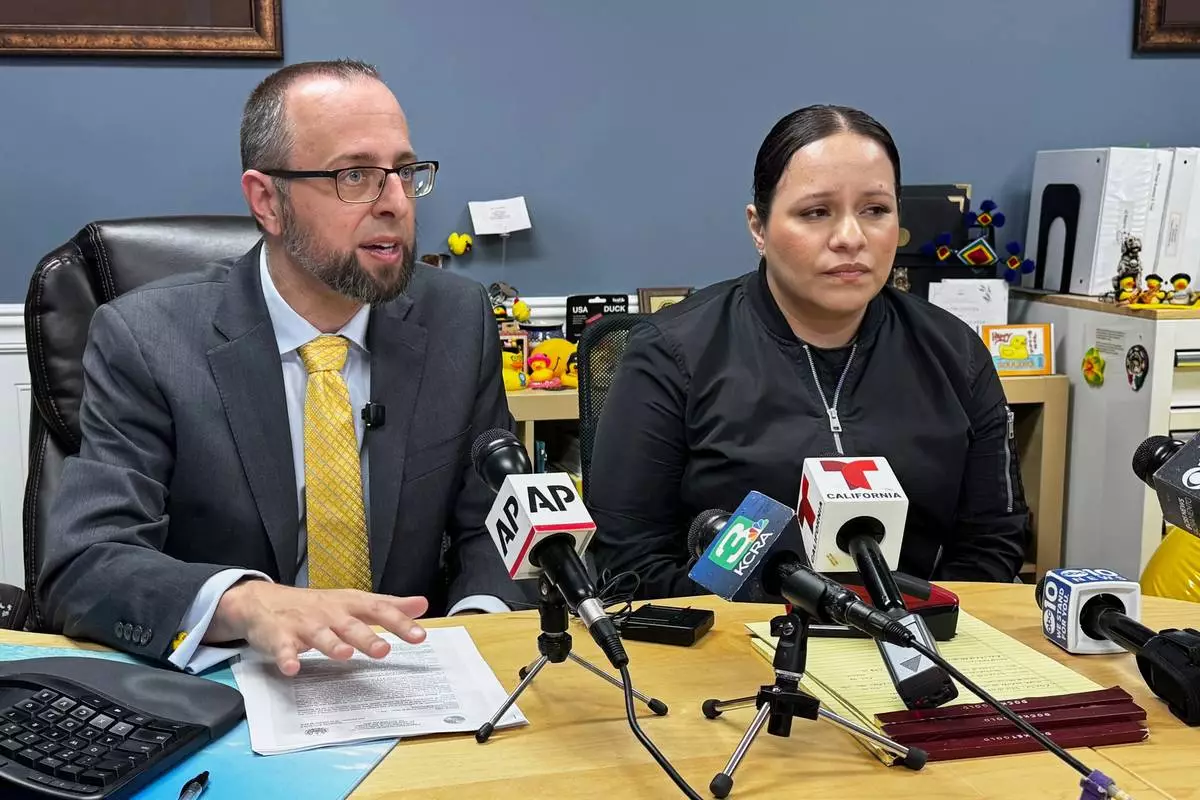
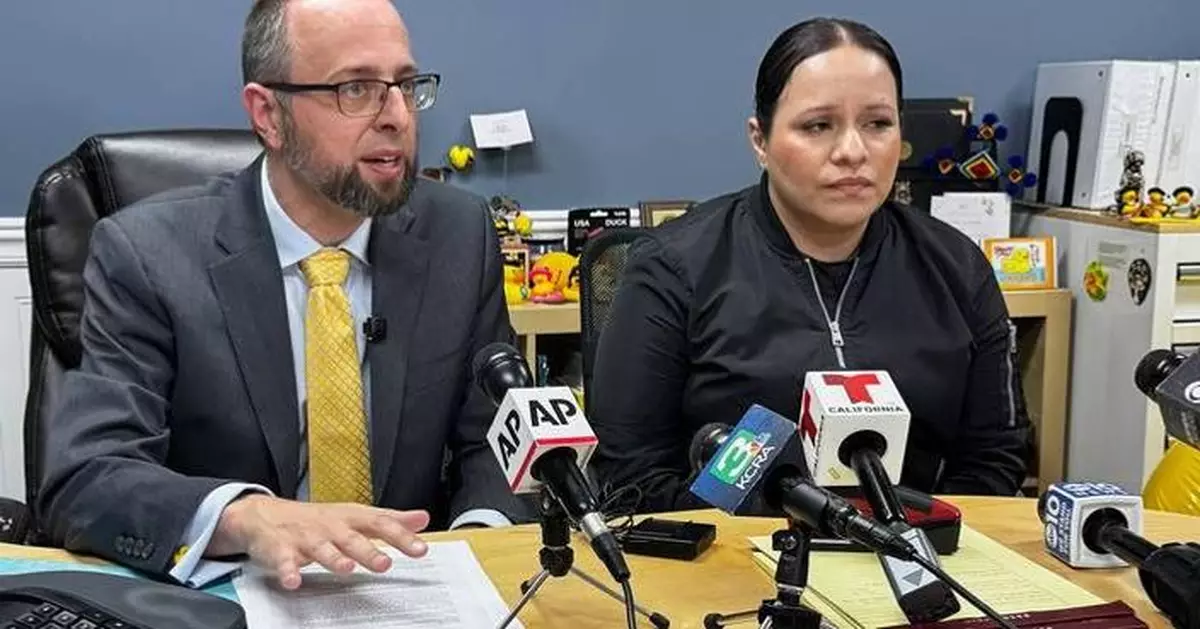
Patrick Kolasinski, attorney for Carlos Ivan Mendoza Hernandez, speaks at a news conference accompanied by his client's girlfriend, Cindy, in Modesto, Calif., Wednesday, April 8, 2026. (AP Photo/Terry Chea)
WASHINGTON (AP) — President Donald Trump, over the course of a single day, went from threatening Iran with “annihilation” to proclaiming that the battered Islamic Republic's leadership had presented a “workable” plan that led him to agree to a 14-day ceasefire that he hopes will pave the way to end the nearly six-week war.
The dramatic shift in tenor came as intermediaries led by Pakistan worked feverishly to head off a further escalation. Even China, Iran's biggest trading partner and America's most significant economic competitor, quietly pulled strings to find a path toward a ceasefire, according to two officials briefed on the matter who were not authorized to comment publicly and spoke on the condition of anonymity.
“The reason for doing so is that we have already met and exceeded all Military objectives, and are very far along with a definitive Agreement concerning Longterm PEACE with Iran, and PEACE in the Middle East,” Trump said in a social media post Tuesday announcing the temporary ceasefire. It came about 90 minutes before his deadline for Tehran to open the critical Strait of Hormuz or see its power plants and other critical infrastructure obliterated.
But even as the White House was celebrating the moment as a victory, the fragile ceasefire appeared in danger of falling apart Wednesday as the U.S., Iran and Israel offered differing statements on what was included in the deal less than 24 hours after it was brokered.
Iran insisted that an end to the Israeli war in Lebanon was part of the ceasefire agreement with the U.S. But Israeli Prime Minister Benjamin Netanyahu and Trump said the truce did not cover Lebanon and the Israeli operations there continued.
The U.S., meanwhile, demanded that Iran make good on reopening the strait after the Islamic Republic closed the waterway in response to Israel's intensifying attacks against the Hezbollah militant group in Lebanon.
The president was to meet at the White House with NATO Secretary-General Mark Rutte on Wednesday, with the emerging plan to reopen the strait expected to be at the center of their talks. Trump has been angry that NATO member countries ignored his call to help reopen the vital waterway as gas prices soared during the war.
As the deadline neared, Democratic lawmakers decried Trump's threat to wipe away an entire civilization as “a moral failure." Pope Leo XIV warned that strikes against civilian infrastructure would violate international law and said the Republican president's comments were “truly unacceptable.”
In the end, Trump may have backed down because of a simple truth: Escalation could risk involving the United States in the sort of “forever war” that had bedeviled his predecessors in the White House and that he had vowed he would keep the U.S. out of if voters elected him again.
As Trump boasted about U.S. and Israeli military success over the past six weeks, he appeared to be working from the premise that he could bomb Iran into capitulation.
Starting with the killing of Ayatollah Ali Khamenei in the opening salvos, he seemed to discount that the Iranian leadership could opt for a long and bloody war.
The Islamic Republic over the past 47 years has shown it is willing to dig in, even when it appears to America to be working against its own self-interest.
The clerical leadership held Americans hostage for 444 days, from late 1979 to early 1981, at the cost of the country’s international standing. The mullahs allowed the Iran-Iraq war to go on for years, leaving hundreds of thousands dead. Iran stood by Hamas after the Oct. 7, 2023, attack that ultimately defanged the Iran-backed group in Gaza as well as Hezbollah in Lebanon, and created the conditions that led to the collapse of Bashar Assad's government in Syria, an authoritarian rule supported by Tehran.
Iran's leadership exuded confidence that it could bog down the world's superpower in a costly and extended conflict even if it might not defeat the U.S. military.
Defense analysts largely agreed that the U.S. military could quickly take control of the narrow Persian Gulf waterway between Iran and Oman through which roughly 20% of the world's oil flows on any given day. But maintaining security over the strait would require a high-risk, resource-intensive operation that could be a yearslong American commitment.
Ben Connable, executive director of the nonprofit Battle Research Group, said securing the strait would require the U.S. military to maintain control of about 600 kilometers (373 miles) of Iranian territory, from Kish Island in the west to Bandar Abbas in the east, in order to stop Iran from firing missiles at passing ships. It is a mission that Connable said would likely require three U.S. infantry divisions, roughly 30,000 to 45,000 troops.
“This would be an indefinite operation — so, you know, think: be ready to do this for 20 years,” said Connable, a retired Marine Corps intelligence officer. “We didn't think we were going to be in Afghanistan for 20 years. We didn’t think we’re going to have to be in Vietnam as long as we were, or Iraq.”
The two-week ceasefire includes allowing both Iran and Oman to charge fees on ships transiting through Hormuz, a regional official said. The official said Iran would use the money it raised for reconstruction.
White House press secretary Karoline Leavitt on Wednesday noted that Trump has considered the idea of a toll for vessels passing through the strait. But in the near term, his priority “is the reopening of the strait without any limitations, whether in the form of tolls or otherwise.”
The White House confirmed that Vice President JD Vance will lead the U.S. negotiating team in talks with Iran aimed at finding a permanent end to war.
The delegation is also expected to include special envoy Steve Witkoff and Trump’s son-in-law Jared Kushner. The talks are expected to begin Friday in Pakistan.
“Vice President Vance has played a very significant and a key role in this since the very beginning,” Leavitt said.
Trump’s deadline was nearing with no resolution in sight when Vance, who has long pushed for restraint in U.S. military intervention overseas, got roped into the conversation, according to an official from one of the mediating countries who was briefed on the matter and spoke on the condition of anonymity to share sensitive diplomatic discussions.
Vance, who was traveling in Hungary in support of Prime Minister Viktor Orbán before upcoming elections, said Wednesday that the agreement with Iran was “a fragile truce.”
“I think if they negotiate in good faith, we will be able to find a deal. That’s a big if. And ultimately, it’s up to the Iranians how they negotiate. I hope they make the right decision,” said Vance, who was to travel back to Washington on Wednesday before heading to Islamabad.
Amiri reported from New York. Associated Press writers Michelle L. Price in Washington, Justin Spike in Budapest and Samy Magdy in Cairo contributed to this report.
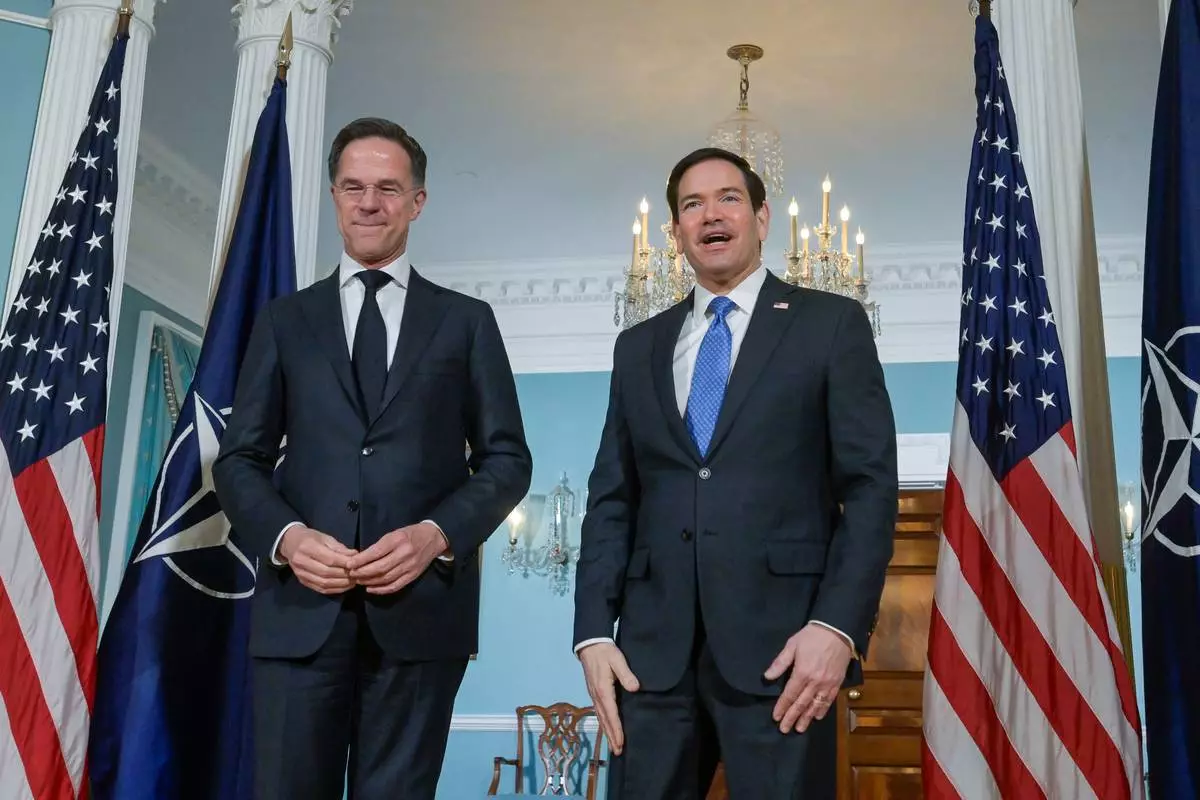
Secretary of State Marco Rubio, right, is joined by NATO Secretary General Mark Rutte, left, for a photo opportunity at the State Department, Wednesday, April 8, 2026, in Washington. (AP Photo/Rod Lamkey, Jr.)
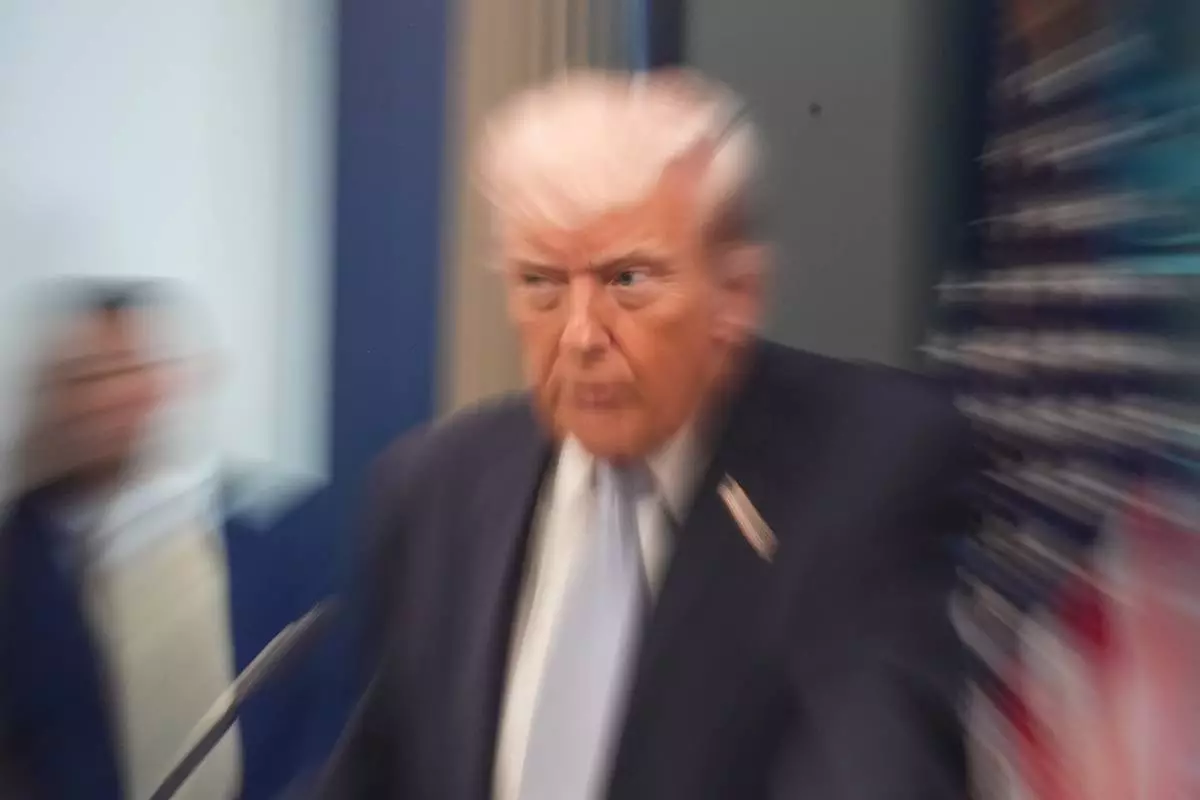
A zoom lens and slow shutter speed technique shows President Donald Trump speaking with reporters in the James Brady Press Briefing Room at the White House, Monday, April 6, 2026, in Washington.(AP Photo/Alex Brandon)
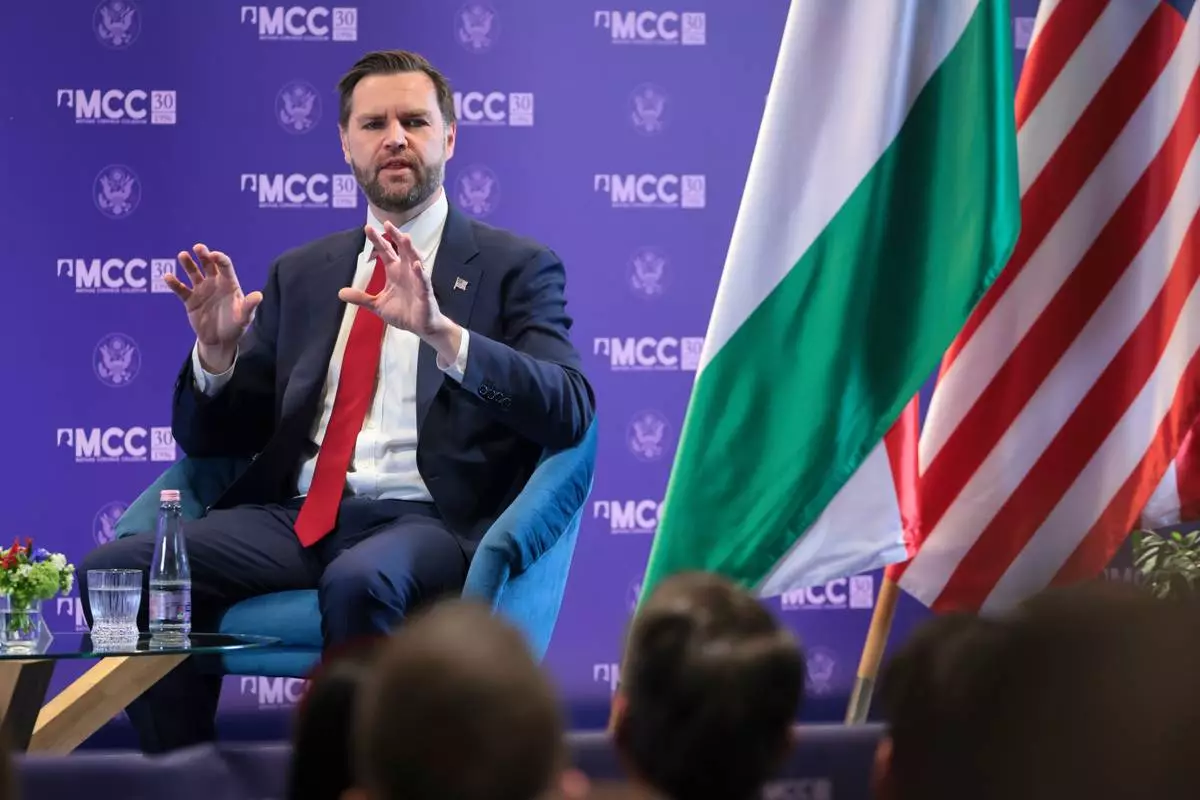
U.S. Vice President JD Vance, speaks at Mathias Corvinus Collegium in Budapest, Hungary, Wednesday, April 8, 2026. (Jonathan Ernst/Pool Photo via AP)
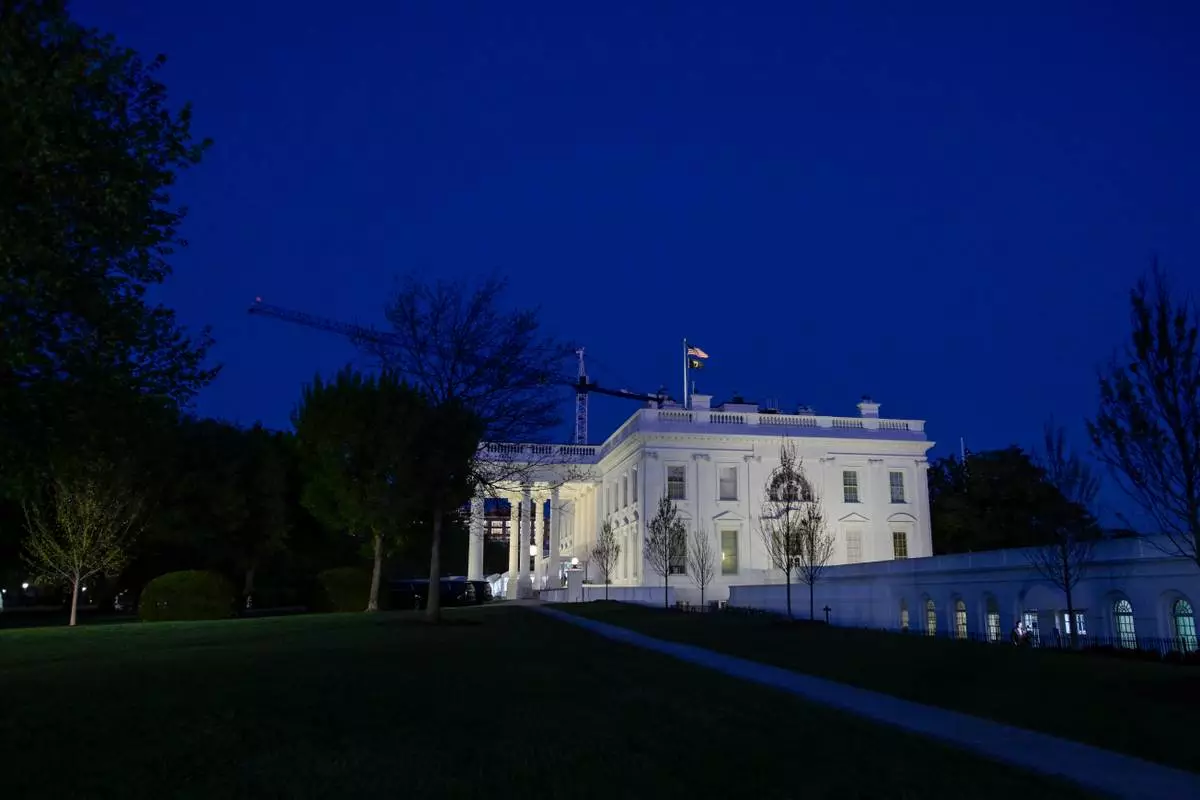
The White House is seen in Washington, Tuesday, April 7, 2026, at 8:00 p.m. EDT. (AP Photo/Rod Lamkey, Jr.)
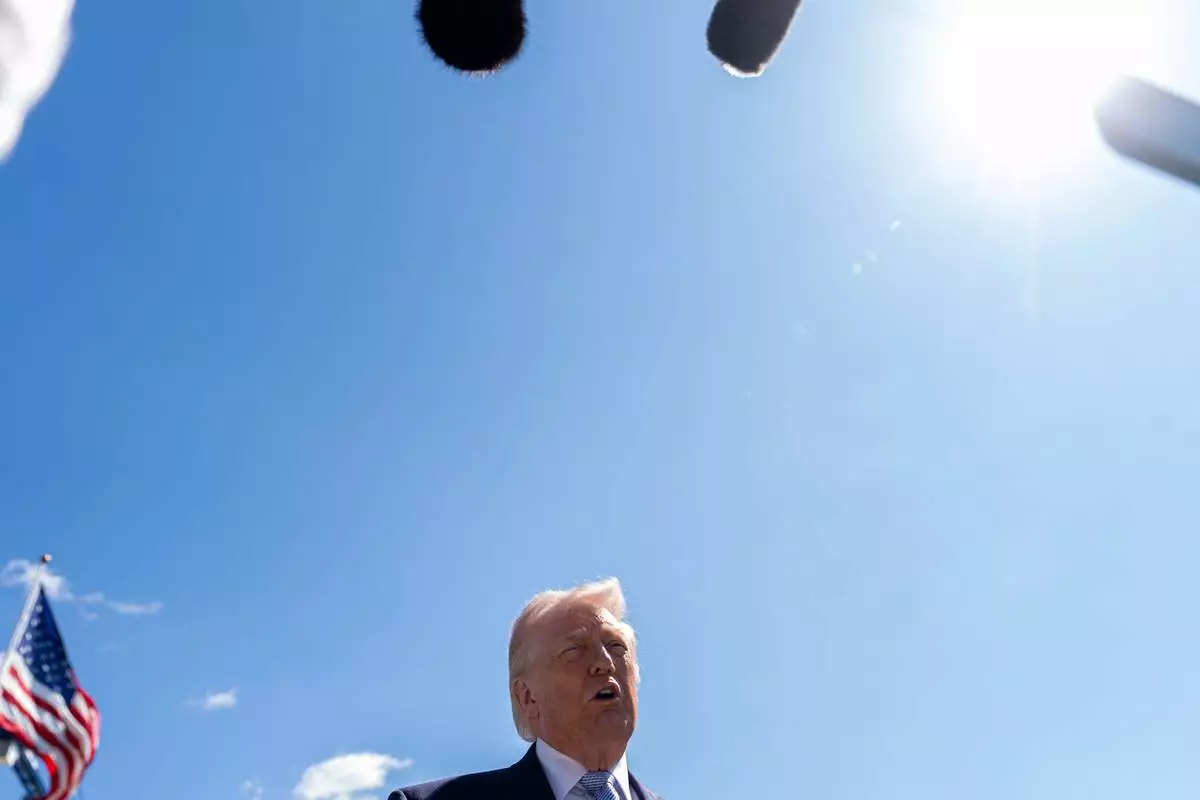
President Donald Trump speaks with reporters during the White House Easter Egg Roll on the South Lawn of the White House, Monday, April 6, 2026, in Washington. (AP Photo/Julia Demaree Nikhinson)