NASHVILLE, Tenn. (AP) — The Tennessee Supreme Court on Wednesday temporarily blocked a lower court's order that would have let media witnesses view more parts of state-run executions.
The ruling restores the prior process ahead of the May 21 scheduled execution of Tony Carruthers, and it will remain in place during an ongoing appeal. The order expanding access had not yet been in effect during any execution.
In January, a Nashville judge issued a temporary injunction favoring a coalition of news organizations including The Associated Press. The group sued over claims that state execution protocols unconstitutionally limit thorough and accurate reporting.
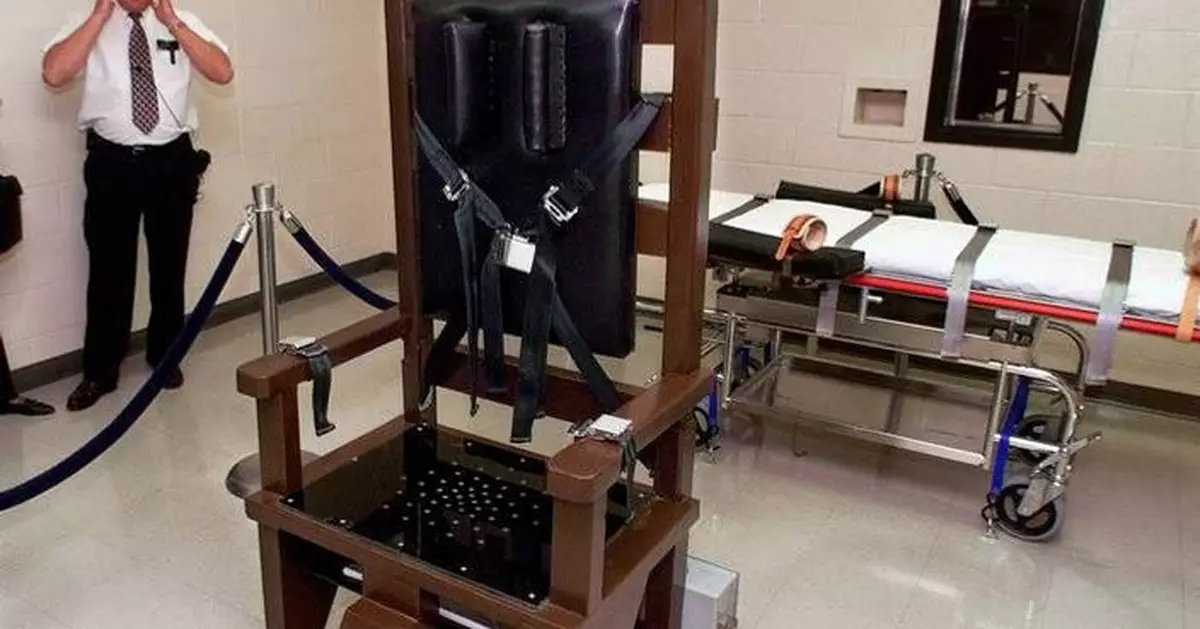
The judge had ordered that the curtains to the official witness room be opened earlier during a lethal injection, allowing witnesses to observe the inmate being secured with restraints to a gurney and the IV insertion process itself. The curtains would have to remain open longer as well, until the pronouncement of death, under the judge's ruling.
The judge also had ruled that, in to protect execution team members' identities, they would have had to wear a disposable protective suit covering the members’ regular work uniform, identification badge and hair, and must be offered a mask to further conceal themselves.
While arguing to block the new rules during its appeal, the state attorney general's office has said the media plaintiffs don't have a right under the First Amendment to watch executions, let alone to see the additional segments ordered viewable by the trial court judge. The state also argued that the order that would have expanded the media's view significantly risks exposing the identities of execution team members, introduces “untested” procedures and relies on an erroneous analysis of state statutes.
In response, attorneys for the media organizations contended that blocking the expanded access would deprive the public of valuable information about upcoming scheduled executions. They have said they have a constitutional and statutory right to observe executions in their entirety and that wearing PPE would shield the execution team's identities.
The order reinstates the process from previous executions, when media members begin seeing what happens once the condemned person is already strapped to a gurney and hooked up to IV lines. Witnesses also don’t know at which precise moment the injections begin and those administering the injections are in a separate room.
The protocol says that after the syringes of saline and pentobarbital are administered, a team leader signals to the warden and a five-minute waiting period begins. After that period, the blinds are closed, the camera is turned off and then the doctor comes in to determine if the person is dead. If that is the case, the warden announces on the intercom system that the sentence was carried out and witnesses are directed to exit.
The camera and closed circuit TV are viewed by the execution team, not media witnesses.
In addition to AP, the media coalition includes Gannett Co., Inc.; Nashville Public Media, Inc.; Nashville Public Radio; Scripps Media, Inc.; Six Rivers Media, LLC; and TEGNA INC.
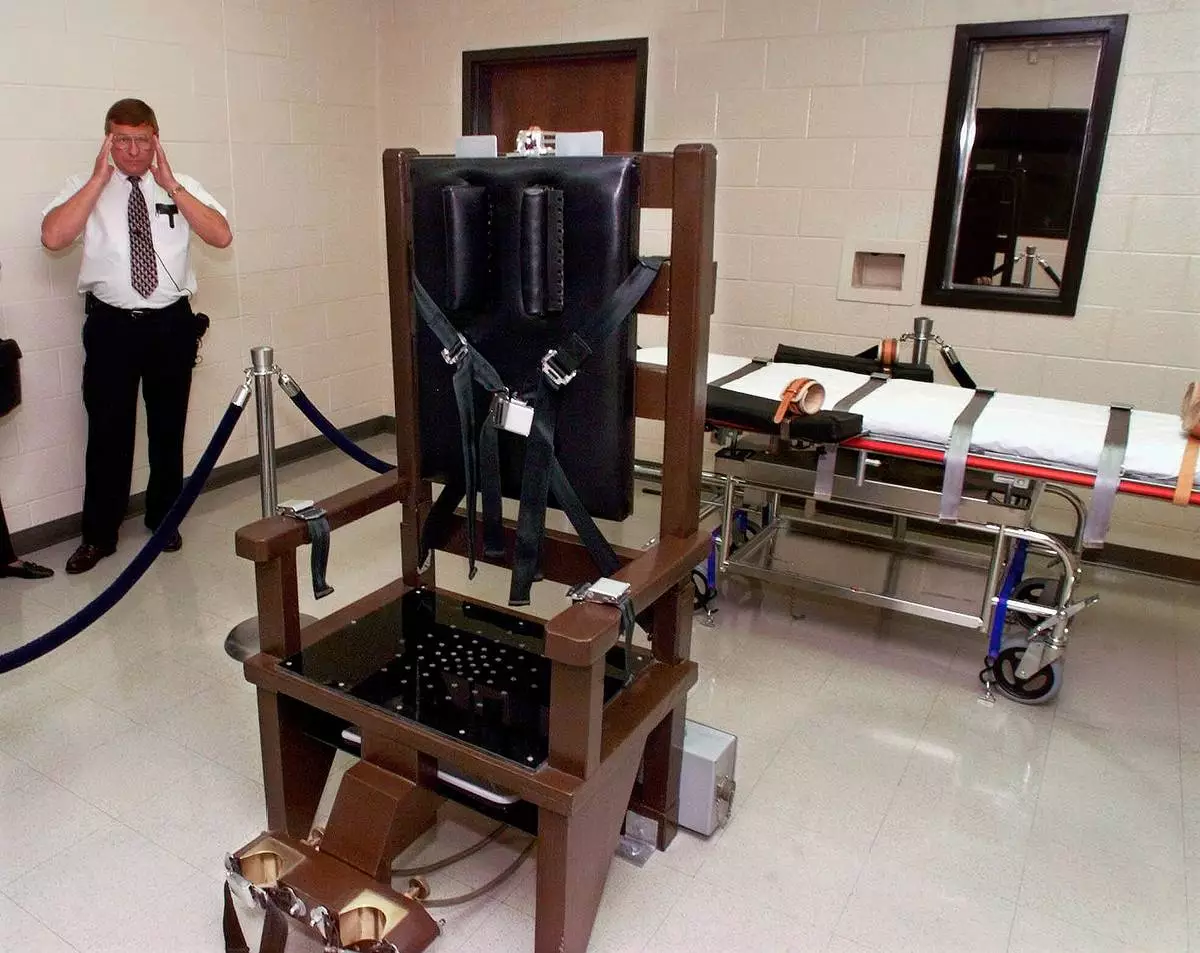
FILE - Ricky Bell, warden at Riverbend Maximum Security Institution in Nashville, Tenn., gives a tour of the prison's execution chamber, Oct. 13, 1999. (AP Photo/Mark Humphrey, File)
WASHINGTON (AP) — President Donald Trump, over the course of a single day, went from threatening Iran with “annihilation” to proclaiming that the battered Islamic Republic's leadership had presented a “workable” plan that led him to agree to a 14-day ceasefire that he hopes will pave the way to end the nearly six-week war.
The dramatic shift in tenor came as intermediaries led by Pakistan worked feverishly to head off a further escalation. Even China, Iran's biggest trading partner and America's most significant economic competitor, quietly pulled strings to find a path toward a ceasefire, according to two officials briefed on the matter who were not authorized to comment publicly and spoke on the condition of anonymity.
“The reason for doing so is that we have already met and exceeded all Military objectives, and are very far along with a definitive Agreement concerning Longterm PEACE with Iran, and PEACE in the Middle East,” Trump said in a social media post Tuesday announcing the temporary ceasefire. It came about 90 minutes before his deadline for Tehran to open the critical Strait of Hormuz or see its power plants and other critical infrastructure obliterated.
But even as the White House was celebrating the moment as a victory, the fragile ceasefire appeared in danger of falling apart as the U.S., Iran and Israel offered differing statements on Wednesday on what was included in the deal less than 24 hours after it was brokered.
Iran insisted that an end to the Israeli war in Lebanon was part of the ceasefire agreement with the U.S. But Israeli Prime Minister Benjamin Netanyahu and Trump said the truce did not cover Lebanon and the Israeli operations there continued.
The U.S., meanwhile, demanded that Iran make good on reopening the strait after the Islamic Republic closed the waterway in response to Israel's intensifying attacks against the Hezbollah militant group in Lebanon.
Vice President JD Vance, who is set to lead a U.S. delegation to Pakistan later this week for mediated talks with Iran aimed at finding a permanent agreement to end the conflict, downplayed the setbacks, saying “no ceasefire ever goes without a little bit of choppiness.”
“We’re seeing evidence that things are going in the right direction, but it’s going to take a little time,” Vance told reporters as he wrapped up a visit to Hungary.
The president also met at the White House with NATO Secretary-General Mark Rutte on Wednesday. Trump has been angry that NATO member countries ignored his call to help reopen the vital waterway as gas prices soared during the war.
As the Trump deadline for Iran to open the strait neared, Democratic lawmakers decried Trump's threat to wipe away an entire civilization as “a moral failure." Pope Leo XIV warned that strikes against civilian infrastructure would violate international law and said the Republican president's comments were “truly unacceptable.”
In the end, Trump may have backed down because of a simple truth: Escalation could risk involving the United States in the sort of “forever war” that had bedeviled his predecessors in the White House and that he had vowed he would keep the U.S. out of if voters elected him again.
As Trump boasted about U.S. and Israeli military success over the past six weeks, he appeared to be working from the premise that he could bomb Iran into capitulation.
Starting with the killing of Ayatollah Ali Khamenei in the opening salvos, he seemed to discount that the Iranian leadership could opt for a long and bloody war.
The Islamic Republic over the past 47 years has shown it is willing to dig in, even when it appears to America to be working against its own self-interest.
The clerical leadership held Americans hostage for 444 days, from late 1979 to early 1981, at the cost of the country’s international standing. The mullahs allowed the Iran-Iraq war to go on for years, leaving hundreds of thousands dead. Iran stood by Hamas after the Oct. 7, 2023, attack that ultimately defanged the Iran-backed group in Gaza as well as Hezbollah in Lebanon, and created the conditions that led to the collapse of Bashar Assad's government in Syria, an authoritarian rule supported by Tehran.
Iran's leadership exuded confidence that it could bog down the world's superpower in a costly and extended conflict even if it might not defeat the U.S. military.
Defense analysts largely agreed that the U.S. military could quickly take control of the narrow Persian Gulf waterway between Iran and Oman through which roughly 20% of the world's oil flows on any given day. But maintaining security over the strait would require a high-risk, resource-intensive operation that could be a yearslong American commitment.
Ben Connable, executive director of the nonprofit Battle Research Group, said securing the strait would require the U.S. military to maintain control of about 600 kilometers (373 miles) of Iranian territory, from Kish Island in the west to Bandar Abbas in the east, in order to stop Iran from firing missiles at passing ships. It is a mission that Connable said would likely require three U.S. infantry divisions, roughly 30,000 to 45,000 troops.
“This would be an indefinite operation — so, you know, think: be ready to do this for 20 years,” said Connable, a retired Marine Corps intelligence officer. “We didn't think we were going to be in Afghanistan for 20 years. We didn’t think we’re going to have to be in Vietnam as long as we were, or Iraq.”
The two-week ceasefire includes allowing both Iran and Oman to charge fees on ships transiting through Hormuz, a regional official said. The official said Iran would use the money it raised for reconstruction.
White House press secretary Karoline Leavitt on Wednesday noted that Trump has considered the idea of a toll for vessels passing through the strait. But in the near term, his priority “is the reopening of the strait without any limitations, whether in the form of tolls or otherwise.”
The White House confirmed that Vance will lead the U.S. negotiating team in talks with Iran aimed at finding a permanent end to war.
The delegation is also expected to include special envoy Steve Witkoff and Trump’s son-in-law Jared Kushner. The talks are expected to begin Friday in Pakistan's capital, Islamabad.
“Vice President Vance has played a very significant and a key role in this since the very beginning,” Leavitt said.
Trump’s deadline was nearing with no resolution in sight when Vance, who has long pushed for restraint in U.S. military intervention overseas, got roped into the conversation, according to an official from one of the mediating countries who was briefed on the matter and spoke on the condition of anonymity to share sensitive diplomatic discussions.
Vance expressed measured confidence that a permanent deal could reached if the Iranians act in good faith.
“I encourage the Iranians to come to the table seriously," Vance said. “We’ve seen some signs that they’re going to do that, we’ve seen some signs of bravado. Fundamentally, we're in a good spot.”
Amiri reported from New York. Associated Press writers Collin Binkley and Michelle L. Price in Washington, Justin Spike in Budapest and Samy Magdy in Cairo contributed to this report.
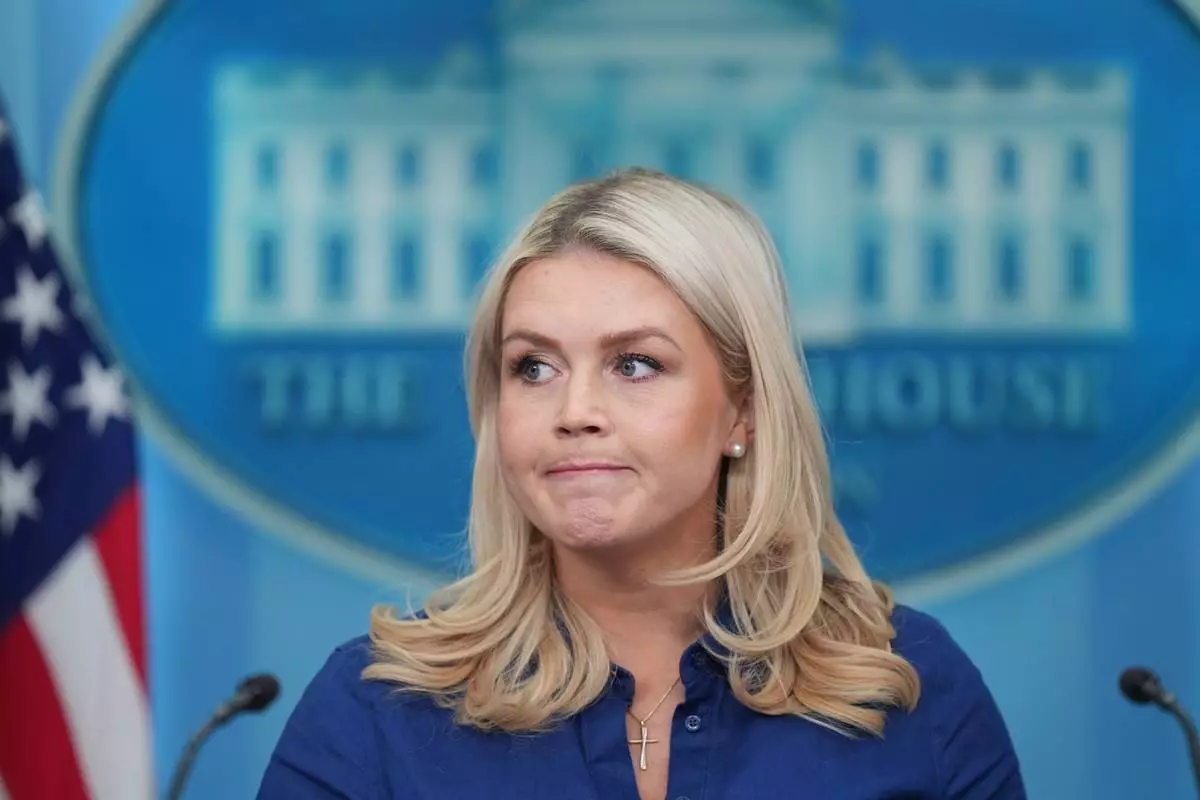
White House press secretary Karoline Leavitt speaks with reporters in the James Brady Press Briefing Room at the White House, Wednesday, April 8, 2026, in Washington. (AP Photo/Alex Brandon)
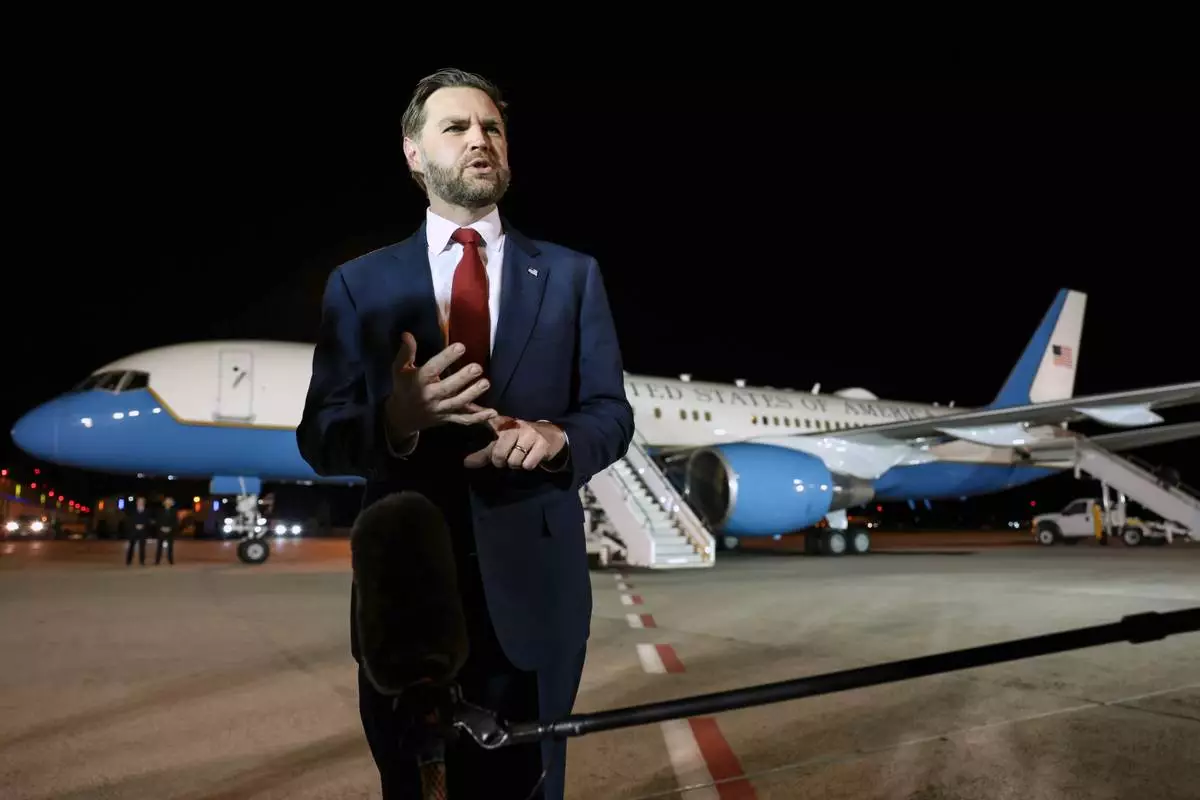
Vice President JD Vance speaks to reporters before boarding Air Force Two to return to Washington, at Budapest Ferenc Liszt International Airport in Budapest, Hungary, Wednesday, April 8, 2026. (Jonathan Ernst/Pool via AP)
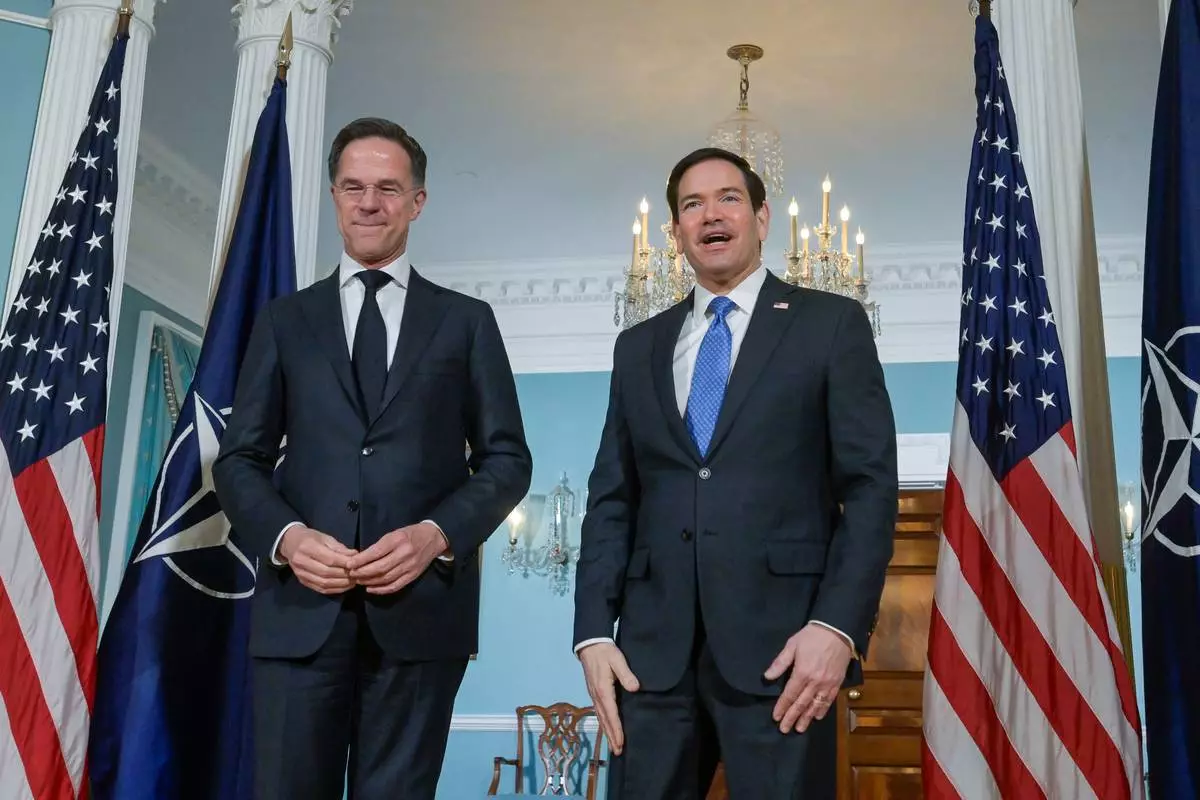
Secretary of State Marco Rubio, right, is joined by NATO Secretary General Mark Rutte, left, for a photo opportunity at the State Department, Wednesday, April 8, 2026, in Washington. (AP Photo/Rod Lamkey, Jr.)

A zoom lens and slow shutter speed technique shows President Donald Trump speaking with reporters in the James Brady Press Briefing Room at the White House, Monday, April 6, 2026, in Washington.(AP Photo/Alex Brandon)
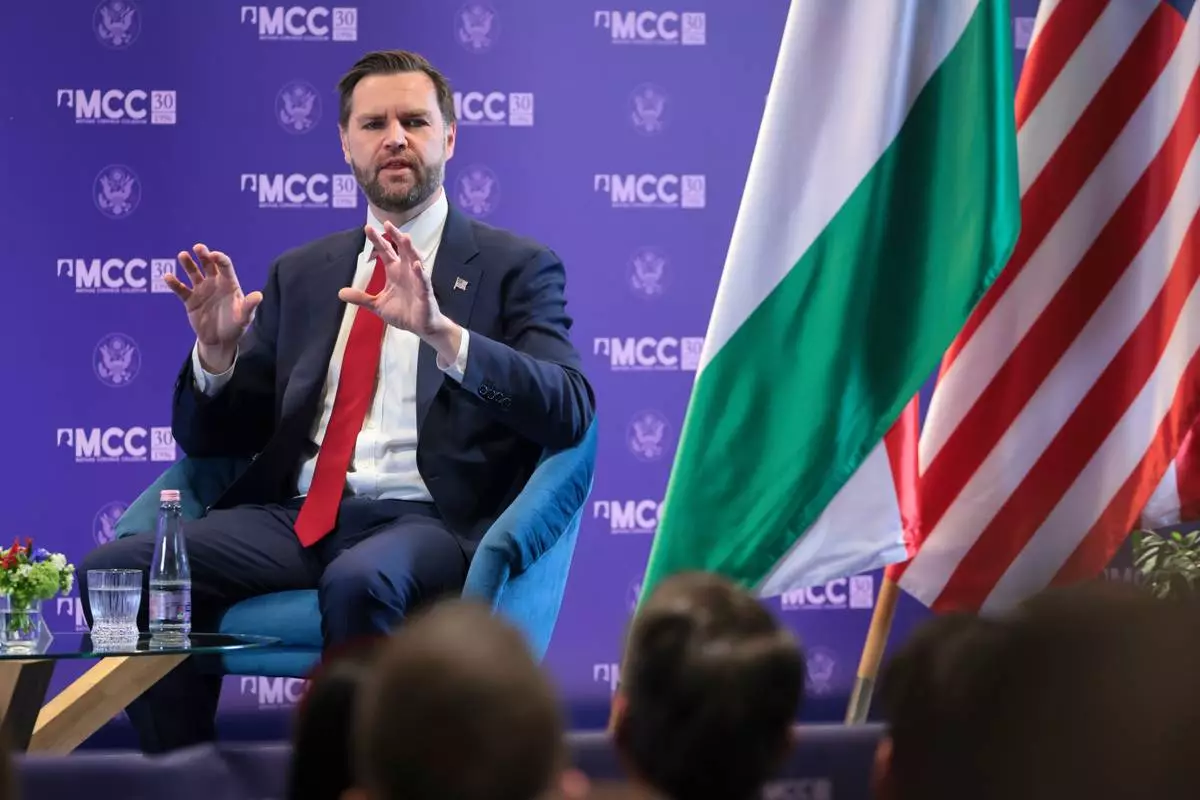
U.S. Vice President JD Vance, speaks at Mathias Corvinus Collegium in Budapest, Hungary, Wednesday, April 8, 2026. (Jonathan Ernst/Pool Photo via AP)
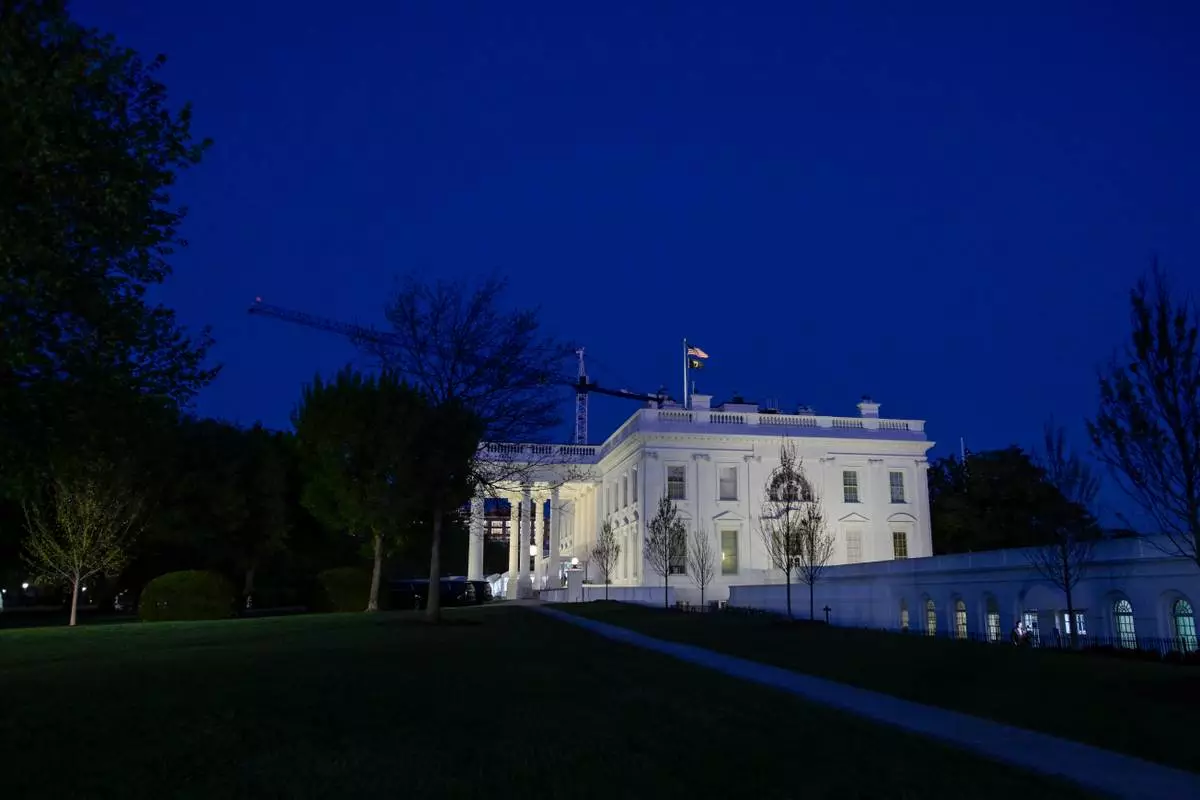
The White House is seen in Washington, Tuesday, April 7, 2026, at 8:00 p.m. EDT. (AP Photo/Rod Lamkey, Jr.)
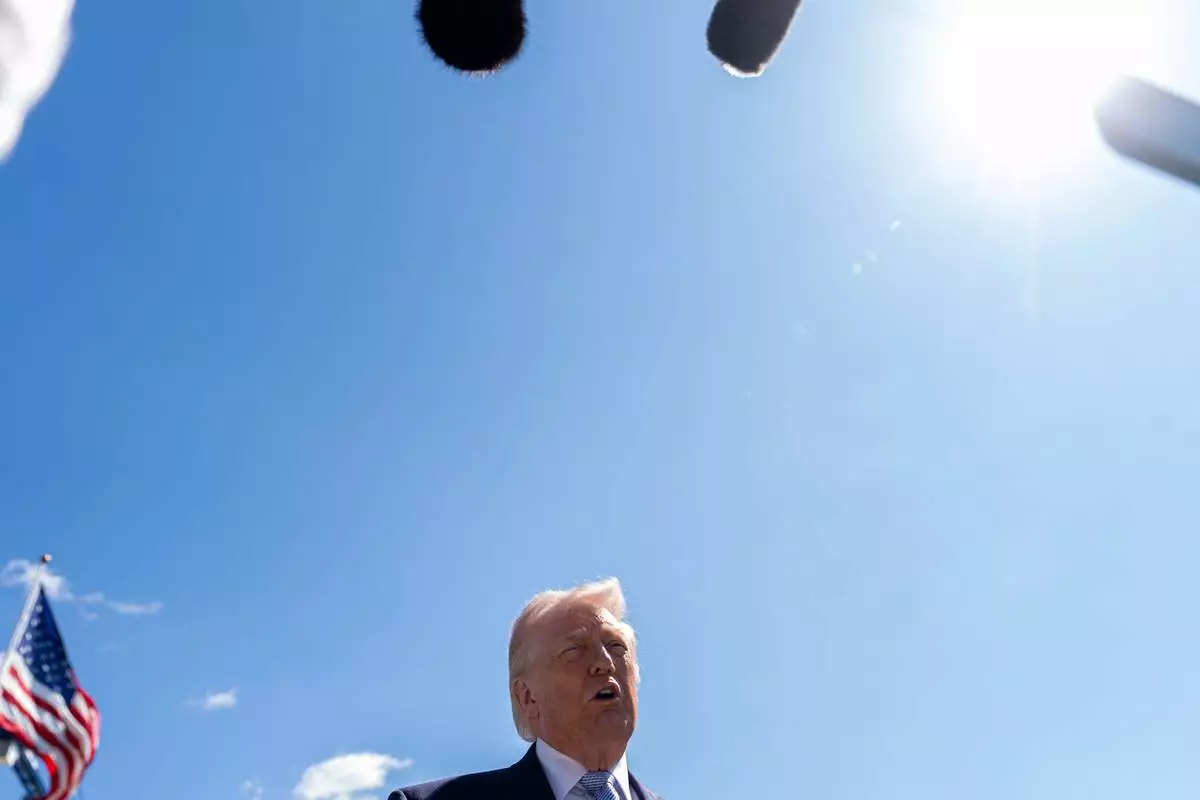
President Donald Trump speaks with reporters during the White House Easter Egg Roll on the South Lawn of the White House, Monday, April 6, 2026, in Washington. (AP Photo/Julia Demaree Nikhinson)