Remember the iPod? It's making a quiet comeback.
Four years after Apple killed off its digital music player, secondhand sales are surging. It's fueled in part by young people interested not just in its retro looks but a desire to listen to music in a focused way and with playlists not determined by algorithms.
“There’s a growing trend, particularly amongst younger users, to mitigate the ease with which they can be distracted by smartphones, often driven by mental health and well-being concerns,” said Ben Wood, chief analyst at CCS Insight. “Having a dedicated music device, such as an iPod, is a good way to reduce your dependence on a smartphone and avoid being drawn into other activities, like doomscrolling through social media feeds, when you only really want to listen to music.”
If you're interested in joining the iPod revival, here are some pointers:
You can't buy a new iPod anymore but it's not too hard to get your hands on a used one. There are still a lot of them around because Apple sold 450 million over two decades.
There's a thriving secondhand market, as evidenced by thousands of listings for used iPods on eBay. “Based on my discussions with people in the market, there has definitely been renewed interest in refurbished iPods,” said Wood.
But watch out, because eBay, strangely, also has thousands of listings for new iPods. On closer inspection, they're from China-based sellers and some buyers have left feedback complaining they received a used or refurbished device in counterfeit packaging.
Facebook Marketplace, peer-to-peer reselling site Mercari and refurbished electronics platform Back Market also have plenty of listings. Back Market, which operates in the U.S., Japan and more than a dozen European countries, said iPod sales last year jumped 48% from 2024.
There are also businesses dedicated to selling refurbished iPods.
And there’s a chance someone you know has one gathering dust in a drawer somewhere. My 16-year-old daughter recently discovered her grandmother's silver iPod Nano, complete with original charging cable and white earphones, in a guest room nightstand during a recent visit.
For support, there’s a vibrant online community of users swapping tips and sharing pictures of their devices, many with aftermarket modifications like faceplates in non-original colors.
There's not just one single style of iPod.
The original iPod, released in 2001, came with a scroll wheel that became a design signature. When the sixth generation was released, Apple started calling it the Classic.
It was followed by the smaller Mini and Nano versions, and the Shuffle, which had no screen. Then came the Touch, which had a glass touch screen and ran on iOS to support mobile apps — basically an iPhone without the phone.
If you're not sure which model you have, check Apple's identification page.
So you've found grandma's old iPod, but does it work? The battery could be dead so you will need a charging cable.
Later generations of the iPod Touch used Apple's Lightning cable but all other models require a 30-pin charging cable, which has a distinctive wide, flat plug. Apple doesn't make these anymore but replacements are available from aftermarket manufacturers.
If charging doesn't revive it, the battery might need replacing. Or maybe there's something else wrong, like a broken earphone jack or a damaged display. Apple still repairs iPods, but only for the two final generations of the Touch.
You can send it to a repair service or fix it yourself if you're feeling handy. Repair website iFixit has detailed step-by-step repair guides for replacing various components. You'll need to source spare parts yourself.
IPod Touch owners should beware of software limitations. The most recent version of Apple's operating system that will work on the seventh generation iPod Touch — the last version ever sold — is iOS 15, and previous models are limited to even older versions.
This is not an issue with other iPod variants because they don't run iOS.
Grandma's silver iPod Nano appeared to be working fine, but I decided to start fresh by doing a factory reset to wipe the audio files left on it and restore the original settings. You'll need a computer, either a Mac or Windows, to do this. Apple has a page that outlines the steps.
Those of you with Windows computers can use Apple's iTunes program to manage your iPod and sync up your song library. To add digital music files from your computer, drag the files into iTunes and drop them in the iPod's music library. To add a song that you've bought previously in iTunes, download it first to your computer, right click on it and select “Add to Device."
Apple discontinued iTunes for MacOS in 2019 so Mac computer users will have to use Apple Music, but it's an equally easy process of dragging and dropping files.
Take note, Apple Music subscribers: you should be able to stream music on later generations of the iPod Touch. But for every other type of iPod, you'll only be able to add and listen to music files ripped from a CD or purchased from a digital music platform.
Most iPods are pretty basic, in part because they're limited by the device's onboard firmware.
But part of the iPod’s appeal is that it’s easy for hobbyists to tinker with them, said Wood.
“There is definitely a movement of people looking to take iPods and modify them for modern use,” he said.
One popular hack is replacing the iPod's firmware with open-source software such as RockBox, which can be used “to upgrade an iPod to offer greater control and add features that Apple had not included or did not exist at the time,” Wood said.
This includes support for high-resolution lossless music files, the ability to manage music without iTunes, and tracking what you've been listening to so you can upload your playlist to a platform such as Last.fm, Wood said.
Is there a tech topic that you think needs explaining? Write to us at onetechtip@ap.org with your suggestions for future editions of One Tech Tip.

An iPod is displayed at the new Apple Museum which traces 50 years of the iconic brand's innovations, in Utrecht, Netherlands, Wednesday, April 1, 2026. (AP Photo/Peter Dejong)
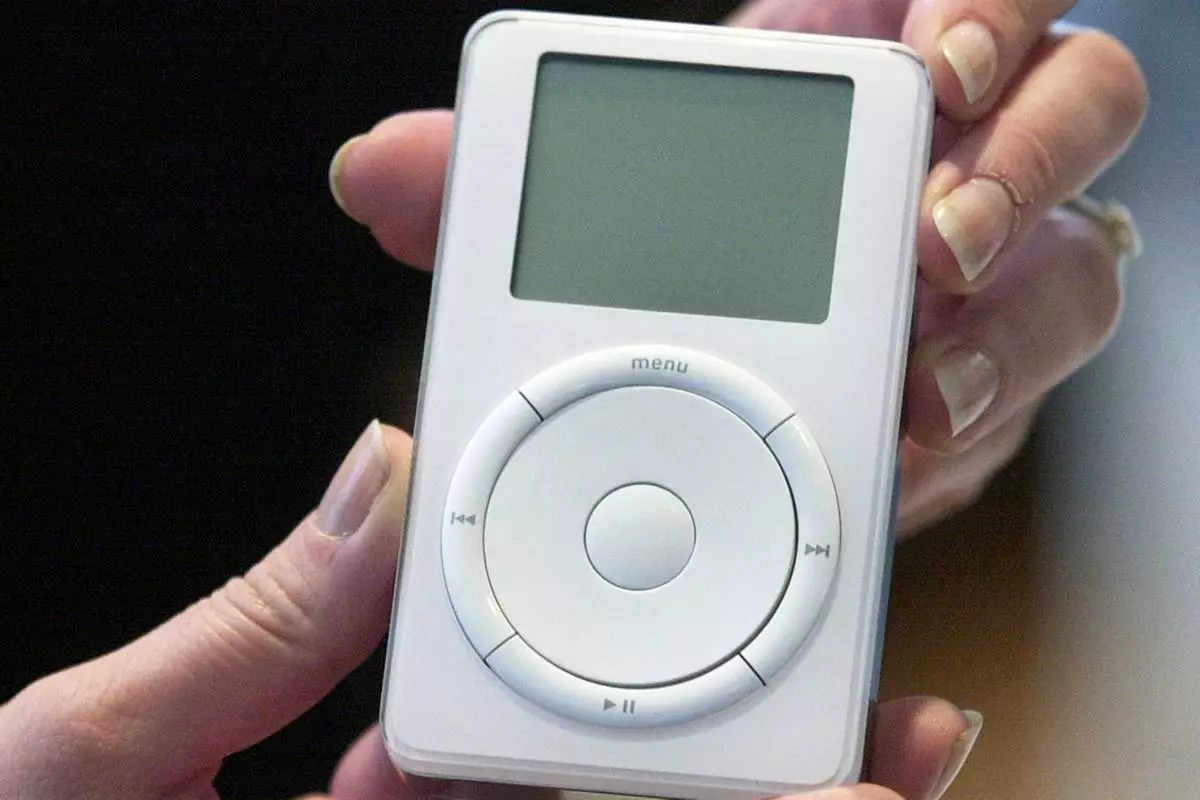
FILE - An iPod is displayed after its introduction by Apple CEO Steve Jobs during a news conference, Oct. 23, 2001, in Cupertino, Calif. (AP Photo/Julie Jacobson, File)

HONOLULU (AP) — A Hawaii anesthesiologist who was accused of trying to murder his wife on a scenic cliffside hike with ocean views last year has been convicted of the lesser charge of attempted manslaughter.
A Honolulu jury returned the verdict against Gerhardt Konig, 47, on Wednesday after a day of deliberations. Rather than the more serious charge of attempted murder, he was convicted of attempted manslaughter based on extreme mental or emotional disturbance, which carries up to 20 years in prison. Sentencing was set for Aug. 13.
Thomas Otake, his attorney, said he planned to appeal. Nevertheless, Otake said the defense respected the jury's verdict.
“We are thankful that they did not convict him of attempted murder, which would have been life in prison,” Otake said. “We look forward to an appeal related to some of the judge's rulings throughout the case.”
EDITOR’S NOTE: This story includes discussion of domestic violence. If you or someone you know needs help, please call the national domestic violence hotline: 1-800-799-7233 in the U.S.
Distraught over her relationship with a coworker, Konig planned to kill his wife, Arielle Konig, during a weekend trip to Honolulu for her birthday in March 2025, prosecutors said. They said he tried to push her off a cliff and stab her with a syringe, and when that didn't work, he struck her with a rock. The attack was interrupted by two hikers who heard her cries for help.
The defendant testified that it was his wife who first hit him with a rock, and he hit her back in self-defense.
Konig stood as the jury’s foreperson announced the verdict, then closed his eyes and lowered his face. His parents declined to comment to reporters afterward. Arielle Konig was not in court.
Jury foreperson Makalapua Atkins said deliberations focused on what transpired on the trail. She said jurors examined the testimony of those who were at the scene to see where they matched up and where there were inconsistencies.
“At the end of the day when it comes down to it, she was hit in the head. And a head injury can be serious. And that’s a very deadly part of the body," Atkins told reporters after the verdict was read.
Jurors believed an affair Arielle Konig had was sufficient to cause “an emotional disturbance” and this affected their verdict, she said.
Under Hawaii law, if jurors believe a defendant committed murder but was under the influence of an extreme mental or emotional disturbance at the time, they must reduce the charge to attempted manslaughter if they believe there was a reasonable explanation for the disturbance.
During closing arguments, the doctor’s lawyer repeatedly sought to cast doubt on Arielle Konig’s account.
If Gerhardt Konig had wanted to kill his wife and had access to a syringe in a remote area, attorney Thomas Otake suggested to jurors during closing arguments, wouldn’t he have drugged her and then thrown her from the cliff, rather than having started a scuffle before attempting to fill the syringe as he was wrestling with her?
“You would use the syringe first,” Otake said. “It makes no sense.”
The trial started last month, nearly a year after Gerhardt and Arielle Konig went on a hike on the Pali Puka trail in Honolulu that ended with her bloodied and screaming that he had tried to kill her.
Their two young sons stayed home on Maui while the Konigs were on the trip.
The Pali Puka trail has long been closed by the state of Hawaii due to its danger but social media sites feature it. People trespass on state land to take in its views and snap photos. Arielle Konig described it as having “narrow ridge sections with steep drop-offs on both sides.”
The trial, with testimony livestreamed by Court TV, has aired the couple’s marital problems leading up to the hike, along with their versions of what happened on the trail.
Gerhardt Konig testified that his wife was having an affair, which he confirmed by unlocking her phone while she slept. The relationship, which Arielle Konig characterized as an “emotional affair” involving flirty messages with a coworker, came up during the hike.
Arielle Konig testified that her husband grabbed her and moved her toward the cliff’s edge, but she threw herself on the ground in an attempt to hold on. He straddled her and had a syringe in his hand, she said, but she batted it away. She bit his forearm and squeezed his testicles in an attempt to get him off her, she said.
Her husband denied pushing her toward the edge and testified that she hit him with a rock on the side of his face. He wrestled the rock away and hit her with it twice in self-defense, he said.
Gerhardt Konig also denied having any syringes on the mountain or trying to stab his wife. His defense attorney said no syringe was found at the scene because he never had one.
Otake said Gerhardt Konig was not someone who would try to commit murder, but someone who was struggling with infidelity and trying to do his best. Otake quoted from a heart-shaped birthday card Gerhardt Konig had written to his wife, calling her “the heart of our family” and saying, “The kids and I hit the jackpot with you.”
Gerhardt Konig testified that as he watched his wife crawl away, he believed his marriage and career were over, and he decided to jump to his death. But first, he called his adult son from a previous marriage. The son told authorities that his father said he “tried to kill your stepmom” — a confession Gerhardt Konig denied having made.
Konig testified that he called his son to say good-bye.
During that call, the defendant made no reference to having struck his wife in self-defense, deputy prosecutor Joel Garner said.
He spent about eight hours hiding on the mountain before deciding to come down, and even then, he tried to flee when confronted by police, Garner said.
His wife has since filed for divorce.
Associated Press writer Audrey McAvoy contributed to this report.
Thomas Otake, right, defense attorney for Gerhardt Konig, speaks to media after Konig's verdict, Wednesday, April 8, 2026, in Honolulu. (Jamm Aquino/Honolulu Star-Advertiser via AP, Pool)
Deputy prosecutor Joel Garner speaks to media after the verdict in Gerhardt Konig's trial, Wednesday, April 8, 2026, in Honolulu. (Jamm Aquino/Honolulu Star-Advertiser via AP, Pool)
Gerhardt Konig, center, reacts after the verdict is read in court Wednesday, April 8, 2026, in Honolulu. (Jamm Aquino/Honolulu Star-Advertiser via AP, Pool)
Gerhardt Konig, left, reacts after the verdict is read while sitting with defense attorney Thomas Otake, right, in court Wednesday, April 8, 2026, in Honolulu. (Jamm Aquino/Honolulu Star-Advertiser via AP, Pool)
FILE - Hawaii doctor Gerhardt Konig appears before a judge via video during an arraignment hearing after being indicted on allegation of attempting to kill his wife, April 7, 2025, in Honolulu. (AP Photo/Marco Garcia, File)
Defense attorney Thomas Otake delivers closing arguments during the attempted murder trial of Gerhardt Konig, in a courtroom, Tuesday, April 7, 2026, in Honolulu. (AP Photo/Mengshin Lin, Pool)
Gerhardt Konig, left, talks to his defense lawyer Thomas Otake after closing arguments in his attempted murder trial in a courtroom, Tuesday, April 7, 2026, in Honolulu. (AP Photo/Mengshin Lin, Pool)
Deputy Prosecutor Joel Garner holds a rock as evidence while presenting closing arguments during the attempted murder trial of Gerhardt Konig in a courtroom, Tuesday, April 7, 2026, in Honolulu. (AP Photo/Mengshin Lin, Pool)
Gerhardt Konig appears in court before closing arguments in his attempted murder trial, Tuesday, April 7, 2026, in Honolulu. (AP Photo/Mengshin Lin, Pool)