Skip to Content Facebook Feature Image

Netanyahu authorizes direct talks with Lebanon in potential boost to ceasefire efforts

News

Netanyahu authorizes direct talks with Lebanon in potential boost to ceasefire efforts
News

News

Netanyahu authorizes direct talks with Lebanon in potential boost to ceasefire efforts

2026-04-10 10:00 Last Updated At:10:10

DUBAI, United Arab Emirates (AP) — In a potential boost to Middle East ceasefire efforts, Israeli Prime Minister Benjamin Netanyahu said Thursday that he has authorized direct negotiations with Lebanon “as soon as possible” aimed at disarming Iranian-backed Hezbollah militants and establishing relations between the neighbors.

Israel and Lebanon have technically been at war since Israel was established in 1948, and Netanyahu later stressed that there was no ceasefire between them. In a video statement, he said Israel will keep striking Hezbollah until security is restored in northern Israel.

More Images
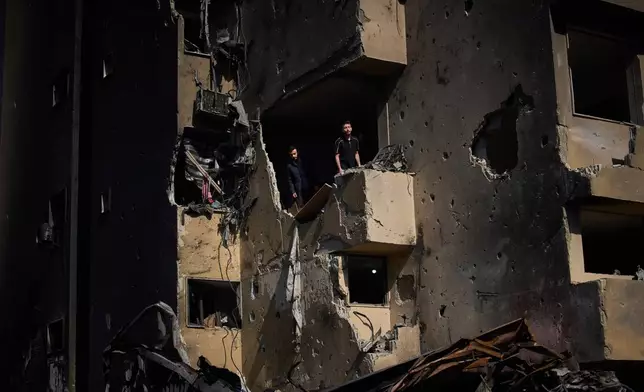
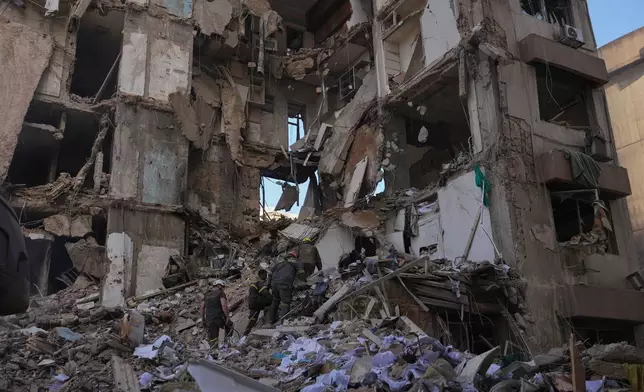
Men inspect the damage to their home destroyed in an Israeli airstrike a day earlier in Beirut, Lebanon, Thursday, April 9, 2026. (AP Photo/Emilio Morenatti)
Men inspect the damage to their home destroyed in an Israeli airstrike a day earlier in Beirut, Lebanon, Thursday, April 9, 2026. (AP Photo/Emilio Morenatti)

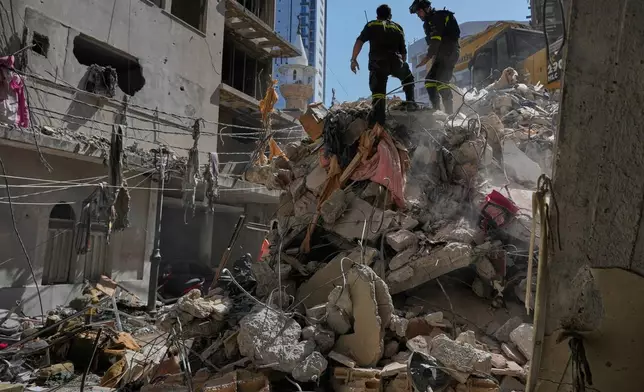
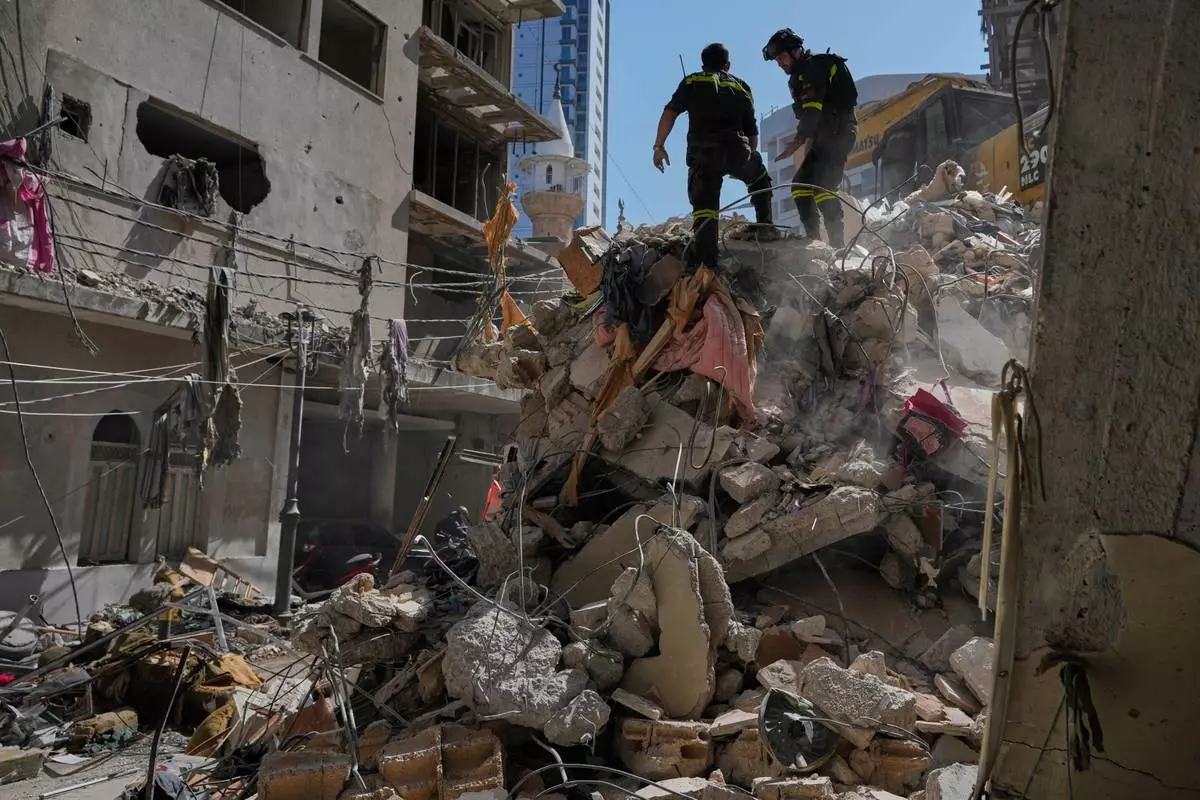
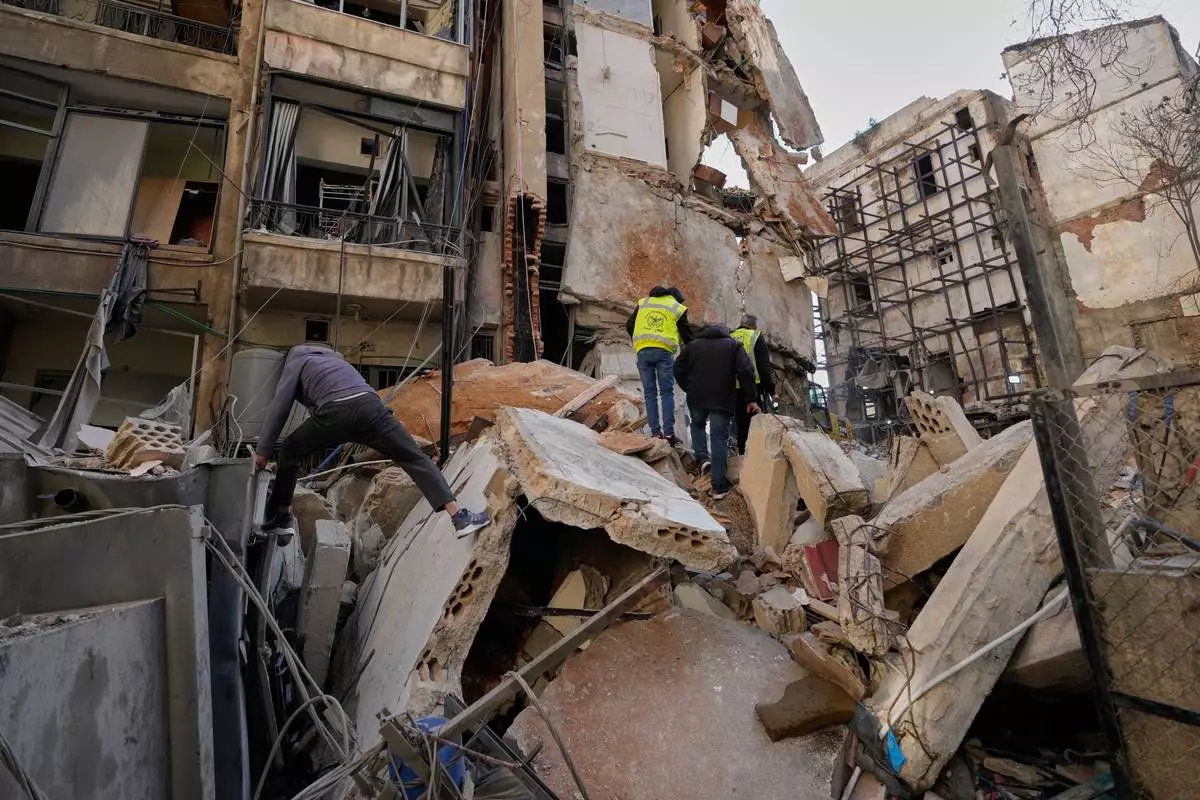
Lebanese civil defense workers inspect the rubble at the site of a building destroyed in an Israeli airstrike a day earlier in Beirut, Lebanon, Thursday, April 9, 2026. (AP Photo/Hussein Malla)
Lebanese civil defense workers inspect the rubble at the site of a building destroyed in an Israeli airstrike a day earlier in Beirut, Lebanon, Thursday, April 9, 2026. (AP Photo/Hussein Malla)

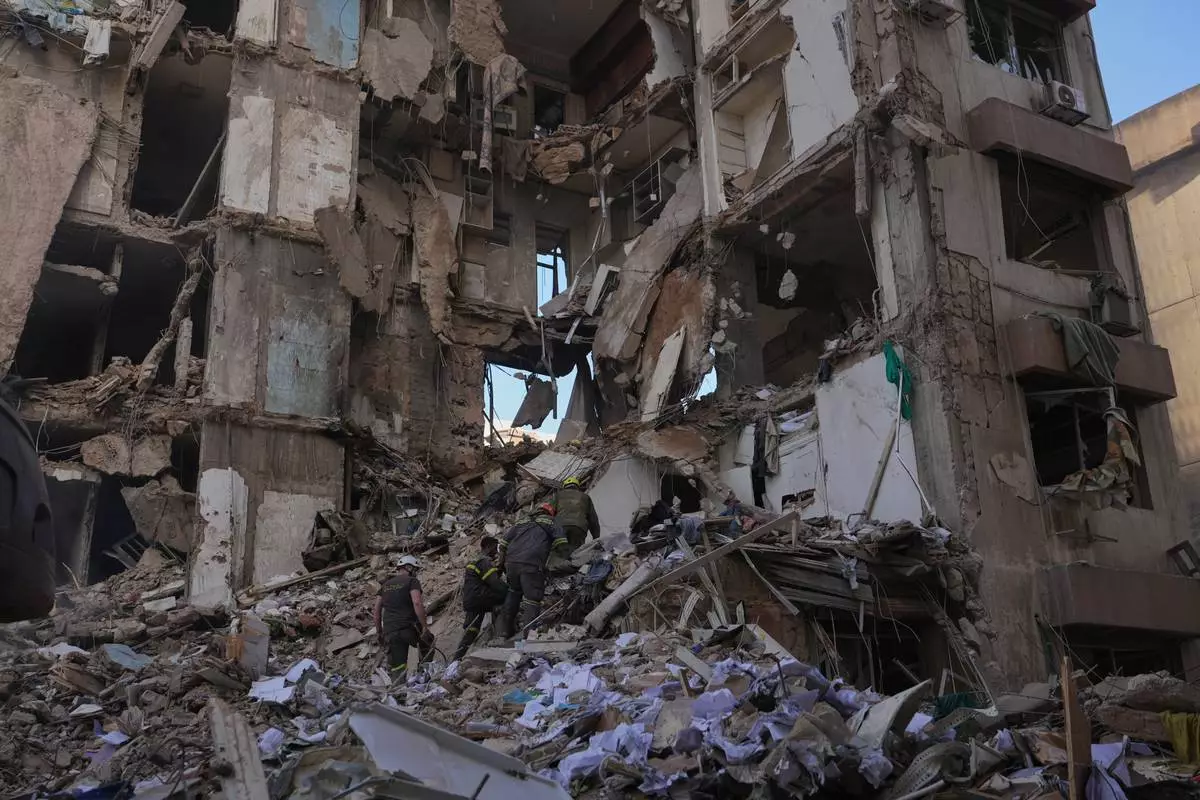
Lebanese civil defense workers search for victims in the rubble of a building destroyed in an Israeli airstrike a day earlier in central Beirut, Lebanon, Thursday, April 9, 2026. (AP Photo/Hassan Ammar)
Lebanese civil defense workers search for victims in the rubble of a building destroyed in an Israeli airstrike a day earlier in central Beirut, Lebanon, Thursday, April 9, 2026. (AP Photo/Hassan Ammar)

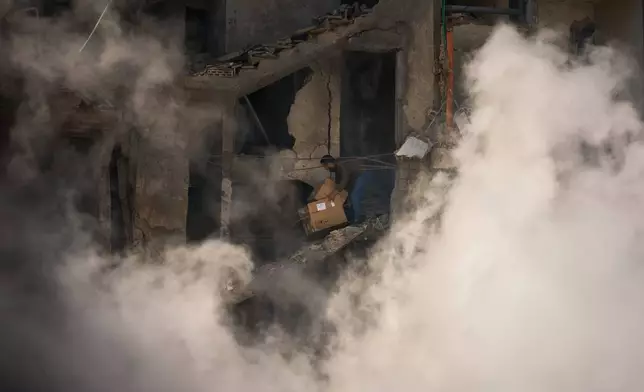
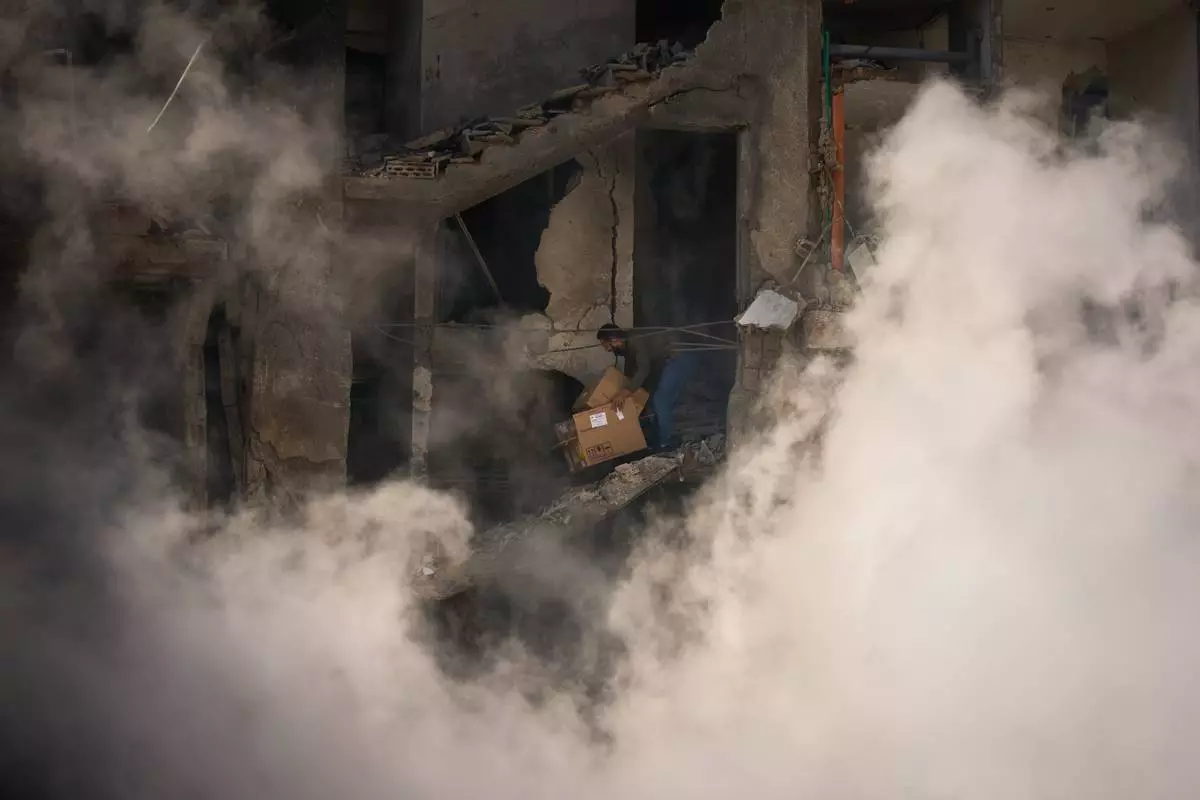
A man gathers his belongings from his home, which has been destroyed in an Israeli airstrike a day earlier in Beirut, Lebanon, Thursday, April 9, 2026. (AP Photo/Emilio Morenatti)
A man gathers his belongings from his home, which has been destroyed in an Israeli airstrike a day earlier in Beirut, Lebanon, Thursday, April 9, 2026. (AP Photo/Emilio Morenatti)

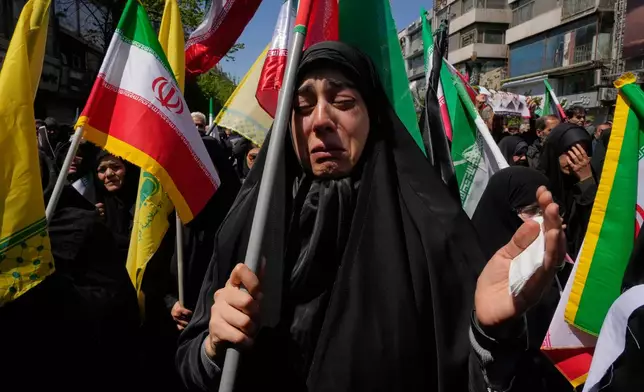
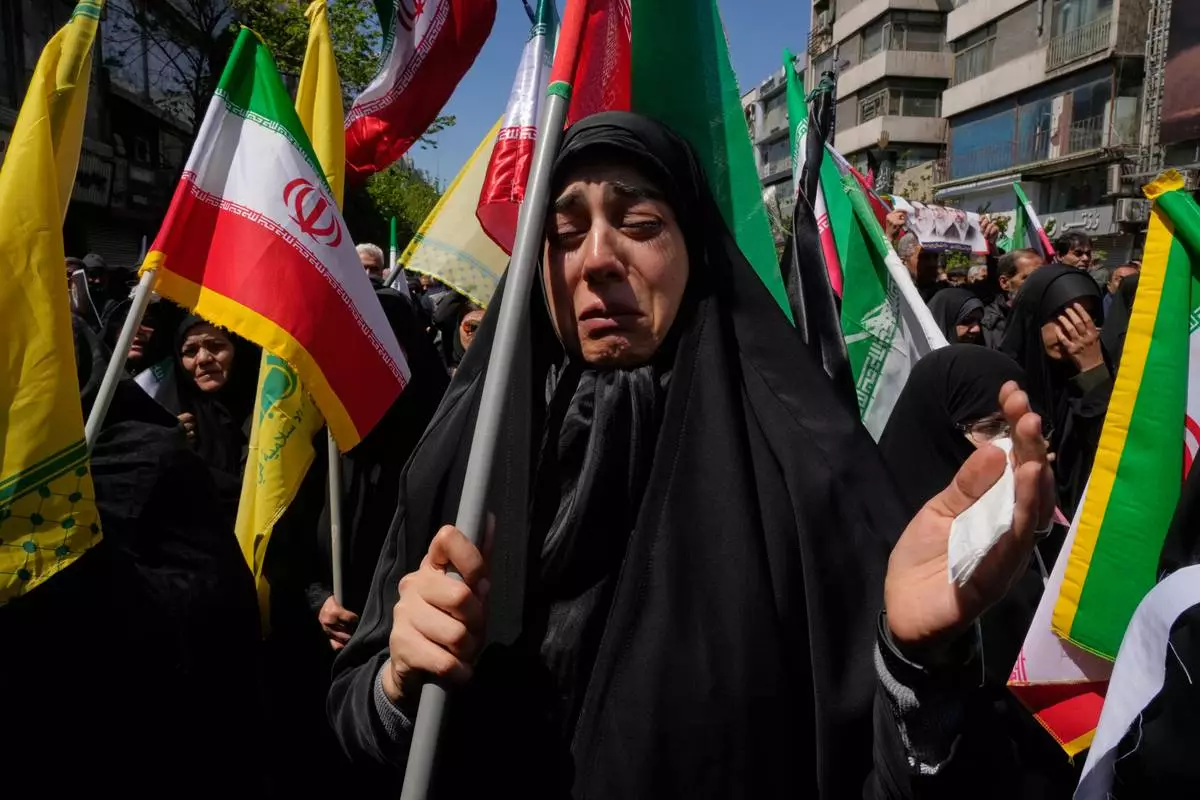
A government supporter weeps during a mourning ceremony marking the 40th day since the death of Iranian Supreme Leader Ayatollah Ali Khamenei, who was killed in the U.S. and Israel strikes in Tehran, Iran, Thursday, April 9, 2026. (AP Photo/Vahid Salemi)
A government supporter weeps during a mourning ceremony marking the 40th day since the death of Iranian Supreme Leader Ayatollah Ali Khamenei, who was killed in the U.S. and Israel strikes in Tehran, Iran, Thursday, April 9, 2026. (AP Photo/Vahid Salemi)

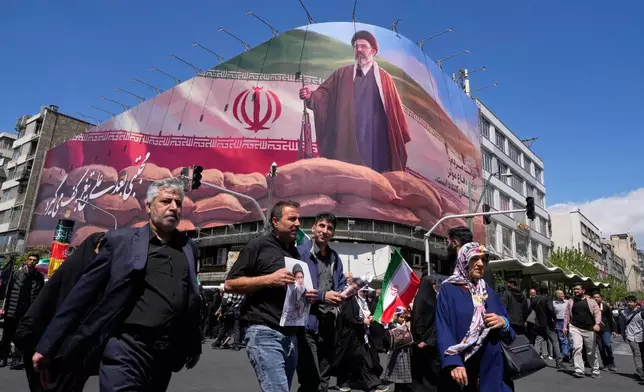
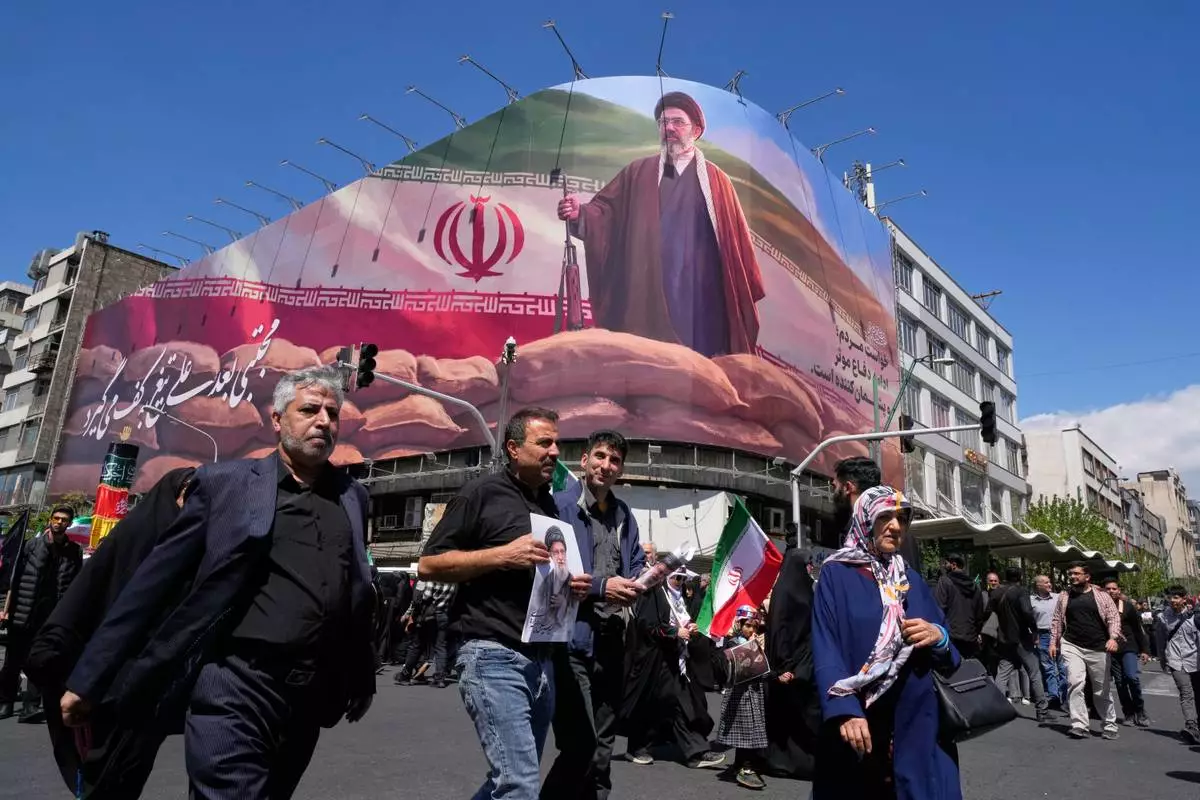
Government supporters walk past a billboard depicting Iran's Supreme Leader Mojtaba Khamenei as they gather to mark the 40th day since the killing of his father, slain Supreme Leader Ayatollah Ali Khamenei, in Tehran, Iran, Thursday, April 9, 2026. (AP Photo/Vahid Salemi)
Government supporters walk past a billboard depicting Iran's Supreme Leader Mojtaba Khamenei as they gather to mark the 40th day since the killing of his father, slain Supreme Leader Ayatollah Ali Khamenei, in Tehran, Iran, Thursday, April 9, 2026. (AP Photo/Vahid Salemi)

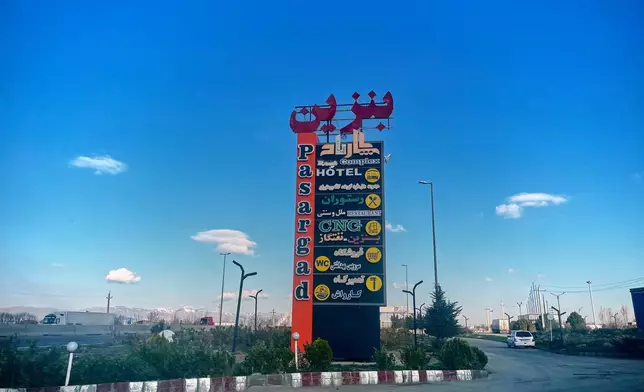
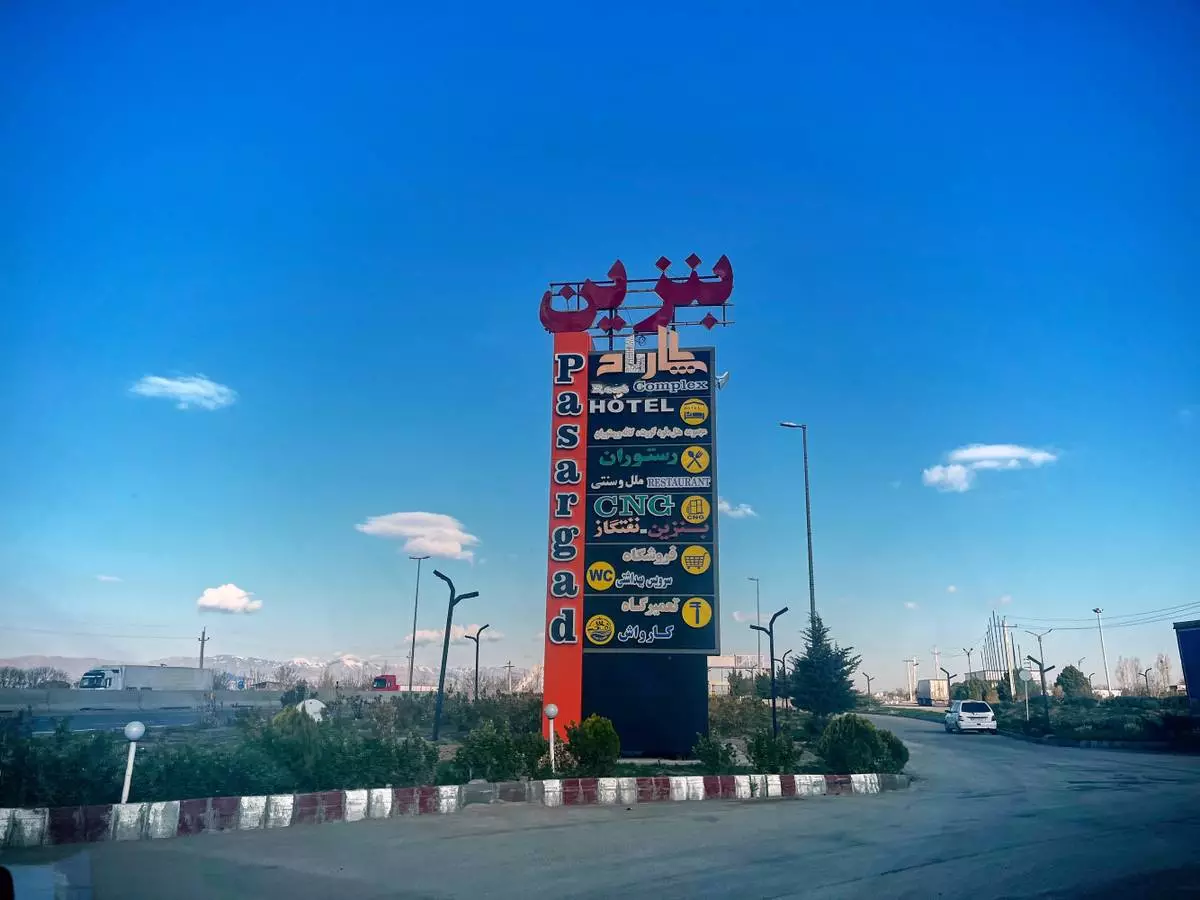
A sign for a roadside hotel is seen on Road 2 near Golhahr, Iran, Thursday, April 9, 2026. (AP Photo/Francisco Seco)
A sign for a roadside hotel is seen on Road 2 near Golhahr, Iran, Thursday, April 9, 2026. (AP Photo/Francisco Seco)

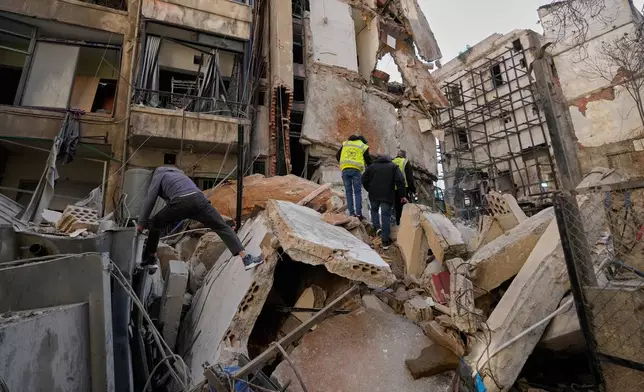
People inspect the rubble of a building destroyed in an Israeli airstrike a day earlier in Beirut, Lebanon, Thursday, April 9, 2026. (AP Photo/Hussein Malla)

People inspect the rubble of a building destroyed in an Israeli airstrike a day earlier in Beirut, Lebanon, Thursday, April 9, 2026. (AP Photo/Hussein Malla)

Government supporters gather to mark the 40th day since the death of Supreme Leader Ayatollah Ali Khamenei in Tehran, Iran, Thursday, April 9, 2026. (AP Photo/Vahid Salemi)
Government supporters gather to mark the 40th day since the death of Supreme Leader Ayatollah Ali Khamenei in Tehran, Iran, Thursday, April 9, 2026. (AP Photo/Vahid Salemi)

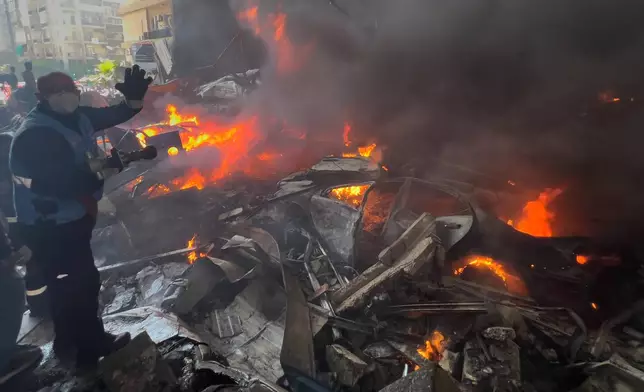
A rescue worker extinguishes burning cars at the site of an Israeli airstrike in central Beirut, Lebanon, Wednesday, April 8, 2026. (AP Photo/Hussein Malla)
A rescue worker extinguishes burning cars at the site of an Israeli airstrike in central Beirut, Lebanon, Wednesday, April 8, 2026. (AP Photo/Hussein Malla)

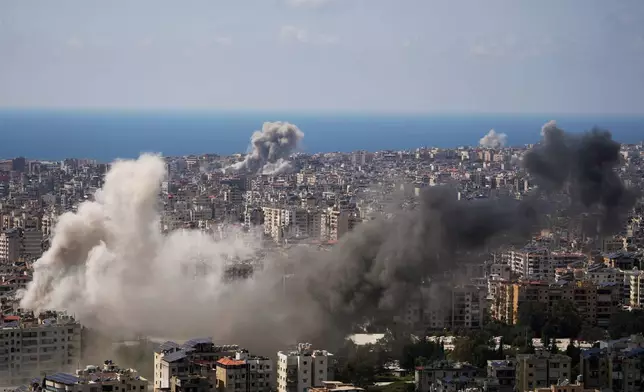
Smoke rises following several Israeli airstrikes in Beirut, Lebanon, Wednesday, April 8, 2026. (AP Photo/Hassan Ammar)
Smoke rises following several Israeli airstrikes in Beirut, Lebanon, Wednesday, April 8, 2026. (AP Photo/Hassan Ammar)

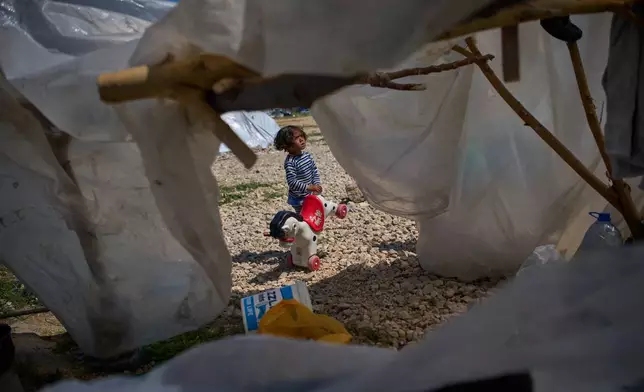
Ali, 4, holds a toy horse next to the tent his family uses as a shelter after fleeing Israeli bombardment in southern Lebanon, in Beirut, Lebanon, Wednesday, April 8, 2026. (AP Photo/Emilio Morenatti)
Ali, 4, holds a toy horse next to the tent his family uses as a shelter after fleeing Israeli bombardment in southern Lebanon, in Beirut, Lebanon, Wednesday, April 8, 2026. (AP Photo/Emilio Morenatti)

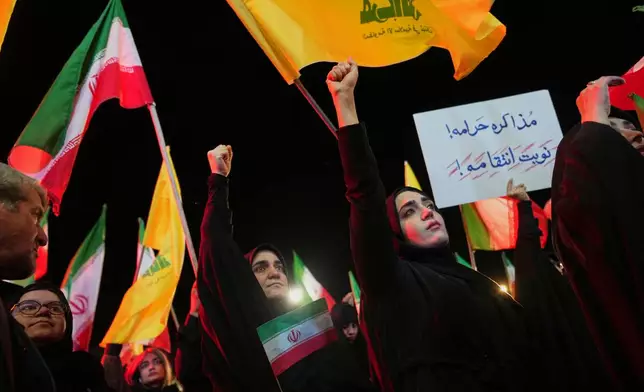
Government supporters gather ahead of the funeral procession for Maj. Gen. Majid Khademi, head of intelligence for Iran's paramilitary Revolutionary Guard, in Tehran, Iran, Wednesday, April 8, 2026. (AP Photo/Francisco Seco)
Government supporters gather ahead of the funeral procession for Maj. Gen. Majid Khademi, head of intelligence for Iran's paramilitary Revolutionary Guard, in Tehran, Iran, Wednesday, April 8, 2026. (AP Photo/Francisco Seco)

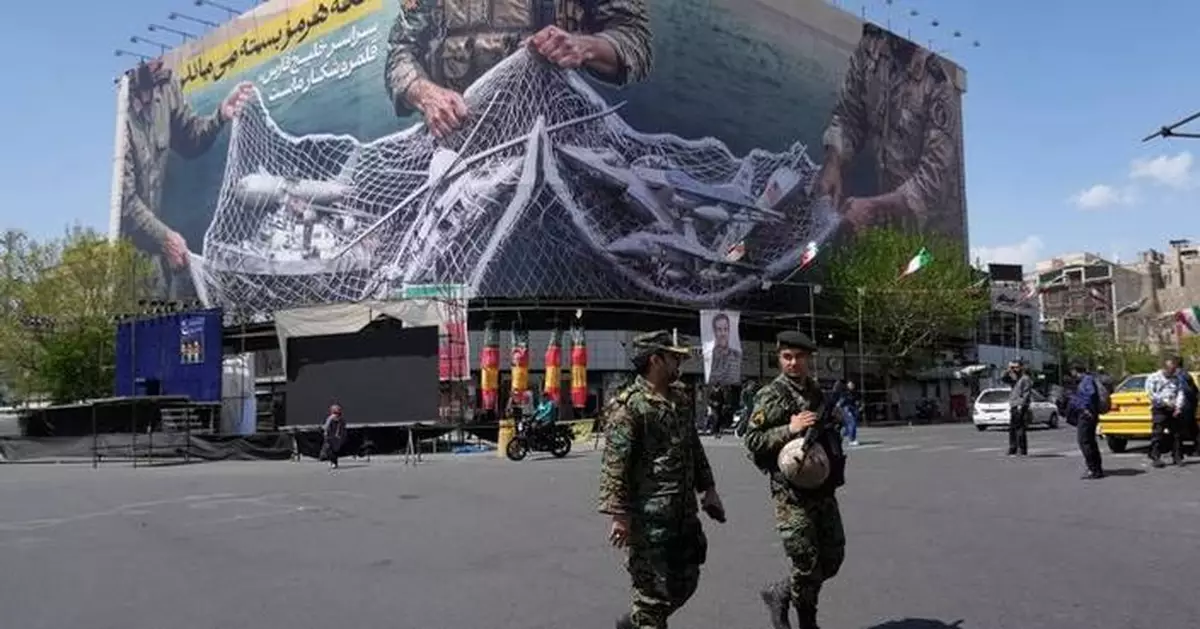
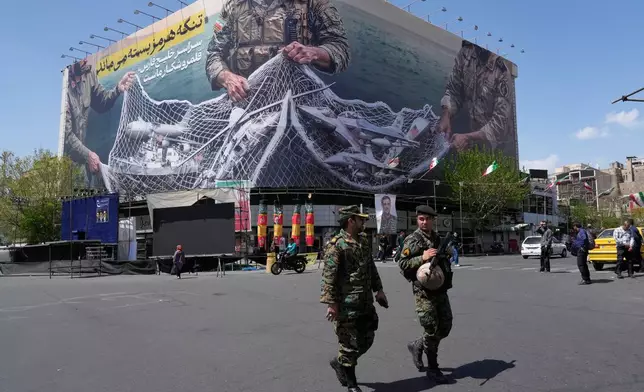
FILE - Two police officers walk in front of an anti-U.S. billboard depicting American aircraft being caught by Iranian armed forces in a fishing net beneath the words in Farsi, "The Strait of Hormuz will remain closed, The entire Persian Gulf is our hunting ground," in Tehran, Iran, Sunday, April 5, 2026. (AP Photo/Vahid Salemi, File)

FILE - Two police officers walk in front of an anti-U.S. billboard depicting American aircraft being caught by Iranian armed forces in a fishing net beneath the words in Farsi, "The Strait of Hormuz will remain closed, The entire Persian Gulf is our hunting ground," in Tehran, Iran, Sunday, April 5, 2026. (AP Photo/Vahid Salemi, File)

There was no immediate response from Lebanon. But Israel-Lebanon negotiations were expected to begin next week at the State Department in Washington, according to a U.S. official and a person familiar with the plans, who spoke on condition of anonymity due to the delicacy of the matter.

The prospect of talks appeared to bolster the tentative ceasefire in the Iran war that has staggered under the weight of Israel’s bombardment of Beirut, Tehran’s continued chokehold on the Strait of Hormuz and uncertainty over whether talks can find common ground.

However later Thursday, U.S. President Donald Trump appeared to cast doubt on the effectiveness of the ceasefire, writing on his social media platform: “Iran is doing a very poor job, dishonorable some would say, of allowing Oil to go through the Strait of Hormuz.”

“That is not the agreement we have!” Trump wrote of the trickle of ships Iran has allowed to pass through the crucial waterway.

Meanwhile, Kuwait accused Iran and its proxies of launching drone attacks targeting it on Thursday despite the ceasefire, as Saudi Arabia said recent attacks damaged a key pipeline in the kingdom. The accusation from Kuwait’s Foreign Ministry put new pressure on the ceasefire ahead of planned talks between the U.S. and Iran this weekend.

Saudi Arabia’s state-run Saudi Press Agency, quoting an anonymous official, said its crucial East-West pipeline, which carries oil out to the Red Sea and avoids the Strait of Hormuz, was damaged in the recent attacks.

Iran’s paramilitary Revolutionary Guard denied launching attacks on Persian Gulf states after Kuwait’s announcement.

Such an assault would mirror the continuing pressure campaign Tehran is waging on the U.S. and its allies, particularly amid efforts to secure a ceasefire between Israel and Hezbollah.

Israel's announcement of negotiations with Lebanon comes amid disagreement over whether the ceasefire deal included a pause in fighting between Israel and Hezbollah, and a day after Israel pounded Beirut with airstrikes, the deadliest day in Lebanon since the war began Feb. 28.

The launch of direct peace talks between the neighboring nations is a significant achievement, though reaching an agreement will be difficult after decades of hostilities, Hezbollah’s continued presence and longstanding disagreements over the countries' shared land border.

The talks in Washington are expected to be handled on the American side by the U.S. ambassador to Lebanon, Michel Issa, and on the Israeli side by the Israeli ambassador to the U.S., Yechiel Leiter, according to the person familiar with the planning.

It was not immediately clear who would represent Lebanon. The timing and location of the talks was first reported by Axios.

After declaring victory with the ceasefire announcement, both Iran and the U.S. have appeared to apply pressure on each other. Semiofficial news agencies in Iran suggested forces have mined the Strait of Hormuz, a crucial waterway for oil that Tehran has closed. Trump warned that U.S. forces would hit Iran harder than before if it did not fulfill the agreement.

Underlining Iran’s continued control of the strait, a Botswana-flagged liquified natural gas tanker attempted to travel out of the Persian Gulf via a route ordered by the Revolutionary Guard, but suddenly turned around and headed back early Friday, ship-tracking data showed.

Questions also remained over what will happen to Iran’s stockpile of enriched uranium at the heart of tensions, how and when normal traffic will resume through the strait, and what happens to Iran’s ability to launch future missile attacks and support armed proxies in the region.

Iran’s parliament speaker, Mohammad Bagher Qalibaf, warned in a social media post Thursday that continued Israeli attacks on Hezbollah in Lebanon would bring “explicit costs and STRONG responses.”

Qalibaf has been discussed as a possible negotiator who could meet U.S. Vice President JD Vance this weekend in Islamabad. The White House has said Vance would lead the delegation for talks starting Saturday.

Iran had said Israel's ongoing attacks on Hezbollah were violating the ceasefire agreement. Netanyahu and Trump have said they were not.

Trump said Thursday that he has asked Netanyahu to dial back the strikes in Lebanon.

Lebanon’s health ministry said more than 300 people were killed and more than 1,100 wounded Wednesday by Israeli strikes on central Beirut and other areas of Lebanon that Israel said targeted Hezbollah, which joined the war in support of Tehran.

Early Friday morning, Israel’s military said it struck approximately 10 launchers in Lebanon that had fired rockets toward northern Israel on Thursday.

Israel also said Thursday it killed Ali Yusuf Harshi, an aide to Hezbollah leader Naim Kassem. There was no Hezbollah comment.

Four tankers and three bulk carriers crossed through the strait Thursday, bringing the total number of ships passing through since the ceasefire to at least 12, according to the data firm Kpler.

Semiofficial news agencies in Iran published a chart Thursday suggesting the country’s paramilitary Revolutionary Guard put sea mines into the Strait of Hormuz during the war — a message that may be intended to pressure the U.S.

The chart, released by the ISNA news agency and Tasnim, showed a large circle marked “danger zone” in Farsi over the route ships take through the strait, through which 20% of all traded oil and natural gas once passed.

The head of the United Arab Emirates’ major oil company, Sultan al-Jaber, said some 230 ships loaded with oil were waiting to get through the strait and must be allowed "to navigate this corridor without condition.”

The strait’s de facto closure has caused oil prices to skyrocket — affecting the cost of gasoline, food and other basics far beyond the Middle East. The spot price of Brent crude, the international standard, was around $98 Thursday, up about 35% since the war began.

The fate of Iran’s missile and nuclear programs — which the U.S. and Israel sought to eliminate in going to war — was unclear. The U.S. insists Iran must never be able to build nuclear weapons and wants to remove Tehran’s stockpile of highly enriched uranium, which could be used to build them. Iran insists its program is peaceful.

Trump said Wednesday that the U.S. would work with Iran to remove the uranium, buried in last year's U.S. and Israeli strikes on Iran's nuclear facilities, though Tehran did not confirm that. In one version of the ceasefire deal that Iran published, it said it would be allowed to continue enrichment.

The chief of Iran’s nuclear agency, Mohammad Eslami, said Thursday that protecting Tehran’s right to enrich uranium is “necessary” for any ceasefire talks.

Corder reported from The Hague, Netherlands. Becatoros reported from Athens, Greece. Associated Press writers Chan Ho-him in Hong Kong, Zeke Miller, Matthew Lee and Will Weissert in Washington, Hannah Schoenbaum in Salt Lake City and Kareem Chehayeb and Hussein Malla in Beirut contributed to this report.
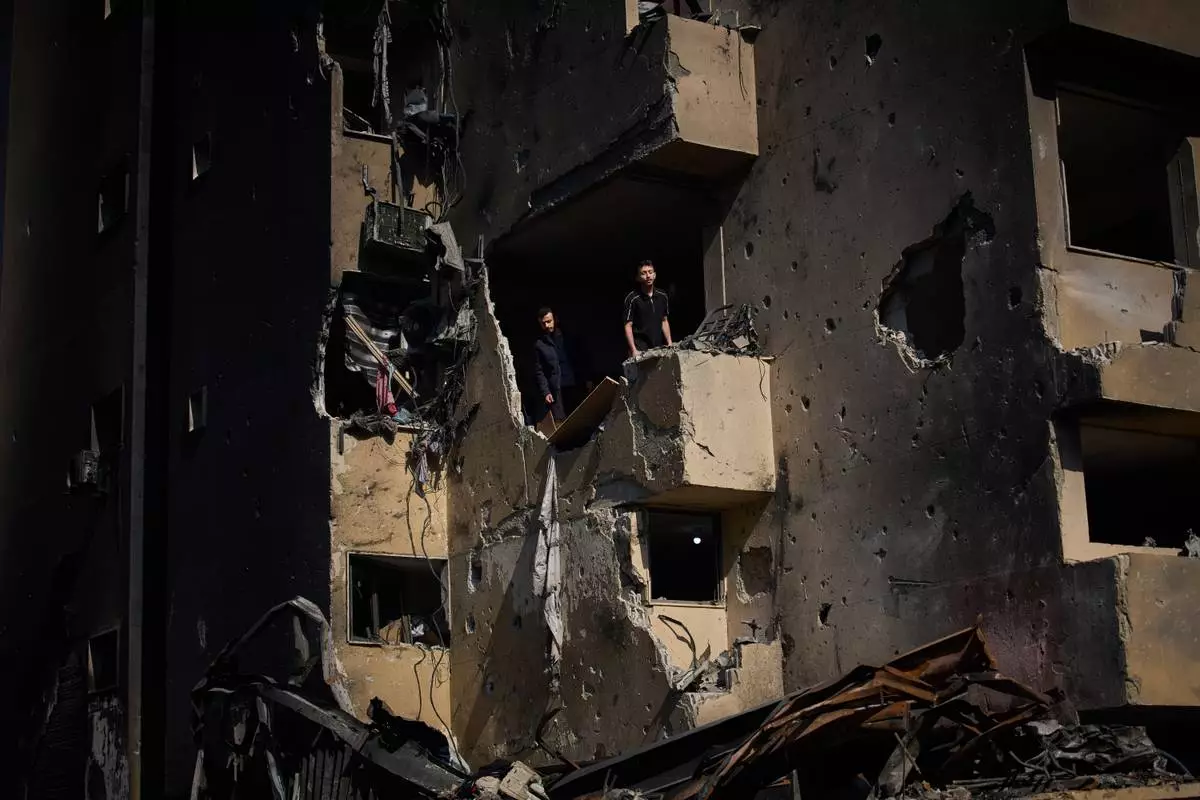
Men inspect the damage to their home destroyed in an Israeli airstrike a day earlier in Beirut, Lebanon, Thursday, April 9, 2026. (AP Photo/Emilio Morenatti)
Men inspect the damage to their home destroyed in an Israeli airstrike a day earlier in Beirut, Lebanon, Thursday, April 9, 2026. (AP Photo/Emilio Morenatti)

Lebanese civil defense workers inspect the rubble at the site of a building destroyed in an Israeli airstrike a day earlier in Beirut, Lebanon, Thursday, April 9, 2026. (AP Photo/Hussein Malla)
Lebanese civil defense workers inspect the rubble at the site of a building destroyed in an Israeli airstrike a day earlier in Beirut, Lebanon, Thursday, April 9, 2026. (AP Photo/Hussein Malla)

Lebanese civil defense workers search for victims in the rubble of a building destroyed in an Israeli airstrike a day earlier in central Beirut, Lebanon, Thursday, April 9, 2026. (AP Photo/Hassan Ammar)
Lebanese civil defense workers search for victims in the rubble of a building destroyed in an Israeli airstrike a day earlier in central Beirut, Lebanon, Thursday, April 9, 2026. (AP Photo/Hassan Ammar)

A man gathers his belongings from his home, which has been destroyed in an Israeli airstrike a day earlier in Beirut, Lebanon, Thursday, April 9, 2026. (AP Photo/Emilio Morenatti)
A man gathers his belongings from his home, which has been destroyed in an Israeli airstrike a day earlier in Beirut, Lebanon, Thursday, April 9, 2026. (AP Photo/Emilio Morenatti)

A government supporter weeps during a mourning ceremony marking the 40th day since the death of Iranian Supreme Leader Ayatollah Ali Khamenei, who was killed in the U.S. and Israel strikes in Tehran, Iran, Thursday, April 9, 2026. (AP Photo/Vahid Salemi)
A government supporter weeps during a mourning ceremony marking the 40th day since the death of Iranian Supreme Leader Ayatollah Ali Khamenei, who was killed in the U.S. and Israel strikes in Tehran, Iran, Thursday, April 9, 2026. (AP Photo/Vahid Salemi)

Government supporters walk past a billboard depicting Iran's Supreme Leader Mojtaba Khamenei as they gather to mark the 40th day since the killing of his father, slain Supreme Leader Ayatollah Ali Khamenei, in Tehran, Iran, Thursday, April 9, 2026. (AP Photo/Vahid Salemi)
Government supporters walk past a billboard depicting Iran's Supreme Leader Mojtaba Khamenei as they gather to mark the 40th day since the killing of his father, slain Supreme Leader Ayatollah Ali Khamenei, in Tehran, Iran, Thursday, April 9, 2026. (AP Photo/Vahid Salemi)

A sign for a roadside hotel is seen on Road 2 near Golhahr, Iran, Thursday, April 9, 2026. (AP Photo/Francisco Seco)
A sign for a roadside hotel is seen on Road 2 near Golhahr, Iran, Thursday, April 9, 2026. (AP Photo/Francisco Seco)

People inspect the rubble of a building destroyed in an Israeli airstrike a day earlier in Beirut, Lebanon, Thursday, April 9, 2026. (AP Photo/Hussein Malla)
People inspect the rubble of a building destroyed in an Israeli airstrike a day earlier in Beirut, Lebanon, Thursday, April 9, 2026. (AP Photo/Hussein Malla)

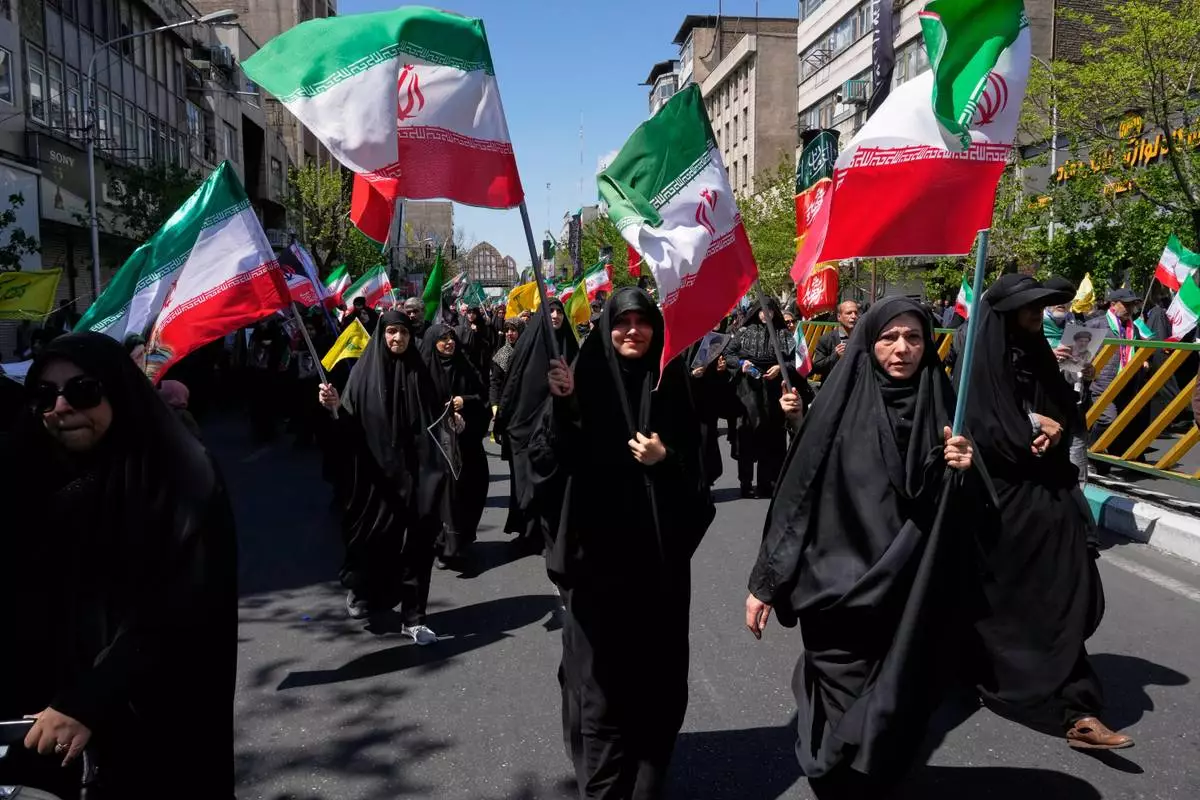
Government supporters gather to mark the 40th day since the death of Supreme Leader Ayatollah Ali Khamenei in Tehran, Iran, Thursday, April 9, 2026. (AP Photo/Vahid Salemi)
Government supporters gather to mark the 40th day since the death of Supreme Leader Ayatollah Ali Khamenei in Tehran, Iran, Thursday, April 9, 2026. (AP Photo/Vahid Salemi)

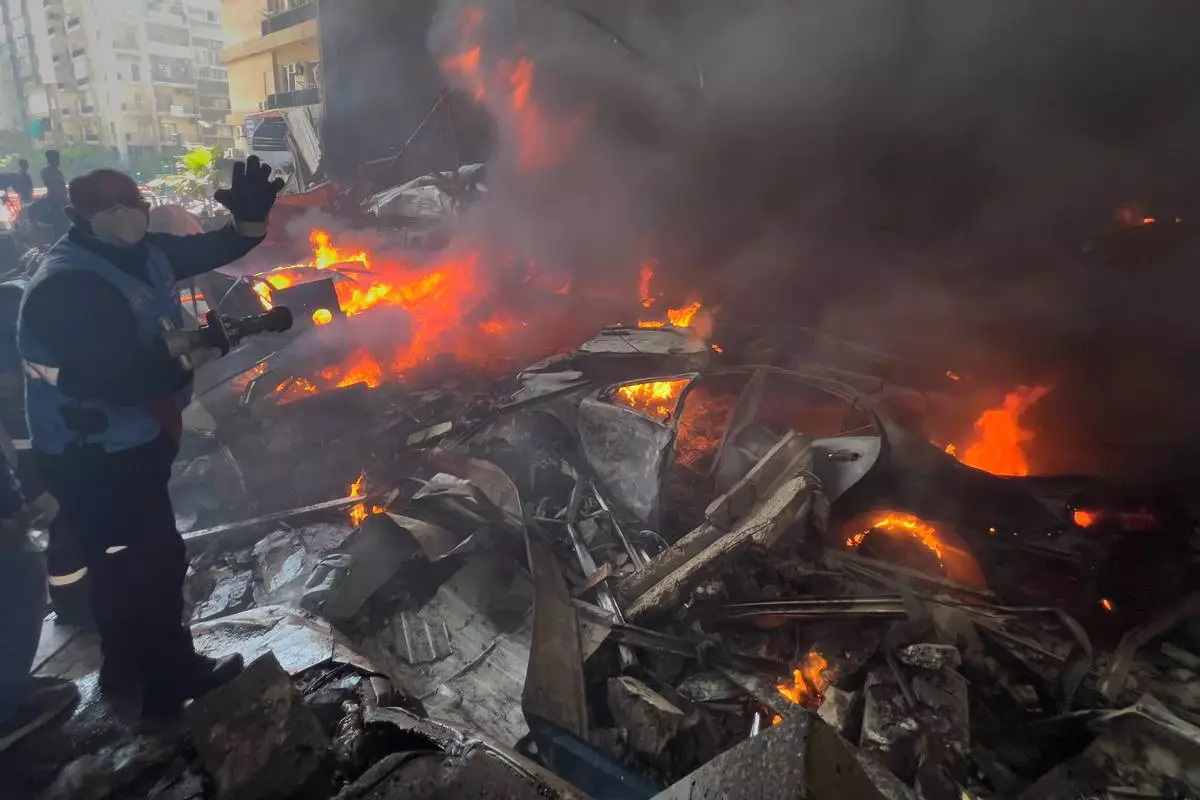
A rescue worker extinguishes burning cars at the site of an Israeli airstrike in central Beirut, Lebanon, Wednesday, April 8, 2026. (AP Photo/Hussein Malla)
A rescue worker extinguishes burning cars at the site of an Israeli airstrike in central Beirut, Lebanon, Wednesday, April 8, 2026. (AP Photo/Hussein Malla)

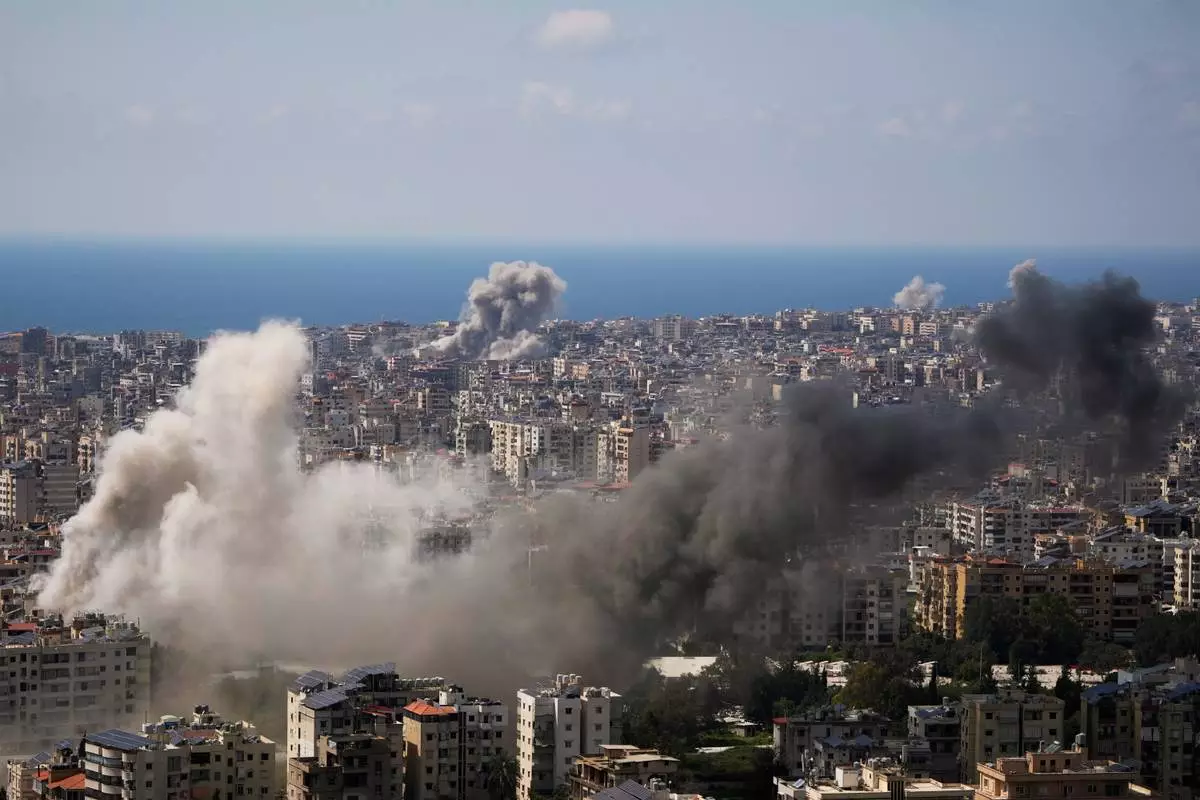
Smoke rises following several Israeli airstrikes in Beirut, Lebanon, Wednesday, April 8, 2026. (AP Photo/Hassan Ammar)
Smoke rises following several Israeli airstrikes in Beirut, Lebanon, Wednesday, April 8, 2026. (AP Photo/Hassan Ammar)

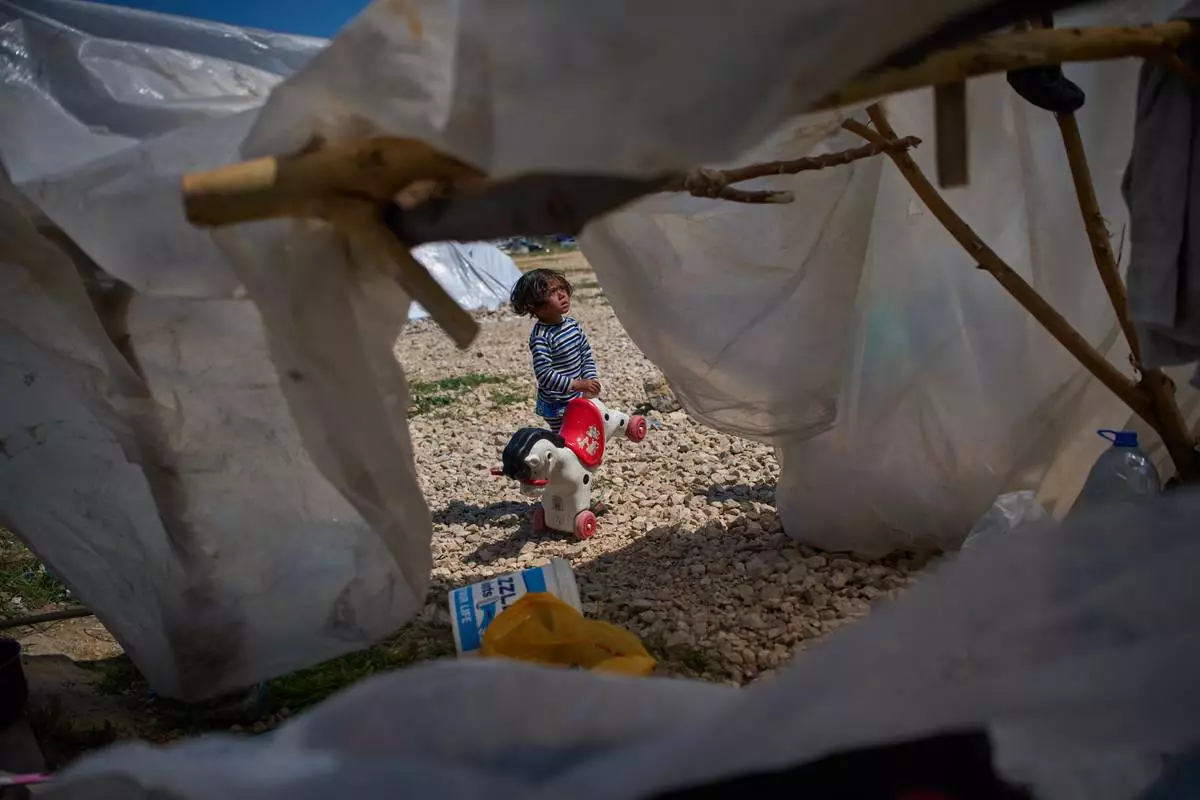
Ali, 4, holds a toy horse next to the tent his family uses as a shelter after fleeing Israeli bombardment in southern Lebanon, in Beirut, Lebanon, Wednesday, April 8, 2026. (AP Photo/Emilio Morenatti)
Ali, 4, holds a toy horse next to the tent his family uses as a shelter after fleeing Israeli bombardment in southern Lebanon, in Beirut, Lebanon, Wednesday, April 8, 2026. (AP Photo/Emilio Morenatti)

Government supporters gather ahead of the funeral procession for Maj. Gen. Majid Khademi, head of intelligence for Iran's paramilitary Revolutionary Guard, in Tehran, Iran, Wednesday, April 8, 2026. (AP Photo/Francisco Seco)
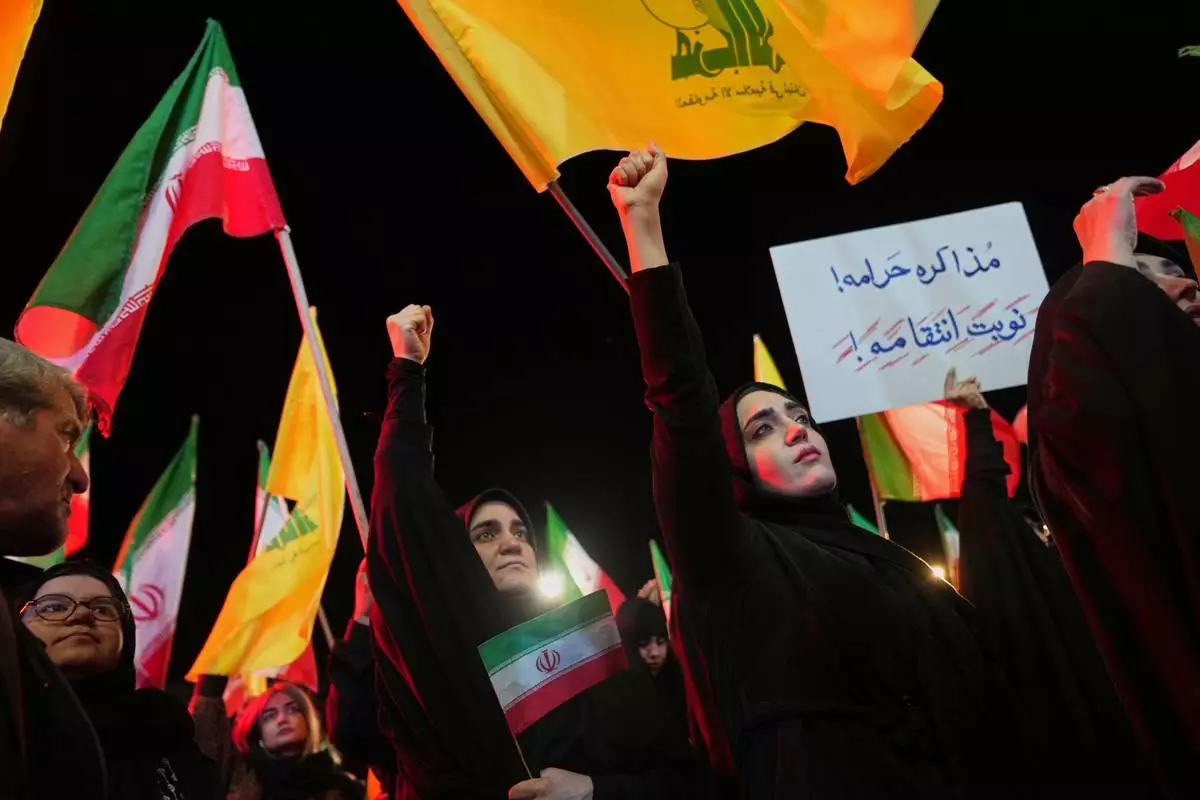
Government supporters gather ahead of the funeral procession for Maj. Gen. Majid Khademi, head of intelligence for Iran's paramilitary Revolutionary Guard, in Tehran, Iran, Wednesday, April 8, 2026. (AP Photo/Francisco Seco)

FILE - Two police officers walk in front of an anti-U.S. billboard depicting American aircraft being caught by Iranian armed forces in a fishing net beneath the words in Farsi, "The Strait of Hormuz will remain closed, The entire Persian Gulf is our hunting ground," in Tehran, Iran, Sunday, April 5, 2026. (AP Photo/Vahid Salemi, File)
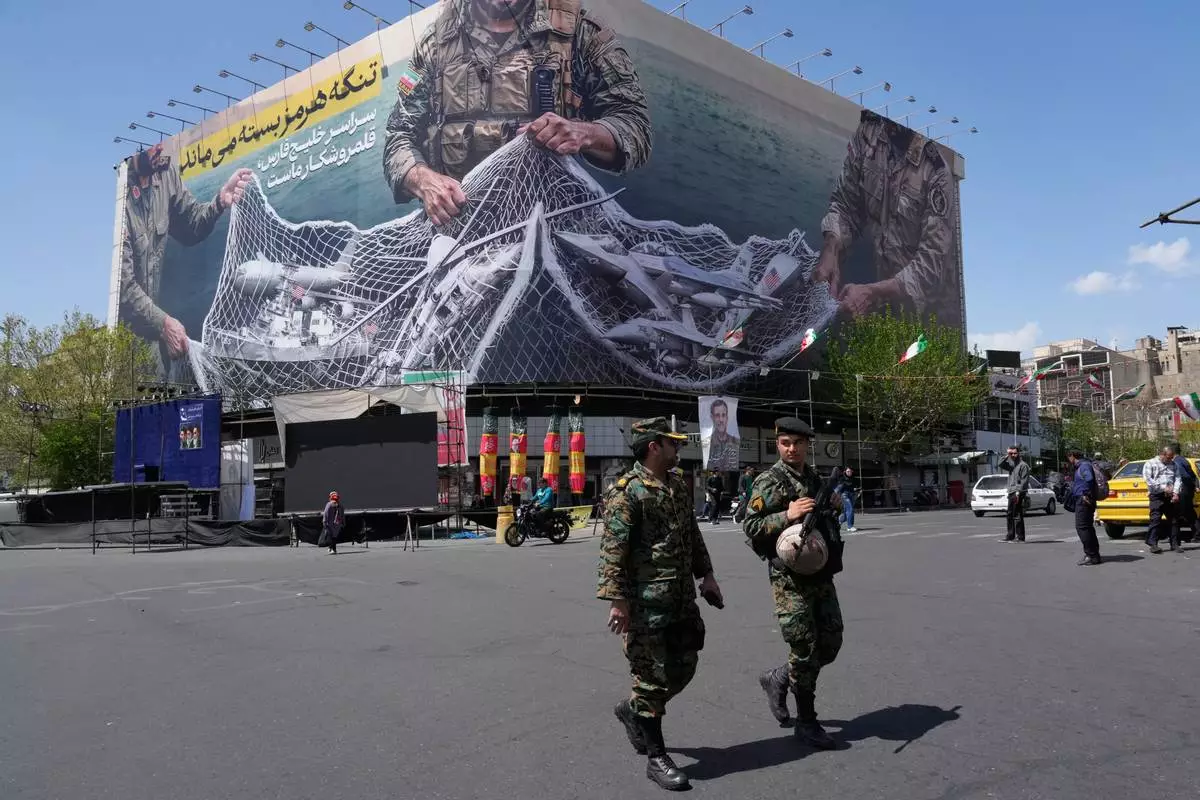
FILE - Two police officers walk in front of an anti-U.S. billboard depicting American aircraft being caught by Iranian armed forces in a fishing net beneath the words in Farsi, "The Strait of Hormuz will remain closed, The entire Persian Gulf is our hunting ground," in Tehran, Iran, Sunday, April 5, 2026. (AP Photo/Vahid Salemi, File)

VILNIUS, Lithuania (AP) — Residents of Vilnius were told to take shelter and Lithuania's president and prime minister were taken to safe locations Wednesday because of an alarm over drone activity near the border with Belarus, underlining jitters on NATO's eastern flank over incursions related to Russia's war with Ukraine.

An emergency announcement from the military told people in the Vilnius region to “immediately head to a shelter or a safe place.”

The alert, which lasted for about an hour, also led to the closure of the airspace over Vilnius Airport. President Gitanas Nauseda and Prime Minister Inga Ruginiene were taken to shelters, and there was also an evacuation order at Lithuania's parliament, the Seimas, the BNS news agency reported.

It was the first major alert that sent residents and political leaders in a European Union and NATO capital rushing to shelters since Russia’s full-scale invasion of Ukraine in February 2022.

Lithuania borders Russia-allied Belarus to the east and Russia's Kaliningrad exclave to the west. Wednesday's alert came after the military said it detected drone activity in Belarus, but no drones were sighted over Lithuania.

On Wednesday, NATO Secretary-General Mark Rutte commended the alliance’s reaction to several drone incidents in recent days, saying that they had been met with “a calm, decisive and proportionate response.” Rutte said: “This is exactly what we planned and prepared for,” and he blamed Russia’s war on Ukraine for the problem.

In recent months, Ukrainian drones aimed at Russia have crossed or come down in NATO territory on numerous occasions. Western officials have blamed what they say is likely Russian electronic jamming of the drones. Russia, meanwhile, has renewed threats that it would retaliate if Ukrainian drones are launched from Baltic countries or if those countries are complicit in their use against Russia.

On Tuesday evening, Lithuanian Foreign Minister Kęstutis Budrys wrote on social media that “Russia is deliberately redirecting Ukrainian drones into Baltic airspace while waging smear campaigns” against Lithuania, Latvia and Estonia. “It’s a transparent act of desperation — an attempt to sow chaos and distract from a simple reality: (Ukraine) is hitting Russian military machine hard.”

Budrys' comment came hours after a NATO jet shot down a Ukrainian drone over southern Estonia. Ukraine apologized for that “unintended incident,” without specifying what had happened.

Last week, Latvia’s government collapsed following an argument over the handling of multiple incidents involving stray drones suspected to be from Ukraine. The defense minister was forced to quit after his party withdrew its support for him, and the prime minister then resigned. The governing coalition had been under strain for months over several other issues.

In a recent escalation of aerial attacks, Russia and Ukraine have sometimes fired hundreds of drones a day at each other.

Ukraine’s air force said Wednesday that it shot down 131 out of 154 drones that Russia launched overnight. The ones that got past air defenses killed three civilians and wounded 18 others, including two children, officials said.

Ukraine, meanwhile, continued its aerial campaign against Russia’s vital oil industry, with the General Staff reporting its drones struck a major Russian oil refinery and a pipeline pumping station overnight.

Russian media reports also indicated that a chemical plant in the southern Stavropol region was hit and caught fire, although local officials didn’t confirm any direct hit.

The U.K. government, a strong supporter of Ukraine's war effort, has loosened strict sanctions on Russian oil refined into diesel and jet fuel in third countries as prices rise due to the Iran war.

The waiver begins Wednesday and reflects growing supply concerns over certain fuels due to the effective blockade of the key Strait of Hormuz waterway.

That step comes two days after U.S. Treasury Secretary Scott Bessent announced that Washington was granting a 30-day extension for countries to import Russian oil that is already in tankers at sea, a move that is meant to reduce the oil supply shortages.

The announcement marked a continued policy reversal by the Trump administration, which had previously said the sanctions on Russian oil would resume. Originally announced in early March, the temporary waiver on the sanctions was first renewed in April.

Geir Moulson in Berlin, Lorne Cook in Brussels, Hanna Arhirova in Kyiv, Ukraine and Barry Hatton in Lisbon, Portugal contributed to this report.

Follow the AP’s coverage of the war in Ukraine at https://apnews.com/hub/russia-ukraine

NATO Secretary General Mark Rutte speaks during a media conference at NATO headquarters in Brussels, Wednesday, May 20, 2026. (AP Photo/Virginia Mayo)

NATO Secretary General Mark Rutte speaks during a media conference at NATO headquarters in Brussels, Wednesday, May 20, 2026. (AP Photo/Virginia Mayo)

People take shelter in an underground car park during an air raid alert in Vilnius, Lithuania, Wednesday, May 20, 2026. (Vygintas Skaraitis/Lrytas via AP)

People take shelter in an underground car park during an air raid alert in Vilnius, Lithuania, Wednesday, May 20, 2026. (Vygintas Skaraitis/Lrytas via AP)

People take shelter in an underground car park during an air raid alert in Vilnius, Lithuania, Wednesday, May 20, 2026. (Vygintas Skaraitis/Lrytas via AP)

People take shelter in an underground car park during an air raid alert in Vilnius, Lithuania, Wednesday, May 20, 2026. (Vygintas Skaraitis/Lrytas via AP)

In this photo provided by the Ukrainian Emergency Services on Wednesday, May 20, 2026, rescue workers put out a fire of a residential building damaged after a Russian strike on Konotop, Ukraine. (Ukrainian Emergency Service via AP)

In this photo provided by the Ukrainian Emergency Services on Wednesday, May 20, 2026, rescue workers put out a fire of a residential building damaged after a Russian strike on Konotop, Ukraine. (Ukrainian Emergency Service via AP)

The phone shows the received message "The Lithuanian military reports: "AIR DANGER. Hurry to cover or a safe place without delay, take care of your loved ones, wait for further recommendations. We will inform you about the end of the danger in a separate message", in Vilnius, Lithuania, Wednesday, May 20, 2026. (AP Photo/Mindaugas Kulbis)

The phone shows the received message "The Lithuanian military reports: "AIR DANGER. Hurry to cover or a safe place without delay, take care of your loved ones, wait for further recommendations. We will inform you about the end of the danger in a separate message", in Vilnius, Lithuania, Wednesday, May 20, 2026. (AP Photo/Mindaugas Kulbis)

The phone shows the received message "The Lithuanian military reports: "AIR DANGER. Hurry to cover or a safe place without delay, take care of your loved ones, wait for further recommendations. We will inform you about the end of the danger in a separate message", in Vilnius, Lithuania, Wednesday, May 20, 2026. (AP Photo/Mindaugas Kulbis)

The phone shows the received message "The Lithuanian military reports: "AIR DANGER. Hurry to cover or a safe place without delay, take care of your loved ones, wait for further recommendations. We will inform you about the end of the danger in a separate message", in Vilnius, Lithuania, Wednesday, May 20, 2026. (AP Photo/Mindaugas Kulbis)

Recommended Articles