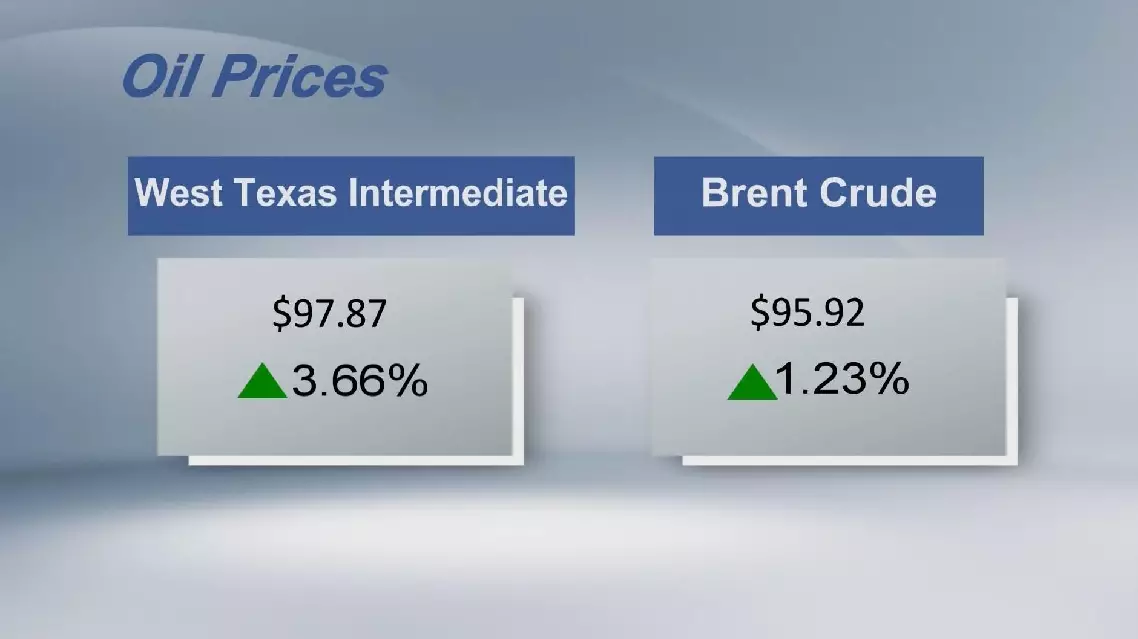
International oil prices advanced on Thursday with the West Texas Intermediate for May delivery hitting 100 U.S. dollars per barrel on the New York Mercantile Exchange during the trading session, as concerns about the U.S.-Iran ceasefire persist.
At the close of the trading session, the West Texas Intermediate for May delivery gained 3.46 dollars, or 3.66 percent, to settle at 97.87 U.S. dollars a barrel.
Brent crude for June delivery increased by 1.17 dollars, or 1.23 percent, to settle at 95.92 dollars a barrel on the London ICE Futures Exchange.
The surge was driven by investors' fading hope for resuming shipping traffic through the Strait of Hormuz.
On April 8, only five bulk carriers were tracked outbound through the strait, all transiting via a corridor controlled by Iran's Islamic Revolution Guards Corps (IRGC) rather than standard commercial routes.
Limited additional vessel movements were observed on April 9, mainly involving smaller vessels or Iran-linked operations.
Sources said that Iran halted oil tanker traffic in the Strait of Hormuz after Israel attacked Lebanon.
Iran's Parliament Speaker Mohammad Bagher Ghalibaf said on Wednesday in a post on X that even before the negotiations began, three clause of Iran's 10-point proposal had been violated.
Late on Tuesday night, as the world braced for possible U.S. strikes on Iran, U.S. President Donald Trump announced a two-week "double sided ceasefire," as Tehran agreed to "the complete, immediate and safe opening" of the Strait of Hormuz.
In an interview with the media, Trump hailed the agreement as a "total and complete victory," saying that Iran's uranium would be "perfectly taken care of" under the ceasefire deal.
Following Trump's announcement, Iran's Supreme National Security Council quickly issued a statement confirming the ceasefire.
Iran has achieved a "great victory" and "forced" the United States to accept its 10-point plan, which includes controlled passage through the Strait of Hormuz and the necessity of ending the war against all elements of the "axis of resistance," said the statement.
Oil prices hit 100 dollars per barrel as concerns about US-Iran ceasefire persist
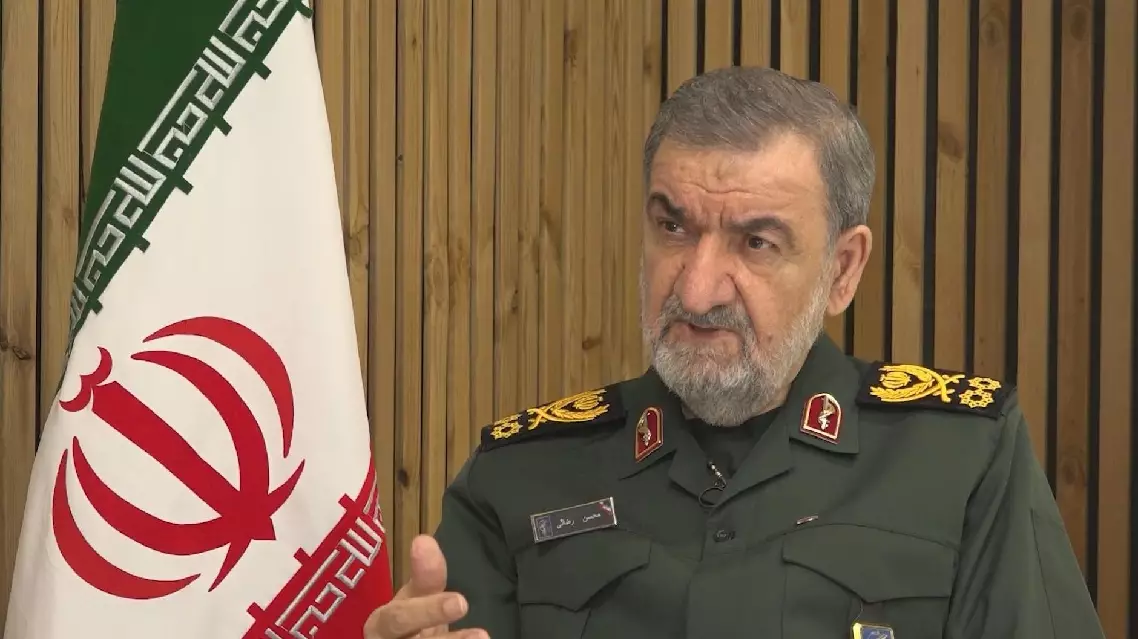
As the diplomatic engagement between the United States and Iran continues despite a faltering ceasefire, a former commander of Iran's Islamic Revolutionary Guard Corps (IRGC) has said that Iran is prepared to use military power to break the U.S. maritime blockade should the negotiations collapse or run on too long.
Mohsen Rezaee, who also currently serves as a member of the Iranian Expediency Discernment Council, struck a confident tone about Iran's current trajectory in an exclusive interview with China Global Television Network (CGTN) in Tehran on Wednesday.
He said the country has withstood over two decades of crippling sanctions and continued to move forward.
"We have been under sanctions for more than 20 years. The number of sanctions likely exceeds 2,000, targeting individuals, enterprises, corporations, ships, insurance companies, and even foreign countries that interacted with us. However, we have managed to find solutions to neutralize these sanctions, and we will continue to do so moving forward," he said.
He said Iran aims to ease the sanctions burden through talks with the U.S., although at the same time, he said, Iran is ready to shift to a military response if the path to a peaceful resolution closes.
"Furthermore, we will compel the U.S. to lift these sanctions. We will force the U.S. to end the maritime blockade -- either through negotiations or, should they resist, through direct action and we will attack U.S. warships. Therefore, despite all the pressures, the future of our economy is bright and promising, while the future of the US economy is bleak," he said.
While any new war against Iran would be a dead end, the best way out for the U.S. is to continue talks, according to the senior official.
"We have prepared ourselves so that if the maritime blockade continues beyond a certain timeframe, we will launch an attack and break the blockade. The Americans have no choice but to negotiate. Continuing this war is a journey into a very dark tunnel for the United States. The more America chooses to fight, the deeper it enters a tunnel with no end. Yet for us, the path is perfectly clear. America is moving toward us in the dark, while we are monitoring their every move," he said.
Former IRGC chief says Iran ready to break U.S. naval blockade by force if talks fail