Skip to Content Facebook Feature Image

What's in a name? It's succession, legacy and celebration in Japan's Kabuki theater

ENT

What's in a name? It's succession, legacy and celebration in Japan's Kabuki theater
ENT

ENT

What's in a name? It's succession, legacy and celebration in Japan's Kabuki theater

2026-04-10 12:13 Last Updated At:04-11 13:11

TOKYO (AP) — Handing down a name over generations is a central part of the Japanese traditional theater art of Kabuki, and that ceremony gets celebrated at theaters and special events every few years.

Now, the ritual is taking place with the eighth Kikugoro, who is having that honor passed down from his 83-year-old father, the seventh Kikugoro, who in turn got that name from his father.

More Images
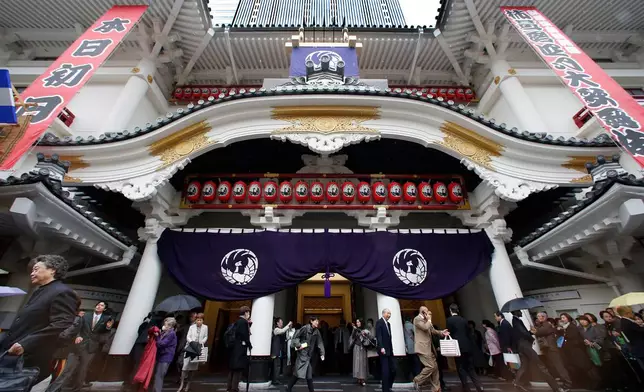
FILE - People walk out from newly-refurbished Kabukiza Theatre on its opening day in Tokyo Tuesday, April 2, 2013, following a three-year renovation work. (AP Photo/Shizuo Kambayashi, File)
FILE - People walk out from newly-refurbished Kabukiza Theatre on its opening day in Tokyo Tuesday, April 2, 2013, following a three-year renovation work. (AP Photo/Shizuo Kambayashi, File)

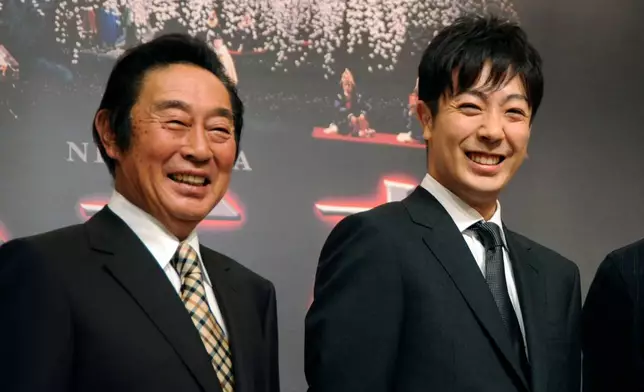
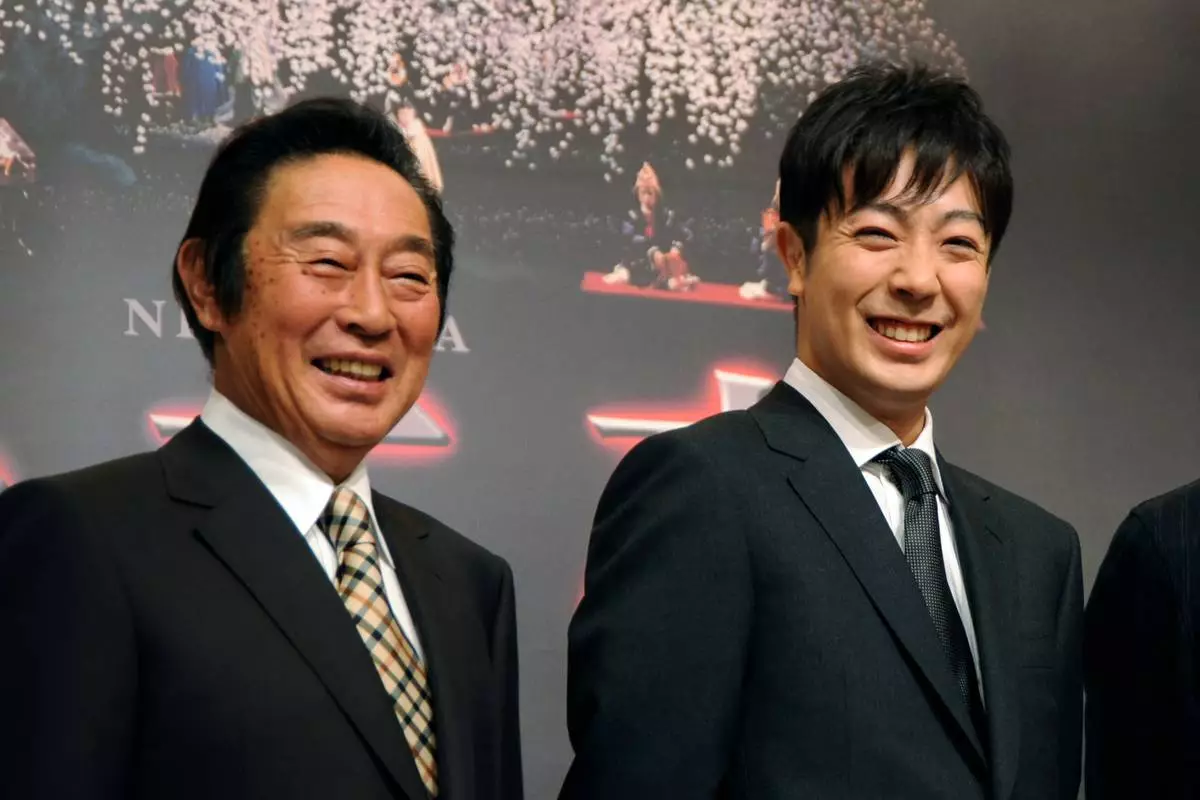
FILE -Japanese Kabuki actors, Kikugoro Onoe, left, and his son, Kikunosuke Onoe, attend a press conference in Tokyo Tuesday, Sept. 16, 2008. (AP Photo/Katsumi Kasahara)
FILE -Japanese Kabuki actors, Kikugoro Onoe, left, and his son, Kikunosuke Onoe, attend a press conference in Tokyo Tuesday, Sept. 16, 2008. (AP Photo/Katsumi Kasahara)

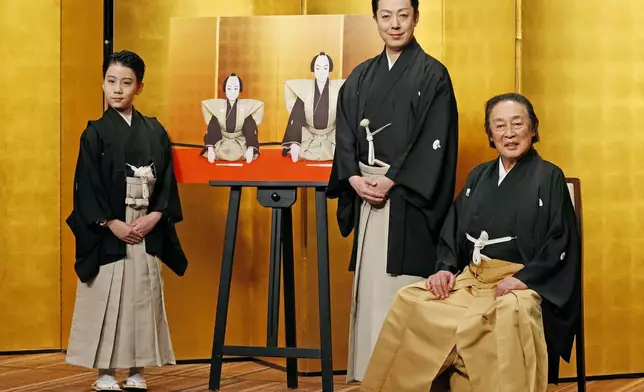
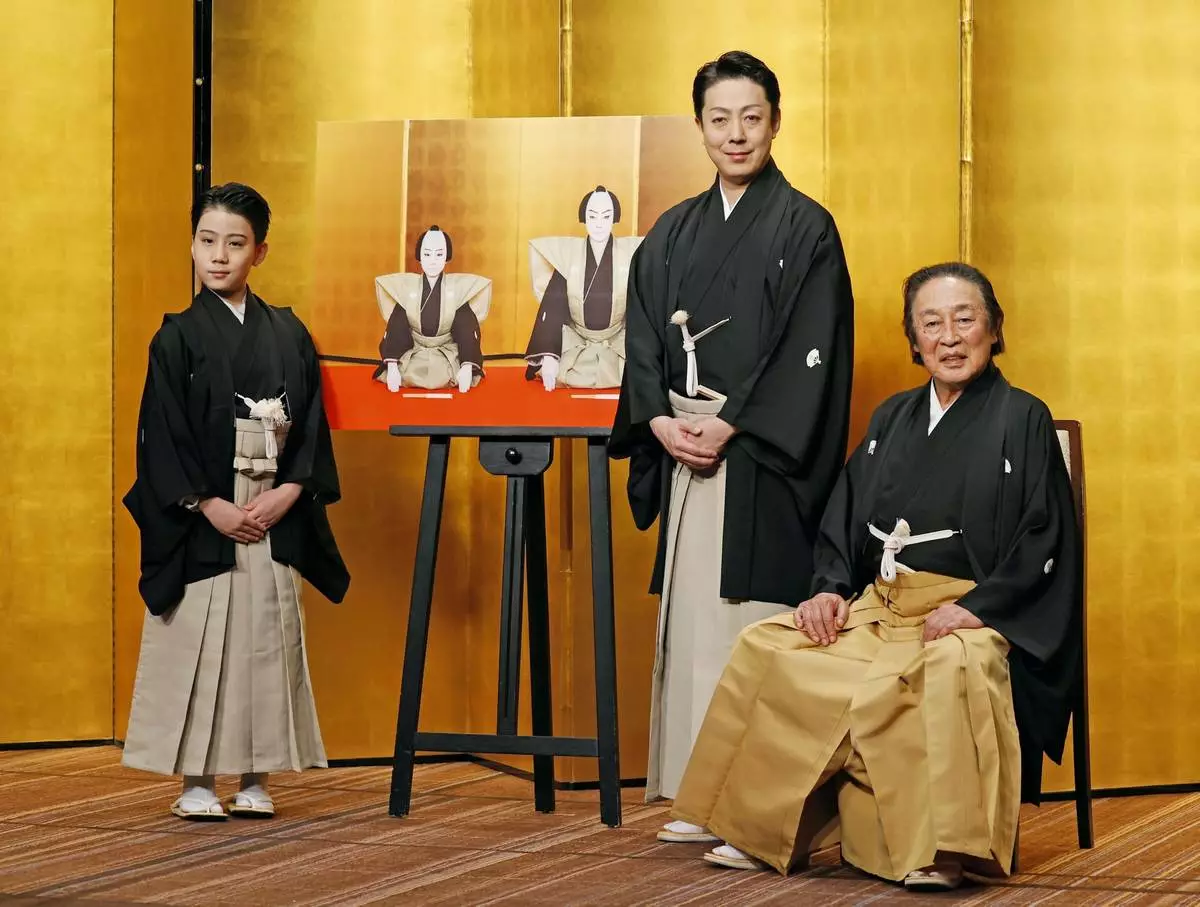
Kabuki actors, from right to left, the seventh Kikugoro Onoe, his son Kikunosuke Onoe and his grandson, Ushinosuke Onoe pose for a photo after a press conference in Tokyo, on May 27, 2024. (Kyodo News via AP)
Kabuki actors, from right to left, the seventh Kikugoro Onoe, his son Kikunosuke Onoe and his grandson, Ushinosuke Onoe pose for a photo after a press conference in Tokyo, on May 27, 2024. (Kyodo News via AP)

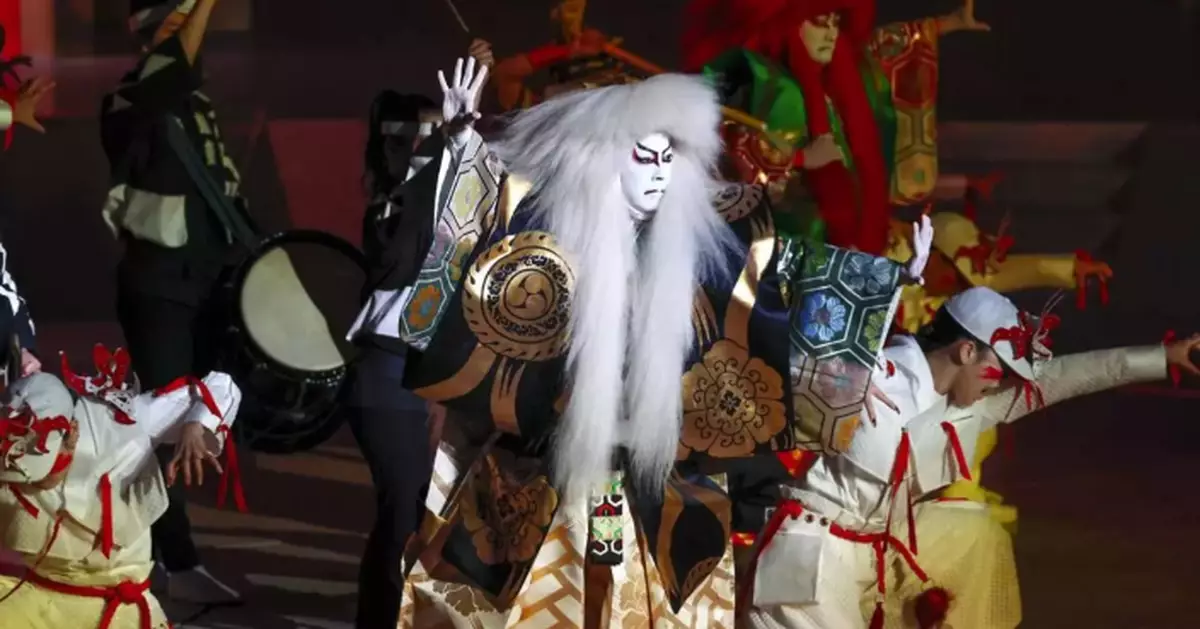
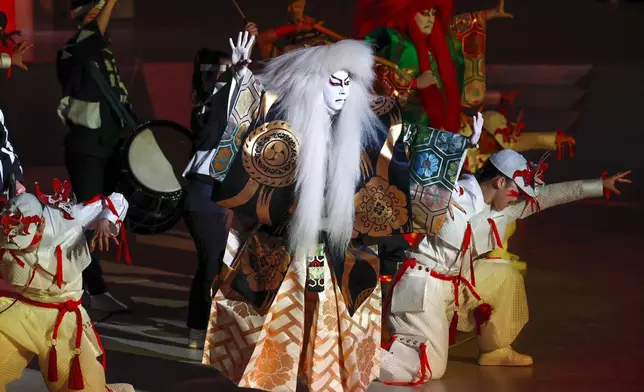
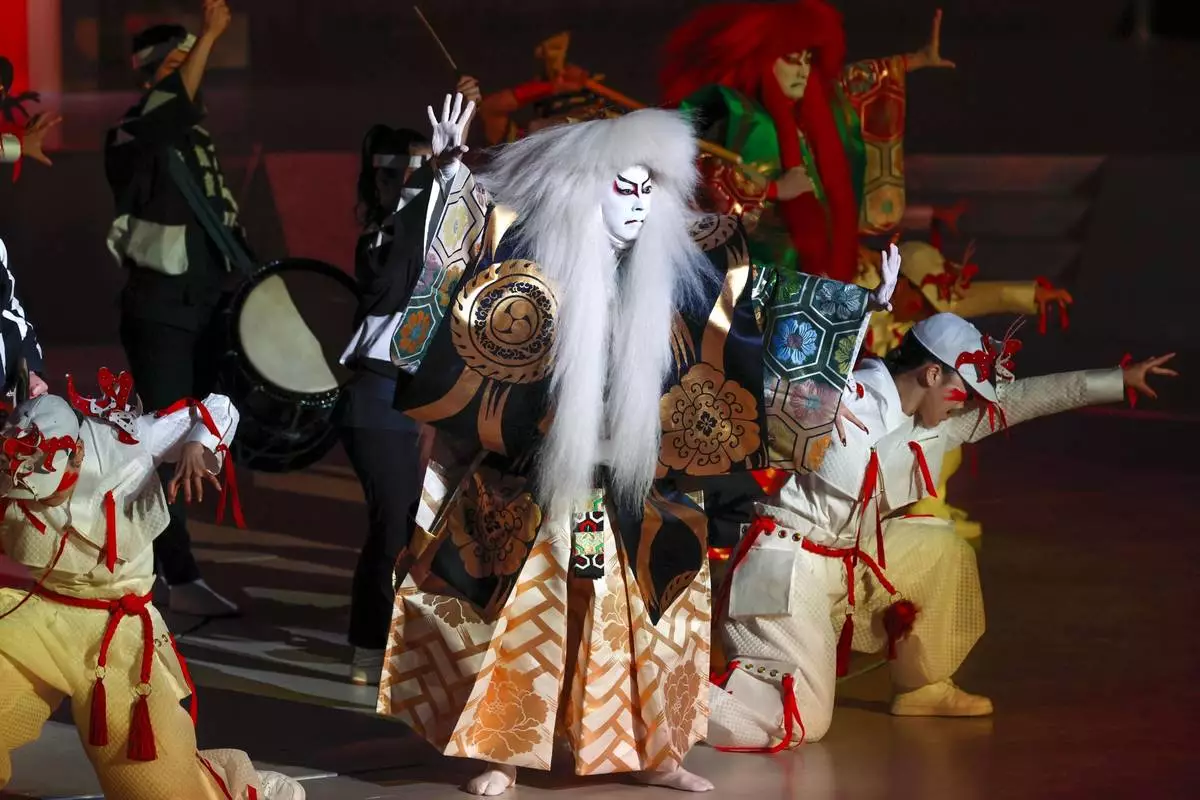
Kabuki actor Kikunosuke Onoe, center, performs during the opening ceremony of Osaka Expo in Osaka on April 12, 2025. (Kyodo News via AP)
Kabuki actor Kikunosuke Onoe, center, performs during the opening ceremony of Osaka Expo in Osaka on April 12, 2025. (Kyodo News via AP)

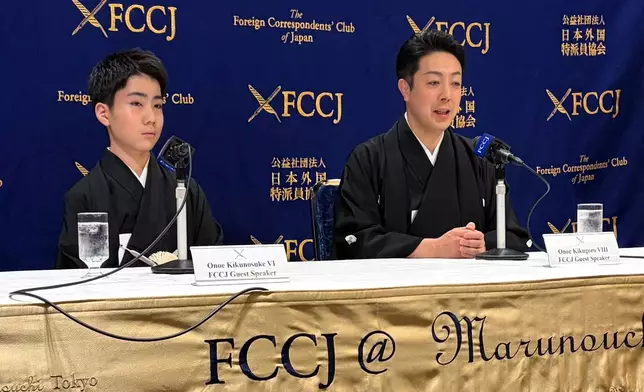
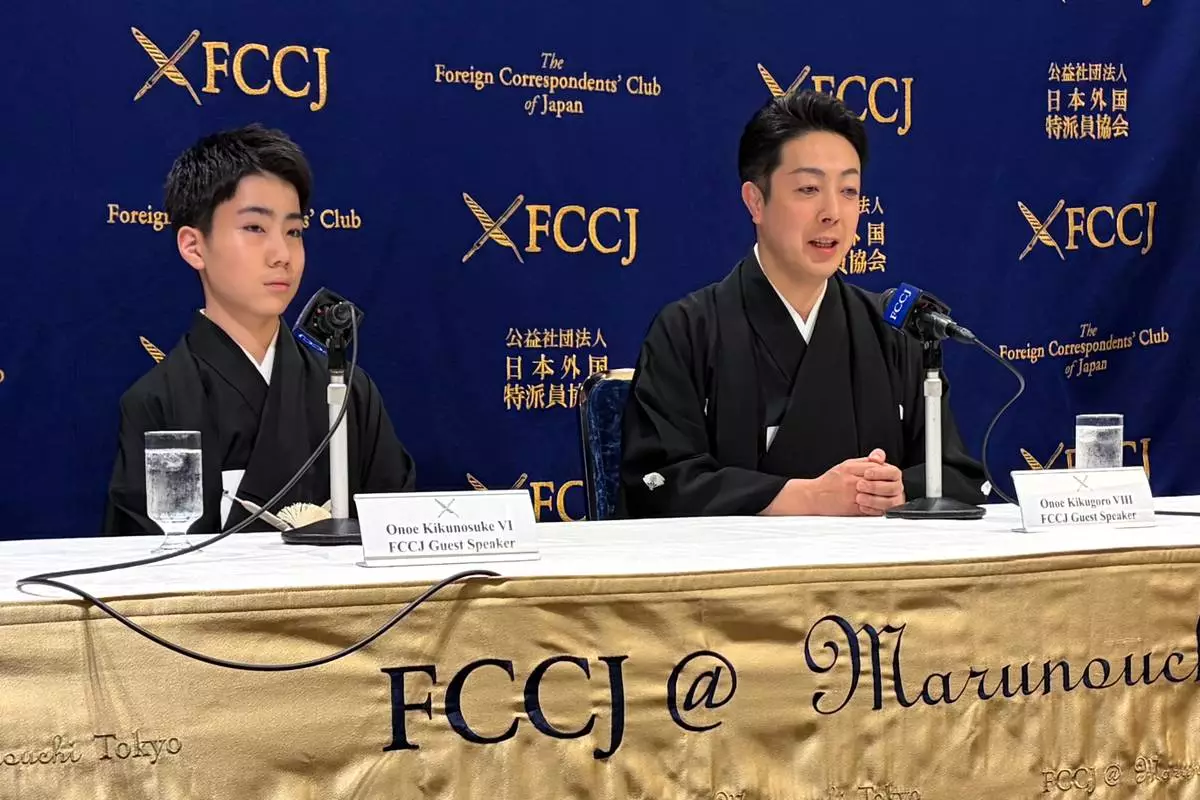
Kabuki actors, Kikunosuke Onoe, left, and the eighth Kikugoro Onoe, right, attend a press conference at the Foreign Correspondents's Club of Japan in Tokyo, Japan, on March 26, 2026. (AP Photo/Yuri Kageyama)

Kabuki actors, Kikunosuke Onoe, left, and the eighth Kikugoro Onoe, right, attend a press conference at the Foreign Correspondents's Club of Japan in Tokyo, Japan, on March 26, 2026. (AP Photo/Yuri Kageyama)

“Taking on the name is about taking on the spirit and responsibility that’s created and getting passed down over generations by those who came before us,” the younger Kikugoro, Kazuyasu Terajima, told reporters recently.

“The job of the Kabuki actor is to carry on and develop in the present what we have inherited from our predecessors and make sure it gets passed on to those who come after us.”

Another famous family name in Kabuki is Danjuro, whose name succession for the 13th Danjuro happened in 2022.

Kabuki, dating to the 1600s, is still very much alive in modern-day Japan. The hit film “Kokuho,” nominated for this year’s Oscars in makeup and hairstyling, is one proof of Kabuki’s continuing popularity, becoming the biggest grossing live-action movie for the home market in Japanese filmmaking history.

Kabuki showcases gut-wrenching stories about brave samurai who assume a hidden identity to avenge an injustice, or a beautiful maiden who turns into a serpent, combining live music, dance and song with stylized acting — with all the roles played by men, wearing colorful costumes and plastered makeup.

The Kabuki actors specializing in women roles are called “onnagata,” while others like Kikugoro play both men and women.

What often strikes Westerners about Kabuki is the utter abandonment of any attempt to portray reality, as things might appear on the surface, or how people might behave naturally. The actors strike dramatic poses called “mie” in the middle of their lines to drive home the idea of courage or flight from pursuit. Experts refer that moment to conveying a picture, a moment often accentuated by the rhythmical clatter of two pieces of wood, which are like claves.

The actors’ lines are often delivered in singsong poetry. The live music is an integral part of the play in setting the scene, with thunderous giant drums evoking thunder or, when played more softly, gently falling snow. Tinkling bells might portray floating butterflies.

The backdrop is a revolving spectacular set, such as cherry trees showering pink paper petals. Pieces may have elements of acrobatics, such as an actor playing a fox, dancing with joy, suspended by wires from the ceiling.

One of the fun aspects of Kabuki is the costume and character changes that happen right on stage before the audience, transforming a human character into a demon, for instance, sometimes with the help of stagehands cloaked in anonymous black costuming called “kurogo.”

Yet the parallels with Shakespearean theater are stark. One popular play, “The Love Suicides at Sonezaki,” is about young lovers who choose to die together, a Romeo and Juliet of Kabuki.

The parallels are coincidental. Chikamatsu Monzaemon, who wrote the piece for Japan’s Bunraku puppet theater, lived during Japan’s 18th century isolationist Tokugawa period and is believed to have never read Shakespeare, who had penned the similar love story decades before Chikamatsu.

For the new Kikugoro, the 48-year-old Terajima, it’s a role he was born into like his predecessors. He has trained from childhood, but stressed he has no qualms or hesitation about having been destined from birth to be Kikugoro.

“I totally adored and admired my predecessors,” he said at the Foreign Correspondents’ Club in Tokyo last month.

“First of all, I am filled with gratitude to our predecessors who created great works that continue to be loved by generations that came after. So I am grateful to be born into the family of such ancestors.”

Terajima was sitting next to his 12-year-old son Kazufumi, who in turn will take on the name he had before, Kikunosuke. It's the name for the younger actor in that family, handed down over generations like the Kikugoro name.

Kikunosuke said he loves being a Kabuki actor, although like a normal kid, he also likes video games and the Japanese rock band Mrs. Green Apple.

It’s hard work, he said, which involves running every morning, watching his diet and going to bed early.

“It’s not only hard physically. It’s also pretty hard mentally, and I sometime took it out on my parents,” he said with a smile, carrying himself with a controlled professional pose way beyond his age.

The name-succession ritual, called “shumei,” which began for the father and son last year in various performances throughout Japan, continues through this year.

James R. Brandon, an American who devoted his scholarship to Kabuki, describes it as centered on a type of code, “a theater in which the art of acting is central, and in which playwright and actor cooperate to achieve the unique style of performance found only in Kabuki.”

In Japanese tradition, there is always the right way to do something, known as “kata,” which turns into the model for the future generation who choose to pursue the art, according to Brandon.

Although some worry about the survival of Kabuki, the new Kikugoro said he believed in Kabuki’s “kata,” and that nothing needed to change, as the core spirit of the art form remains as relevant as ever.

“By using kata, what we want to truly communicate the most in the tradition of Kabuki is human compassion, that spirit of caring for others,” he said.

Yuri Kageyama is on Threads: https://www.threads.com/@yurikageyama
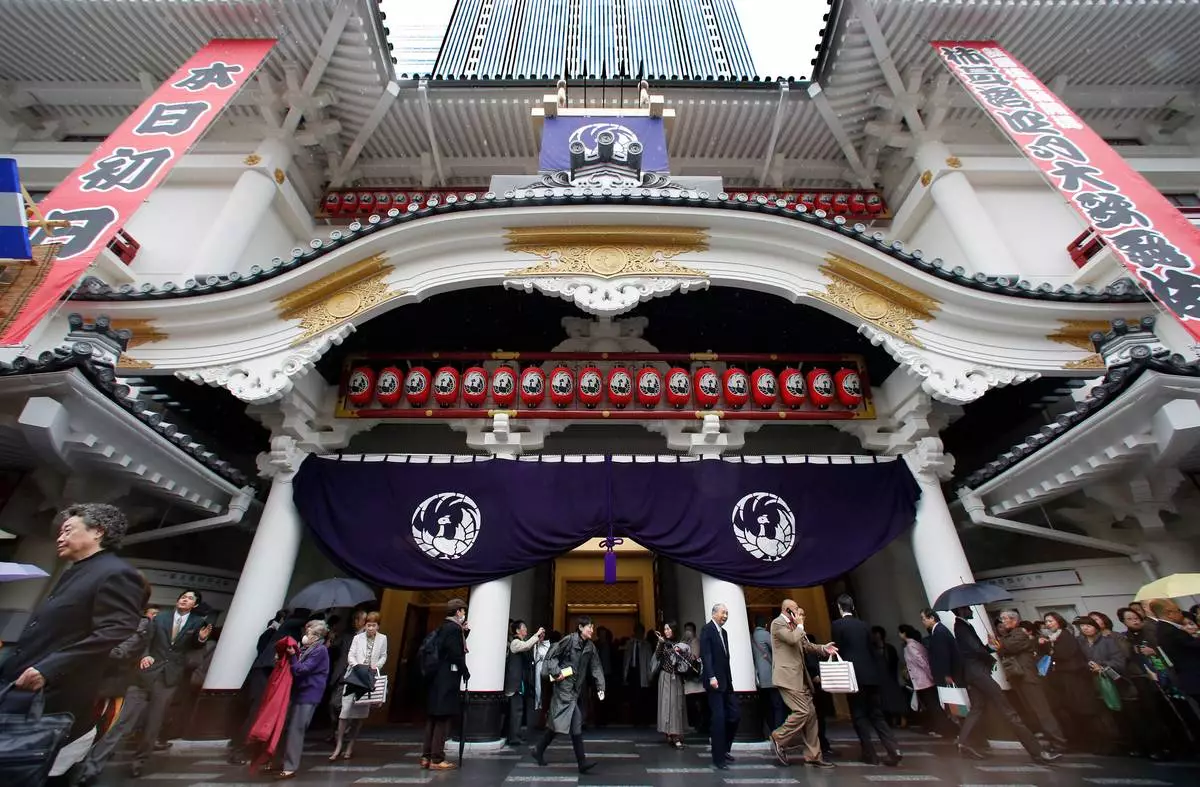
FILE - People walk out from newly-refurbished Kabukiza Theatre on its opening day in Tokyo Tuesday, April 2, 2013, following a three-year renovation work. (AP Photo/Shizuo Kambayashi, File)
FILE - People walk out from newly-refurbished Kabukiza Theatre on its opening day in Tokyo Tuesday, April 2, 2013, following a three-year renovation work. (AP Photo/Shizuo Kambayashi, File)

FILE -Japanese Kabuki actors, Kikugoro Onoe, left, and his son, Kikunosuke Onoe, attend a press conference in Tokyo Tuesday, Sept. 16, 2008. (AP Photo/Katsumi Kasahara)
FILE -Japanese Kabuki actors, Kikugoro Onoe, left, and his son, Kikunosuke Onoe, attend a press conference in Tokyo Tuesday, Sept. 16, 2008. (AP Photo/Katsumi Kasahara)

Kabuki actors, from right to left, the seventh Kikugoro Onoe, his son Kikunosuke Onoe and his grandson, Ushinosuke Onoe pose for a photo after a press conference in Tokyo, on May 27, 2024. (Kyodo News via AP)
Kabuki actors, from right to left, the seventh Kikugoro Onoe, his son Kikunosuke Onoe and his grandson, Ushinosuke Onoe pose for a photo after a press conference in Tokyo, on May 27, 2024. (Kyodo News via AP)

Kabuki actor Kikunosuke Onoe, center, performs during the opening ceremony of Osaka Expo in Osaka on April 12, 2025. (Kyodo News via AP)
Kabuki actor Kikunosuke Onoe, center, performs during the opening ceremony of Osaka Expo in Osaka on April 12, 2025. (Kyodo News via AP)

Kabuki actors, Kikunosuke Onoe, left, and the eighth Kikugoro Onoe, right, attend a press conference at the Foreign Correspondents's Club of Japan in Tokyo, Japan, on March 26, 2026. (AP Photo/Yuri Kageyama)
Kabuki actors, Kikunosuke Onoe, left, and the eighth Kikugoro Onoe, right, attend a press conference at the Foreign Correspondents's Club of Japan in Tokyo, Japan, on March 26, 2026. (AP Photo/Yuri Kageyama)

The risk of a catastrophic explosion at a damaged chemical tank in Southern California has been eliminated following a close overnight inspection that confirmed a crack in the tank relieved pressure and cooled the chemical, authorities said Monday.

Officials said crews conducted tank temperature checks at night to reduce risks to firefighters, avoiding daytime operations when heat from the tank made conditions around it most dangerous. The overnight mission allowed crews to verify the crack and confirm temperatures were falling, Orange County Fire Authority division chief Craig Covey said Monday morning.

Covey said the results of overnight evaluation of the tank — that the temperature inside had dropped and that pressure had been released — was “incredibly positive news.”

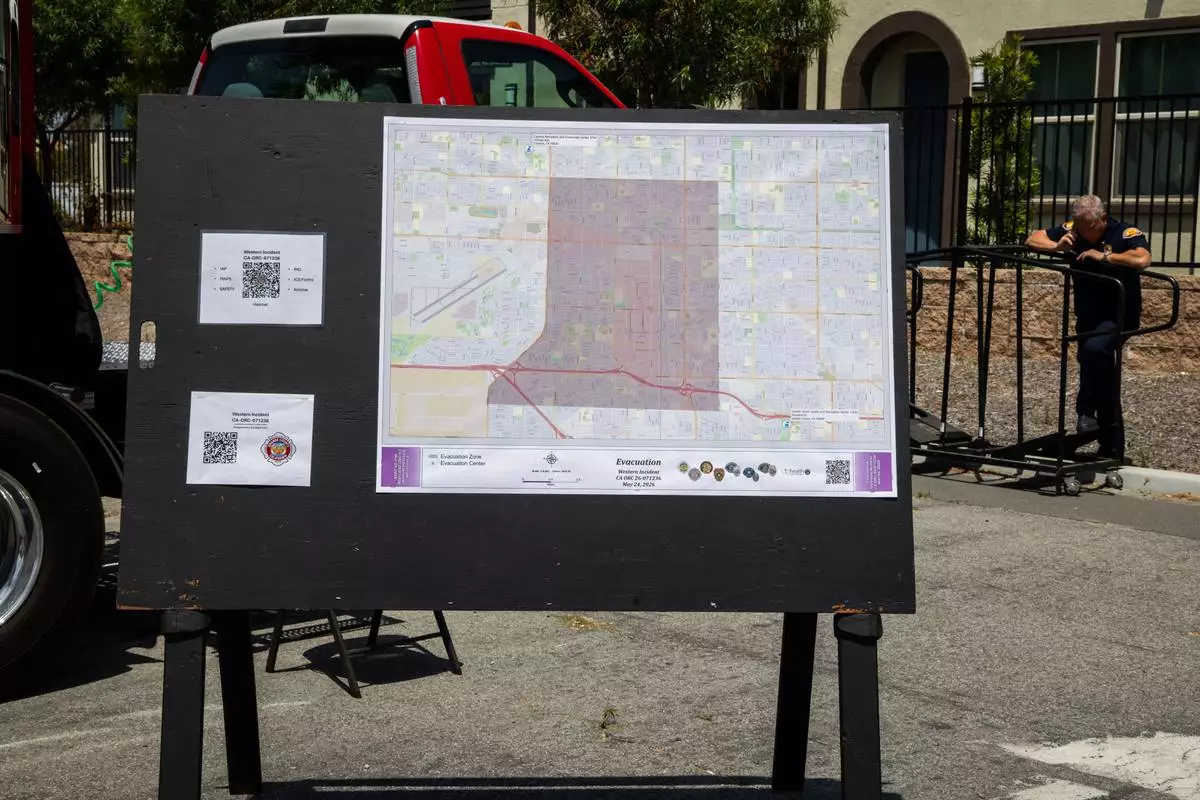
However, evacuation orders remained in place for about 50,000 people in Garden Grove, California, located south of Los Angeles.

Covey said falling temperatures and the release of pressure from the tank were allowing officials to “turn the corner on this incident” after days of concern about a possible explosion.

There has been no chemical leak as of early Monday, but the Orange County Fire Authority said the risk to public safety is “ongoing.”'

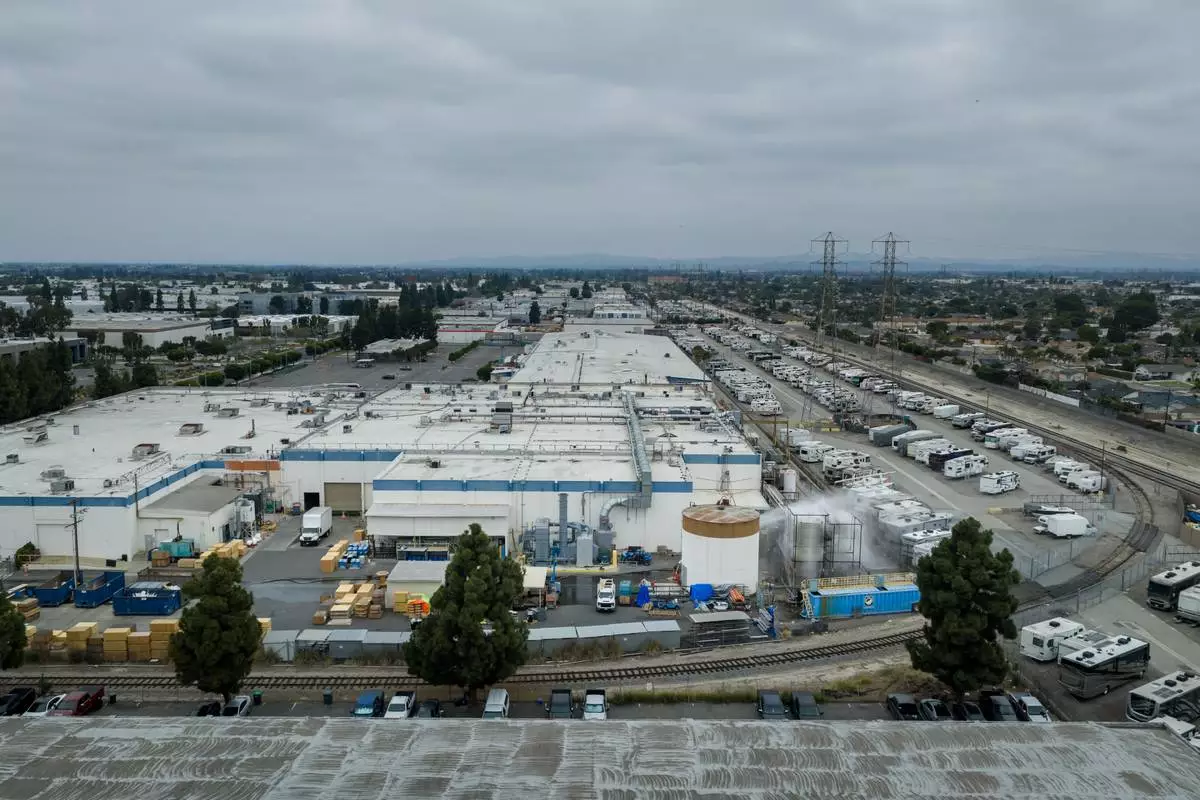
After the tank overheated Thursday and began venting vapors, firefighters have repeatedly sprayed the tank with water in an attempt to cool the chemical inside, methyl methacrylate, which is used to make plastic parts.

The tank's interior reached 100 degrees (37.7 Celsius) Sunday, an increase of 10 degrees Fahrenheit (5.5 Celsius) since Saturday, according to Democratic state Sen. Tom Umberg. On Monday, Covey said the temperature fell to 93 degrees F (33.9 degrees C).

Gov. Gavin Newsom declared a state of emergency Saturday and said he asked President Donald Trump to issue an emergency declaration to bolster federal support for local and state officials.

The tank at GKN Aerospace Transparency Systems, which makes parts for commercial and military aircraft, holds 6,000 to 7,000 gallons (22,700 to 26,500 liters) of methyl methacrylate used to make plastic parts.

The first goal of firefighters was to cool off the chemical inside the tank to prevent a leak or explosion.

Drones were monitoring temperatures at 10-minute intervals to watch for any spikes. Containment barriers were set up to prevent the chemical from getting into storm drains or reaching creeks or the nearby ocean in the event of a spill, Covey said earlier.

As the interior temperature rises, methyl methacrylate converts from a liquid to a gas and increases the pressure, according to Purdue University engineering professor Andrew Whelton, who had said earlier that the crack could mean product or pressure is being released, reducing the chance of explosion.

“Think of a soda can. If you leave it in a hot car it can explode,” Whelton said. “But if you put a hole in the can, the product is released and the can itself doesn’t explode.”

An explosion that could spread the chemical over a broad area and send shrapnel flying would be the worst-case scenario, he said.

Aerial photos taken by The Associated Press showed streets in the area were empty Sunday, while several evacuation shelters were open. At a high school in neighboring La Palma, people slept in cars or on mats and sleeping bags on the asphalt.

Garden Grove is next to Anaheim, home to Disneyland’s two theme parks, which were not under evacuation orders. Park officials said they were monitoring the situation.

Exposure to methyl methacrylate can cause serious respiratory problems, neurological problems and irritation to the skin, eyes and throat, according to fact sheets about the chemical.

Whelton said if an explosion occurs, it will be crucial to conduct detailed air monitoring specifically for methyl methacrylate and not just generic tests for volatile organic compounds as officials did after a 2023 train derailment in East Palestine, Ohio, which released more than 115,000 gallons (435,000 liters) of vinyl chloride after officials blew open five tank cars and burned the chemical.

Orange County health officials said the chemical is easy to smell and people may notice it over a large area without being harmed.

Some Garden Grove residents filed a class-action federal lawsuit Saturday against GKN Aerospace Transparency Systems, which operates the facility where the tank is located. Lawyers for the residents argued that regardless of what happens, property values in the surrounding community are sure to be impacted.

GKN Aerospace did not comment on the lawsuit but has apologized to residents and businesses forced to evacuate. It said Sunday it was “working around the clock to mitigate the risk of a leak.”

GKN Aerospace agreed in 2025 to pay state regulators more than $900,000 to settle violations involving recordkeeping, permitting issues and nitrogen oxide emissions, according to a report on the South Coast Air Quality Management District website.

Associated Press journalist Ethan Swope in Garden Grove, California, contributed to this report.

An evacuation map is displayed at the incident command post at the Los Alamitos Race Course in Cypress, Calif., on Sunday, May 24, 2026. (AP Photo/Ethan Swope)

An evacuation map is displayed at the incident command post at the Los Alamitos Race Course in Cypress, Calif., on Sunday, May 24, 2026. (AP Photo/Ethan Swope)

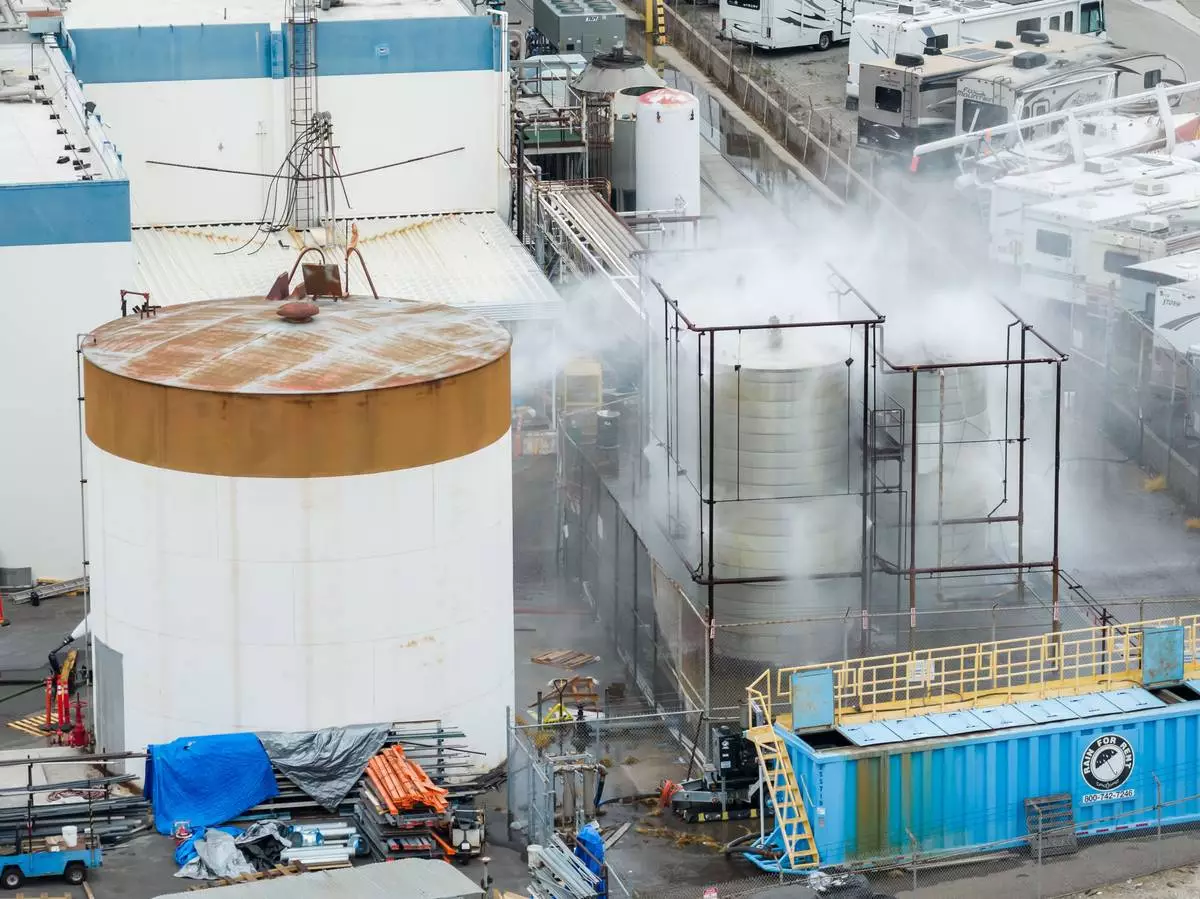
Water is sprayed on a damaged tank at GKN Aerospace in Garden Grove, Calif., on Sunday, May 24, 2026, after the tank containing a chemical used to make plastic parts overheated Thursday. (AP Photo/Ethan Swope)

Water is sprayed on a damaged tank at GKN Aerospace in Garden Grove, Calif., on Sunday, May 24, 2026, after the tank containing a chemical used to make plastic parts overheated Thursday. (AP Photo/Ethan Swope)

The streets remain empty in Garden Grove, Calif., on Sunday, May 24, 2026, after a storage tank containing a chemical used to make plastic parts overheated Thursday at an aerospace plastics facility. (AP Photo/Ethan Swope)

The streets remain empty in Garden Grove, Calif., on Sunday, May 24, 2026, after a storage tank containing a chemical used to make plastic parts overheated Thursday at an aerospace plastics facility. (AP Photo/Ethan Swope)

Emergency personnel work at the incident command post at the Los Alamitos Race Course Sunday, May 24, 2026, in Cypress, Calif. (AP Photo/Ethan Swope)

Emergency personnel work at the incident command post at the Los Alamitos Race Course Sunday, May 24, 2026, in Cypress, Calif. (AP Photo/Ethan Swope)

Water is sprayed on a damaged tank at GKN Aerospace in Garden Grove, Calif., on Sunday, May 24, 2026, after the tank containing a chemical used to make plastic parts overheated Thursday. (AP Photo/Ethan Swope)

Water is sprayed on a damaged tank at GKN Aerospace in Garden Grove, Calif., on Sunday, May 24, 2026, after the tank containing a chemical used to make plastic parts overheated Thursday. (AP Photo/Ethan Swope)

Recommended Articles