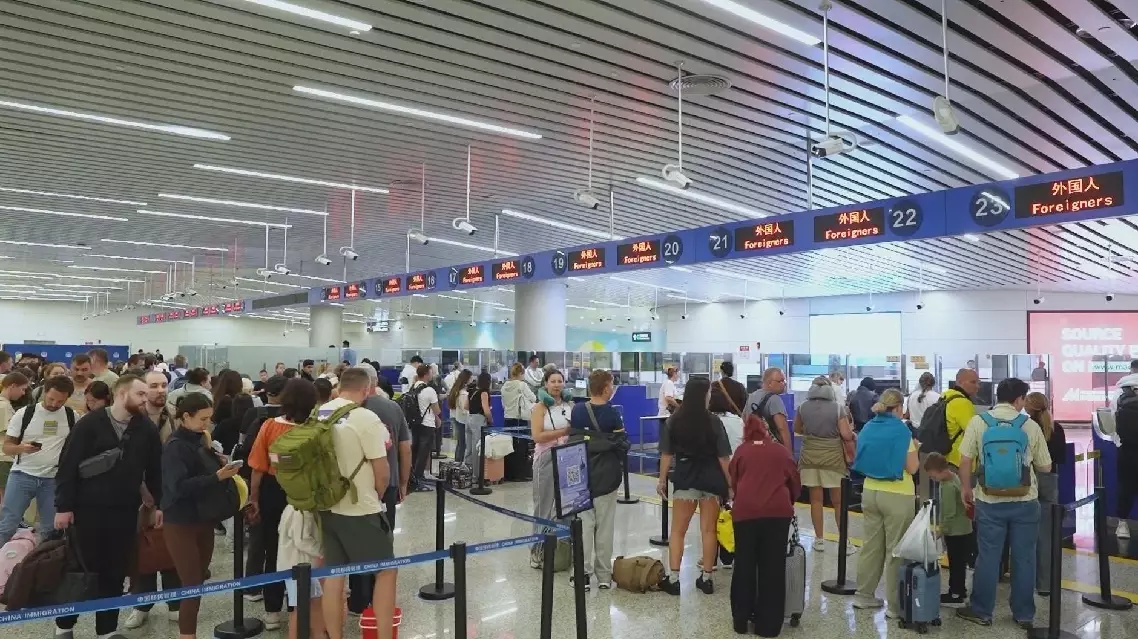
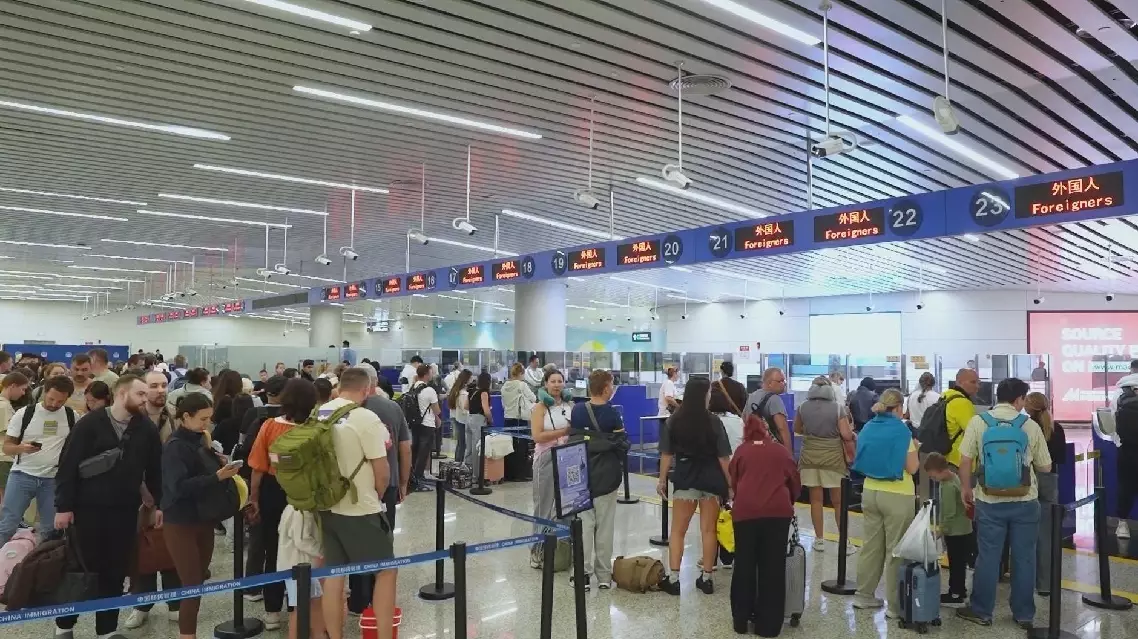
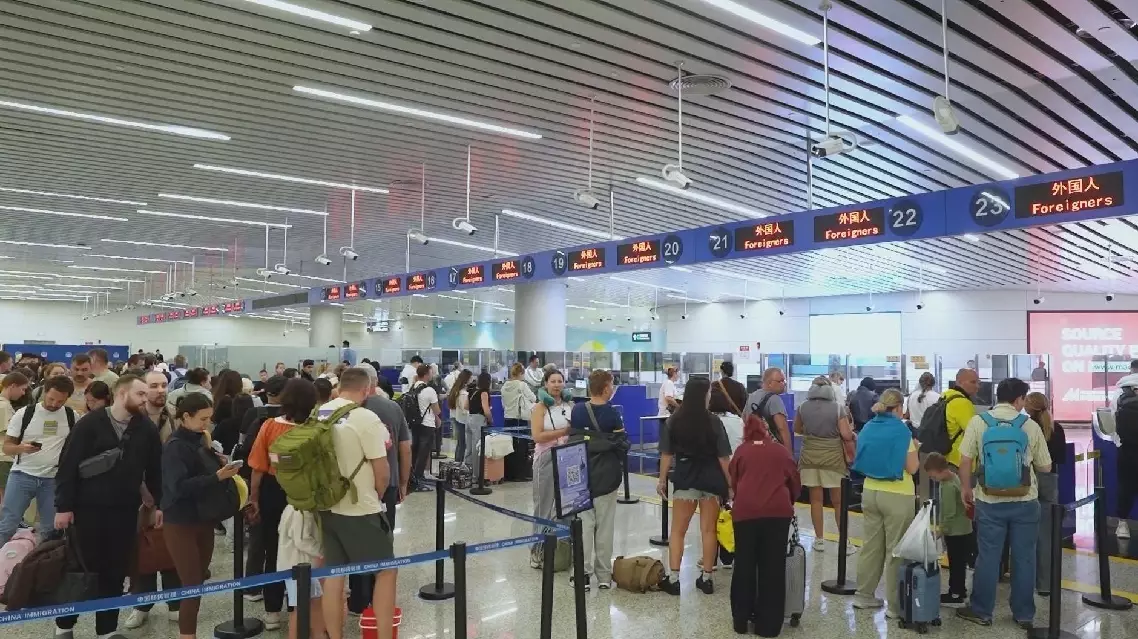
Chinese border authorities handled 185 million entries and exits in the first quarter of 2026, up 13.5 percent from a year earlier, official data showed Friday.
Mainland residents made 91.66 million cross-border trips, a 14.2 percent increase year on year. Trips by residents of Hong Kong, Macao and Taiwan totaled 72.49 million, up 10.3 percent, according to the National Immigration Administration.
Foreign nationals made 21.33 million crossings in the first three months, up 22.3 percent. Nearly 78 percent of those were visa-free entries, reflecting the effect of China’s expanded visa-free policies.
China records 13.5 pct growth in cross-border trips in Q1
China records 13.5 pct growth in cross-border trips in Q1
China records 13.5 pct growth in cross-border trips in Q1
Seven of the eight major categories of commodities and services that make up China's consumer price index (CPI) have risen in March, said an analyst after the country's National Bureau of Statistics (NBS) released the latest data on Friday.
The latest data showed China's CPI, a main gauge of inflation, rose 1 percent year on year in March, and the core CPI, which excludes food and energy prices, increased 1.1 percent year on year.
Among them, prices of industrial consumer goods grew by 2.2 percent, an increase of 1.1 percentage points from the previous month, contributing about 0.67 percentage points to the year-on-year CPI increase.
Specifically, the prices of gold jewelry, household appliances and clothing all went up, while gasoline prices turned from a decline to a rise.
"Of the eight major categories of commodities and services that make up the CPI, seven recorded price increases and one saw a decline, namely the residential category. Specifically, driven by strong seasonal demand, a rise in clothing prices pushed up the overall price of the apparel category year on year. The price of the transportation and communication category shifted from a decline to a year-on-year increase. Meanwhile, boosted by growing resident travel demand, prices for travel agency services also rose year on year," said He Xiaoying, deputy director at the analysis and forecasting division of the price monitoring center under the National Development and Reform Commission.
Friday's data also showed that the producer price index (PPI), which measures costs for goods at the factory gate, returned to year-on-year growth in March, ending a 41-month streak of decline.
The PPI rose 0.5 percent year on year in March, reversing a 0.9 percent drop in February, according to the NBS.
NBS statistician Dong Lijuan attributed the turnaround mainly to imported inflationary pressures and improved supply-demand dynamics in some domestic industries.
Peng Xiaozhen, an analyst at Sublime China Information Company Limited, an institute specializing in providing information on Chinese commodity market, said overall, China's PPI is set to recover.
"International energy markets experienced wide fluctuations, and rising costs pushed up prices across the entire petrochemical industrial chain. Boosted by higher energy and chemical product prices, the rebound trend of China's PPI was further consolidated and overall, its recovery is going to continue," said Peng.

Price hike of seven major categories drives China's CPI in March: analyst