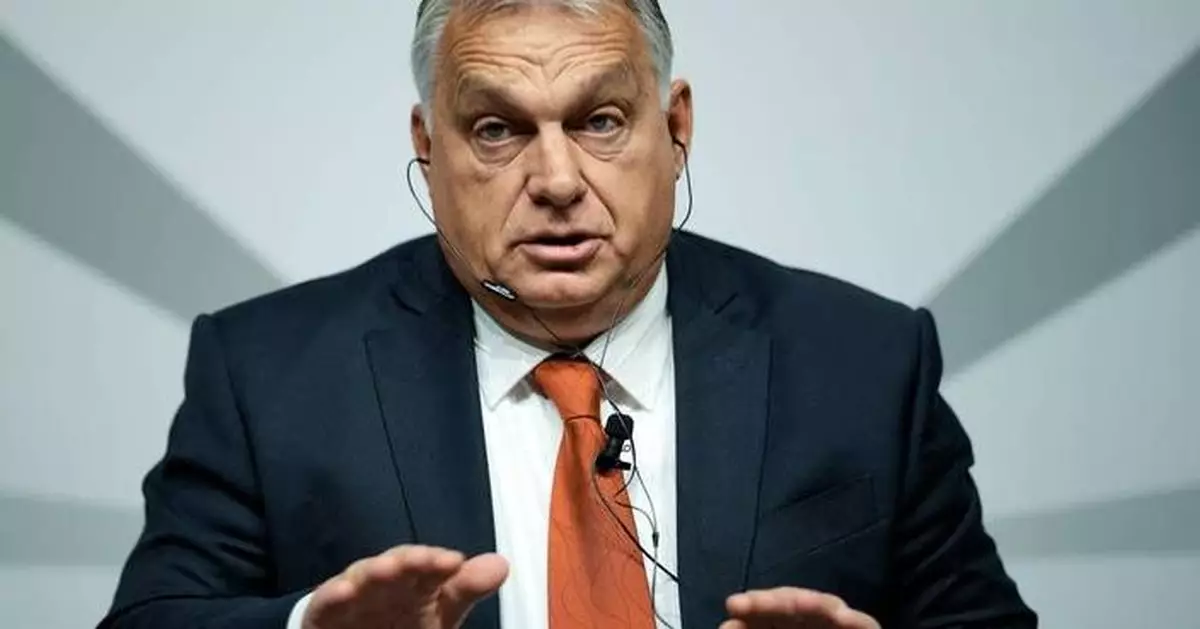
BUDAPEST, Hungary (AP) — Hungarian Prime Minister Viktor Orbán, the European Union's longest-serving leader and one of its biggest antagonists, has taken a long road from his early days as a liberal, anti-Soviet firebrand to the Russia-friendly nationalist admired by the global far-right today.
After dominating Hungarian politics for more than two decades, the 62-year-old could suffer a defeat during Sunday's elections which could bring his 16-year reign to a spectacular end. Most polls have him at a double-digit deficit — despite a recent visit from U.S. Vice President JD Vance meant to boost his chances.
Click to Gallery
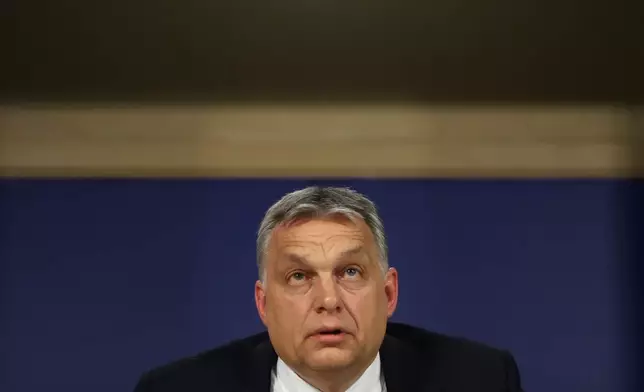
FILE -Hungarian Prime Minister Viktor Orban talks to journalists during a news conference following an European People's Party meeting at the European Parliament in Brussels, March 20, 2019. (AP Photo/Francisco Seco, File)
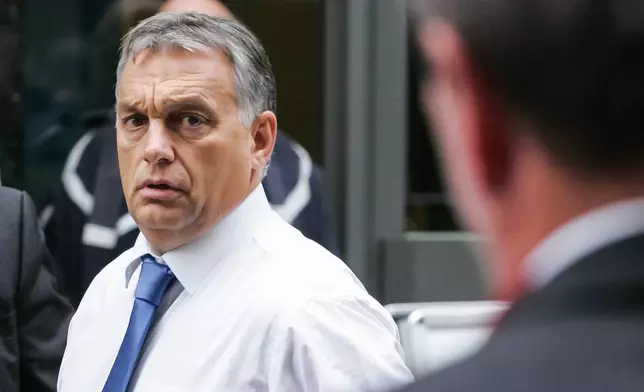
FILE -Hungarian Prime Minister Viktor Orban, right, arrives for a European Peoples Party, EPP meeting, ahead of an emergency EU heads of state summit on migration, in Brussels on Sept. 23, 2015. (AP Photo/Francois Walschaerts, File)
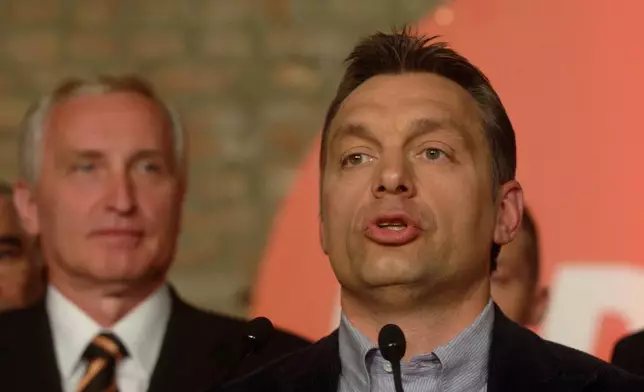
FILE -Viktor Orban, chairman of the senior opposition party, the Fidesz - Hungarian Civic Alliance, right, speaks following the first round of the parliamentary elections in Hungary in Budapest, April 9, 2006. At left is deputy prime minister candidate of the Fidesz, Istvan Mikola. (AP Photo/MTI, Szilard Koszticsak, File)
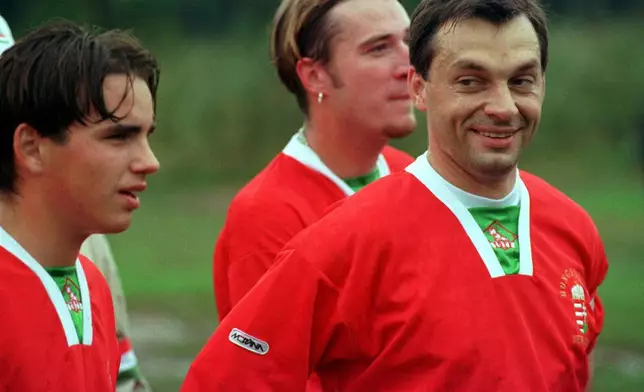
FILE -New Hungarian Prime Minister Dr. Viktor Orban smiles at fellow teammates at the end of the first half of play during a scrimage played at the Hungarian Sports Club in Woodbridge, N. J., Oct. 10, 1998. (AP Photo/Michael J.Treola, File)
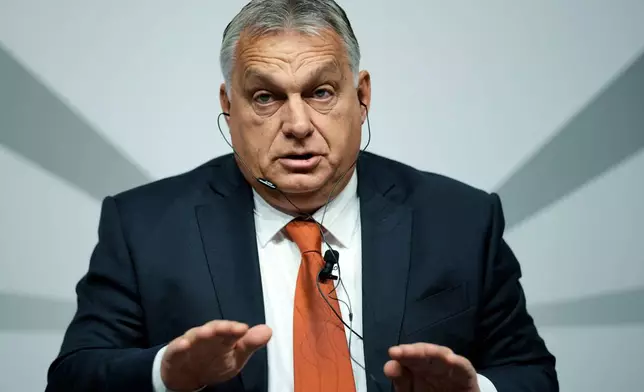
FILE -Hungarian Prime Minister Viktor Orban speaks during a panel discussion organised by publisher houses about 'Storm over Europe - the Ukraine war, the energy crisis and geopolitical challenges' in Berlin, Germany, Oct. 11, 2022. (AP Photo/Markus Schreiber), File)
Facing the center-right Tisza party and its popular leader, Péter Magyar, Orbán has deployed a barrage of disinformation and AI-generated smear ads, and warned voters that bankruptcy and all-out war would come to Hungary if he loses.
Orbán, a symbol of the country's burgeoning democracy in the 1990s, has resorted to tactics that would have shocked his early supporters, and likely his younger self.
Beloved by many older and more rural Hungarians and reviled by detractors, Orbán has emerged as the country's most consequential leader since its transition to democracy at the end of the Cold War.
Born in 1963, Orbán grew up in a modest household in rural Felcsút, about 20 miles (32 kilometers) outside Budapest. A gifted student and avid soccer fan, he studied law and later went to Oxford to study political science under a scholarship awarded by a foundation run by George Soros — the Hungarian-born financier that Orbán would later frame as the country's most sinister bogeyman.
In 1988, Orbán co-founded Fidesz, originally a liberal, anti-communist youth party. The following year as a 26-year-old law student, he gave a fiery speech before tens of thousands, demanding Soviet troops leave Hungary — a bold move during the waning days of the Communist era.
After first entering parliament in 1990 as head of the Fidesz caucus, he became one of Europe's youngest-ever prime ministers when he won a national election in 1998 at the age of 35. But as Hungary's political dynamics changed and other liberal parties emerged, he began steering Fidesz to the right, transforming it into a vehicle for increasingly nationalist conservatism.
Many observers view the election in 2002, when he lost to Hungary's Socialist party, as a turning point in Orbán's approach to power. Speaking to Fidesz members afterward, he set the agenda for major changes he would introduce once back in office.
“We've only got to win once, but we've got to win big,” he said.
It took eight years of leading the opposition in parliament, but that big win finally came. Orbán rode discontent over the fallout from the 2008 global financial crisis, as well as scandal and mismanagement by the Socialist government, to return as prime minister in 2010. Fidesz won a two-thirds majority in parliament.
It marked a turning point. With its overwhelming mandate, Fidesz set to work reshaping Hungary by unilaterally writing a new constitution, re-rigging the electoral system and stacking the courts.
Meanwhile, Orbán began siphoning public contracts, largely financed by the European Union, into companies owned by loyalists. Those loyalists in turn bought up hundreds of media outlets and forced others into closure. By the end of the decade, it was estimated that Fidesz and its allies controlled up to 80% of Hungary's private media market.
Using the power and resources of the state, Orbán also has transformed public media into a mouthpiece for his party, and spent billions on state-funded communication — billboards, ads and letters to households — to boost his narratives. Media watchdog Reporters Without Borders has called him a press freedom “predator.”
Despite the EU and international watchdogs sounding the alarm — the European Parliament declared Hungary an “electoral autocracy” in 2022 — Orbán's supporters praise him as a defender of Christian values and national sovereignty in the face of globalization, mass migration and what he describes as an oppressive EU.
Appearing to revel in disrupting EU decision making, Orbán built border fences and enacted harsh immigration and asylum policies, casting migrants and refugees as part of a globalist ploy to "replace" Europe's white population.
He told a party gathering in Romania in 2022 that “we do not want to become peoples of mixed-race.”
Orbán's government has frequently clashed with Brussels over corruption, press freedom, judicial independence and anti-LGBTQ+ legislation. More recently, it has prevented EU efforts to support Ukraine and sanction Russia over its full-scale invasion.
The bloc has frozen billions in funding to Hungary over rule-of-law concerns. In response, Orbán has campaigned heavily against the EU, comparing it to the Soviet Union, which had dominated Hungary for over four decades.
Orbán also has cultivated close ties with like-minded leaders including U.S. President Donald Trump and Russian President Vladimir Putin. He's made common cause with euroskeptic, far-right parties, predicting a “patriotic” takeover of EU institutions.
His pursuit of a foreign policy at odds with the Western consensus has drawn accusations that he is acting to benefit Moscow.
As the Hungarian election approaches, media reports have suggested Russian secret services were meddling to tip Sunday's vote in Orbán's favor, something Russia denied. Other reports showed Orbán's foreign minister frequently shared sensitive details on closed-door EU meetings with his Russian counterpart.
Orbán's election opponent, Magyar, has seized on the prime minister's drift toward Moscow, with supporters shouting at his rallies: “Russians go home!”
Magyar, whose victory is still far from assured, calls Sunday's election a referendum on whether Hungary continues deeper into autocracy or retakes its place among Europe's democratic societies.
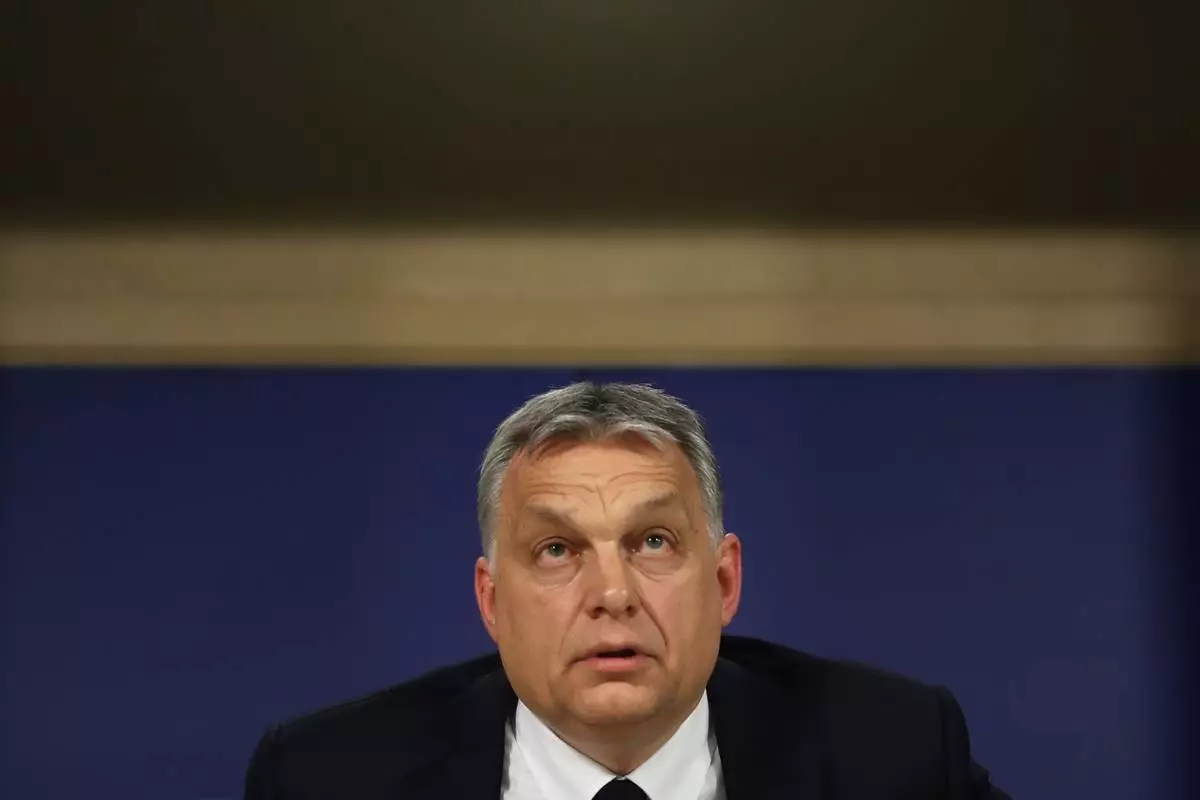
FILE -Hungarian Prime Minister Viktor Orban talks to journalists during a news conference following an European People's Party meeting at the European Parliament in Brussels, March 20, 2019. (AP Photo/Francisco Seco, File)
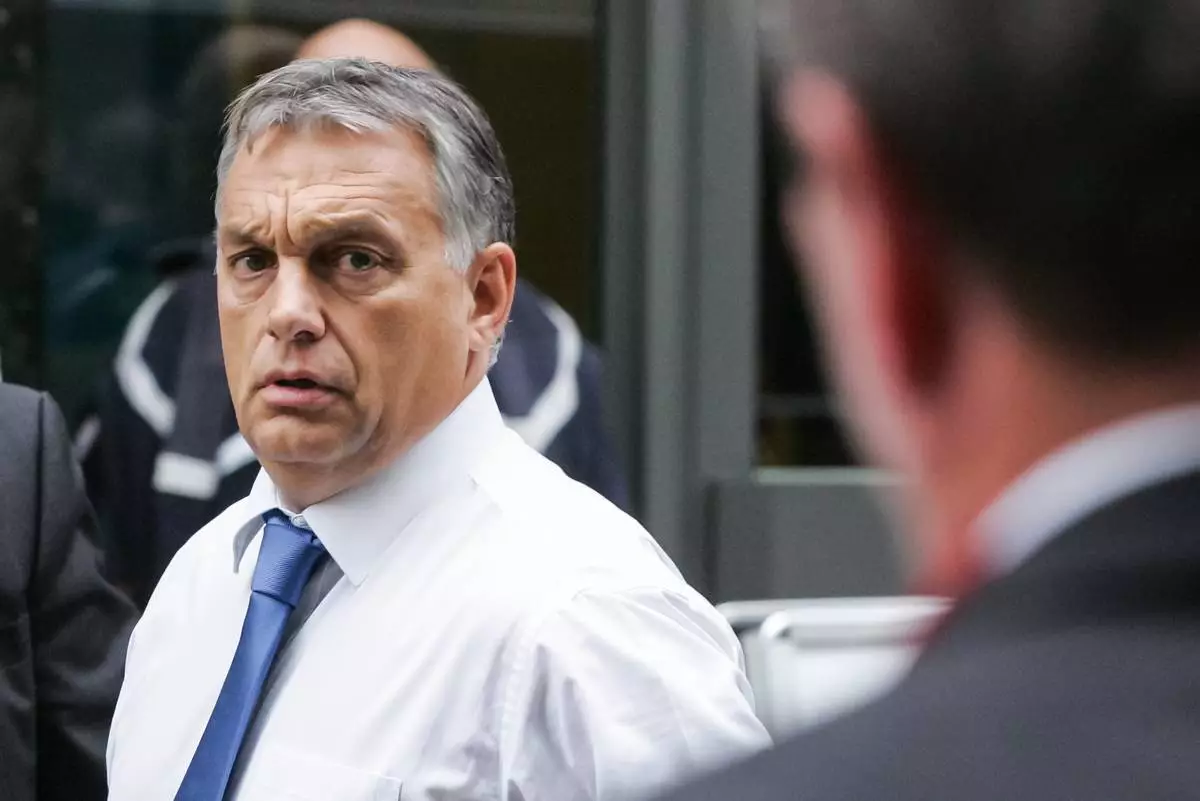
FILE -Hungarian Prime Minister Viktor Orban, right, arrives for a European Peoples Party, EPP meeting, ahead of an emergency EU heads of state summit on migration, in Brussels on Sept. 23, 2015. (AP Photo/Francois Walschaerts, File)
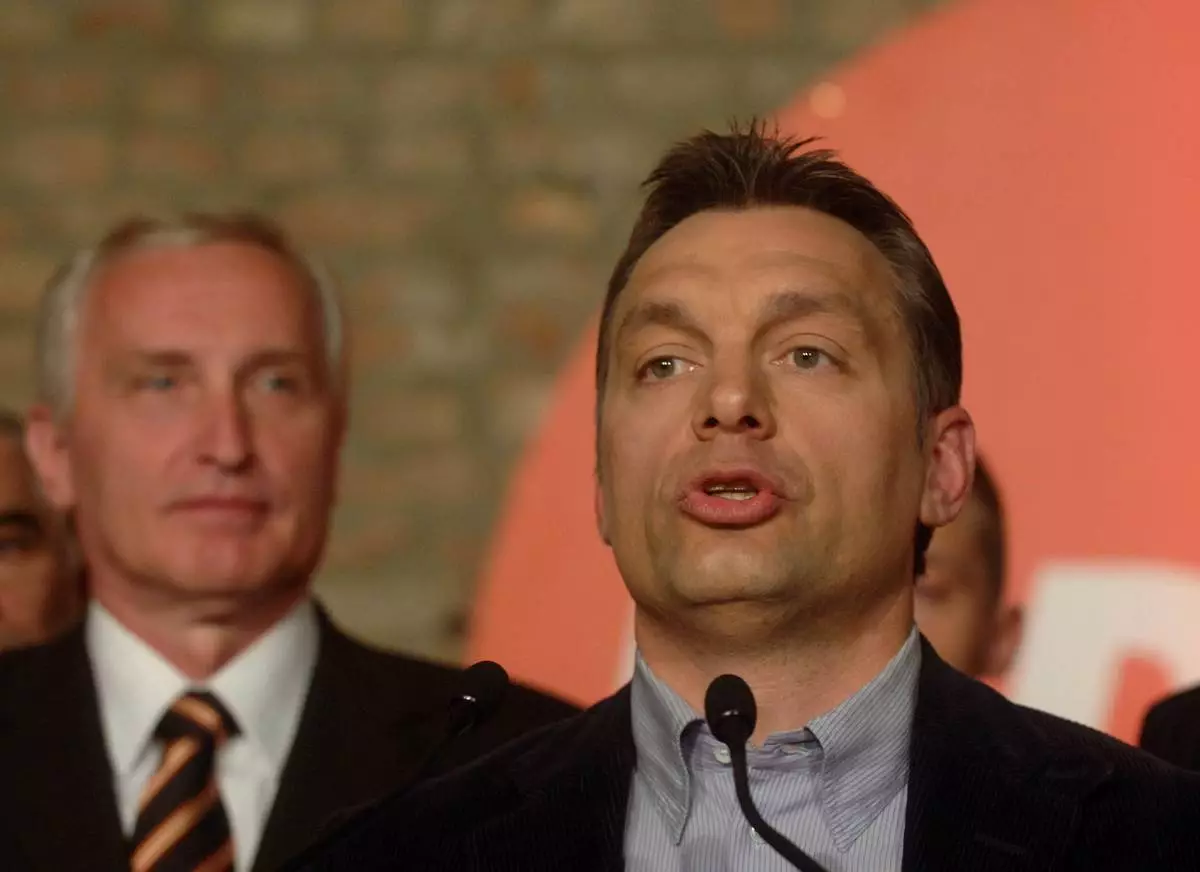
FILE -Viktor Orban, chairman of the senior opposition party, the Fidesz - Hungarian Civic Alliance, right, speaks following the first round of the parliamentary elections in Hungary in Budapest, April 9, 2006. At left is deputy prime minister candidate of the Fidesz, Istvan Mikola. (AP Photo/MTI, Szilard Koszticsak, File)
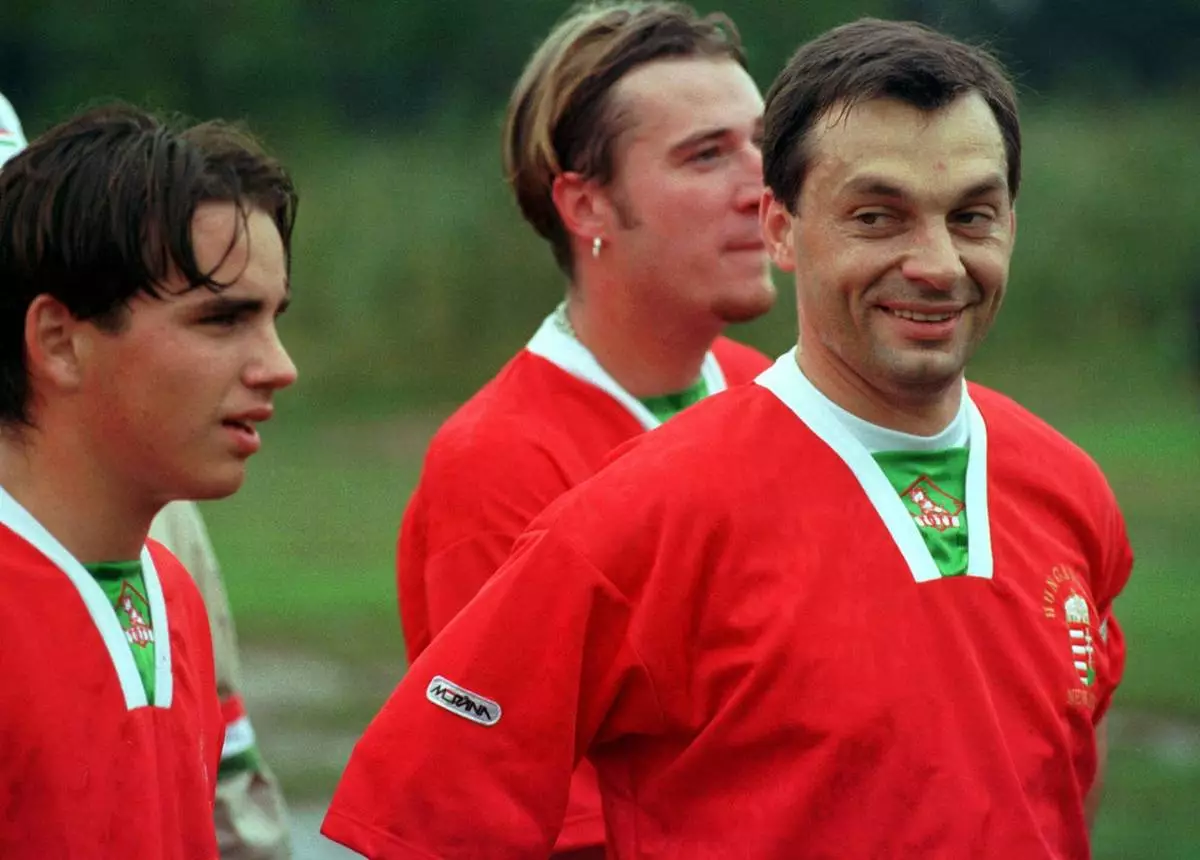
FILE -New Hungarian Prime Minister Dr. Viktor Orban smiles at fellow teammates at the end of the first half of play during a scrimage played at the Hungarian Sports Club in Woodbridge, N. J., Oct. 10, 1998. (AP Photo/Michael J.Treola, File)
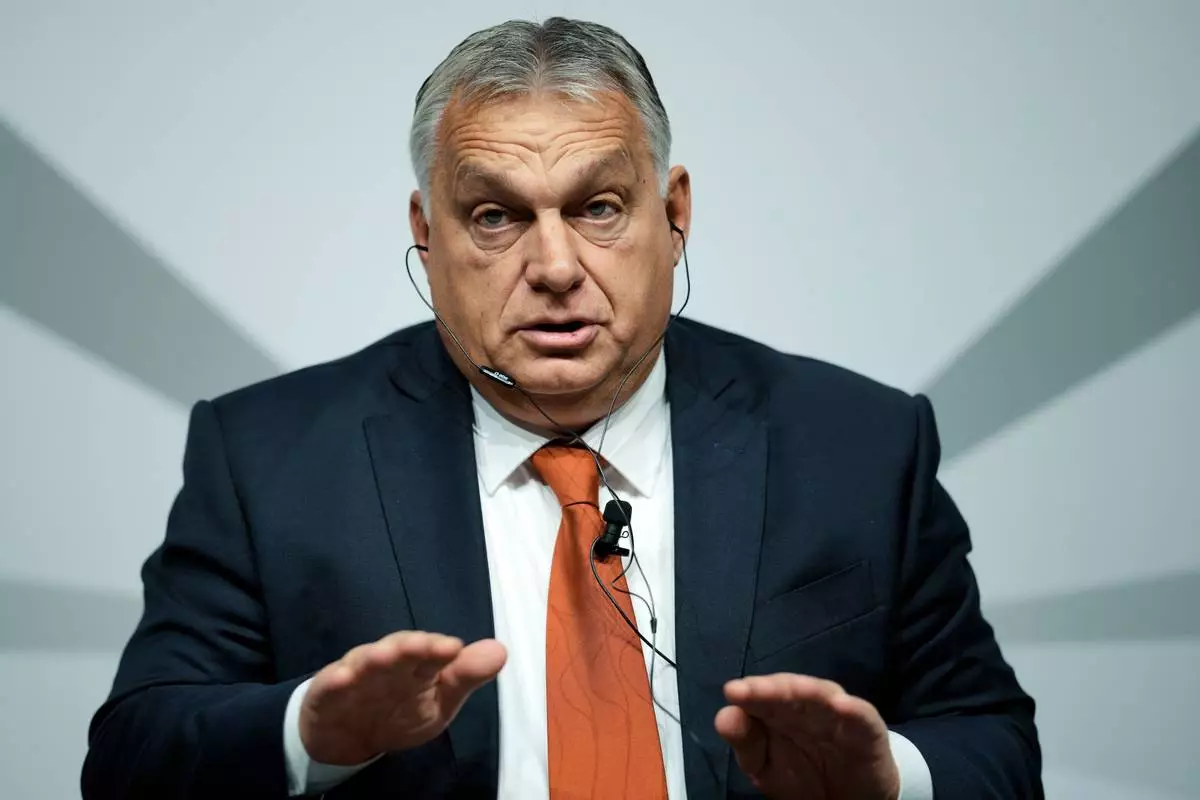
FILE -Hungarian Prime Minister Viktor Orban speaks during a panel discussion organised by publisher houses about 'Storm over Europe - the Ukraine war, the energy crisis and geopolitical challenges' in Berlin, Germany, Oct. 11, 2022. (AP Photo/Markus Schreiber), File)