DEVB supports continuous professional development in construction industry to address manpower needs
In response to the Construction Expenditure Forecast and the Manpower Forecast for Hong Kong Construction Industry released by the Construction Industry Council (CIC) today (April 10), a spokesman for the Development Bureau (DEVB) said that the Government will continue to collaborate with the CIC to promote professional development for the construction industry and address manpower needs through a multipronged approach.
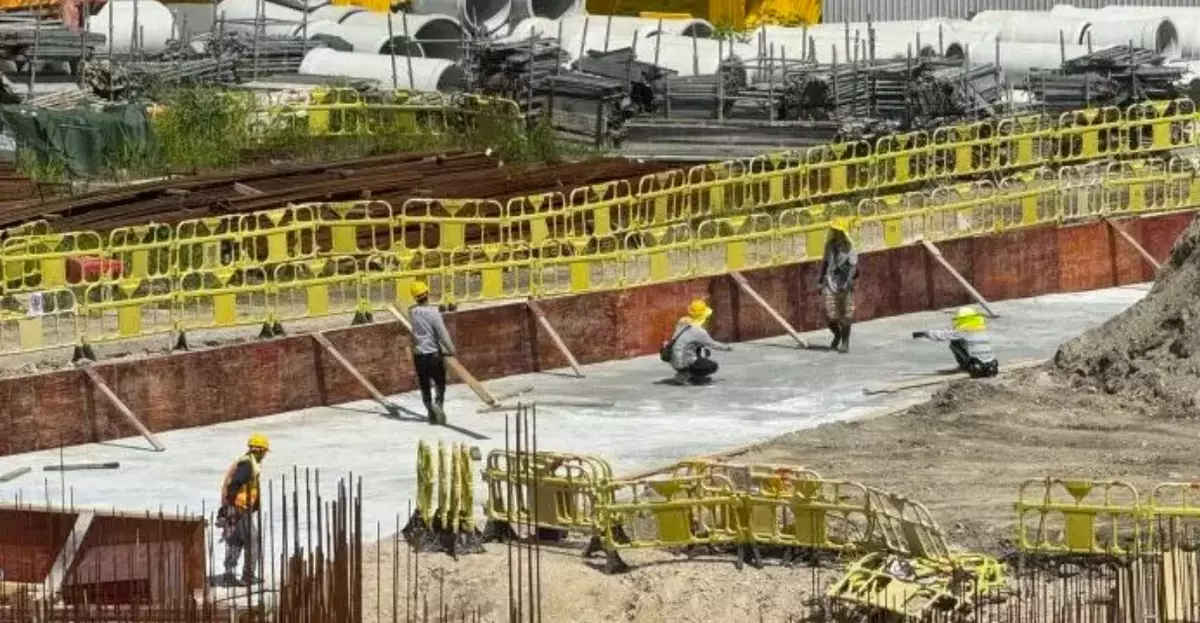
Photo by Bastille Post
As announced in the Budget in February this year, the Government's estimated capital works expenditure for 2026/27 is about $128 billion. From 2027/28 to 2030/31, the annual capital works expenditure on average is expected to remain at a similarly high level. Furthermore, with the recovery of the economy including the real estate market, a gradual resurgence of the volume of private sector projects is expected. Together with the anticipated increase in other public sector projects (such as railway and public housing projects), the CIC estimates the total construction expenditure of the industry to reach $305 billion to $360 billion in 2030/31. The medium-to long-term outlook for the construction industry remains robust, and the overall construction expenditure of the industry is expected to grow steadily.
The manpower demands across trades in the construction sector will continue to vary in response to changes of project types and trades involved. Due to the expected increase in the number of infrastructure-related projects (including land formation works for the Northern Metropolis, railway projects, etc) over the next few years, as well as the growing adoption of advanced construction technologies such as Modular Integrated Construction (MiC), greater manpower shortages are anticipated in certain trades, including plant and machinery operation, rigger, and electrical and mechanical installation. Meanwhile, as has been observed recently, labour shortages in some trades have eased, such as bar-bending, formwork carpentry, concreting and grouting, and plastering. However, given the projected steady increase in the total construction volume, the overall manpower demand for the construction industry is expected to remain strong over the next five years.
The spokesman said, "The DEVB will make reference to the forecast data released by the CIC and work with the Council to strengthen local training and drive technology adoption to enhance the overall productivity of the construction industry, while adhering to the multipronged approach and the policy of ensuring employment priority for local workers. The DEVB will continue to make effective use of the existing Labour Importation Scheme for the Construction Sector as a supplementary measure to respond flexibly to the industry’s manpower needs."
The Government looks forward to the CIC making persistent efforts to make good use of government funding and its own resources to assist construction workers in upskilling and reskilling by providing training places, training subsidies and employment services under the Multi-skilled and Skill Enhancement courses.
Regarding construction talent, the 2026-27 Budget proposes an allocation of $65 million for the DEVB to increase on-the-job training places to 260 in relevant government departments under the Graduate Training Scheme in 2026, thereby supporting graduates from construction-related programmes in obtaining professional qualifications. At the same time, with government support, the CIC will allocate an additional $180 million in the 2026-27 financial year to subsidise the provision of on-the-job training for a total of 3 000 relevant graduates in the construction industry.
Meanwhile, the Government has been supporting the industry in adopting advanced construction technologies to enhance overall productivity and drive the sustainable development of the industry. The Government injected a total of $2.2 billion into the Construction Innovation and Technology Fund (CITF) in 2018 and 2022. As the remaining balance is expected to be fully committed within 2026, the Government proposes in the Budget a further injection of $1 billion into the CITF, together with the CIC's contribution of $400 million, bringing the total to $1.4 billion to continue supporting a wider adoption of innovative technologies. The Government will work with the CIC to promote a broader use of advanced construction methods and new technologies such as MiC, Multi-trade integrated Mechanical, Electrical and Plumbing, AI technologies, and construction robotics.
The spokesman said, "The healthy development of the construction industry is not only an important component of the economic development of Hong Kong, but also a cornerstone of the city's high-quality development. Looking ahead, the Government will continue to collaborate with the CIC and industry stakeholders to address various tasks related to the construction volume and manpower needs in the sector."
The Development Bureau (DEVB), Photo source: HKSAR Government Press Releases