WASHINGTON (AP) — Democrats are struggling to come up for air after outside groups flooded their first round of midterm primaries with campaign cash.
As the Democratic Party fights to regain control of Congress, organizations affiliated with the American Israel Public Affairs Committee, cryptocurrency and artificial intelligence have dominated the airwaves, sometimes leaving candidates on the sidelines of their own campaigns.
Democratic pollster Zac McCrary said the primaries have “become proxy wars, and the candidates are almost afterthoughts in larger skirmishes."
Now the Democratic National Committee is advancing a resolution at its New Orleans spring meeting to condemn the surge of spending that has scrambled its primaries and exacerbated tensions within the party. A final vote is expected on Friday.
Candidates who lost have pointed their fingers at special interests, blaming them for derailing their campaigns. Others who are still in the running are courting voters by denouncing deep-pocketed outside groups. Even those who have benefited from the spending have expressed concern.
“It’s definitely a brave new world,” McCrary said.
“We’re not talking about doubling of campaign expenditures,” he added. “We’re talking about 10 times or 20 times more.”
Dan Sena, a former executive director at the Democratic Congressional Campaign Committee, said party organizations are no longer the ones with the clout to push favored candidates.
“All that’s been completely smashed now,” Sena said. Even if Democrats regain control of the U.S. House, he warned that outside spending could damage the party in the long run.
Referring to House Minority Leader Hakeem Jeffries, he said, “You’re going to hand Jeffries a caucus that is divided.”
So far this cycle, outside money in U.S. House races has largely targeted districts particularly friendly to Democrats, meaning the primaries will likely determine who will win the general election in November. After a record number of House members retired this year, many of those seats opened up for the first time in years, drawing dozens of Democratic hopefuls.
In Illinois, for example, there was more than $125 million in outside spending across five open Democratic primaries. In all but one of those congressional races, the outside spending exceeded candidate spending.
While it's still early in the calendar, there are indicators that many more races could see big spending. Almost 40 seats have already seen more than $1 million in outside spending, according to Federal Election Commission filings.
In Illinois, the top three spenders in U.S. House races were groups affiliated with AIPAC, according to AdImpact, which tracks ad buys in political races, followed by the cryptocurrency-affiliated Fairshake.
AIPAC was founded to support strong ties between the U.S. and Israel, a particularly controversial issue as Democratic hostility toward Israel rises over the war in Gaza. Some DNC members wanted to call out AIPAC's role in primaries, but the final resolution did not.
“We had various resolutions that focused on different industries and groups, and instead of going one-by-one, we passed a blanket repudiation,” DNC Chair Ken Martin said in a statement.
The latest DNC meeting marks another chapter in longstanding disputes between progressives and the party establishment.
Progressives want the party to adopt official language that all Democratic presidential contenders oppose money from dark-money groups, or super PACs that aren't required to disclose their donors.
“It’s necessary that we actually have the party do something on this issue, not just say something,” said Larry Cohen, co-chair of Our Revolution, a progressive group founded by independent Sen. Bernie Sanders of Vermont, who caucuses with Democrats.
The resolution being advanced at the DNC meeting in New Orleans is viewed by progressives as a step toward that goal. However, some Democrats warn against weakening their candidates when facing a Republican Party that's flush with cash.
“Provided that we don’t handcuff ourselves in the general elections — because if the Republicans are going to use dark money in general elections, we should be using our money in general elections, too — if you provide an even playing field, I think then that’s fine,” said Sen. Ruben Gallego, an Arizona Democrat. “But we just can’t be handcuffing ourselves in the general to lose races.”
Any DNC resolutions would not stop outside groups from surging funds into primary contests or general elections. But some Democrats believe the issue is core to the party's values.
“We should eliminate any super PAC in a Democratic primary. And I think every presidential candidate in 2028 should pledge that they will not have any super PAC spending in a Democratic primary,” said Rep. Ro Khanna, a progressive and possible Democratic presidential contender who co-chaired Sanders’ 2020 presidential campaign.
“That should be a litmus test,” Khanna argued. “If you’re not willing to take that pledge, then you’re part of the problem.”
Brown reported from New York.
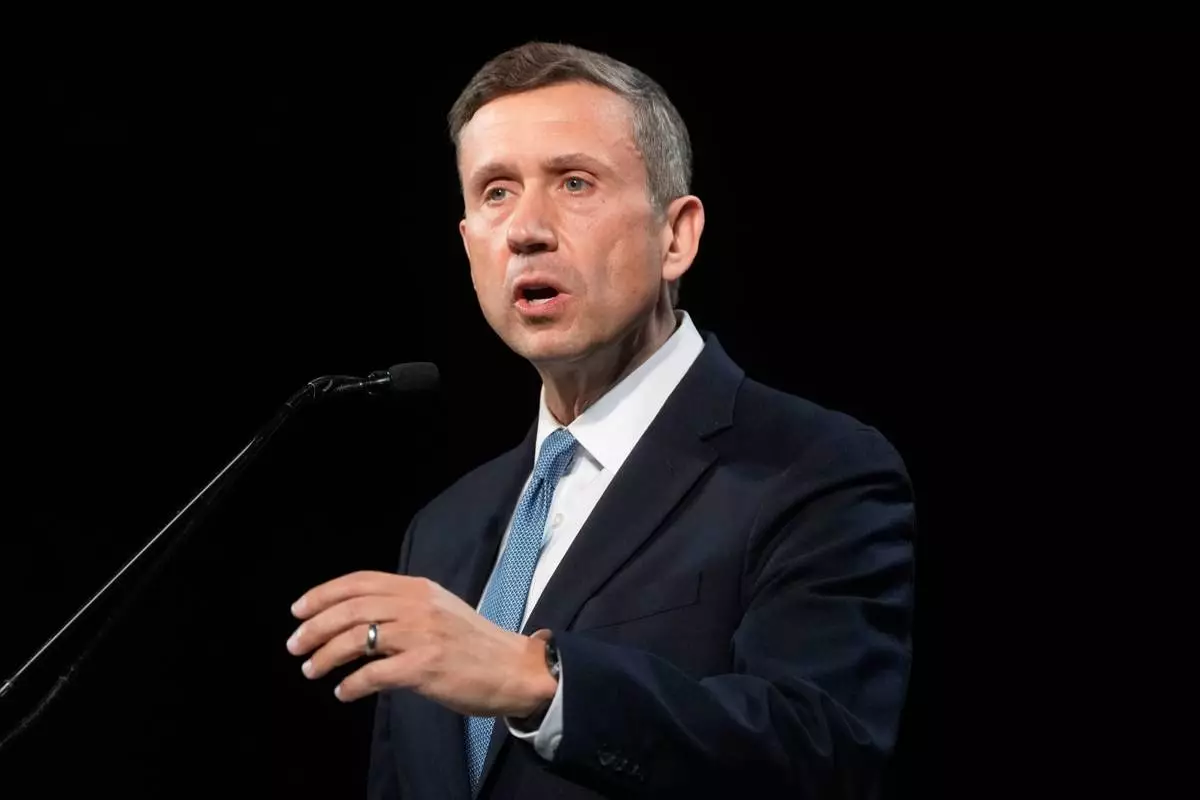
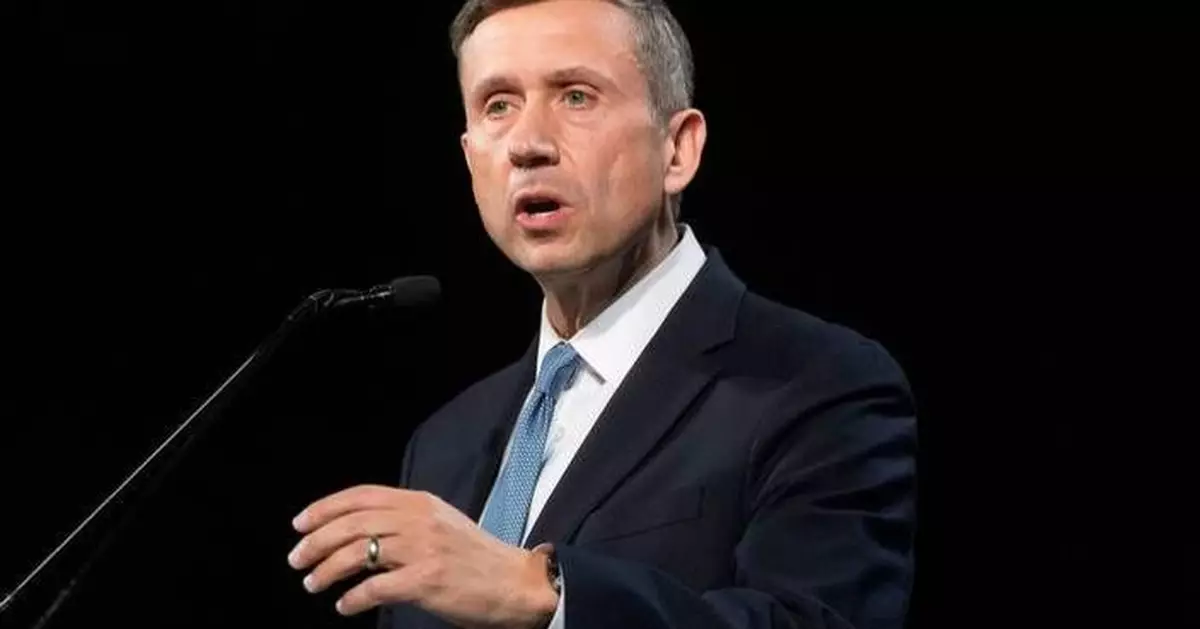
FILE - Ken Martin speaks at the 2026 California Democratic Party State Convention in San Francisco, Feb. 21, 2026. (AP Photo/Jeff Chiu, File)
NEW YORK (AP) — President Donald Trump's administration this week acknowledged it made a significant error in figures it used to help justify a fraud probe into New York’s Medicaid program, a glaring mistake that undercuts a federal campaign to tackle waste, mostly in Democratic-led states.
The error, one of at least a few misrepresentations in its description of the program, prompted health analysts to question how many of the Republican administration’s sweeping anti-fraud efforts around the country were based on faulty findings. It also reflected a common criticism that’s been made of Trump’s second administration — that it tends to attack first and confirm the facts later.
“These numbers could have been cleared up in a phone call, so it’s really slapdash,” said Fiscal Policy Institute senior health policy adviser Michael Kinnucan, whose recent analysis called attention to the Trump administration’s inaccurate claim.
The mistake appeared in comments made last month by Dr. Mehmet Oz, the administrator of the Centers for Medicare & Medicaid Services, in a social media video and in a letter to New York’s Democratic governor announcing the fraud investigation.
Oz claimed that New York’s Medicaid program last year provided some 5 million people with personal care services, which assist people in need with basic activities like bathing, grooming and meal preparation. That would add up to nearly three-fourths of the state’s 6.8 million Medicaid enrollees.
“That level of utilization is unheard of,” Oz said in the video, adding in his post that New York needs to “come clean about its Medicaid program.”
But the real number of New Yorkers who used those services last year was about 450,000, or between 6% and 7% of total enrollees, CMS spokesman Chris Krepich told The Associated Press this week in the agency’s first public acknowledgment of the error. He said the agency misidentified New York’s approach to applying billing codes and had since refined its methodology.
“CMS is committed to ensuring its analyses fully reflect state-specific billing practices and will continue to work closely with New York to validate data and strengthen program integrity oversight,” he said in an emailed statement.
Krepich said the probe was ongoing as the administration still has concerns with New York’s oversight of personal care services and the Medicaid program and is reviewing the state’s response to last month’s letter. CMS had raised other flags about New York’s program, including that it spends more per beneficiary and per resident than the average state, has high personal care spending and employs so many personal care aides that the job category is now the largest in the state.
Health analysts said the state's high spending reflected both high costs for services in New York and a policy choice to provide robust at-home care. Cadence Acquaviva, senior public information officer for the New York Department of Health, called Oz’s initial mischaracterizations “a targeted attempt to obscure the facts.”
“New York State remains committed to protecting and preserving vital Medicaid programs that deliver high-quality services to New Yorkers who depend on them,” she said.
In a statement, a spokesperson for Gov. Kathy Hochul said, “The initial claim by CMS was patently false, and we are glad they now admit it."
“Governor Hochul has been clear that New York has zero tolerance for waste, fraud and abuse in Medicaid, or any other state programs, and will continue her efforts to root out bad actors, protect taxpayer dollars, and safeguard the critical programs that New Yorkers rely on,” spokesperson Nicolette Simmonds said.
The Trump administration’s investigation into New York comes as it has similarly approached at least four other states, including California, Florida, Maine and Minnesota, with investigations into potential health care fraud. The anti-fraud effort appears to be expanding as voters in the upcoming midterm elections say they’re concerned about affordability.
Trump last month signed an executive order to create an anti-fraud task force across federal benefit programs led by Vice President JD Vance. As part of that project, Vance announced the administration would temporarily halt $243 million in Medicaid funding to Minnesota over fraud concerns, a move over which the state has since sued.
Kinnucan, the analyst with expertise in New York’s Medicaid program, said he’s concerned that the Trump administration’s adversarial approach to targeting fraud in some states “politicizes” a conversation that should be a team effort.
“We want to think collaboratively among all the stakeholders in the program about how we can actually fix it,” Kinnucan said. “We don’t want to have fraud be this political football.”
In his video, Oz made at least two other claims about New York that Medicaid advocates and beneficiaries say distorted the facts.
In one instance, he said the state recently made its screening for personal care eligibility “more lenient by allowing problems like being ‘easily distracted’ to qualify for a personal care assistant.”
Rebecca Antar, director of the health law unit at the Legal Aid Society, said the opposite was true — that the state in a rule change that went into effect last September instead made its program requirements more stringent. She said being “easily distracted” doesn’t appear anywhere among them.
Krepich said the administrator was referring to whether New York’s standard for personal care services was “sufficiently rigorous.”
“When standards are overly permissive, it risks diverting resources away from individuals with the highest levels of need and placing long-term pressure on the sustainability of the Medicaid program,” he said.
Oz in the video also referred to personal care services as “something that our families would normally do for us, like carrying groceries.”
Kathleen Downes, a 33-year-old who has quadriplegic cerebral palsy and uses personal care services in New York’s Nassau County, said she was offended by the notion that all Medicaid beneficiaries have family members who are willing and able to help.
Downes, who has been disabled since birth and needs personal care help for things like showering, using the toilet and eating, said she hires both her mother and outside assistants for personal care services, so her aging mother doesn’t have to take on those tasks full time. She said her mother did the labor unpaid for years, precluding her from pursuing other career opportunities.
“He’s assuming that everybody wants to and can just do it for free forever,” Downes said. "And that’s not feasible for a lot of people.”
Associated Press writer Anthony Izaguirre contributed to this story.
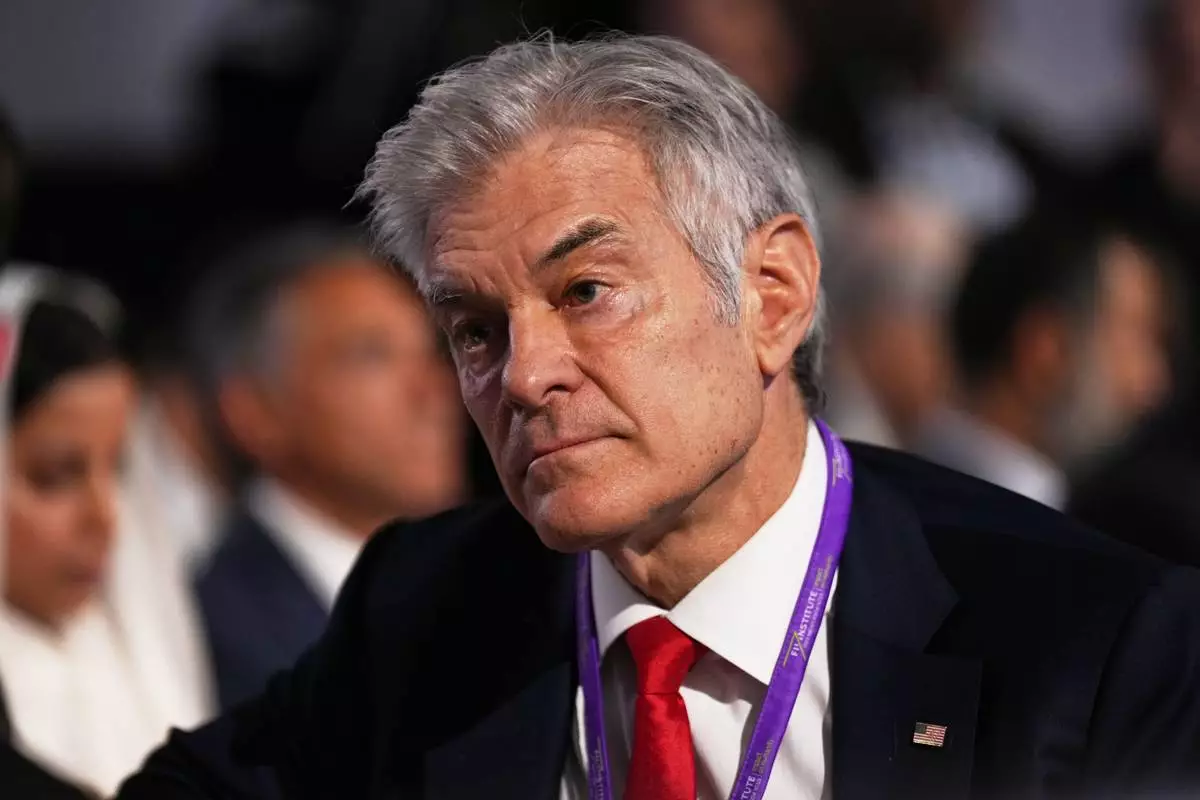
Administrator for the Centers for Medicare & Medicaid Services Dr. Mehmet Oz attends the Future Investment Initiative Institute's summit, where President Donald Trump is set to speak, Friday, March 27, 2026, in Miami Beach, Fla. (AP Photo/Mark Schiefelbein)
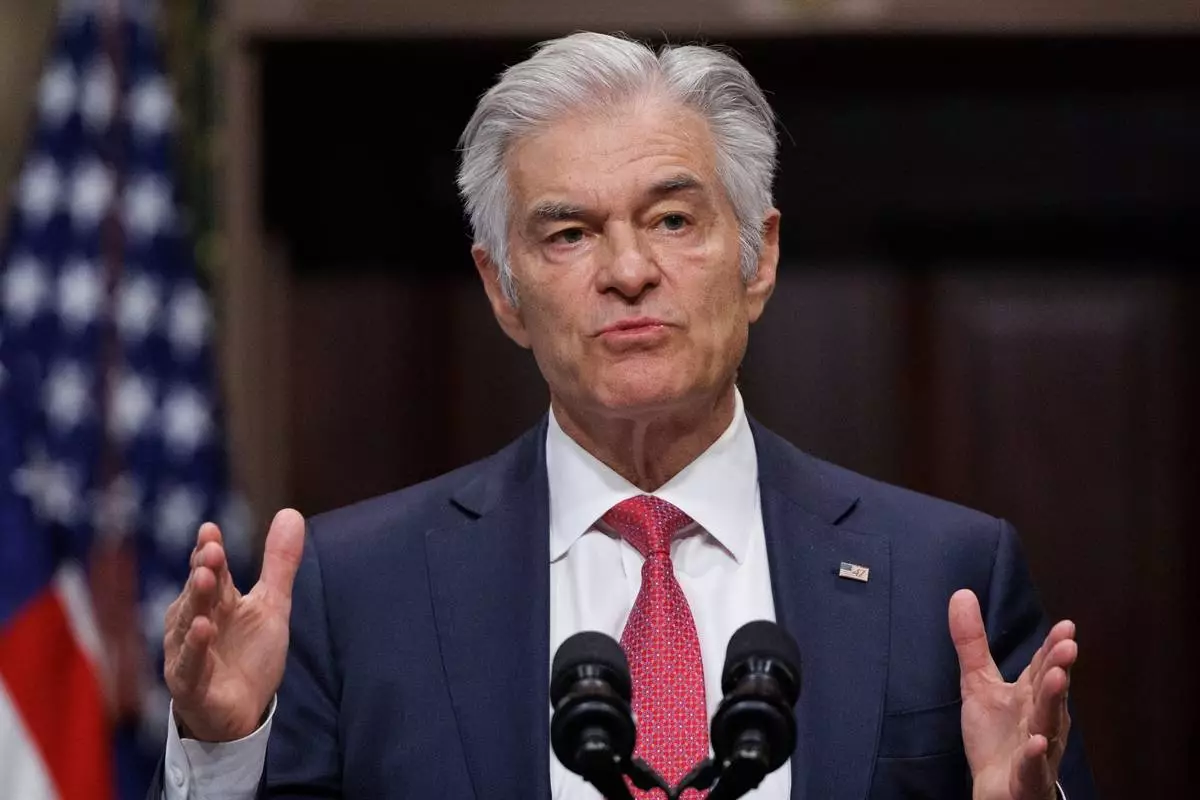
FILE - Administrator for the Centers for Medicare & Medicaid Services Dr. Mehmet Oz speaks during a news conference on efforts to combat fraud, in the Old Eisenhower Executive Office Building on the White House campus Feb. 25, 2026, in Washington. (AP Photo/Tom Brenner, File)