McALLEN, Texas (AP) — The Honduran family of an 8-year-old girl with a heart condition who died in U.S. custody after crossing the border in 2023 sued the federal government on Friday.
Anadith Danay Reyes Alvarez, who had chronic heart problems and sickle cell anemia, got sick with flu-like symptoms and died after being detained for eight days in a U.S. Customs and Border Protection facility in Donna, then later Harlingen, Texas.
An internal CPB investigation found found failures in providing proper medical care and that medical personnel did not review documents the mother offered which described the girl's sensitive condition. In custody, Anadith had a high fever of 104.9 F (40.5 C) as well as nausea, breathing difficulties and pain.
Despite pleas from her mom, the child was not taken to a hospital until her body went limp in her mother's arms. Mabel Alvarez Benedicks described her daughter's death in an emotional interview with The Associated Press later that week.
The U.S. Department of Homeland Security did not immediately respond to a request for comment on the lawsuit.
Friday's wrongful death lawsuit follows a tort claim made against the government last year which was denied in October. The lawsuit is seeking to cover damages suffered by the family but does not request a specific monetary amount.
The child's mother said she visits a psychiatrist regularly and takes medication to help her sleep. Her father, Rossel Reyes Martinez, said their daughter's death was the realization of a parent's worst nightmare.
“That is why we are filing this lawsuit today in her memory, to ensure that no family has to endure the same pain we have endured,” her father said Thursday.
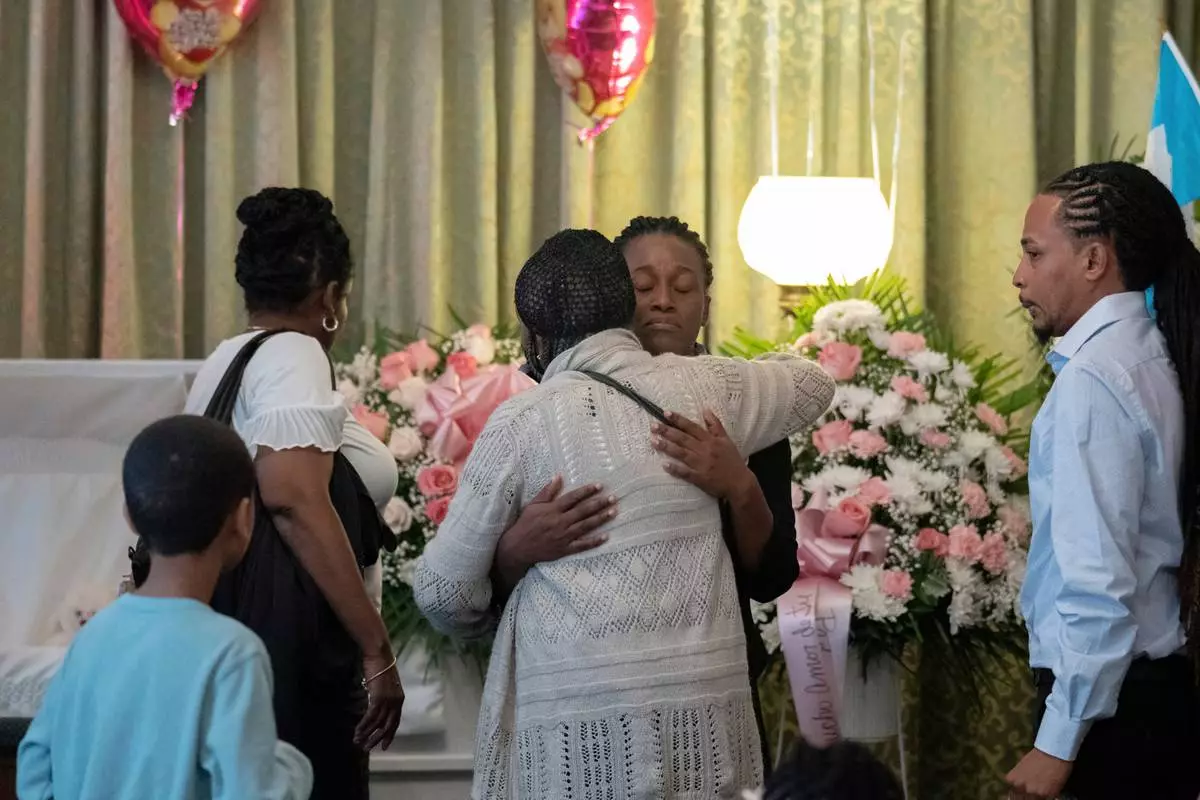
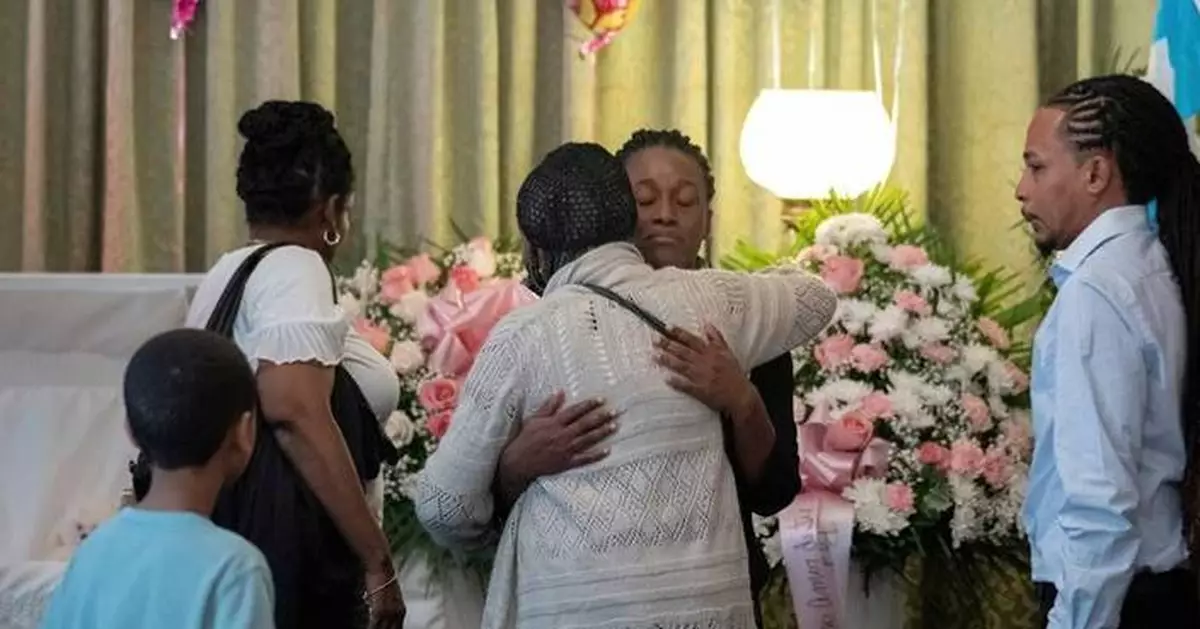
FILE - Mabel Alvarez Benedicks, mother of Anadith Danay Reyes Alvarez, center, greets a guest during the wake for her 8-year-old daughter at R.G. Ortiz Funeral Home in New York, on Friday, June 16, 2023. (AP Photo/Jeenah Moon, File)
CLEVELAND (AP) — Donovan Mitchell and the Cavaliers finally got past the second round and face-planted in the Eastern Conference finals.
They weren't ready for the Knicks or the big stage.
The lights were too bright again.
Cleveland's season ended with a resounding, demoralizing and embarrassing 130-93 loss on Monday night in Game 4 to the New York Knicks, who swept the series and advanced to the NBA Finals for the first time since 1999.
Playing on tired and wobbly legs after failing to put Toronto and Detroit away before seven games in the earlier rounds, the Cavs, whose fate was sealed when they blew a 22-point lead in the fourth quarter and lost Game 1 at Madison Square Garden, had no answer for anything the Knicks threw at them.
They got out-played, out-shot, out-rebounded and out-coached.
“We did this to ourselves,” said Mitchell, who scored 31 in the close-out loss. "We didn't give our team a chance because we didn't take care of business. You can't play with your food. We had an opportunity in Game 1 and we blew that.
“We had an opportunity, but give credit where credit is due.”
And now that they've fallen short, the Cavs head into what will likely be a tumultuous summer that will trigger a major roster overhaul and perhaps other moves.
This wasn't the plan. Cleveland made a blockbuster trade at the deadline in February, sending guard Darius Garland, part of its “Core Four” to the Los Angeles Clippers for James Harden, who was supposed to take pressure off Mitchell.
It never happened.
Cleveland's top player approved the Garland swap, but other than a few games here and there, he and Harden never truly meshed as intended. The Cavs, who shot just 28.9% (48 of 166) on 3-pointers in the series, never outgrew their growing pains.
“This was the first time going through what we were going to go through,” said Harden. “Now we have to take another two steps and get even better. ... I feel like we didn't have a fair chance. We did play one quarter of Cavs basketball offensively. If you're not making shots, you're not going to beat anybody."
Harden has a $42.3 million player option for next season that he's expected to decline to re-sign with the Cavs as a free agent. But the 36-year-old didn't perform up to offensive expectations and was a virtual turnstile on defense.
Mitchell's future is more complicated. He can be offered a five-year, $350 million super-max extension by the Cavs as early as this offseason, but the team will likely wait due to several financial factors, and still must decide if the seven-time All-Star is worth the investment.
With the Knicks up by 33 in the fourth, Mitchell and Cleveland's other starters were mercifully replaced. The 29-year-old went to the bench and watched a team he once cheered for as a kid win its 11th straight playoff game.
Mitchell feels the Cavs took a significant step this season, and he's determined to get Cleveland a title.
“I love it here,” he said when asked about the extension. “I don't know how else to say it. I have no doubt these guys can get there. We have unfinished business.”
Cleveland's stunning flame-out in the conference finals is only going to fuel more speculation about coach Kenny Atkinson's future. He guided the team to a No. 1 seed in his first season a year ago before a disappointing, second-round exit against Indiana.
Atkinson helped the Cavs take a step deeper into the postseason, but it's not certain that will be enough to satisfy demanding owner Dan Gilbert, who has dropped more than $400 million on a team that hasn't delivered him a second title.
Not long after the game, Gilbert went on social media to give a brief assessment of the season.
“We took a step ahead this spring, but we are nowhere near where we need to be,” he posted. “I can’t thank the fans enough for the support this year. We will dig in all summer and do everything we possibly can to take the next step. We will grind until we get there.”
Harden and Mitchell staunchly defended Atkinson.
“We did something we haven't done since 2018,” Mitchell said. “I love Kenny. We love Kenny. We ride with Kenny. That's all that matters. We're in this together.”
New York exposed all of Cleveland's on-court flaws and may have set the stage for Gilbert to make even bolder moves. There's little doubt that seeing his team get completely overwhelmed in Game 4 — with thousands of New York fans chanting “Knicks in 4!” — stung badly.
The Cavs will closely monitor superstar Giannis Antetokounmpo's unsettled situation in Milwaukee. The Bucks have reportedly had past interest in 24-year-old Cleveland forward Evan Mobley.
And then there's LeBron James and the possibility the NBA's all-time scoring leader could bring his storied career full circle by coming back home a second time. He's a free agent, currently at odds with the Los Angeles Lakers and surveying the landscape.
At the moment, Cleveland appears to need him again.
When asked, Mitchell wouldn't even entertain the possibility of joining forces with James. His primary concern was what went wrong against the Knicks.
“We got swept,” he said. “We've got to own it.”
AP NBA: https://apnews.com/hub/nba
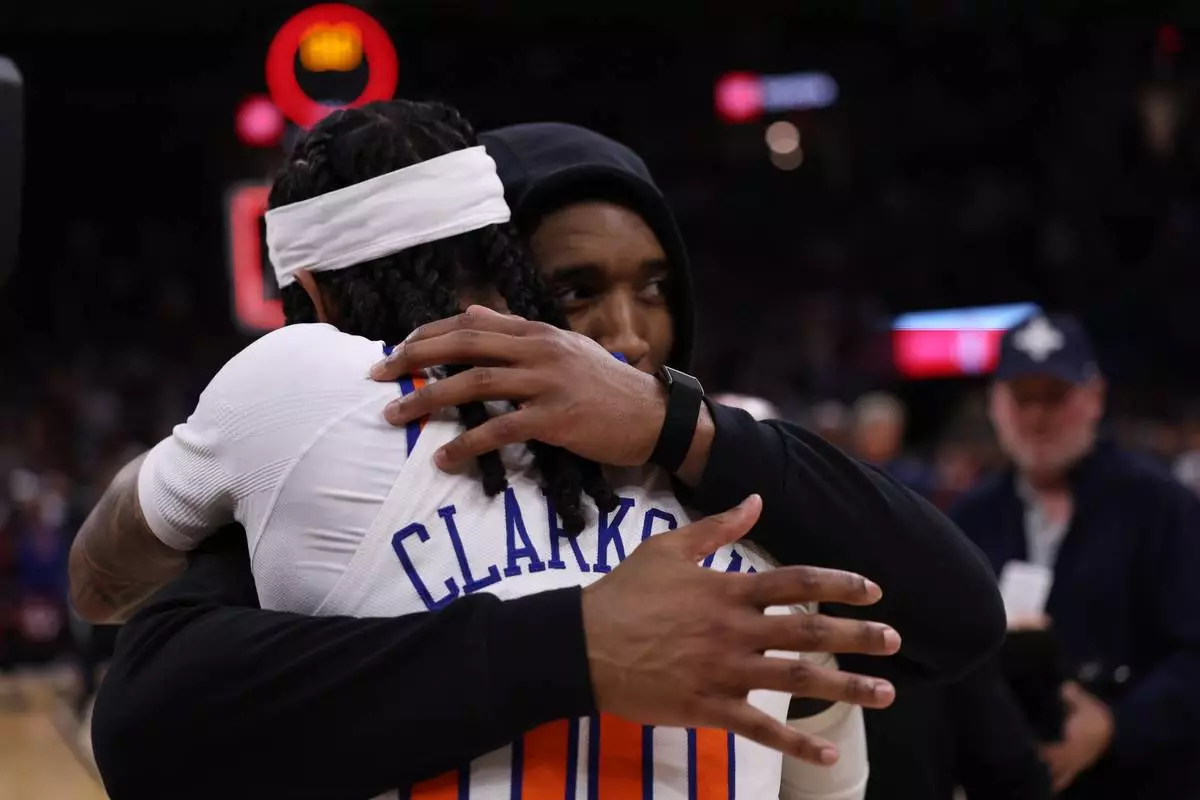
Cleveland Cavaliers guard Donovan Mitchell, right, hugs New York Knicks guard Jordan Clarkson (00) after Game 4 in the Eastern Conference finals NBA basketball playoffs series in Cleveland, Monday, May 25, 2026. (AP Photo/Tim Phillis)
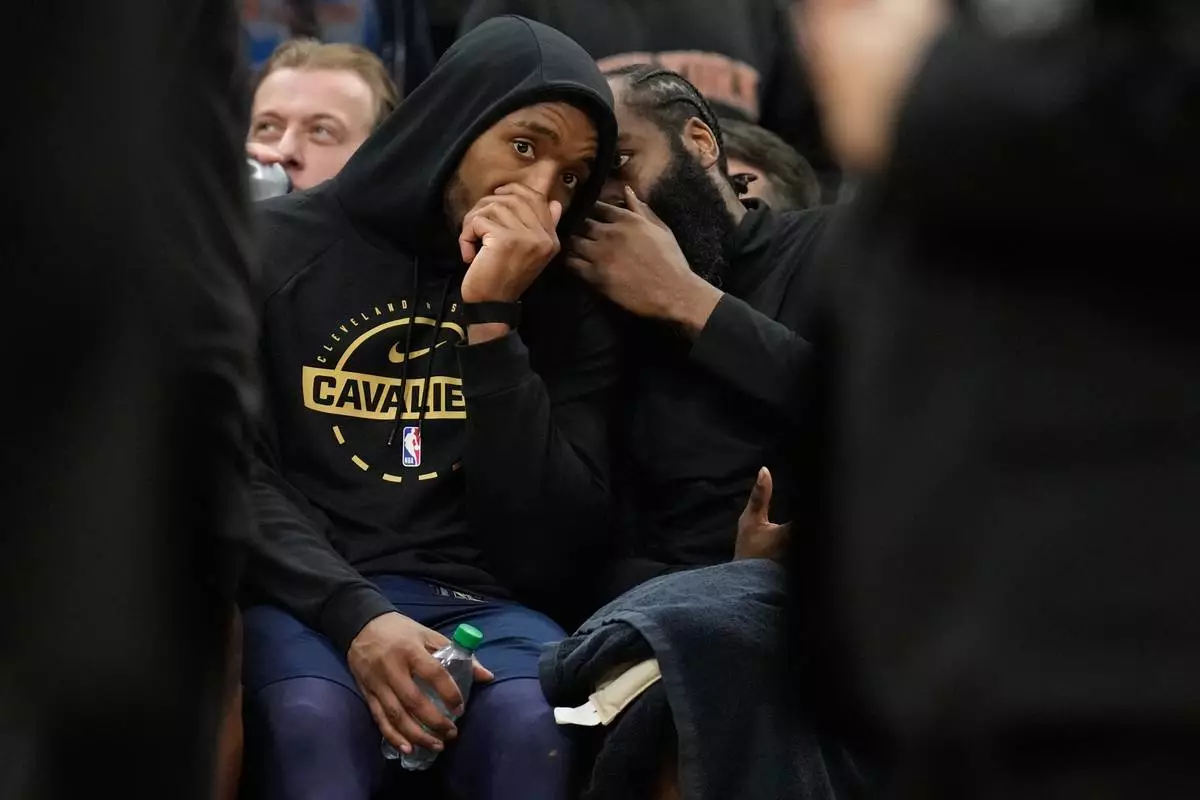
Cleveland Cavaliers guard Donovan Mitchell, left, talks with guard James Harden (1) during the second half of Game 4 in the Eastern Conference finals NBA basketball playoffs series against the New York Knicks in Cleveland, Monday, May 25, 2026. (AP Photo/Sue Ogrocki)
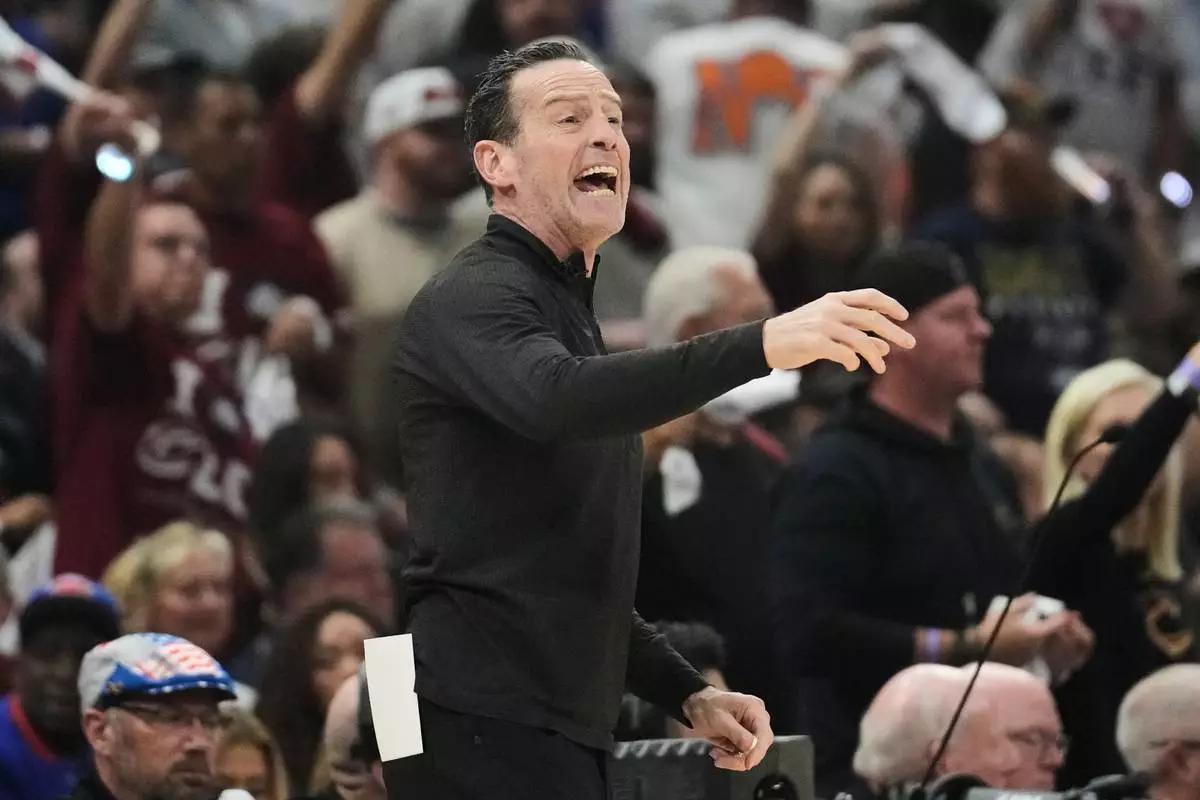
Cleveland Cavaliers head coach Kenny Atkinson yells from the sideline during the first half of Game 4 in the Eastern Conference finals NBA basketball playoffs series against the New York Knicks in Cleveland, Monday, May 25, 2026. (AP Photo/Sue Ogrocki)
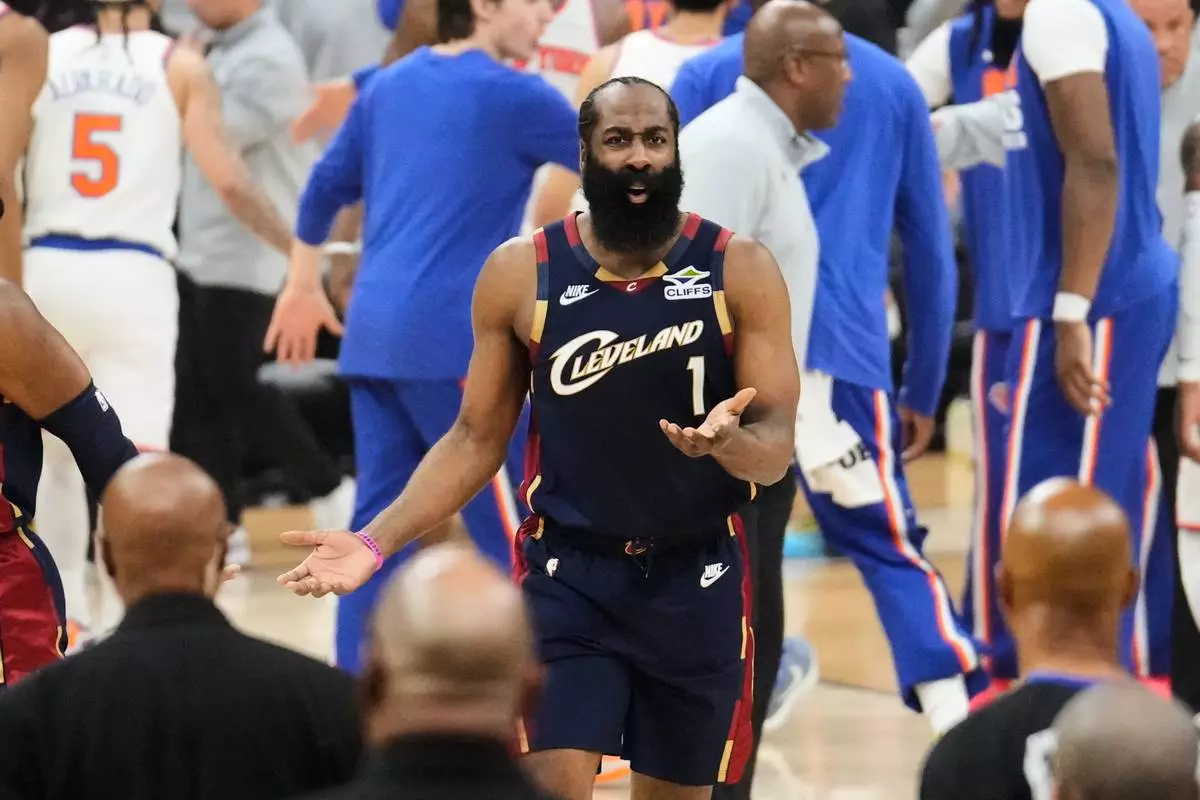
Cleveland Cavaliers guard James Harden reacts to a call during the first half of Game 4 in the Eastern Conference finals NBA basketball playoffs series against the New York Knicks in Cleveland, Monday, May 25, 2026. (AP Photo/Sue Ogrocki)
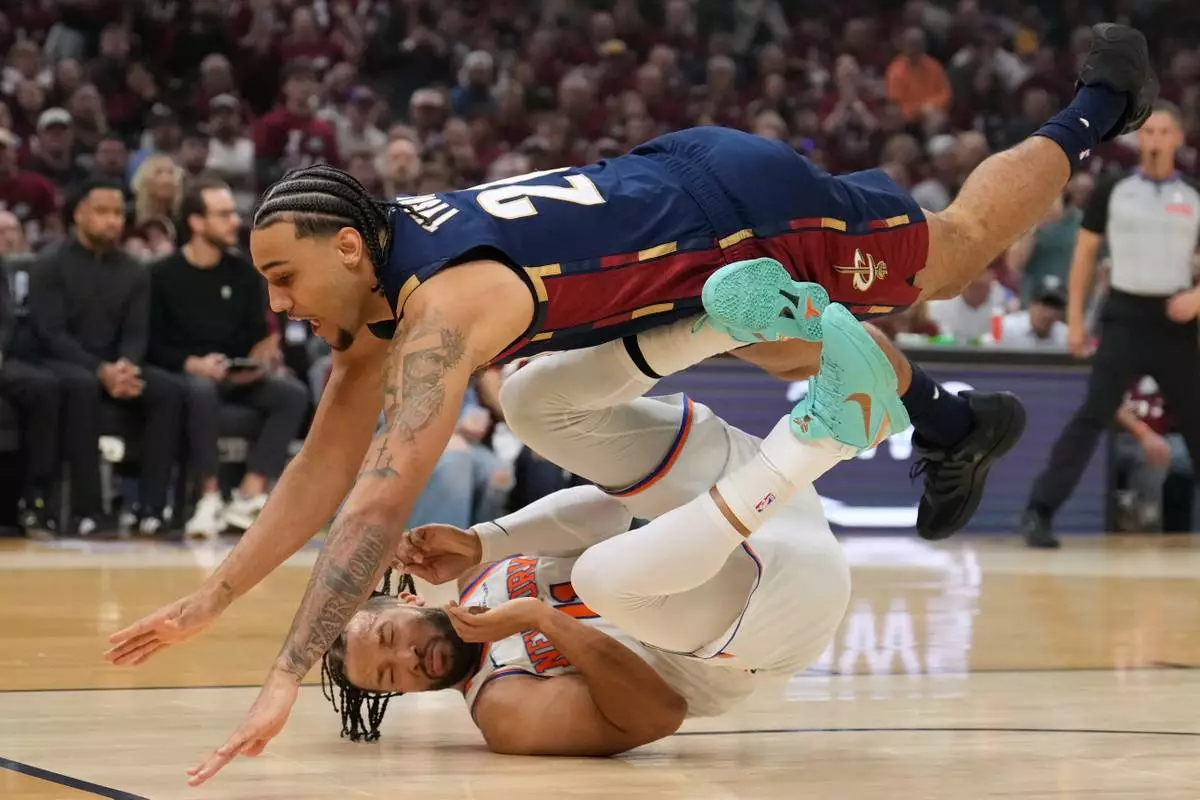
Cleveland Cavaliers guard Jaylon Tyson (20) collides with New York Knicks guard Jalen Brunson (11) during the first half of Game 4 in the Eastern Conference finals NBA basketball playoffs series in Cleveland, Monday, May 25, 2026. (AP Photo/Sue Ogrocki)
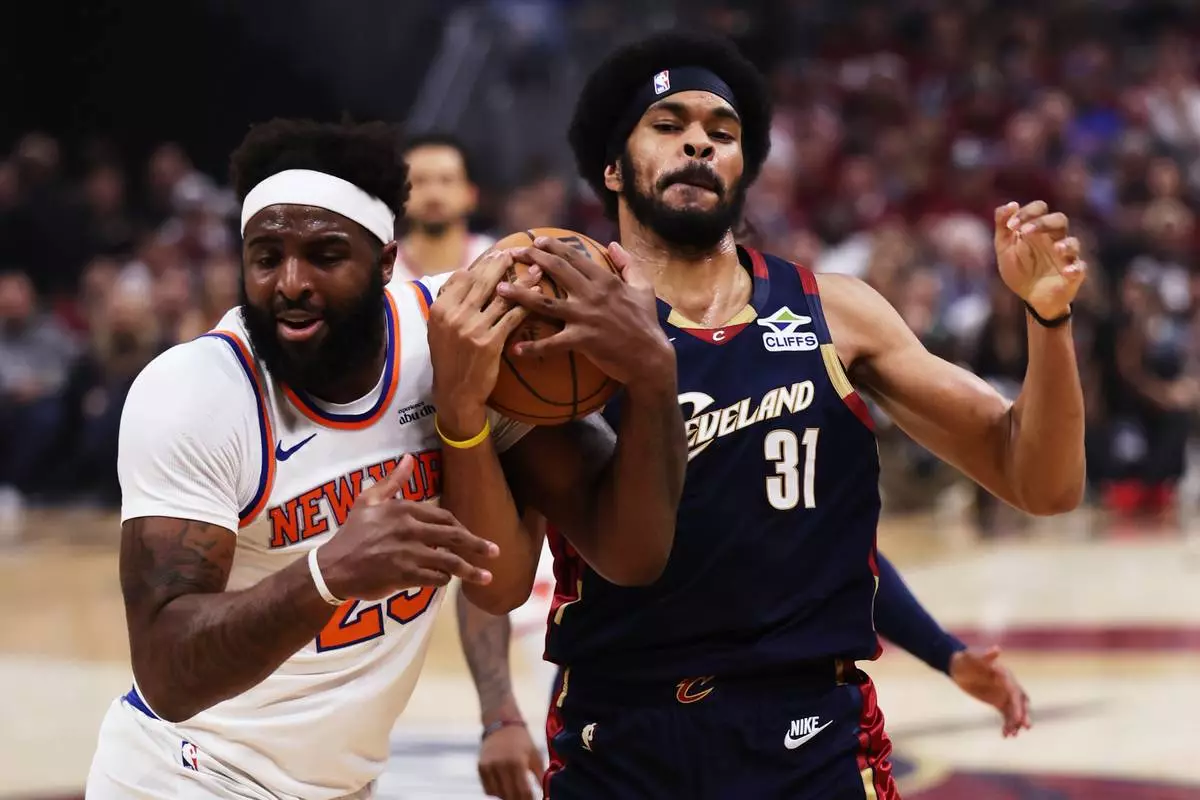
New York Knicks center Mitchell Robinson (23) and Cleveland Cavaliers center Jarrett Allen (31) battle for the ball during the first half of Game 4 in the Eastern Conference finals NBA basketball playoffs series in Cleveland, Monday, May 25, 2026. (AP Photo/Tim Phillis)
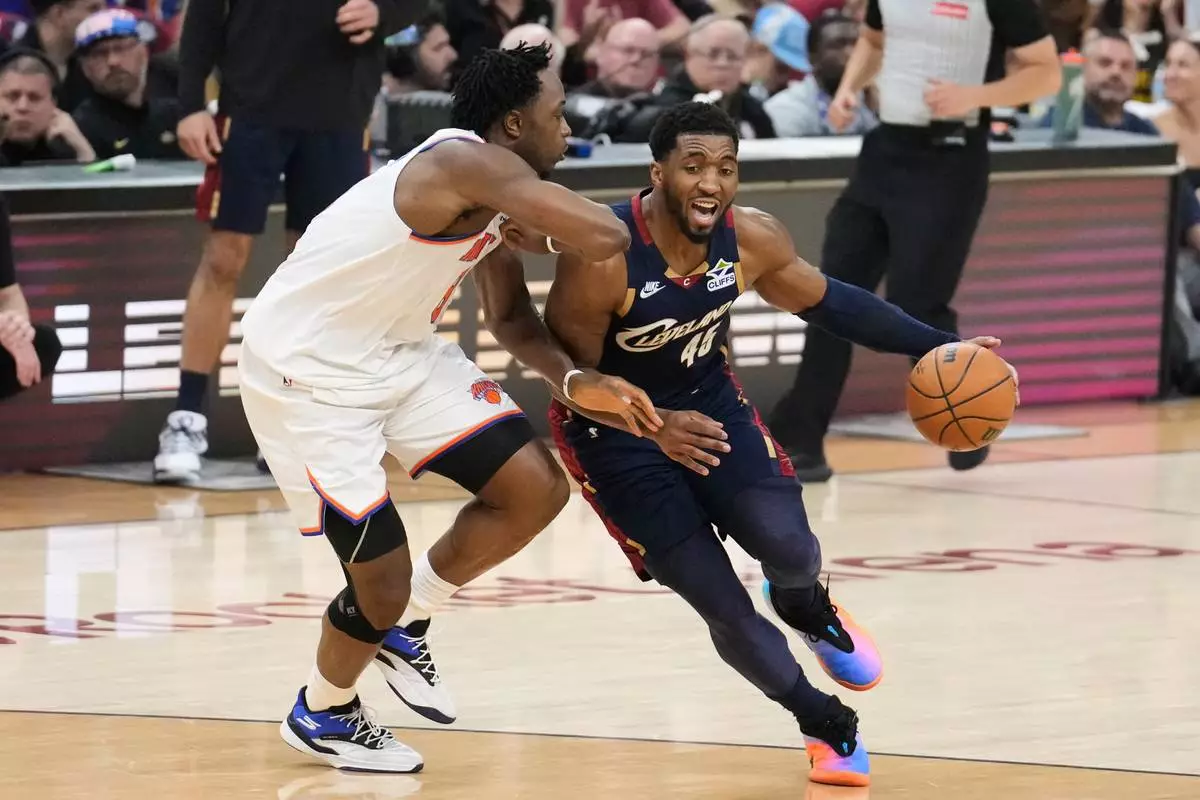
New York Knicks forward Og Anunoby (8) defense against Cleveland Cavaliers guard Donovan Mitchell (45) during the first half of Game 4 in the Eastern Conference finals NBA basketball playoffs series in Cleveland, Monday, May 25, 2026. (AP Photo/Sue Ogrocki)