ST. PETERSBURG, Fla. (AP) — Yandy Díaz sparked a comeback with a tying, two-run homer in the first inning off Luis Gil, who made his first big league start this season, and the Tampa Bay Rays beat the Yankees 5-3 on Friday night to extend New York's losing streak to three.
Steven Matz (3-0) and three relievers combined on a five-hitter with 12 strikeouts.
Click to Gallery
New York Yankees second baseman Jazz Chisholm Jr. tags out Tampa Bay Rays' Chandler Simpson (14) attempting to steal second base during the eighth inning of a baseball game Friday, April 10, 2026, in St. Petersburg, Fla. (AP Photo/Chris O'Meara)
Tampa Bay Rays third baseman Junior Caminero celebrates with first baseman Jonathan Aranda (8) after the team defeated the New York Yankees during a baseball game Friday, April 10, 2026, in St. Petersburg, Fla. (AP Photo/Chris O'Meara)
New York Yankees' Aaron Judge, right, scores on a sacrifice fly by Cody Bellinger off Tampa Bay Rays pitcher Steven Matz during the first inning of a baseball game Friday, April 10, 2026, in St. Petersburg, Fla. (AP Photo/Chris O'Meara)
New York Yankees pitcher Luis Gil delivers to the Tampa Bay Rays during the first inning of a baseball game Friday, April 10, 2026, in St. Petersburg, Fla. (AP Photo/Chris O'Meara)
Tampa Bay Rays' Yandy Díaz points into the dugout after his two-run home run off New York Yankees pitcher Luis Gil during the first inning of a baseball game Friday, April 10, 2026, in St. Petersburg, Fla. (AP Photo/Chris O'Meara)
Since their first three batters got hits against the A's on Wednesday, Yankees hitters are 7 for 86 (.081). New York had a 22-batter stretch without a hit.
New York batters failed on two robot umpire challenges and have succeeded on two of their last 13 attempts.
Playing at Tropicana Field for the first time since July 11, 2024, New York took a 2-0 lead in the first. Aaron Judge singled, stole a base and scored on Cody Bellinger’s sacrifice fly, and Amed Rosario tripled on a one-hopper that went past left fielder Chandler Simpson and bounced to the wall.
Gil, the 2024 AL Rookie of the Year, was left at Triple-A early this season when the Yankees didn't need a fifth starter because of off days. Given the early lead, he walked Jonathan Aranda with two outs in the a 32-pitch first and gave up Diaz’s 377-foot homer on a slider over the middle of the strike zone.
Simpson grounded into a run-scoring forceout in the second for a 3-2 lead against Gil, who allowed three runs, three hits and three walks in four innings.
After Judge took a step back and allowed Junior Caminero's sixth-inning fly to drop in right for a hit, Simpson had an RBI single and Aranda a run-scoring groundout.
Ben Rice hit first first major league pinch homer in the eighth off Hunter Bigge. New York had runners at second in the third in the ninth before Bryan Baker struck out Randal Grichuk and retired pinch-hitter Trent Grisham on a popup for his second save.
Matz retired 13 of 15 hitters after early trouble and allowed two runs and five hits over five innings with seven strikeouts and two walks.
Yankees LHP Max Fried (2-0, 1.35 ERA) and Rays RHP Nick Martinez (0-0, 2.25) start Saturday.
AP MLB: https://apnews.com/hub/mlb

New York Yankees second baseman Jazz Chisholm Jr. tags out Tampa Bay Rays' Chandler Simpson (14) attempting to steal second base during the eighth inning of a baseball game Friday, April 10, 2026, in St. Petersburg, Fla. (AP Photo/Chris O'Meara)

Tampa Bay Rays third baseman Junior Caminero celebrates with first baseman Jonathan Aranda (8) after the team defeated the New York Yankees during a baseball game Friday, April 10, 2026, in St. Petersburg, Fla. (AP Photo/Chris O'Meara)

New York Yankees' Aaron Judge, right, scores on a sacrifice fly by Cody Bellinger off Tampa Bay Rays pitcher Steven Matz during the first inning of a baseball game Friday, April 10, 2026, in St. Petersburg, Fla. (AP Photo/Chris O'Meara)

New York Yankees pitcher Luis Gil delivers to the Tampa Bay Rays during the first inning of a baseball game Friday, April 10, 2026, in St. Petersburg, Fla. (AP Photo/Chris O'Meara)

Tampa Bay Rays' Yandy Díaz points into the dugout after his two-run home run off New York Yankees pitcher Luis Gil during the first inning of a baseball game Friday, April 10, 2026, in St. Petersburg, Fla. (AP Photo/Chris O'Meara)
HOUSTON (AP) — Artemis II’s astronauts closed out humanity’s first lunar voyage in more than half a century with a Pacific splashdown on Friday, blazing new records near the moon with grace and joy.
It was a dramatic grand finale to a mission that revealed not only swaths of the lunar far side never seen before by human eyes, but a total solar eclipse and a parade of planets, most notably our own shimmering Earth against the endless black void of space.
With their flight now complete, the four astronauts have set NASA up for a moon landing by another crew in just two years and a full-blown moon base within the decade.
The triumphant moon-farers — commander Reid Wiseman, pilot Victor Glover, Christina Koch and Canada’s Jeremy Hansen — emerged from their bobbing capsule into the sunlight off the coast of San Diego.
In a scene reminiscent of NASA’s Apollo moonshots of yesteryear, military helicopters hoisted the astronauts one by one from an inflatable raft docked to the capsule, hauling them aboard for the short trip to the Navy’s awaiting recovery ship, the USS John P. Murtha.
“These were the ambassadors from humanity to the stars that we sent out there right now, and I can’t imagine a better crew,” NASA Administrator Jared Isaacman said from the recovery ship.
Their Orion capsule, dubbed Integrity, made the entire plunge on automatic pilot. The lunar cruiser hit the atmosphere traveling Mach 33 — or 33 times the speed of sound — a blistering blur not seen since the 1960s and 1970s Apollo.
The tension in Mission Control mounted as the capsule became engulfed in red-hot plasma during peak heating and entered a planned communication blackout. All eyes were on the capsule’s life-protecting heat shield that had to withstand thousands of degrees during reentry.
Watching the drama unfold nearly 2,000 miles (3,200 kilometers) away, hundreds of jubilant workers jammed Mission Control to celebrate the splashdown. Astronauts’ families huddled in a viewing room, where cheers erupted when the capsule emerged from its six-minute blackout and again at splashdown.
The last time NASA and the Defense Department teamed up for a lunar crew’s reentry was Apollo 17 in 1972. Artemis II was projected to come screaming back at 36,170 feet (11,025 meters) per second — or 24,661 mph (39,668 kph) — just shy of the record before slowing to a 19 mph (30 kph) splashdown.
Until Artemis II, NASA’s fresh-from-the-moon homecomings starred only white male pilots. Intent on reflecting changes in society, NASA chose a diverse, multinational crew for its lunar comeback.
Koch became the first woman to fly to the moon, Glover the first Black astronaut and Hansen the first non-U.S. citizen, bursting Canada with pride. They laughed, cried and hugged all the way there and back, striving to take the entire world along with them.
Launched from Florida on April 1, the astronauts racked up one win after another as they deftly navigated NASA’s long-awaited lunar comeback, the first major step in establishing a sustainable moon base.
Artemis II didn't land on the moon or even orbit it. But it broke Apollo 13's distance record and marked the farthest that humans have ever journeyed from Earth when the crew reached 252,756 miles (406,771 kilometers). Then in the mission's most heart-tugging scene, the teary astronauts asked permission to name a pair of craters after their moonship and Wiseman's late wife, Carroll.
During Monday's record-breaking flyby, they documented scenes of the moon's far side never seen before by the human eye along with a total solar eclipse. The eclipse, in particular, “just blew all of us away,” Glover said.
Their sense of wonder and love awed everyone, as did their breathtaking pictures of the moon and Earth. The Artemis II crew channeled Apollo 8's first lunar explorers with Earthset, showing our Blue Marble setting behind the gray moon. It was reminiscent of Apollo 8’s famous Earthrise shot from 1968.
“We are back in the business of sending astronauts to the moon, bringing them back safely and to set up for a series more," Isaacman said. "This is just the beginning.”
Isaacman greeted the astronauts with hugs as they headed from the helicopters to ship’s medical bay for routine checks. They walked by themselves, refusing the wheelchairs offered them.
Their moonshot drew global attention as well as star power, earning props from President Donald Trump; Canadian Prime Minister Mark Carney; Britain's King Charles III; Ryan Gosling, star of the latest space flick “Project Hail Mary”; Scarlett Johansson of the Marvel Cinematic Universe; and even Captain Kirk himself, William Shatner of TV’s original “Star Trek.”
Despite its rich scientific yield, the nearly 10-day flight was not without technical issues. Both the capsule’s drinking water and propellant systems were hit with valve problems. In perhaps the most high-profile predicament, the toilet kept malfunctioning, but the astronauts shrugged it all off.
“We can’t explore deeper unless we are doing a few things that are inconvenient,” Koch said, “unless we’re making a few sacrifices, unless we’re taking a few risks, and those things are all worth it.”
Added Hansen: “You do a lot of testing on the ground, but your final test is when you get this hardware to space and it’s a doozy.”
Under the revamped Artemis program, next year’s Artemis III will see astronauts practice docking their capsule with a lunar lander or two in orbit around Earth. Artemis IV will attempt to land a crew of two near the moon’s south pole in 2028.
The Artemis II astronauts' allegiance was to those future crews, Wiseman said.
“But we really hoped in our soul is that we could for just for a moment have the world pause and remember that this is a beautiful planet and a very special place in our universe, and we should all cherish what we have been gifted,” he said.
The Associated Press Health and Science Department receives support from the Howard Hughes Medical Institute’s Department of Science Education and the Robert Wood Johnson Foundation. The AP is solely responsible for all content.

People wait for a glimpse of the return of NASA's Artemis II Friday, April 10, 2026, along the beach in Coronado, Calif. (AP Photo/Gregory Bull)
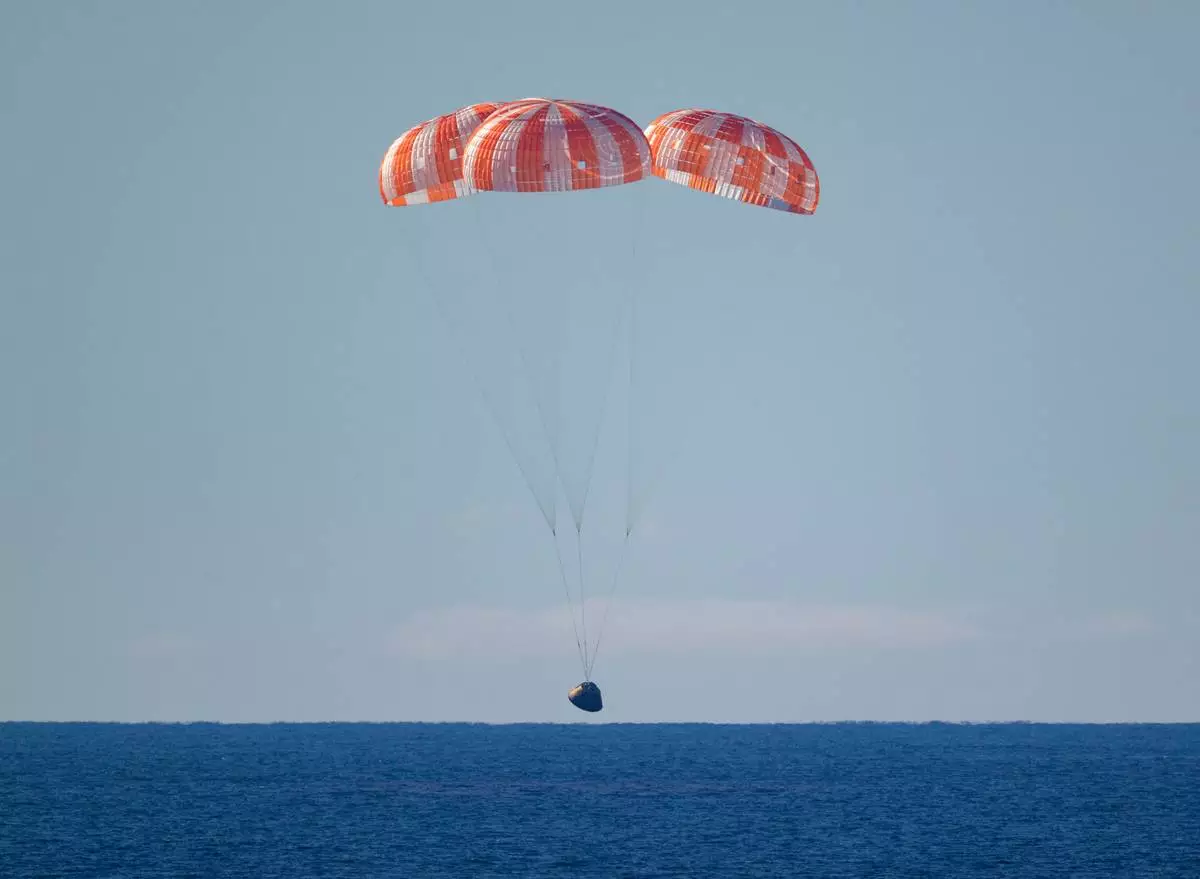
In this photo provided by NASA, the Orion spacecraft with Artemis II crewmembers aboard approaches the surface of the Pacific Ocean for splashdown off the coast of California, Friday, April 10, 2026. (Bill Ingalls/NASA via AP)
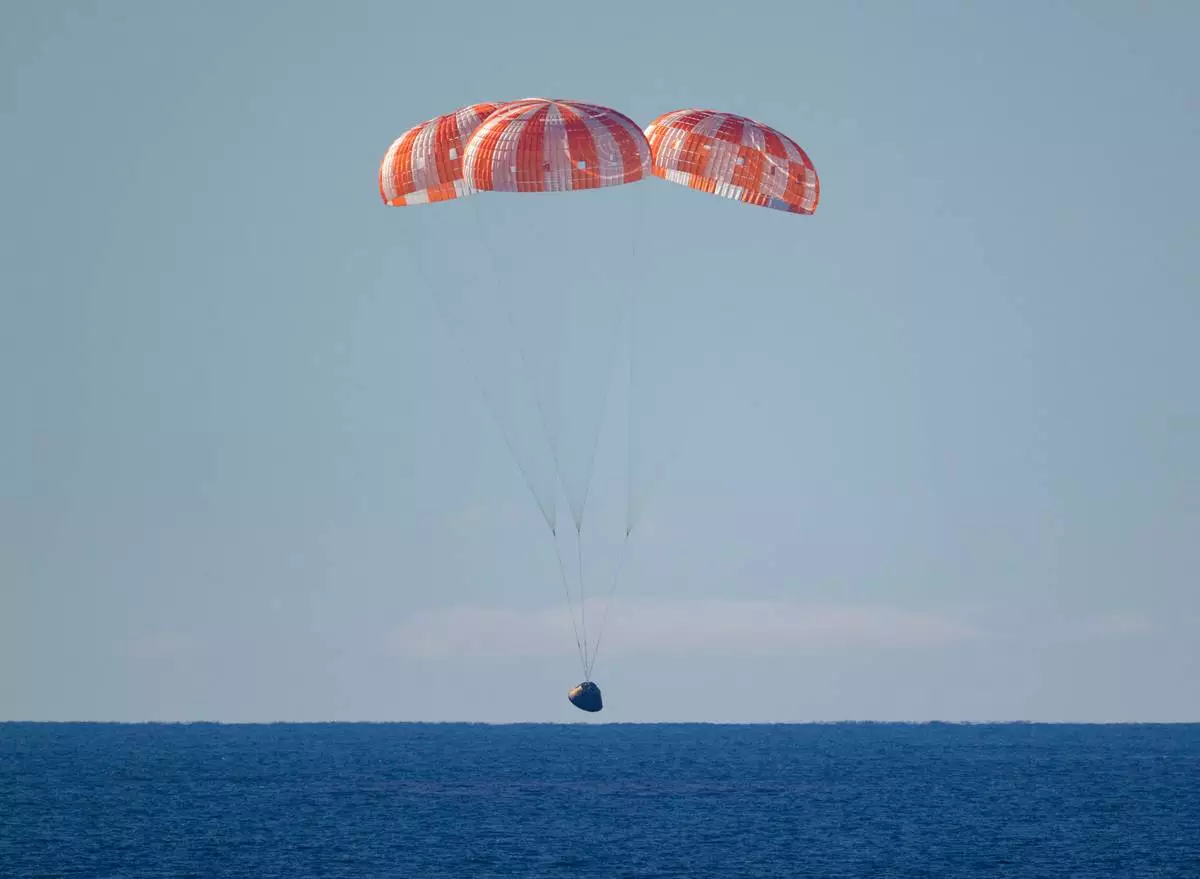
In this photo provided by NASA, the Orion spacecraft with Artemis II crewmembers aboard approaches the surface of the Pacific Ocean for splashdown off the coast of California, Friday, April 10, 2026. (Bill Ingalls/NASA via AP)
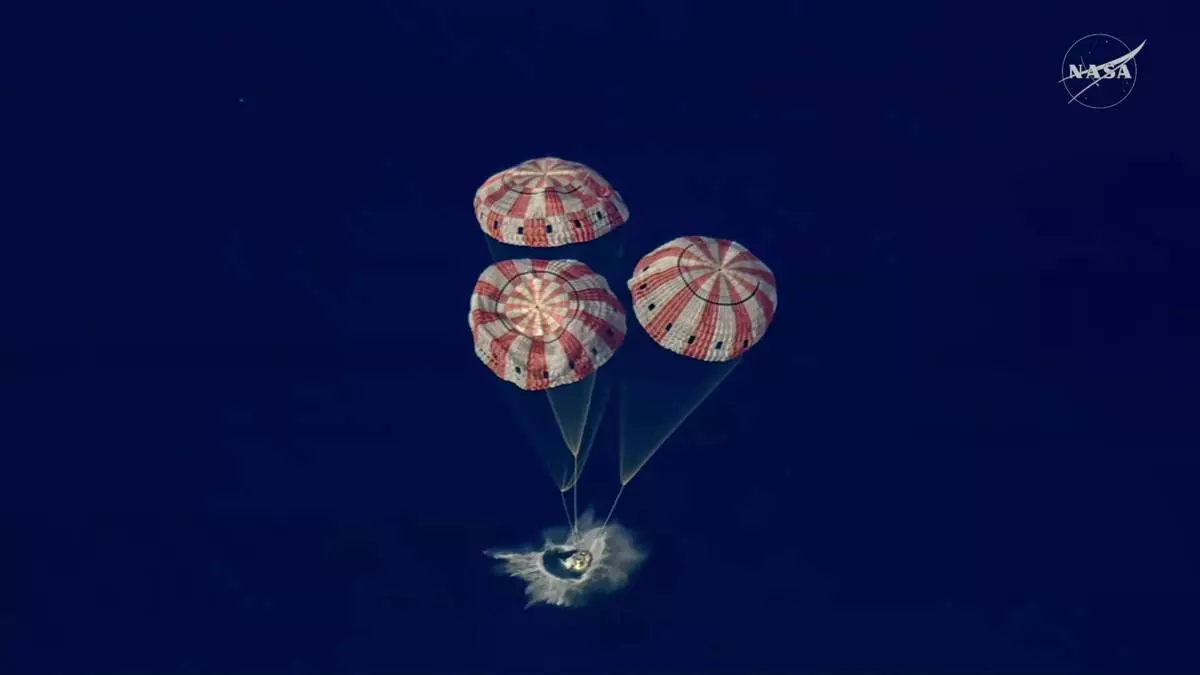
In this image from video provided by NASA, the Artemis II Orion capsule splashes down in the Pacific Ocean, on Friday, April 10, 2026. (NASA via AP)

In this photo provided by NASA, U.S. Navy divers prepare to deploy in small boats from the well deck of USS John P. Murtha to recover Artemis II crew members NASA astronauts Reid Wiseman, commander; Victor Glover, pilot; Christina Koch, mission specialist; and CSA (Canadian Space Agency) astronaut Jeremy Hansen, mission specialist and NASA's Orion spacecraft in the Pacific Ocean off the coast of California, Friday, April 10, 2026. (Bill Ingalls/NASA via AP)
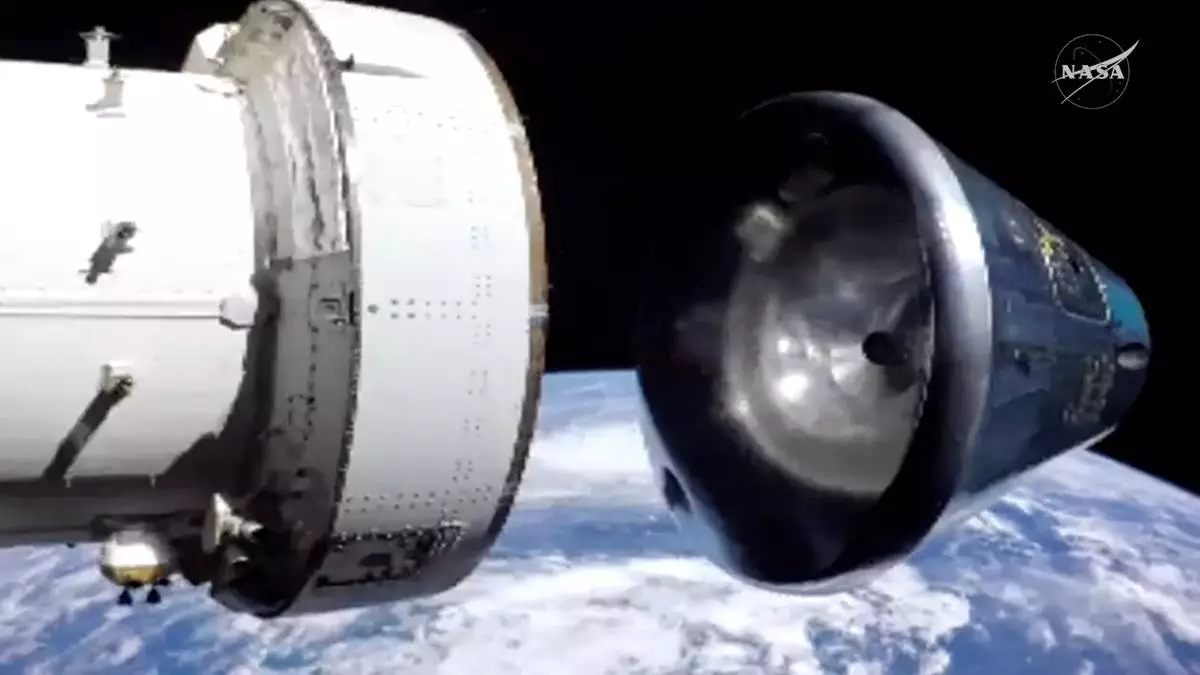
In this image from video provided by NASA, the Artemis II Orion capsule, right, separates from the service module above the Earth in preparation for splash down in the Pacific Ocean. (NASA via AP)
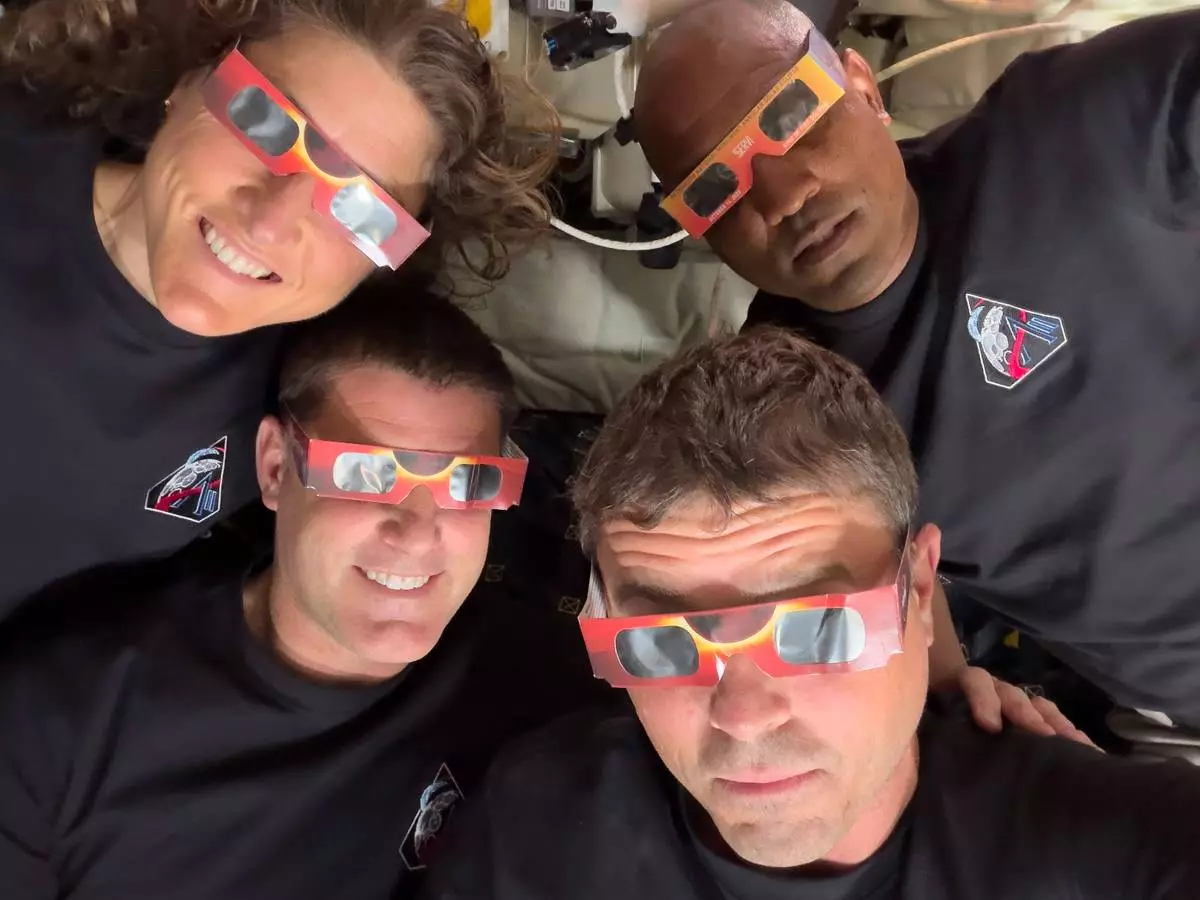
In this image provided by NASA, the Artemis II crew, counterclockwise from top left, Mission Specialist Christina Koch, Mission Specialist Jeremy Hansen, Commander Reid Wiseman, and Pilot Victor Glover pose with eclipse viewers during a lunar flyby, Monday, April 6, 2026. (NASA via AP)

In this image provided by NASA, the Artemis II crew photographed the Moons curved limb during their journey around the far side of the Moon on April 6, 2026. (NASA via AP)
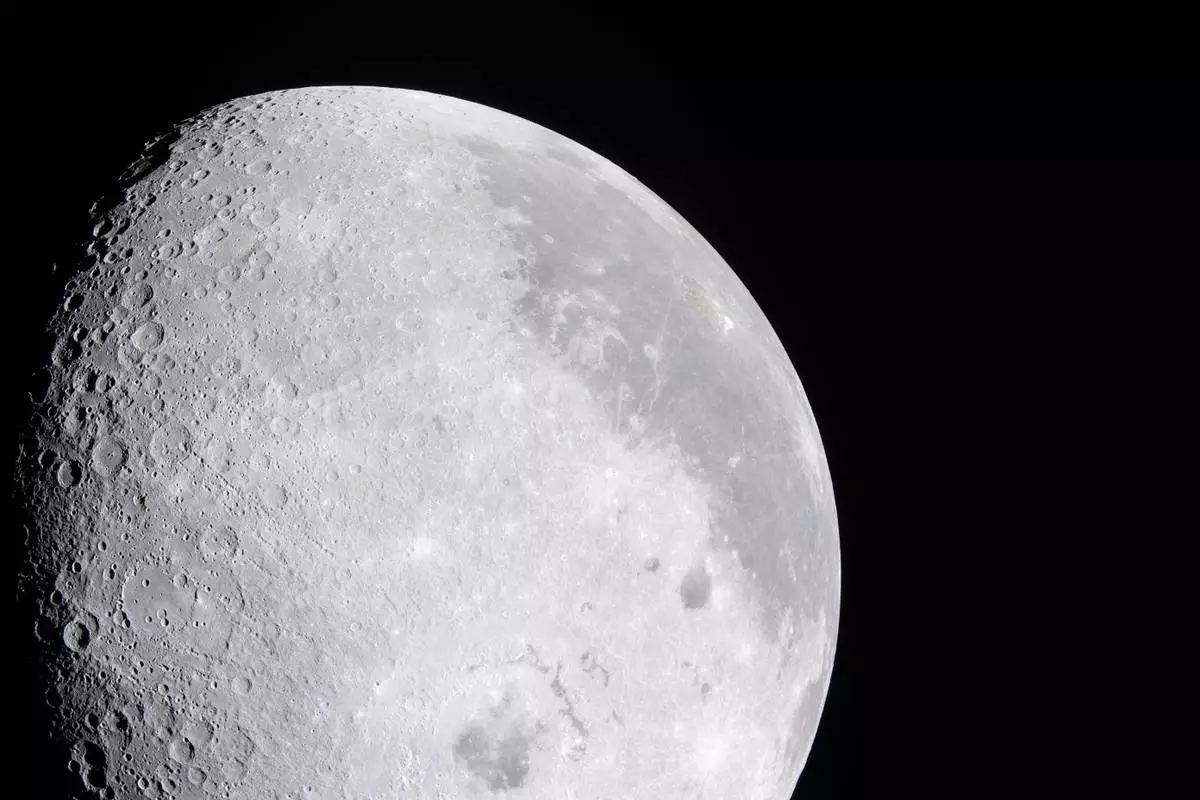
In this image provided by NASA, the Artemis II crew photographed a bright portion of the Moon on April 6, 2026. (NASA via AP)
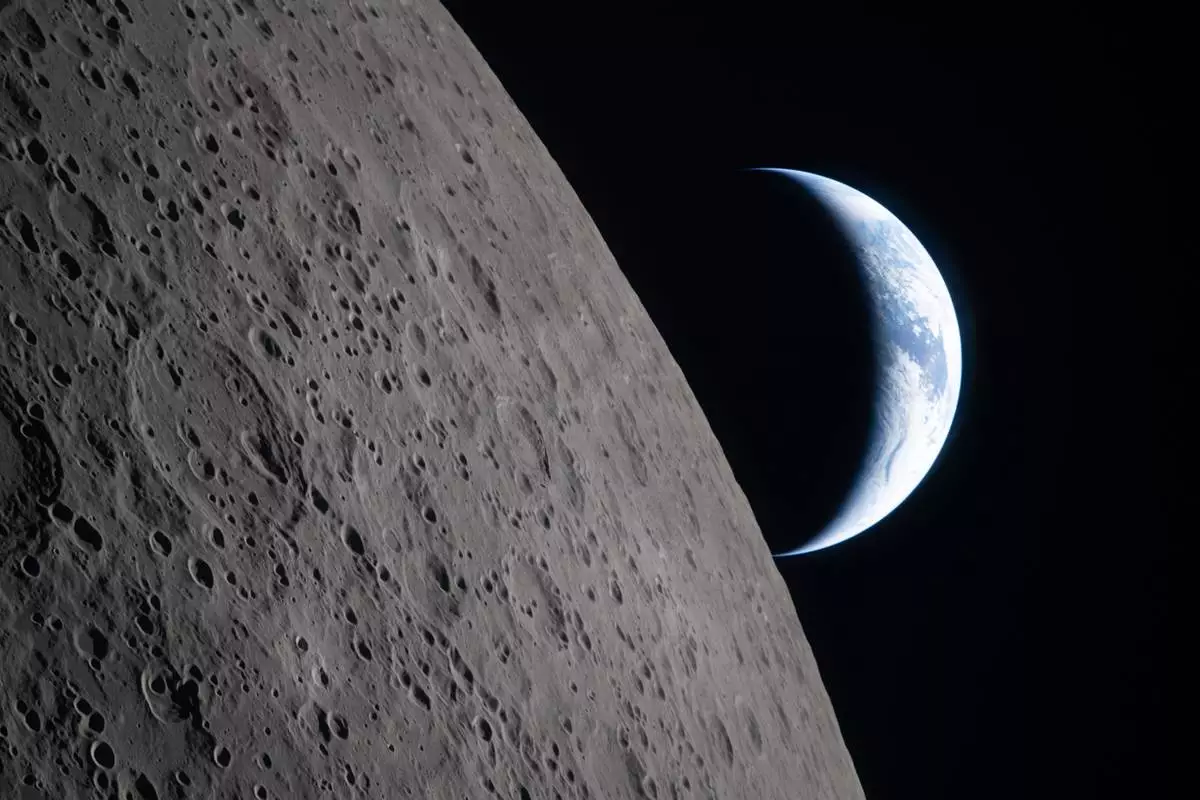
In this image provided by NASA, the Artemis II crew captured this view as the Earth sets behind the Moon during a lunar flyby, Monday, April 6, 2026. (NASA via AP)