DETROIT (AP) — After a few years of sharing a 2019 Chevrolet Trax, Dana Eble and Tyler Marcus are finally looking for a second car. But as they jump into the market, the young married couple isn't sure what they can afford.
“I just keep seeing a lot of different aspects of life getting more expensive, and it’s harder,” said Eble, an account manager for a public relations agency.
Car ownership has long been integral to the American dream. But as automakers slash the production of inexpensive models to cater to customers who can afford oversized pickups and sport utility vehicles, buyers find themselves facing sticker shock at the same time they are already frustrated by the lingering effects of high inflation.
Consumer prices rose 3.3% in March, the biggest yearly increase since May 2024, while new car prices were up 12.6% from a year ago, the Labor Department reported Friday.
New vehicles now sell for an average of nearly $50,000, up 30% in six years, and average monthly payments — based on 10% down and a 6-year note — recently hit $775. Looking for something on the cheap end? The share of vehicles listing for less than $30,000 is about 13% — down from 40% five years ago, per the car review site CarGurus.
To cope, buyers are spreading their payments out longer. Consumers choosing 7-year loans make up more than 12% of all sales, up from nearly 8% a year ago, according to auto buying resource J.D. Power. Such contracts wind up costing more in the long run because of interest payments.
“The ability to buy transportation is still out there. The question is just, what do you get for your money?” Charlie Chesbrough, a senior economist at Cox Automotive, said.
The rising cost of cars is contributing to increased concerns about affordability throughout American life. Consumers, especially young people, say they feel like everyday needs like housing, food, utilities and child care are getting costlier and wages aren't keeping up.
It is a vulnerable position for Republicans ahead of this year’s midterm elections, especially as the Iran war has pumped up gas prices that makes getting behind the wheel even more expensive.
Sticker prices have been rising since automakers discovered Americans are willing to pay more for bigger, more expensive SUVs and pickup trucks that bring the companies more profit from each sale. They have largely phased out smaller, cheaper sedans.
That is especially true for domestic carmakers; the average selling prices for many vehicles from Ford Motor Co., General Motors and Jeep-maker Stellantis have generally trended higher than those for Asian companies Honda, Hyundai, Mazda and Subaru.
Car companies are also savvy about placing desired options in more expensive trim levels that can lure consumers into a vehicle that costs more than they planned, said David Undercoffler, the head of consumer insights at CarGurus.
Advanced safety technology — lane-keep assist, automatic emergency braking, blind-spot monitoring, collision warnings and more — all add to the cost of a vehicle. Automakers are required by federal industry rules to add some features, such as rear-view cameras.
The COVID-19 pandemic pushed up auto prices because production fell, affecting both the new and used markets. Though production recovered, other supply chain disruptions and tariffs have affected prices. Meanwhile, government data shows that car insurance prices have soared 55% compared with six years ago, or just before the pandemic, driving up the number of Americans going without. Car repairs, on average, are 48% more expensive.
The share of new car buyers earning below $100,000 fell to 37% last year, down from 50% in 2020, according to Cox Automotive.
Some carmakers have acknowledged affordability concerns. In February, Ford said it would have several vehicles prices under $40,000 by the end of the decade. GM has pointed to vehicles from Buick and Chevrolet, including the Trax, as cheaper options.
Chesbrough thinks consumers are sometimes unrealistic in their wants.
“There are vehicles out there for less than $30,000. What everybody wants is the mid-sized SUV with leather seats and the sunroof for $25,000, and that’s not available,” Chesbrough said.
Those buyers, he said, are being pushed into the used market.
But as those buyers shift to used, they are finding fewer affordable options there, too. The share of used vehicles priced less than $30,000 fell from 78% in 2021 to 69% in February, according to CarGurus. The average used vehicle sold for about $25,000 in February, and the average used monthly payments hit $560.
The inventory of used cars is being hit by a couple of trends. One is that consumers keen to avoid a big expense are hanging on to their cars longer — nearly 13 years on average now, 18 months longer than a decade ago, according to the Bureau of Transportation Statistics. And a downturn in the popularity of leasing means fewer two- and three-year-old cars hitting the market after leases expire.
J.D. Power estimates that consumers might spend up to $140 less on a lease payment than the average finance commitment, a good option especially for drivers whose annual mileage is predictable. But experts say there is still an affordability challenge.
Sam Dykhuis, 27, of Chicago, needed to buy her first car recently when she started a new job as a scheduler for United Airlines. She searched for something used under $20,000, and eventually paid a little more than that for a 2021 Mazda CX-5. To hold down the cost, she tapped savings to buy the car outright. She pays insurance six months at a time to save a few bucks, too.
Still, “My paycheck went down and my expenses went up,” Dykhuis said. “Certainly, I have to be more just on top of it than I was previously."
Eble, 30, and Marcus, 31, say they appreciate cool vehicles but don't consider themselves “car people" and are hoping their search is easier as a result. Still, finding something in their $20,000 to $30,000 budget might not be as easy as it once was.
They are considering cars such as a newer Trax, a Mazda or maybe an electric vehicle. New EVs generally cost more upfront, but consumers can save in the long run. The used EV market will also soon be flooded with two- or three-year-old EVs that were leased at the time federal credits were generous.
Like Dykhuis, they say they also might buy their new ride outright to avoid a new monthly payment.
“It feels like if anything happens out of our control … it just seems so much more difficult to figure out how to orient our finances," Eble said.
Alexa St. John is an Associated Press climate reporter. Follow her on X: @alexa_stjohn. Reach her at ast.john@ap.org.
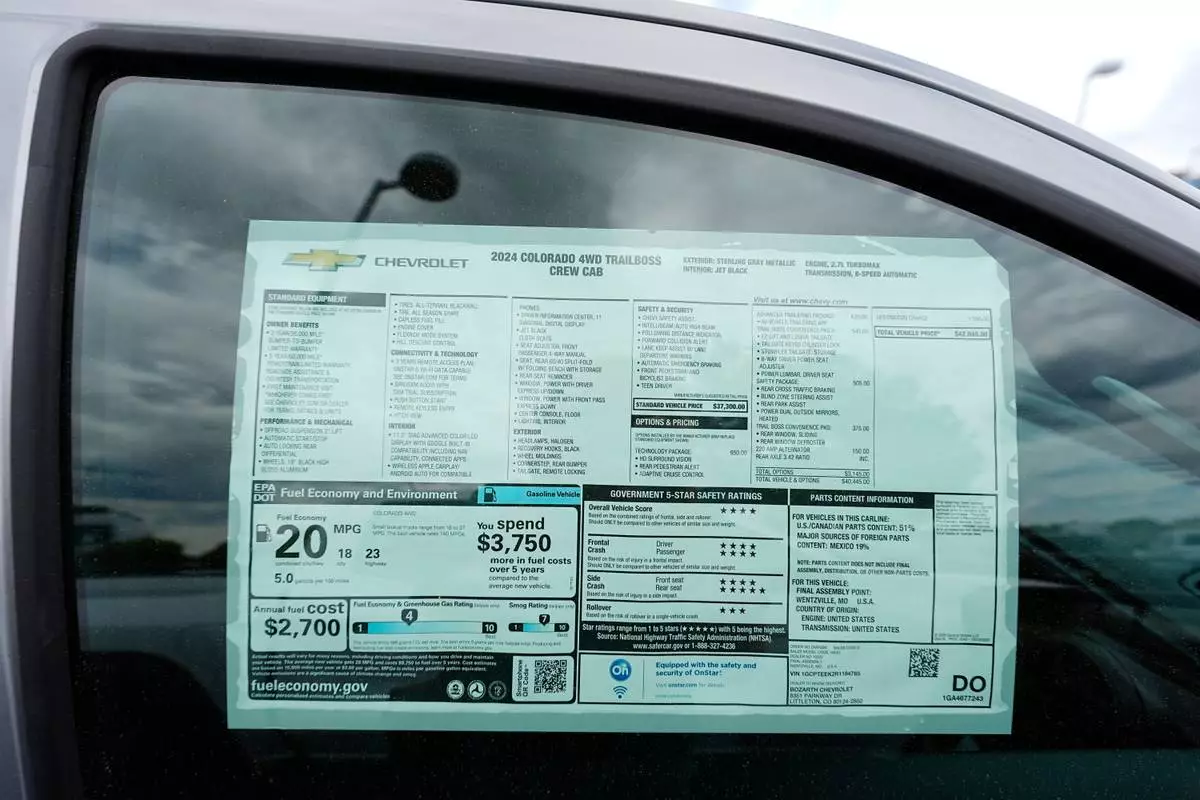
FILE - A sticker shows the price for an unsold 2024 Colorado pickup truck at a Chevrolet dealership Sunday, June 2, 2024, in Lone Tree, Colo. (AP Photo/David Zalubowski, File)

FILE - Made with a slow shutter speed and zoom lens, an unsold 2026 Cooper S hardtop is diplayed in a Mini dealership Friday, Oct. 24, 2025, in Highlands Ranch, Colo. (AP Photo/David Zalubowski, File)
ISLAMABAD (AP) — The United States and Iran began historic face-to-face negotiations Saturday in Pakistan, days after a fragile, two-week ceasefire was announced, as the war that has killed thousands of people and shaken global markets entered its seventh week.
The White House confirmed the direct nature of the talks, a rare instance of high-level engagement.
Meanwhile, the U.S. military said two destroyers transited the Iran-gripped Strait of Hormuz ahead of mine-clearing work, a first since the war began. Iran’s state media, however, earlier said Iran forced a U.S. military ship that was attempting to cross the strait to turn around.
Iran's state-run news agency said three-party talks including Pakistan began after Iranian preconditions, including a reduction in Israeli strikes on southern Lebanon, were met, and after U.S. and Iranian officials met separately with Pakistani Prime Minister Shehbaz Sharif.
The U.S. delegation led by Vice President JD Vance and the Iranian one led by Parliament Speaker Mohammad Bagher Qalibaf were discussing how to advance the ceasefire already threatened by deep disagreements and Israel's continued attacks against the Iranian-backed Hezbollah in Lebanon.
Since the Islamic Revolution in Iran in 1979, the most direct U.S. contact had been in 2013 when President Barack Obama called newly elected President Hassan Rouhani to discuss Iran’s nuclear program. The most recent highest-level meetings were between Secretary of State John Kerry and counterpart Mohammad Javad Zarif during negotiations over the program.
Now talks are underway between Vance, a reluctant defender of the war who has little diplomatic experience and warned Iran not to “try and play us,” and Qalibaf, a former commander with Iran's powerful Revolutionary Guard who has issued some of Iran's most fiery statements since fighting began.
Iran doubled down on parts of its earlier proposal, with its delegation telling Iranian state television it had presented some of the plan’s ideas as “red lines” in meetings with Sharif. Those included compensation for damage caused by U.S.-Israeli strikes that launched the war on Feb. 28 and releasing Iran’s frozen assets.
The war has killed at least 3,000 people in Iran, 1,953 in Lebanon, 23 in Israel and more than a dozen in Gulf Arab states, and caused lasting damage to infrastructure in half a dozen Middle Eastern countries. Iran's chokehold on the Strait of Hormuz has largely cut off the Persian Gulf and its oil and gas exports from the global economy, sending energy prices soaring.
Reflecting the high stakes, officials from the region said Chinese, Egyptian, Saudi and Qatari officials were in Islamabad to indirectly facilitate the talks. The officials spoke on condition of anonymity to discuss the sensitive matter.
In Tehran, residents told The Associated Press they were skeptical yet hopeful about the talks after weeks of airstrikes left destruction across their country of some 93 million people. Some said the path to recovery would be long.
“Peace alone is not enough for our country, because we’ve been hit very hard, there have been huge costs,” 62-year-old Amir Razzai Far said.
Meanwhile, Israel pressed ahead with strikes in Lebanon after saying there is no ceasefire there. Iran and Pakistan have disagreed. The Lebanese state-run news agency reported at least three people killed.
Ahead of the talks, President Donald Trump accused Iran of using the Strait of Hormuz, a key artery for global energy supplies, for extortion, and told reporters Friday it would be opened “with or without them.”
Iran’s closure of the strait has proved its biggest strategic advantage in the war. Around a fifth of the world’s traded oil had typically passed through on over 100 ships a day. Only 12 have been recorded transiting since the ceasefire.
On Saturday, Trump said on social media that the U.S. had begun “clearing out” the strait.
"Today, we began the process of establishing a new passage and we will share this safe pathway with the maritime industry soon to encourage the free flow of commerce,” U.S. Central Command commander Adm. Brad Cooper later said in the U.S. statement about the destroyers' transit.
Iranian Foreign Minister Abbas Araghchi had said Tehran was entering negotiations with “deep distrust” after strikes on Iran during previous rounds of talks. Araghchi, part of Iran’s delegation in Pakistan, said Saturday that his country was prepared to retaliate if attacked again.
Iran and the United States outlined competing proposals ahead of the talks.
Iran’s 10-point proposal called for a guaranteed end to the war and sought control over the Strait of Hormuz. It included ending fighting against Iran’s “regional allies," explicitly calling for a halt to Israeli strikes on Hezbollah.
The United States’ 15-point proposal includes restricting Iran’s nuclear program and reopening the strait.
Negotiations between Israel and Lebanon are expected to begin Tuesday in Washington, Lebanese President Joseph Aoun’s office said Friday, after Israel's surprise announcement authorizing talks despite the countries lack of official relations.
But thousands in Lebanon protested the planned negotiations, and Prime Minister Nawaf Salam said he had postponed a planned trip to Washington “in light of the current internal circumstances.” It was not immediately clear what that meant for the talks.
Israel wants the Lebanese government to assume responsibility for disarming Hezbollah, much like was envisaged in a November 2024 ceasefire. But it is unclear whether Lebanon's army can confiscate weapons from the militant group, which has survived efforts to curb its strength for decades.
Israel’s insistence that the ceasefire in Iran does not include a pause in its fighting with Hezbollah has threatened to sink the deal. The militant group joined the war in support of Iran in the opening days. Israel followed up with airstrikes and a ground invasion.
The day the Iran ceasefire deal was announced, Israel pounded Beirut with airstrikes, killing more than 300 people in the deadliest day in Lebanon since the war began, according to the country's Health Ministry.
Metz reported from Jerusalem, Castillo from Beijing and Magdy from Cairo. Associated Press writer Josh Boak contributed.
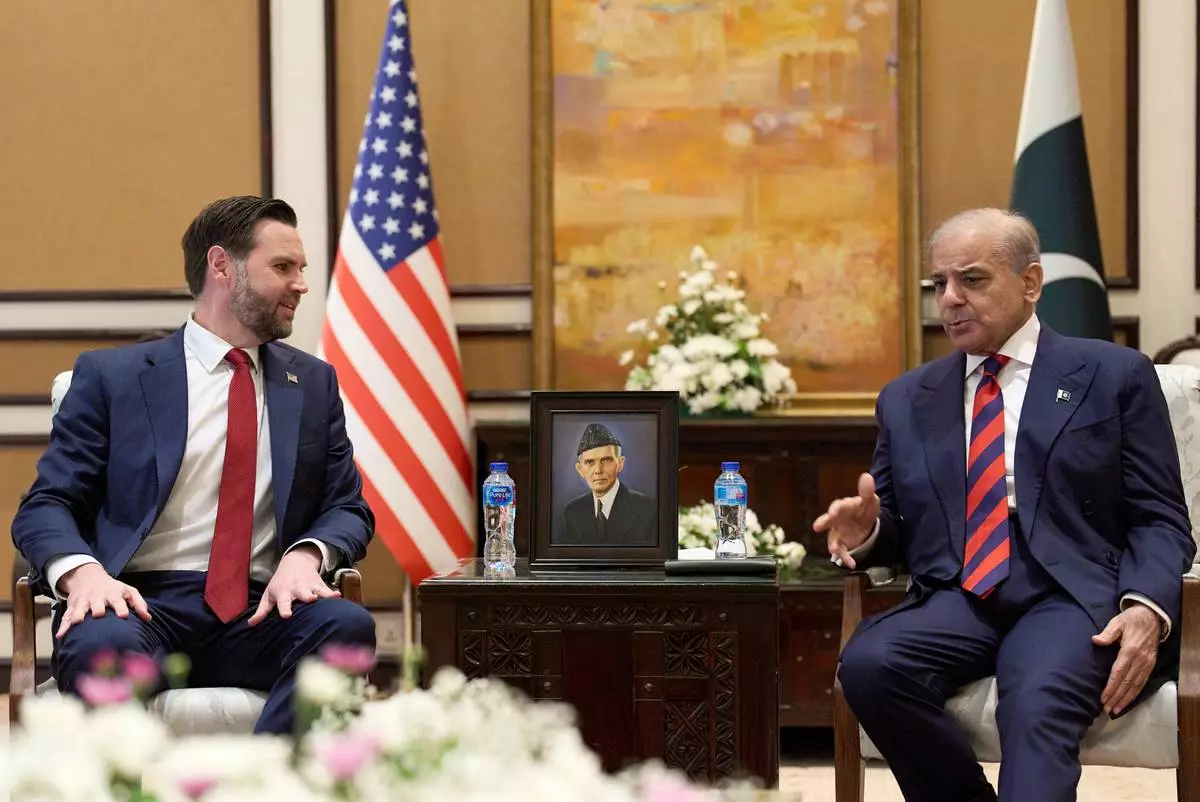
U.S. Vice President JD Vance meets with Pakistan's Prime Minister Shehbaz Sharif, Saturday, April 11, 2026, in Islamabad, for talks about Iran. (AP Photo/Jacquelyn Martin, Pool)
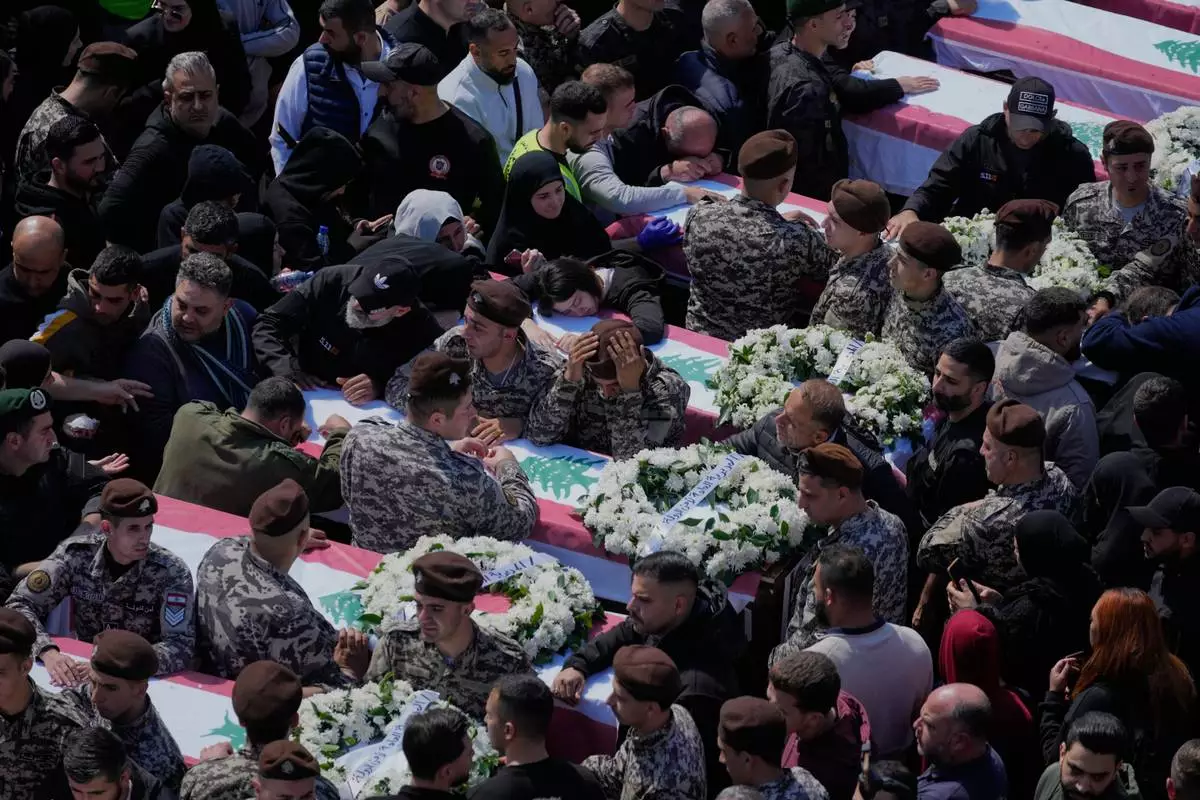
Colleagues mourn over the coffins during the funeral of 13 state security officers killed the previous day in an Israeli strike in the Lebanese coastal city of Sidon, Saturday, April 11, 2026. (AP Photo/Mohammed Zaatari)
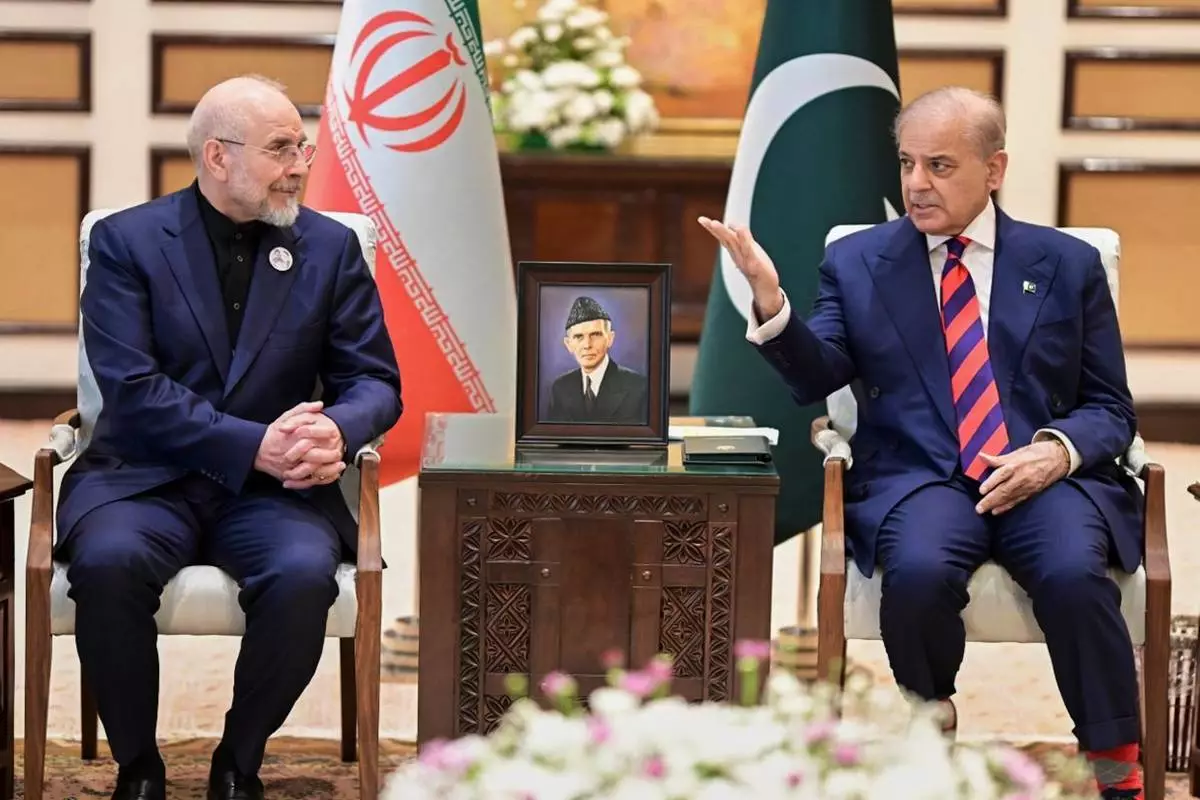
In this photo released by the Pakistan Prime Minister Office, Iran's Parliament Speaker Mohammad Bagher Ghalibaf, left, meets with hand with Pakistani Prime Minister Shehbaz Sharif, in Islamabad, Pakistan, Saturday, April 11, 2026 (Pakistan Prime Minister Office via AP)

Mohammed, 8, weeps next to the coffin of his father, Hussein Makkah, during the funeral of 13 state security officers killed the previous day in an Israeli strike in Lebanon’s coastal city of Sidon, Lebanon, Saturday, April 11, 2026. (AP Photo/Emilio Morenatti)
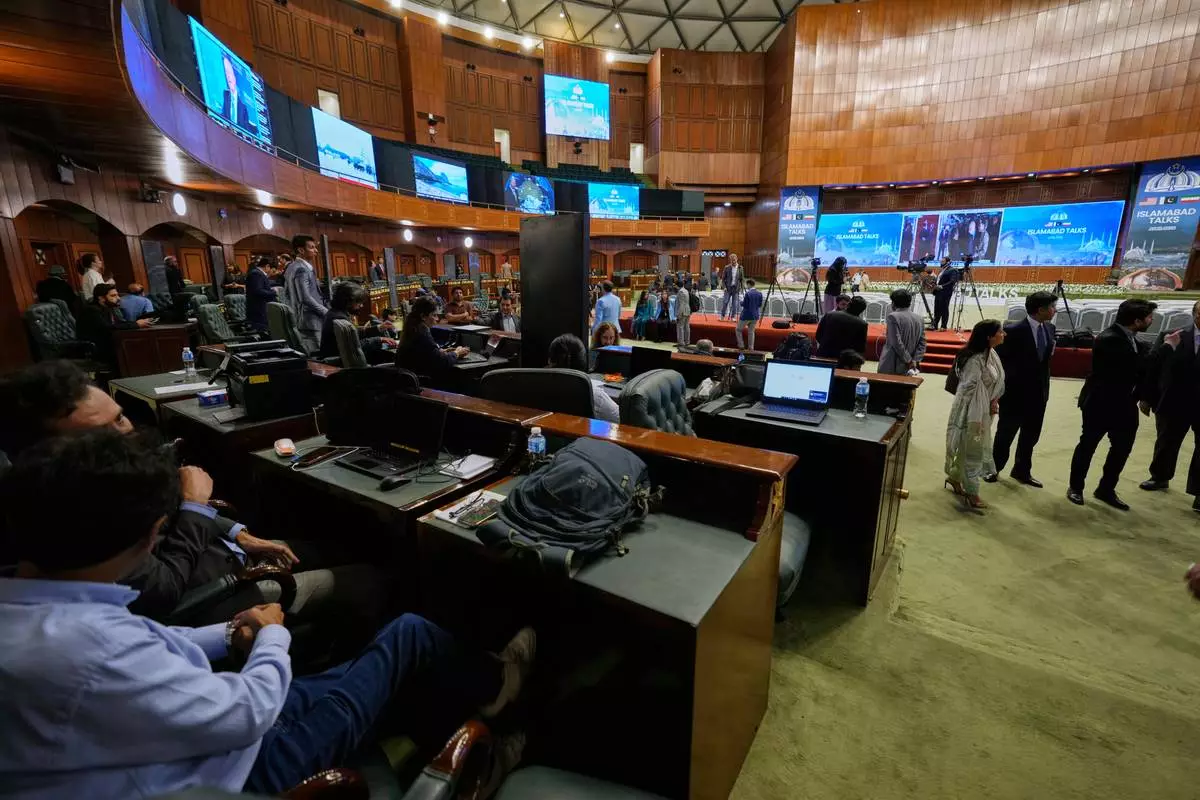
Members of the media work at a media center setup for the coverage of the US-Iran talks, in Islamabad, Pakistan, Saturday, April 11, 2026. (AP Photo/Anjum Naveed)
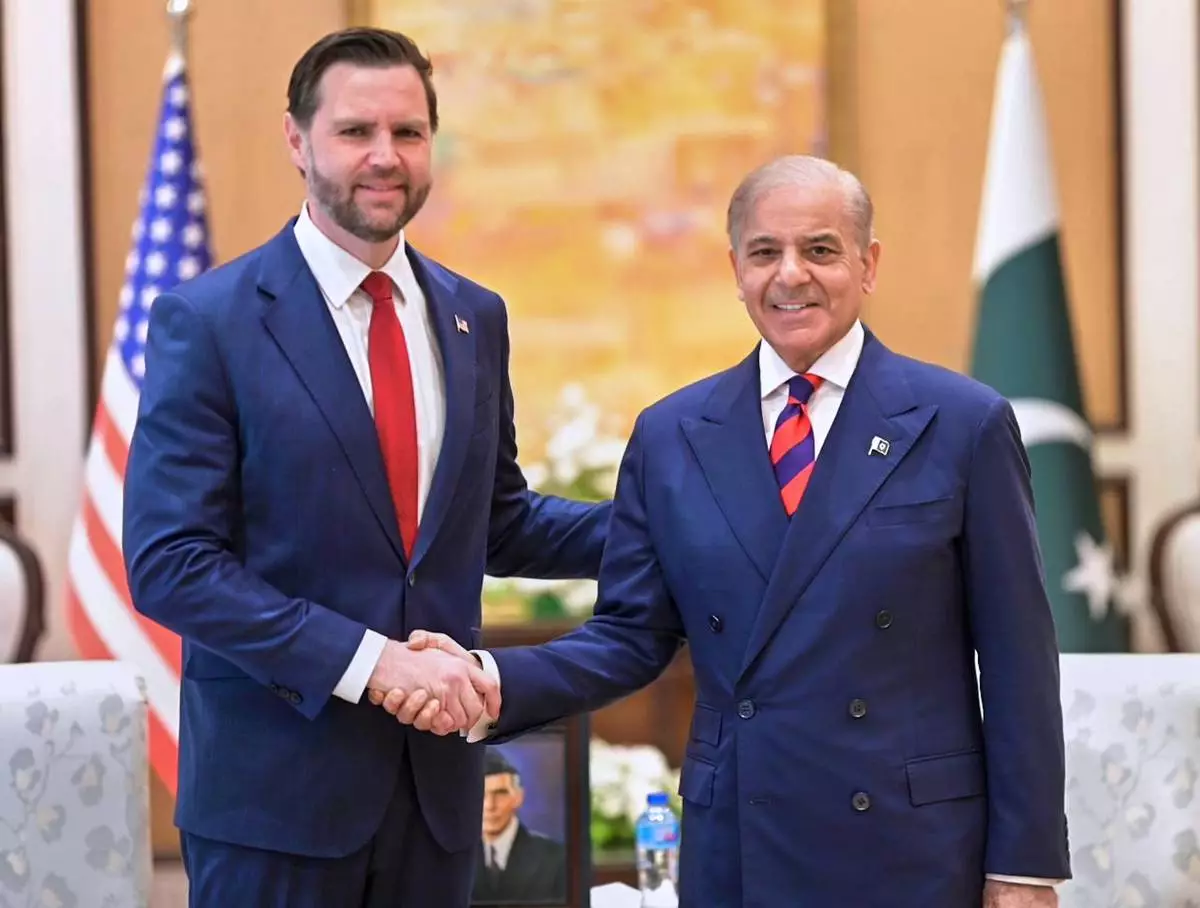
In this photo released by the Pakistan Prime Minister Office, U.S. Vice President JD Vance, left, shakes hand with Pakistani Prime Minister Shehbaz Sharif prior to their meeting, in Islamabad, Pakistan, Saturday, April 11, 2026 (Pakistan Prime Minister Office via AP)

Mohammed, 8, weeps next to the coffin of his father, Hussein Makkah, during the funeral of 13 state security officers killed the previous day in an Israeli strike in Lebanon’s coastal city of Sidon, Lebanon, Saturday, April 11, 2026. (AP Photo/Emilio Morenatti)

A Pakistani official is seen during the arrival of the U.S. Vice President JD Vance for talks with Iranian officials in Islamabad, Pakistan, Saturday, April 11, 2026. (AP Photo/Jacquelyn Martin, Pool)
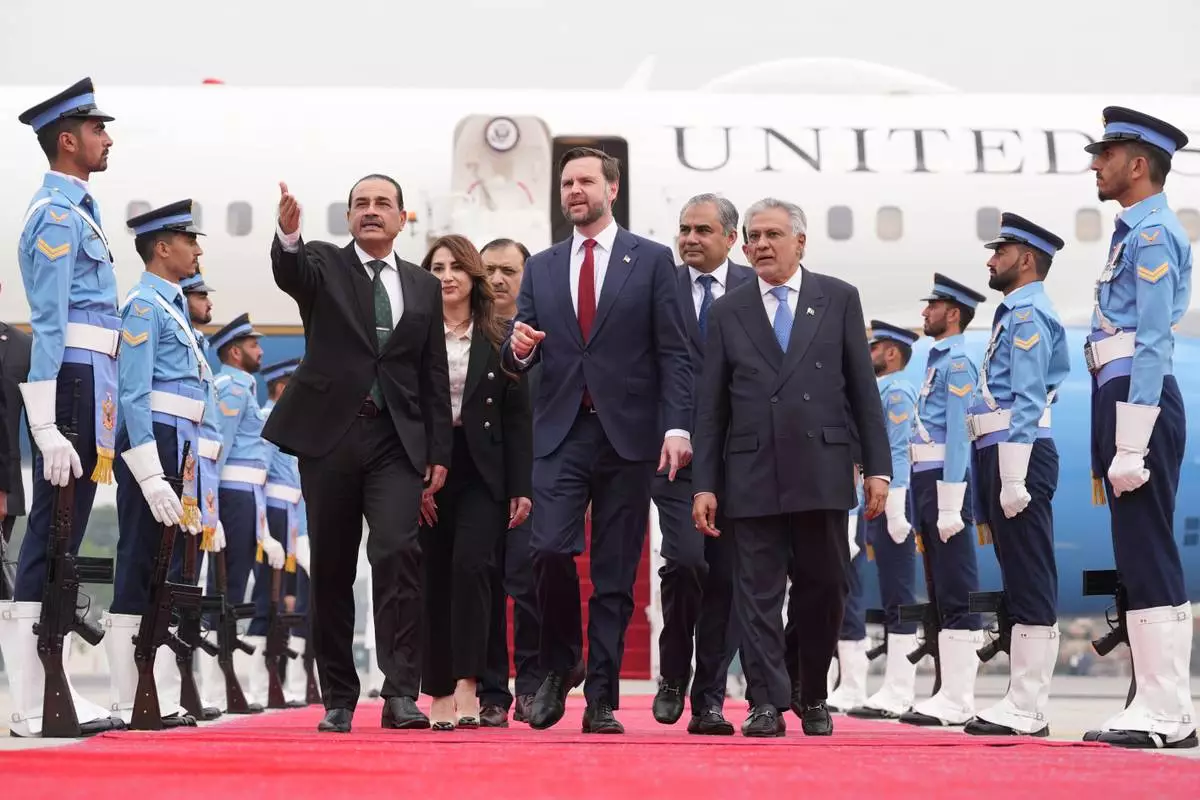
U.S. Vice President JD Vance, center, walks with Pakistan's Chief of Defence Forces and Chief of Army Staff Field Marshall Asim Munir, left, and Pakistani Deputy Prime Minister and Foreign Minister Mohammad Ishaq Dar after arriving for talks with Iranian officials in Islamabad, Pakistan, Saturday, April 11, 2026. (AP Photo/Jacquelyn Martin, Pool)
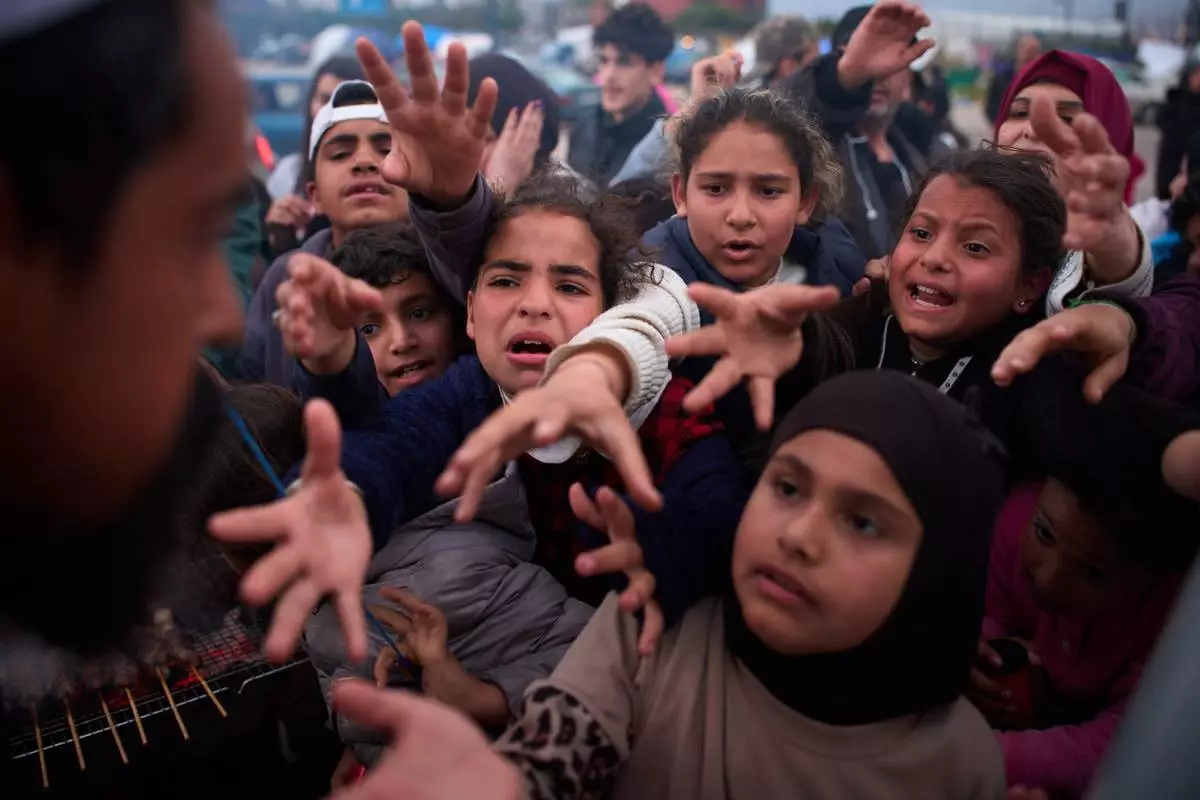
Displaced families extend their hands while waiting for donated food beside the tents they use as shelters after fleeing Israeli bombardment in southern Lebanon, in Beirut, Lebanon, Thursday, April 9, 2026. (AP Photo/Emilio Morenatti)
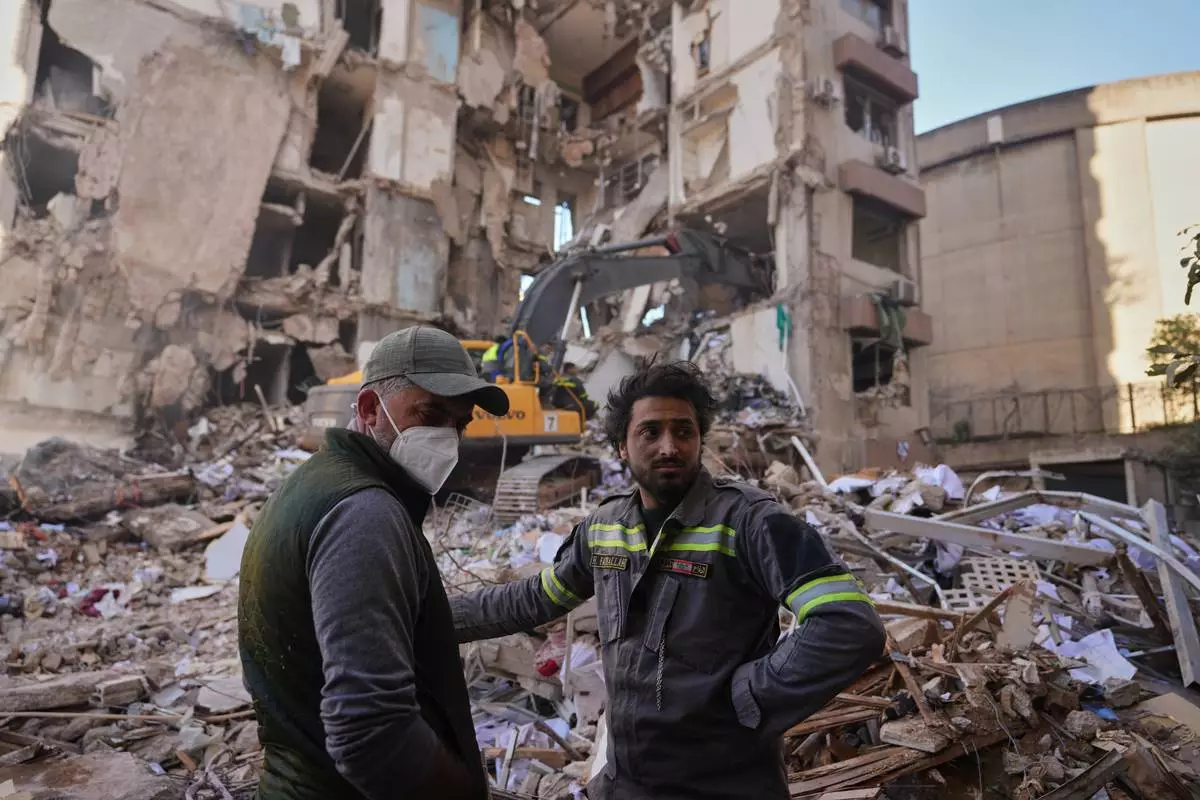
A Lebanese civil defense worker, right, stands with a resident at the site of a building destroyed in an Israeli airstrike a day earlier in central Beirut, Lebanon, Thursday, April 9, 2026. (AP Photo/Hassan Ammar)
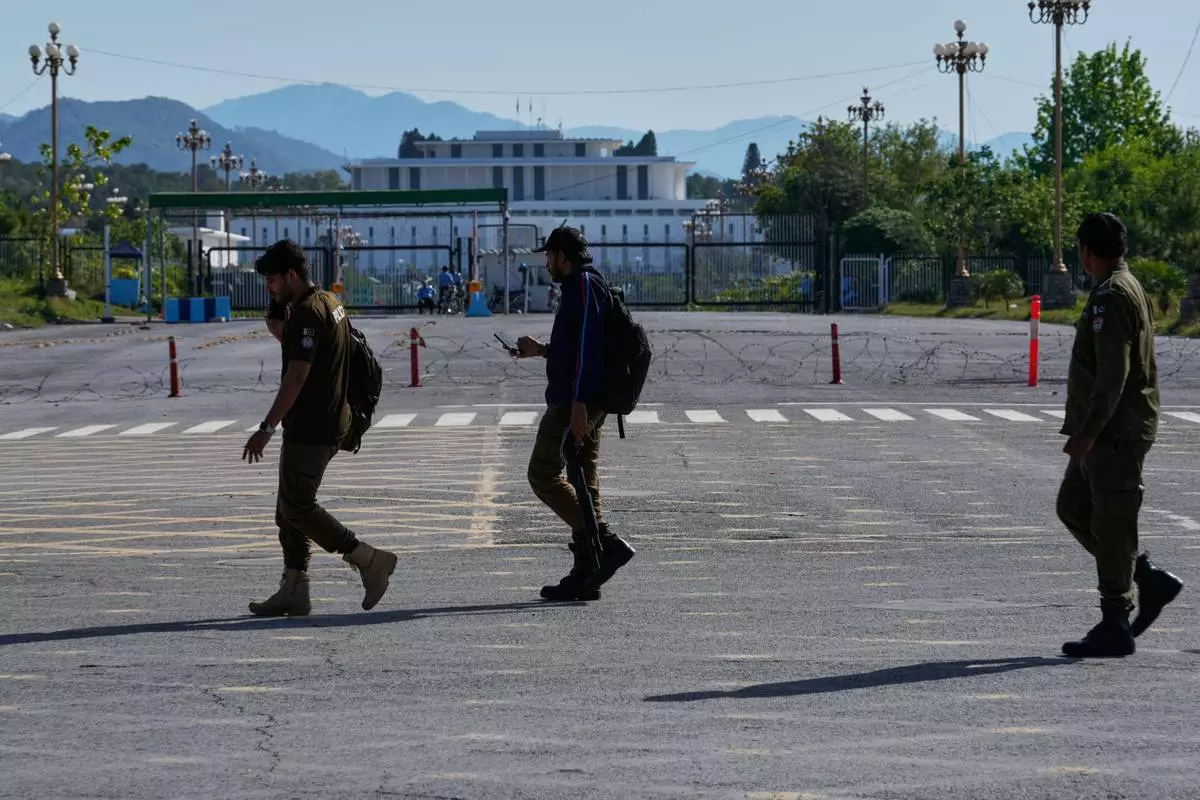
Police officers take position in Islamabad, Pakistan, to ensure security ahead of possible negotiations between Iran and the United States, Friday, April 10, 2026. (AP Photo/Anjum Naveed)
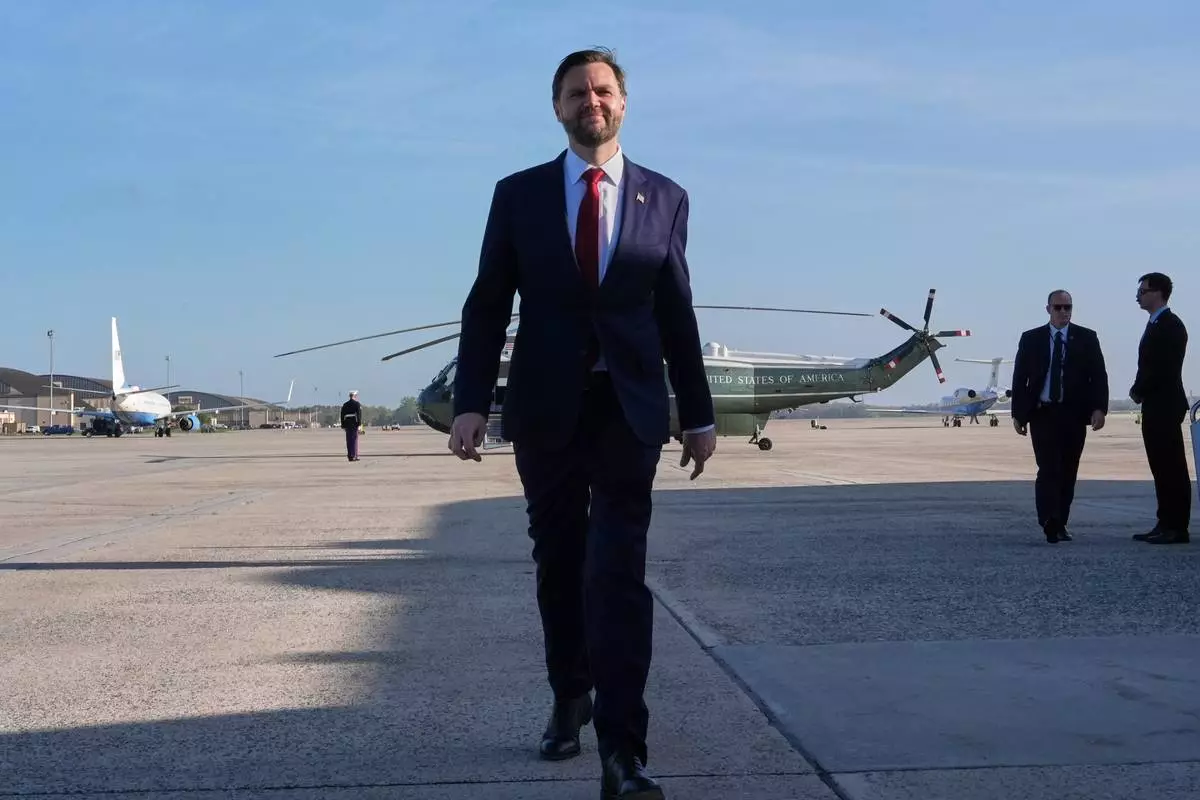
Vice President JD Vance walks to speak with the Press before boarding Air Force Two, Friday, April 10, 2026, at Joint Base Andrews, Md., for expected departure to Pakistan, for talks on Iran. (AP Photo/Jacquelyn Martin, pool)
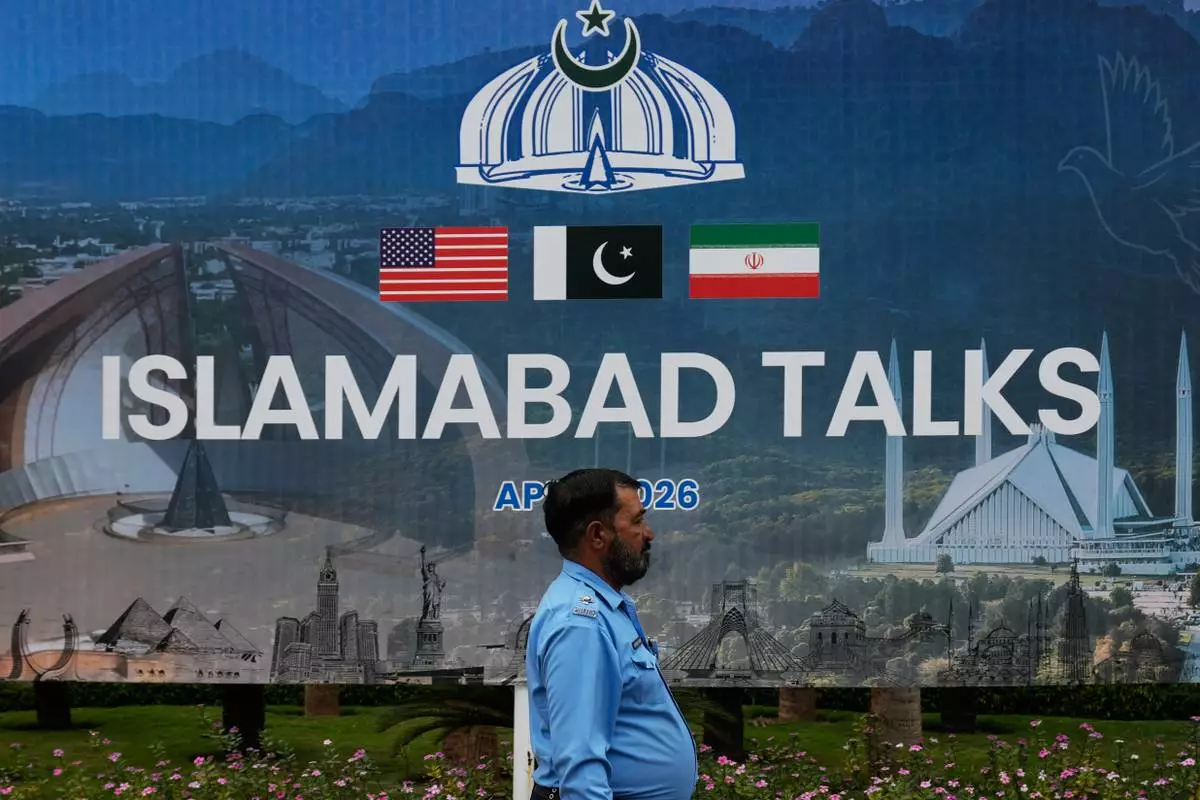
A police officer walks past a billboard regarding the United States and Iran negotiations, outside a media facilitation center in Islamabad, Pakistan, Saturday, April 11, 2026. (AP Photo/Anjum Naveed)