ISLAMABAD (AP) — The United States and Iran failed to reach an agreement at the end of historic, face-to-face talks after the U.S. said Tehran refused to commit to not developing a nuclear weapon, leaving uncertainty over a fragile, two-week ceasefire.
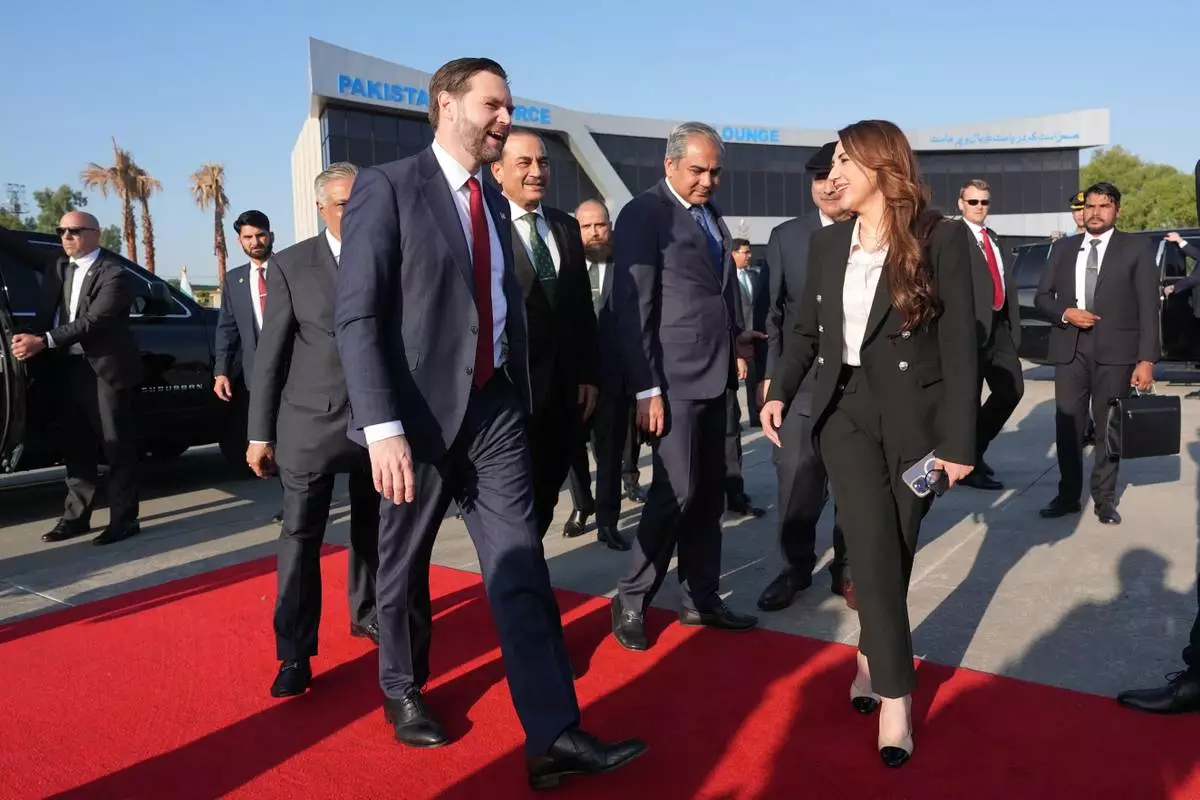
Vice President JD Vance, who led the U.S. delegation, said the talks lasted 21 hours in Pakistan's capital Islamabad but in the end they did not see “an affirmative commitment” from Iran “that they will not seek a nuclear weapon.”
Click to Gallery
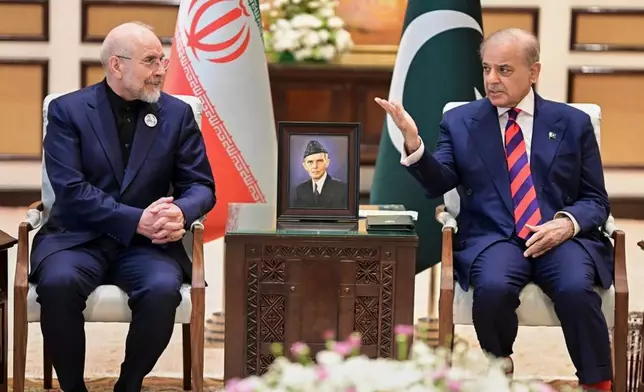
In this photo released by the Pakistan Prime Minister Office, Iran's Parliament Speaker Mohammad Bagher Ghalibaf, left, meets with hand with Pakistani Prime Minister Shehbaz Sharif, in Islamabad, Pakistan, Saturday, April 11, 2026 (Pakistan Prime Minister Office via AP)
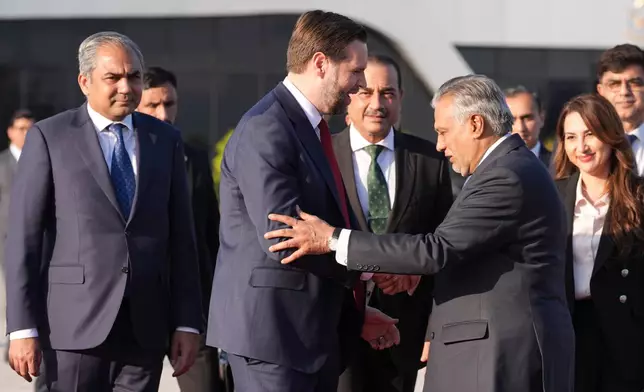
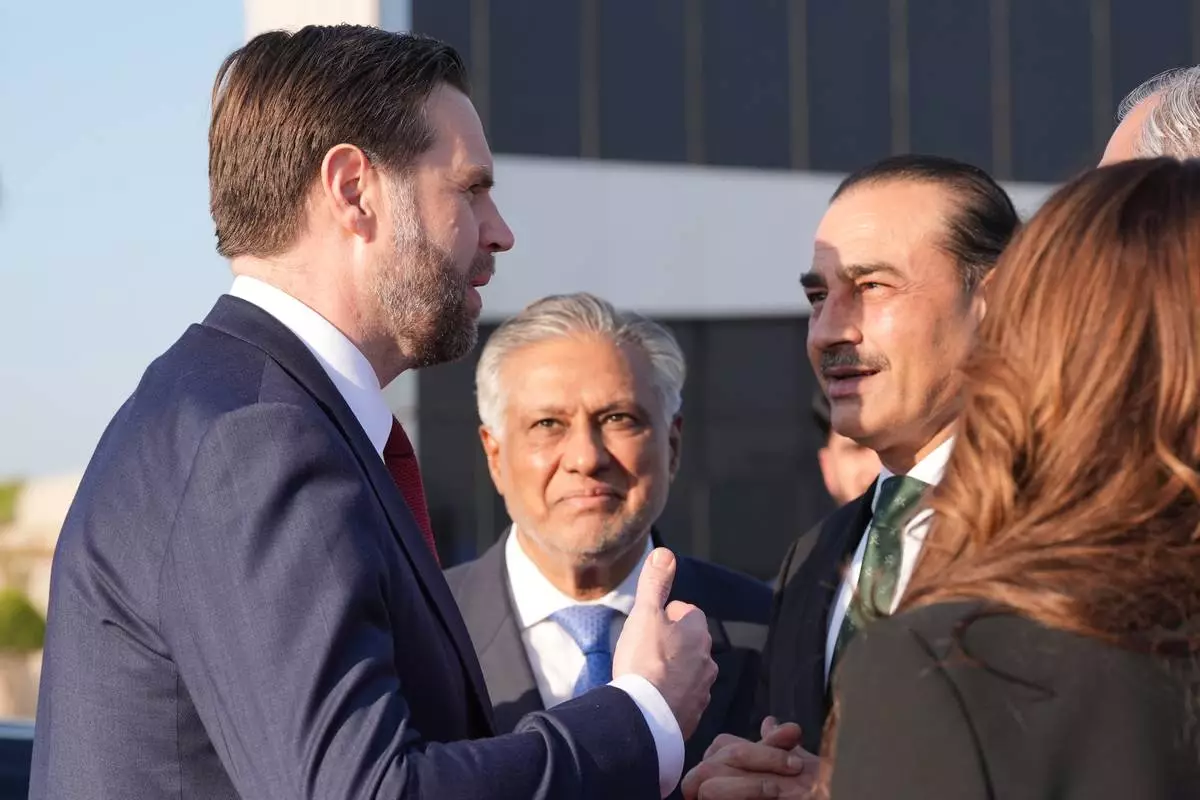
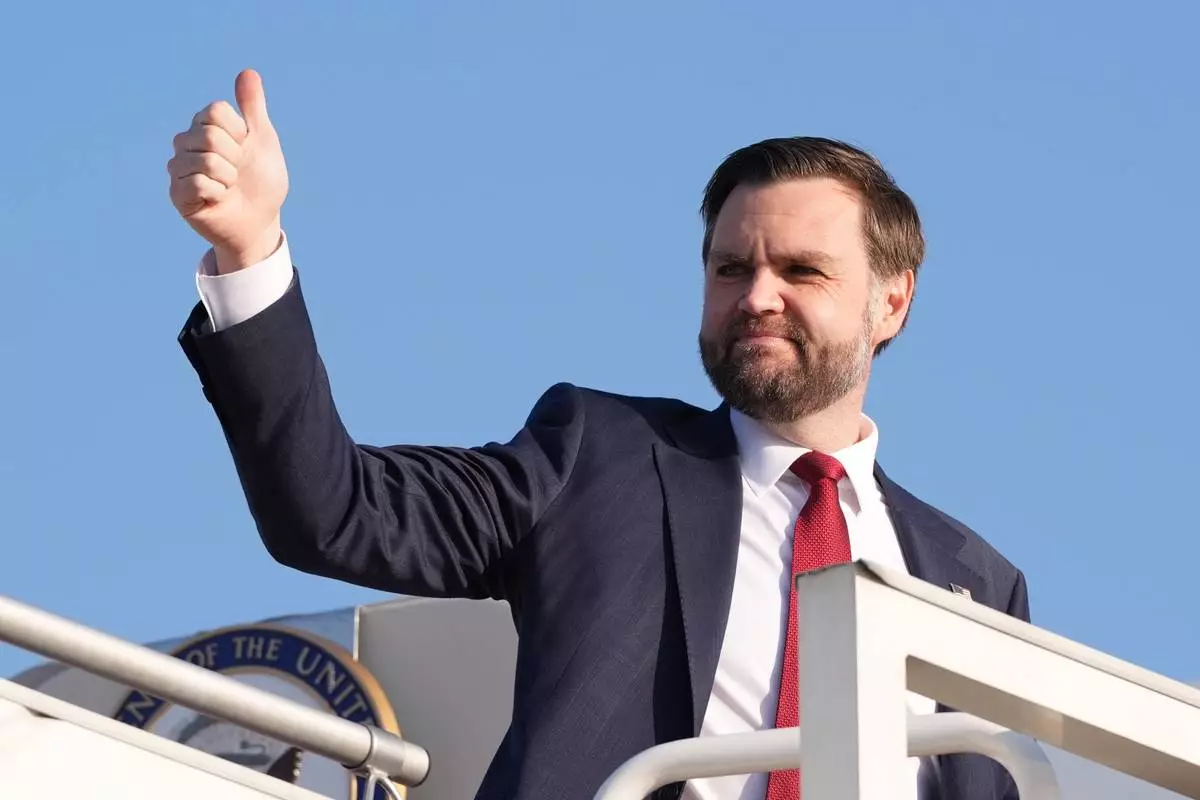
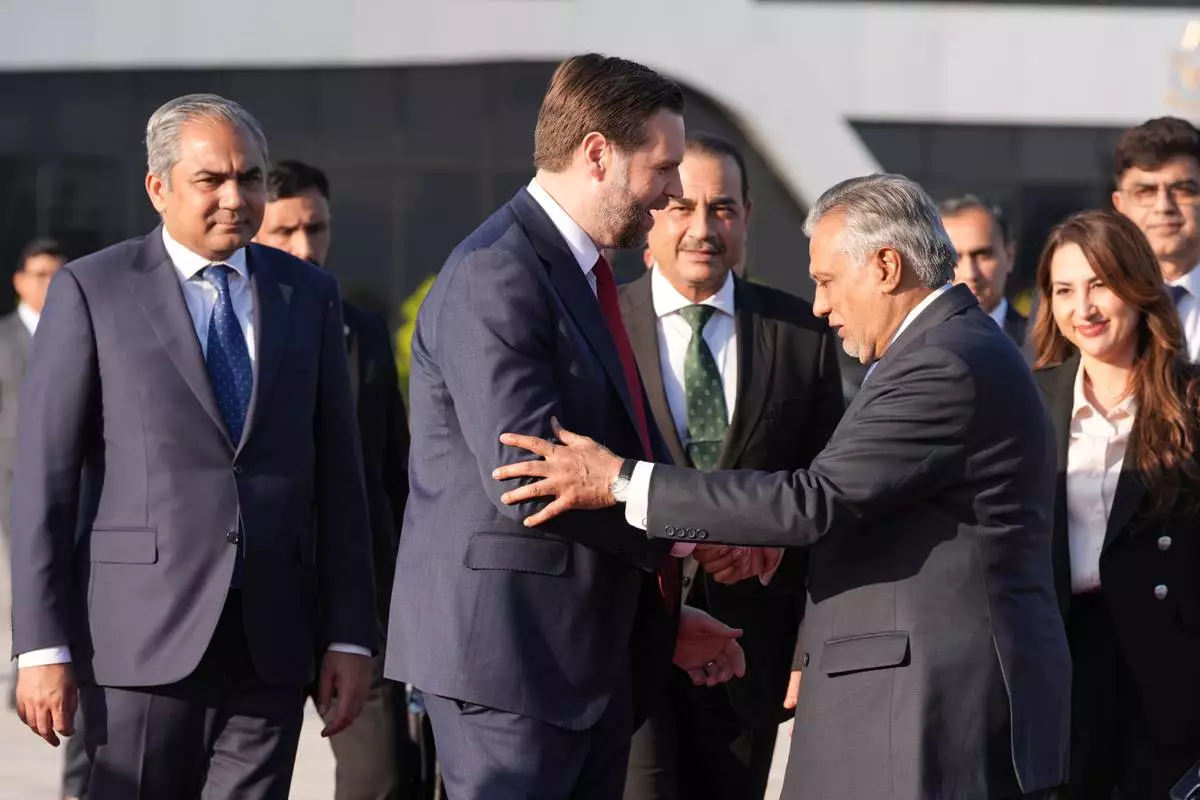
Vice President JD Vance, second left, shakes hands with Pakistani Deputy Prime Minister and Foreign Minister Mohammad Ishaq Dar, as Pakistan's Interior Minister Mohsin Naqvi, left, Pakistan's Chief of Defence Forces Chief of Army Staff Field Marshall Asim Munir, third left, and Charge d'Affaires of the U.S. Embassy in Islamabad Natalie A. Baker, right, look on, as he prepares to board Air Force Two after attending talks on Iran in Islamabad, Pakistan, Sunday, April 12, 2026. (AP Photo/Jacquelyn Martin, Pool)
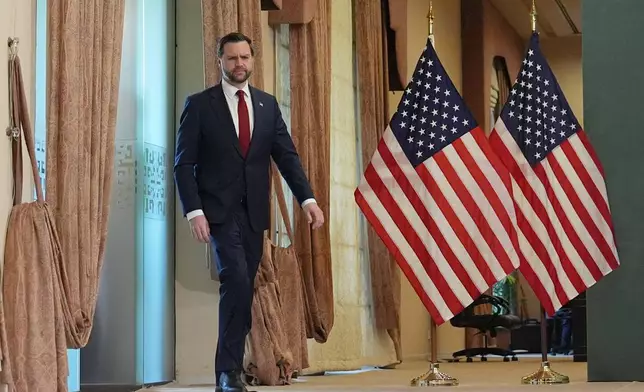
Vice President JD Vance arrives for news conference after meeting with representatives from Pakistan and Iran, Sunday, April 12, 2026, in Islamabad, Pakistan. (AP Photo/Jacquelyn Martin, Pool)
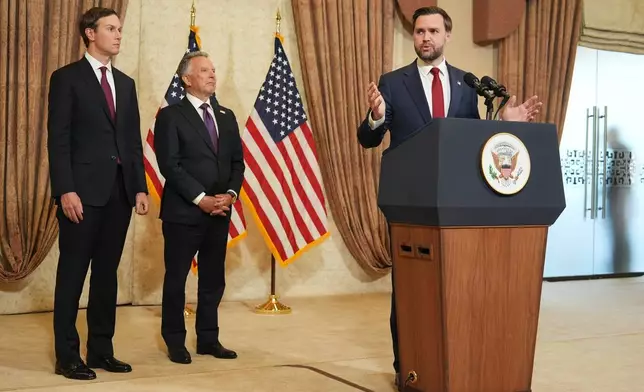
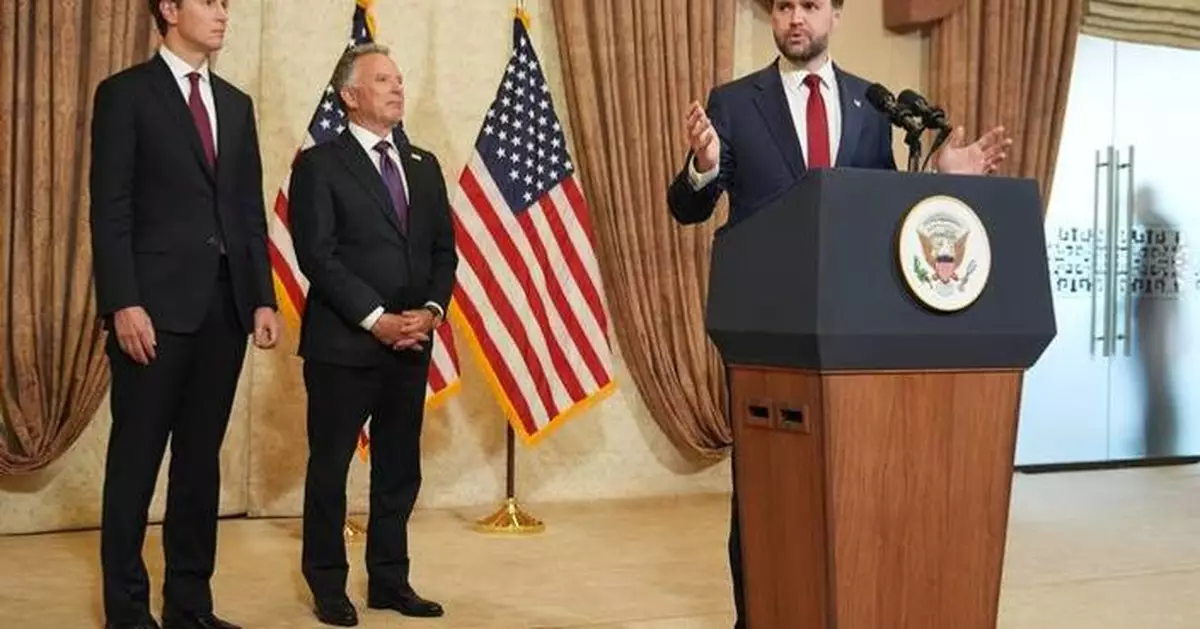
Vice President JD Vance, right, speaks during a news conference after meeting with representatives from Pakistan and Iran as Jared Kushner, left, and Steve Witkoff, Special Envoy for Peace Missions listen, on Sunday, April 12, 2026, in Islamabad, Pakistan. (AP Photo/Jacquelyn Martin, Pool)
Vance’s comments did not indicate what will happen after the 14-day ceasefire initially agreed to by the U.S., Iran and Israel, but Pakistani mediators called on the U.S. and Iran to maintain the ceasefire.
“It is imperative that the parties continue to uphold their commitment to ceasefire,” Pakistan Foreign Minister Ishaq Dar said, adding that his country will try to facilitate a new dialogue between Iran and the U.S. in the coming days.
In one of the first reactions from Iran, foreign ministry spokesman Esmaeil Baghaei said the talks fell apart over a “gap between our opinions over two or three important issues.” He told Iran’s state TV that the Strait of Hormuz was among the topics discussed by negotiators and blamed “U.S. overreach.” He did not mention nuclear weapons.
The discussions in Islamabad began Saturday, a few days after the fragile ceasefire was announced as the war that has killed thousands of people and shaken global markets entered its seventh week.
“We need to see an affirmative commitment that they will not seek a nuclear weapon, and they will not seek the tools that would enable them to quickly achieve a nuclear weapon,” Vance told reporters. “That is the core goal of the president of the United States. And that’s what we’ve tried to achieve through these negotiations.”
“We leave here with a very simple proposal, a method of understanding that is our final and best offer. We’ll see if the Iranians accept it," he added.
Since the U.S. and Israel launched the war on Feb. 28, it has killed at least 3,000 people in Iran, 2,020 in Lebanon, 23 in Israel and more than a dozen in Gulf Arab states, and caused lasting damage to infrastructure in half a dozen Middle Eastern countries. Iran’s grip on the Strait of Hormuz has largely cut off the Persian Gulf and its oil and gas exports from the global economy, sending energy prices soaring.
The United States and Iran entered talks with sharply different proposals and contrasting assumptions about their leverage to end the war. Before negotiations began, the ceasefire was already threatened by deep disagreements and Israel’s continued attacks against the Iranian-backed Hezbollah in Lebanon.
Iran’s 10-point proposal ahead of the talks called for a guaranteed end to the war and sought control over the Strait of Hormuz. It included ending fighting against Iran’s “regional allies,” explicitly calling for a halt to Israeli strikes on Hezbollah. The United States’ 15-point proposal includes restricting Iran’s nuclear program and reopening the strait.
Indeed, Iran’s closure of the Strait of Hormuz has proved its biggest strategic advantage in the war. Around a fifth of the world’s traded oil had typically passed through on over 100 ships a day. Only 12 have been recorded transiting since the ceasefire.
During the talks, the U.S. military said two destroyers transited the critical waterway ahead of mine-clearing work, a first since the war began. Iran’s state media, however, reported the country's joint military command denied that.
“We’re sweeping the strait. Whether we make a deal or not makes no difference to me,” Trump said as talks extended into early Sunday morning.
The U.S. delegation led by Vance and the Iranian one led by Parliament Speaker Mohammad Bagher Qalibaf discussed with Pakistan how to advance the ceasefire already threatened by deep disagreements and Israel's continued attacks against the Iranian-backed Hezbollah in Lebanon.
Israel wants Lebanon's government to assume responsibility for disarming Hezbollah, much like was envisaged in a November 2024 ceasefire. But the militant group has survived efforts to curb its strength for decades.
Hezbollah joined the war in support of Iran in the opening days. Israel followed with airstrikes and a ground invasion.
The day the Iran ceasefire deal was announced, Israel pounded Beirut with airstrikes, killing more than 300 people in the deadliest day in Lebanon since the war began, according to the country's Health Ministry.
Castillo reported from Beijing and Finley and Binkley from Washington. Samy Magdy in Cairo and Sam Metz in Ramallah, West Bank, contributed.
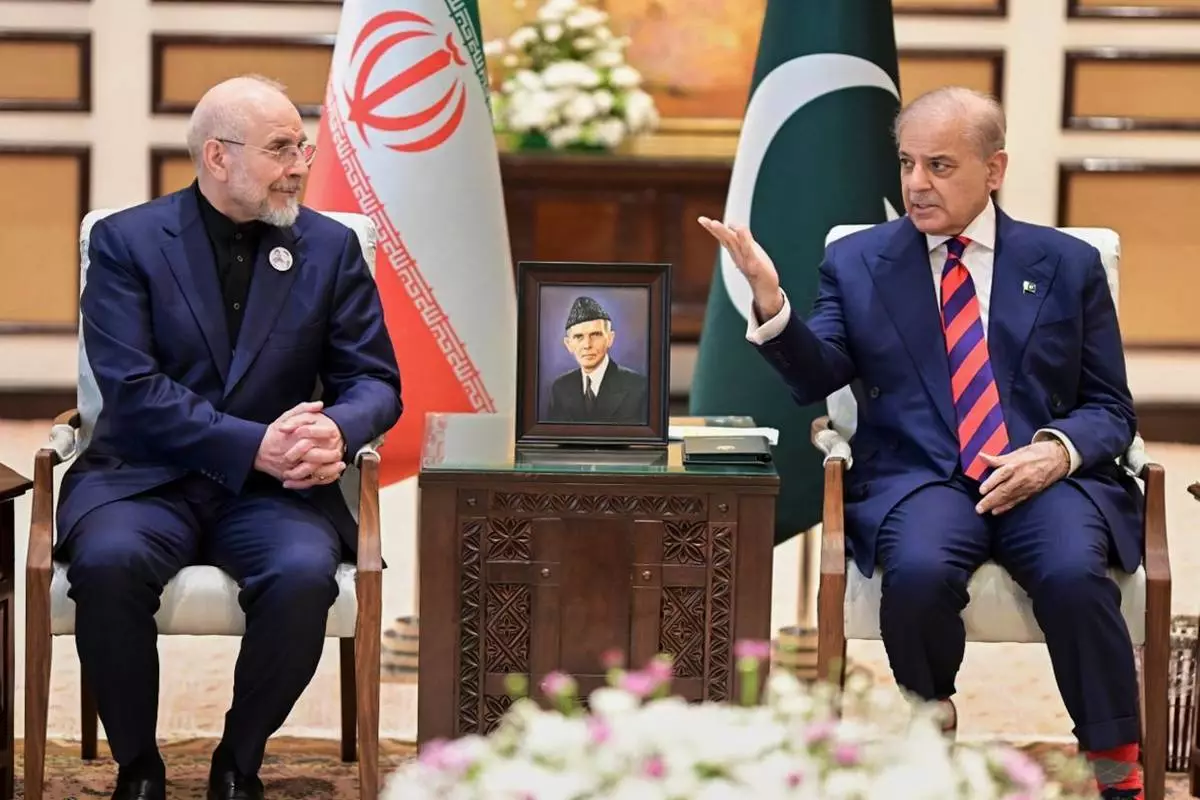
In this photo released by the Pakistan Prime Minister Office, Iran's Parliament Speaker Mohammad Bagher Ghalibaf, left, meets with hand with Pakistani Prime Minister Shehbaz Sharif, in Islamabad, Pakistan, Saturday, April 11, 2026 (Pakistan Prime Minister Office via AP)
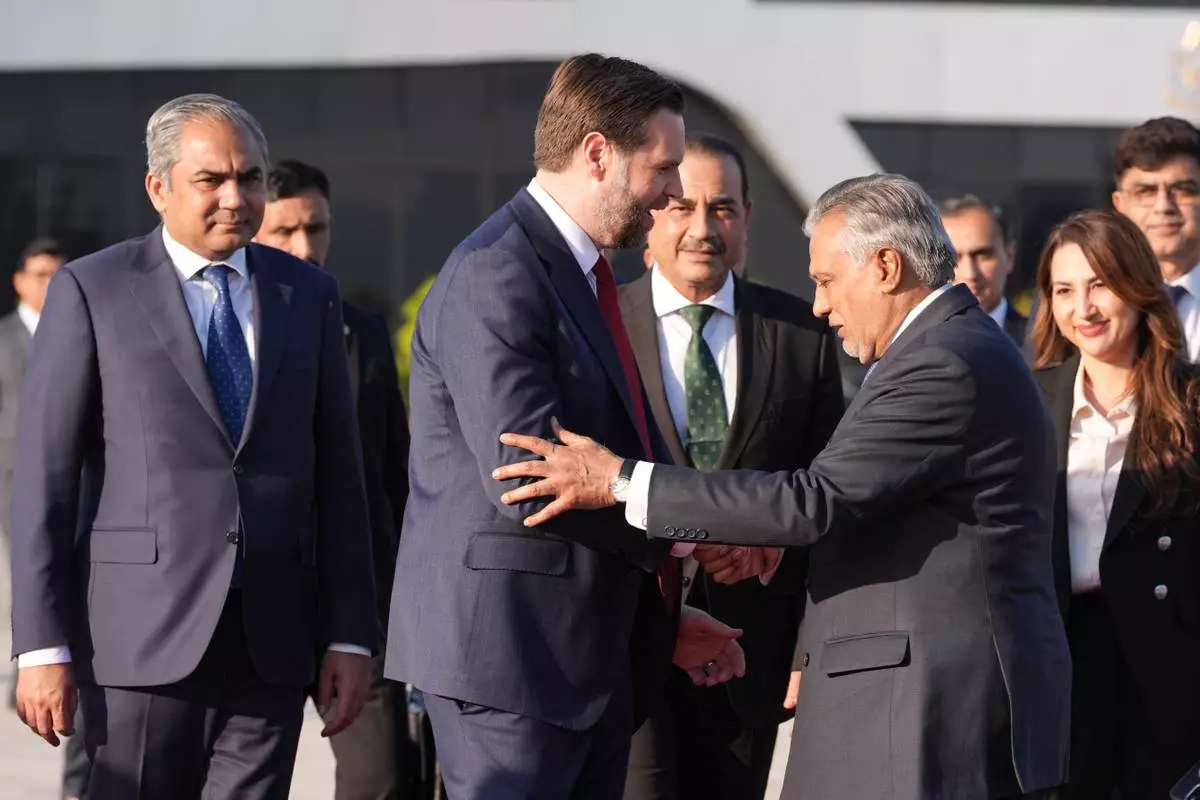
Vice President JD Vance, second left, shakes hands with Pakistani Deputy Prime Minister and Foreign Minister Mohammad Ishaq Dar, as Pakistan's Interior Minister Mohsin Naqvi, left, Pakistan's Chief of Defence Forces Chief of Army Staff Field Marshall Asim Munir, third left, and Charge d'Affaires of the U.S. Embassy in Islamabad Natalie A. Baker, right, look on, as he prepares to board Air Force Two after attending talks on Iran in Islamabad, Pakistan, Sunday, April 12, 2026. (AP Photo/Jacquelyn Martin, Pool)
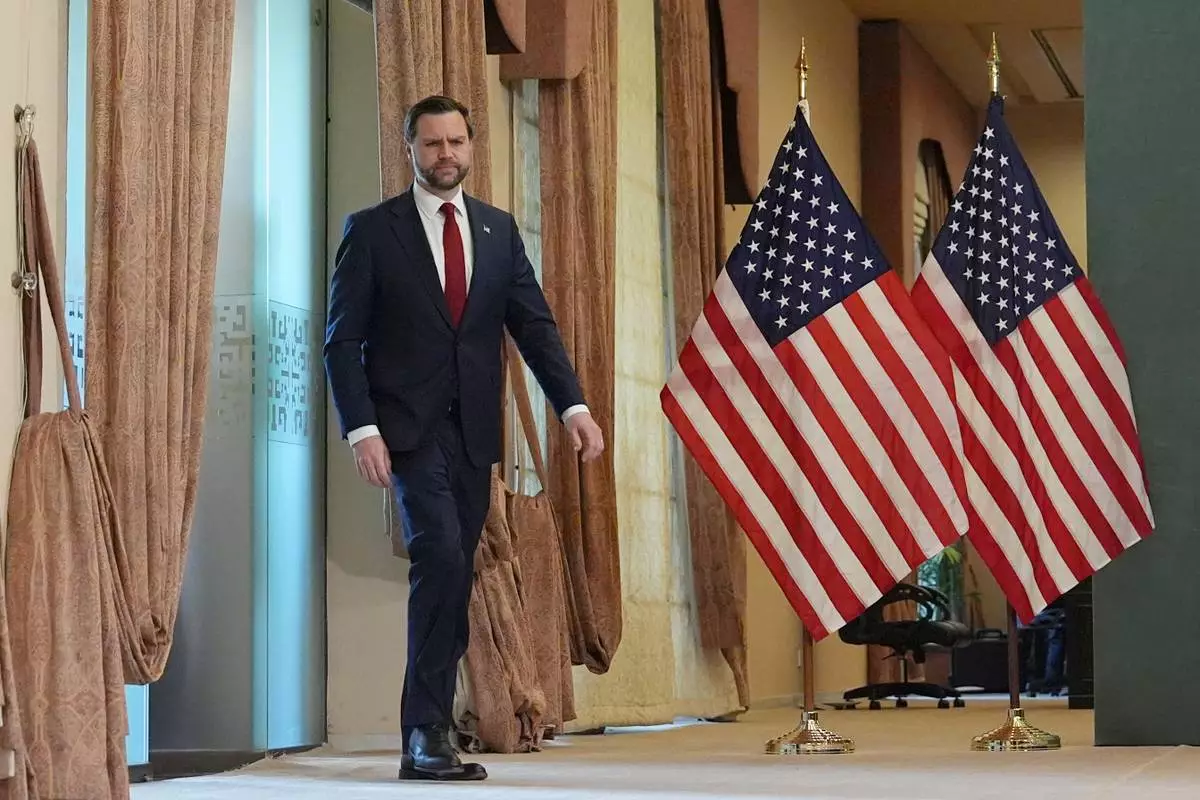
Vice President JD Vance arrives for news conference after meeting with representatives from Pakistan and Iran, Sunday, April 12, 2026, in Islamabad, Pakistan. (AP Photo/Jacquelyn Martin, Pool)
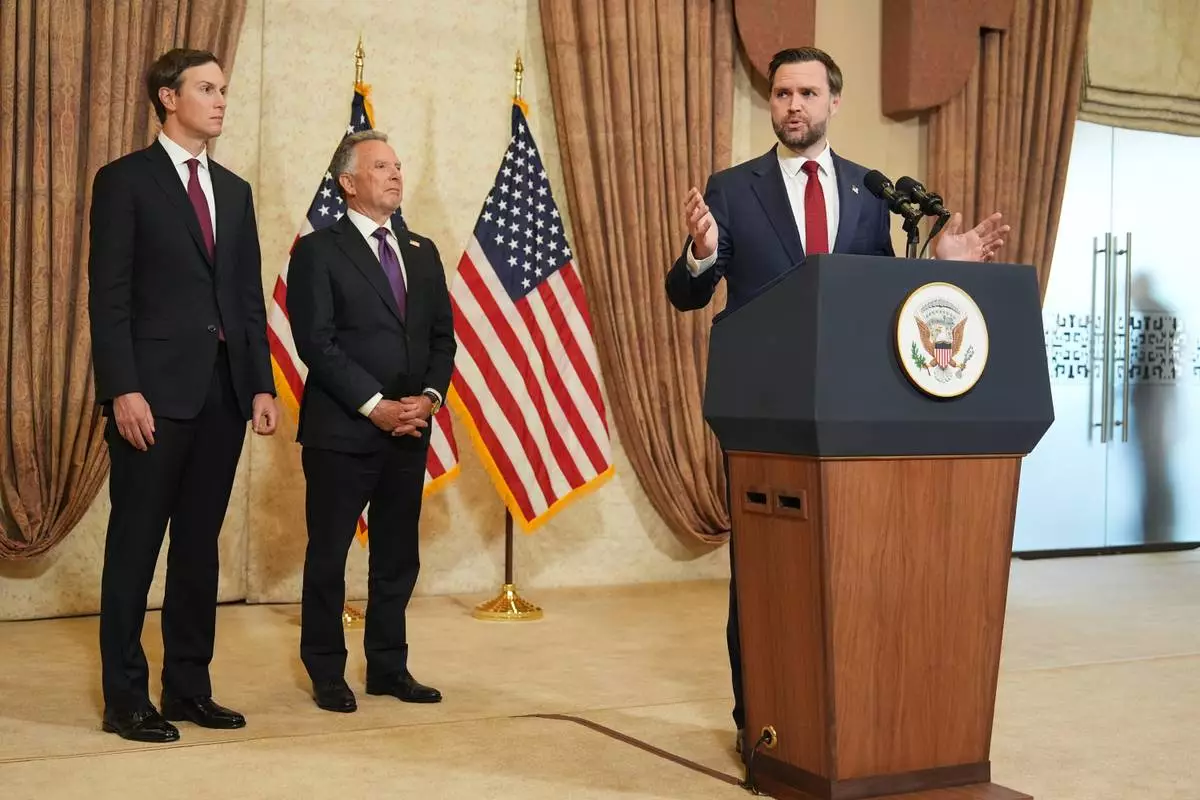
Vice President JD Vance, right, speaks during a news conference after meeting with representatives from Pakistan and Iran as Jared Kushner, left, and Steve Witkoff, Special Envoy for Peace Missions listen, on Sunday, April 12, 2026, in Islamabad, Pakistan. (AP Photo/Jacquelyn Martin, Pool)