BUDAPEST, Hungary (AP) — Hungary's Viktor Orbán had such an outsize global influence that his crushing electoral defeat is resounding far and wide.
During his 16 years in power, admirers emulated Orbán’s playbook for reshaping political institutions to his advantage and squeezing minority rights and media freedoms, and viewed him as a defender of national sovereignty in the face of globalization and migration.
To his detractors, he was a threat to European democracy and the continent's hard-fought values of human rights and rule of law.
Ultimately, Hungarian voters decided it was time to turn the page and overwhelmingly favored challenger Péter Magyar in Sunday's election.
Here's how global leaders reacted, in their own words.
Orbán’s was the Kremlin's strongest ally in the European Union and repeatedly blocked aid for Ukraine to fend off Russia's invasion.
After Magyar's election win, Ukrainian President Volodymyr Zelenskyy quickly reached out in hopes of support.
‘’It is important when constructive approach prevails. Ukraine has always sought good-neighbourly relations with everyone in Europe and we are ready to advance our cooperation with Hungary,'' he posted on social media.
‘’We are ready for meetings and joint constructive work for the benefit of both nations, as well as peace, security, and stability in Europe,'' Zelenskyy said.
Orbán was especially and constantly critical of the EU, even though his country enjoys billions in funding from the bloc.
Within minutes of his concession speech, European Commission President Ursula von der Leyen, a frequent target of Orbán's pronouncements, posted on X: “Europe’s heart is beating stronger in Hungary tonight.”
Europe's biggest powers also jumped in.
British Prime Minister Keir Starmer called it “an historic moment, not only for Hungary, but for European democracy. I look forward to working with you for the security and prosperity of both our countries.”
German Chancellor Friedrich Merz messaged Magyar: ‘’Let’s join forces for a strong, secure and, above all, united Europe. Gratulálok, kedves Magyar Péter!”
French President Emmanuel Macron said that "France welcomes the victory of democratic participation, the Hungarian people’s commitment to the values of the European Union, and Hungary’s commitment to Europe.''
Polish Prime Minister Donald Tusk, who is visiting Seoul, South Korea, posted on X Monday the flags of Hungary, his country and the European Union and said “Back together! Glorious victory, dear friends!”
He later posted a short video clip apparently showing him speaking to Magyar by phone while overlooking the Korean capital.
“Oh, I am so happy. I think I am happier than you, you know,” Tusk said in English.
In his victory speech, Magyar said that his first foreign stop would be to Poland, which has historically had longstanding, friendly ties to Hungary.
Slovak Prime Minister Robert Fico, an ally of Orbán who is visiting Vietnam, posted a statement offering his congratulations and saying he is ready for “intensive cooperation” with Magyar.
Italian Premier Giorgia Meloni thanked her ‘’friend Viktor Orbán'' for their collaboration. ‘’I know that even from the opposition he will continue to serve his Nation.''
France's far-right National Rally, jockeying to replace Macron in the French presidency next year, supported Orbán and tread cautiously after his defeat.
‘’This result, respectfully welcomed by Viktor Orbán, shows that the incessant accusations by European institutions in recent years against Hungarian democracy were unfounded,'' posted the party's president Jordan Bardella.
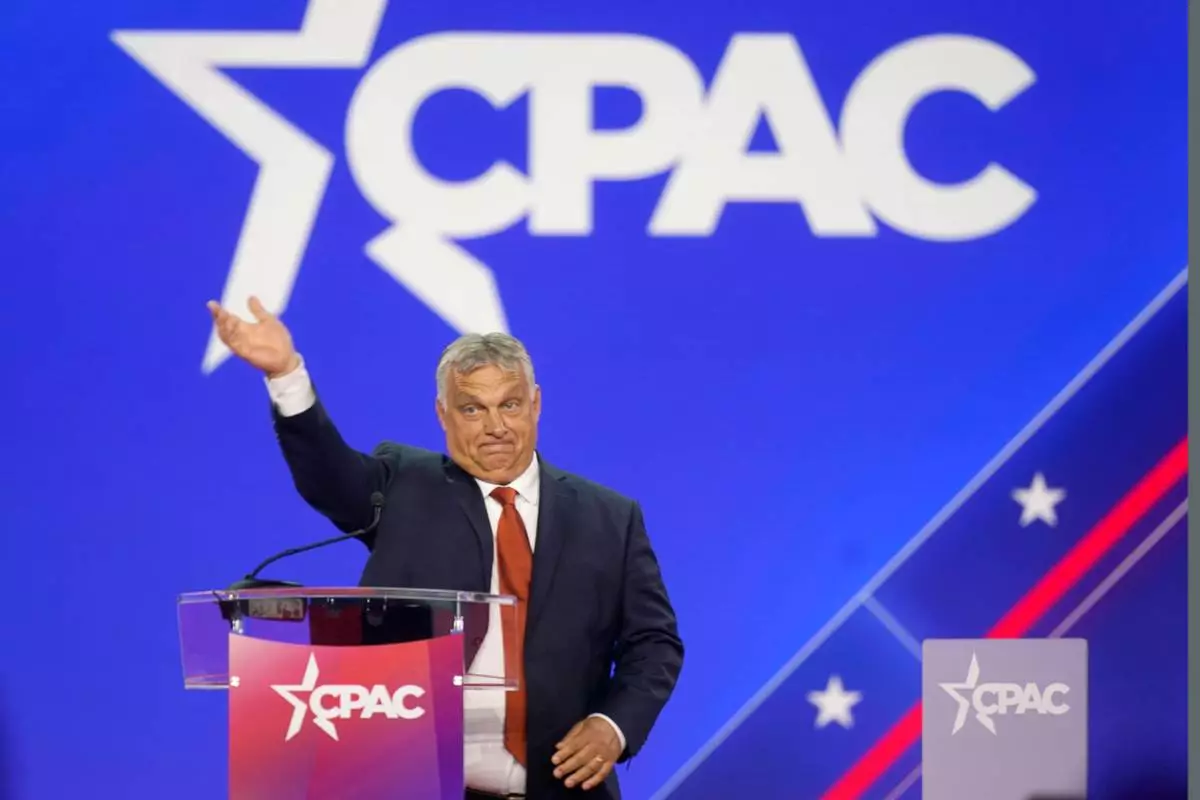
FILE - Hungarian Prime Minister Viktor Orban waves has he walks onto stage to speak at the Conservative Political Action Conference (CPAC) in Dallas, Thursday, Aug. 4, 2022. (AP Photo/LM Otero,File)
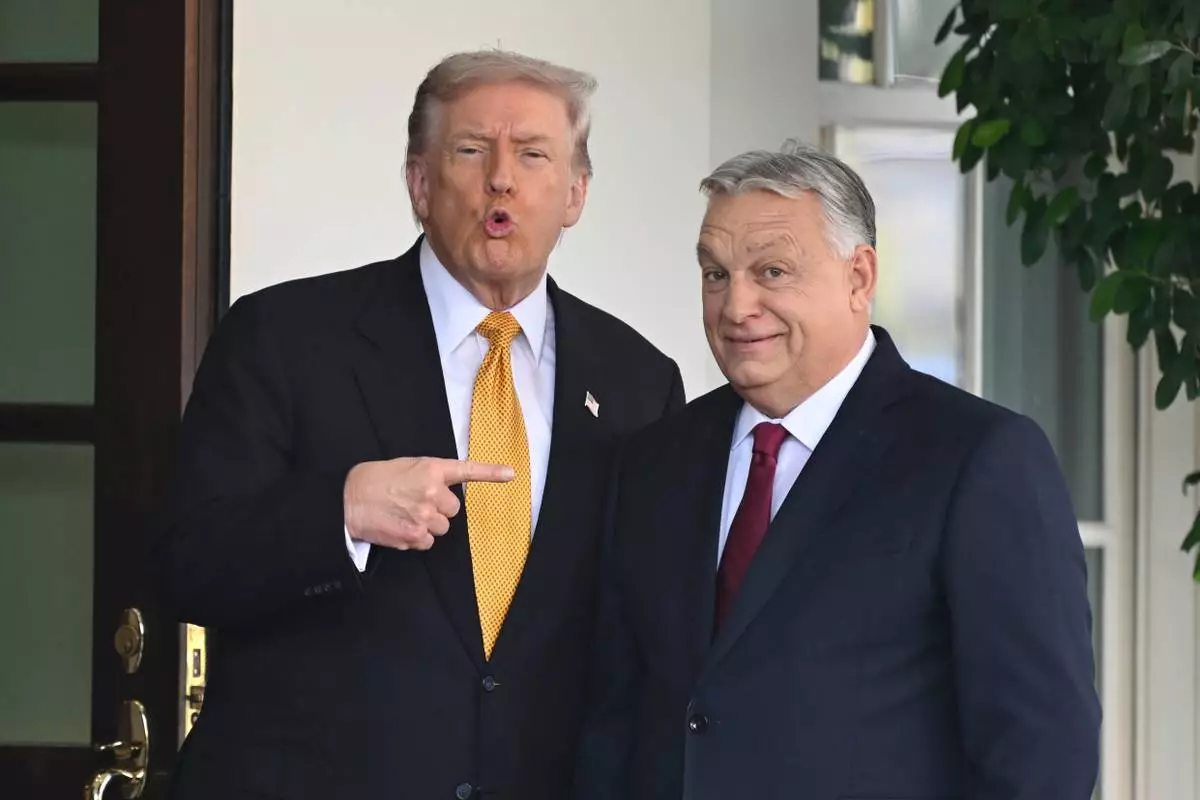
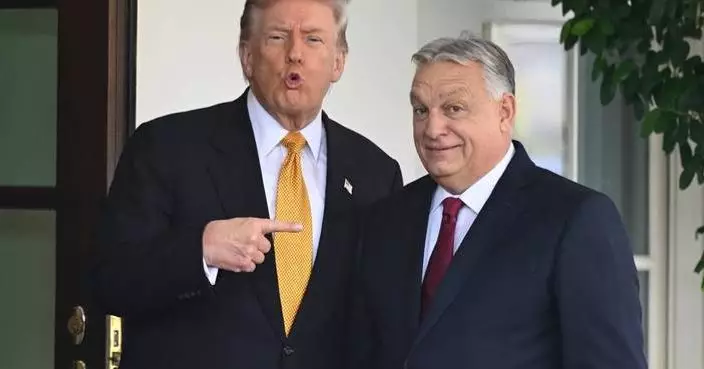
FILE - President Donald Trump, left, greets Hungary's Prime Minister Viktor Orban at the White House, Friday, Nov. 7, 2025, in Washington. (AP Photo/John McDonnell,File)
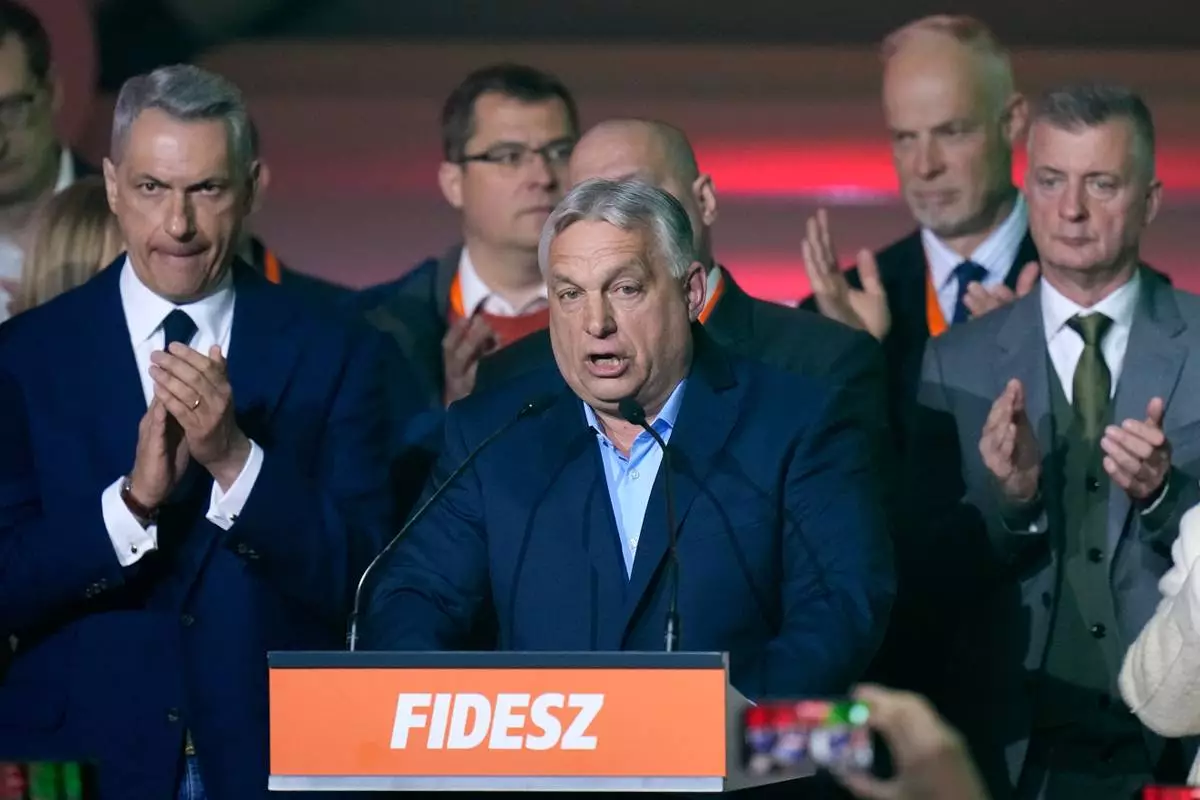
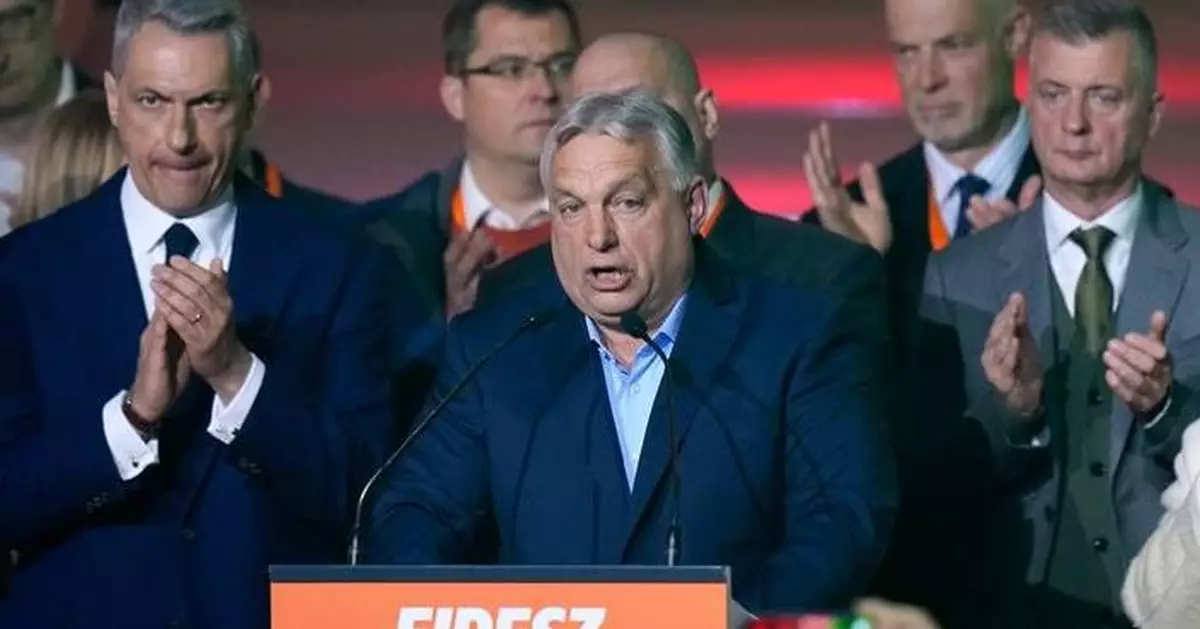
Hungary's Prime Minister Viktor Orban, center, addresses after a parliamentary election in Budapest, Hungary, Sunday, April 12, 2026. (AP Photo/Petr David Josek)
CAIRO (AP) — The U.S. military announced it will begin a blockade of all Iranian ports and coastal areas on Monday, tempering President Donald Trump 's earlier vow to entirely block the strategic Strait of Hormuz as early reports indicated that ships had stopped crossing the waterway.
The move came after marathon U.S.-Iran ceasefire talks in Pakistan ended without an agreement, and it set the stage for a showdown. Iranian leaders vowed to counter the blockade.
U.S. Central Command announced the blockade would begin on Monday at 10 a.m. EDT, or 5:30 p.m. in Iran, and would be “enforced impartially against vessels of all nations entering or departing Iranian ports and coastal areas, including all Iranian ports on the Arabian Gulf and Gulf of Oman.” CENTCOM said it would still allow ships traveling between non-Iranian ports to transit the strait, a step down from the president’s earlier threat to blockade the entire strait.
The announcement of the blockade halted the limited ship traffic that resumed in the strait since the ceasefire, said an early report from Lloyd’s List intelligence. Marine trackers say over 40 commercial ships have crossed since the start of the ceasefire, down from roughly 100 to 135 vessel passages per day before the war.
Later Sunday, Trump extended his feud over the war with Pope Leo XIV, lashing out in a Truth Social post that called the Catholic leader “terrible on foreign policy.” The extraordinary broadside came after Leo denounced the war and demanded that political leaders stop and negotiate peace.
The blockage is likely intended to add pressure on Iran, which has exported millions of barrels of oil since the war began, much of it likely carried by so-called “dark” transits that evade Western government sanctions and oversight.
Trump also hopes to undercut Iran's control over the Strait of Hormuz after demanding that it reopen the waterway where 20% of global oil transited before fighting began. A U.S. blockade could further rattle global energy markets.
Oil prices rose in early market trading after the blockade announcement. The price of U.S. crude rose 8% to $104.24 a barrel, and Brent crude oil, the international standard, rose 7% to $102.29. Brent crude cost roughly $70 per barrel before the war in late February.
A chorus of top-ranking Iranian officials threatened retaliation. Mohsen Rezaei, a military adviser and a former Revolutionary Guard Commander, wrote on X that the country’s armed forces had “major untouched levers” to counter a Hormuz blockade. He said Iran would not be coerced by “tweets and imaginary plans.”
Iranian parliament speaker, Mohammad Bagher Qalibaf, who led Iran’s side in the talks, addressed Trump in a statement on his return to Iran: “If you fight, we will fight.”
Iran’s Revolutionary Guard later said the strait remained under Iran’s “full control” and was open for non-military vessels, but military ones would get a “forceful response,” two semi-official Iranian news agencies reported.
During the 21-hour talks this weekend in Pakistan, the U.S. military said two destroyers had transited the strait ahead of mine-clearing work, a first since the war began. Iran denied it.
The face-to-face talks that ended early Sunday were the highest-level negotiations between the longtime rivals since the 1979 Islamic Revolution.
Trump said Tehran’s nuclear ambitions were the core reason for the talks’ failure. In comments to Fox News, he again threatened to strike civilian infrastructure if it didn't give up its nuclear program.
“In one half of a day they wouldn’t have one bridge standing, they wouldn’t have one electric generating plant standing, and they’re back in the stone ages,” Trump said.
Vice President JD Vance, who led the U.S. side in the talks, said Washington would need "an affirmative commitment that they will not seek a nuclear weapon."
Iranian negotiators could not agree to all U.S. “red lines,” said a U.S. official who spoke on condition of anonymity because they were not authorized to describe positions on the record. Those red lines included Iran never obtaining a nuclear weapon, ending uranium enrichment, dismantling major enrichment facilities and allowing retrieval of its highly enriched uranium, along with opening the Strait of Hormuz and ending funding for Hamas, Hezbollah and Houthi rebels.
Iranian officials said talks fell apart over two or three key issues, blaming what they called U.S. overreach. Qalibaf, who noted progress in negotiations, said it was time for the United States “to decide whether it can gain our trust or not.”
Iran’s foreign minister claimed that the U.S. tanked the negotiations when they were within “inches” of an agreement, but did not provide evidence.
"We encountered maximalism, shifting goalposts, and blockade,” wrote Abbas Araghchi on X.
Neither Iran nor the U.S. indicated what will happen after the ceasefire expires on April 22.
Pakistani Foreign Minister Ishaq Dar said his country will try to facilitate a new dialogue in the coming days. Iran said it was open to continuing dialogue, state-run IRNA news agency reported.
Iran’s nuclear program was at the center of tensions long before the U.S. and Israel launched the war on Feb. 28. The fighting has killed at least 3,000 people in Iran, 2,055 in Lebanon, 23 in Israel and more than a dozen in Gulf Arab states, and damaged infrastructure in half a dozen countries.
Tehran has long denied seeking nuclear weapons but insists on its right to a civilian nuclear program. The landmark 2015 nuclear deal, which Trump later pulled the U.S. out of, took well over a year of negotiations. Experts say Iran’s stockpile of enriched uranium, though not weapons-grade, is only a short technical step away.
Metz reported from Ramallah, West Bank, Boak from Miami and Magdy from Cairo. Associated Press writers E. Eduardo Castillo in Beijing; Collin Binkley and Ben Finley in Washington; Kareem Chehayeb in Beirut; Brian Melley in London; Ghaya Ben MBarek in Tunis; Hannah Schoenbaum in Salt Lake City and Julia Frankel and Mae Anderson in New York contributed to this report.
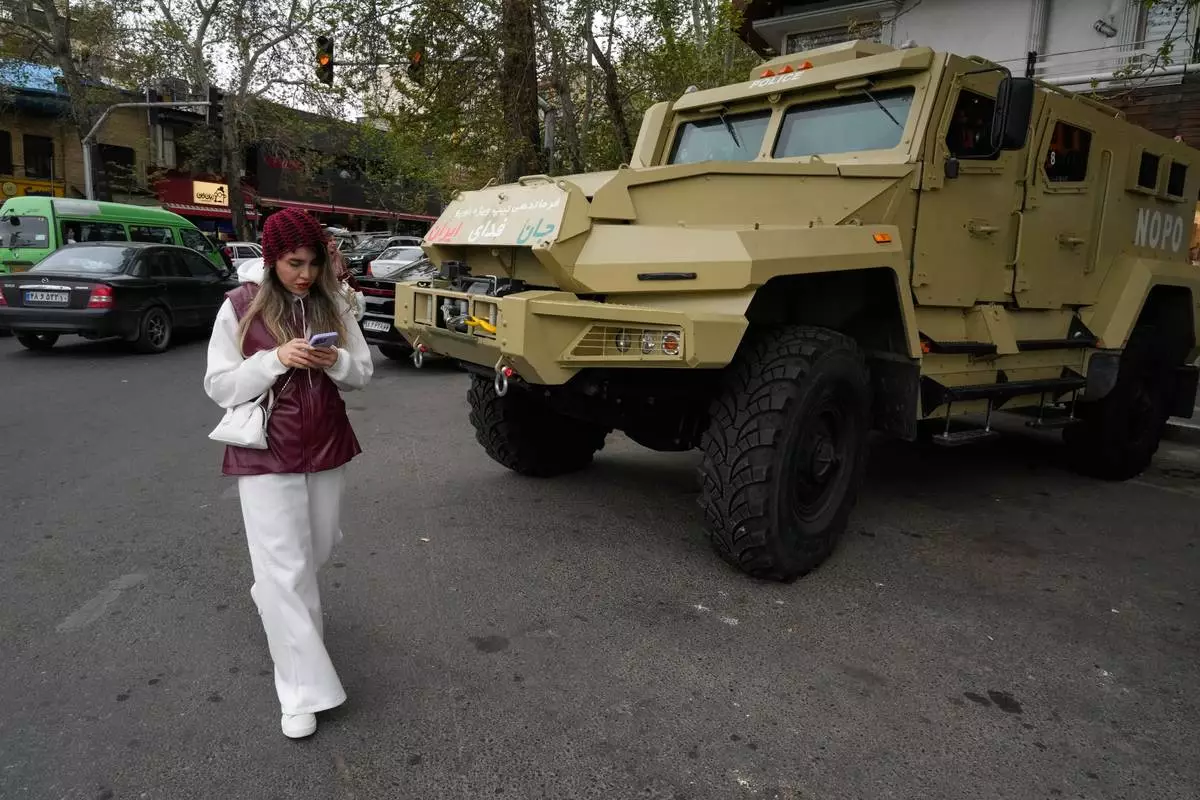
A woman checks her smartphone while walking past a police special forces car at Tajrish Square in northern Tehran, Iran, Sunday, April 12, 2026. (AP Photo/Vahid Salemi)
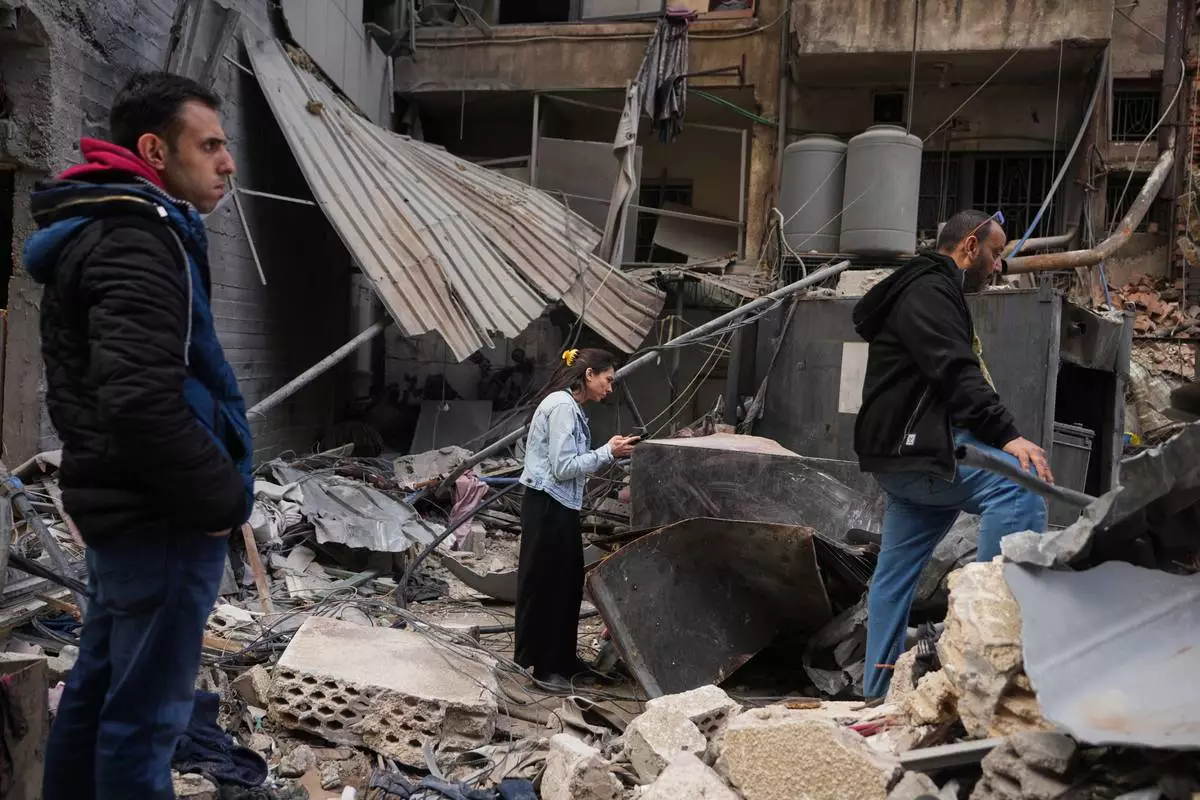
Residents inspect debris at the site of a building where efforts continue to recover the body of missing woman Zahraa Aboud, 26, after it was destroyed in an Israeli airstrike on Wednesday, in central Beirut, Sunday, April 12, 2026. (AP Photo/Hassan Ammar)
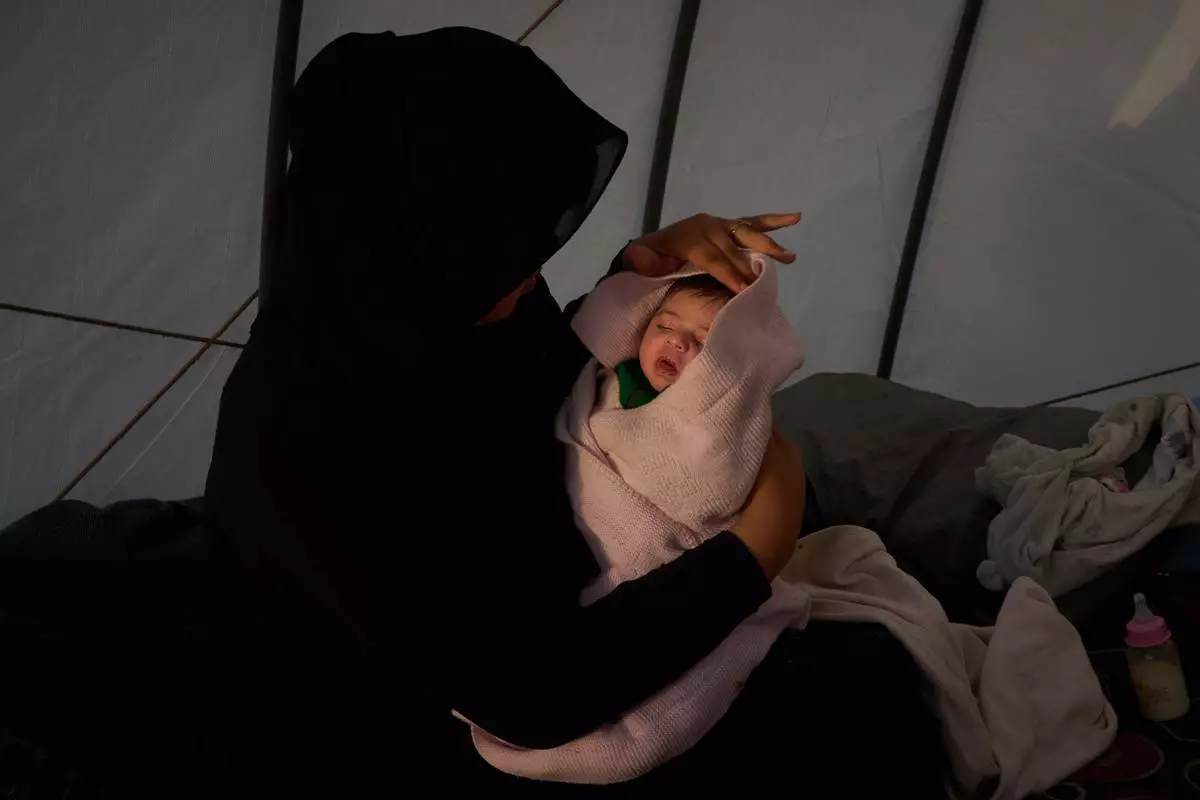
Haifa Kenjo, who fled Israeli airstrikes on the southern suburbs of Beirut, holds her 15-day-old daughter Shiman inside the tent she uses as a shelter and where she gave birth to her in Beirut, Sunday, April 12, 2026. (AP Photo/Emilio Morenatti)

Vice President JD Vance gives a thumbs up gesture while boarding Air Force Two as he leaves Islamabad, Sunday, April 12, 2026, after attending talks on Iran. (AP Photo/Jacquelyn Martin, Pool)
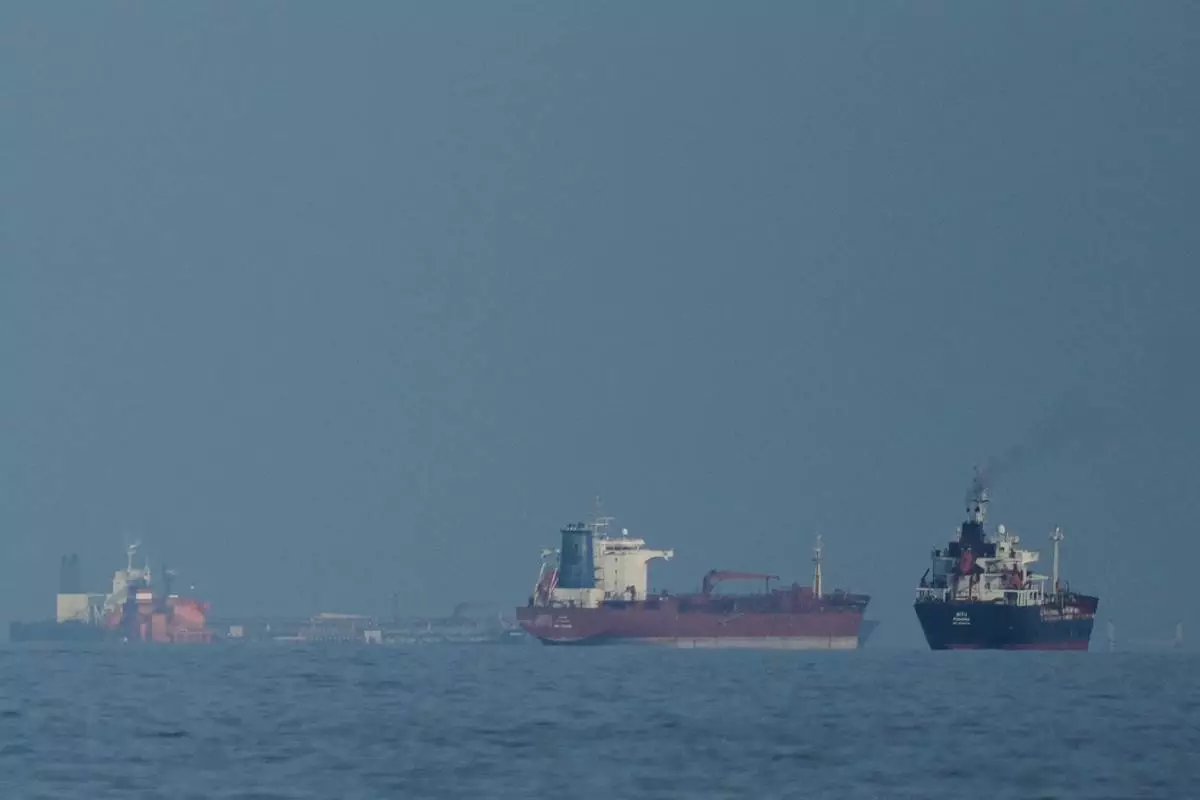
FILE - Oil tankers and cargo ships line up in the Strait of Hormuz as seen from Khor Fakkan, United Arab Emirates, Wednesday, March 11, 2026. (AP Photo/Altaf Qadri,File)