SCS's opening remarks at LegCo Finance Committee special meeting
Following is the English translation of the opening remarks by the Secretary for the Civil Service, Mrs Ingrid Yeung, at the special meeting of the Legislative Council Finance Committee this afternoon (April 13):
Chairman,
Among the matters related to the civil service in the 2026-27 Draft Estimates of Expenditure, I would like to focus my introduction on the following items.
The first item is the civil service establishment. The entire Government has continued to implement the fiscal consolidation programme and strictly contain the growth of its operating expenditure, which has achieved certain results. In line with the Productivity Enhancement Programme and in order to optimise the use of manpower resources, we will reduce the civil service establishment by 2 per cent each in 2026-27 and 2027-28 basing on the establishment of the preceding financial year. Together with the establishment reduced under the zero-growth policy for the civil service establishment in previous years, a cumulative deletion of over 10 000 posts is expected within this term of Government.
All bureaux and their departments (B/Ds) have considered such factors as the overall service demand, operational needs and vacancy situations for making arrangements for the 2 per cent reduction in the civil service establishment in 2026-27. The overall civil service establishment will be reduced to an estimated level of about 188 000 posts by April 1, 2026.
I would like to take this opportunity to reiterate that the reduction in establishment is the most direct way to reduce the actual expenditure, as the financial provisions for personal emoluments allocated to B/Ds are calculated based on the establishment rather than the strength. With the reduction in establishment, the provisions allocated to them will be directly reduced.
I understand that concerns have been raised about the impact of the reduction in establishment on the development of large-scale projects and the efficiency of daily services. I would like to take this opportunity to clarify the matter. Reduction in the civil service establishment is achieved by optimising manpower arrangements through reorganisation and reprioritisation of work while maintaining the efficiency of public services. All posts will be reviewed to ascertain the necessity to retain them. For posts that are essential to the provision of public services, they will be retained. Departments with actual needs can still apply for additional manpower. For instance, we will deploy internal manpower and create time-limited posts as necessary for the preparation of the Asia-Pacific Economic Cooperation Finance Ministers' Meeting 2026.
As for civil service pay adjustment, we are taking forward the relevant work of the 2026-27 civil service pay adjustment in a gradual and orderly manner in accordance with the established mechanism. The 2026 Pay Trend Survey (PTS) is currently under way, and the results are expected to be available in May. The Chief Executive in Council will make a decision on the 2026-27 civil service pay adjustment arrangements having due regard to all relevant factors, including the state of Hong Kong's economy, changes in the cost of living, the Government's fiscal position, the net pay trend indicators derived from the PTS, the pay claims of the staff sides and civil service morale.
The next item is the work on civil service training. The Civil Service College (CSC) will continue to implement the Governance Talents Development Programme to cultivate a pool of governance talent who love the country and Hong Kong and are familiar with the national development and international landscape as well as local circumstances. In addition, the CSC will continue to take forward various initiatives to strengthen the governance capabilities of the civil service. On AI, the CSC will collaborate with the Digital Policy Office to provide training and online learning resources themed around AI to enable civil servants to better grasp the relevant knowledge. The CSC will also continue to enhance elements related to AI and technology application in leadership training for civil servants, enabling leaders to guide their departments in adopting AI more widely to improve public services. The relevant estimated expenditure for 2026-27 is approximately $259 million.
As for medical benefits, the Government will continue to honour its contractual obligation as the employer and provide medical benefits for serving civil servants, pensioners and other eligible persons. The medical services provided by the Hospital Authority (HA) as part of the medical benefits have been included in the HA's overall provision. Regarding Families Clinics and dental services provided by the Department of Health, on top of its regular services, the provision will continue to cover the pilot scheme on provision of dental scaling services via private dental organisations for some civil service eligible persons, the pilot scheme on receiving designated dental services at a medical institution in Shenzhen and the seasonal influenza vaccination pilot scheme.
The Civil Service Bureauwill continue to take forward various policies and initiatives, such as expanding the functions of the Public Service Commission to cover Tier II investigation under the Heads of Department Accountability System, and formulating enhancement measures to develop a more rigorous civil service performance appraisal system for differentiating staff performance more effectively.
Chairman, this is the end of my introduction. I would welcome questions from Members.
FEHD releases first batch of gravidtrap indexes for Aedes albopictus in April
The Food and Environmental Hygiene Department (FEHD) today (April 13) released the first batch of gravidtrap indexes and density indexes for Aedes albopictus in April, covering 13 survey areas, as follows:
District |
Survey Area |
April 2026 |
First Phase Gravidtrap Index |
First Phase Density Index |
Central and Western |
Central and Admiralty |
0.0% |
N/A |
Sheung Wan and Sai Ying Pun |
1.8% |
1.0 |
Southern |
Pok Fu Lam |
7.0% |
1.0 |
Kowloon City |
Hung Hom and To Kwa Wan |
5.3% |
1.0 |
Kwun Tong |
Yau Tong and Cha Kwo Ling |
0.0% |
N/A |
Wong Tai Sin |
Wong Tai Sin West |
1.9% |
1.0 |
Sai Kung |
Sai Kung Town |
13.2% |
1.6 |
Sha Tin |
Sha Tin East |
1.6% |
1.0 |
Kwai Tsing |
Lai King |
3.8% |
1.0 |
Tsing Yi North |
11.9% |
1.1 |
Tsuen Wan |
Ma Wan and Sham Tseng |
5.7% |
1.0 |
Tsuen Wan West |
3.9% |
1.5 |
Yuen Long |
Hung Shui Kiu and Ping Shan |
4.3% |
1.5 |
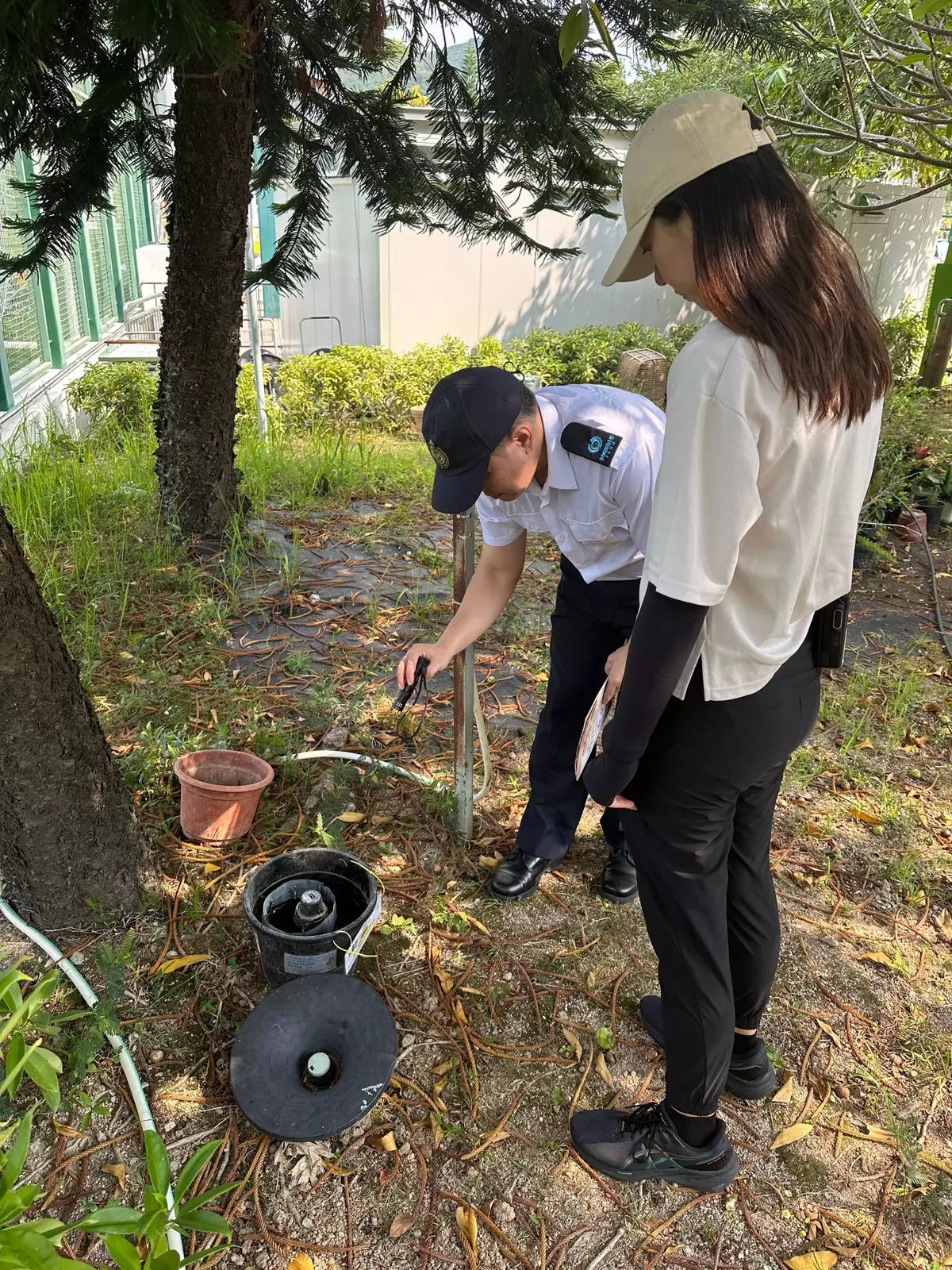
Among the first batch of First Phase Gravidtrap Indexes covering 13 survey areas in April, all were below 10 per cent, except for Sai Kung Town in Sai Kung District and Tsing Yi North in Kwai Tsing District.
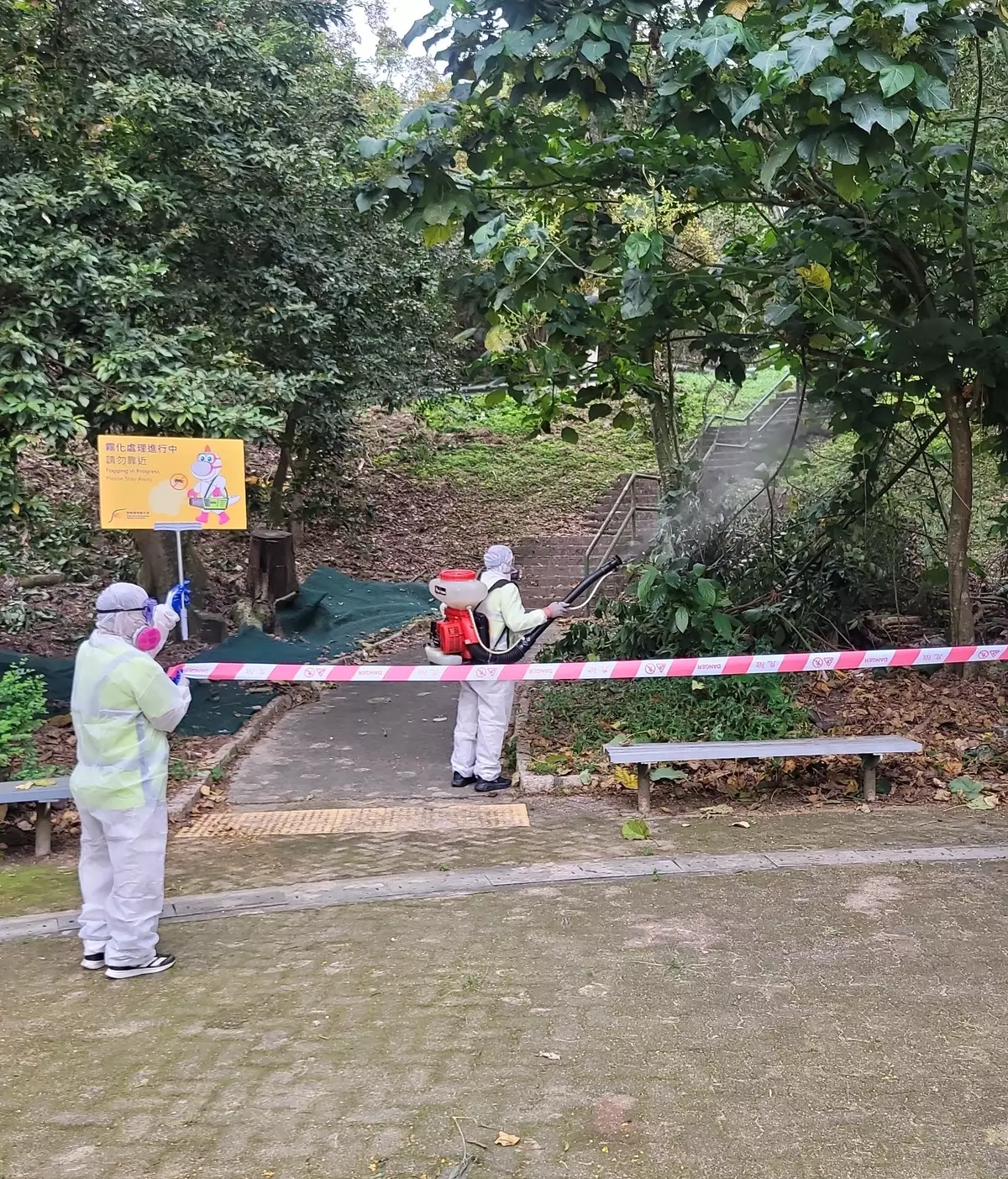
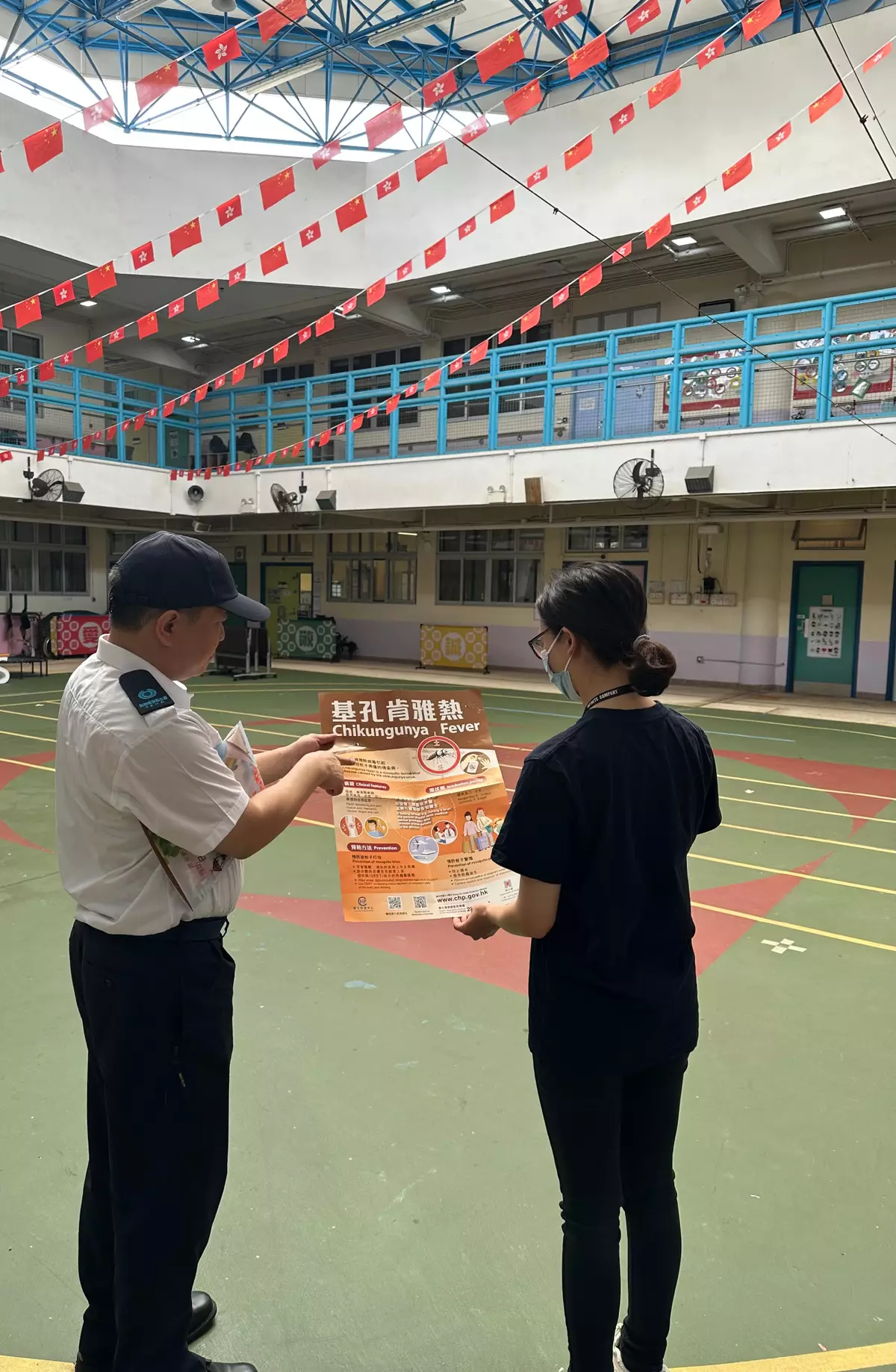
For Sai Kung Town in Sai Kung District and Tsing Yi North in Kwai Tsing District, which recorded indexesexceeding 10 per cent, in accordance with the mechanism implemented by the FEHD in response to the chikungunya fever (CF) situation (i.e. strengthening mosquito control work in areas with a gravidtrap index between 10 per cent and 20 per cent, instead of 20 per cent or above under the original mechanism), the FEHD is collaborating with relevant departments and stakeholders to identify locations with high mosquito infestations and carry out intensive and targeted mosquito control measures. In particular, the gravidtrap data for Sai Kung Town showed that areas with more mosquito problems included parks, schools, and public and private housing estates, while the gravidtrap data for Tsing Yi North showed that areas with more mosquito problems included parks, schools and public housing estates. The relevant departments are following up on the mosquito control work. The FEHD will also organise exhibitions, distribute leaflets and posters, and notify residential estates that have subscribed to the gravidtrap Rapid Alert System, advising property management agents and residents to stay vigilant and work together in taking mosquito prevention and elimination measures. In addition, the FEHD will strengthen the monitoring of the gravidtrap index in those two areas to review the effectiveness of the mosquito control work.
Among these 13 survey areas, three recorded a decrease or remained unchanged as compared to the Area Gravidtrap Index last month (i.e. March 2026), representing that the areas' mosquito infestation improved or maintained a low level. Eight other areas recorded a slight increase, but the indexes were lower than 10 per cent.
The warm and humid weather of spring is favourable for mosquito breeding. Members of the public should strengthen prevention work against mosquito breeding before the rainy season and eliminate potential mosquito breeding sites in advance, with a view to avoiding the nuisances caused by rapid mosquito breeding during the rainy season and reducing the risk of transmitting mosquito-borne diseases.
Public participation is crucial to the effective control of mosquito problems. The FEHD appeals to members of the public to continue to work together in strengthening personal mosquito control measures, including:
tidy up their premises and check for any accumulation of water inside their premises;
remove all unnecessary water collections and eliminate the sources;
check household items (those placed in outdoor and open areas in particular), such as refuse containers, vases, air conditioner drip trays, and laundry racks to prevent stagnant water;
change water in flower vases and scrubbing their inner surfaces thoroughly, and remove water in saucers under potted plants at least once a week;
properly cover all containers that hold water to prevent mosquitoes from accessing the water;
properly dispose of articles that can contain water, such as disposable meal boxes and empty cans; and
scrub drains and surface sewers with alkaline detergent at least once a week to remove any mosquito eggs.
Starting in August 2025, following the completion of the surveillance of individual survey areas, and once the latest gravidtrap index and the density index are available, the FEHD has been disseminating relevant information through press releases, its website and social media. It aims to allow members of the public to quickly grasp the mosquito infestation situation and strengthen mosquito control efforts, thereby reducing the risk of CF transmission.
Following recommendations from the World Health Organization and taking into account the local situation in Hong Kong, the FEHD sets up gravidtraps in districts where mosquito-borne diseases have been recorded in the past, as well as in densely populated places such as housing estates, hospitals and schools to monitor the breeding and distribution of Aedes albopictus mosquitoes, which can transmit CF and dengue fever. At present, the FEHD has set up gravidtraps in 62 survey areas of the community, with a surveillance period of two weeks. During the surveillance period, the FEHD will collect the gravidtraps once a week. After the first week of surveillance, the FEHD will immediately examine the glue boards inside the retrieved gravidtraps for the presence of adult Aedine mosquitoes to compile the Gravidtrap Index (First Phase) and Density Index (First Phase). At the end of the second week of surveillance, the FEHD will instantly check the glue boards for the presence of adult Aedine mosquitoes. Data from the two weeks of surveillance will be combined to obtain the Area Gravidtrap Index and the Area Density Index. The gravidtrap and density indexes for Aedes albopictus in different survey areas, as well as information on mosquito prevention and control measures, are available on the department's webpage (www.fehd.gov.hk/english/pestcontrol/dengue_fever/Dengue_Fever_Gravidtrap_Index_Update.html#).
FEHD releases first batch of gravidtrap indexes for Aedes albopictus in April Source: HKSAR Government Press Releases
FEHD releases first batch of gravidtrap indexes for Aedes albopictus in April Source: HKSAR Government Press Releases
FEHD releases first batch of gravidtrap indexes for Aedes albopictus in April Source: HKSAR Government Press Releases