SCS's opening remarks at LegCo Finance Committee special meeting
Following is the English translation of the opening remarks by the Secretary for the Civil Service, Mrs Ingrid Yeung, at the special meeting of the Legislative Council Finance Committee this afternoon (April 13):

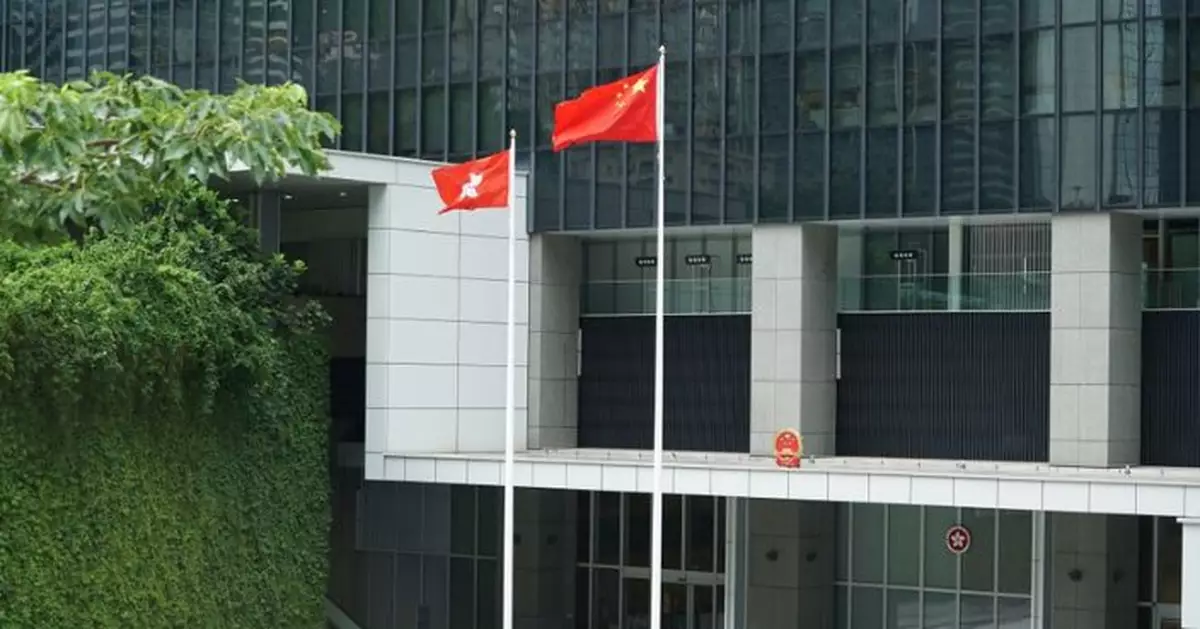
The Secretary for the Civil Service, Mrs Ingrid Yeung, Photo source: reference image
Chairman,
Among the matters related to the civil service in the 2026-27 Draft Estimates of Expenditure, I would like to focus my introduction on the following items.
The first item is the civil service establishment. The entire Government has continued to implement the fiscal consolidation programme and strictly contain the growth of its operating expenditure, which has achieved certain results. In line with the Productivity Enhancement Programme and in order to optimise the use of manpower resources, we will reduce the civil service establishment by 2 per cent each in 2026-27 and 2027-28 basing on the establishment of the preceding financial year. Together with the establishment reduced under the zero-growth policy for the civil service establishment in previous years, a cumulative deletion of over 10 000 posts is expected within this term of Government.
All bureaux and their departments (B/Ds) have considered such factors as the overall service demand, operational needs and vacancy situations for making arrangements for the 2 per cent reduction in the civil service establishment in 2026-27. The overall civil service establishment will be reduced to an estimated level of about 188 000 posts by April 1, 2026.
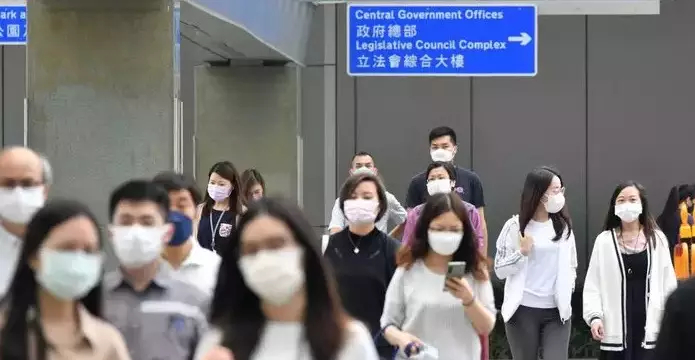
Photo source: reference image
I would like to take this opportunity to reiterate that the reduction in establishment is the most direct way to reduce the actual expenditure, as the financial provisions for personal emoluments allocated to B/Ds are calculated based on the establishment rather than the strength. With the reduction in establishment, the provisions allocated to them will be directly reduced.
I understand that concerns have been raised about the impact of the reduction in establishment on the development of large-scale projects and the efficiency of daily services. I would like to take this opportunity to clarify the matter. Reduction in the civil service establishment is achieved by optimising manpower arrangements through reorganisation and reprioritisation of work while maintaining the efficiency of public services. All posts will be reviewed to ascertain the necessity to retain them. For posts that are essential to the provision of public services, they will be retained. Departments with actual needs can still apply for additional manpower. For instance, we will deploy internal manpower and create time-limited posts as necessary for the preparation of the Asia-Pacific Economic Cooperation Finance Ministers' Meeting 2026.
As for civil service pay adjustment, we are taking forward the relevant work of the 2026-27 civil service pay adjustment in a gradual and orderly manner in accordance with the established mechanism. The 2026 Pay Trend Survey (PTS) is currently under way, and the results are expected to be available in May. The Chief Executive in Council will make a decision on the 2026-27 civil service pay adjustment arrangements having due regard to all relevant factors, including the state of Hong Kong's economy, changes in the cost of living, the Government's fiscal position, the net pay trend indicators derived from the PTS, the pay claims of the staff sides and civil service morale.
The next item is the work on civil service training. The Civil Service College (CSC) will continue to implement the Governance Talents Development Programme to cultivate a pool of governance talent who love the country and Hong Kong and are familiar with the national development and international landscape as well as local circumstances. In addition, the CSC will continue to take forward various initiatives to strengthen the governance capabilities of the civil service. On AI, the CSC will collaborate with the Digital Policy Office to provide training and online learning resources themed around AI to enable civil servants to better grasp the relevant knowledge. The CSC will also continue to enhance elements related to AI and technology application in leadership training for civil servants, enabling leaders to guide their departments in adopting AI more widely to improve public services. The relevant estimated expenditure for 2026-27 is approximately $259 million.
As for medical benefits, the Government will continue to honour its contractual obligation as the employer and provide medical benefits for serving civil servants, pensioners and other eligible persons. The medical services provided by the Hospital Authority (HA) as part of the medical benefits have been included in the HA's overall provision. Regarding Families Clinics and dental services provided by the Department of Health, on top of its regular services, the provision will continue to cover the pilot scheme on provision of dental scaling services via private dental organisations for some civil service eligible persons, the pilot scheme on receiving designated dental services at a medical institution in Shenzhen and the seasonal influenza vaccination pilot scheme.
The Civil Service Bureau will continue to take forward various policies and initiatives, such as expanding the functions of the Public Service Commission to cover Tier II investigation under the Heads of Department Accountability System, and formulating enhancement measures to develop a more rigorous civil service performance appraisal system for differentiating staff performance more effectively.
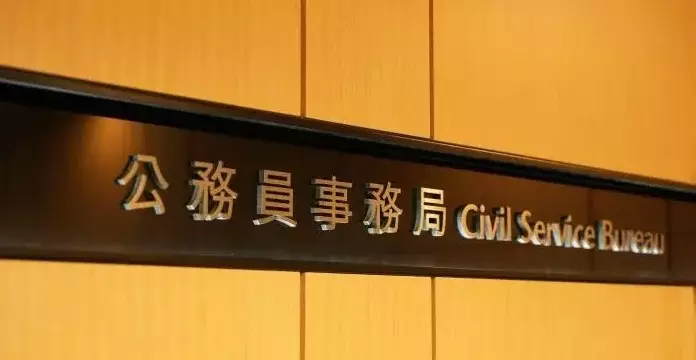
The Civil Service Bureau, Photo by Bastille Post
Chairman, this is the end of my introduction. I would welcome questions from Members.
HKSAR organises activities for 2026 National Security Education Day (with photos/video)
The following is issued on behalf of the Committee for Safeguarding National Security of the Hong Kong Special Administrative Region:
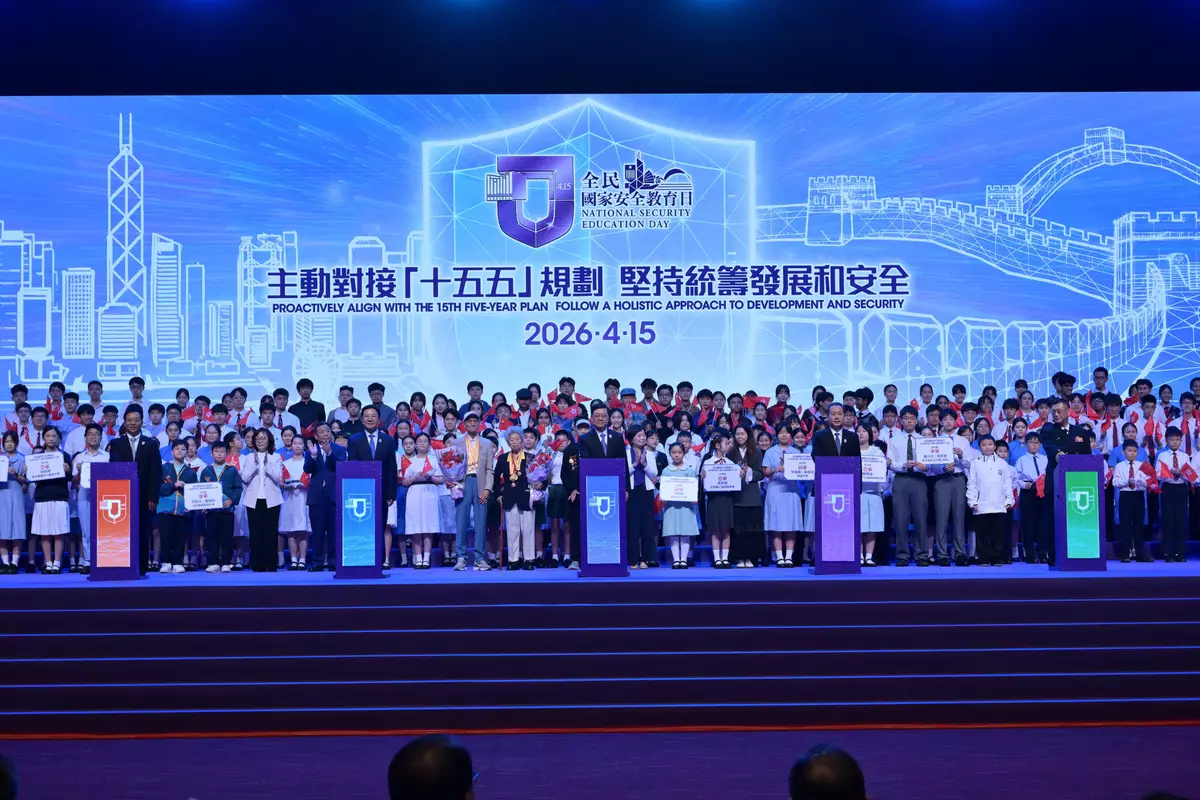
Held on April 15 at the Hong Kong Convention and Exhibition Centre, the National Security Education Day Opening Ceremony was organised by the Committee for Safeguarding National Security of the Hong Kong Special Administrative Region (the Hong Kong National Security Committee) and supported by the Liaison Office of the Central People's Government in the Hong Kong Special Administrative Region (LOCPG) and the Office for Safeguarding National Security of the Central People's Government in the Hong Kong Special Administrative Region (OSNS). The Director of the Hong Kong and Macao Work Office of the Communist Party of China Central Committee and the Hong Kong and Macao Affairs Office of the State Council, Mr Xia Baolong, delivered a speech via video at the opening ceremony. Officiating guests attending the ceremony were the Chief Executive of the Hong Kong Special Administrative Region (HKSAR) and the Chairman of the Hong Kong National Security Committee, Mr John Lee; Director of LOCPG and National Security Advisor of the Hong Kong National Security Committee, Mr Zhou Ji; Head of OSNS, Mr Dong Jingwei; Commissioner of the Ministry of Foreign Affairs of the People's Republic of China in the HKSAR, Mr Cui Jianchun; and Political Commissar of the Chinese People's Liberation Army Hong Kong Garrison, Navy Rear Admiral Lai Ruxin.
Director Xia stated in his speech, "President Xi Jinping emphasised that the period of the 15th Five-Year Plan is a crucial stage for reinforcing the foundations and pushing ahead on all fronts towards basically realising socialist modernisation. We should place greater emphasis on ensuring both development and security, with a comprehensive assessment of domestic and external risks and challenges, improve the national security system, strengthen our capacity to safeguard security, facilitate the virtuous interaction between high-quality development and high-level security through high-efficiency governance, and ensure the new development pattern with a new security architecture."
Director Xia put forward four guiding principles on studying and implementing the spirit of President Xi Jinping's important speech, ensuring both development and security, safeguarding Hong Kong's transition from stability to prosperity with high-level security, and opening up a new chapter for the cause of "One Country, Two Systems" during the 15th Five-Year Plan period. First, it is imperative to thoroughly understand the inner logic of Hong Kong's transition from chaos to order and then from stability to prosperity, and to cherish the hard-won progress. Second, it is imperative to appreciate that security should not be taken for granted, and to stay vigilant against various risks and dangers affecting Hong Kong's prosperity and stability. Third, it is imperative to seize the strategic opportunities amid the major changes unseen in a century, proactively align with the National 15th Five-Year Plan, and accelerate high-quality development in Hong Kong. Fourth, it is imperative for all sectors of the community to join forces to safeguard security and build a better Hong Kong.
Director Xia emphasised that only with security can there be development, and without security, nothing is possible. Only by holding the bottom line of security can we ensure prosperous development and a bright future. We must strengthen bottom-line thinking and remain vigilant at all times against all potential risks, including in particular external interference, geopolitical risks, and public security risks. Director Xia pointed out that on the new journey of the 15th Five-Year Plan, Hong Kong should strengthen scientific forward planning, with particular focus on the Northern Metropolis as a priority, and leveraging education and technology as engines to promote synergy among industry, academia, and research, as well as the integrated development of education, technology, and talent. The planning should also elaborate on constituent projects, and actively forge new platforms and new drivers for development.
Director Xia trusted that the HKSAR Government will effectively fulfil their leading role and shoulder primary responsibility for Hong Kong's governance, better co-ordinate development as the "top priority" and security as the "most important task", and draw on the collective wisdom to formulate and implement the first five-year plan. He also expressed confidence that the legislative and judicial bodies will consciously respect and maintain the executive-led system, perform their respective duties with the executive branch, and collaborate to provide a strong legal guarantee for Hong Kong's high-quality development during the 15th Five-Year Plan period.
Director Xia expected that the business community and entrepreneurs serve as the main force in promoting Hong Kong's economic development and actively act as supporters and practitioners of Hong Kong's five-year plan. He hoped that universities and tertiary institutions would capitalise on the advantages of Hong Kong's reputation as an education hub and its international characteristics, actively align with national strategies, focus on cutting-edge technological research and development, and attract and cultivate various types of talent urgently needed by the country and Hong Kong. He hoped that all sectors of society would fully support the Chief Executive and the HKSAR Government in governing according to the law, and continuously forge consensus on actively aligning with the National 15th Five-Year Plan and building a better Hong Kong. He also hoped that the youth would seize opportunities and pursue their dreams while actively participating in the construction of the Guangdong-Hong Kong-Macao Greater Bay Area and the Northern Metropolis.
Mr Lee extended his sincere gratitude to Director Xia for delivering the keynote speech, saying, "Director Xia's speech is rich in substance and profound in exposition. It comprehensively elucidates the inherent logic between safeguarding national security and promoting economic and social development in Hong Kong, and profoundly points the way forward for the HKSAR."
Mr Lee pointed out, "The fourth session of the 14th National People's Congress approved the 'Outline of the 15th Five-Year Plan' last month, making top-level design and strategic plans for our country's development for the next five years. We will proactively align with the 15th Five-Year Plan to formulate Hong Kong's first five-year plan. The Government's 15 policy bureaux have each established working groups. The working process will be led by the Chief Executive, with the Constitutional and Mainland Affairs Bureau taking the lead, and Secretaries of Departments and Directors of Bureaux will jointly drive the process forward. We will complete the work within this year, providing a clear guidance for socio-economic and livelihood development.
"On February 10 this year, the State Council Information Office released the white paper on 'Hong Kong: Safeguarding China's National Security Under the Framework of One Country, Two Systems'. The white paper states that the Central Government bears the fundamental responsibility for affairs concerning national security in Hong Kong, while the HKSAR shoulders the constitutional responsibility for safeguarding national security. We must adhere to a holistic approach to national security as its guiding principle, grasp the practical requirements of safeguarding national security under the framework of 'One Country, Two Systems'.
"As the head of the HKSAR and taking a leading role in the HKSAR's governance, I will lead and co-ordinate the executive authorities, the legislature and the judiciary of the HKSAR in effectively preventing, suppressing and punishing acts and activities that endanger national security in accordance with the law. I will create high-standard security for the high-quality development and implement six important initiatives. First, upholding the unity of the Central Government's fundamental responsibility and the HKSAR's constitutional responsibility. Second, keeping the power to govern the HKSAR firmly in the hands of patriots. Third, respecting the rule of law and ensuring human rights. Fourth, following a holistic approach to development and security. Fifth, safeguarding security with greater openness. Sixth, improving the governance system for public security.
"The world is beset by intertwined upheavals, intensifying turbulence, and frequent geopolitical conflicts, with the external environment growing increasingly complex and severe. Amid the accelerating global changes not seen in a century, we must put into practice the essence of the white paper, understand and grasp a holistic approach to national security, and adhere to 'bottom-line thinking' and 'worst-case-scenario thinking'. We must shoulder the constitutional responsibility for safeguarding national security, continue to strengthen national security, and unwaveringly build high-level security to ensure the steadfast and successful implementation of 'One Country, Two Systems'.
"In addition, we must proactively align with the 15th FiveYear Plan, ensure both development and security, lay a solid foundation for Hong Kong's longterm prosperity and stability, proactively shoulder further responsibilities to achieve better development for Hong Kong, and make new and greater contributions to building China into a great country and advancing national rejuvenation."
Director Zhou pointed out that it is necessary to strengthen public awareness of safeguarding national security, to further fortify the security shield for Hong Kong's high quality development, and to further enhance the HKSAR's capacity to safeguard national security.
"In today's world, turbulence and conflicts are intertwined, and wars are ravaging certain countries and regions. Hong Kong's peace and stability has not come easily and is something that we should cherish all the more. There is no 'mere spectator' in safeguarding national security: every Hong Kong resident is a beneficiary of national security and must also act as a guardian of national security.
"Since the promulgation and implementation of the Hong Kong National Security Law, international institutions and organisations have repeatedly expressed confidence in Hong Kong, and Hong Kong has secured top positions in a number of international indices. A 'safe harbour' is a 'harbour for development' — Hong Kong's safe and stable business environment has been widely recognised by the international community, and investors from around the world have cast their 'vote of confidence' in Hong Kong's future with real capital.
"The LOCPG will conscientiously and faithfully implement the Central Government's requirements, continue to firmly support the HKSAR in fulfiling its constitutional responsibility for safeguarding national security, uphold a holistic approach to national security, better ensure both development and security, and continuously consolidate and expand the progress in stability advancing to prosperity."
In his speech, Director Dong Jingwei shared three insights on how Hong Kong can better achieve secure development in the process from stability to prosperity, and put forward three imperatives: "To achieve development with security, we must resolutely defend the bottom line of national security; we must steadfastly implement the rule of law in national security; we must continuously fortify the national security shield."
He said, "Hong Kong's responsibility for safeguarding national security is purely the responsibility of 'One Country' and there is no distinction between the 'Two Systems'. The objective is to defend 'One Country, Two Systems', to safeguard national sovereignty, security and development interests, and to maintain Hong Kong's long term prosperity and stability."
Director Dong pointed out, "The unrelenting fight in safeguarding national security in Hong Kong has made society more stable, strengthened social order, and energised development. The role of the rule of law in national security as a guarantee for development has become increasingly evident."
He stressed that, "We must be guided by a holistic approach to national security, accurately grasp the practical requirements for safeguarding national security under 'One Country, Two Systems', make security a recurring theme among all fields of development, and remain constantly vigilant against various risks and hidden dangers.
"Together we will create a 'safe harbour' and a 'harbour for development' that is free, developed, open, and vibrant."
Commissioner Cui Jianchun said in his speech that, faced with a turbulent and complex international situation, following a holistic approach to development and security is Hong Kong's 'ballast stone' for responding to external risks and challenges, and is also Hong Kong's source of confidence as it proactively aligns with the National 15th Five Year Plan, spares no efforts to pursue economic growth, advance development, and improve people's livelihood.
"Regardless of changes in the international landscape, the Office of the Commissioner of the Ministry of Foreign Affairs of the People's Republic of China in the HKSAR will resolutely defend national sovereignty, security and development interests, and will always fully support Hong Kong in extensively expanding its global reach, help Hong Kong better integrate into and serve the country's overall development, promote Hong Kong's long term prosperity and stability, and advance the steadfast and successful implementation of 'One Country, Two Systems'."
Rear Admiral Lai Ruxin said in his speech that the world is not at peace and peace must be defended. "Today the world is riven by turmoil and war, while our country flourishes and stands as firm as Mount Tai; this is inseparable from the loyal guardianship and sense of mission of the People's Liberation Army."
"The Hong Kong Garrison of the Chinese People's Liberation Army resolutely follows President Xi's command, conscientiously implements the 'One Country, Two Systems' policy, the HKSAR's Basic Law and Garrison Law, comprehensively strengthens training and preparedness, fully supports the HKSAR Government in governing according to law, serves the people wholeheartedly, firmly defends the bottom line of national security, and resolutely safeguards Hong Kong's prosperity and stability."
The HKSAR Government will continue to promote and deepen national security education in innovative and diversified ways, and to encourage all citizens to safeguard national security on their own accord. The National Security Exhibition Gallery, as he first physical education base in the HKSAR to systematically introduce national security to the public, has won widespread acclaim and praise from all sectors of society through its rich and unique exhibits, cutting-edge technological displays, and engaging interactive installations. It has attracted a steady stream of visitors; as of the end of March 2026, the number of visitors had exceeded 1.7 million, including 260 000 primary and secondary school students and 180 000 civil servants. The enthusiastic social response represents a remarkable achievement. Furthermore, the HKSAR Government continues to deepen the National Security Education District Tutor Training Scheme. As of early 2026, approximately 3 300 persons had completed their district tutor training, having organised over 7 400 promotional activities for national security education, reaching more than 750 000 person-times. The National Security Youth Ambassador Training Scheme, launched in February 2025, has also to date trained up about 200 youth ambassadors. This academic year's Territory-wide Inter-school National Security Knowledge Challenge continues in a quiz format, featuring primary and secondary school sections, as well as an English section for non-Chinese speaking secondary school students. The competition received an active response from schools, with a record-high participation of 651 schools and over 130 000 students. Top-performing schools were invited to join the recently held third National Security Education Study Tour to Beijing and Nanjing. A total of 187 teachers and students participated, a significant increase from the previous two tours. At today's opening ceremony, some students from the study tour performed a stage play acting out the heroic anti-Japanese resistance of the Dongjiang Column led by the Communist Party of China during the occupation of Hong Kong, conveying the message: "Remember history, honour the martyrs, cherish peace, and create the future".
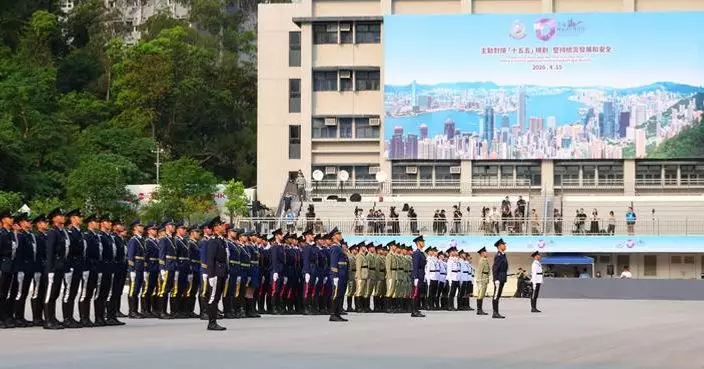
Apart from the above, the Security Bureau, leading disciplined services and auxiliary forces, held a solemn and grand flag-raising ceremony on the morning of April 15, and organised "Safeguarding National Security Cup" sports events and open days before and after April 15. The Education Bureau also organised the Territory-wide Inter-school Drone Show Design Competition for the first time. In addition, 18 District Councils have organised different events, including seminars, carnivals, competitions, lectures, and flag-raising ceremonies for Hong Kong citizens to participate in and understand national security.
The National Security Law of the People's Republic of China stipulates that April 15 each year is the National Security Education Day. The aim of National Security Education Day is to raise citizens' awareness of safeguarding national security and help them appreciate that everyone has a responsibility for safeguarding national security and that everyone should fulfil such responsibility.
HKSAR organises activities for 2026 National Security Education Day (with photos/video) Source: HKSAR Government Press Releases

HKSAR organises activities for 2026 National Security Education Day (with photos/video) Source: HKSAR Government Press Releases

HKSAR organises activities for 2026 National Security Education Day (with photos/video) Source: HKSAR Government Press Releases
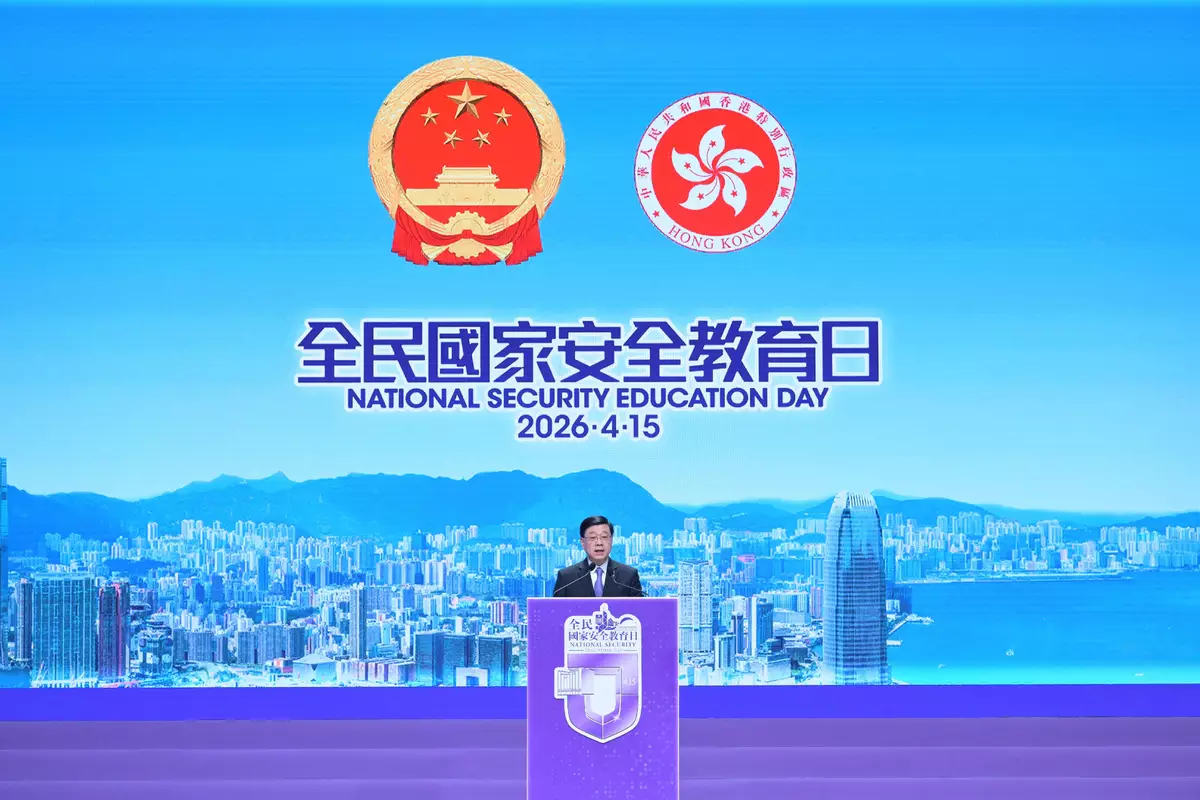
HKSAR organises activities for 2026 National Security Education Day (with photos/video) Source: HKSAR Government Press Releases
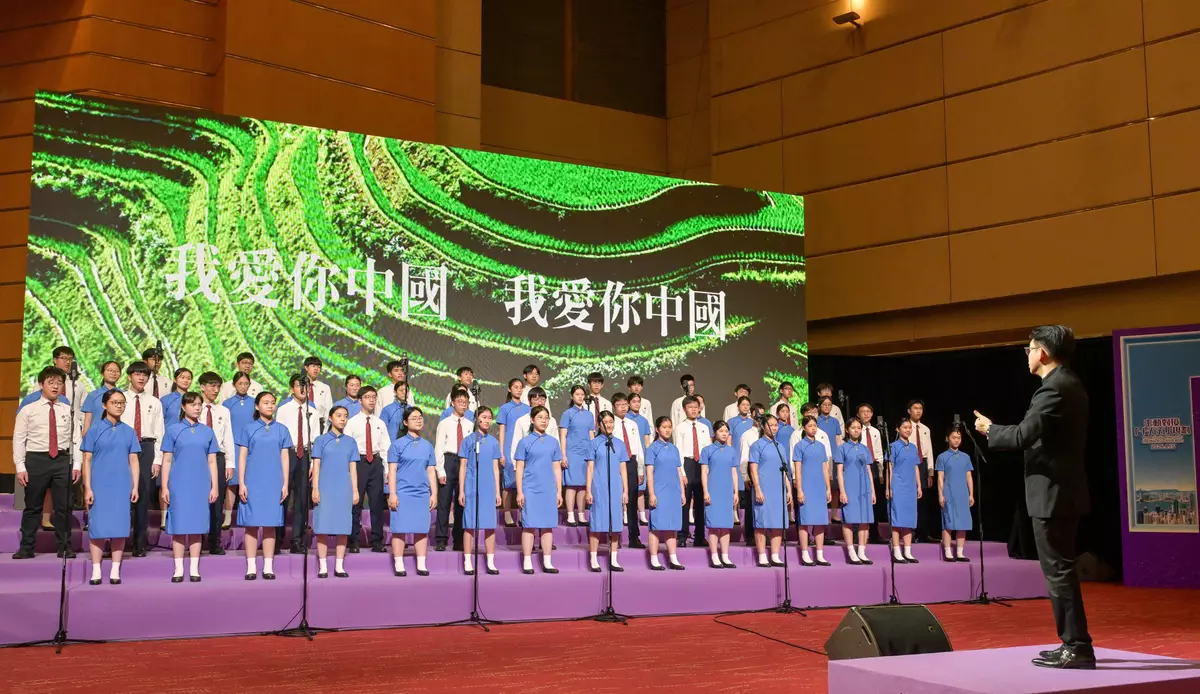
HKSAR organises activities for 2026 National Security Education Day (with photos/video) Source: HKSAR Government Press Releases
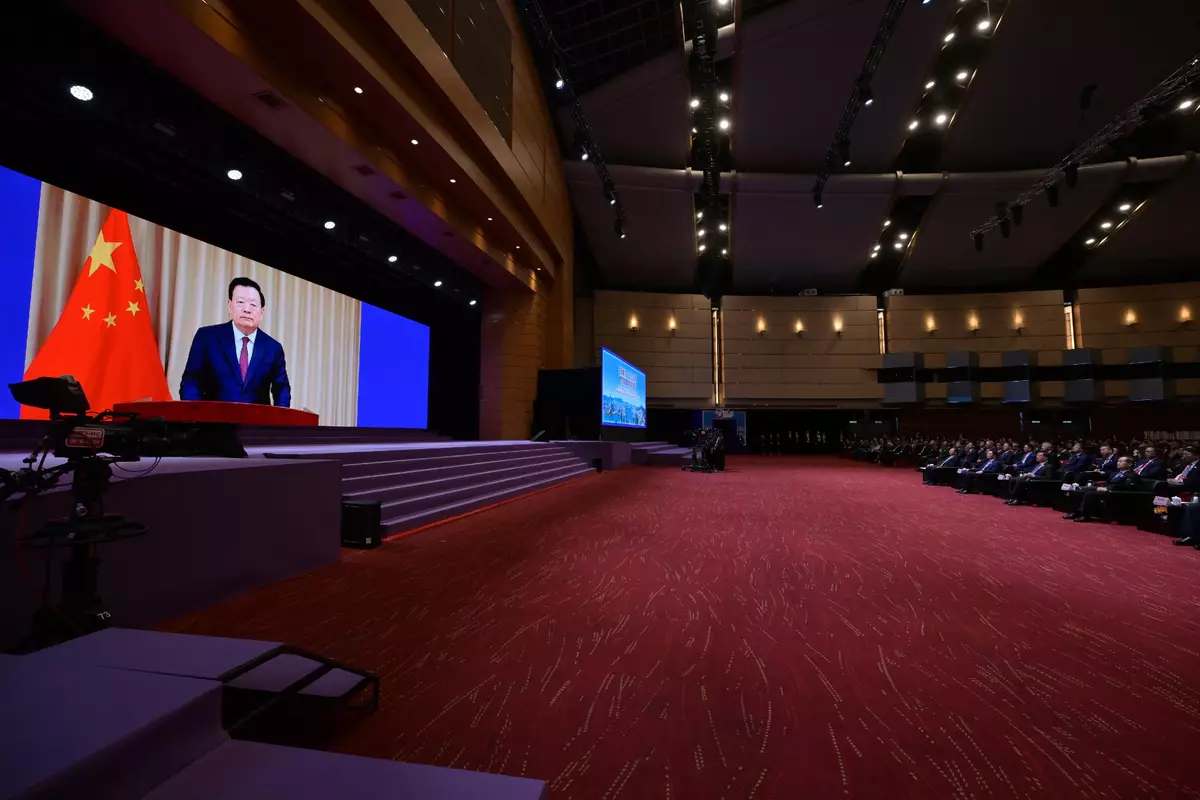
HKSAR organises activities for 2026 National Security Education Day (with photos/video) Source: HKSAR Government Press Releases