The first game of the World Cup will be played in Group A, with co-host Mexico kicking off the tournament against South Africa on June 11 in Mexico City.
The Czech Republic and South Korea complete the group.
Click to Gallery
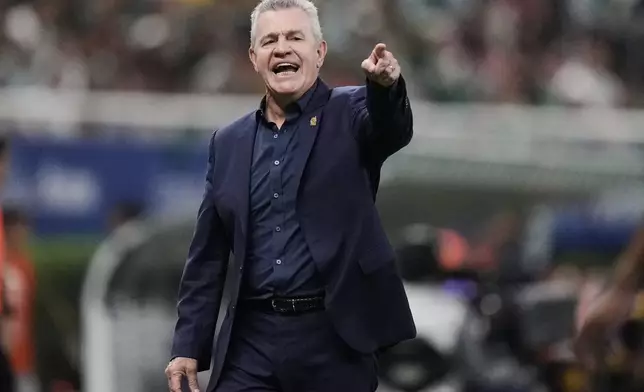
FILE - Mexico's coach Javier Aguirre directs his team during a international friendly soccer match against Ecuador at Akron stadium in Guadalajara, Mexico, Tuesday, Oct. 14, 2025. (AP Photo/Eduardo Verdugo, File)
FILE - Czech Republic's Vladimir Darida dribles during the Euro 2020 soccer championship group D match between the Czech Republic and England at Wembley stadium in London, Tuesday, June 22, 2021. (Justin Tallis/Pool Photo via AP, File)
FILE - South Korea's Lee Kang-in dribbles during a World Cup qualifying soccer match against Oman in Goyang, South Korea, Thursday, March 20, 2025. (AP Photo/Lee Jin-man, File)
FILE - South Africa's head coach Hugo Broos watches from the bench during the Africa Cup of Nations round of 16 soccer match between South Africa and Cameroon in Rabat, Morocco, Sunday, Jan. 4, 2026. (AP Photo/Themba Hadebe, File)
FILE - Mexico's Gilberto Mora controls the ball during a FIFA U-20 World Cup quater-final soccer match against Argentina at National Stadium in Santiago, Chile, Saturday, Oct. 11, 2025. (AP Photo/Esteban Felix, File)
Most of the games will be played in Mexico: two in Mexico City, two in Guadalajara and one in Monterrey. The one game outside Mexico will be in Atlanta on June 18 between the Czech Republic and South Africa.
Two of Mexico’s matches will be at the recently renovated Azteca Stadium, which hosted the World Cup finals in 1970 and 1986.
Hosting the World Cup for the first time in 40 years, Mexico will hope to rebound from a group-stage elimination four years ago in Qatar. Before that, it was eliminated in the round of 16 seven consecutive times between 1994 and 2018.
The only times Mexico made it to the last eight was when it hosted the tournament, in 1970 and 1986.
Much of the team’s hopes will rest on 17-year-old Gilberto Mora, who last year became the youngest ever to play for Mexico’s senior squad at 16.
The team will be coached by veteran Javier Aguirre, who took over the squad in 2024 for his third stint with the national team.
“I count myself lucky,” Aguirre, a former Mexico player, was quoted as saying by FIFA.com. “Every day I’m grateful to be here, doing what I’m doing, because I’m Mexican… and because the best moment in my coaching career is on the horizon. As a player, nothing could top playing at a home World Cup.”
South Africa is back in the World Cup for the first time since hosting the tournament in 2010.
Despite an upset 2-1 win against France, it became the first host nation to be eliminated in the group stage.
South Africa’s only other appearances had been in 1998 and 2002, when it also failed to reach the knockout rounds.
The South Africans made it to the World Cup this year by edging African powerhouse Nigeria in their qualifying group.
The team will be coached by Belgian Hugo Broos, who has been in charge of the Bafana Bafana since 2021. The squad is mostly made up of players from local clubs.
South Korea will make its 12th World Cup appearance — the most of any Asian country. Its best result was a fourth-place finish at the tournament it co-hosted with Japan in 2002.
Since then, the South Koreans have never gone beyond the round of 16. Four years ago in Qatar, they finished second to Portugal in a group that also included Uruguay and Ghana. They were eliminated by Brazil 4-1 in the last 16.
The team was undefeated in Asian qualifying but hasn't impressed in its recent World Cup warmups, losing to Ivory Coast 4-0 and Austria 1-0 last month.
The team's biggest star and captain is former Tottenham attacker Son Heung-min, who now plays for Los Angeles FC in Major League Soccer. Other players to watch include Paris Saint-Germain midfielder Lee Kang-in and Bayern Munich defender Kim Min-jae.
Coach Hong Myung-bo has been in charge since 2024 in his second stint with South Korea. The former defender was the captain of the South Korea team that reached the semifinals in 2002.
The Czech Republic needed a penalty shootout win over Denmark in the European playoffs to make it to its first World Cup since 2006.
It arrived at the 2006 tournament as one of the highest-ranked teams but wasn't able to get past a group stage that included Italy, Ghana and the United States.
Former captain Vladimír Darida, 35, agreed to come out of international retirement to help the team qualify for the World Cup. Darida had left the national team in 2021 after the Czechs were eliminated in the quarterfinals of the European Championship.
The team’s coach is 74-year-old Miroslav Koubek, who replaced Ivan Hašek late last year after the team’s 2-1 loss to minnow Faeroe Islands in World Cup qualifying.
AP World Cup coverage: https://apnews.com/hub/fifa-world-cup
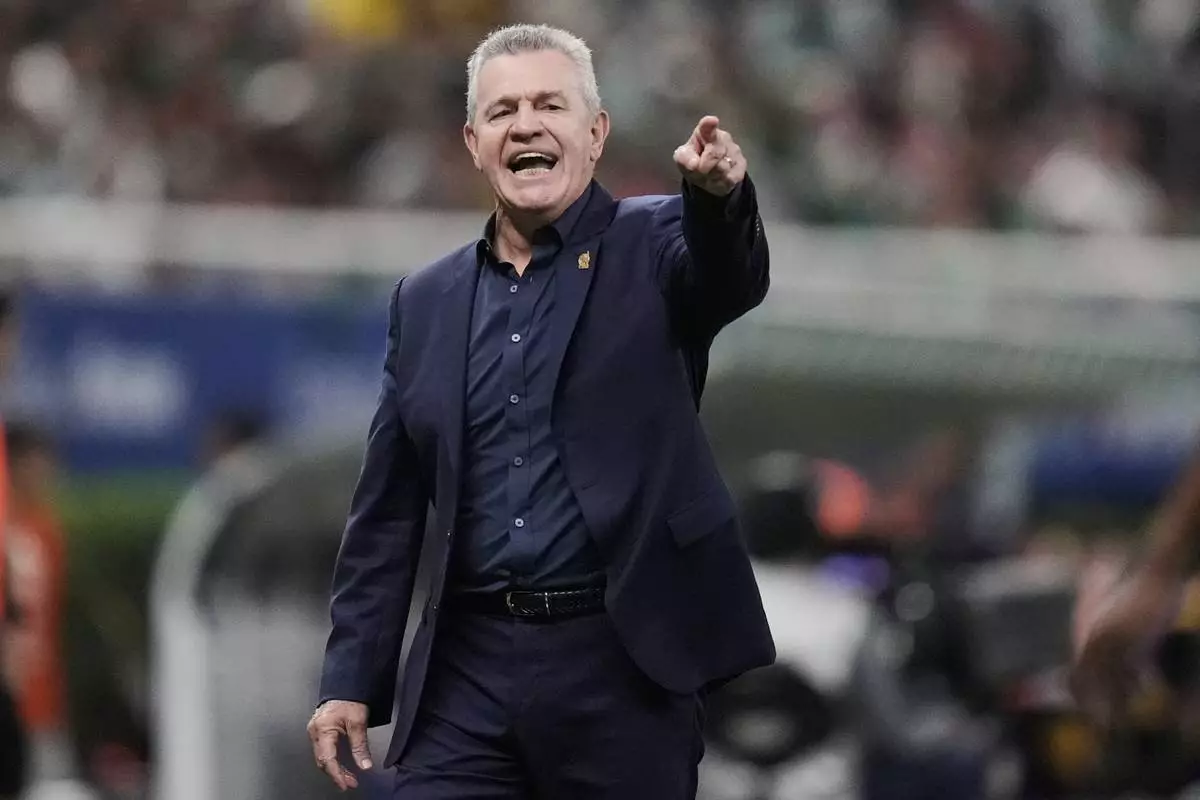
FILE - Mexico's coach Javier Aguirre directs his team during a international friendly soccer match against Ecuador at Akron stadium in Guadalajara, Mexico, Tuesday, Oct. 14, 2025. (AP Photo/Eduardo Verdugo, File)

FILE - Czech Republic's Vladimir Darida dribles during the Euro 2020 soccer championship group D match between the Czech Republic and England at Wembley stadium in London, Tuesday, June 22, 2021. (Justin Tallis/Pool Photo via AP, File)

FILE - South Korea's Lee Kang-in dribbles during a World Cup qualifying soccer match against Oman in Goyang, South Korea, Thursday, March 20, 2025. (AP Photo/Lee Jin-man, File)
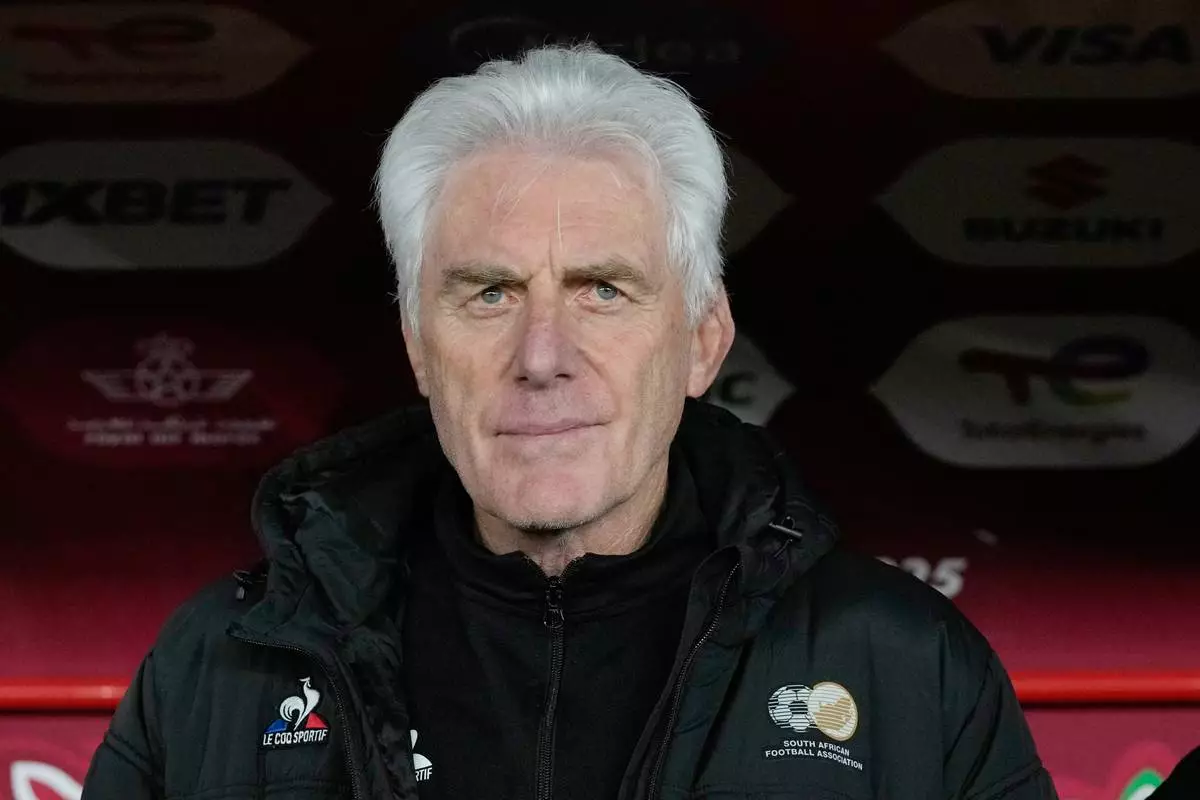
FILE - South Africa's head coach Hugo Broos watches from the bench during the Africa Cup of Nations round of 16 soccer match between South Africa and Cameroon in Rabat, Morocco, Sunday, Jan. 4, 2026. (AP Photo/Themba Hadebe, File)

FILE - Mexico's Gilberto Mora controls the ball during a FIFA U-20 World Cup quater-final soccer match against Argentina at National Stadium in Santiago, Chile, Saturday, Oct. 11, 2025. (AP Photo/Esteban Felix, File)
Ships have stopped moving through the Strait of Hormuz, an intelligence firm said, and oil prices resumed their climb Monday after U.S. President Donald Trump announced on social media that the United States would blockade the waterway.
U.S. Central Command later said the blockade would involve all vessels entering or departing Iranian ports and coastal areas, and that it would still allow ships traveling between non-Iranian ports to transit the strait, a step down from the president’s earlier threat to blockade the entire strait.
Trump confirmed the timing and some details of the CENTCOM statement in a post on his social media site early Monday.
Iran’s Revolutionary Guard said the strait remained under Iran’s “full control” and was open for non-military vessels, but military ones would get a “forceful response,” two semiofficial Iranian news agencies reported.
The moves came after marathon U.S.-Iran ceasefire talks in Pakistan ended without an agreement, setting the stage for a showdown. Iranian parliament speaker, Mohammad Bagher Qalibaf, who led Iran’s side in the talks, addressed Trump in a statement on his return to Iran: “If you fight, we will fight.”
The war, which is entering its seventh week, has killed thousands of people and shaken global markets.
Here is the latest:
A labor union said Monday that thousands of crew members stuck on vessels in and around the Strait of Hormuz are running short on basics and growing increasingly desperate.
Milind Kandalgaonkar, general secretary of the National Union of Seafarers of India, said that nearly 20,000 Indian crew members were stranded in the region.
“Many of these seafarers are reportedly facing acute shortages of food, potable water, and essential medical supplies,” he wrote in a letter to India’s national shipping board. He urged authorities to ensure supplies can reach the vessels, protect seafarers’ welfare and prepare evacuation plans if needed.
Tanker owners say the ceasefire has done little to ease conditions for mariners in the strait, where crews report dwindling food and fresh water.
Israel’s military said Monday said its troops have surrounded what they say is Hezbollah military infrastructure and have started ground operations
in the strategic southern Lebanese town of Bint Jbeil and its surrounding areas, killing over 100 Hezbollah fighters.
Hezbollah did not immediately publicly announce anyone killed among their ranks, and Israel did not immediately acknowledge any fatalities among their forces. Hezbollah has not commented on the developments.
On Sunday Hezbollah claimed at least five attacks on Israeli troops in the town and its outskirts with rockets, artillery, and exploding drones. According to the group’s statements, the Israeli troops were positioned near a school, a hospital, and juncture that surrounds the heart of Bint Jbeil. The Israeli military said it attacked Hezbollah forces.
The town overlooks the UN-mandated Blue Line that divides Israel and Lebanon, just over 2 miles away, making it a strategic point for the Iran-backed group.
German Chancellor Friedrich Merz has criticized the peace talks between the U.S. and Iran in Pakistan last week as not well prepared.
“I was not surprised by the decision to break off the talks in Islamabad,” he told reporters in Berlin on Monday.
“From the very beginning, I didn’t get the impression that they were really well prepared,” the chancellor said without further elaborating who exactly he was referring to with this criticism.
The U.S. blockade of Iranian ports could prompt the Iranian-backed Houthi rebels in Yemen to disrupt transit through Bab el-Mandeb Strait, an analyst has warned.
“If the U.S. moves to impose a blockade on Iranian ports and Iran starts feeling the pain, the Houthis are very likely to escalate in the Bab el-Mandeb,” said Ahmed Nagi, a senior analyst for Yemen at the International Crisis Group think-tank.
The closure of Bab el-Mandeb would add “another layer” of pressure on the global shipping industry, he said.
The offices of the Lebanese Red Cross in Tyre were hit by a drone strike on Monday, Lebanon’s state-run National News Agency reported.
The strike in the southern coastal city killed a wounded person being transported and damaged Red Cross vehicles. The Israeli military did not immediately reply to inquires from The Associated Press.
The funeral was being held on Monday for a Lebanese Red Cross volunteer killed on Sunday in an Israeli strike that hit his team while on a mission in Beit Yahoun.
The Lebanese Red Cross operates in war-torn southern Lebanon in coordination with the UN peacekeeping mission in Lebanon, UNIFIL, and the Lebanese military.
Japan’s Prime Minister Sanae Takaichi held telephone talks Monday with her Pakistani counterpart, Shehbaz Sharif, during which she expressed support for his mediation efforts for hosting U.S.-Iran talks in Islamabad.
Takaichi said she reiterated Japan’s position that what is most important is to promptly reach a final agreement and to de-escalate the situation through talks to ensure safe passages through the Strait of Hormuz.
Sharif said Pakistan hopes to cooperate with Japan in the effort, Takaichi said.
France and the U.K. will organize a conference with partners ready to contribute to a peaceful multinational mission to help restore navigation in the Strait of Hormuz, President Emmanuel Macron said.
In a post on X, Macron stressed “the need to restore free and unimpeded navigation through the Strait of Hormuz as quickly as possible.” He called for a “peaceful multinational mission,” adding: “This strictly defensive mission, separate from the warring parties to the conflict, is intended to be deployed as soon as circumstances permit.”
France and the U.K. have in recent years been working to set up an operation that would allow ships to cross the Strait of Hormuz once the fighting ends.
The roughly 17-cent (20 U.S. cent) per-liter reduction is intended to help cushion the impact of high energy prices linked to the Iran war.
Chancellor Friedrich Merz said Monday the measure “will very quickly improve the situation for drivers and businesses across the country, and especially for those who spend a great deal of time on the road, primarily for work-related reasons.”
Prime Minister Keir Starmer says Britain will not be part of a U.S. blockade of Iranian ports in response to the closing of the Strait of Hormuz. Starmer told BBC radio on Monday that “we’re not supporting the blockade” and “we’re not getting dragged into the war.”
He said U.K. efforts remain focused on reopening the key shipping route, whose closure has sent prices for oil and other commodities soaring.
Starmer spoke after U.S. President Donald Trump said Britain would send minesweepers to the strait.
Britain says it might help with mine-clearing in the waterway, but only after the fighting stops. Starmer said all Britain’s military capability is focused on getting the strait “fully open.” The U.K. is working with dozens of other countries on plans to restore security to shipping through the key oil route after the conflict.
Japan has expressed support for the U.S.-Iran talks held in Pakistan over the weekend and that it continues to closely watch further development in hopes of an early de-escalation.
Chief Cabinet Secretary Minoru Kihara told reporters Monday that his government believes that the most important thing is actually to achieve de-escalation, including ensuring the safe passage through the Strait of Hormuz.
“We hope a final agreement will be reached swiftly through diplomatic efforts,” Kihara said.
Kihara, asked if Japan is considering sending Japanese warships to join minesweeping effort in the key waterway, said nothing has been decided.
Southeast Asian countries urged the United States and Iran Monday to keep going with peace negotiations, enforce a ceasefire and restore the safe passage of ships, seafarers and aircraft in the Strait of Hormuz.
The foreign ministers of the Association of Southeast Asian Nations made the urgent plea as they held an emergency video conference, the second in recent weeks, to assess the impact of the war in the Middle East, including soaring fuel prices, and how they could cooperate in the face of global crises.
The 11-nation bloc reminded “the obligations of all states to resolve their differences through peaceful means, to respect the sovereignty and territorial integrity of all nations, to protect civilians and civilian infrastructure in armed conflicts.”
It called “for the full and effective implementation of the ceasefire, aimed at preventing further suffering and loss of lives, ensuring maritime security and freedom of navigation and overflight.”
Iran threatened ports in the Persian Gulf and the Gulf of Oman after the U.S. announced a blockade on Iran’s ports and coastline.
“Security in the Persian Gulf and the Sea of Oman is either for everyone or for NO ONE,” according to the Islamic Republic of Iran Broadcasting, IRIB. “NO PORT in the region will be safe,” the Iranian military said.
Oil prices started climbing and Asian markets mostly declined Monday as the U.S. military prepared to blockade ships bound for or coming from Iranian ports and transiting the Strait of Hormuz.
On Monday, benchmark U.S. crude jumped $6.71 or nearly 7% to $103.28 a barrel. Brent crude, the international standard, rose $6.20, or 6.5%, to $101.40 a barrel.
Oil prices have been rising as shipping through the strait has essentially stalled since late February. Brent crude oil, the international standard, has gone from roughly $70 per barrel before the war in late February to more than $119 at times.
Japan’s benchmark Nikkei 225 lost 0.7% to finish at 56,502.77. Australia’s S&P/ASX 200 shed 0.4% to 8,926.00. South Korea’s Kospi dipped 0.9% to 5,808.62. Hong Kong’s Hang Seng slipped 1.1% to 25,613.85, while the Shanghai Composite was little changed, inching up less than 0.1% to 3,988.56.
Iraq’s oil exports plunged in March to 18.6 million barrels, down from 99.87 million in February due to the closure of the Strait of Hormuz, according to official figures released Monday.
The state-run Organization for Marketing of Oil said revenues also have fallen to just $1.95 billion, down from over $6.81 billion.
The figures showed that exports from the Kurdistan Region through Turkey’s Ceyhan port also dropped to 1.27 million barrels, down from 5.55 million barrels in February.
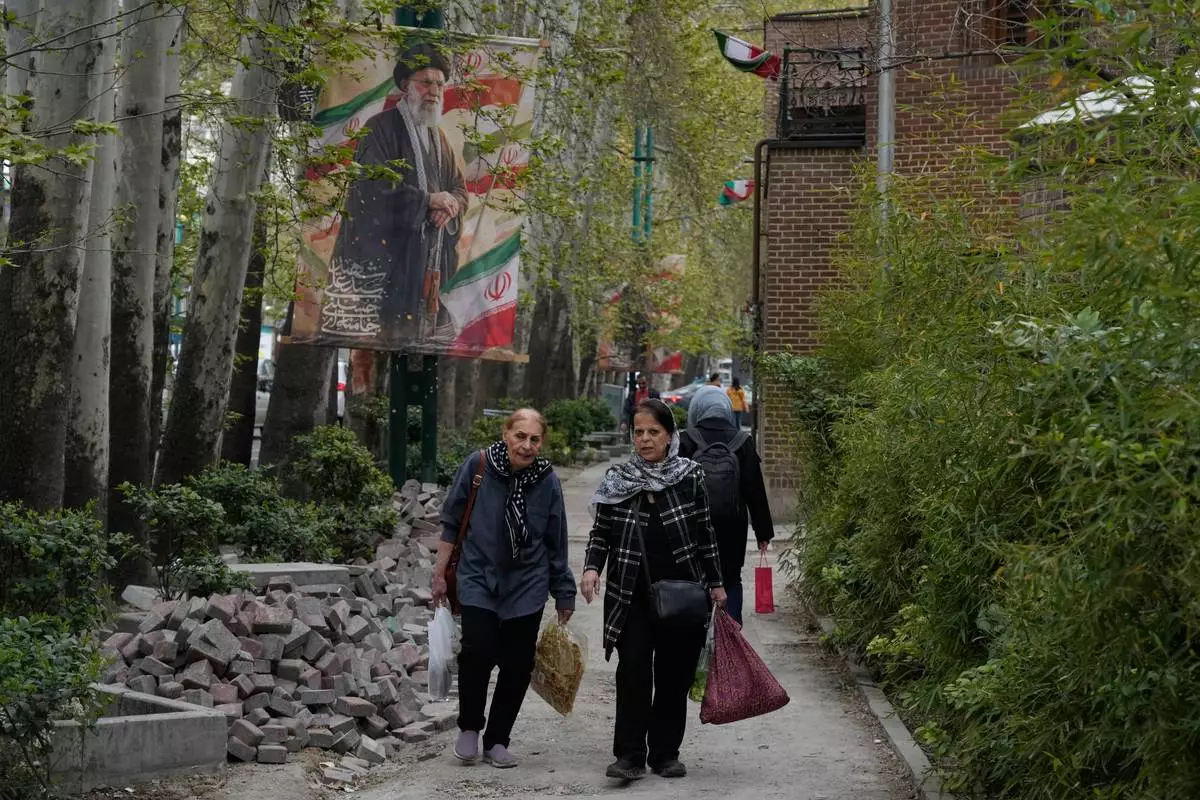
Women walk past a banner depicting the late Iranian Supreme Leader Ayatollah Ali Khamenei, who was killed in the U.S. and Israel strikes on Feb. 28, in northern Tehran, Iran, Sunday, April 12, 2026. (AP Photo/Vahid Salemi)
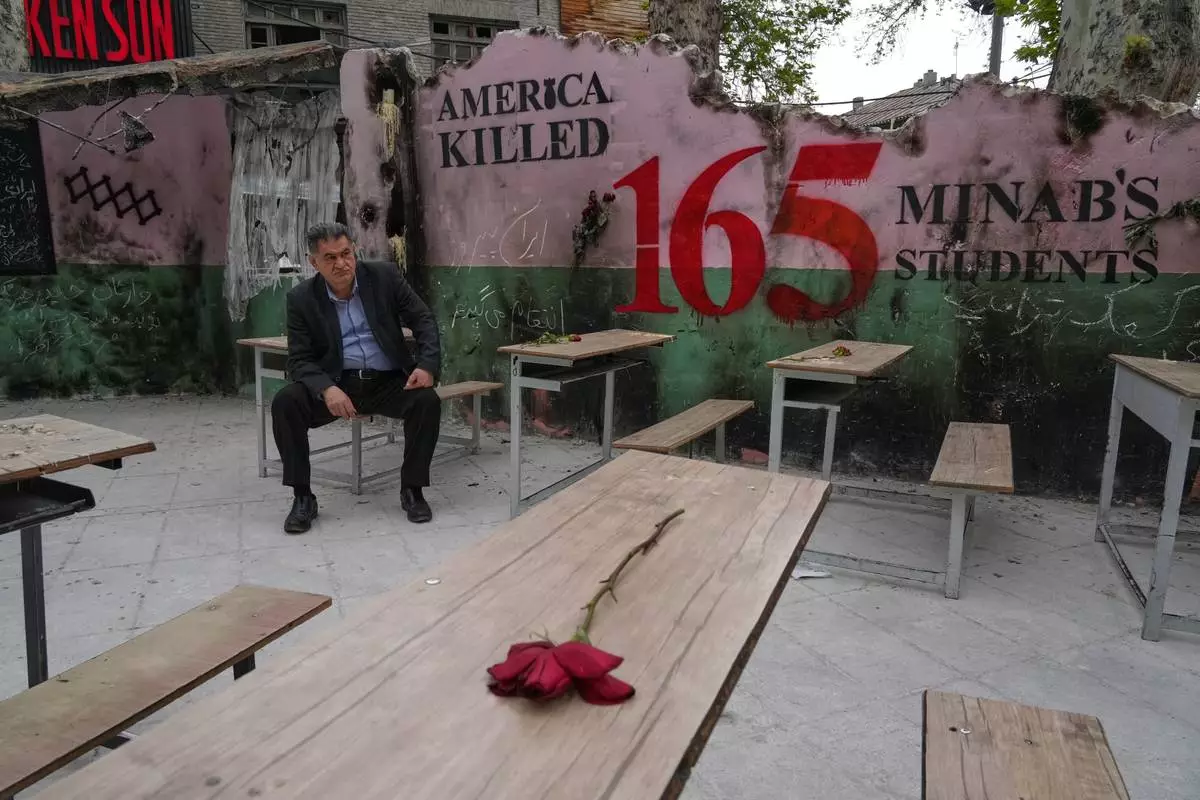
A man sits on a bench in a memorial, set for the school children who were killed during a strike on a school in southern town of Minab on Feb. 28, in northern Tehran, Iran, Sunday, April 12, 2026. (AP Photo/Vahid Salemi)
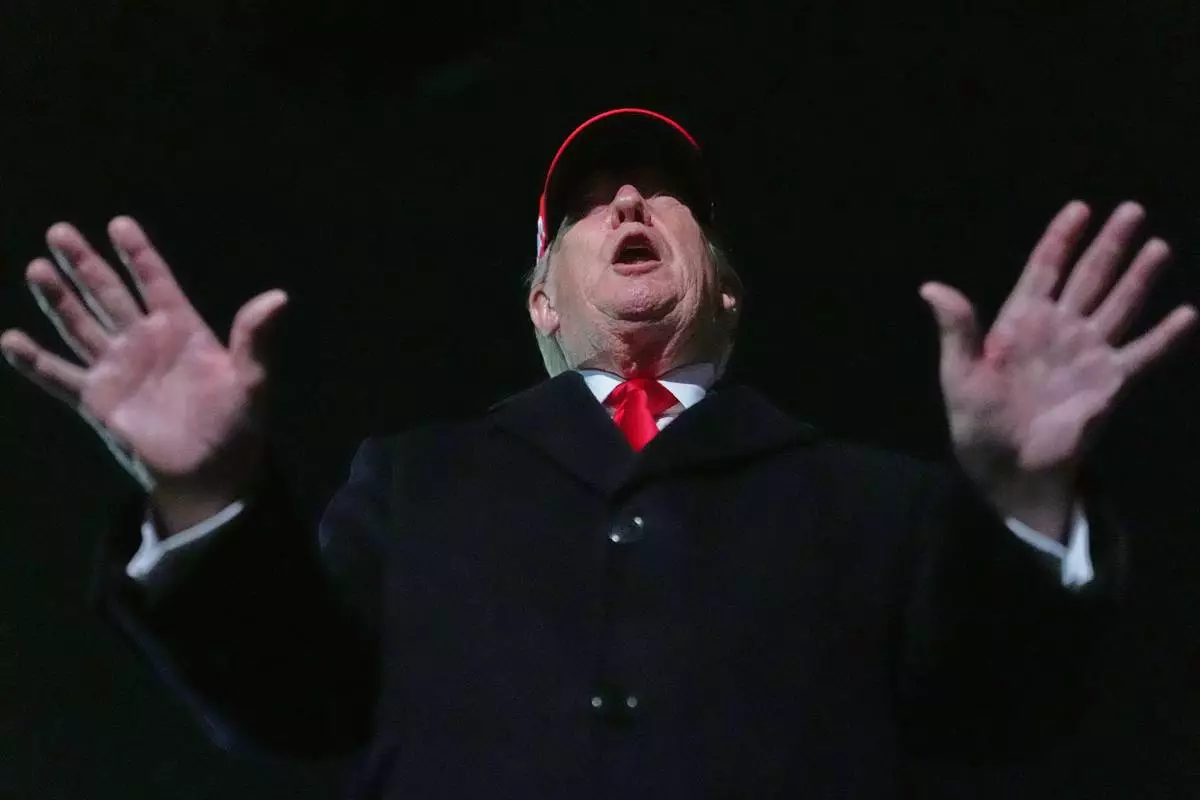
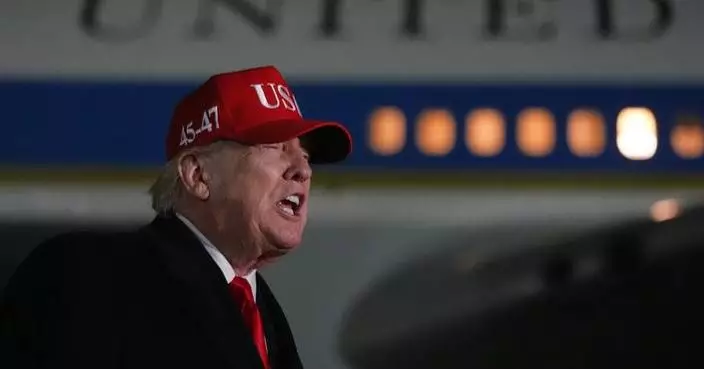
President Donald Trump speaks with reporters at Joint Base Andrews, Md., Sunday, April 12, 2026, after he returned from Miami. (AP Photo/Julia Demaree Nikhinson)
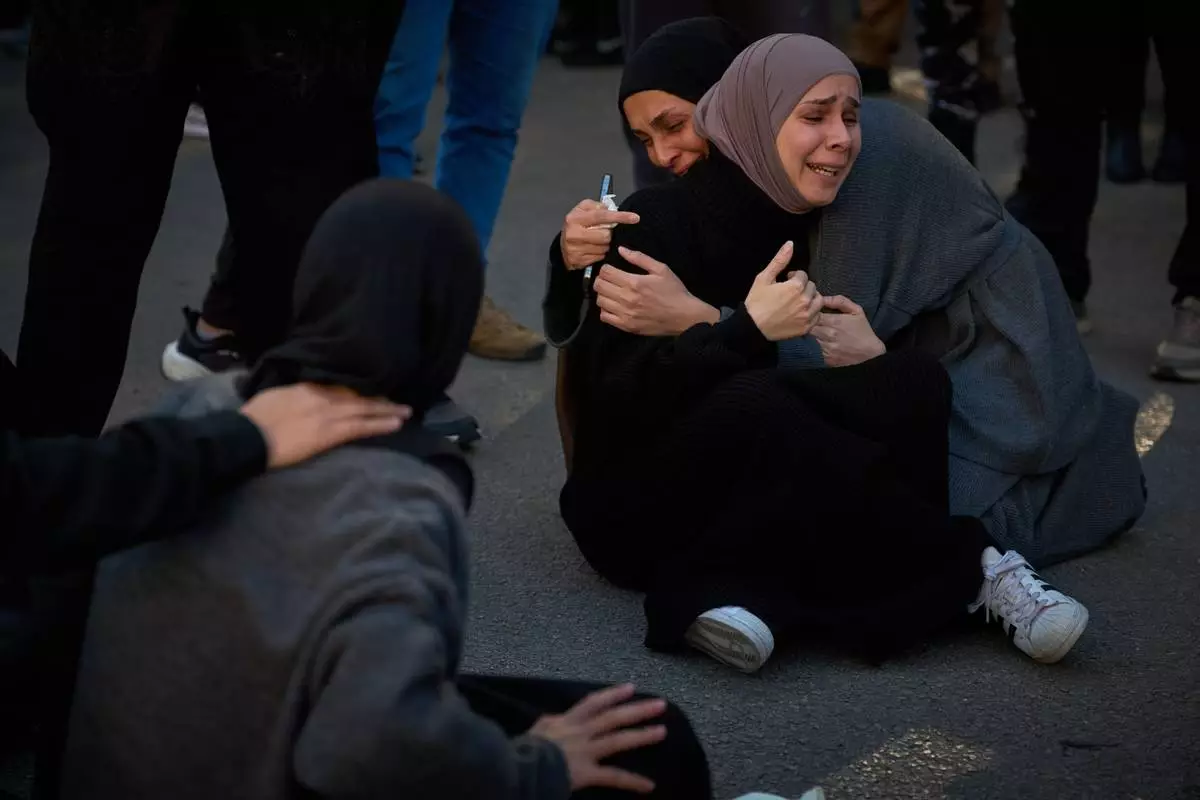
Mourners react during the funeral of 13 state security officers killed the previous day in an Israeli strike in Lebanon's coastal city of Sidon, Saturday, April 11, 2026. (AP Photo/Emilio Morenatti)