MANCHESTER, England (AP) — Noah Okafor scored twice in the first half hour as Leeds United beat Manchester United 2-1 at Old Trafford to climb six points clear of the Premier League relegation zone on Monday.
It was the first time Leeds has won a league match at Old Trafford since 1981 and the Yorkshire club moved up to 16th place in the 20-team table.
Click to Gallery
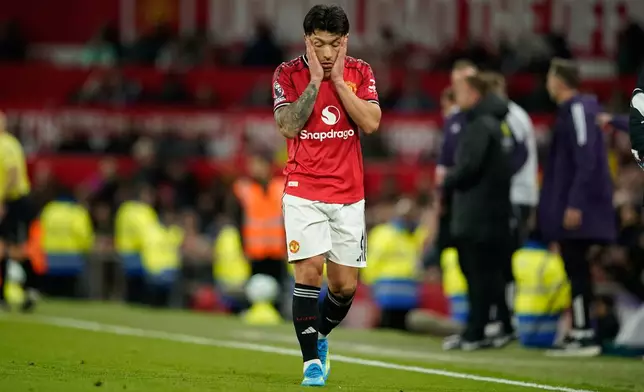
Manchester United's Lisandro Martinez reacts after receiveng a red card during the Premiier League soccer match between Manchester United and Leeds in Manchester, England, Monday, April 13, 2026. (AP Photo/Dave Thompson)
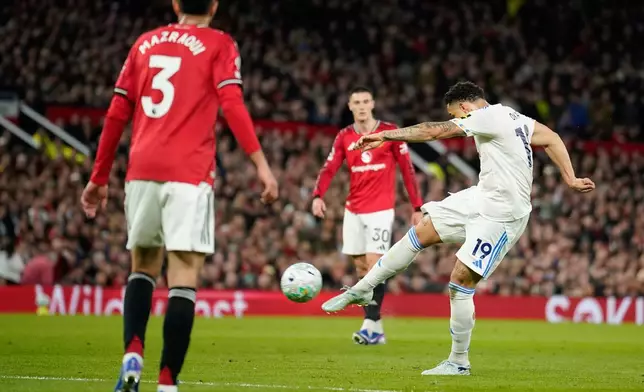
Leeds' Noah Okafor scores during the Premiier League soccer match between Manchester United and Leeds in Manchester, England, Monday, April 13, 2026. (AP Photo/Dave Thompson)
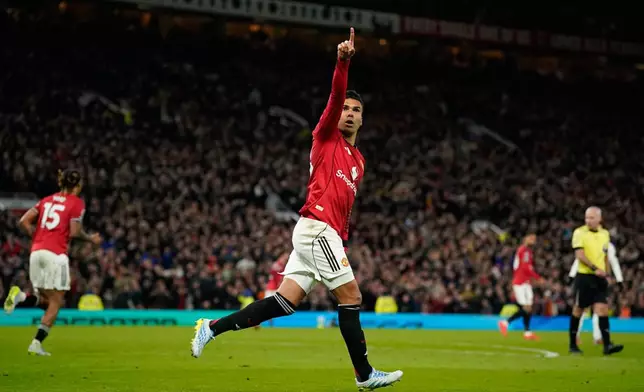
Manchester United's Casemiro celebrates after scoring during the Premiier League soccer match between Manchester United and Leeds in Manchester, England, Monday, April 13, 2026. (AP Photo/Dave Thompson)
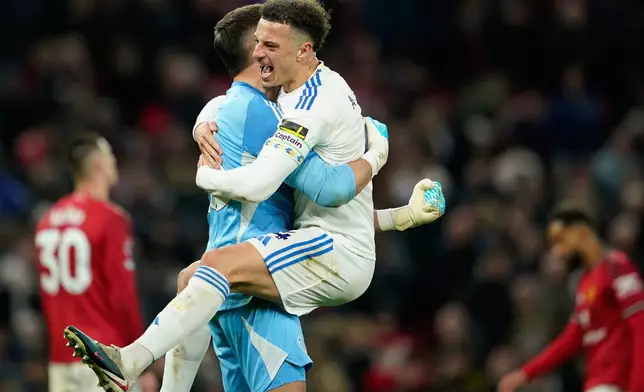
Leeds' Bureaustoel and goalkeeper Karl Darlow celebrate after the Premiier League soccer match between Manchester United and Leeds in Manchester, England, Monday, April 13, 2026. (AP Photo/Dave Thompson)
Leeds' Noah Okafor celebrates after scoring during the Premiier League soccer match between Manchester United and Leeds in Manchester, England, Monday, April 13, 2026. (AP Photo/Dave Thompson)
“I feel tired and relieved but also proud of the boys," Leeds coach Daniel Farke said. “It was a fantastic performance. We are into the crunch time of the season and you have to keep your nerve and stick to your plan.”
Manchester remained in third but missed a chance to move clear of Aston Villa, with which it is tied on points.
Leeds started on the front foot and almost scored in the second minute but Senne Lammers made an excellent point-blank save from Dominic Calvert-Lewin.
However, its pressure paid off two minutes later when Okafor side-footed home with style after everyone missed Jayden Bogle’s deep cross from the right.
Leeds was all over United during the opening half hour and a second arrived in the 29th. A ball was half cleared to Okafor, whose first-time shot from outside the box took a slight deflection as it flew past Lammers and into the far corner.
United interim coach Michael Carrick had never lost a game at home since replacing Rubem Amorim in mid-January and his task got even harder 10 minutes into the second period when Lisandro Martínez was sent off for pulling Calvert-Lewin’s hair.
However, the 10 men kept plugging away in what was a pulsating end-to-end encounter and got a goal back after 68 minutes when Casemiro bulleted a header past Karl Darlow from a Ruben Fernandes cross.
Both sides had more chances in a thrilling last 20 minutes. United had two shots knocked off the goal-line and Leeds failed to make the most of its frequent counterattacks but neither could find the net again.
“We didn’t start the game particularly well," Carrick said. “We didn’t quite have the rhythm or click.
“I’m pleased the way we went about the second half but it was more difficult when you are a man down.”
Farke, meanwhile, was ecstatic at taking all three points from one of Leeds' fiercest rivals at such a crucial juncture in a testing campaign.
“A win is always good for the mood and the confidence. It is also good for the table," he said.
“A few more points are needed but tonight we edge three points closer. Nothing is achieved yet. We have to stay humbled, grounded and hungry to make sure we get as many points as possible.”
AP soccer: https://apnews.com/hub/soccer
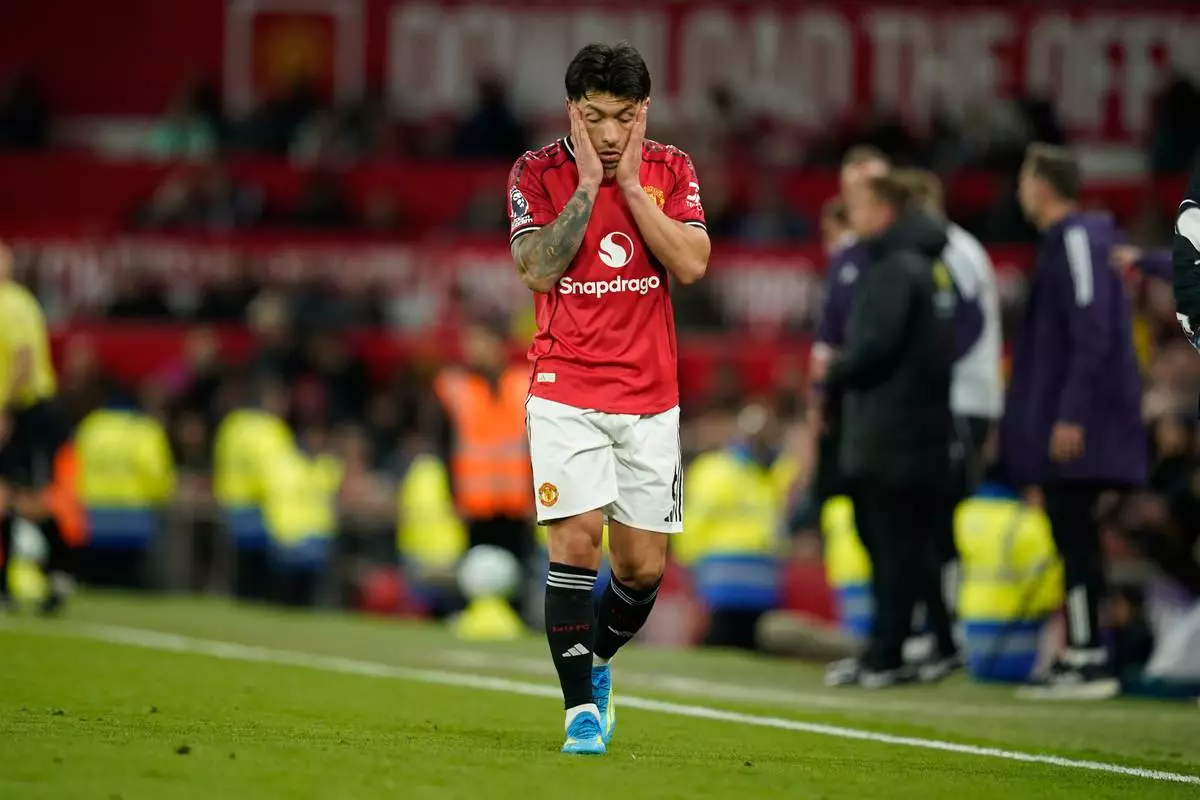
Manchester United's Lisandro Martinez reacts after receiveng a red card during the Premiier League soccer match between Manchester United and Leeds in Manchester, England, Monday, April 13, 2026. (AP Photo/Dave Thompson)
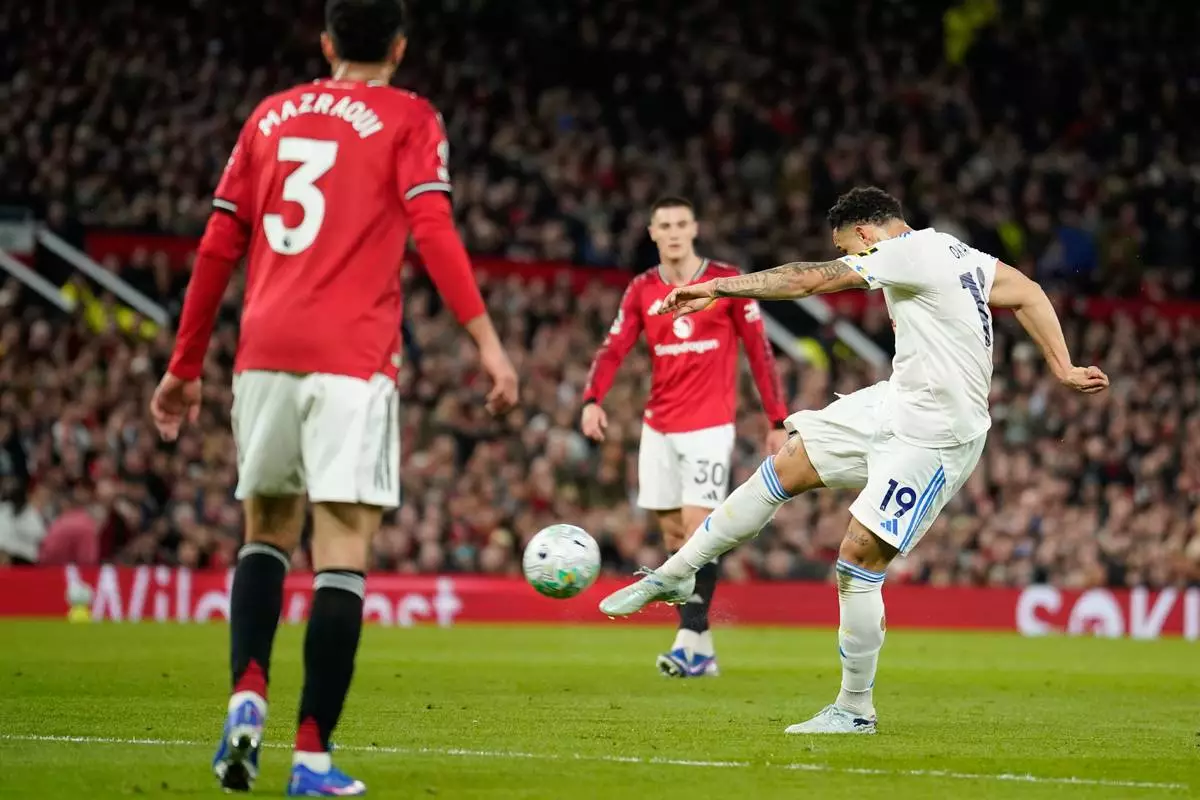
Leeds' Noah Okafor scores during the Premiier League soccer match between Manchester United and Leeds in Manchester, England, Monday, April 13, 2026. (AP Photo/Dave Thompson)
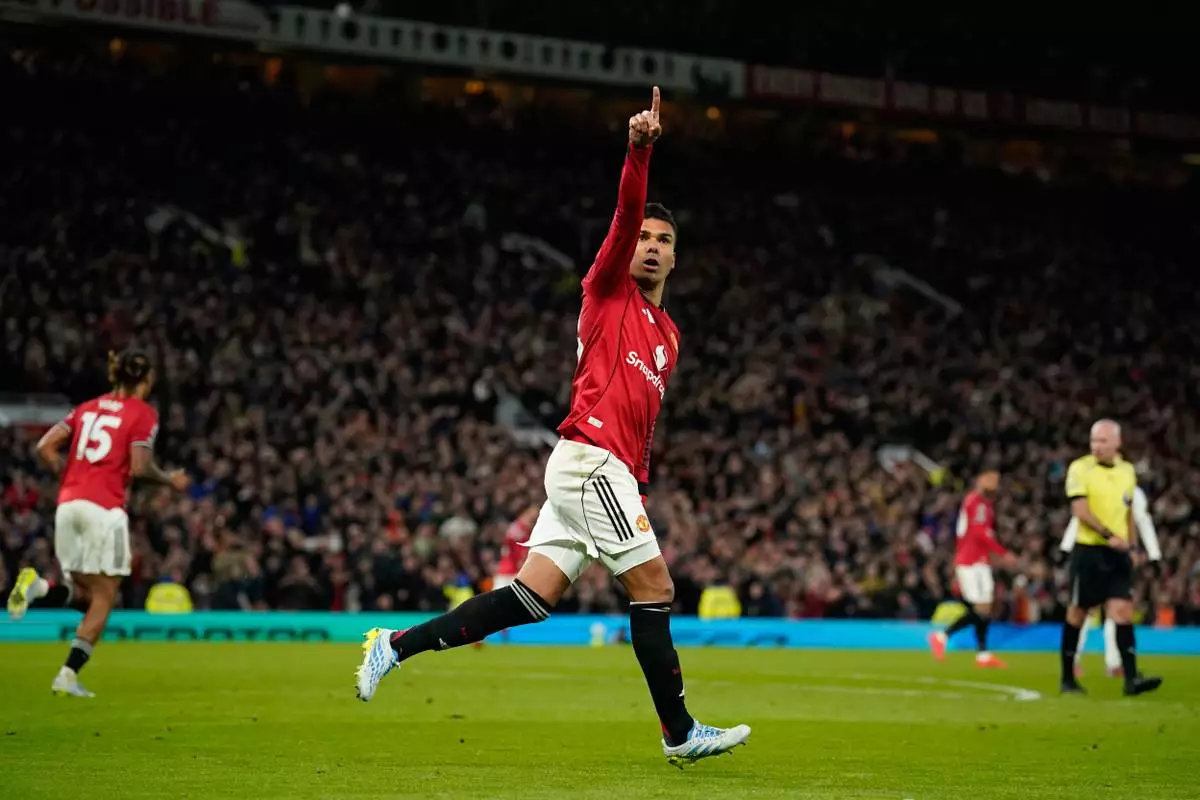
Manchester United's Casemiro celebrates after scoring during the Premiier League soccer match between Manchester United and Leeds in Manchester, England, Monday, April 13, 2026. (AP Photo/Dave Thompson)
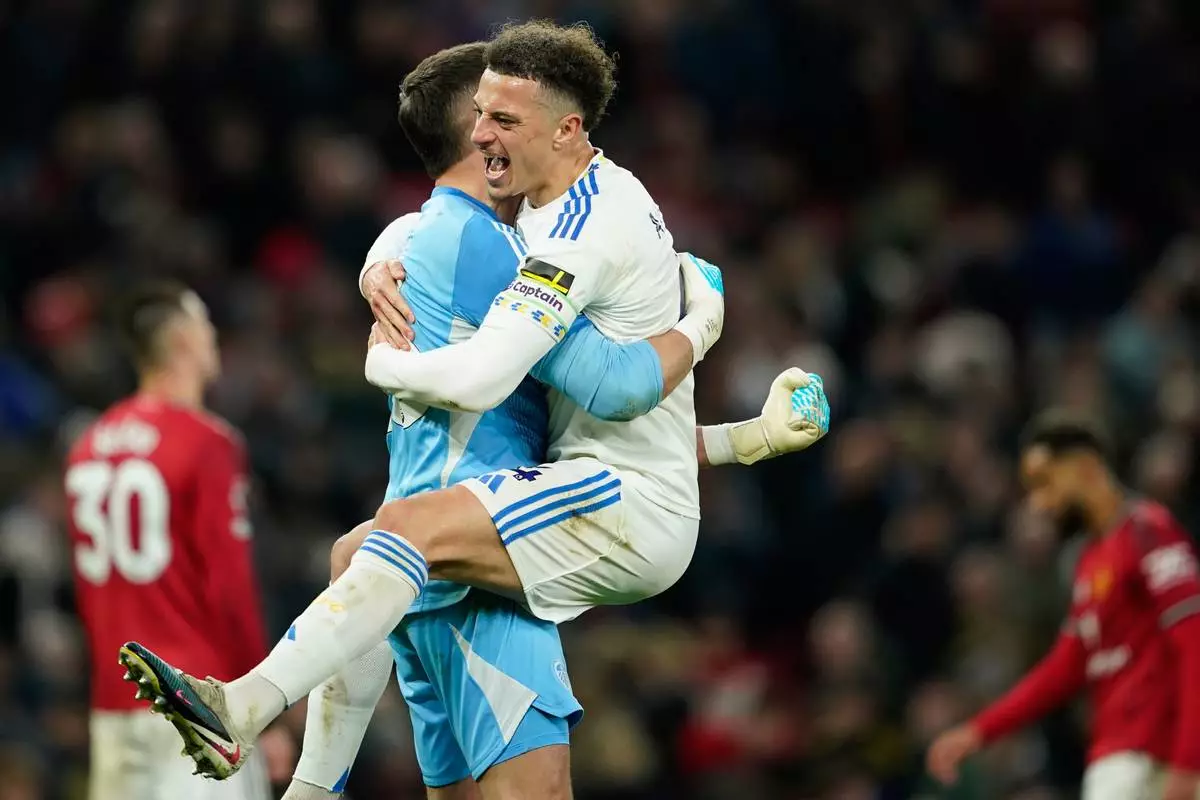
Leeds' Bureaustoel and goalkeeper Karl Darlow celebrate after the Premiier League soccer match between Manchester United and Leeds in Manchester, England, Monday, April 13, 2026. (AP Photo/Dave Thompson)

Leeds' Noah Okafor celebrates after scoring during the Premiier League soccer match between Manchester United and Leeds in Manchester, England, Monday, April 13, 2026. (AP Photo/Dave Thompson)
CAIRO (AP) — Pakistan’s army chief met Wednesday in Tehran with Iran's foreign minister in the latest diplomatic move to ease tensions in the Middle East and arrange a second round of negotiations between the United States and Iran after almost seven weeks of war.
The White House said any further talks would likely take place in the Pakistani capital of Islamabad, though no decision had been made on whether to resume negotiations.
The U.S. naval blockade of Iranian ports continued for a third day. The Trump administration warned of new economic sanctions on countries doing business with Iran, saying the Islamic Republic would feel the “financial equivalent” of a bombing campaign.
Pakistan has emerged as a key mediator in the conflict after it hosted rare direct talks between the U.S. and Iran in Islamabad, a move authorities said helped narrow differences between the two sides. Mediators are seeking a new round before a ceasefire is set to expire next week.
The Pakistani military said the delegation sent to Iran included the country’s interior minister and other senior security officials, but provided no details.
Even as the U.S. blockade on Iranian ports and renewed Iranian threats strained the ceasefire agreement, regional officials reported progress, telling The Associated Press the United States and Iran had an “in principle agreement” to extend it to allow for more diplomacy. They spoke on condition of anonymity to discuss the matter.
Iran's foreign minister, Abbas Araghchi, took part in a preliminary meeting with Asim Munir, Pakistan's army chief of staff, Iranian state media reported. It said talks would continue Thursday.
But even as mediators worked for peace, tensions simmered.
The commander of Iran’s joint military command, Ali Abdollahi, threatened to halt trade in the region if the U.S. does not lift its naval blockade.
In a move aimed at inflicting more economic pain on Iran, U.S. Treasury Secretary Scott Bessent said the White House has warned countries and private companies they could face sanctions for doing business with Tehran.
White House press secretary Karoline Leavitt said the U.S. had not “formally requested an extension of the ceasefire" with Iran, which is set to expire Tuesday.
"At this moment, we remain very much engaged in these negotiations, in these talks,” Leavitt said, adding that any further in-person talks “would very likely” return to Islamabad.
Mediators are pushing for a compromise on three main sticking points that derailed direct talks last weekend — Iran’s nuclear program, the Strait of Hormuz and compensation for wartime damages, according to a regional official involved in the mediation efforts.
Iranian Foreign Ministry spokesman Esmail Baghaei said Iran is open to discussing the type and level of its uranium enrichment, but his country “based on its needs, must be able to continue enrichment,” Iranian state media reported.
The negotiating team led by Vice President JD Vance urged Iran to agree to a 20-year moratorium on uranium enrichment as part of a potential deal to end the war, according to the regional official and a person briefed on the matter.
The Iranians countered with an offer to suspend enrichment for five years, said the officials, who spoke on condition of anonymity because they were not authorized to comment publicly on the negotiations.
The White House rejected that. The dueling proposals were first reported by The New York Times.
The fighting has killed at least 3,000 people in Iran, more than 2,100 in Lebanon, 23 in Israel and more than a dozen in Gulf Arab states. Thirteen U.S. service members have also been killed.
The war has jolted markets and rattled the global economy as shipping has been cut off and airstrikes have torn through military and civilian infrastructure across the region. Oil prices have fallen amid hopes for an end to fighting, and U.S. stocks on Wednesday surpassed records set in January.
Yet the future of the fragile ceasefire still hung in the balance as the U.S. pressed ahead with its blockade, which threatens to sever Iran from economic lifelines.
“I think they want to make a deal very badly,” U.S. President Donald Trump said in an interview Wednesday on Fox Business Network’s “Mornings with Maria."
In a social media post, Trump said China has agreed not to provide weapons to Iran as reports circulated that Beijing has considered transferring arms.
China has long supported Iran’s ballistic missile program and backed it with dual-use industrial components that can be used for missile production, according to the U.S. government.
U.S. Central Command said Wednesday that no ships made it past the blockade in the first 48 hours, while nine merchant vessels complied with direction from U.S. forces to turn around and reenter Iranian waters.
The blockade is intended to pressure Iran, which has exported millions of barrels of oil, mostly to Asia, since the war began Feb. 28. Much of it has likely been carried by so-called dark transits that evade sanctions and oversight, providing cash that’s been vital to keeping Iran running.
Since the war began, Iran has curtailed maritime traffic as most commercial vessels have avoided the Strait of Hormuz, through which a fifth of global oil transits in peacetime. Tehran's effective closure of the strait sent oil prices skyrocketing, raising the cost of fuel, food and other basic goods far beyond the Middle East.
Meanwhile, Israel pressed ahead with its aerial and ground war in Lebanon. The country's National News Agency reported airstrikes and artillery shelling throughout southern Lebanon on Wednesday, including near Bint Jbeil, where Israeli forces have encircled fighters with the militant group Hezbollah.
Israeli Prime Minister Benjamin Netanyahu said Israeli troops were about to “eliminate this great stronghold of Hezbollah” and would continue expanding their control of areas in southern Lebanon.
The fighting continued after Israeli and Lebanese officials concluded their first direct talks in decades. Netanyahu said negotiations are continuing, with disarming Hezbollah a key goal.
The Lebanese Health Ministry said Israel struck three different teams of paramedics Wednesday in southern Lebanon, first hitting one team and then two more that rushed to help. The attacks killed three paramedics and wounded six others, the ministry said.
The Israeli military did not immediately respond to a request for comment.
Israel and Lebanon have technically been at war since Israel was established in 1948, and Lebanon remains deeply divided over diplomatic engagement with Israel.
Metz reported from Ramallah, West Bank, Ahmed from Islamabad and Corder from The Hague, Netherlands. Associated Press writers Darlene Superville, Aamer Madhani and Joshua Boak in Washington; Julia Frankel in New York and Russ Bynum in Savannah, Georgia, contributed to this report.
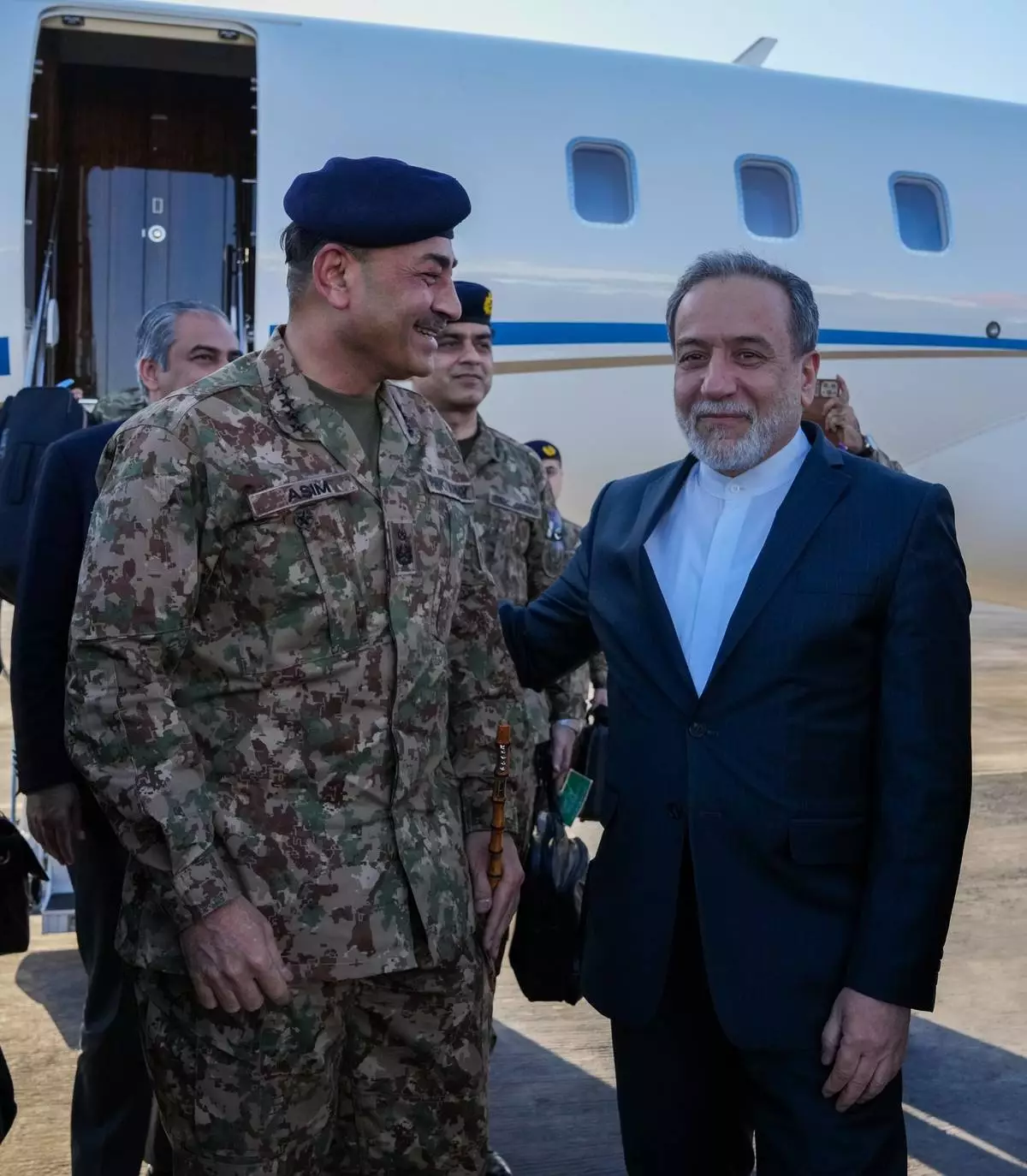
In this photo released by the Iranian Foreign Ministry, Pakistan's Army Chief Field Marshal Gen. Asim Munir, left, is welcomed by Iranian Foreign Minister Abbas Araghchi upon his arrival in Tehran, Wednesday, April 15, 2026. (Iranian Foreign Ministry via AP)
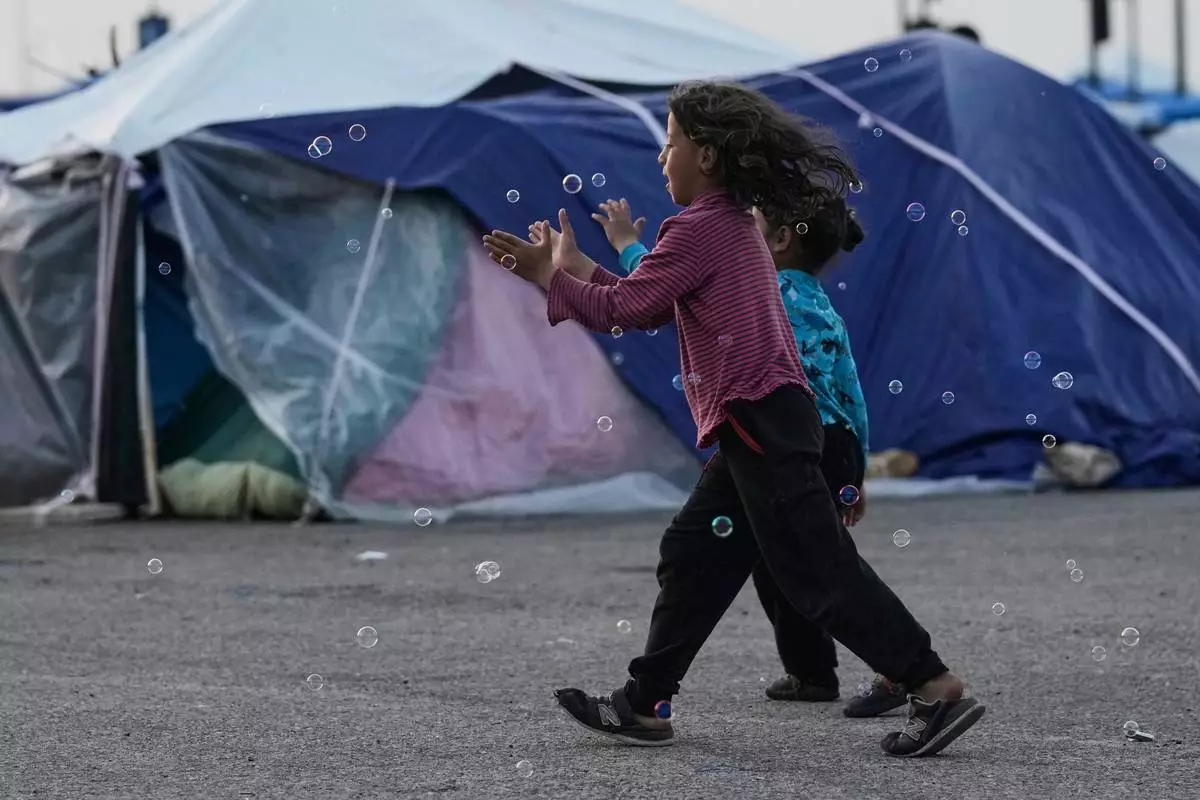
Girls chase bubbles next to their family's tents used as shelter after fleeing Israeli bombardment in Dahiyeh, Beirut's southern suburbs, in Beirut, on Wednesday, April 15, 2026. (AP Photo/Bilal Hussein)
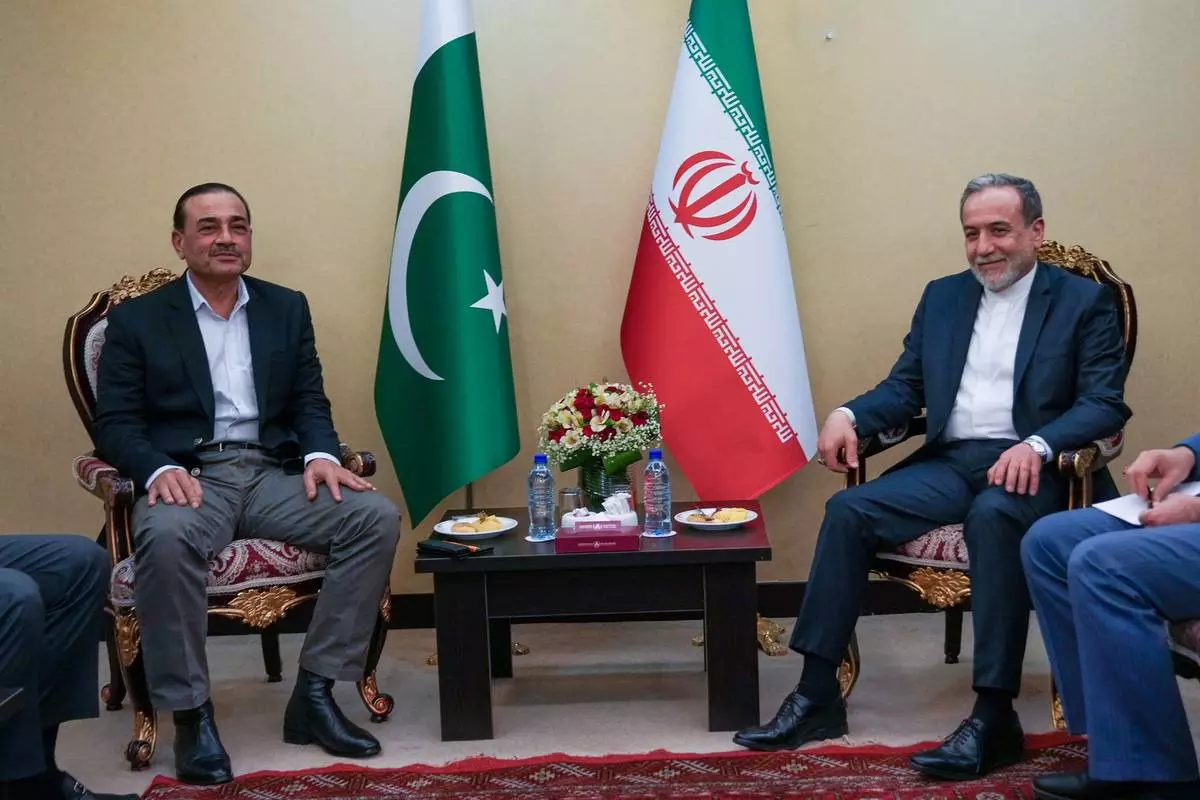
In this photo released by the Iranian Foreign Ministry, Iranian Foreign Minister Abbas Araghchi, right, meets with Pakistan's Army Chief Field Marshal Gen. Asim Munir in Tehran, Wednesday, April 15, 2026. (Iranian Foreign Ministry via AP)
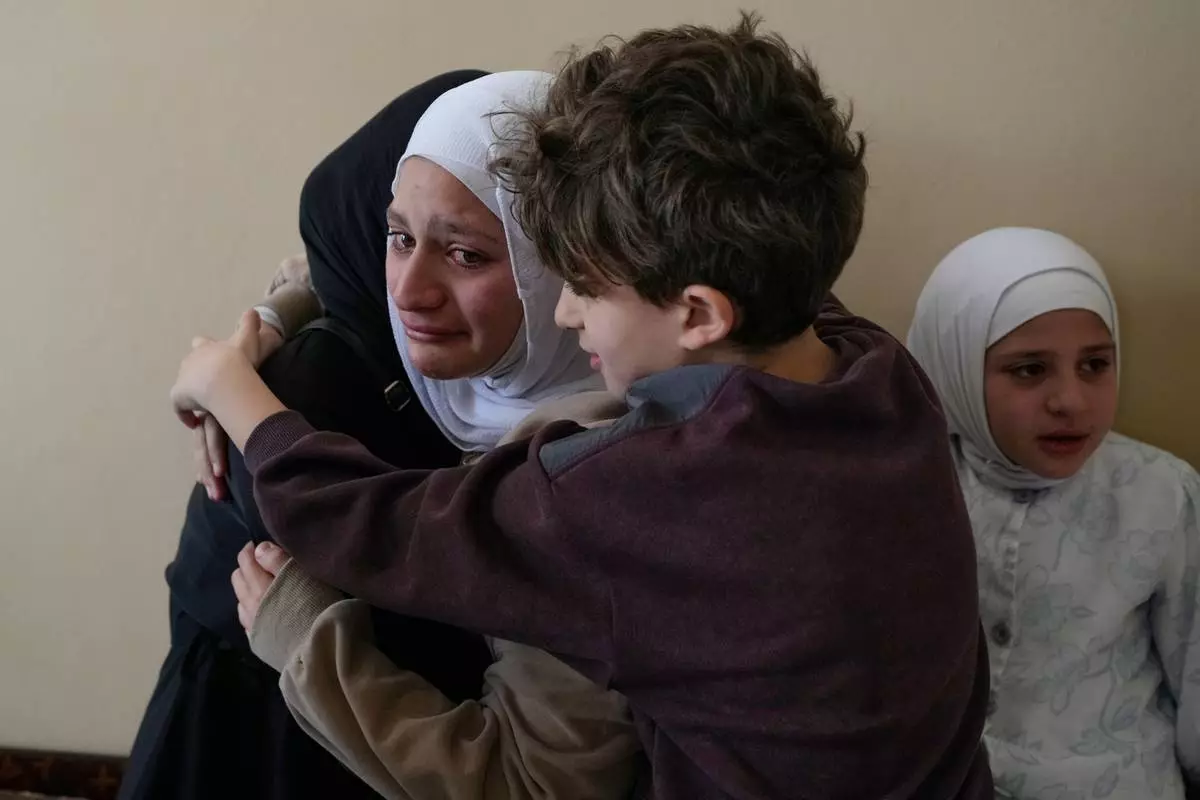
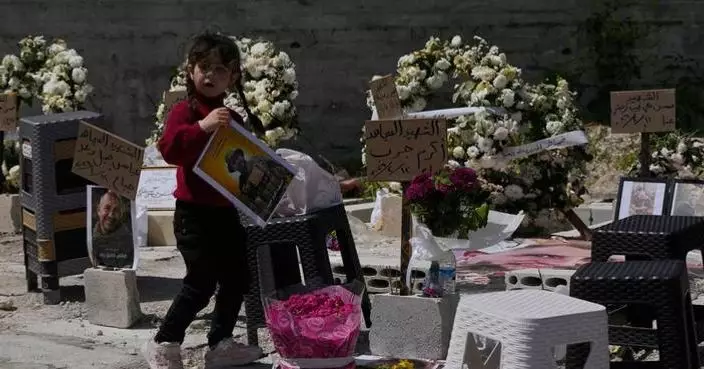
Relatives of Ghadir Baalbaki, 19, who was killed on Tuesday in an Israeli airstrike, mourn during her funeral in the southern port city of Tyre, Lebanon, Wednesday, April 15, 2026. (AP Photo/Hussein Malla)
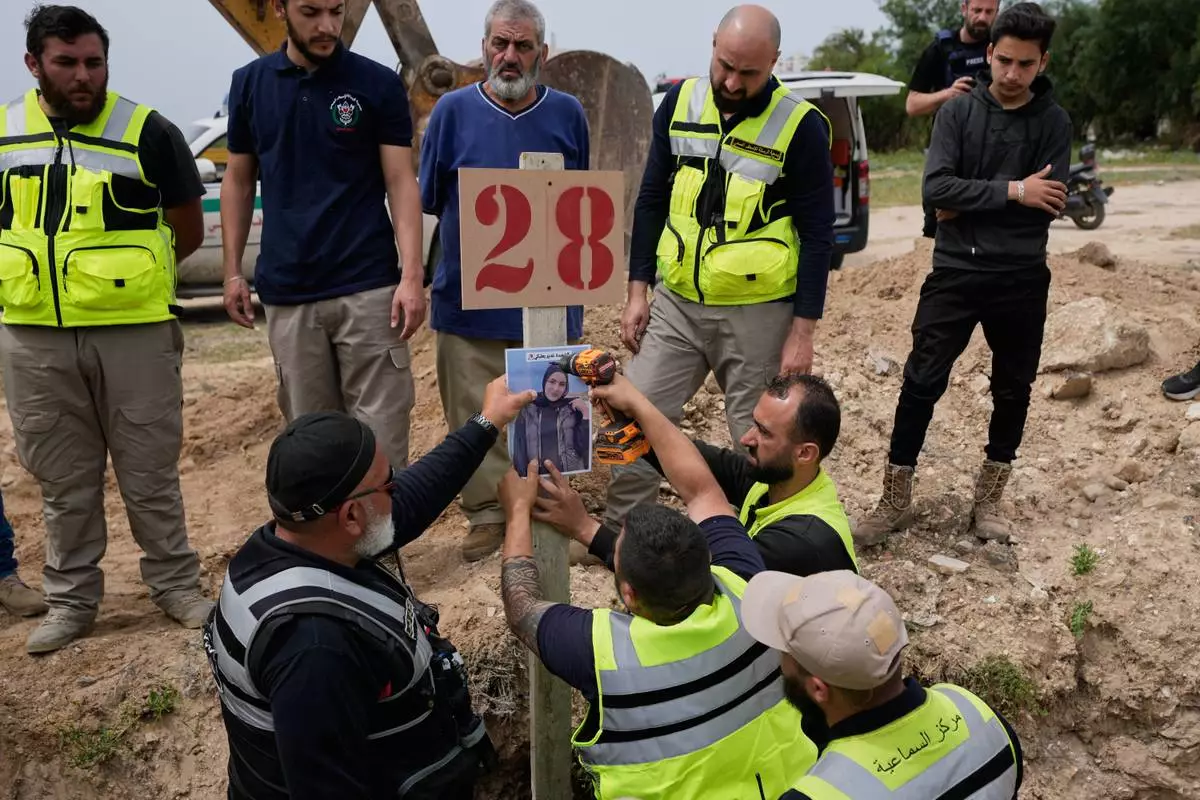
Paramedics attach a portrait over the grave of Ghadir Baalbaki, 19, who was killed on Tuesday in an Israeli airstrike, at a temporary mass grave in the southern port city of Tyre, Lebanon, Wednesday, April 15, 2026. (AP Photo/Hussein Malla)

A cargo ship sails in the Persian Gulf towards Dubai port as seen from Ajman, United Arab Emirates, Tuesday, April 14, 2026. (AP Photo)
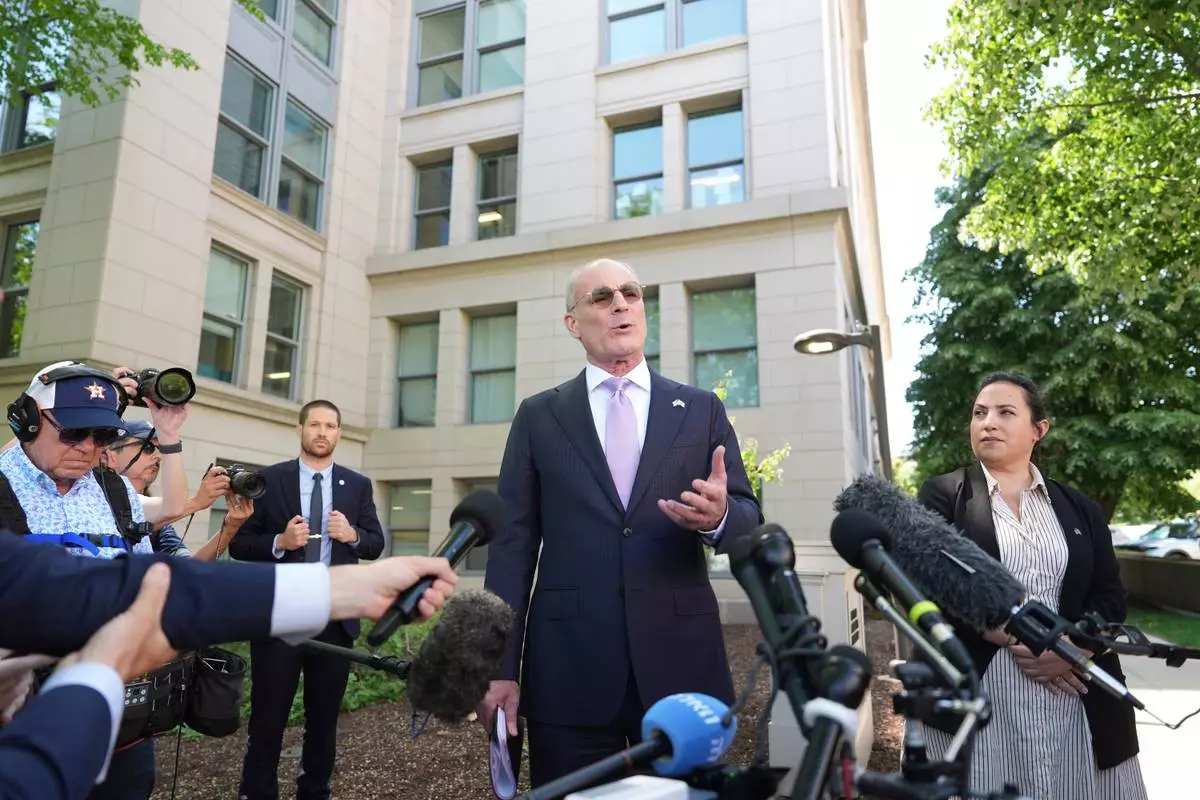
Israeli Ambassador to the U.S. Yechiel Leiter speaks with reporters outside of the State Department in Washington, Tuesday, April 14, 2026. (AP Photo/Jacquelyn Martin)
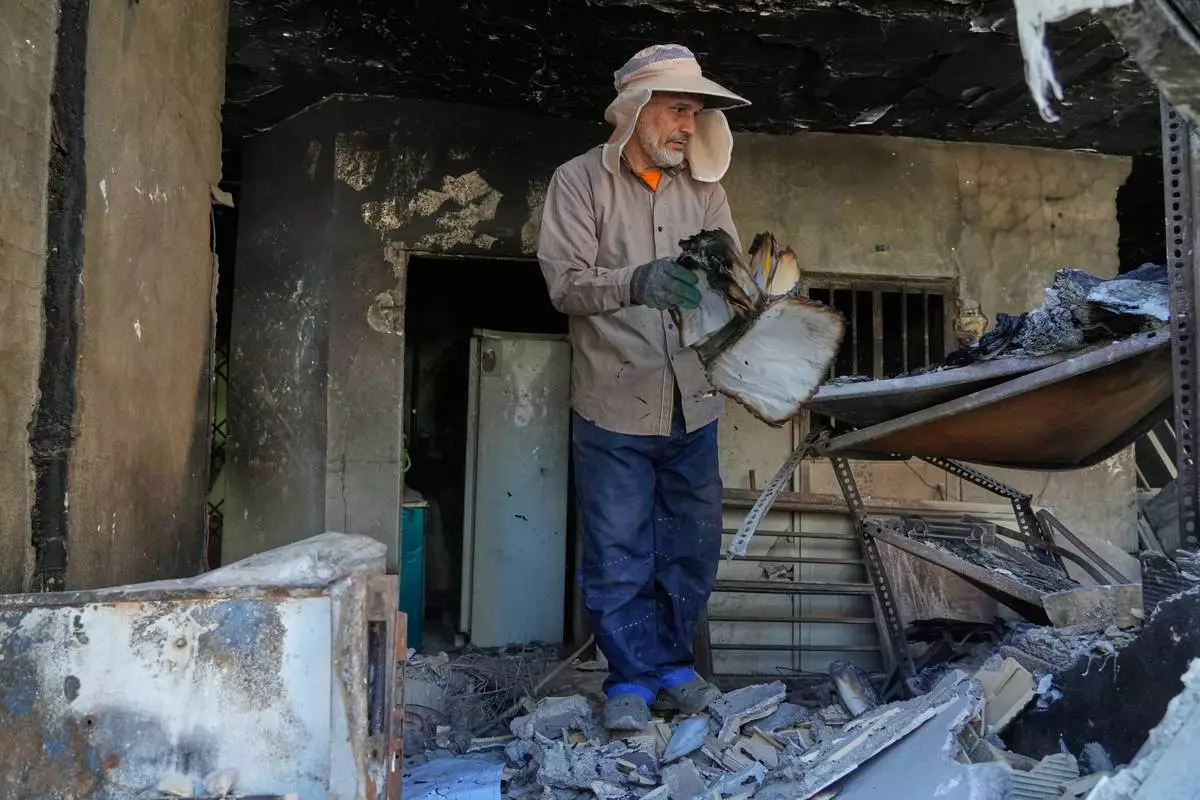
A volunteer flips a burnt book amid the debris of a residential building that, according to the authorities, was damaged on March 4 during the U.S.-Israeli military campaign, in southeastern Tehran, Iran, Tuesday, April 14, 2026. (AP Photo/Vahid Salemi)
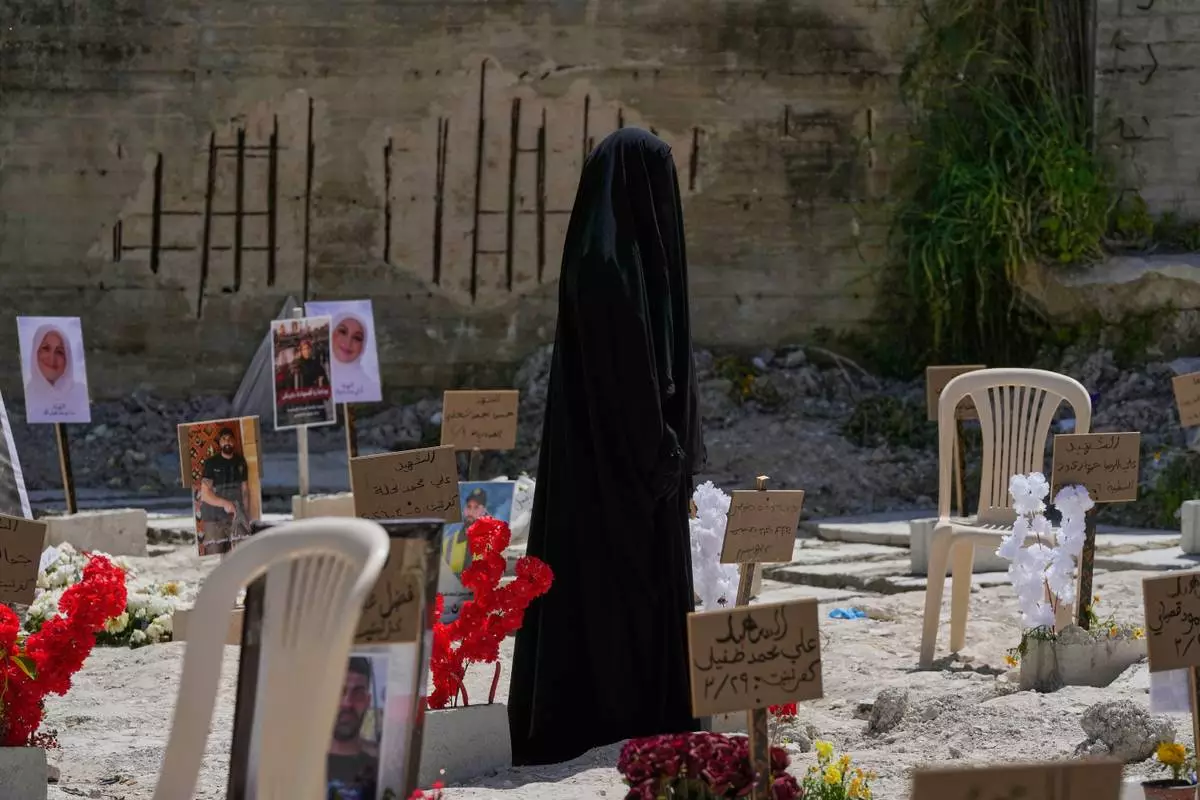
A veiled woman walks through a mass grave where civilians and Hezbollah fighters killed by Israeli airstrikes are temporarily buried in the southern port city of Sidon, Lebanon, Tuesday, April 14, 2026. (AP Photo/Mohammed Zaatari)
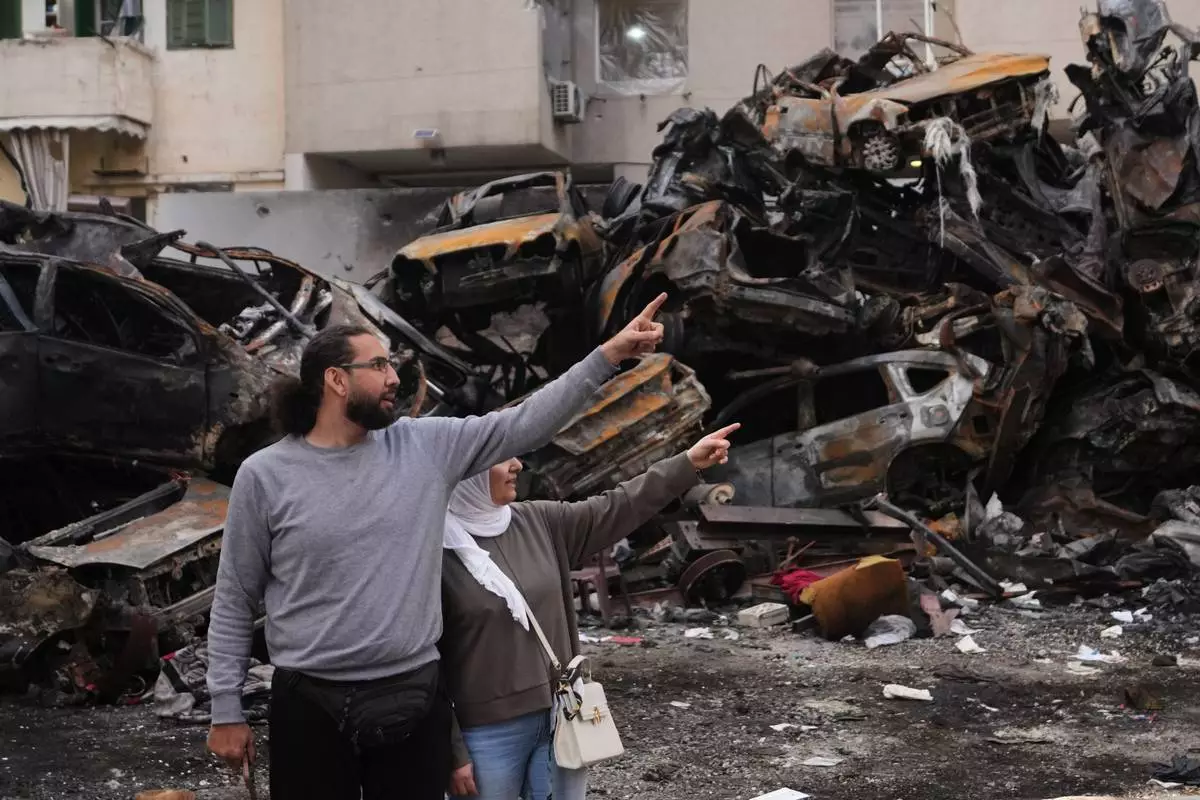
Residents gesture and point toward damage as they stand near charred cars at the site of a building destroyed in an Israeli airstrike last Wednesday in central Beirut, Lebanon, Tuesday, April 14, 2026. (AP Photo/Hassan Ammar)