A man shot by U.S. Immigration and Customs Enforcement agents during an enforcement stop in central California last week was arrested Monday by the FBI after being discharged from a hospital, his attorney said.
Attorney Patrick Kolasinski said federal officials have not said what charges Carlos Ivan Mendoza Hernandez might face. Messages were sent to the FBI and the U.S. Attorney's Office seeking more information about the arrest.
Kolasinski said Mendoza, who underwent three surgeries for multiple gunshot wounds, was discharged into FBI custody without any notification to his family or legal team.
“We're in shock,” Kolasinski told The Associated Press. “He should not be out of that hospital. He was in no condition to be released.”
The U.S. Department of Homeland Security has said ICE agents fired defensive shots at Mendoza when he tried to drive into them after he was pulled over last Tuesday. Officials said they were conducting an enforcement stop targeting Mendoza, 36, in Patterson, a city about 75 miles (120 kilometers) southeast of San Francisco. They described him as a suspected gang member wanted in El Salvador for questioning in connection with a murder.
Kolasinski told reporters last week that Mendoza was having difficulty speaking because he was shot in the jaw, but that he insisted he was never a member of a gang. Kolasinski said his client has been stopped for minor traffic infractions but has no criminal record in the U.S. and is not the subject of an arrest warrant in El Salvador, where he was acquitted of murder.
Federal authorities haven't said why Mendoza was the target of an enforcement action. The U.S. Department of Homeland Security has not responded to inquiries about Kolasinski’s statements.
Tuesday’s encounter was among a string of shootings during the Trump administration’s aggressive push to detain and deport immigrants in the country illegally, about which questions have been raised with federal immigration officials.
Kolasinski has said that agents fired on Mendoza while the car was stopped and he drove away to flee the gunfire.
According to an Oct. 25, 2019, court document from a judge in El Salvador, Mendoza was acquitted after being accused of murder and ordered immediately released. He was 29 at the time. The document lists 10 others who were convicted of various crimes from aggravated robbery to murder, and mentions at least one of them was a member of the 18th Street Gang. But the document contains no mention of Mendoza belonging to a gang or being accused of engaging in gang activity.
In the California ICE shooting, dashcam footage obtained by KCRA-TV shows three officers standing around a vehicle stopped on the side of a road. One of the officers appears to be touching the driver's side window when the car begins to back up and turn, hitting a vehicle behind it. At least two of the agents have weapons drawn, pointing at the car. The driver then pulls forward toward where the men are standing and turns sharply, driving over the roadway median.
The video has no sound, and it's unclear when the shots were fired or if words were said.
Mendoza’s fiancée visited him in the hospital over the weekend and he was still in significant pain, Kolasinski said Monday.
Kolasinski has said Mendoza, a dual citizen of El Salvador and Mexico, came to the U.S. in 2019 but the attorney did not know his legal status nor how he arrived in the country.
The attorney said his client works as a laborer to repair fire damage. He has a 2-year-old daughter and is engaged to a U.S. citizen, he said.
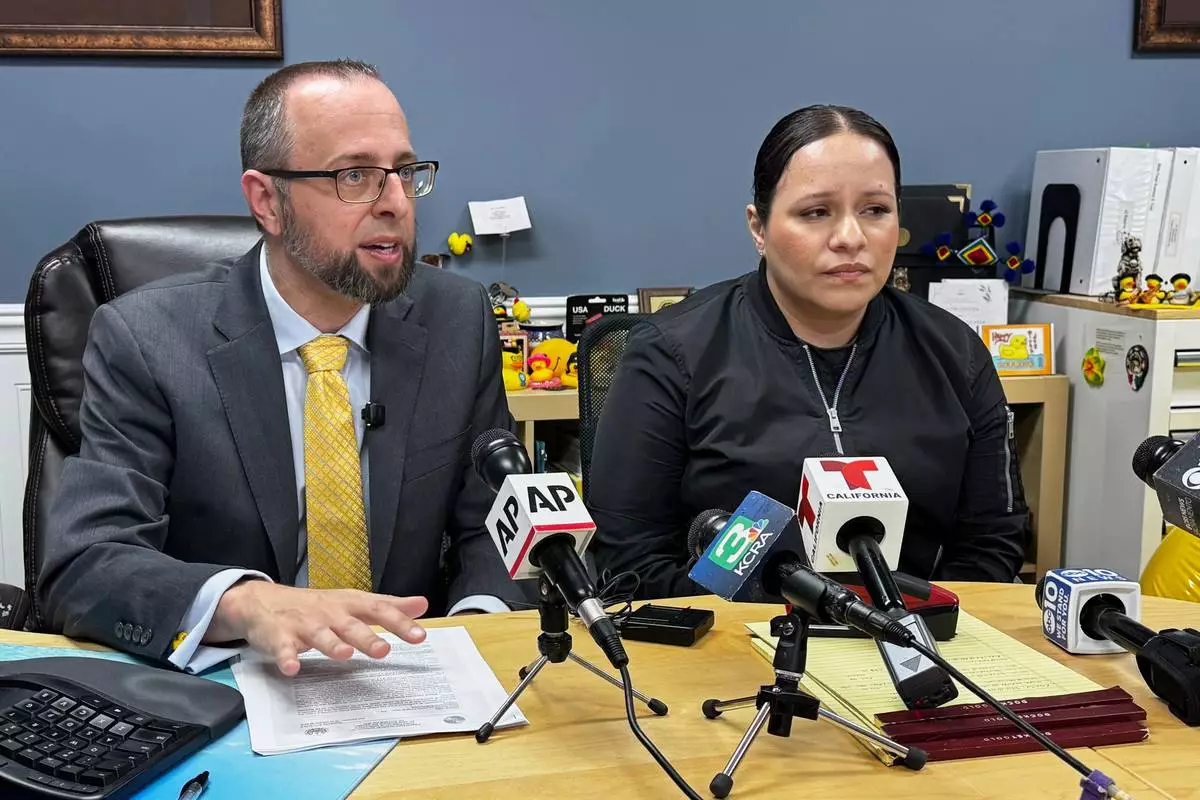
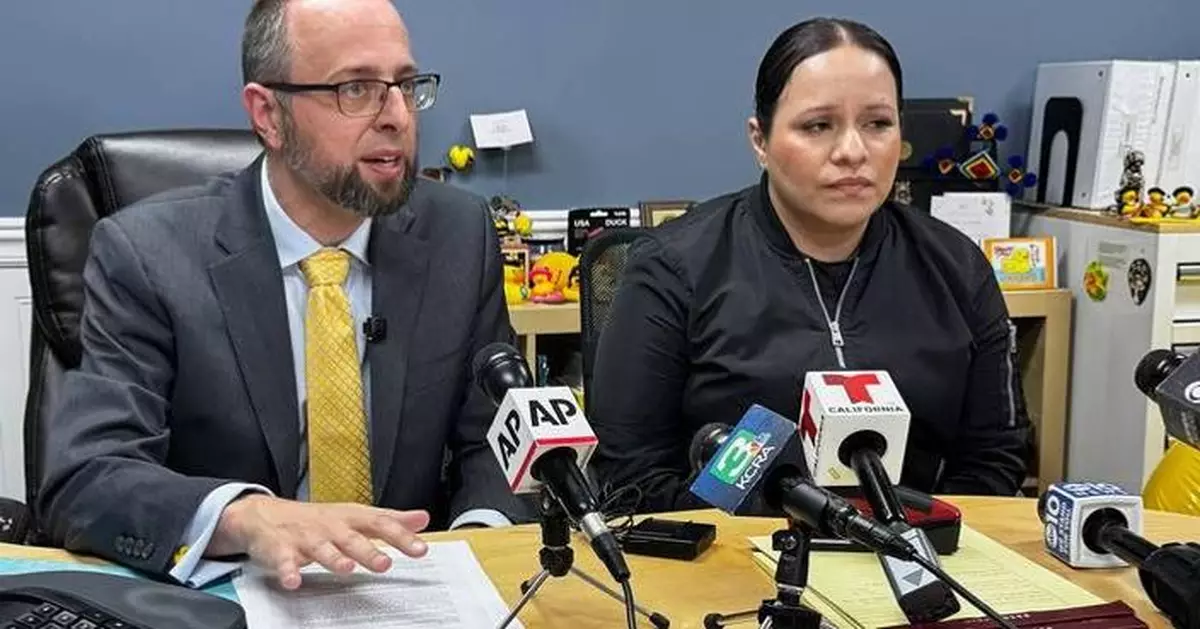
Patrick Kolasinski, attorney for Carlos Ivan Mendoza Hernandez, speaks at a news conference accompanied by his client's girlfriend, Cindy, in Modesto, Calif., Wednesday, April 8, 2026. (AP Photo/Terry Chea)
ANNABA, Algeria (AP) — Pope Leo XIV walked Tuesday in the footsteps of his spiritual father, St. Augustine, making a pilgrimage to the archaeological ruins in Algeria where the fifth-century titan of early Christianity lived, died and wrote some of the most important works in Western thought.
Leo’s visit to Annaba, the modern-day Hippo, was a spiritual homecoming for the American pope on his second full day in Algeria. He arrived Monday on a first-ever papal visit, against the backdrop of his calls for peace that have sparked a feud with U.S. President Donald Trump over the war in Iran. It's the first stop on Leo’s four-country Africa tour.
The pope arrived at the ruins in a rainstorm and with tight security, with sharpshooters positioned around the site and policemen stationed every few yards (meters) along roads leading to it.
Leo prayed under under a tent looking out over the ruins of the ancient Roman city, including its theater, market and basilica where Augustine preached and the adjoining baptistry. In a sign of peace, he planted an olive tree and watched as white doves were set free.
Accompanied by the current head of his Augustinian religious order, the Rev. Joseph Farrell, Leo then walked amid the muddy ruins for a few minutes, pausing to listen to an Algerian choir.
Leo proclaimed himself a “son of St. Augustine” on the night of his election and has cited Augustine prolifically in his first year, making clear that he's the guiding inspiration of Leo's pontificate. For this trip, Leo is focusing on Augustine as a bridge-builder as he aims to press a message of peace and Christian-Muslim coexistence.
“God’s heart is torn apart by wars, violence, injustice and lies,” Leo later told a small gathering of nuns and elderly people in Annaba.
The visit also draws attention to the North African origins of Augustine, who spent only five years in Italy but is often seen through a Eurocentric lens as one of the greatest Western thinkers of Christianity for his writings on truth, evil, creation and grace.
Leo's Augustinian religious order was founded in Italy in the 13th century, inspired by the saint.
St. Augustine was born in 354 to a Berber mother and Roman father in Thagaste, today the Algerian city of Souk Ahras near the border with Tunisia. At the time, the swath of North Africa was part of the Roman Empire, including Carthage in today’s Tunisia, where Augustine was educated and taught rhetoric.
He left North Africa for Rome in 383 and then Milan, where he converted to Christianity. He returned to his homeland soon thereafter, founded a monastery at Hippo where he developed the rule of his order in use today, emphasizing community life. He became a bishop and in Hippo wrote some of the most important works in the Western canon, including “Confessions” and “The City of God.”
A new book, “Augustine the African,” by Catherine Conybeare, an Augustine scholar at Bryn Mawr college in Pennsylvania, explores Augustine from his perspective: As a North African, looking to Rome as the center of his universe but feeling insecure there about his Punic-accented Latin.
“One of the most important thinkers in the Western intellectual tradition actually came from Africa, spent almost his whole life in Africa,” Conybeare told The Associated Press. “How does that change things?”
“Of course, because his successors — the people who carried on his heritage — were in Europe, they got to tell the story,” she said. And Europe got his body: After Augustine died in Hippo in 430, his body was taken eventually to Pavia, Italy, though a forearm remains in the basilica dedicated to him in Annaba.
In welcoming Leo, President Abdelmadjid Tebboune expressed the “immense pride” Algerians feel over St. Augustine. He called him “a cherished son of this land, which having been his first cradle, proudly became his initial resting place.”
Leo made clear en route to Algeria and in remarks to Algerian authorities how deeply personal and important this visit is to him, because of his spiritual connection to St. Augustine. He had visited twice before, while he was superior of the Augustinian order.
“This journey, which is very special for several reasons, was supposed to be the first of my pontificate,” Leo told reporters on the papal plane. “As early as last May, I had said that on my first journey, I would like to visit Africa. Several people immediately suggested Algeria because of St. Augustine.”
In the end, other trips intervened, but he kept the appointment.
The saint, he said, represents “a very important bridge in interreligious dialogue" that the world could use today.
“We must always seek bridges to build peace and reconciliation," he said. "This journey, then, truly represents a valuable opportunity to continue with the same voice, with the same message, that we wish to convey: to promote peace, reconciliation, respect and consideration for all peoples.”
Also Tuesday, Leo was visiting a small community of Augustinians in Annaba. He was finishing the day by celebrating Mass at the Basilica of St. Augustine, the 19th century basilica overlooking the ruins of Hippo which contains the relic of the saint. Thousands of pilgrims visit the basilica each year, including Muslims.
Associated Press religion coverage receives support through the AP’s collaboration with The Conversation US, with funding from Lilly Endowment Inc. The AP is solely responsible for this content.
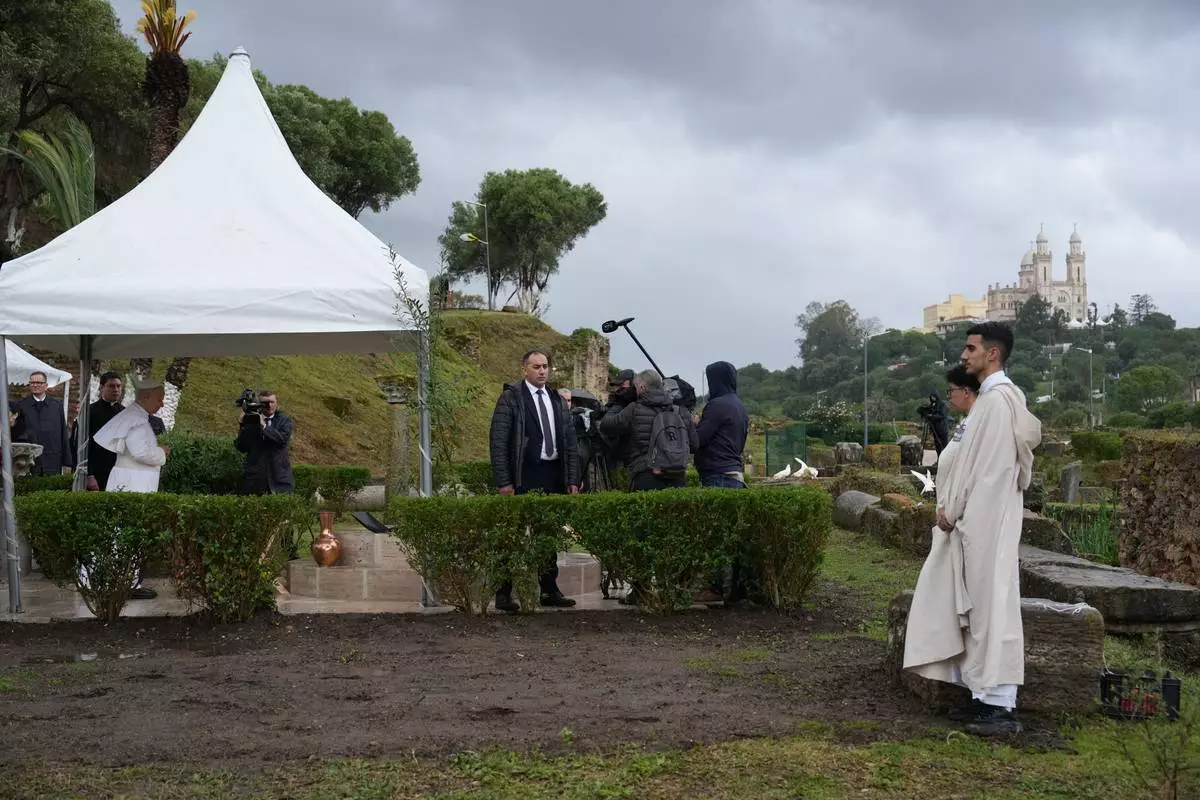
Pope Leo XIV, left, prays as he visits the archaeological site of Hippo, in Annaba, Algeria, Tuesday, April 14, 2026, on the second day of an 11-day apostolic journey to Africa. (AP Photo/Andrew Medichini)
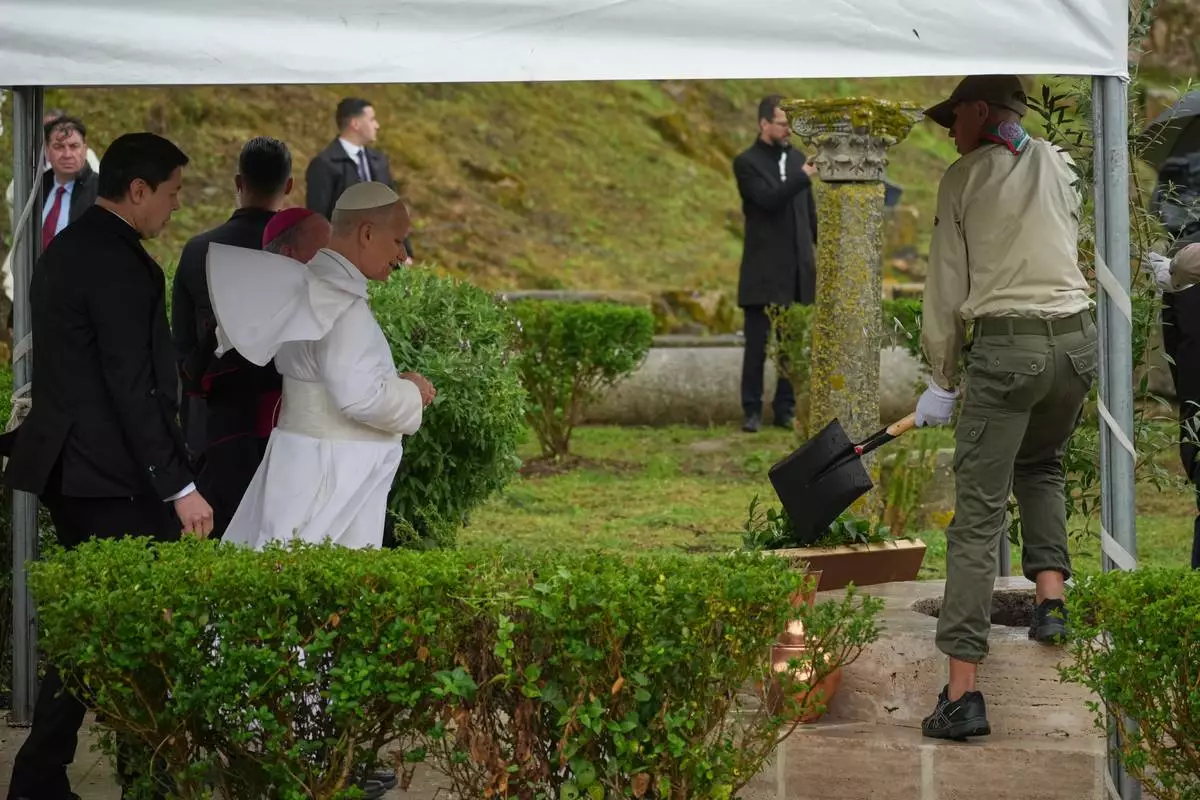
Pope Leo XIV visits the archaeological site of Hippo, in Annaba, Algeria, Tuesday, April 14, 2026, on the second day of an 11-day apostolic journey to Africa. (AP Photo/Andrew Medichini)
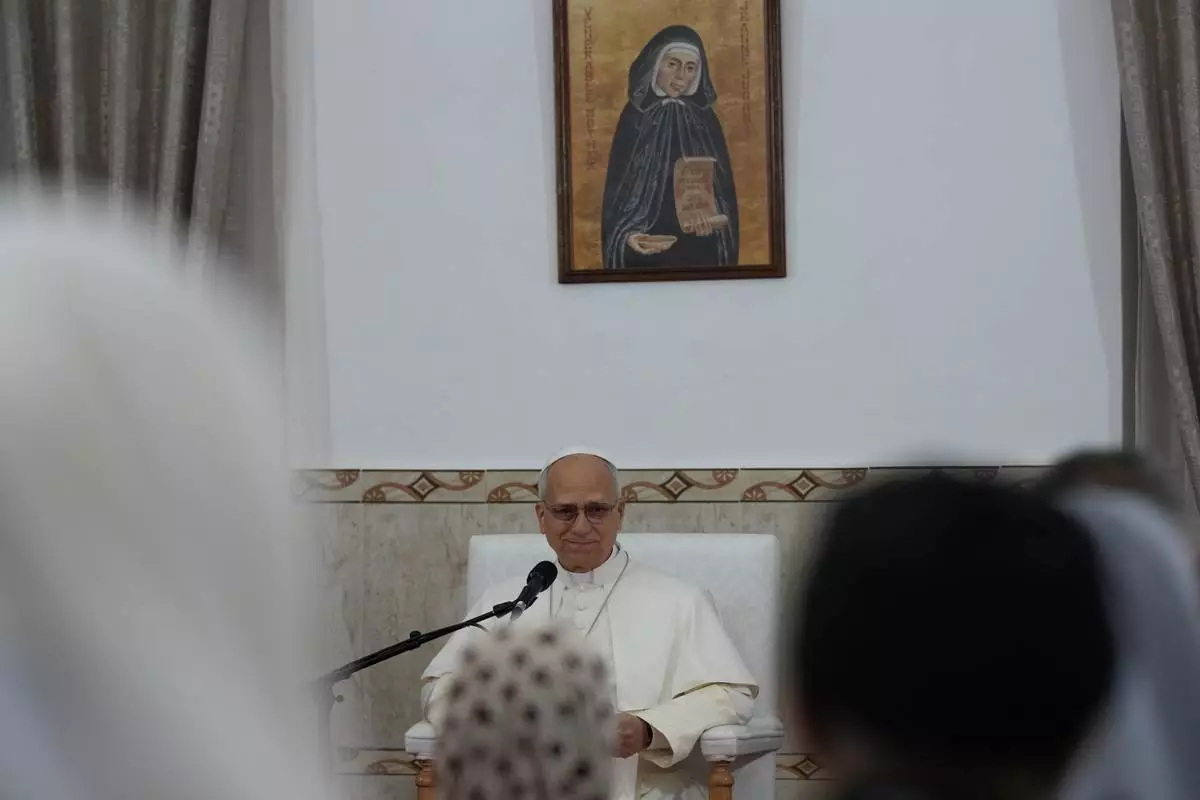
Pope Leo XIV visits the nursing home of the Little Sisters of the Poor in Annaba, Algeria, Tuesday, April 14, 2026, on the second day of an 11-day apostolic journey to Africa. (AP Photo/Andrew Medichini, Pool)
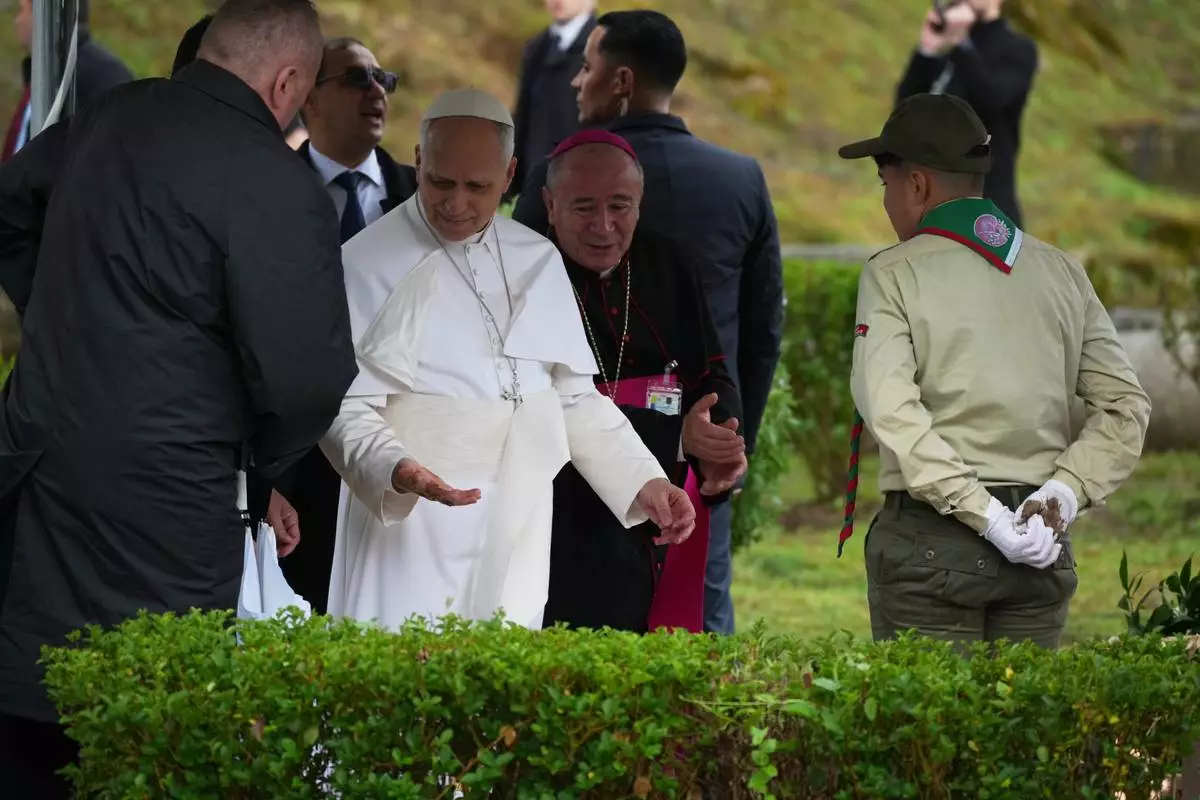
Pope Leo XIV visits the archaeological site of Hippo, in Annaba, Algeria, Tuesday, April 14, 2026, on the second day of an 11-day apostolic journey to Africa. (AP Photo/Andrew Medichini)
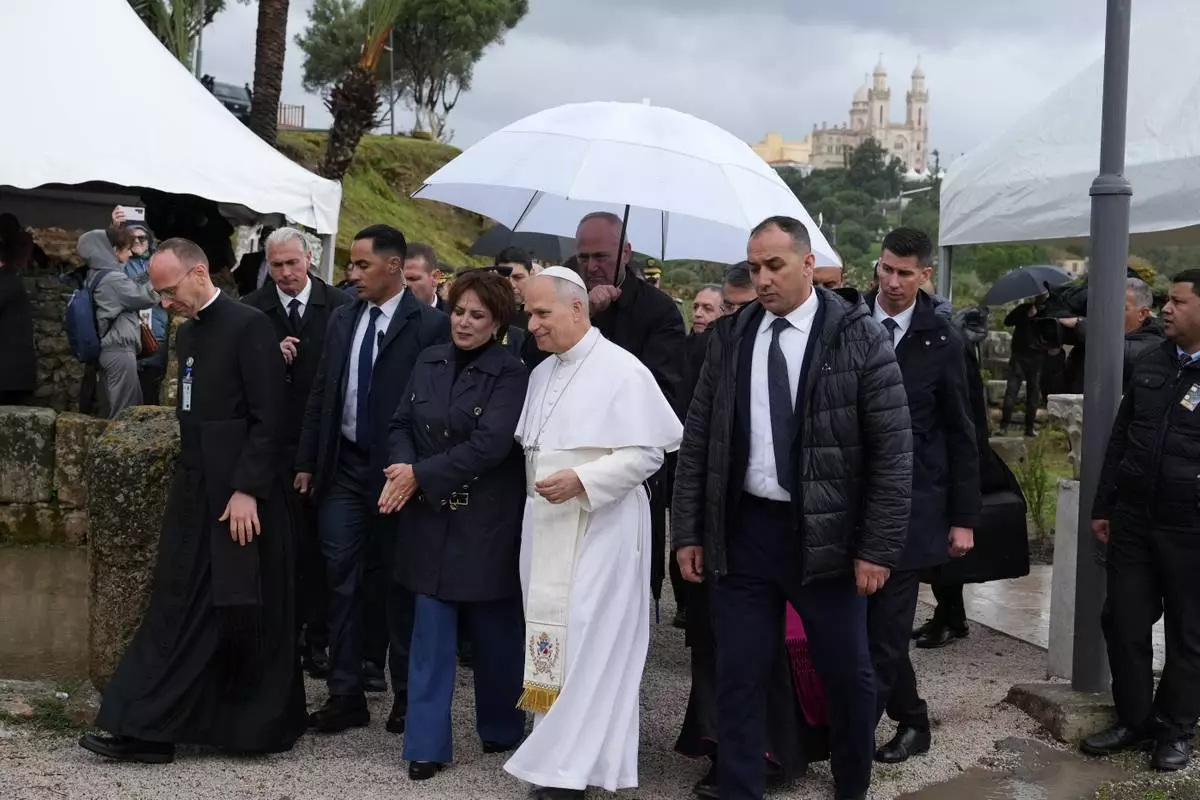
Pope Leo XIV visits the archaeological site of Hippo, in Annaba, Algeria, Tuesday, April 14, 2026, on the second day of an 11-day apostolic journey to Africa. (AP Photo/Andrew Medichini)
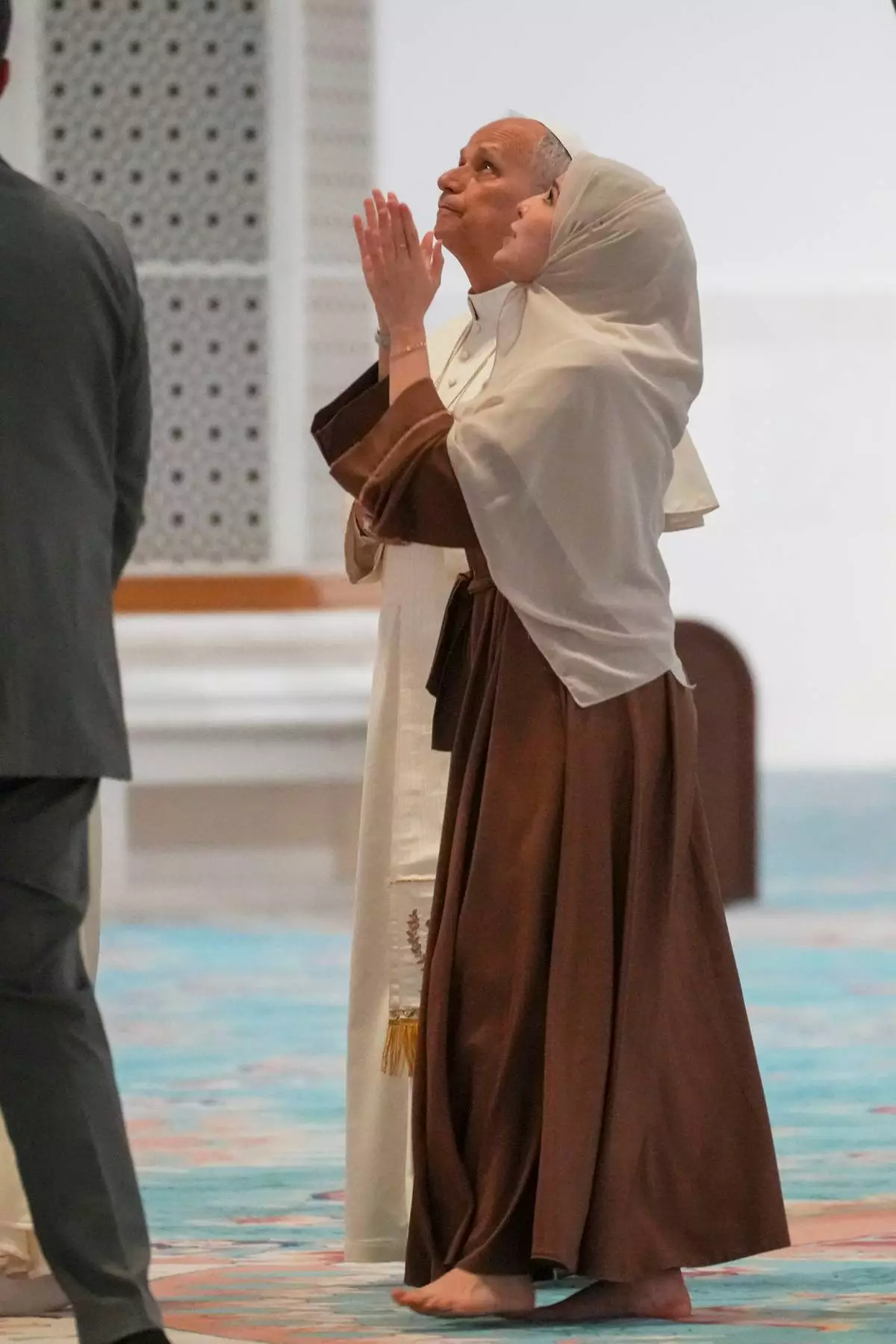
Pope Leo XIV listens to explanations upon his arrival at the Great Mosque in Algiers, Monday, April 13, 2026, on the first day of an 11-day apostolic journey to Africa. (AP Photo/Andrew Medichini)
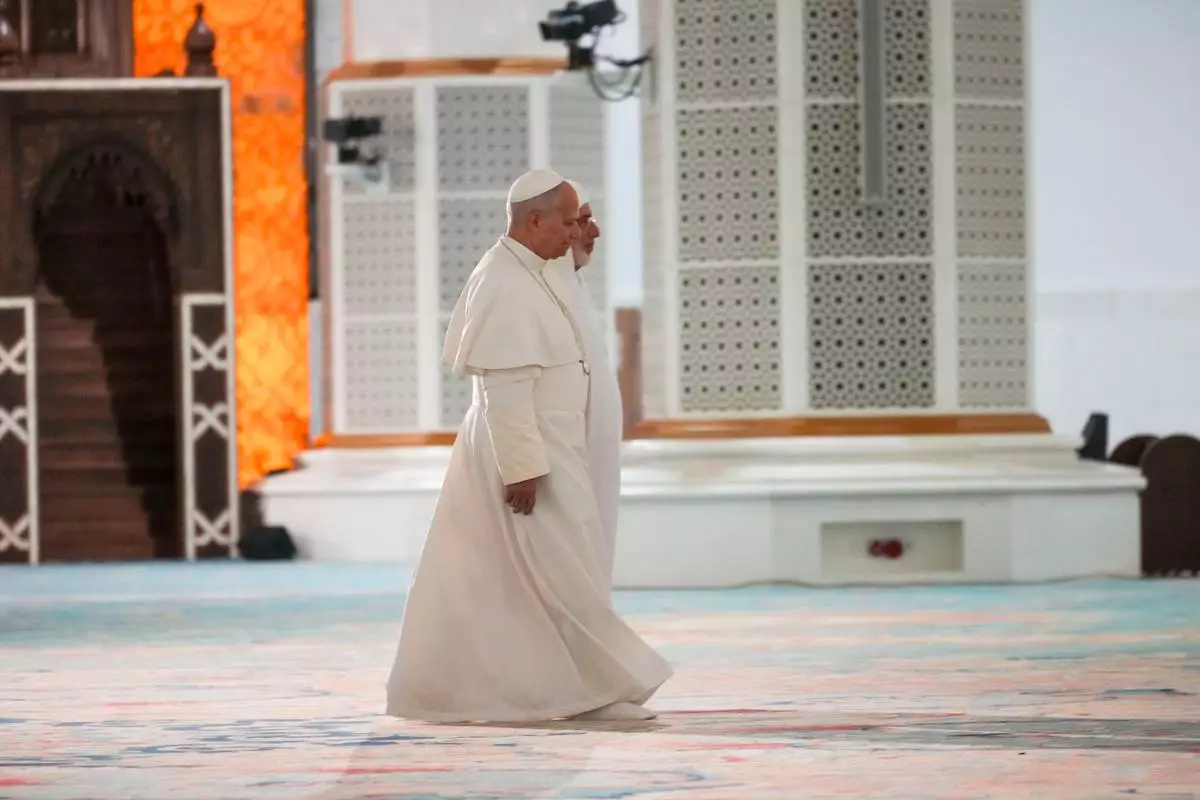
Pope Leo XIV is welcomed by Rector Mohamed Mamoun Al Qasimi upon his arrival at the Great Mosque in Algiers, Monday, April 13, 2026, on the first day of an 11-day apostolic journey to Africa. (AP Photo/Andrew Medichini)
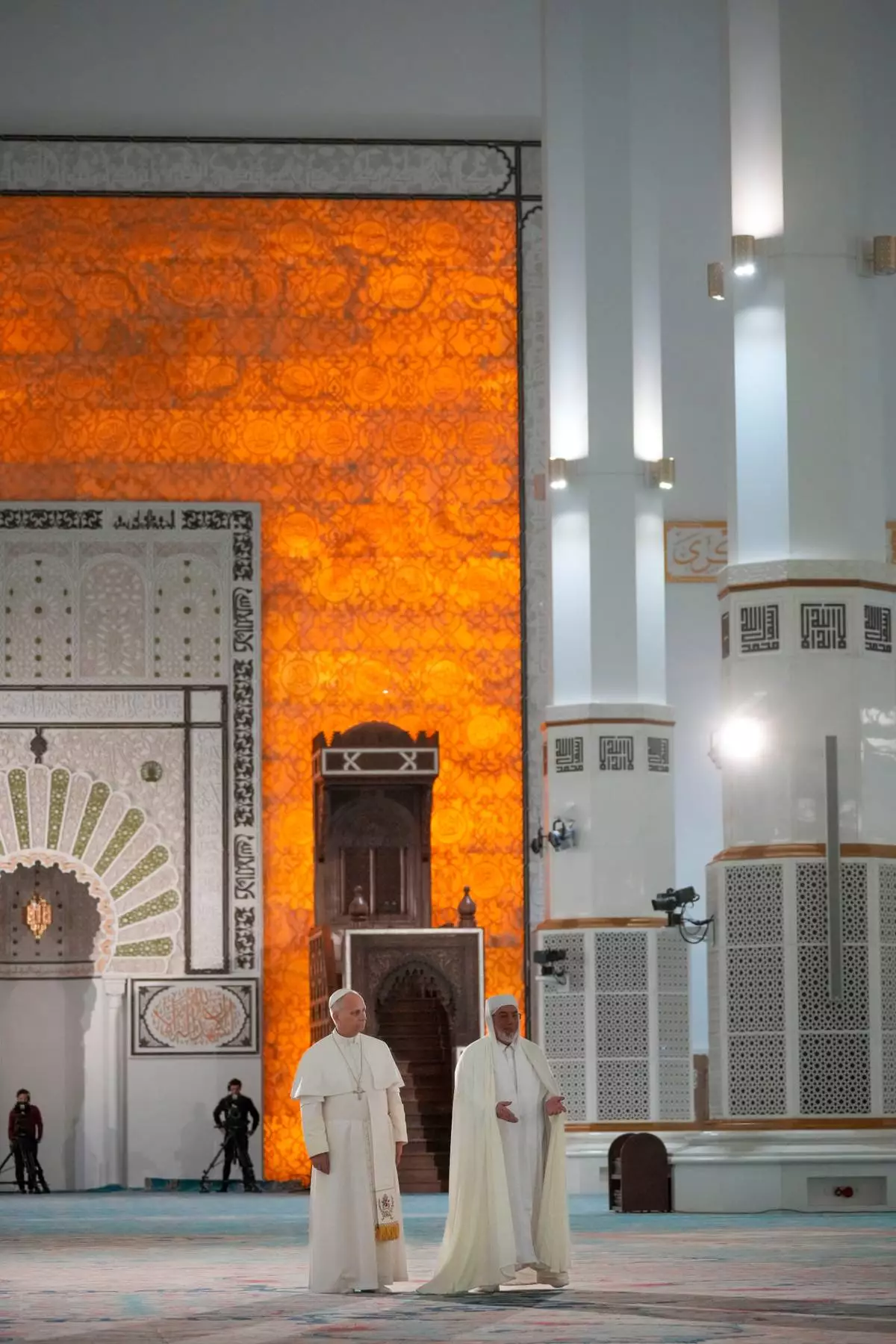
Pope Leo XIV is welcomed by Rector Mohamed Mamoun Al Qasimi, right, upon his arrival at the Great Mosque in Algiers, Monday, April 13, 2026, on the first day of an 11-day apostolic journey to Africa. (AP Photo/Andrew Medichini)
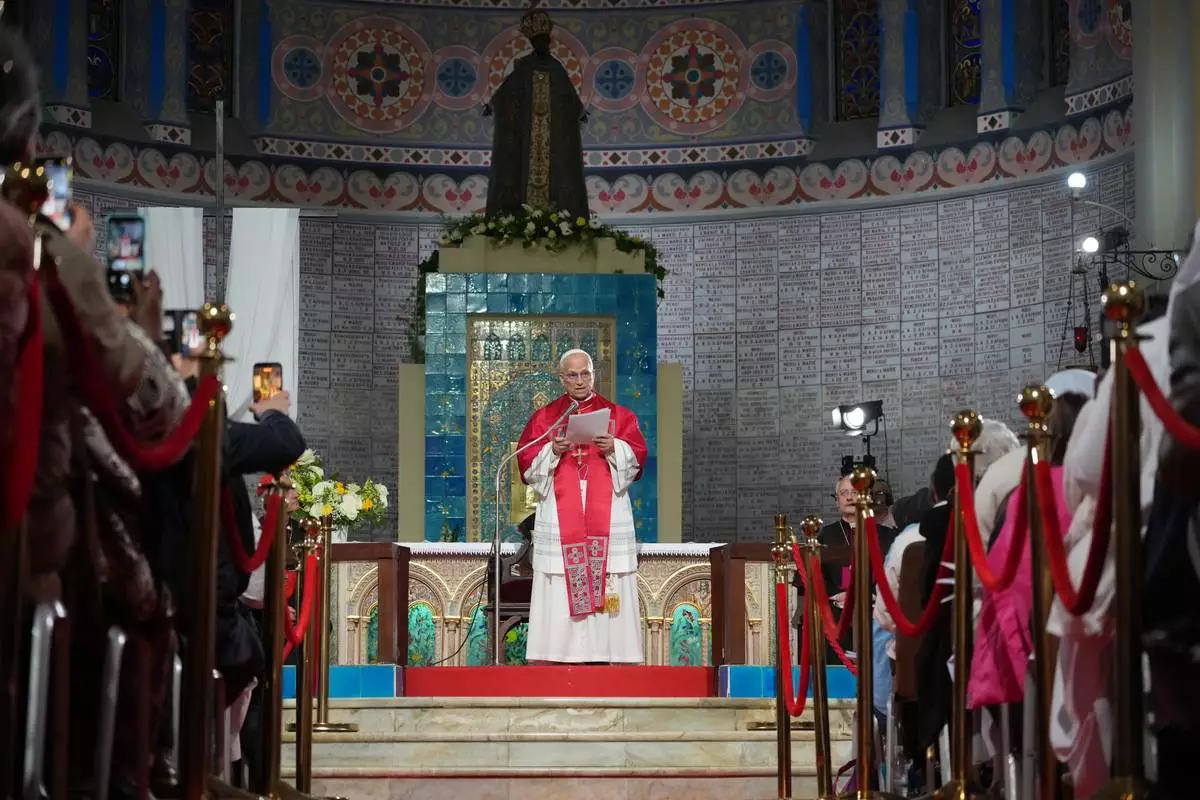
Pope Leo XIV meets the Algerian Community in the Basilica of Our Lady of Africa in Algiers, Monday, April 13, 2026, on the first day of an 11-day apostolic journey to Africa. (AP Photo/Andrew Medichini)
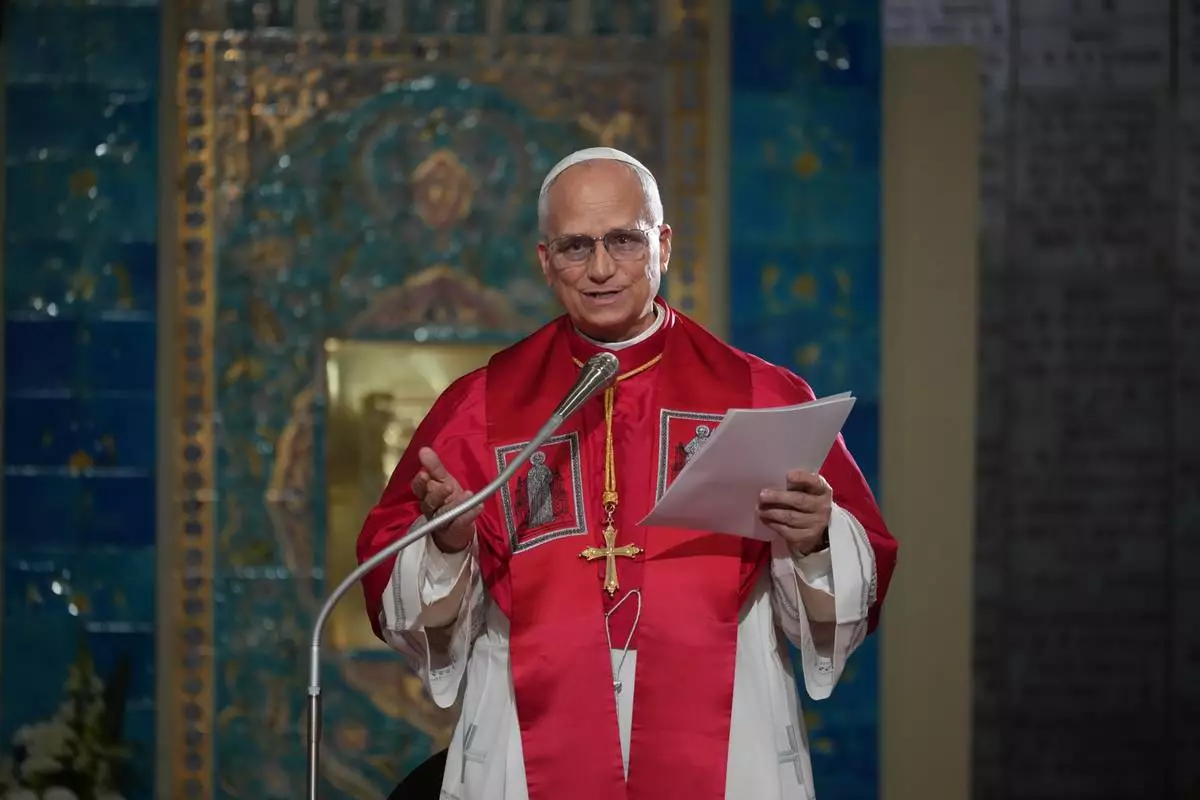
Pope Leo XIV meets the Algerian Community in the Basilica of Our Lady of Africa in Algiers, Monday, April 13, 2026, on the first day of an 11-day apostolic journey to Africa. (AP Photo/Andrew Medichini)