Speech by CE at 2026 International Academicians Hong Kong Forum
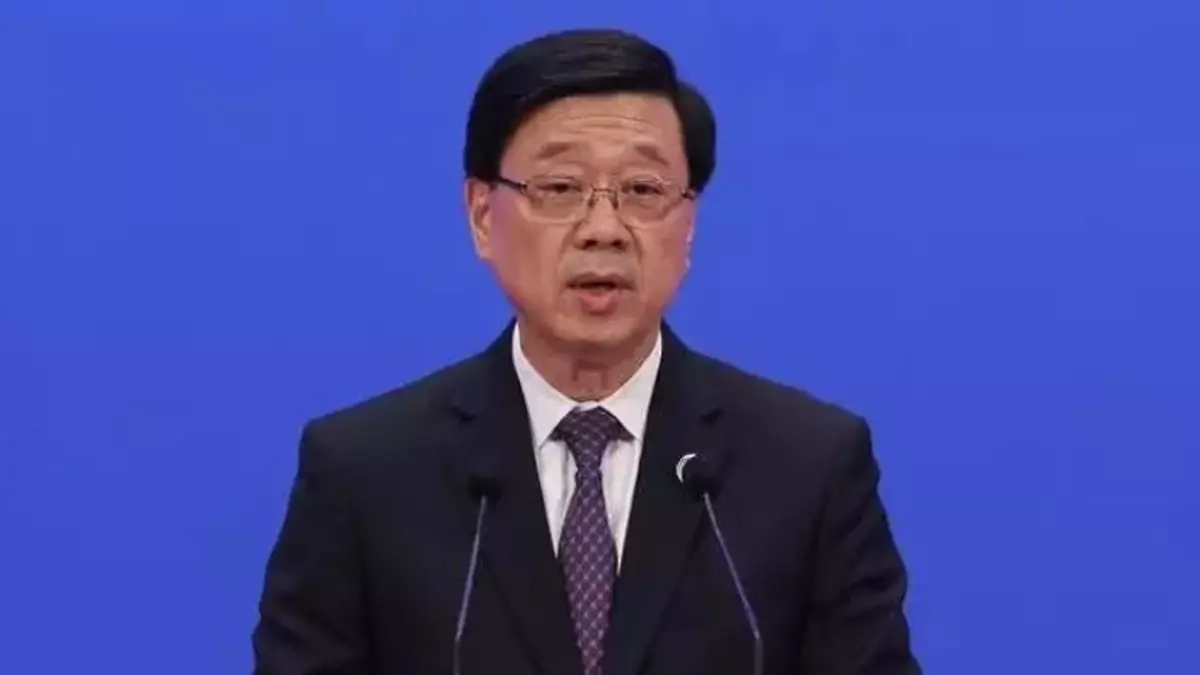
Following is the video speech by the Chief Executive, Mr John Lee, at the 2026 International Academicians Hong Kong Forum today (April 14):
Professor Nancy Ip (Chair of the International Alliance of Academicians), Professor Sir Christopher Pissarides (Co-Chair of the International Alliance of Academicians), Professor Pierre-Louis Lions (Co-Chair of the International Alliance of Academicians), Professor Xiang Zhang (Co-Chair of the International Alliance of Academicians), ladies and gentlemen,
Good morning and welcome to Hong Kong. I'm pleased to join you all at this year's International Academicians Hong Kong Forum.
For the second year in a row, this forum is organised by the International Alliance of Academicians. This year's event brings together Nobel laureates, Fields medallists, and a host of globally renowned experts and academics in the fields of medicine, AI, higher education and more. Among the finest minds from around the world, you are gathered here to promote the transformation of outstanding academic research into application.
Hong Kong is well-placed to hold this important dialogue. Under the unique "one country, two systems" principle, we are the only world city that enjoys both the China advantage and the global advantage. We boast five universities in the world's top 100. Our research environment is open and vibrant. Our intellectual property protection is robust and aligned with international standards.
These lay the solid foundation for the development of our innovation and technology ecosystem, and talent regime. The National 15th Five-Year Plan, approved last month, gives strong backing to Hong Kong's development into an international innovation and technology centre, and international hub for high-calibre talent. More than recognising our potential, this is a call to action for us to devote our efforts into promoting innovation and academic co-operation.
This year's forum puts a much-needed spotlight on artificial intelligence and, crucially, how it brings about innovation in higher education and an ageing population. In our ever-changing world, the application of AI is pivotal for economies to make new breakthroughs in technological advancement.
Hong Kong is taking forward the National AI+ Initiative by promoting "industries for AI" and "AI for industries". As a key driver, the Hong Kong Artificial Intelligence Research and Development Institute will commence operation in the second half of this year. The Institute will be tasked to promote AI+ development and transformation of R&D (research and development) outcomes, thereby empowering industries such as healthcare, legal services and finance to adopt AI.

Photo source: Design Image
As part of the InnoHK initiative, the HKSAR (Hong Kong Special Administrative Region) Government established the Hong Kong Generative AI Research and Development Center in 2023. The Center has successfully launched Hong Kong's first large language model, and a series of generative AI applications based on it. HKChat, the generative AI chatbot created by the Center, has over 700 000 local registered users.
We are committed to nurturing a new generation of users, and innovators of AI. The HKSAR Government endeavours to have at least 35 per cent of the students in our publicly funded universities studying STEAM-related subjects by the next academic year. We have also introduced the Hong Kong Future Talents Scholarship Scheme for Advanced Studies to attract more local students to pursue advanced studies in areas crucial to the development of Hong Kong, with science, technology and digital transformation very much included.
We have also launched the Fund for Innovative Technology-in-Education, which helps universities harness innovative and breakthrough technologies, to transform teaching methods and enrich learning experiences. All to nurture a digitally competent, and technologically responsible generation, for the future success of our young people in the digital economy.
The people of Hong Kong are blessed with longevity and healthy lives. The life expectancies at birth increased from 67.8 years for males and 75.3 years for females, in 1971, to 82.7 years and 88.2 years respectively in 2024. That’s one of the highest life expectancies around the world. As fortunate as we are, we know that chronic diseases could also be more prevalent in an ageing population.
The HKSAR Government is accelerating clinical trials to promote the development of Hong Kong into an international health and medical innovation hub. To expedite patients' access to advanced diagnostic and treatment services, we are rapidly expanding our clinical trial capabilities.
Clinical trial, as you all know, is a key process in driving the translation of innovative biomedical R&D outcomes into clinical applications. Just last December, we launched the Greater Bay Area Clinical Trial Collaboration Platform. It was set up alongside the Real-World Study and Application Centre under the Greater Bay Area International Clinical Trial Institute. Both are located in the Hetao Shenzhen-Hong Kong Science and Technology Innovation Co-operation Zone, an area straddling the boundary between Hong Kong and Shenzhen, and rapidly becoming a global I&T (innovation and technology) hub.
We work closely with our Mainland counterparts to streamline cross-boundary clinical trials. We aim to provide a one-stop support platform for medical research and development institutions worldwide, and accelerate the translation of cutting-edge medical technologies into clinical applications.
Ladies and gentlemen, we look forward to working with a world of experts and professionals to solve the problems, and embrace the opportunities, brought by the rapid development of technology. I am confident that the International Alliance of Academicians, and all of you here, will continue to play a vital role in fostering global scientific co-operation.
While you enjoy the forum and this special week of gatherings of bright minds in Hong Kong, do take some time to rejoice in this world city as well, which is fast rising as an East-meets-West centre for international cultural exchange.
The pursuit of knowledge knows no boundaries. Neither should our co-operation. I wish you all a very productive and inspiring forum. Thank you.
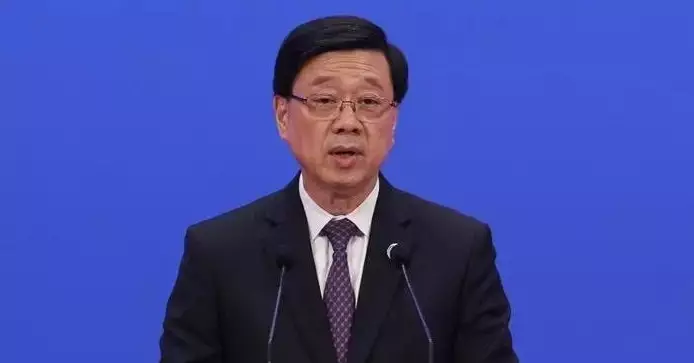
The Chief Executive, Mr John Lee, Photo source: reference image