SINGAPORE, April 14, 2026 /PRNewswire/ -- Singapore is fast becoming a testbed for next-generation logistics—and the latest deployment by Hai Robotics and Maersk signals a clear shift in how fashion supply chains are being rebuilt.
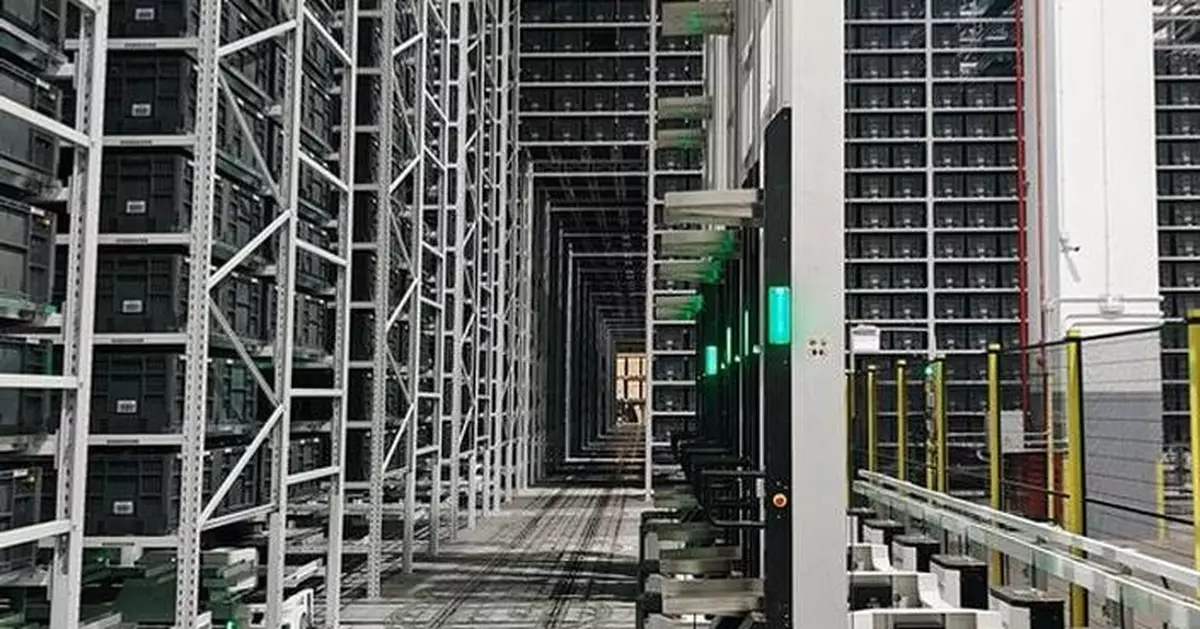
In a newly launched fulfilment centre opened in February 2026, high-density robotics now powers the movement of tens of thousands of SKUs—supporting both retail distribution and e-commerce orders within a single, tightly integrated operation.
At a time when fashion brands are under pressure to deliver more variety, faster turnaround, and seamless omnichannel fulfilment, this project moves beyond traditional automation trade-offs.
"Most operations still compromise between storage density and throughput," said Nathan Zeng, President of Hai Robotics SEA, ANZ, and South Korea. "What we're seeing here is the ability to achieve both—at scale."
Inside the facility, a coordinated fleet of robotic systems handles storage and movement as separate but synchronised functions. High-density storage robots operate across racks reaching over 10 metres, while autonomous mobile robots (AMRs) maintain fast, continuous flow between storage and workstations. The system is designed to move more than 1,000 totes per hour—without the congestion that often limits high-density environments.
But the bigger shift is operational, not just technological.
Workstations are no longer fixed to a single fulfilment model. They can be reconfigured dynamically handling bulk retail shipments one moment, and individual e-commerce orders the next. As demand shifts, so does the operation, without requiring physical reconfiguration.
Behind it all is a deeply data-driven approach. From early-stage simulation to live operations, data has shaped how the system is designed, deployed, and continuously optimised. Inventory placement, order sequencing, and even maintenance cycles are informed by real-time system insights.
Engineering this level of density at height also brings new challenges. Rack design, floor precision, and safety compliance all become critical factors when operating at over 10 metres. The system is built to meet these demands, including automated responses that align with fire safety and evacuation requirements.
Seamless integration with Maersk's warehouse systems ensures real-time coordination across the operation. Notably, much of this integration was validated in a virtual environment before deployment—accelerating implementation and reducing on-site risk.
For Maersk and its fashion partner, the facility represents more than a technology upgrade—it's a new operating model for handling complexity at scale.
And for the broader APAC market, it signals where fulfilment is heading next: denser, faster, and built to adapt.
** This press release is distributed by PR Newswire through automated distribution system, for which the client assumes full responsibility. **
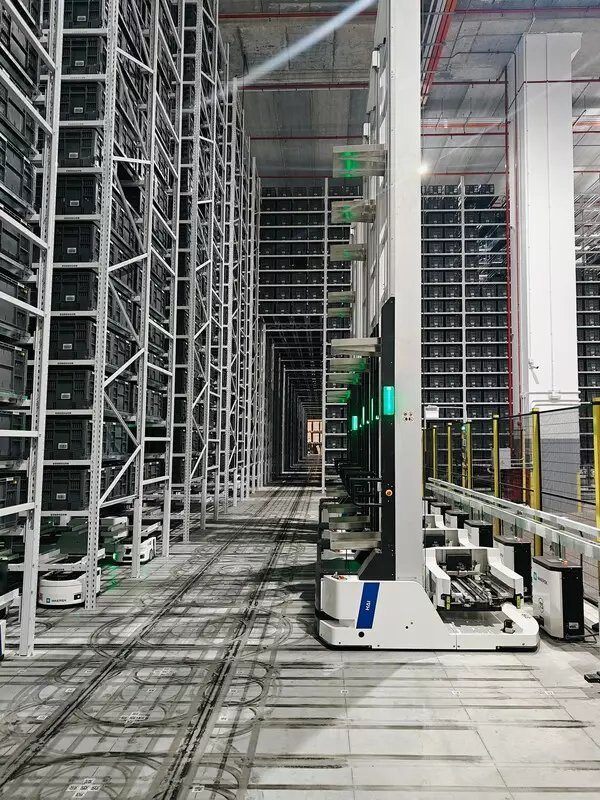
Hai Robotics and Maersk Redefine Fashion Fulfilment with High-Density Robotics at 10-Metre Scale in Singapore
SINGAPORE, April 14, 2026 /PRNewswire/ -- Midea Building Technologies (MBT), a business unit of Midea Group, together with Keppel Ltd.'s Infrastructure Division (Keppel), has entered into a strategic collaboration agreement to jointly develop AI-enabled, energy-efficient cooling solutions across Asia. The signing was witnessed by Ms Cindy Lim, CEO of Keppel's Infrastructure Division and Mr Peter Guan, Vice President of Midea Group and President of MBT.
The non-exclusive collaboration will combine MBT's capabilities in heating, ventilation, and air conditioning manufacturing and intelligent building systems with Keppel's strengths in Cooling-as-a-Service (CaaS) and digital optimisation, to co-develop standardised, modular cooling systems. Implementation of the modular cooling system in specific projects will be carried out through project agreements separately negotiated by Keppel and MBT on a case-by-case basis.
It is envisaged that the jointly developed modular cooling systems will offer a flexible, capex-light solution that can be deployed and scaled across multiple sectors, which will enhance the energy efficiencies of cooling processes while reducing the complexity of on-site installation.
By adopting a modular, pre-engineered approach, Keppel can pre-fabricate cooling modules and assemble them onsite. The modular cooling systems will be connected to Keppel's state-of-the-art Operations Nerve Centre (ONC). The ONC, in turn, runs on Keppel's proprietary digital platform, Infrastructure Intelligence (II), which leverages AI and machine learning for real-time monitoring and performance advanced analytics, allowing the cooling modules to be managed remotely around the clock.
When combined with MBT's smart equipment, IoT sensors and intelligent building management systems, it is expected that the AI-enabled cooling solution will be able to offer enhanced operational reliability, improved energy efficiency and reduced lifecycle carbon emissions generated from cooling processes.
As part of the collaboration, both companies will establish an AI-first Centre of Excellence, a collaborative platform, to facilitate engineering, standardisation, optimisation and replication across potential projects. Target sectors include data centres, advanced manufacturing and industrial parks, healthcare and education campuses, aviation hubs, integrated developments and retrofit projects.
Mr Peter Guan, Vice President of Midea Group and President of MBT, said: "This partnership unlocks the full potential of industrialised AI for cooling. MBT brings scalable manufacturing, equipment-level intelligence, and proven modular architectures that can be rapidly replicated across cities and sectors. Together with Keppel's operational platforms, we are moving from one-off projects to repeatable, standardised solutions – making sustainable cooling accessible and affordable at scale."
Mr Poh Tiong Keng, Executive Director, Energy-as-a-Service, Keppel, said, "This collaboration further strengthens our ability to develop and deploy next-generation cooling solutions across Asia. By combining Keppel's Operations Nerve Centre and deep operating capabilities with Midea's engineering and manufacturing strengths, we are helping to accelerate the adoption of intelligent, AI-enabled infrastructure at scale across multiple sectors. We look forward to building on Keppel's ongoing collaboration with Midea, which includes Keppel's HDB Tengah Centralised Cooling Systems project in Singapore."
About Midea
Midea Group Co., Ltd. (000333.SZ, 00300.HK) is an international tech-leading company ranked #246 at 2025's Fortune Global 500. Midea Group's business comprises smart home, industrial technology, building technology, robotics and automation, new energy, healthcare, and smart logistics. Midea's globally 65 production centers and over 190,000 employees in more than 200 countries and regions generated an annual revenue of more than USD 64.3 billion in 2025. Midea's 41 worldwide innovation centers and the strong commitment to R&D have resulted in more than 90,000 authorized patents to-date.
About Keppel
Keppel Ltd. (SGX:BN4) is a global asset manager and operator with strong expertise in sustainability-related solutions spanning the areas of infrastructure, real estate and connectivity. Headquartered in Singapore, Keppel operates in more than 20 countries worldwide, providing critical infrastructure and services for renewables, clean energy, decarbonisation, sustainable urban renewal and digital connectivity. Keppel creates value for investors and stakeholders through its quality investment platforms and diverse asset portfolios, including private funds and listed real estate and business trusts.
** This press release is distributed by PR Newswire through automated distribution system, for which the client assumes full responsibility. **
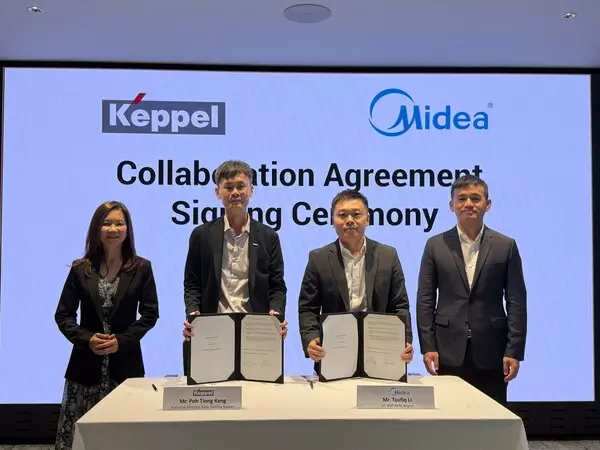
Midea and Keppel Partner to Collaborate on AI-Enabled Modular Cooling Solutions Opportunities across Asia