Pope Leo XIV, a studious and soft-spoken cleric, and Donald Trump, an unapologetically bellicose and pugilistic politician, have long been on a rhetorical collision course. Now their disagreement over the war in Iran has escalated in spectacular fashion, and their comments show how differently each see the conflict and its impact.
On social media, Trump said Leo was “Weak” and captive to the “Radical Left,” even suggesting that Leo somehow owed his position to Trump. The pope has declared Trump’s threats toward Iran “truly unacceptable" and pointed his flock to biblical text and church doctrine on war and peace, explaining that his purpose is not about Trump at all.
Click to Gallery
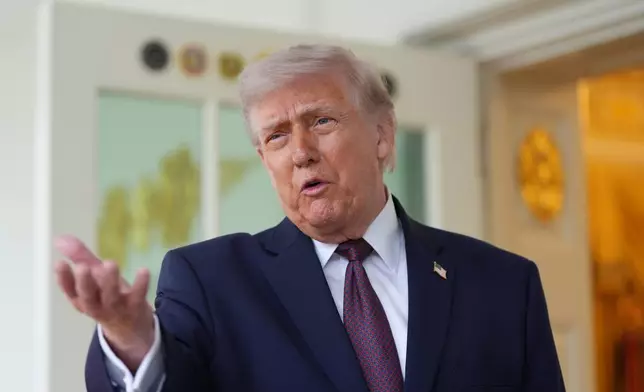
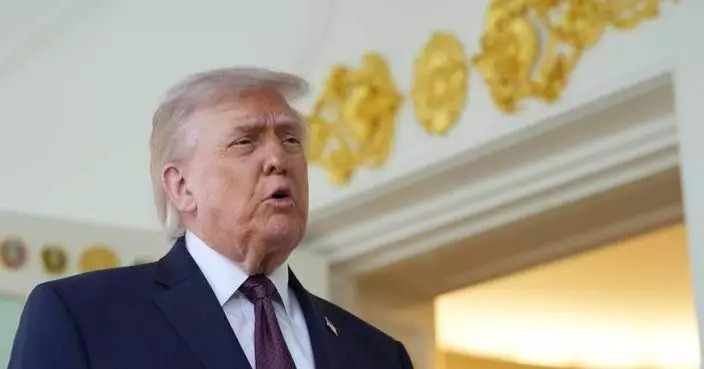
President Donald Trump speaks outside the Oval Office of the White House, Monday, April 13, 2026, in Washington. (AP Photo/Alex Brandon)
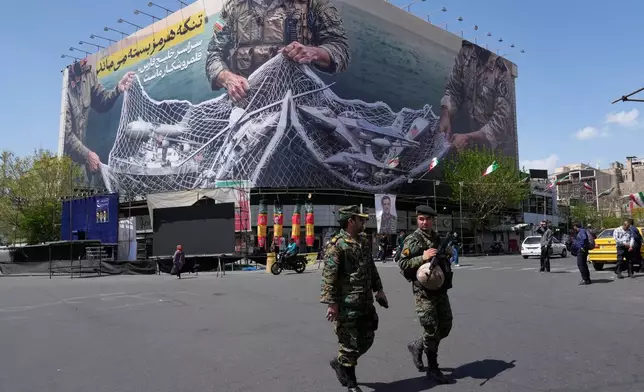
Two police officers walk in front of an anti-U.S. billboard depicting the American aircrafts into the Iranian armed forces fishing net with signs that read in Farsi: "The Strait of Hormuz will remain closed, The entire Persian Gulf is our hunting ground," at the Eqelab-e-Eslami, or Islamic Revolution square in downtown Tehran, Iran, Sunday, April 5, 2026. (AP Photo/Vahid Salemi)
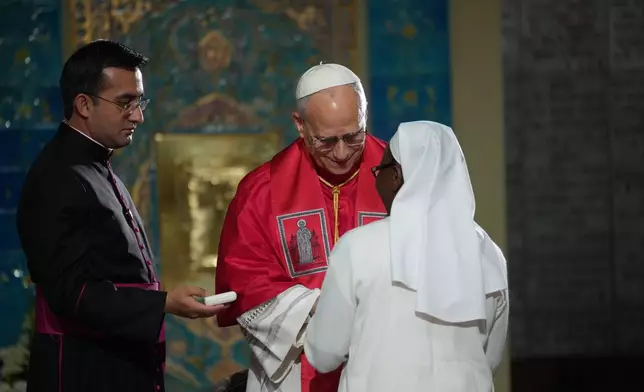
Pope Leo XIV meets the Algerian Community in the Basilica of Our Lady of Africa in Algiers, Monday, April 13, 2026, on the first day of an 11-day apostolic journey to Africa. (AP Photo/Andrew Medichini)
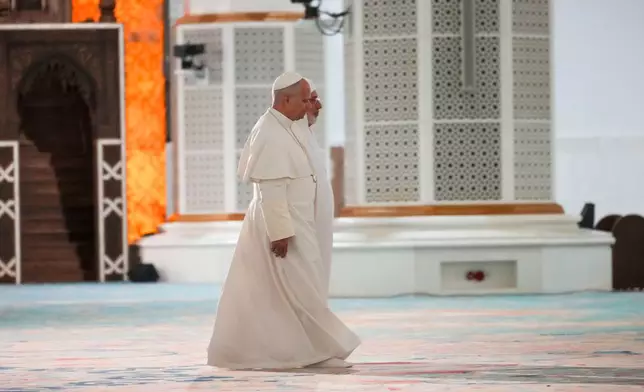
Pope Leo XIV is welcomed by Rector Mohamed Mamoun Al Qasimi upon his arrival at the Great Mosque in Algiers, Monday, April 13, 2026, on the first day of an 11-day apostolic journey to Africa. (AP Photo/Andrew Medichini)
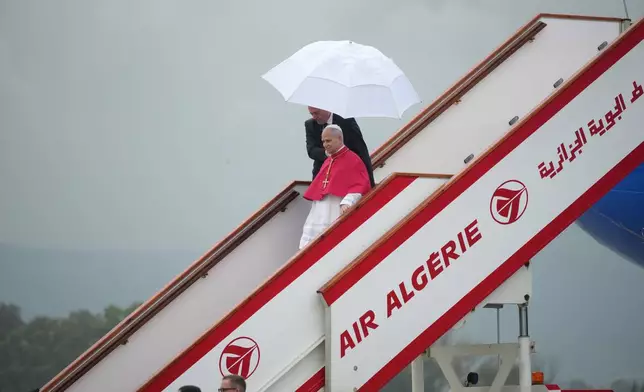
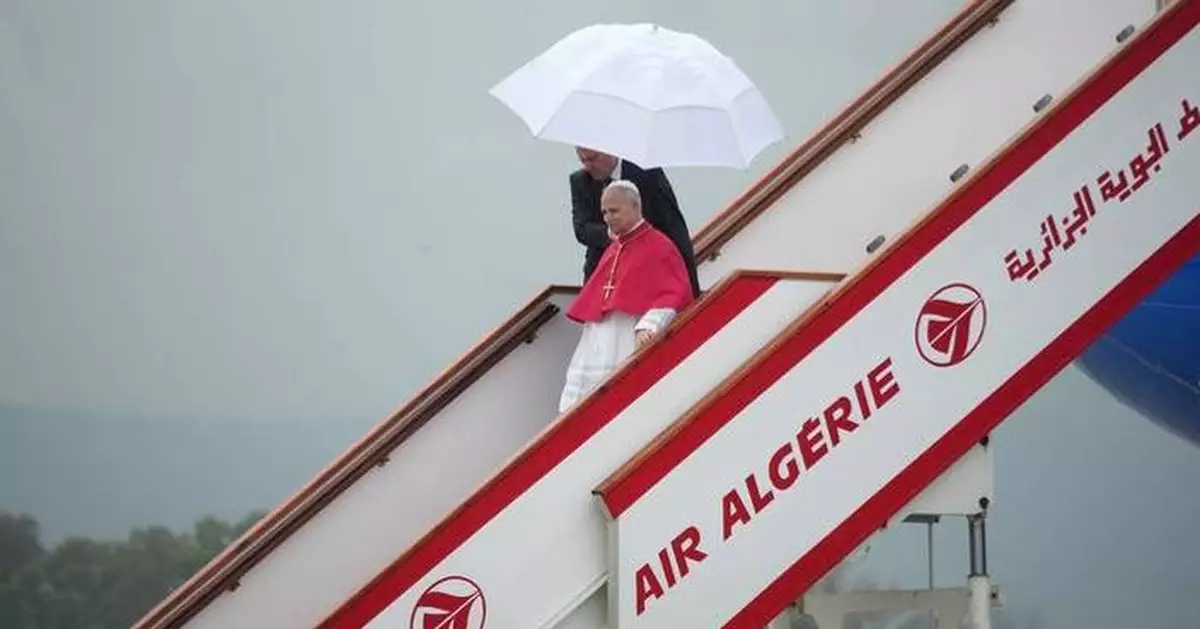
Pope Leo XIV arrives at Algiers' Houari Boumédiène International Airport on Monday, April 13, 2026, at the start of an 11-day apostolic journey to Africa. (AP Photo/Andrew Medichini)
“I’m not afraid of the Trump administration,” Leo said Monday on the way to Africa, “or of speaking out loudly about the message of the Gospel, which is what the Church works for.”
It's a spectacle involving the world's two biggest megaphones, both held by Americans for the first time. Here is how they got to this point.
WHAT HE SAID: When Russia invaded Ukraine in 2022, the future pope was a bishop in Peru. He did not shy away from assigning clear blame to Moscow. On a Peruvian show “Weekly Expression,” Prevost described an “imperialist invasion in which Russia wants to conquer territory for reasons of power given Ukraine’s strategic location.”
The clip resurfaced in Italian media soon after he was elected pope on May 8, 2025.
In early 2025, then-Cardinal Prevost used social media to share a news analyses that criticized U.S. Vice President JD Vance, a converted Catholic, for justifying harsh immigration policy by arguing that Christianity sets a pecking order of caring for others, putting one's family, immediate community and fellow citizens above foreigners.
“JD Vance is wrong: Jesus doesn’t ask us to rank our love for others,” read the headline that the future pope shared.
CONTEXT AND WHY IT MATTERS: Catholic bishops comment often in their local media, and some achieve considerable influence. But they vary widely in how detailed they are about public policy and politics. Many stick to broad statements about church doctrine and values and avoid taking stands at odds with individual politicians. With his comments in Peru and then his rare retweet as a cardinal in Rome, Prevost showed he kept abreast of world affairs and was willing to be quite direct in his critiques.
WHAT HE SAID: “Congratulations to Cardinal Robert Francis Prevost, who was just named Pope,” Trump posted on Truth Social on May 8, 2025. “It is such an honor to realize that he is the first American Pope. What excitement, and what a Great Honor for our Country. I look forward to meeting Pope Leo XIV. It will be a very meaningful moment!”
Trump later said at the White House that “we were a little bit surprised and very happy” with Leo's election.
By Monday, he was using Truth Social to take credit for Leo's election: “He wasn’t on any list to be Pope, and was only put there by the Church because he was an American, and they thought that would be the best way to deal with President Donald J. Trump.”
WHY IT MATTERS: Trump sees Leo in terms of nationalistic pride and loyalty. The immediate look toward meeting Leo (something that still hasn't happened) reflected his typical embrace of power and celebrity, even when it isn't a natural political fit. Further, Trump's takes do not reflect any nuance about Leo's origins or the Vatican's relationship with the U.S.
The College of Cardinals historically has viewed the U.S. with some skepticism — specifically because of how Washington's military and economic policies have affected the world, especially poor nations, and with a general reluctance to grant the papacy to someone from the world's preeminent superpower.
Leo grew up, was educated and then ordained in the U.S. but spent decades as a church leader elsewhere, including in poor areas of South America. “He was the least American of the Americans,” said Steven Millies, a professor at Chicago's Catholic Theological Union, where a young Leo earned his master of divinity.
WHAT HE SAID: “Peace with you all ... the first greeting of the risen Christ, the Good Shepherd who gave his life for the flock of God.”
Those were Leo's first words from the balcony of St. Peters. When he returned to the loggia for his first Sunday blessing, he addressed the Russian war on Ukraine and violence between Israel and Gaza, decrying a “third world war in pieces.” The following Monday, Leo opened an audience with journalists by quoting Jesus. “In the Sermon on the Mount, Jesus proclaimed: ‘Blessed are the peacemakers,’" the pontiff said.
WHY IT MATTERS: Leo's earliest statements all emphasized “peace" as a central message of Jesus — and previewed a likely theme of his papacy. Adding mentions of Ukraine, Russia, Israel and Palestine affirmed his willingness to go beyond theory and apply doctrine to what's happening to people around the world.
WHAT HE SAID: Just as important as the words of his opening papal statements on peace were the languages the polyglot Leo used: none English.
At his introduction to the world from St. Peter's Square, Leo opened in Italian and then used Spanish to address Peruvian Catholics and citizens where he'd served. Leo's Sunday blessing was in Italian. He briefly greeted the journalist assembly in English, with the obvious inflection of a Chicago native, but then quickly transitioned to Italian for his remarks. Even in recent encounters with reporters, Leo has opened in Italian before then answering in English.
WHY IT MATTERS: Latin and Italian are the official languages of the Vatican so it's no surprise that Leo speaks the local vernacular. But it's a conscious choice for him to use his fluent Italian and Spanish. It underscores that he's the leader of a global institution with 1.4 billion followers.
“He doesn’t want to be perceived, I think, as coming from the American side or as relying on his authority as American,” said Catholic University professor William Barbieri. “He wants to speak in the name of the church.”
WHAT THEY SAID: Trump escalated threats to Iran around Easter, when Christians celebrate the story of Jesus' resurrection. Leo used his Palm Sunday message to call Jesus the “King of Peace” and say God “does not listen to the prayers of those who wage war, but rejects them, saying: ‘Even though you make many prayers, I will not listen: your hands are full of blood.’”
Trump welcomed conservative religious leaders to the White House for a Holy Week observance. His spiritual adviser Paula White compared the president to Jesus, saying they're both persecuted figures who endured.
In Rome, Leo washed the feet of others, as the story of the Last Supper records Jesus doing for his disciples. Speaking to reporters, Leo named Trump directly for the first time and said he hoped the president would seek an “off-ramp” in Iran. On Easter, Trump threatened widespread bombing of Iran's civilian infrastructure and eradication of a “whole civilization.” Leo called that threat “truly unacceptable.”
WHY IT MATTERS: Their starkly different viewpoints and personalities, combined with the gravity of the Iran war, finally stripped away any pretense or possibility that Trump and Leo could avoid engaging directly.
WHAT THEY SAID: In Trump's post Sunday blasting Leo as “weak,” among other things, the president said, “I don’t want a Pope who criticizes the President of the United States because I’m doing exactly what I was elected, IN A LANDSLIDE, to do.” (Trump's 2024 victory was by no means a landslide.) He added that Leo should “focus on being a Great Pope, not a Politician.”
Leo, meanwhile, said again that he's not speaking as a politician.
“To put my message on the same plane as what the president has attempted to do here, I think is not understanding what the message of the Gospel is,” Leo told The Associated Press aboard the papal flight to Algeria. “And I’m sorry to hear that but I will continue on what I believe is the mission of the church in the world today.”
WHY IT MATTERS: It’s all a rare exercise for the papacy, whose occupants often comment on global affairs without specifically naming secular politicians. And while Trump routinely lashes out at anyone he perceives as an enemy, these dynamics are uncommon for the president, too: This time, Trump is picking a fight with someone who does not accept the president's terms and faces no measurable political pressure to do so.
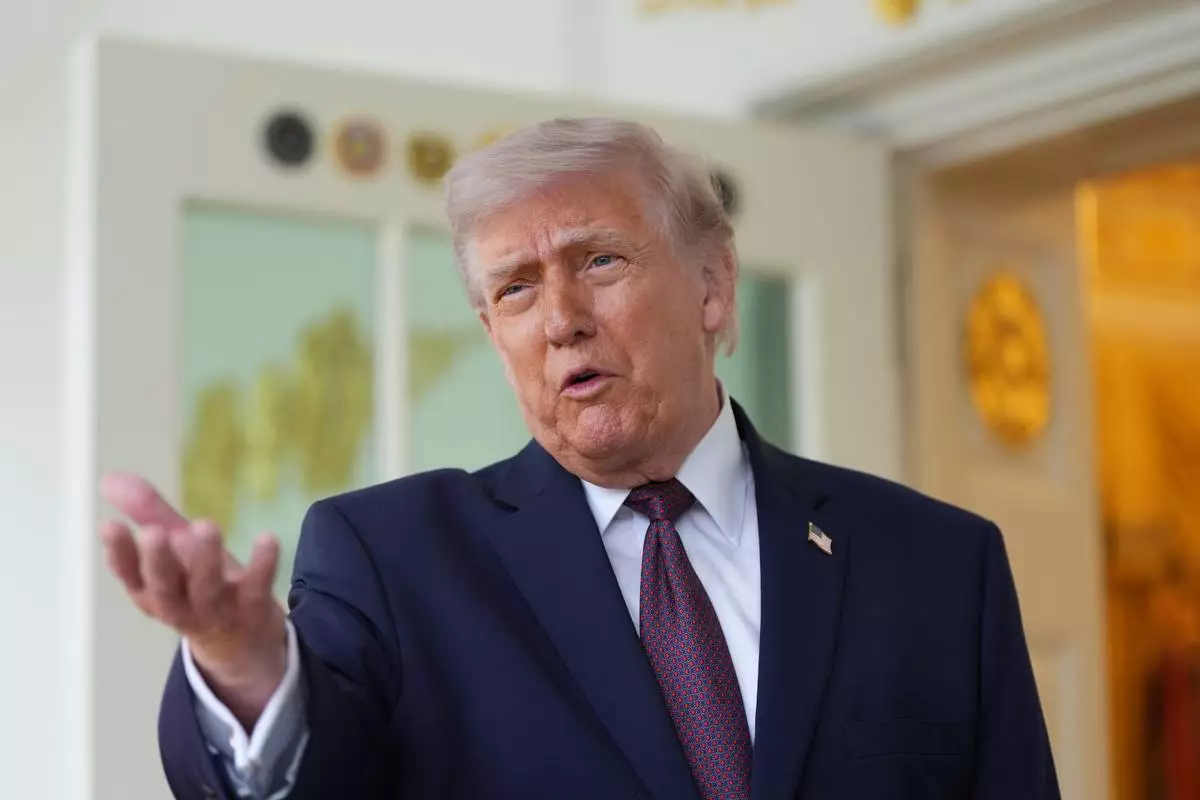
President Donald Trump speaks outside the Oval Office of the White House, Monday, April 13, 2026, in Washington. (AP Photo/Alex Brandon)
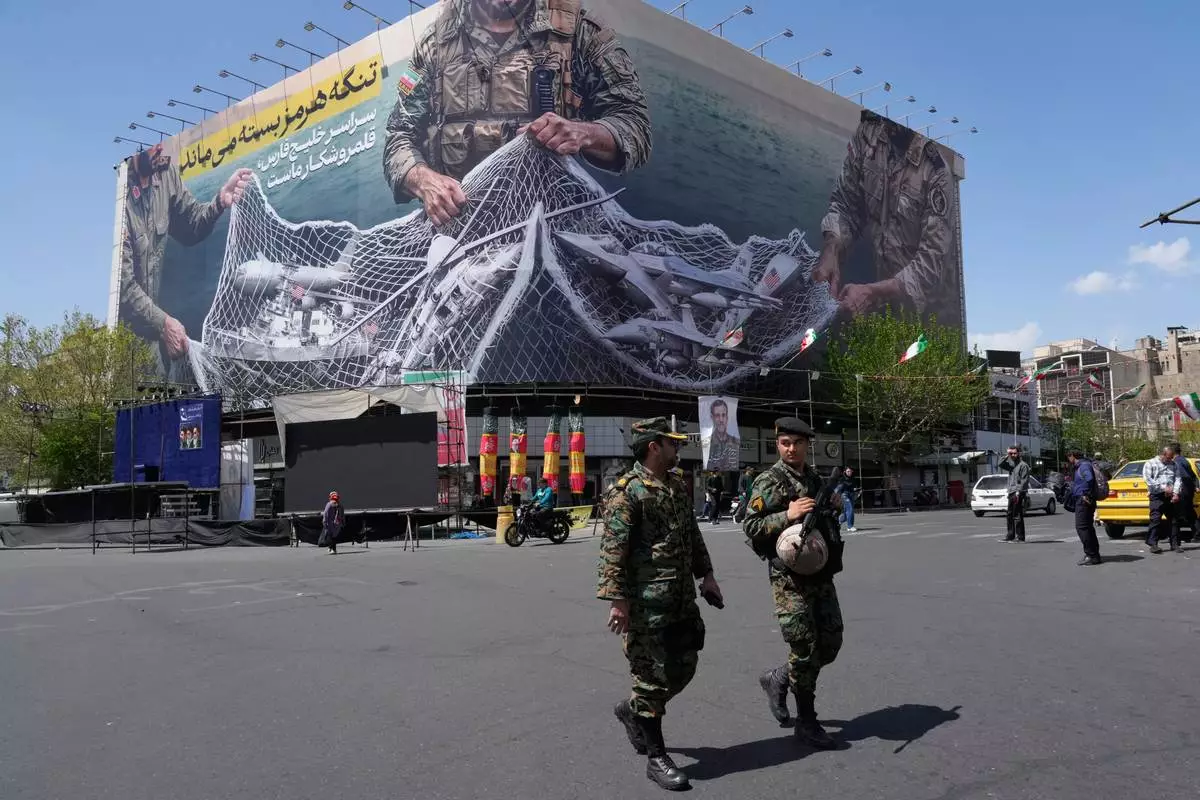
Two police officers walk in front of an anti-U.S. billboard depicting the American aircrafts into the Iranian armed forces fishing net with signs that read in Farsi: "The Strait of Hormuz will remain closed, The entire Persian Gulf is our hunting ground," at the Eqelab-e-Eslami, or Islamic Revolution square in downtown Tehran, Iran, Sunday, April 5, 2026. (AP Photo/Vahid Salemi)
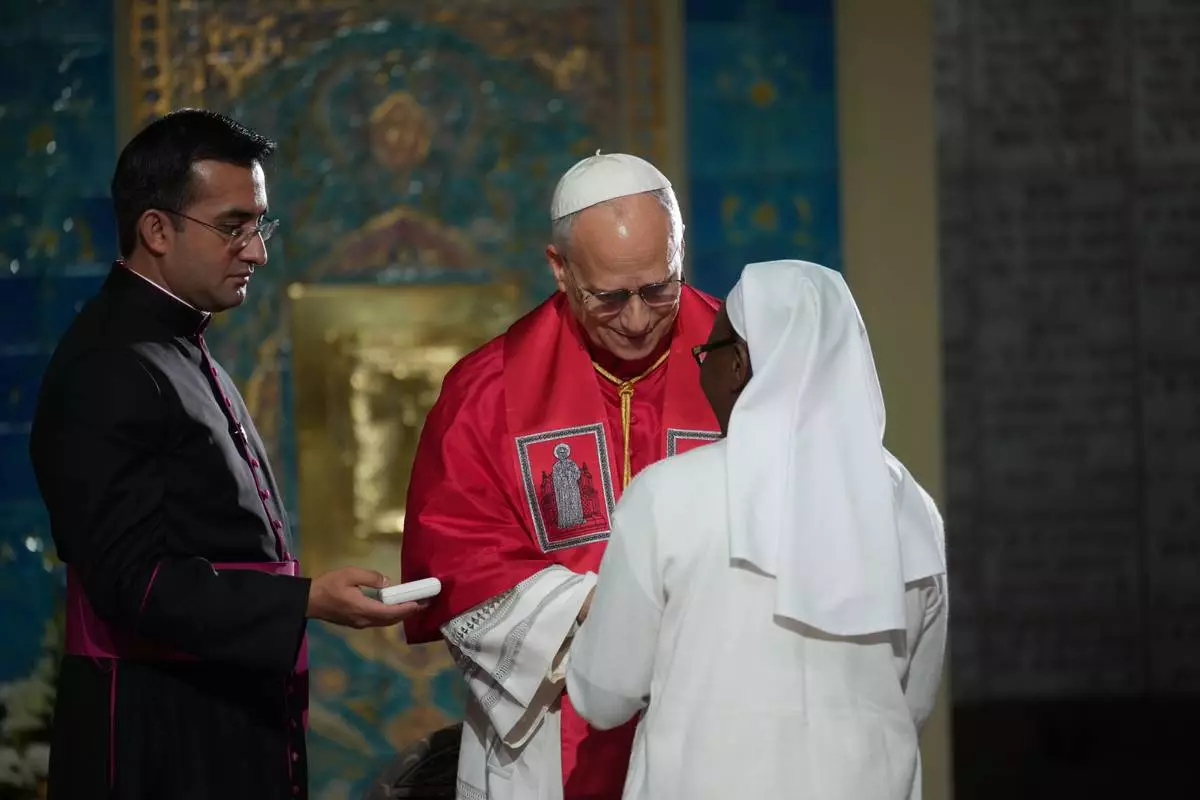
Pope Leo XIV meets the Algerian Community in the Basilica of Our Lady of Africa in Algiers, Monday, April 13, 2026, on the first day of an 11-day apostolic journey to Africa. (AP Photo/Andrew Medichini)
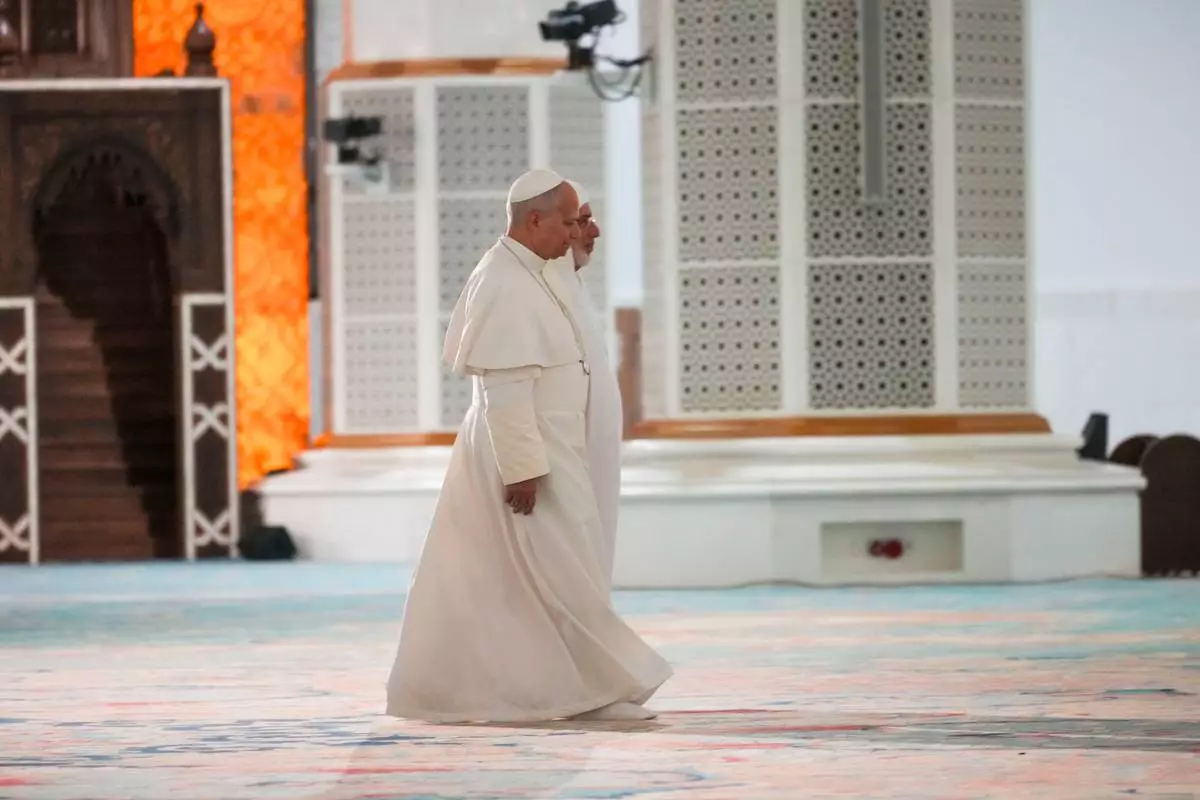
Pope Leo XIV is welcomed by Rector Mohamed Mamoun Al Qasimi upon his arrival at the Great Mosque in Algiers, Monday, April 13, 2026, on the first day of an 11-day apostolic journey to Africa. (AP Photo/Andrew Medichini)
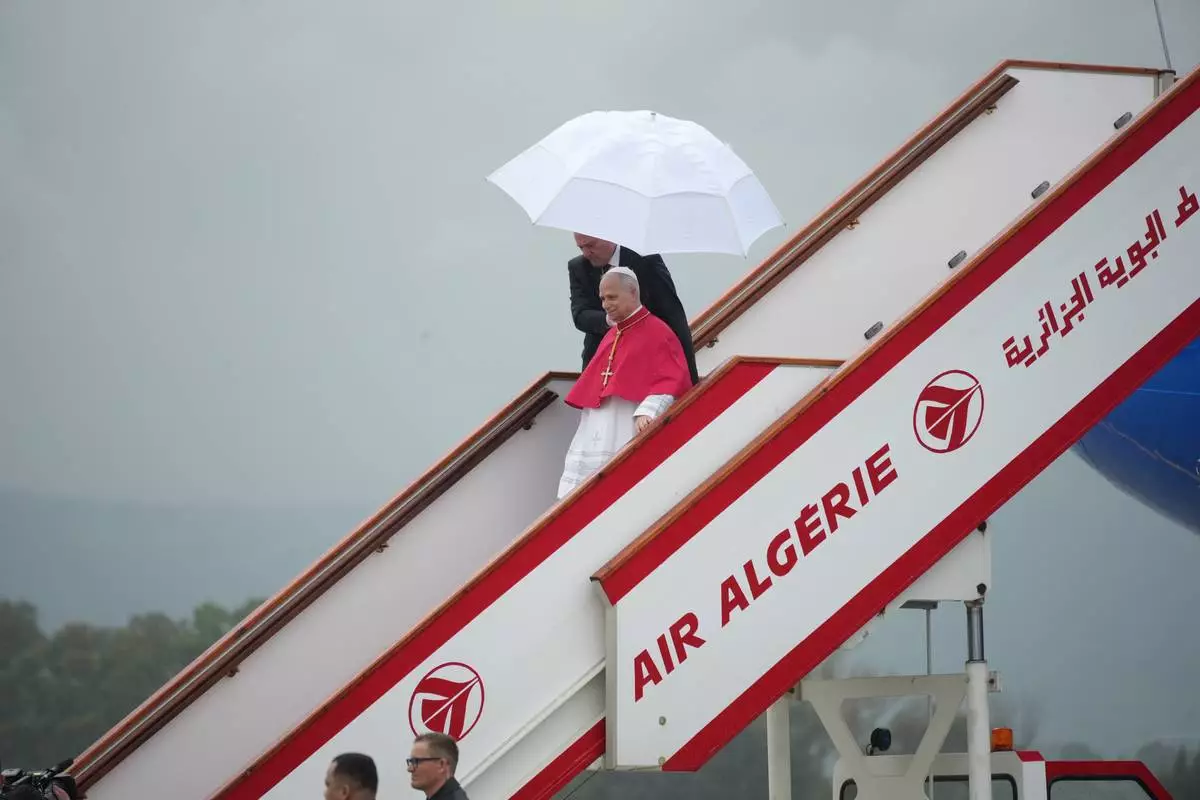
Pope Leo XIV arrives at Algiers' Houari Boumédiène International Airport on Monday, April 13, 2026, at the start of an 11-day apostolic journey to Africa. (AP Photo/Andrew Medichini)