NEW YORK (AP) — The U.S. stock market is rallying to the edge of its all-time high Tuesday, and oil prices are easing as hopes climb that the United States and Iran may try again on talks to end their war and avoid a worst-case scenario for the global economy.
The S&P 500 added 1.1% to its leap from the day before, which had erased the last of its losses since the United States and Israel launched attacks on Iran in late February. It's just 0.2% below its record set in January and on track for its ninth gain in the last 10 days.
Click to Gallery
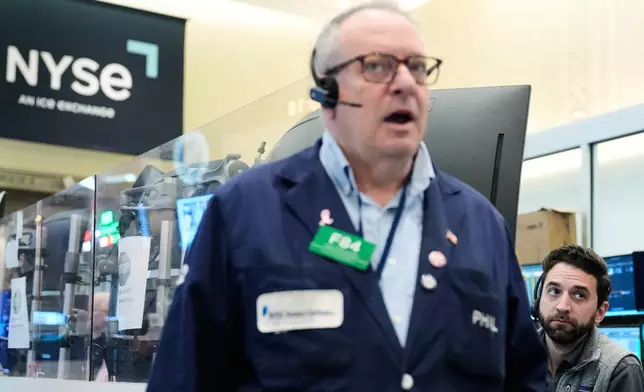
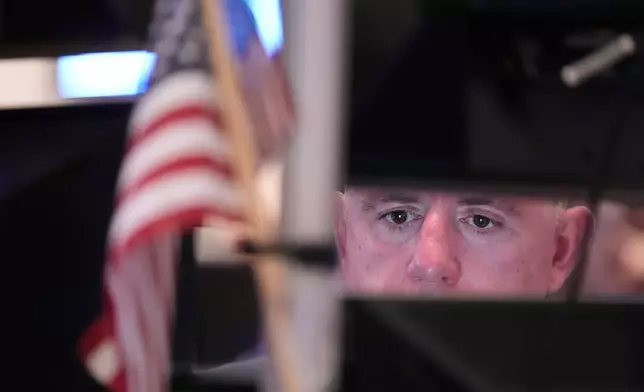
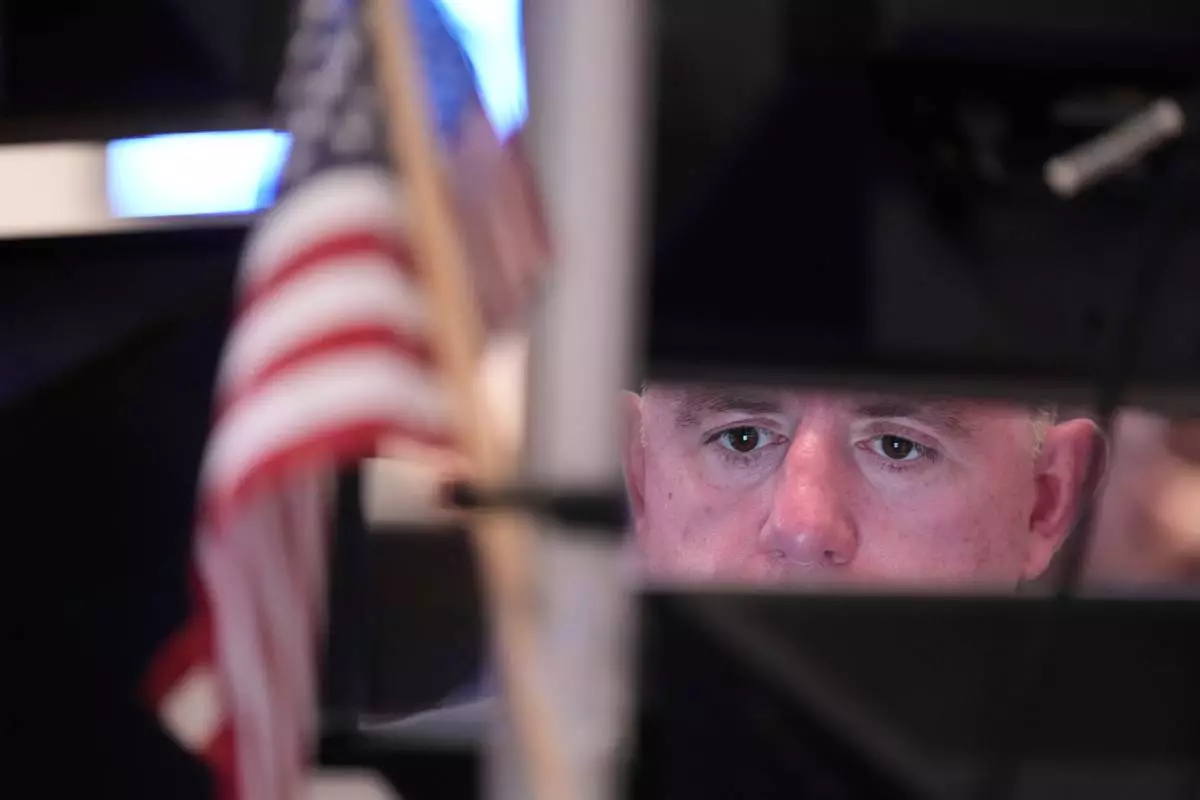
People work on the floor at the New York Stock Exchange in New York, Monday, April 13, 2026. (AP Photo/Seth Wenig)

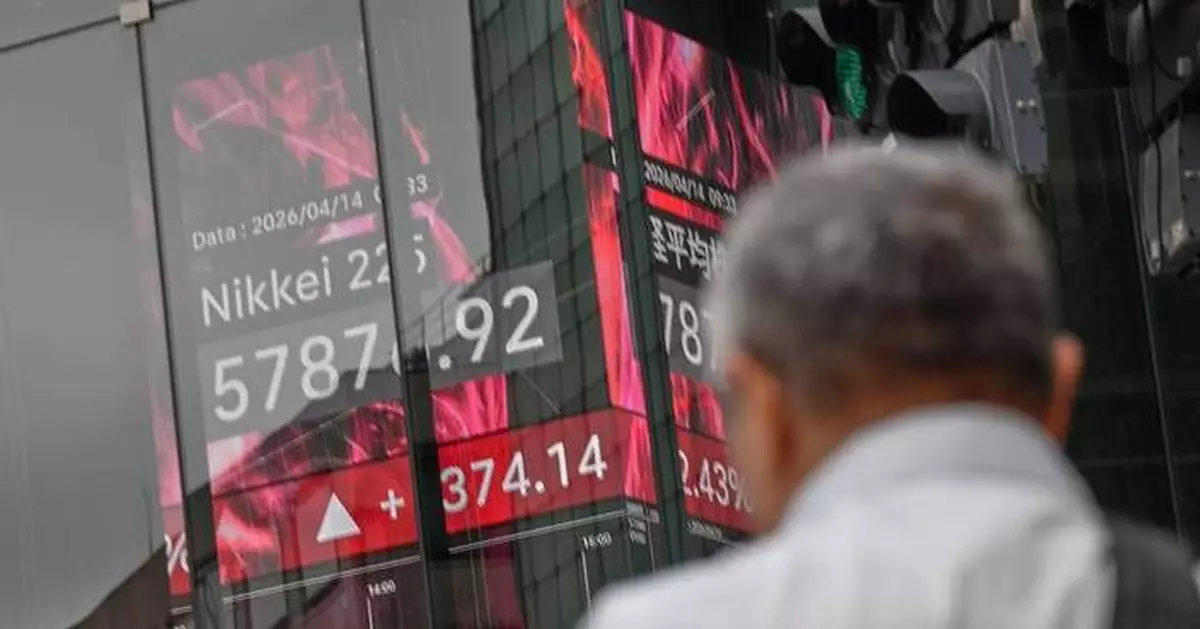
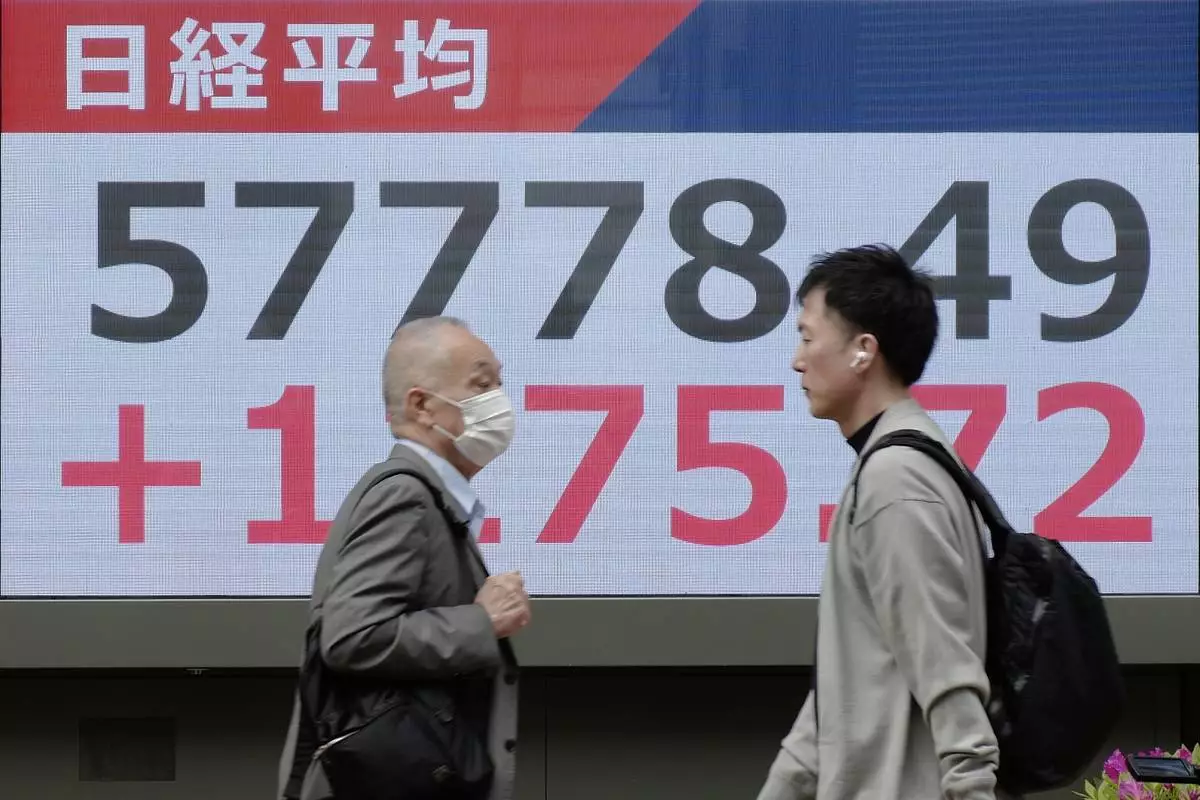
A person walks in front of an electronic stock board showing New York Dow, Japan's Nikkei, and Topix indexes at a securities firm Tuesday, April 14, 2026, in Tokyo. (AP Photo/Eugene Hoshiko)
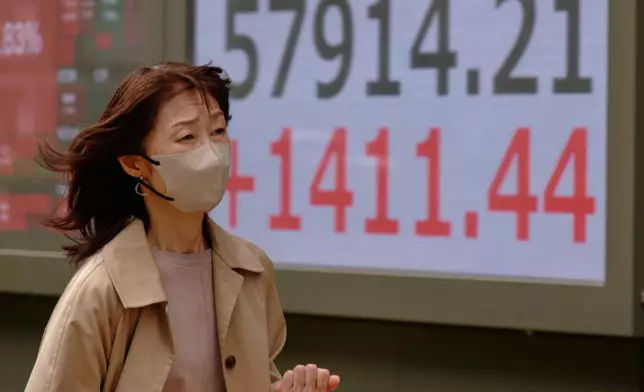
A person walks in front of an electronic stock board showing Japan's Nikkei index at a securities firm Tuesday, April 14, 2026, in Tokyo. (AP Photo/Eugene Hoshiko)
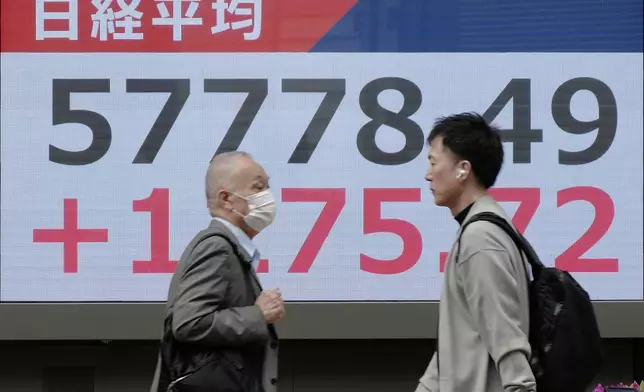
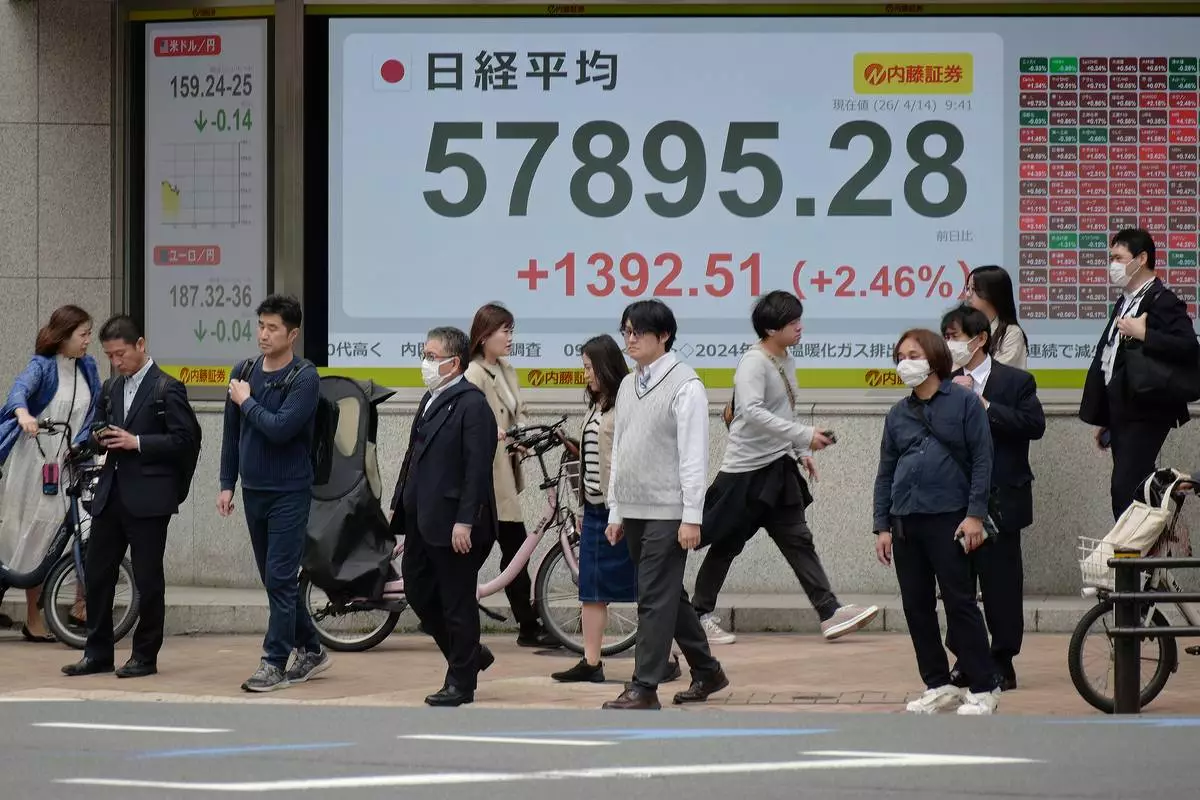
People walk in front of an electronic stock board showing Japan's Nikkei index at a securities firm Tuesday, April 14, 2026, in Tokyo. (AP Photo/Eugene Hoshiko)
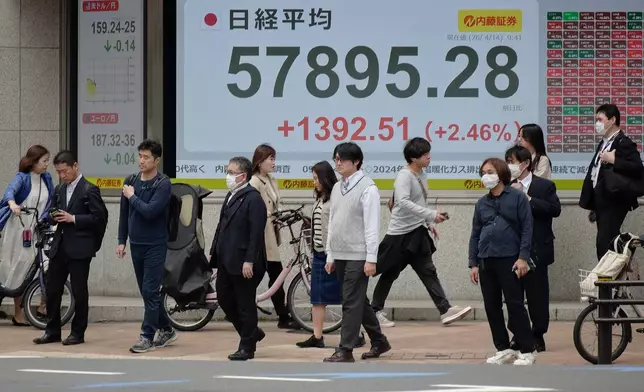
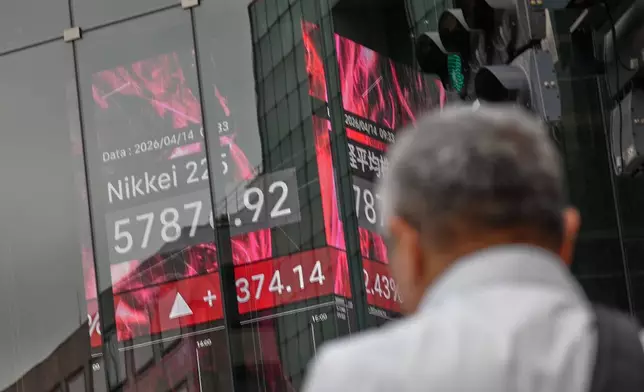
A person walks in front of an electronic stock board showing Japan's Nikkei index at a securities firm Tuesday, April 14, 2026, in Tokyo. (AP Photo/Eugene Hoshiko)
The Dow Jones Industrial Average was up 315 points, or 0.7%, as of 3:12 p.m. Eastern time, and the Nasdaq composite was 1.8% higher.
They followed gains for stock markets worldwide as Pakistan said it was trying to bring the United States and Iran together for more talks. Such prospects also helped lower the price of oil, whose production and transportation has been snarled by the fighting.
If talks succeed and the Iran war ends up being only a temporary setback for the global economy, rather than a new normal of very high oil prices and inflation, financial markets can turn their attention back to rising profits for companies and growth for economies. Those positives had stock markets worldwide largely doing well before the war began.
Brent crude oil, the international standard, has gone from roughly $70 per barrel before the war in late February to more than $119 at times when worries about the war hit their heights. Brent for June delivery fell 4.6% to $94.79 per barrel Tuesday.
A barrel of U.S. crude oil for May delivery dropped 7.9% to $91.28.
To be sure, hope has often quickly swung into doubt in financial markets since the war began, which has caused extreme and sudden reversals. Much of the stress has been due to the Strait of Hormuz, a narrow waterway that’s the main avenue for crude oil produced in the Persian Gulf area to reach customers worldwide. Blockages there have kept oil off the global market, which has in turn driven up its price.
And that has meant a blast of higher inflation. In the United States, inflation at the wholesale level accelerated to 4% in March from 3.4% the month before, according to the latest data released Tuesday. That was actually better than the 4.6% rate economists expected, but it could filter down to U.S. households if businesses fully pass on the increases.
The effect is worldwide. Global inflation this year looks set to accelerate to 4.4% from 4.1% in 2025, according to the International Monetary Fund, which had earlier thought inflation would slow to 3.8%.
The IMF on Tuesday also downgraded its forecast for global economic growth to 3.1% this year from the 3.3% it had forecast in January.
On Wall Street, strong profit reports from several companies and expectations for more helped make up for such worries. At their heart, stock prices tend to follow the path of corporate profits over the long term, and analysts are forecasting S&P 500 companies will deliver solid growth of nearly 13% for the most recent quarter, according to FactSet.
So much optimism is in the strength of corporate America's earnings power that analysts have even raised their estimates for S&P 500 profit over the first six months of the year since the end of February, according to Morgan Stanley.
BlackRock gained 3.3%, and Citigroup rose 3.2% Tuesday after the financial companies reported stronger profit and revenue for the latest quarter than analysts expected.
JPMorgan Chase also delivered a better-than-expected quarter, but its stock dipped 0.5% as CEO Jamie Dimon said bank officials cannot predict how the “increasingly complex set of risks” will play out given so much uncertainty.
Amazon climbed 3.6% after saying it would buy Globalstar, a mobile satellite services company, for $90 per share in either cash or Amazon stock. Globalstar jumped 9.7%.
Software companies also rallied for a second day, recovering more of their sharp losses from earlier in the year taken on worries that they could be made obsolete by artificial-intelligence technology. AppLovin rose 3.5%, and an ETF from iShares tracking the software industry added 0.5%.
That in turn helped private-credit companies rebound. These companies have lent money to software businesses and others that may be under threat from AI, and they've seen investors rush to try to pull their money recently.
Blue Owl Capital rose 8.1% to trim its loss for the year so far to 38.9%. Ares Management climbed 5.5%, and Apollo Global Management rose 4.6%.
They helped offset a 5% drop for Wells Fargo, which reported weaker revenue for the latest quarter than analysts expected.
In stock markets abroad, indexes rose across much of Europe and Asia. South Korea’s Kospi jumped 2.7%, and Japan’s Nikkei 225 rose 2.4% for two of the bigger gains.
In the bond market, Treasury yields eased as the fall for oil prices took some of the pressure off inflation. The yield on the 10-year Treasury fell to 4.25% from 4.30% late Monday.
AP Business Writers Chan Ho-him and Matt Ott contributed to this report.
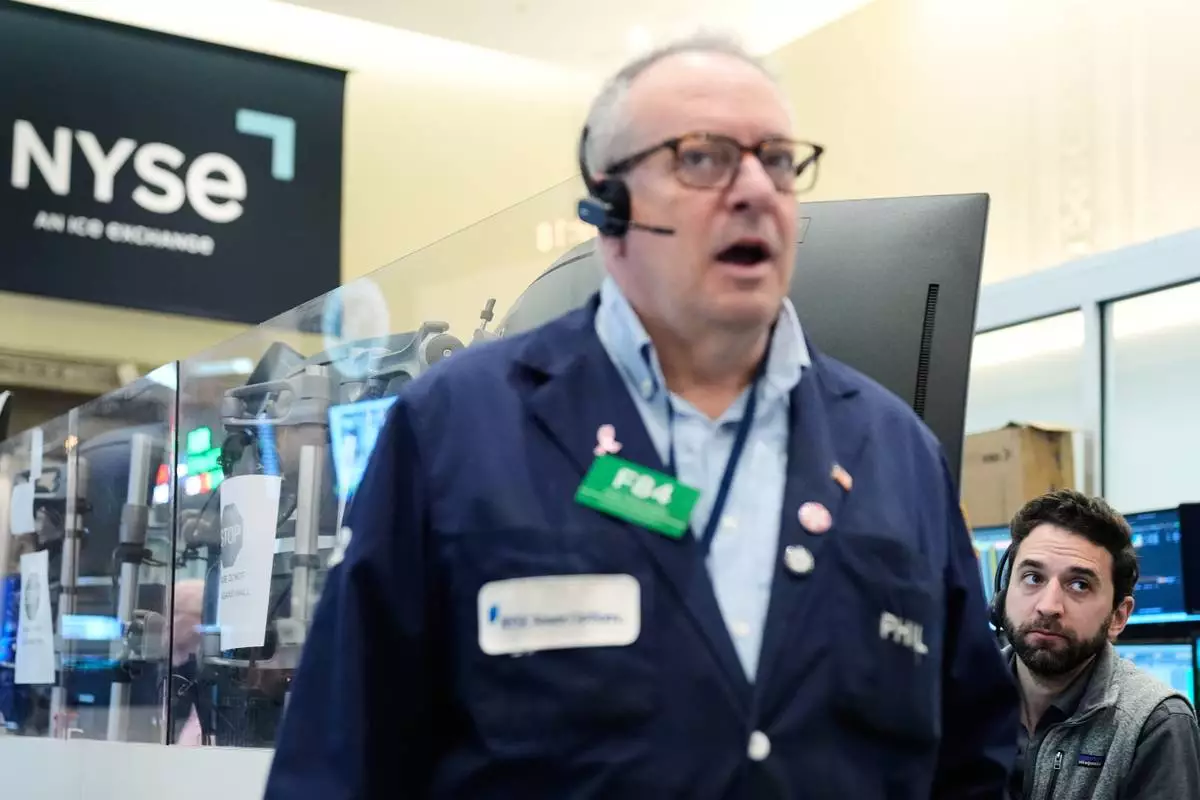
People work on the floor at the New York Stock Exchange in New York, Monday, April 13, 2026. (AP Photo/Seth Wenig)

A person walks in front of an electronic stock board showing New York Dow, Japan's Nikkei, and Topix indexes at a securities firm Tuesday, April 14, 2026, in Tokyo. (AP Photo/Eugene Hoshiko)

A person walks in front of an electronic stock board showing Japan's Nikkei index at a securities firm Tuesday, April 14, 2026, in Tokyo. (AP Photo/Eugene Hoshiko)
People walk in front of an electronic stock board showing Japan's Nikkei index at a securities firm Tuesday, April 14, 2026, in Tokyo. (AP Photo/Eugene Hoshiko)
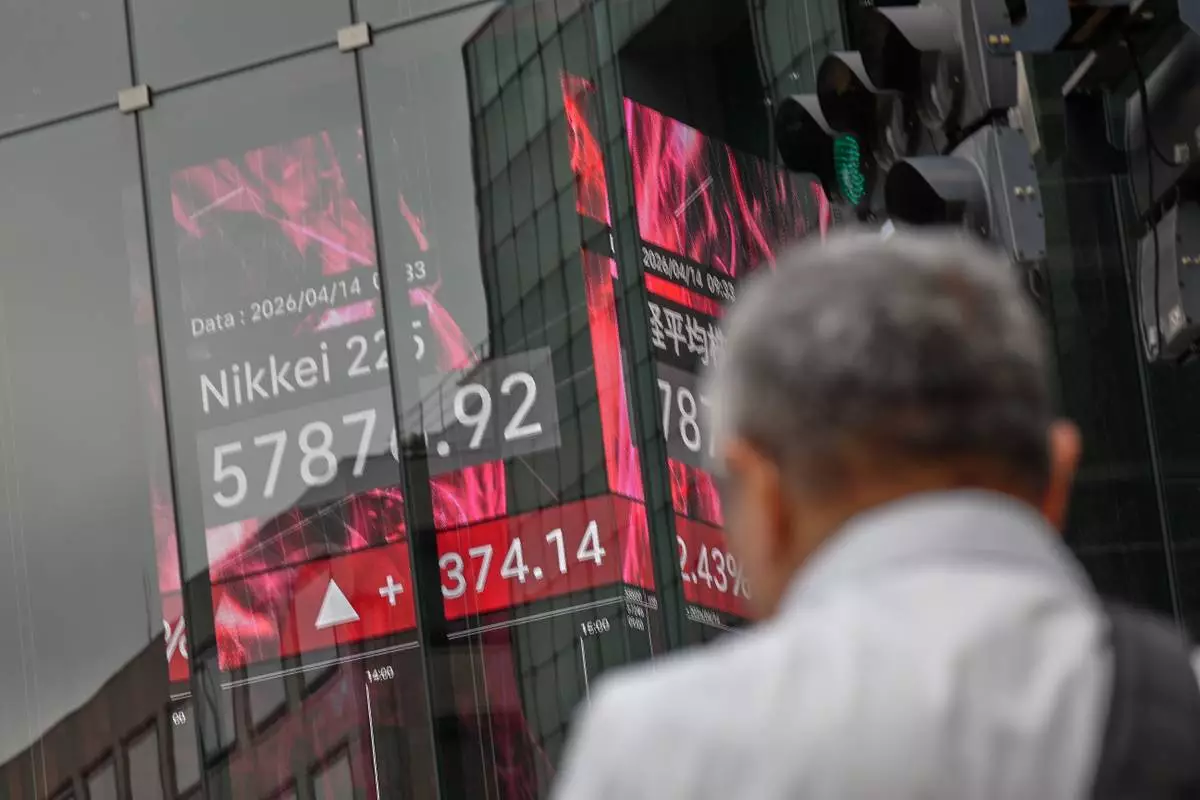
A person walks in front of an electronic stock board showing Japan's Nikkei index at a securities firm Tuesday, April 14, 2026, in Tokyo. (AP Photo/Eugene Hoshiko)
ISLAMABAD (AP) — Diplomats worked through back channels Tuesday to arrange a new round of talks between the United States and Iran after Washington enacted its blockade of Iranian ports, while Tehran threatened to strike targets across the war-weary region.
U.S. President Donald Trump said a second round of talks could happen "over the next two days," telling the New York Post the negotiations could be held again in the capital of Pakistan.
United Nations Secretary-General Antonio Guterres concurred, saying it’s “highly probable” that talks will restart. He cited a meeting he had with Pakistan’s deputy prime minister, Ishaq Dar.
Meanwhile in Washington, the first direct talks in decades between the Israeli and Lebanese ambassadors to the U.S. concluded on an positive note, according to Israeli Ambassador Yechiel Leiter.
Leiter, who was the only diplomat to speak after the two-hour talks, said the two countries are “on the same side of the equation” in “liberating Lebanon” from Hezbollah.
An initial round of talks aimed at permanently ending the U.S.-Iran conflict failed to produce an agreement last weekend. The White House said Iran’s nuclear ambitions were a central sticking point.
A U.S. official said Tuesday that fresh talks with Iran were still under discussion and that nothing has been scheduled. The official spoke on condition of anonymity because they were not authorized to discuss sensitive negotiations.
Though the ceasefire appeared to hold, the showdown over the Strait of Hormuz risked reigniting hostilities and deepening the regional war's economic fallout.
The war, now in its seventh week, has jolted markets and rattled the global economy as shipping has been cut off and airstrikes have torn through military and civilian infrastructure across the region.
The fighting has killed at least 3,000 people in Iran, more than 2,000 in Lebanon, 23 in Israel and more than a dozen in Gulf Arab states. Thirteen U.S. service members have also been killed.
The blockade is intended to pressure Iran, which has exported millions of barrels of oil, mostly to Asia, since the war began. Much of it has likely been carried by so-called dark transits that evade sanctions and oversight, providing cash flow that’s been vital to keeping Iran running.
Both the nature of enforcement and the extent to which ships will comply remained unclear during the first full day of the blockade Tuesday. Tankers approaching the strait Monday turned around shortly after it took effect, though one reversed course again and transited the waterway.
The tanker Rich Starry had been waiting off the coast of the United Arab Emirates, according to shipping data firm Lloyd’s List, which cited data from the energy cargo-tracking firm Vortexa. It was not immediately clear whether the tanker had earlier docked in Iran. Yet it was listed by the U.S. Treasury’s Office of Foreign Assets Control as linked to Iranian shipping.
Lloyd’s List, citing ship registry and tracking data, reported that the vessel is owned by a Chinese shipping company and ultimately bound for China.
U.S. Central Command said no ships made it past the blockade in the first 24 hours, while six merchant vessels complied with direction from U.S. forces to turn around and re-enter an Iranian port on the Gulf of Oman.
U.S. Treasury Secretary Scott Bessent said Chinese tankers will not be allowed passage through the strait. "So they're not going to be able to get their oil,” he told reporters Tuesday on the sidelines of IMF-World Bank meetings.
In rare public criticism seemingly directed at Trump, Chinese President Xi Jinping said nations should “oppose the world’s retrogression to the law of the jungle.” Speaking during a reception for the Spanish prime minister, Xi said nations should work to “jointly safeguard genuine multilateralism.”
Since the start of the war, Iran has curtailed maritime traffic, with most commercial vessels avoiding the waterway.
Iran’s effective closure of the strait, through which a fifth of global oil transits in peacetime, has sent oil prices skyrocketing, pushing up the cost of gasoline, food and other basic goods far beyond the Middle East.
Trump said Monday that Iran's control of the strait amounted to blackmail and extortion as the U.S. blockade took effect. He said in a social media post that Iran’s navy had been "completely obliterated,” but it still had “fast attack ships.”
He warned that “if any of these ships come anywhere close to our BLOCKADE, they will be immediately ELIMINATED."
Iran threatened to retaliate against Persian Gulf ports if attacked.
“If you fight, we will fight," Iran's parliamentary speaker, Mohammad Bagher Qalibaf, said in a statement addressed to Trump.
French President Emmanuel Macron and British Prime Minister Keir Starmer will co-chair a conference Friday for nations willing to deploy warships to escort oil tankers and container ships through the strait. The deployment will happen “when security conditions allow,” Macron’s office said Tuesday.
The talks in Washington between Israel and Lebanon were expected to be preliminary, focused on setting parameters rather than resolving core issues.
U.S. Secretary of State Marco Rubio, who is facilitating the talks, downplayed expectations for any immediate agreement. He called the talks a “historic opportunity” but said the process was “working against decades of history and complexities” that will not be quickly resolved.
Leiter, the Israeli ambassador to the U.S, said after the talks that both countries saw eye-to-eye in several areas.
“The Lebanese government made it very clear that they will no longer be occupied by Hezbollah, and Iran has been weakened. Hezbollah is dramatically weakened,” Leiter said. “This is an opportunity.”
After the ceasefire in Iran, Israel pressed ahead with its air and ground campaign, insisting that the truce does not apply to fighting in Lebanon. It has, however, halted strikes in the country’s capital since April 8, after a deadly bombardment that hit several crowded commercial and residential areas in central Beirut and killed more than 350 people in one day.
The deaths sparked an international outcry and threats by Iran that it would end the ceasefire. Overall, the fighting has killed more than 2,100 people and displacing in excess of 1 million others, according to Lebanese authorities.
Lebanese officials have pushed for a ceasefire. Israel has framed the negotiations around Hezbollah’s disarmament and a potential peace deal, without publicly committing to halting hostilities or withdrawing its forces.
Israel wants Lebanon’s government to assume responsibility for disarming Hezbollah, much as was envisaged in a November 2024 ceasefire. But the militant group has survived efforts to curb its strength for decades and said on Monday that it will not abide by any agreements that may result from the talks.
Israeli Foreign Minister Gideon Saar on Tuesday floated the idea of cooperation with the Lebanese government to dismantle Hezbollah.
Metz reported from Ramallah, West Bank. Associated Press writers Aamer Madhani, Matthew Lee, Fatima Hussein, Collin Binkley and Konstantin Toporin in Washington, Sylvie Corbet in Paris, Toqa Ezzidin in Cairo, Natalie Melzer in Jerusalem, and Edith Lederer and Farnoush Amiri at the United Nations contributed to this report.
Damage is visible on a residential building that, according to Iranian authorities, was hit by a strike on March 4 during the U.S.-Israeli military campaign, in southeastern Tehran, Iran, Tuesday, April 14, 2026. (AP Photo/Vahid Salemi)
FILE - Oil tankers and cargo ships line up in the Strait of Hormuz as seen from Khor Fakkan, United Arab Emirates, Wednesday, March 11, 2026. (AP Photo/Altaf Qadri,File)
Ahlam Badawi, 51, left, mother of Hassan Ali Badawi, 31, a paramedic of the Lebanese Red Cross killed in a Israeli strike, cries during his funeral in Choueifat, Lebanon, Monday, April 13, 2026. (AP Photo/Emilio Morenatti)
A man flashes a victory sign as he carries an Iranian flag in front of an anti-U.S. billboard depicting the American aircrafts into the Iranian armed forces fishing net with signs that read in Farsi: "The Strait of Hormuz will remain closed, The entire Persian Gulf is our hunting ground," at the Eqelab-e-Eslami, or Islamic Revolution Square in downtown Tehran, Iran, Monday, April 13, 2026. (AP Photo/Vahid Salemi)
A woman wears a badge with a portrait of the late Iranian Supreme Leader Ayatollah Ali Khamenei, who was killed in the U.S. and Israel strikes on Feb. 28, during a campaign in support of the government at the Enqelab-e-Eslami, or Islamic Revolution, Square in downtown Tehran, Iran, Monday, April 13, 2026. (AP Photo/Vahid Salemi)
A man drives his motorbike with a poster on its windshield depicting Iran's Supreme Leader Ayatollah Mojtaba Khamenei, top, and his father, the slain Supreme Leader Ayatollah Ali Khamenei, who was killed in the U.S. and Israel strikes on Feb. 28, in downtown Tehran, Iran, Monday, April 13, 2026. (AP Photo/Vahid Salemi)
President Donald Trump speaks outside the Oval Office of the White House, Monday, April 13, 2026, in Washington. (AP Photo/Alex Brandon)