Skip to Content Facebook Feature Image

Afghan migrants in Poland fear forced deportations as asylum applications remain suspended

News

Afghan migrants in Poland fear forced deportations as asylum applications remain suspended
News

News

Afghan migrants in Poland fear forced deportations as asylum applications remain suspended

2026-04-14 16:04 Last Updated At:16:10

WARSAW, Poland (AP) — Afghan migrants in Poland face forced deportations and fear for their lives at the hands of the Taliban-run government back home, concerns that rights groups say have soared after Poland last year moved to partially suspend the right to seek asylum.

Rights groups warn the measure, introduced in March 2025, is now being overused by authorities. It's based on an amended Polish law that imposed temporary restrictions on the right to apply for international protection at the border with Belarus for those who crossed into the NATO and European Union member state illegally.

“I tried more than a billion times to seek safety,” an Afghan in his 20s, currently in a detention center for migrants in eastern Poland, said over the phone. He recounted how the Taliban killed his father, and also detained and beat him up.

The rest of his family is still in hiding in Afghanistan, he said, speaking to The Associated Press on condition of anonymity because he fears for his safety, should he be deported to Afghanistan.

All this he recounted to Polish authorities, he said, "but they did not care.”

The Polish Interior Ministry did not respond to AP requests for comment about the deportations of Afghans and how it applies the new restriction.

Like many of his countrymen, the young Afghan crossed into EU-member Poland from Belarus and managed to reach Germany, where he was arrested and then returned to Poland to have his asylum request assessed under EU laws.

He now says Polish authorities decided to deport him without properly reviewing his case, simply because he had first entered the country by way of Belarus — a fraught route that Warsaw has sought to crack down on after tens of thousands of migrants tried to enter the EU that way in recent years.

Poland says it's been overwhelmed by the influx and argues that the migrants were sent by Russia and its ally Belarus to destabilize Poland and other Western countries.

The temporary suspension — for a total of 60 days — of the right to seek asylum only applies “on the border with Belarus," the new legislation says. The government has prolonged this time period multiple times, effectively suspending asylum applications for over a year and more.

Legal experts such as the Polish Ombudsman, which protects civil and human rights in Poland, and the UNHCR have criticized Poland's suspension of the right to asylum.

They say it's incompatible with international law and especially the Geneva Conventions on refugee rights, which obliges receiving countries to examine each individual's claim for protection.

Poland's liberal Prime Minister Donald Tusk has said the security risks at the Belarus border warranted the new measures, an argument the EU did not reject though its member states are required to provide at least a minimum of rights to asylum-seekers even in cases of orchestrated migration crises.

Since the new law was introduced, rights groups and migrants say Poland has been stretching the measure to include not just migrants apprehended on the Belarus-Polish border but those found anywhere in the country — as long as they entered across that border.

In practice, this means that Afghan migrants, whose route to Poland almost always involves Belarus, cannot apply for asylum, regardless of their individual circumstances.

Council of Europe’s Commissioner for Human Rights Michael O’Flaherty in a letter, dated April 1 and published Tuesday, to the Polish government expressed his concerns that asylum applications are "suspended in every case in which border guards consider that the person has crossed the Poland-Belarus border irregularly.”

“In this regard, I note information about the recent removal of a group of Afghan nationals from Poland to Afghanistan, who were not provided with an opportunity to lodge asylum applications,” O’Flaherty wrote.

The legal grey area has apparently even made Frontex, the EU border control agency, uncomfortable. Its monitors pulled out from a government-organized deportation flight to Pakistan last year after learning that Polish authorities had not properly assessed the asylum applications of those being deported.

“We have to make sure that people that are returned have fully gone through the entire asylum procedure as per EU law,” said Krzysztof Borowski, spokesperson for Frontex.

The young migrant interviewed by the AP is among some 120 Afghans currently in detention centers in Poland. A friend of his, he claimed, was recently deported by Poland back to Afghanistan. His family has not heard from him since.

About 65% of Afghans asking for asylum receive protection in Europe, according to the EU Agency for Asylum, which indicates their applications are mostly successful elsewhere in the bloc.

Tomasz Sieniow, from the nongovernmental Foundation Institute for the Rule of Law, was aboard a flight last Friday that Polish authorities were using to deport nine Afghans back home via Uzbekistan.

He told the AP that the European Court of Human Rights had issued rulings asking Poland not to deport the nine, but that authorities subsequently only took six of the Afghans off the flight.

Sieniow said that most Afghans detained in Poland had worked with the previous, U.S.-allied Afghan government that collapsed when the Taliban overran Afghanistan in August 2021, or with the U.S. or other NATO troops.

These people, and their families, “should not be removed," said the NGO worker and added that “Poland never analyzed their reasons for asking for protection.”

Follow AP’s global coverage of migration at https://apnews.com/hub/migration

_
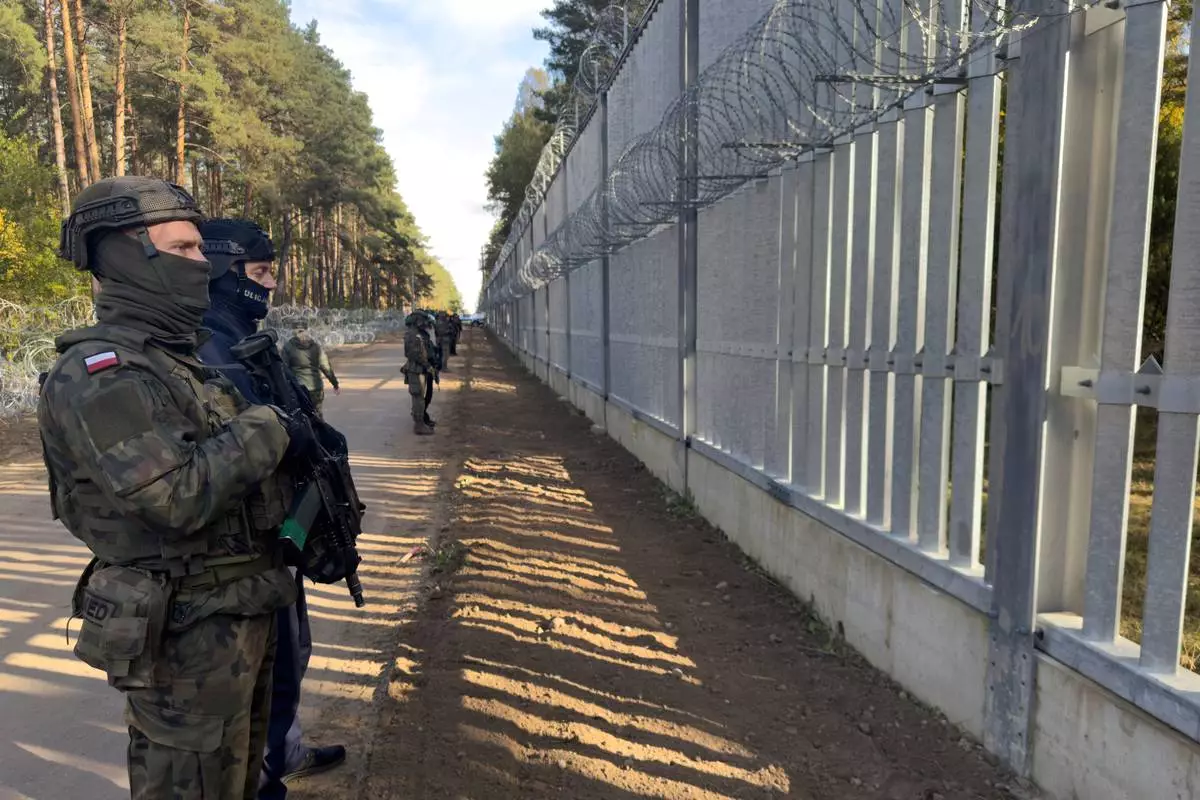
FILE - Servicemen guard at a section of Poland - Belarus border barrier near the Polowce-Pieszczatka, Poland, Oct. 15, 2025. (AP Photo/Rafal Niedzielski, file)
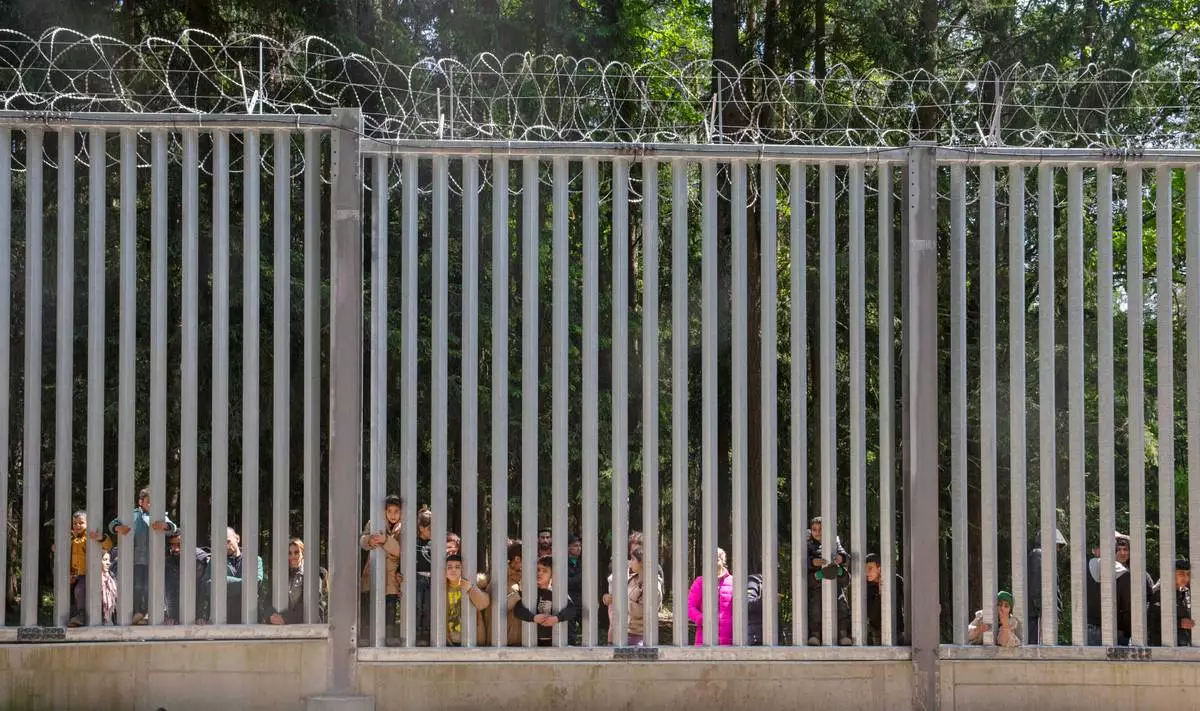
FILE - Servicemen guard at a section of Poland - Belarus border barrier near the Polowce-Pieszczatka, Poland, Oct. 15, 2025. (AP Photo/Rafal Niedzielski, file)

FILE - Members of a group of some 30 migrants seeking asylum look through the railings of a wall that Poland has built on its border with Belarus to stop massive migrant pressure in Bialowieza, Poland, on May 28, 2023. (AP Photo/Agnieszka Sadowska, File)
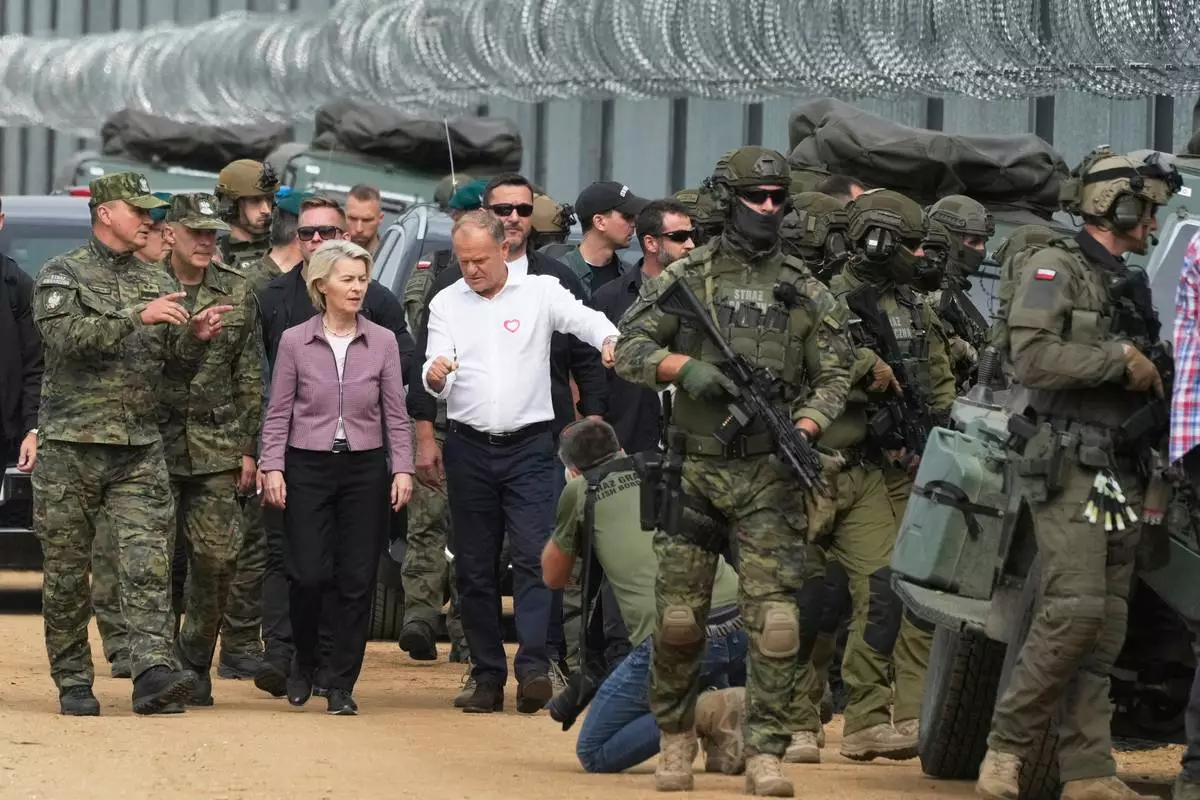
FILE - Members of a group of some 30 migrants seeking asylum look through the railings of a wall that Poland has built on its border with Belarus to stop massive migrant pressure in Bialowieza, Poland, on May 28, 2023. (AP Photo/Agnieszka Sadowska, File)

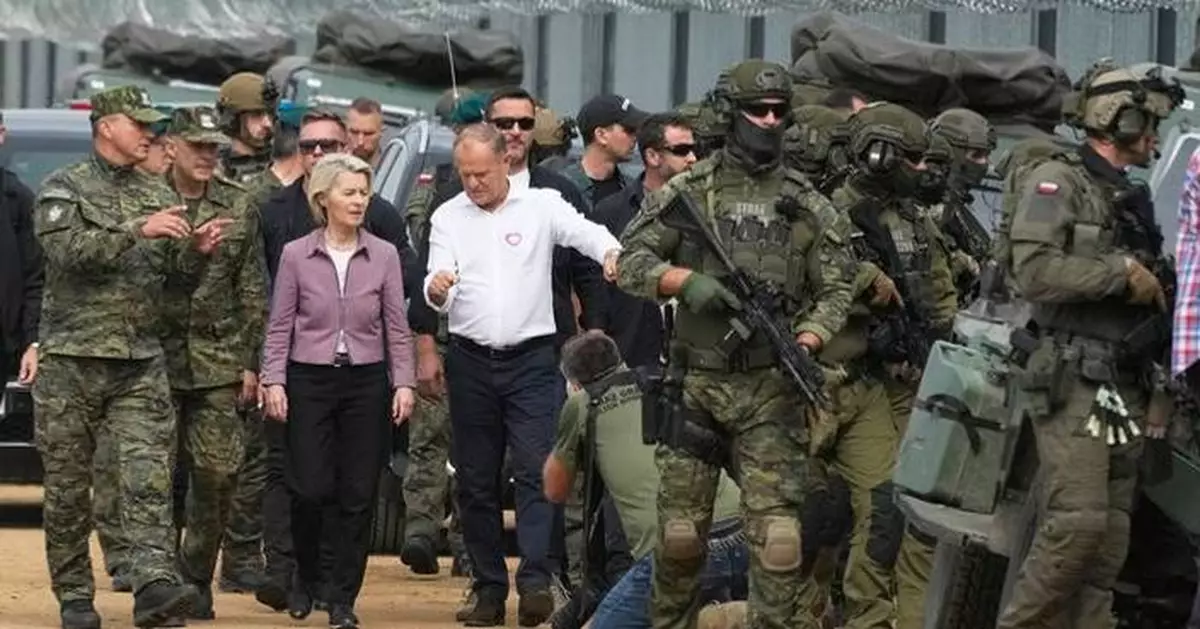
FILE - Polish Prime Minister Donald Tusk , center right, and European Commission President Ursula von der Leyen, center left, walk next to Border Guard personnel during their visit to the Polish-Belarus border, in Krynki, Poland, Aug. 31, 2025. (AP Photo/Czarek Sokolowski, file)
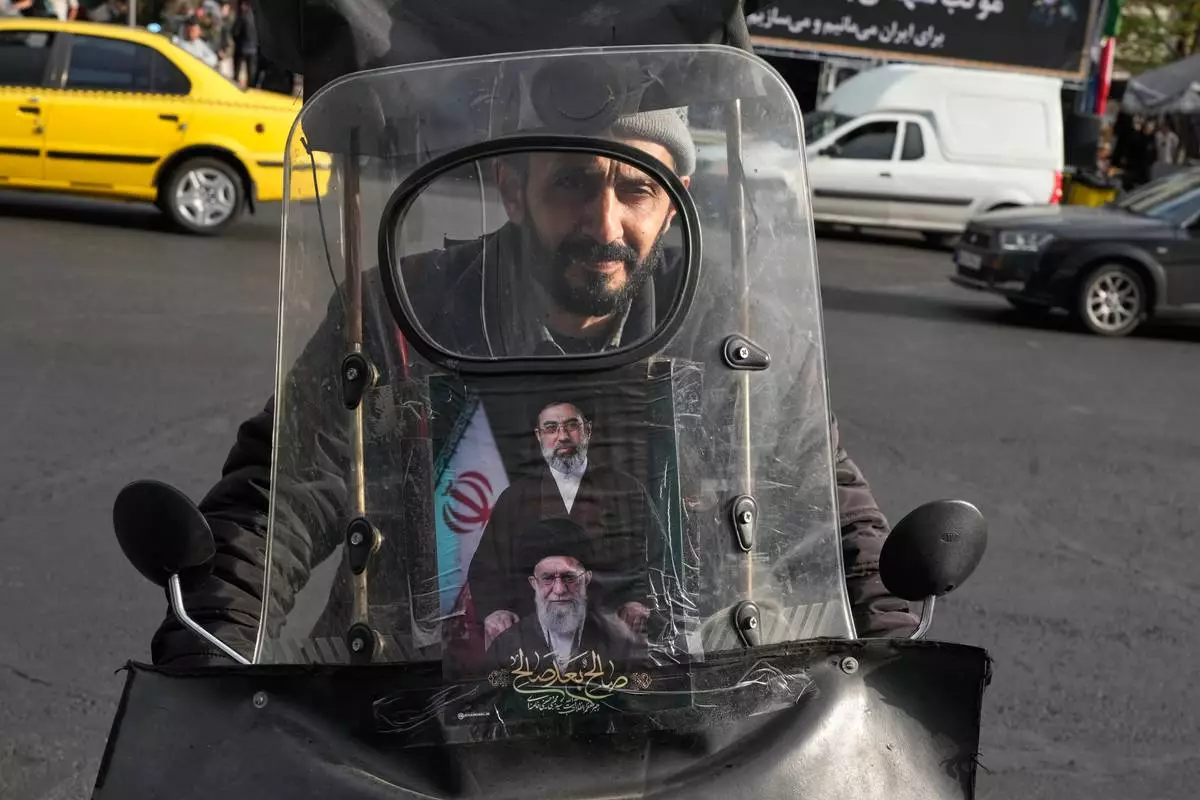

FILE - Polish Prime Minister Donald Tusk , center right, and European Commission President Ursula von der Leyen, center left, walk next to Border Guard personnel during their visit to the Polish-Belarus border, in Krynki, Poland, Aug. 31, 2025. (AP Photo/Czarek Sokolowski, file)
Pakistani officials said Tuesday that Islamabad has proposed a second round of talks to the U.S. and Iran, while U.S. Vice President JD Vance earlier said negotiations with Iran “did make some progress" and U.S. President Donald Trump said Monday “we’ve been called by the other side” and “they want to work a deal.”

The Pakistani officials spoke on condition of anonymity because they were not authorized to discuss the matter with the press.

A senior Hezbollah official on Monday said the Lebanese militant group will not abide by any agreements that may result from direct Lebanon-Israel talks set to start Tuesday in Washington.

Lebanese officials hope to broker a ceasefire in the Israel-Hezbollah war that has killed at least 2,089 people in Lebanon. Israeli Prime Minister Benjamin Netanyahu has said he doesn’t want a ceasefire and the goal is Hezbollah’s disarmament and a potential peace agreement between Lebanon and Israel.

A U.S. blockade of Iranian ports that began Monday and Iran’s threatened retaliation set up an extraordinary showdown posing serious risks for the global economy and raising the specter of a ceasefire collapse and resumed fighting.

Here is the latest:

Spain’s Prime Minister Pedro Sánchez said he sees China as the main global interlocutor that can help end the war in Iran and other conflicts, such as Ukraine, and urged the Asian giant to do more on the diplomatic front.

“I find it very difficult to find other interlocutors, beyond China, who can resolve this situation created in Iran and the Strait of Hormuz,” he said Tuesday after meeting Chinese President Xi Jinping.

Sánchez is in China for his fourth trip in just over three years as Spain looks to strengthen its political and commercial ties with the world’s second-largest economy.

Sánchez said Spain wants to avoid impunity for those who commit crimes and described what has happened in Gaza as “genocide.”

“International law is being violated today, fundamentally by one country: the government of Israel,” he said. “There is also an absolutely illegal response from the Iranian regime regarding a war that we have described from the very beginning as a mistake and an illegality.”

German Chancellor Friedrich Merz said in a phone call with Israeli Prime Minister Benjamin Netanyahu that he supports direct peace talks between the Israeli and Lebanese governments, which are set to start Tuesday in Washington.

Merz called for an end to hostilities in southern Lebanon and said militant group Hezbollah must lay down its arms, the German chancellery said in a statement Monday night.

Merz reaffirmed his government’s strong support of a diplomatic understanding between the U.S. and Iran and its readiness to contribute to freedom of navigation in the Strait of Hormuz if the necessary conditions are met, his office said.

Merz also expressed deep concern about developments in the Palestinian territories and said there must be no de facto partial annexation of the West Bank.

Chinese President Xi Jinping floated a four-point proposal for promoting Middle East peace during a meeting Tuesday with Sheikh Khaled bin Mohamed bin Zayed Al Nahyan, the crown ⁠prince of Abu Dhabi, Chinese official news agency Xinhua reported.

Xi’s proposal calls for upholding the principle of regional peaceful coexistence and respecting national sovereignty while underscoring the principles of coordinating development and security, Xinhua reported.

“Safeguard the authority of the international rule of law. It can’t be ‘use it when it suits us, discard it when it doesn’t,’ and we cannot allow the world to revert to the law of the jungle,” Xi said.

Asian stocks were trading higher tracking and oil fell on Tuesday as expectations rose over a possible second round of talks between the U.S. and Iran.

Benchmark U.S. crude fell 1.7% early Tuesday to $97.37 a barrel. Brent crude, the international standard, was down 0.9% to $98.49 per barrel.

Tokyo’s Nikkei 225 was up 2.3% to 57,804.81. South Korea’s Kospi jumped 2.7% to 5,968.06.

Hong Kong’s Hang Seng rose 0.5% to 25,783.41, while the Shanghai Composite index climbed 0.5% to 4,007.93.

Oil prices continued to pull back on Tuesday from earlier gains.

Pakistan has proposed hosting a second round of talks between the United States and Iran in Islamabad in the coming days, before the end of the ceasefire, two Pakistani officials said.

The officials, who spoke on condition of anonymity because they were not authorized to discuss the matter with the press, said the proposal would depend on whether the parties request a different location.

One of the officials said that, despite ending without an agreement, the first talks were part of an ongoing diplomatic process rather than a one-off effort.

— By Munir Ahmed

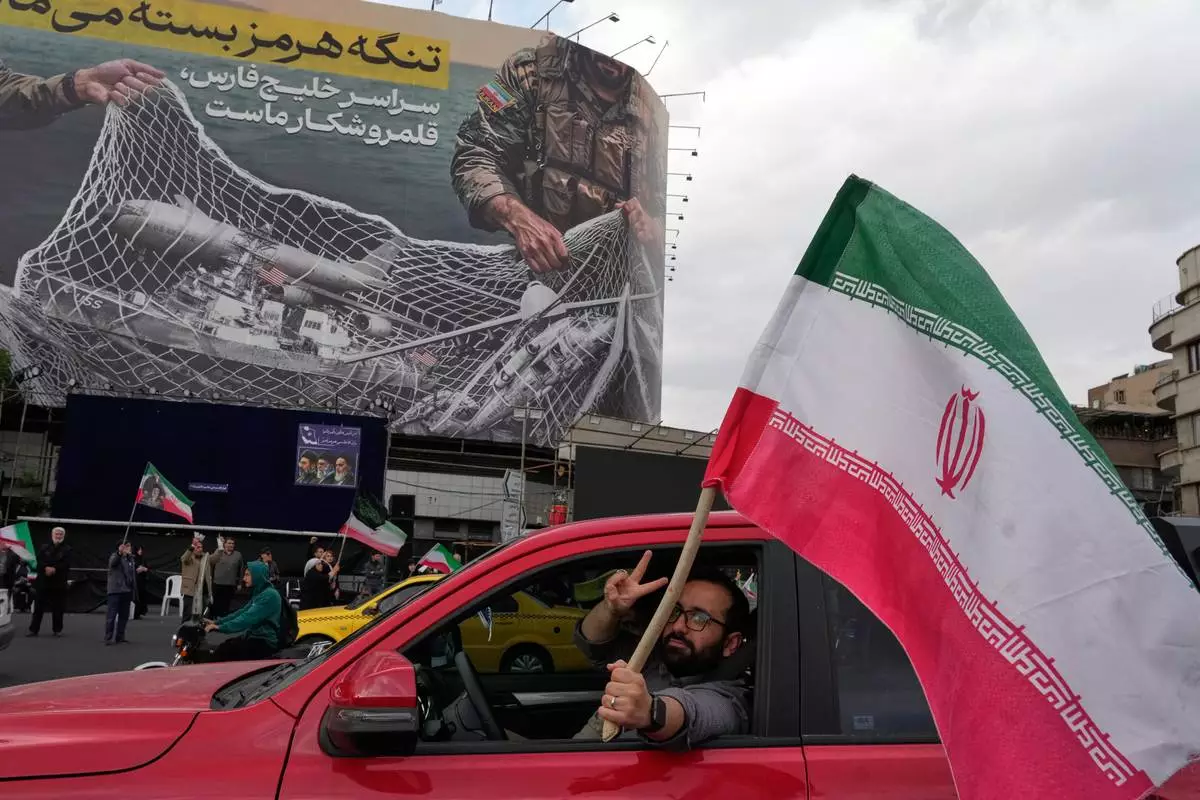
A man drives his motorbike with a poster on its windshield depicting Iran's Supreme Leader Ayatollah Mojtaba Khamenei, top, and his father, the slain Supreme Leader Ayatollah Ali Khamenei, who was killed in the U.S. and Israel strikes on Feb. 28, in downtown Tehran, Iran, Monday, April 13, 2026. (AP Photo/Vahid Salemi)

A man drives his motorbike with a poster on its windshield depicting Iran's Supreme Leader Ayatollah Mojtaba Khamenei, top, and his father, the slain Supreme Leader Ayatollah Ali Khamenei, who was killed in the U.S. and Israel strikes on Feb. 28, in downtown Tehran, Iran, Monday, April 13, 2026. (AP Photo/Vahid Salemi)

President Donald Trump speaks with reporters outside the Oval Office of the White House, Monday, April 13, 2026, in Washington. (AP Photo/Alex Brandon)

President Donald Trump speaks with reporters outside the Oval Office of the White House, Monday, April 13, 2026, in Washington. (AP Photo/Alex Brandon)

A man flashes a victory sign as he carries an Iranian flag in front of an anti-U.S. billboard depicting the American aircrafts into the Iranian armed forces fishing net with signs that read in Farsi: "The Strait of Hormuz will remain closed, The entire Persian Gulf is our hunting ground," at the Eqelab-e-Eslami, or Islamic Revolution Square in downtown Tehran, Iran, Monday, April 13, 2026. (AP Photo/Vahid Salemi)

A man flashes a victory sign as he carries an Iranian flag in front of an anti-U.S. billboard depicting the American aircrafts into the Iranian armed forces fishing net with signs that read in Farsi: "The Strait of Hormuz will remain closed, The entire Persian Gulf is our hunting ground," at the Eqelab-e-Eslami, or Islamic Revolution Square in downtown Tehran, Iran, Monday, April 13, 2026. (AP Photo/Vahid Salemi)

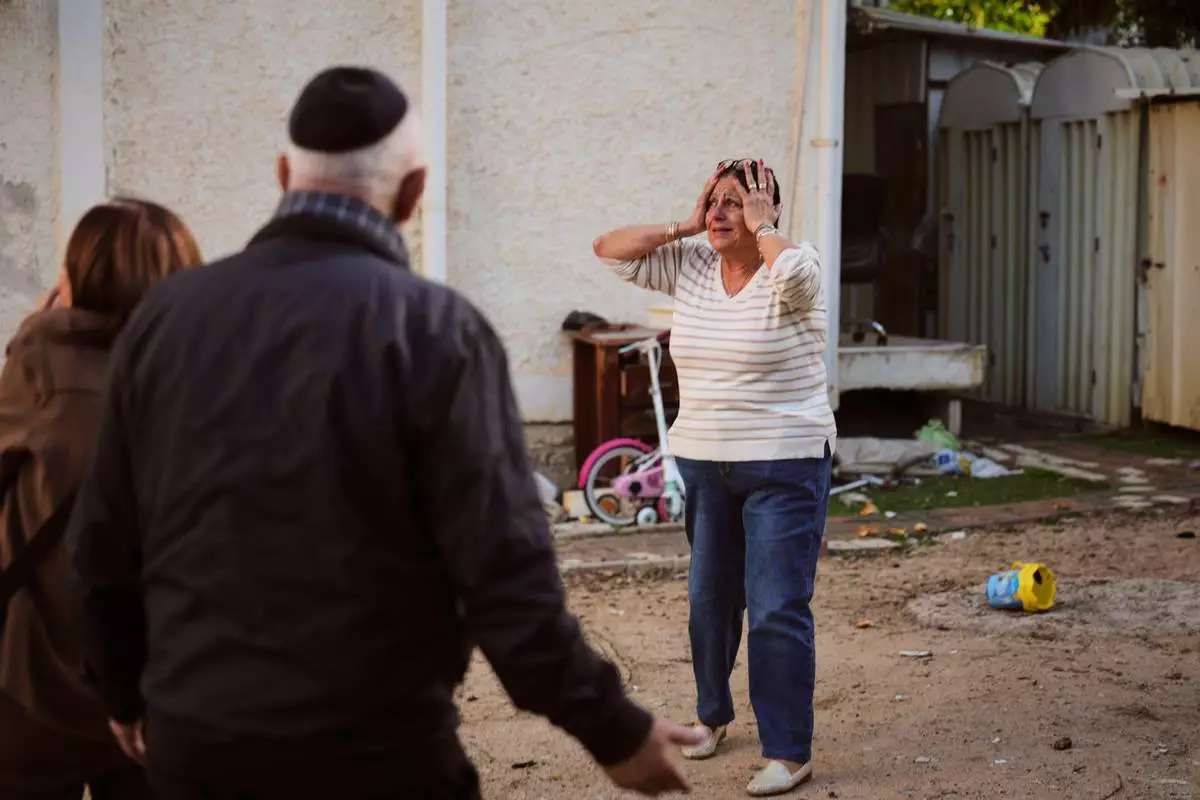
A woman reacts at the site of a damaged residential building after it was struck by a projectile fired from Lebanon, in Nahariya, northern Israel Monday, April 13, 2026. (AP Photo/Ariel Schalit)

A woman reacts at the site of a damaged residential building after it was struck by a projectile fired from Lebanon, in Nahariya, northern Israel Monday, April 13, 2026. (AP Photo/Ariel Schalit)

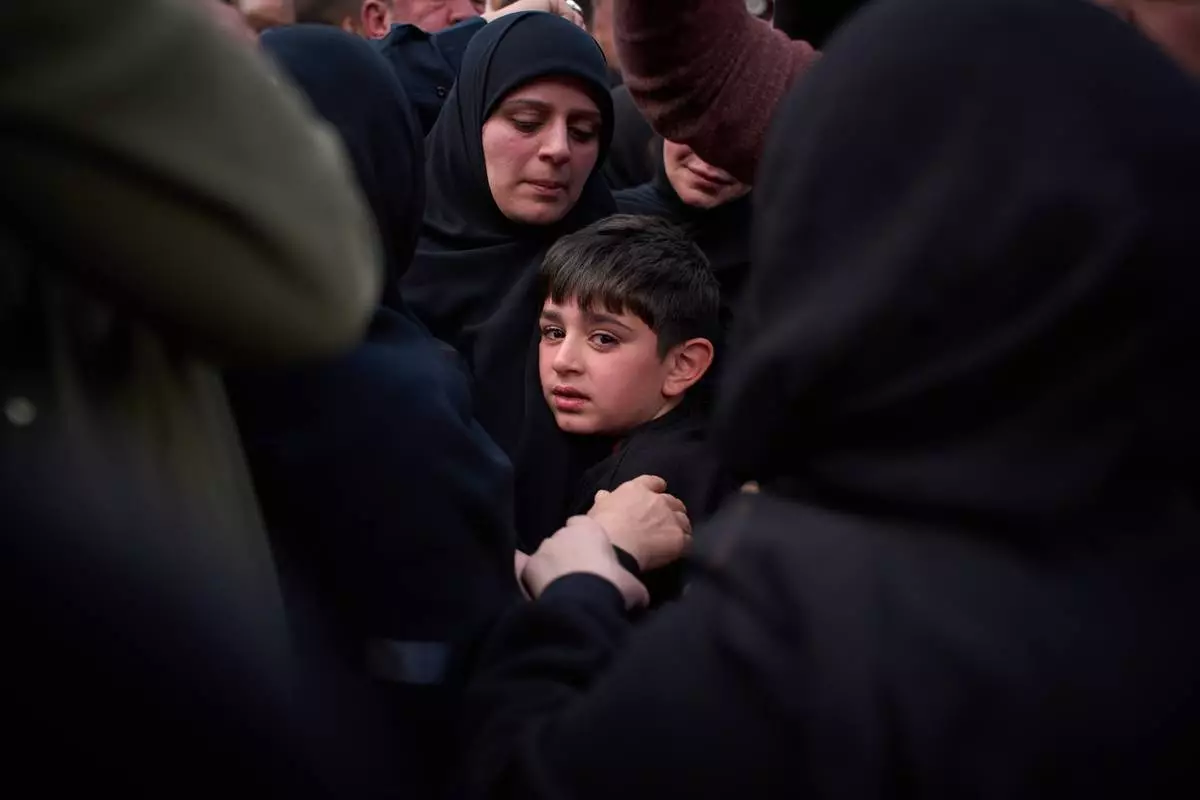
Mohammed, 8, cries next to the coffin of his father, Hussein Makkah, during the funeral of 13 state security officers killed the previous day in an Israeli strike in Lebanon’s coastal city of Sidon, Lebanon, Saturday, April 11, 2026. (AP Photo/Emilio Morenatti)

Mohammed, 8, cries next to the coffin of his father, Hussein Makkah, during the funeral of 13 state security officers killed the previous day in an Israeli strike in Lebanon’s coastal city of Sidon, Lebanon, Saturday, April 11, 2026. (AP Photo/Emilio Morenatti)

Recommended Articles