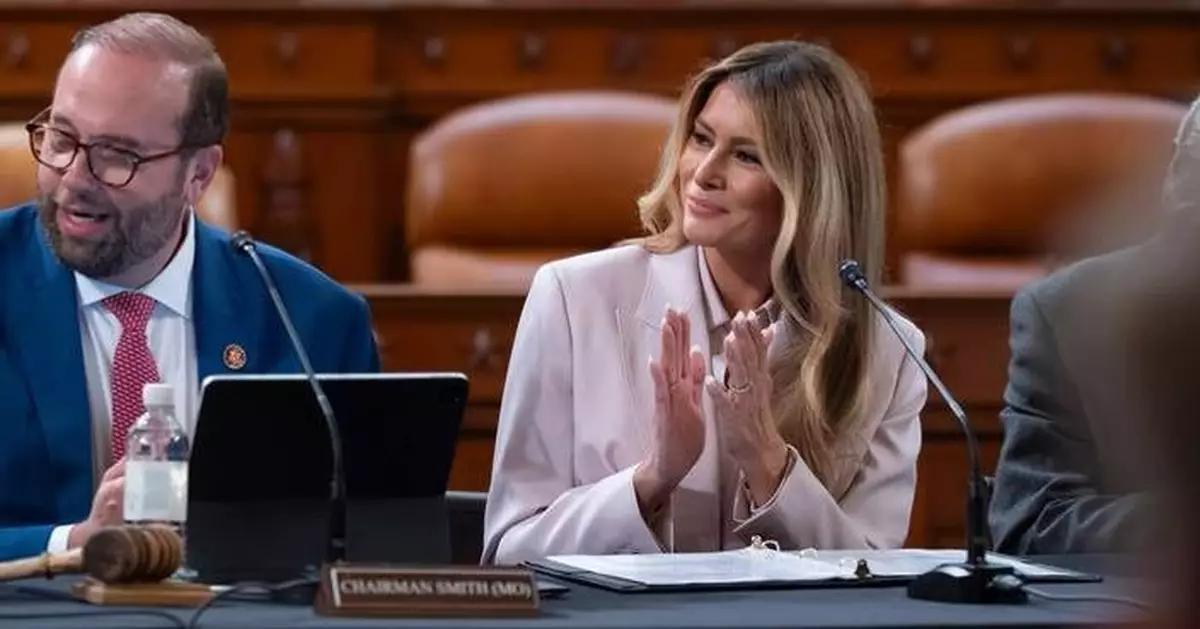
WASHINGTON (AP) — Melania Trump made a rare appearance on Capitol Hill on Wednesday to push Congress to pass bills broadening access to services for young people in foster care, calling it a “moral imperative.”
The first lady began working on foster care issues after President Donald Trump's first term ended in 2021. Her trip followed a similar and successful lobbying effort last year to get Congress to send legislation to the president to protect women and children from online sexual exploitation.
The visit came a week after Melania Trump's surprise on-camera statement at the White House in which she denied ties to Jeffrey Epstein and knowledge of his crimes, and urged Congress to hold a hearing for his victims. She also demanded an end to “lies” linking her to the late financier and convicted sex offender.
On Capitol Hill, she said youngsters in foster care face barriers to housing, transportation and education and other challenges outside the classroom that affect their academic performance.
“We can close this gap,” Melania Trump said. “New legislation for the foster care community is a moral imperative.”
She met Wednesday afternoon with members of the House Ways and Means Committee who introduced the new legislation, and she also heard from people who were in foster care.
Jaydan Martinez, a freshman at Stephen F. Austin State University in Nacogdoches, Texas, said he received just over $2,000 in support per semester, but it disappeared in the “blink of an eye.” He said he supports raising the cap on that financial support.
Jocelyn Fetting, who said she aged out of the system at 21, said thousands in foster care are doing everything right but still struggle because the “systems to support them have not kept pace with their needs.” She said she lost her parents at age 12 and, during college, worked three jobs even with scholarships to meet her housing, food and other needs.
Fetting, who is now 22 and a substitute teacher for grades pre-K through 8 as well as a peer navigator for young adults in foster care, said the proposed changes matter because "we are expecting young people to achieve self-sufficiency without providing support to do so.”
Republican and Democratic committee members have introduced several bills to update the Chafee foster care program to improve outcomes for young people aging out of the foster care system. The measures would increase their access to housing, education and workforce training programs, among other things, to help them succeed in the transition to adulthood and independence.
The bills have a long way to go toward passage in Congress since they've only just been introduced.
The program provides support to foster youth and former foster youth, ages 14 to 21, as they leave the system. The committee said the bipartisan proposals would be the most significant update since the Chafee program was created in 1999.
The Government Accountability Office published a report in January 2025 detailing how states were returning millions of dollars in unused Chafee program funds to the federal government, despite unmet needs of foster youth.
Last November, President Trump created the “Fostering the Future” program by executive order to have federal entities, nonprofits, educational institutions and the private sector work together to improve career and educational opportunities for children raised in foster care.
The first lady, who joined her husband in the Oval Office for the executive order signing, separately spearheads a broader “Fostering the Future” initiative that is part of the “Be Best” child-focused campaign she launched during his first presidential term. The program offers scholarships to current and former foster youth and has a presence on more than 20 university campuses across the United States.
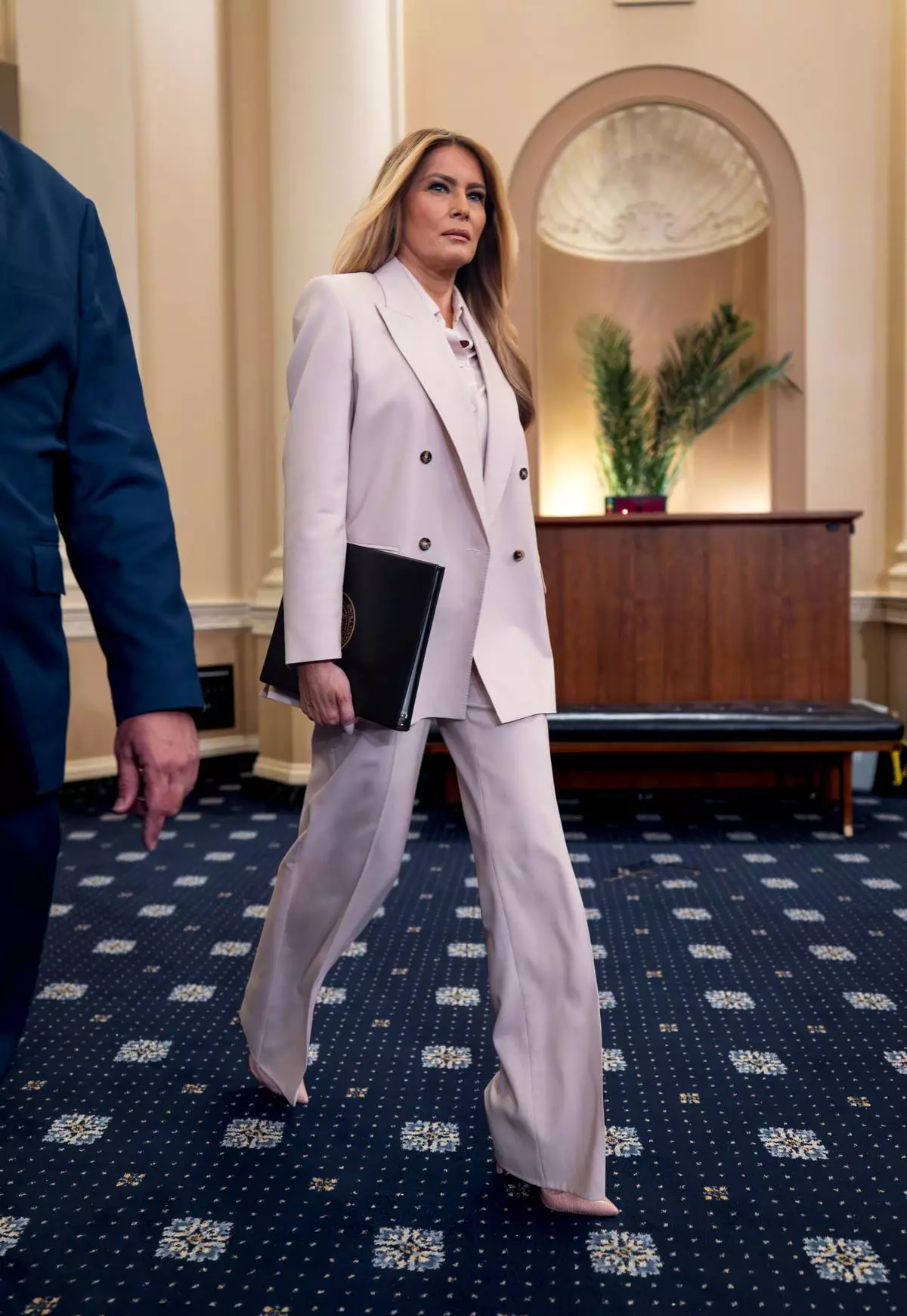
First lady Melania Trump arrives to speak on her legislative initiative to protect America's foster care children, at a House Ways and Means Committee roundtable, at the Capitol in Washington, Wednesday, April 15, 2026. (AP Photo/J. Scott Applewhite)
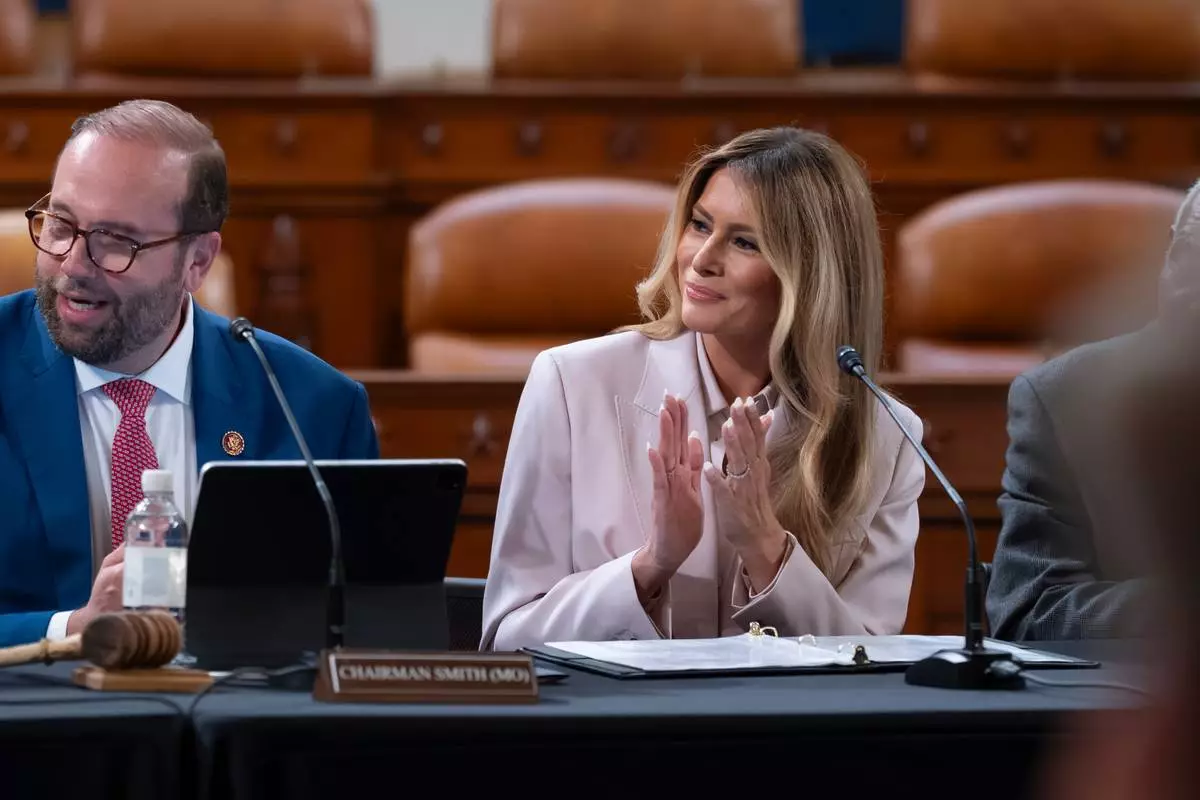
First lady Melania Trump, joined by Rep. Jason Smith, R-Mo., chair of the House Ways and Means Committee, left, speaks to advance her legislative initiative on protecting America's foster care children, at a committee roundtable, at the Capitol in Washington, Wednesday, April 15, 2026. (AP Photo/J. Scott Applewhite)
NEW YORK (AP) — The U.S. stock market hit a record Wednesday after adding to its two-week rally built on hopes the war with Iran won’t create a worst-case scenario for the global economy. Whether Wall Street is correct to have so much hope for peace and whether stocks should be the highest they’ve ever been remains to be seen.
The S&P 500 rose 0.8% and eclipsed its prior all-time high set in January. After falling nearly 10% below its record in late March, a drop steep enough that Wall Street calls it a “correction,” the index at the heart of many 401(k) accounts has since roared more than 10% higher.
Much of the rally has been due to expectations for calming tensions in the war and a resumption of the full flow of oil from the Persian Gulf to customers worldwide. Hopes remained high Wednesday as regional officials told The Associated Press that the United States and Iran had an “in principle agreement” to extend a ceasefire to allow for more diplomacy.
To be sure, stocks could easily get back to falling if those expectations get undercut, which has happened before in the war. Oil prices drifted up and down Wednesday and showed that caution remains in financial markets. Stock indexes around the world also made only modest movements following their big gains in recent weeks.
The price for a barrel of Brent crude, the international standard, added 0.1% to settle at $94.93. That’s still well above its roughly $70 price from before the war, though it’s down from its $119 peak when worries about the fighting have been at their heights.
The Dow Jones Industrial Average dipped 72 points, or 0.1%, while the Nasdaq composite gained 1.6%.
But if U.S.-Iran talks do happen and if they are successful, the war could end up being just a temporary setback for the global economy instead of a new normal of very high oil prices and inflation. And that in turn could allow investors to return their attention to what matters most for stock prices: money.
Through all the day-to-day noise that can affect investors’ opinions, stock prices tend to move with the direction of corporate profits over the long term. And positive trends there had stock markets doing well before the war began. Analysts also see continued growth ahead, for now at least.
Bank of America rose 1.8% after saying it made $8.6 billion in profit during the first three months of the year, more than analysts expected. CEO Brian Moynihan also said the bank saw signs of a “resilient American economy,” including solid spending by U.S. consumers.
Morgan Stanley jumped 4.5% after the investment bank likewise delivered a better-than-expected quarter of results.
Companies hurt earlier in the year by worries about artificial-intelligence technology also rose to recover more of their losses for 2026. Some of the concerns were about companies potentially spending too much to build out AI capabilities, while others focused on businesses that may go obsolete because of AI-powered competition.
The worries got so deep that they shook private-credit companies that have lent money to software businesses and others potentially under threat because of AI.
ServiceNow climbed 7.3%, Oracle rose 4.2% and Ares Management gained 5.9% for some of Wednesday’s bigger gains in the S&P 500. All are still down between 12% and 39% for the year so far.
With stock prices overall back to where they were in January, and with analysts’ expectations for upcoming profits from big U.S. companies only rising since then, optimists say many stocks look less expensive than they did a few months ago.
“Today, we see compelling opportunity potential” to shift into areas of the market that look like better buys than earlier this year, such as technology stocks, said Mason Mendez, investment strategy analyst at Wells Fargo Investment Institute.
The stock price of Allbirds surged 582% to nearly $17 after the company said it’s shifting gears and moving into the AI compute infrastructure industry, while changing its name to NewBird AI. The Allbirds name will stay with the shoe brand that the company has already agreed to sell to American Exchange Group.
Nike rose 2.8% after CEO Elliott Hill and Tim Cook — a Nike director and the CEO of Apple — disclosed that they purchased a combined 48,000 shares of the athletic shoe maker at a cost of about $1 million each. Nike shares are still down nearly 29% this year.
On the losing end of Wall Street was Live Nation Entertainment. It fell 6.3% after a jury found the concert giant and its Ticketmaster subsidiary had a harmful monopoly over big concert venues.
All told, the S&P 500 rose 55.57 points to 7,022.95. The Dow Jones Industrial Average dipped 72.27 to 48,463.72, and the Nasdaq composite rose 376.93 to 24,016.02.
In stock markets abroad, indexes were mixed in Europe following modest gains in Asia. South Korea’s Kospi was an outlier and jumped 2.1%.
In the bond market, the yield on the 10-year Treasury rose to 4.28% from 4.26% late Tuesday.
AP Business Writers Yuri Kageyama and Matt Ott contributed to this report.
This version corrects the last name of Nike’s CEO, which is Hill.
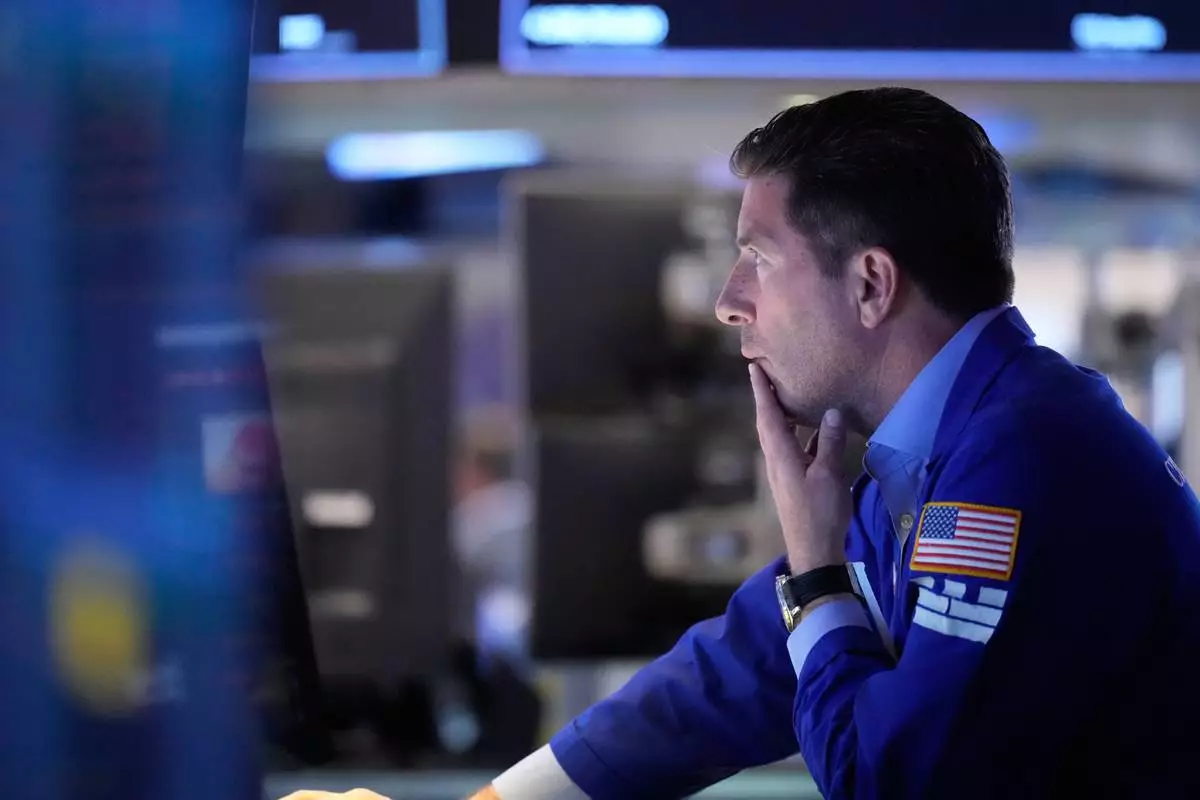
People work on the floor at the New York Stock Exchange in New York, Monday, April 13, 2026. (AP Photo/Seth Wenig)
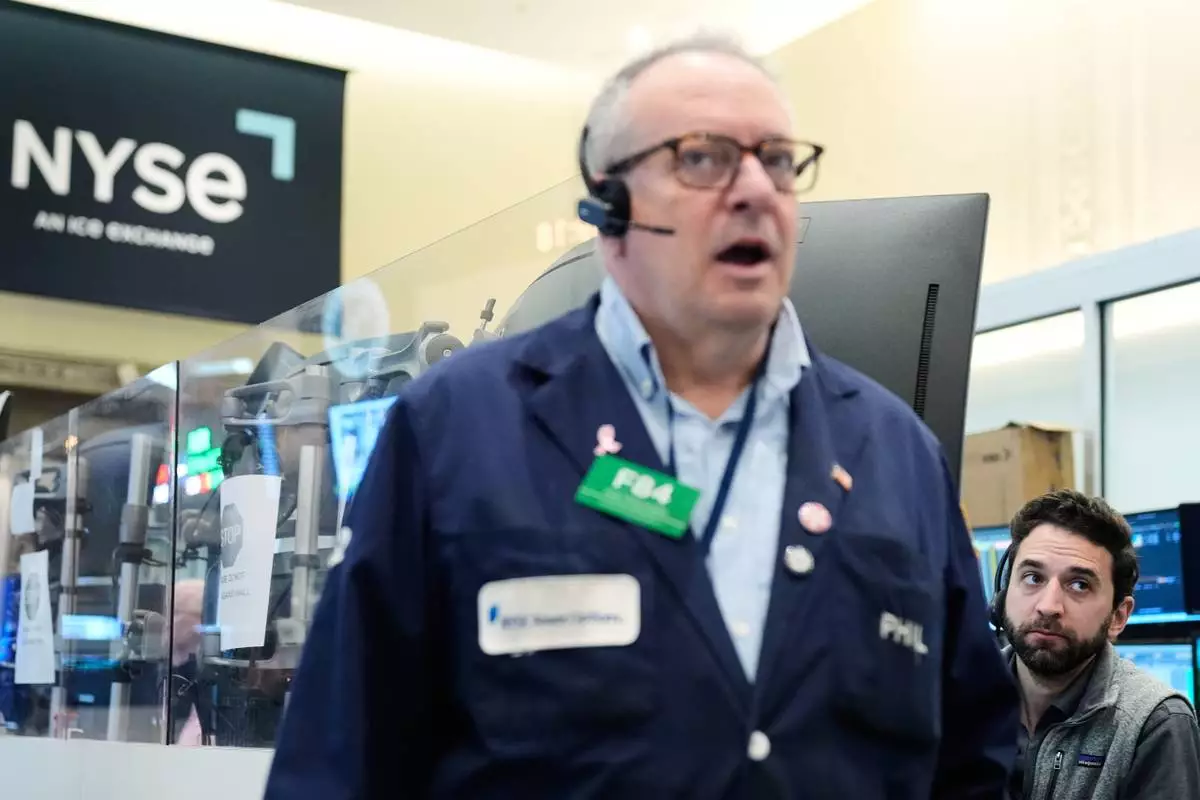
People work on the floor at the New York Stock Exchange in New York, Monday, April 13, 2026. (AP Photo/Seth Wenig)

A currency trader watches monitors near a screen showing the Korea Composite Stock Price Index (KOSPI), top center, and the foreign exchange rate between U.S. dollar and South Korean won, top center left, at the foreign exchange dealing room of the Hana Bank headquarters in Seoul, South Korea, Wednesday, April 15, 2026. (AP Photo/Ahn Young-joon)
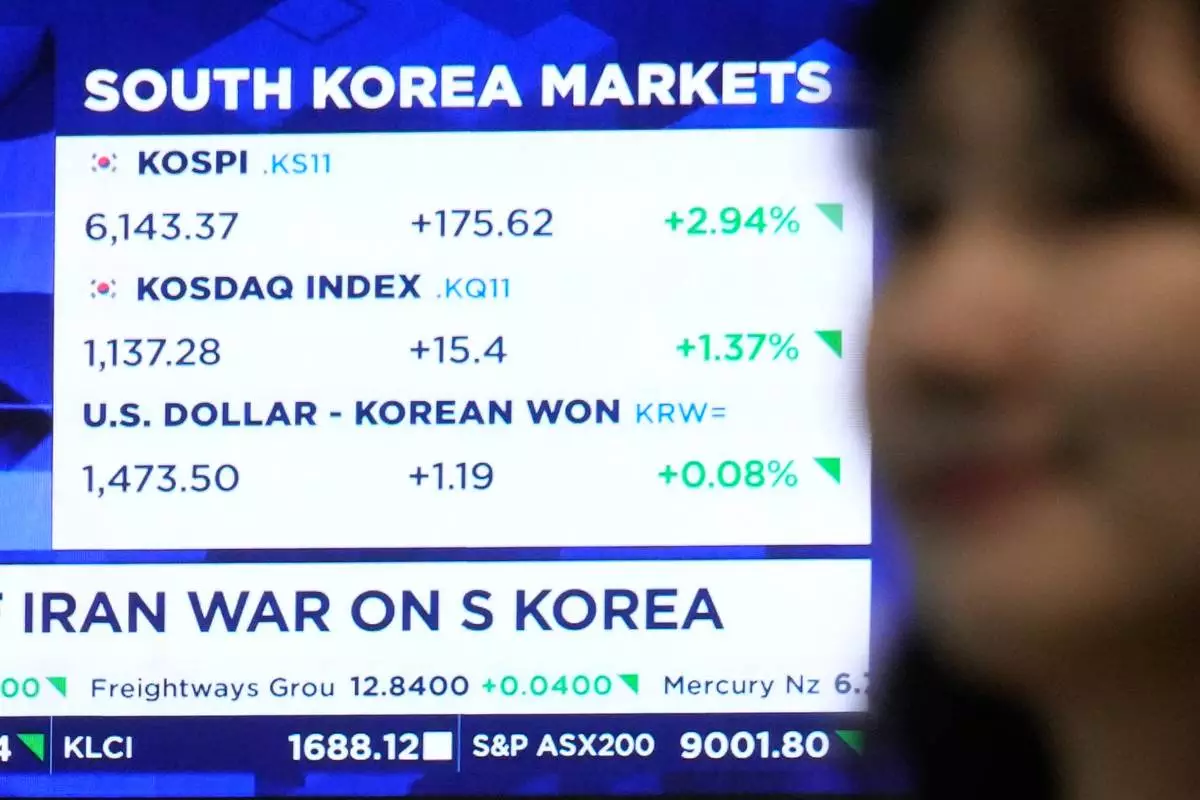
A screen shows the Korea Composite Stock Price Index (KOSPI) and the foreign exchange rate between U.S. dollar and South Korean won at the foreign exchange dealing room of the Hana Bank headquarters in Seoul, South Korea, Wednesday, April 15, 2026. (AP Photo/Ahn Young-joon)
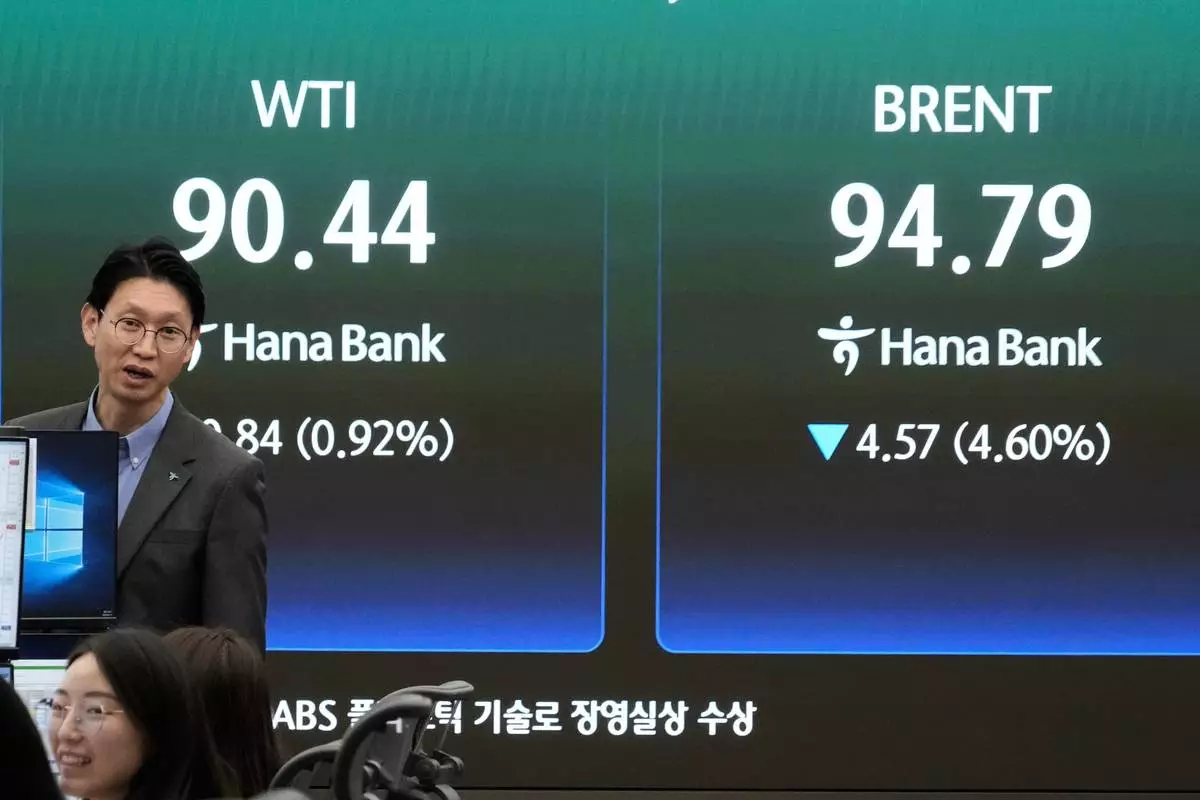
A currency trader reacts near a screen showing international oil prices at the foreign exchange dealing room of the Hana Bank headquarters in Seoul, South Korea, Wednesday, April 15, 2026. (AP Photo/Ahn Young-joon)
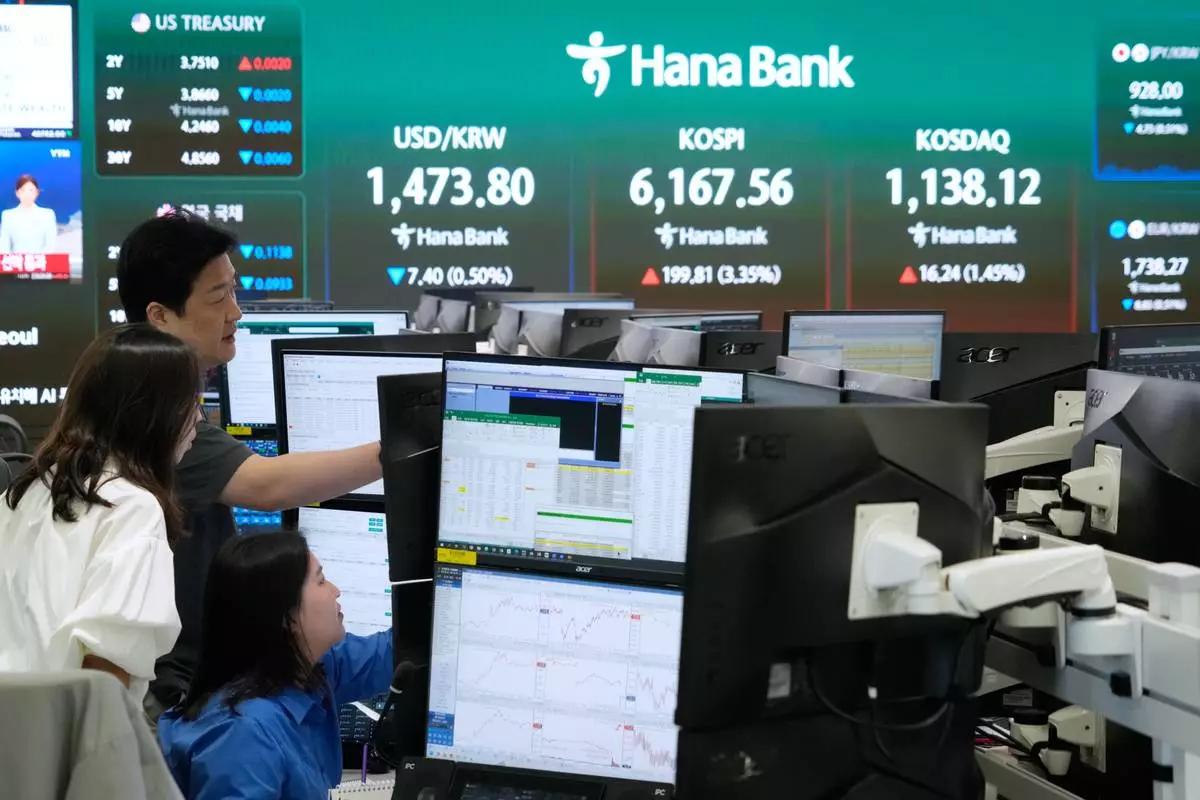
Currency traders watch monitors near a screen showing the Korea Composite Stock Price Index (KOSPI), top center, and the foreign exchange rate between U.S. dollar and South Korean won, top center left, at the foreign exchange dealing room of the Hana Bank headquarters in Seoul, South Korea, Wednesday, April 15, 2026. (AP Photo/Ahn Young-joon)