SEE's opening remarks on environment and ecology at LegCo Finance Committee special meeting
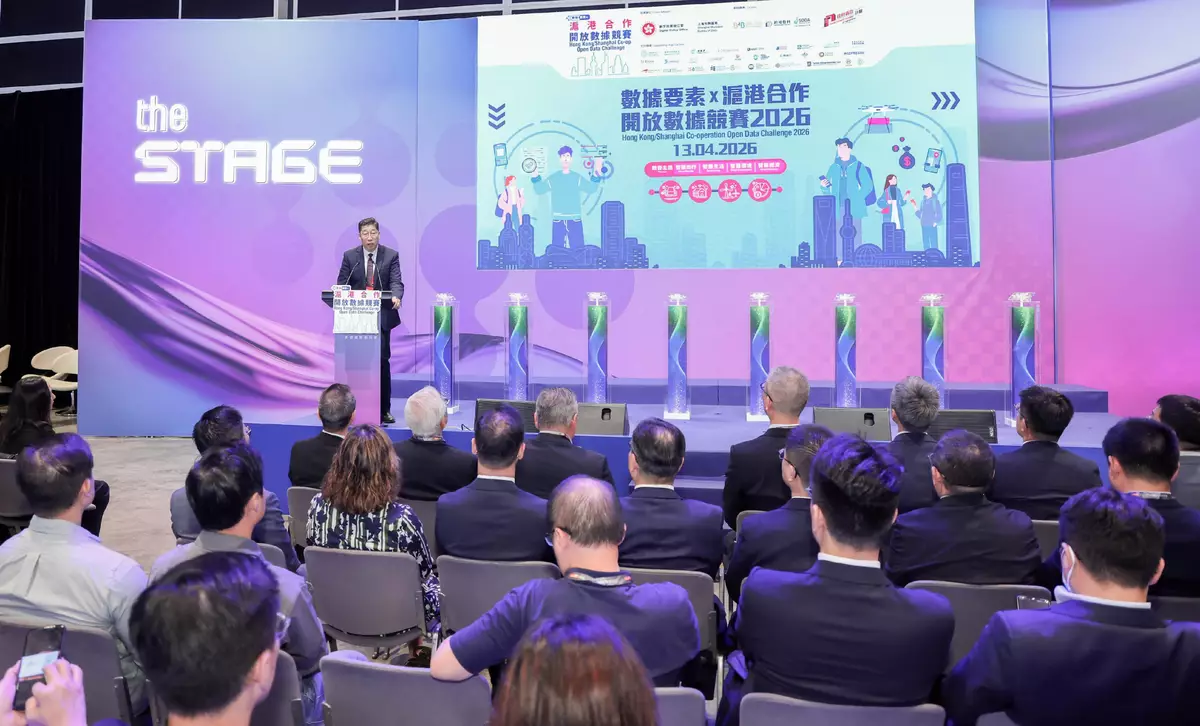
Following is the English translation of the opening remarks by the Secretary for Environment and Ecology, Mr Tse Chin-wan, on environment and ecology at the special meeting of the Legislative Council Finance Committee today (April 15):
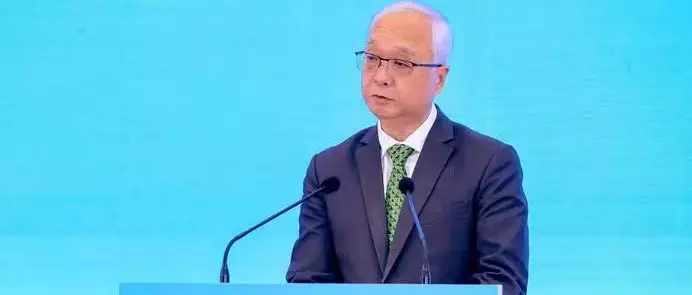
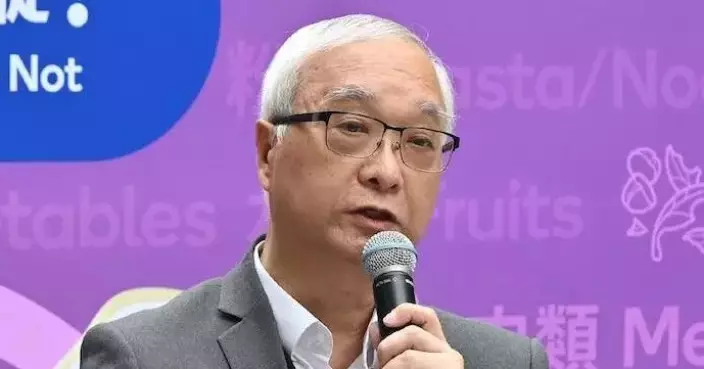
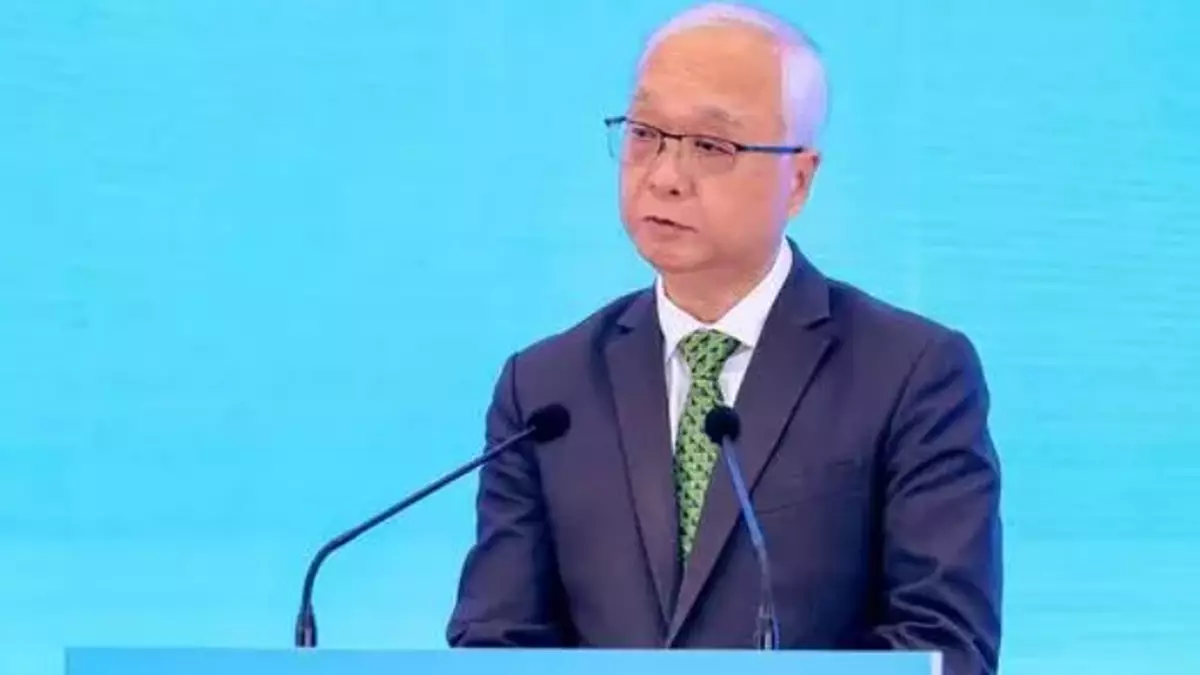
The Secretary for Environment and Ecology, Mr Tse Chin-wan, Photo source: reference image
Thank you, Chairman and Honourable Members.
The Environment and Ecology Bureau will embrace the 15th Five-Year Plan with an innovative mindset, actively align with the national "dual-carbon" targets and green and low-carbon development strategies, and make every effort to promote the development of green industries.
Achieving the "dual-carbon" targets
To align with our country's "dual-carbon" targets, the Government strives to halve Hong Kong's carbon emissions before 2035 and achieve carbon neutrality before 2050. Carbon emissions in Hong Kong peaked in 2014. In 2024, Hong Kong's carbon emissions had already reduced by about a quarter compared to the peak level. The per capita carbon emissions continued their downward trend, reaching a new low of 4.41 tonnes CO2-e. It is 3.5 per cent lower than in 2023, and our carbon emissions now are about a quarter of those of the United States and 60 per cent of those of the European Union.
Green technology
As for the development of green technology, the Government has been promoting research and development of decarbonisation technologies through the $400 million Green Tech Fund, and the 39 projects approved so far cover areas including technologies relevant to hydrogen energy and turning waste into resources. We are assisting two local companies in setting up production lines at the EcoPark by mid-2026 to upcycle waste materials into core materials for electricity-free cooling products and acoustic metamaterial products, etc.
New energy development
On the development of new energy, hydrogen energy is one of the future industries set out in the Outline of the 15th Five-Year Plan. The Government has made top-level planning in the Strategy of Hydrogen Development in Hong Kong published in 2024. We will formulate hydrogen certification standards that connect with the Chinese Mainland and the world, and establish a demonstration platform to facilitate the export of technologies. In May this year, we will organise the Hydrogen Week and technical visits to the Chinese Mainland, leveraging Hong Kong's advantage as a "super connector" to foster international exchange.
The use of Sustainable Aviation Fuel (SAF) is currently the most widely adopted measure to promote low-carbon transition in the aviation sector. The HKSAR Government is enabling a local enterprise, one of the world's major SAF suppliers, to develop its business in the Greater Bay Area. The scope of business includes upstream collection of raw materials and setting up of production plants for large-scale production, with a view to promoting the development of new energy in the aviation sector.
Photo source: Design Image
Electric vehicles
As for new-energy transport, with vigorous promotion by the Government, electric vehicles (EVs) have developed rapidly in Hong Kong, growing more than fourfold in four years to over 140 000 units, with the growth rate of electric private car ranking among the highest in the world. It is estimated that the number of electric private cars (e-PCs) could surpass 290 000 by 2030 and approach nearly 500 000 by 2035.
We updated the Hong Kong Roadmap on Popularisation of Electric Vehicles in February this year, in order to continue to promote the use of EVs with a view to achieving zero vehicular emissions before 2050. As the technology of e-PCs has matured, with the increase in the number of models and gradual price reduction, they have become highly competitive in the market. Their future development will be market-driven, with the Government primarily focusing on improving the supporting infrastructure such as the charging facilities. We will establish a public charging network with fast chargers as the backbone. The goal is that by 2035, all charging facilities, complementing existing and future private charging facilities, will be able to support approximately 800 000 EVs.
Waste reduction and recycling
As regards promoting waste reduction at source, the average daily disposal of municipal solid waste (MSW) decreased from an average of 11 358 tonnes per day in 2021 to 10 510 tonnes per day in 2024. During the same period, the recovery rate of MSW rose from 31 per cent in 2021 to 34 per cent in 2024, showing that the public has gradually developed the culture of waste reduction and recycling.
To achieve "zero landfill" in 2035 and continuously promote waste reduction at source, starting from the financial year 2026-27, the Government will earmark resources for launching a five-year plan to enhance and upgrade recycling infrastructure in three areas: first, expanding the recycling network by gradually transforming GREEN@COMMUNITY into round-the-clock self-service recycling facilities; second, extracting valuable materials from waste and turning them into raw materials for making green products through the use of technology to support the development of circular economy; and third, building a smart recycling network logistics system to enhance its cost-effectiveness and efficiency. Additionally, the Government will consult the Legislative Council (LegCo) Panel on Environmental Affairs this year regarding producer responsibility schemes for EV batteries, plastic beverage containers and beverage cartons. The Government will also seek funding approval from the LegCo for the construction of another large-scale waste-to-energy facility - I·PARK2 (Integrated Waste Management Facilities Phase 2).
Nature conservation
On nature conservation, we promulgated the updated Hong Kong Biodiversity Strategy and Action Plan last December, setting out four strategic areas, 30 priority actions, and 81 priority projects for the next decade. In the Northern Metropolis, we are taking forward the development of Sam Po Shue Wetland Conservation Park, thereby achieving the triple objectives of conservation, eco-education, and recreation and tourism development, as well as the modernisation of the aquaculture industry. The first phase of the park is expected to be completed in 2031, with full completion by 2039 or earlier.
To enhance countryside recreation experiences, we are implementing the "Four Peaks" tourism project, which will enhance facilities on four mountain trails - the Peak, Lantau Peak, Sai Kung Hoi, and Tai Mo Shan - and connect nearby attractions to plan the development of green tourism itineraries and develop tourism products. We will also continue enhancing country park facilities, including new features such as treetop adventures. For some popular green tourism spots, we will examine the need of appropriate visitor management measures, including whether a booking system should be introduced at certain hotspots to better manage visitor flow and protect the ecology.
My colleagues and I are happy to listen to Members' views and respond to questions.
Thank you, Chairman.