WASHINGTON (AP) — Supreme CourtJustice Ketanji Brown Jackson has delivered a sustained attack on her conservative colleagues’ use of emergency orders to benefit the Trump administration, calling the orders “scratch-paper musings” that can “seem oblivious and thus ring hollow.”
The court's newest justice, Jackson delivered a lengthy assessment of roughly two dozen court orders issued last year that allowed President Donald Trump to put in place controversial policies on immigration, steep federal funding cuts and other topics, after lower courts found they were likely illegal.
While designed to be short-term, those orders have largely allowed Trump to move ahead — for now — with key parts of his sweeping agenda.
Jackson spoke for nearly an hour on Monday at Yale Law School, which posted a video of the event on Wednesday.
Last week, Justice Sonia Sotomayor similarly talked about emergency orders in an event Tuesday at the University of Alabama that also took issue with the conservatives' approach.
Jackson has previously criticized the emergency orders both in dissenting opinions and in an unusual appearance with Justice Brett Kavanaugh last month. But her talk at Yale, addressing the public rather than the other eight justices, was notable.
She referred to orders, which often are issued with little or no explanation as “back-of-the-envelope, first-blush impressions of the merits of the legal issue.”
Worse still, she said, was that the court then insists that “those scratch-paper musings” be applied by lower courts in other cases.
The orders suffer from an additional problem, she said, a failure to acknowledge that real people are involved, making them “seem oblivious and thus ring hollow.”
She also pushed back on the court's assessment that preventing the president from putting his policy in place also is a harm that often outweighs what the challengers to a policy might face.
“The president of the United States, though he may be harmed in an abstract way, he certainly isn't harmed if what he wants to do is illegal,” Jackson said during a question-and-answer session with law school dean Cristina Rodriguez.
The court used to be reluctant to step into cases early in the legal process, she said. “There is value in avoiding having the court continually touching the third rail of every divisive policy issue in American life,” Jackson said.
While she said she couldn't explain the change, “in recent years, the Supreme Court has taken a decidedly different approach to addressing emergency stay applications. It has been noticeably less restrained, especially with respect to pending cases that involve controversial matters.”
Jackson, often joined by Sotomayor and Justice Elena Kagan, has frequently dissented.
There have been conversations about emergency orders among the justices, Jackson said, but she decided to speak publicly with the goal of being “a catalyst for change.”
Also on Wednesday, Sotomayor issued a rare public apology to another justice, Kavanaugh, for what she termed “hurtful comments" she made last week during an appearance at the University of Kansas law school.
Referencing an opinion Kavanaugh wrote in an immigration case where the court granted an emergency order sought by the administration, Sotomayor said her colleague “probably doesn’t really know any person who works by the hour.” Her remarks were reported by Bloomberg Law.
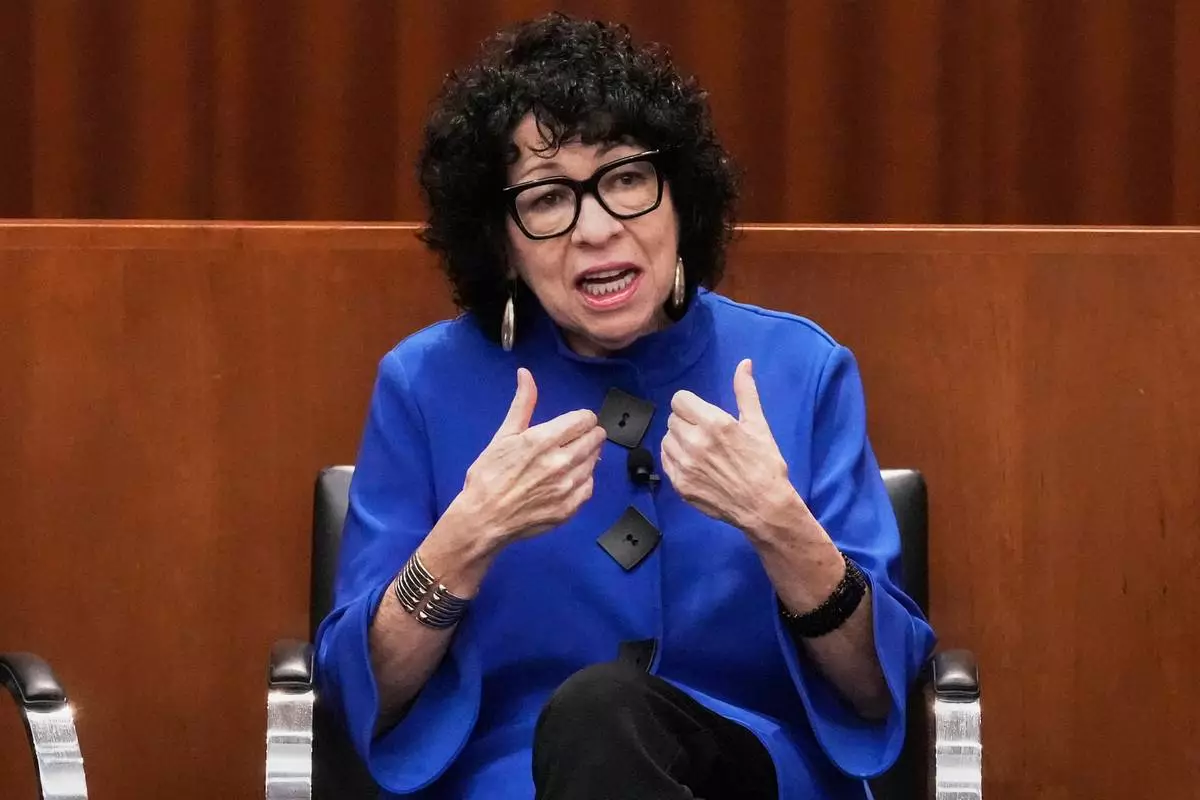
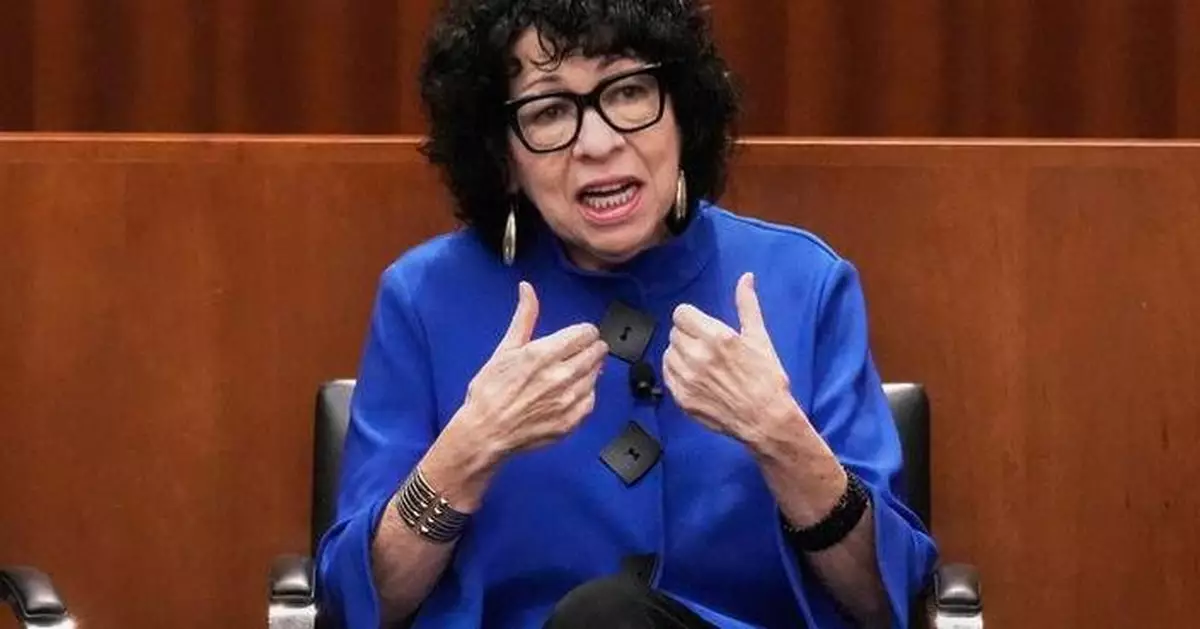
FILE - Supreme Court Justice Sonia Sotomayor speaks at the New York Law School's Constitution and Citizen Day Summit, in New York, Tuesday, Sept. 16, 2025. (AP Photo/Richard Drew, File)
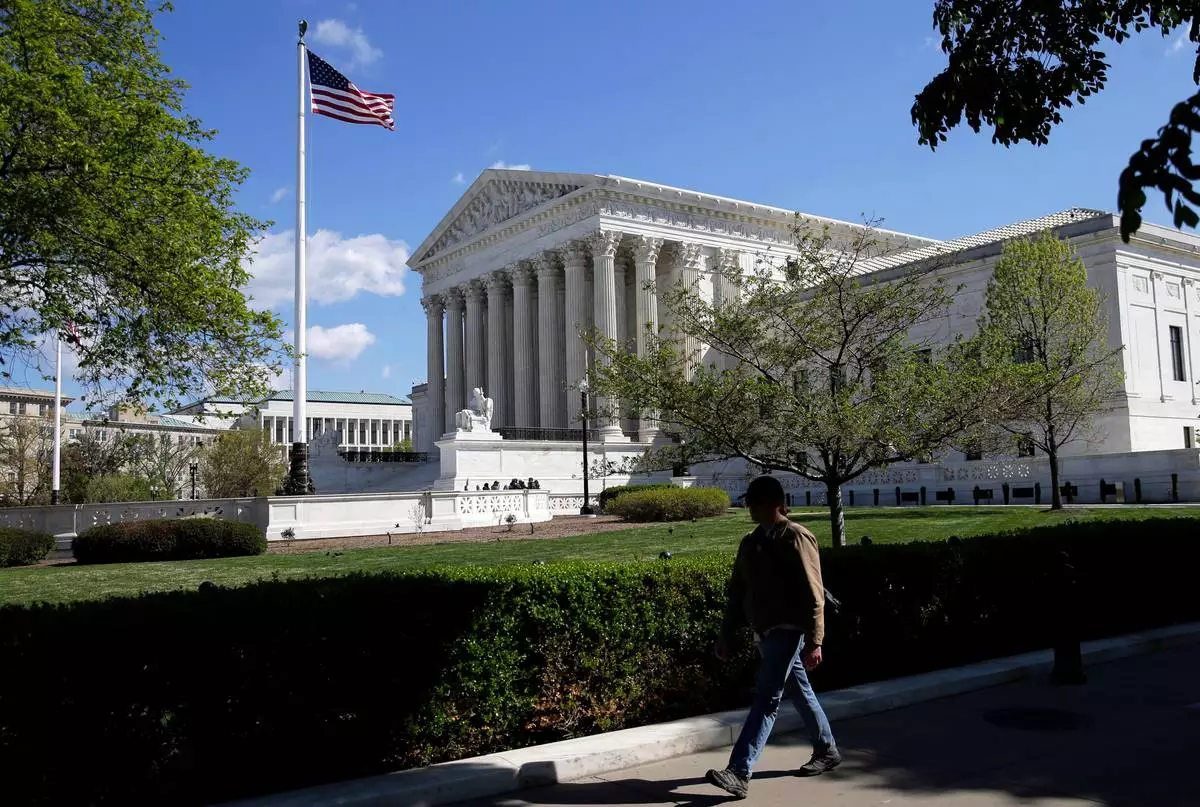
The U.S. Supreme Court is seen in Washington, Tuesday, April 7, 2026, in Washington. (AP Photo/Rahmat Gul)
NEW YORK (AP) — A jury found Wednesday that entertainment giant Live Nation, which hosts tens of thousands of concerts a year, and its Ticketmaster subsidiary had a harmful monopoly over big venues.
The ruling, in a lawsuit brought by dozens of states, won’t immediately bring relief for concertgoers who have long complained about high ticket prices. But it could cost Live Nation hundreds of millions of dollars and perhaps force the company to sell some of its concert venues when the judge hands out penalties later.
Among other things, the jury found Ticketmaster's anticompetitive practices led to people in 22 states paying an extra $1.72 per ticket, which the judge could order the companies to pay back.
A jury in New York deliberated for four days before reaching its decision. State attorneys general who sued Live Nation said the verdict could potentially lead to lower ticket prices for music fans.
Live Nation said in a statement that the verdict “is not the last word on this matter.”
The company predicted that once a remedy phase of the litigation is completed before the judge and all appeals are resolved, the outcome likely won't be much different from what the federal government achieved with a settlement it reached with the company just after the trial began.
That deal included a cap on service fees at some amphitheaters, plus some new ticket-selling options for promoters and venues — potentially allowing, but not requiring, them to open doors to Ticketmaster competitors such as SeatGeek or AXS.
The trial gave fans the equivalent of a backstage pass to a business that dominates live entertainment in the U.S. and beyond.
Live Nation CEO Michael Rapino testified, answering questions about matters including the company’s Taylor Swift ticket debacle in 2022. Rapino blamed a cyberattack.
Jurors also got to see a Live Nation employee’s internal messages to another employee declaring some prices “outrageous,” calling customers “so stupid” and boasting that the company was “robbing them blind, baby.” The employee, Benjamin Baker, who has since been promoted to a position as a ticketing executive, apologetically testified that the messages were “very immature and unacceptable.”
Live Nation Entertainment owns, operates, controls booking for or has an equity interest in hundreds of venues. Its subsidiary Ticketmaster is widely considered to be the world’s largest ticket-seller for live events.
The verdict could cost Live Nation and Ticketmaster hundreds of millions of dollars, based on the jury's estimate that customers paid an extra $1.72 per ticket. The companies could also be assessed penalties. In addition, sanctions could result in court orders that they divest themselves of some entities, including venues such as amphitheaters that they own.
In its statement, Live Nation said the jury's award of $1.72 per ticket applied to “a limited number of tickets” sold at 257 venues and representing about 20% of total tickets sold. The company estimated the aggregate single damages figure would be below $150 million, though it would be trebled.
The civil case, initially led by the U.S. government, accused Live Nation of using its reach to smother competition — by blocking venues from using multiple ticket sellers, for example.
Live Nation insisted it is not a monopoly, saying that artists, sports teams and venues decide prices and ticketing practices. A company lawyer said its size was simply a function of excellence and effort.
“Success is not against the antitrust laws in the United States,” attorney David Marriott said in his summation.
Ticketmaster was established in 1976 and merged with Live Nation in 2010. The company now controls of 86% of the market for concerts and 73% of the overall market when sports events are included, according to an attorney for the states, Jeffrey Kessler.
Ticketmaster has long drawn ire from fans and some artists. Grunge rock titans Pearl Jam battled the business in the 1990s, even filing an anti-monopoly complaint with the U.S. Department of Justice, which declined to bring a case then.
Decades later, the Justice Department, joined by dozens of states, brought the current lawsuit during Democratic former President Joe Biden's administration.
Days into the trial, Republican President Donald Trump's administration announced it was settling its claims against Live Nation.
A handful of the states joined the settlement. But more than 30 pressed ahead with the trial, saying the federal government hadn't gotten enough concessions.
New Jersey Attorney General Jennifer Davenport said in a release after the verdict that Live Nation's “illegal, anti-competitive practices” had driven up ticket prices and made it harder for fans to see their favorite acts.
New York Attorney General Letitia James called the verdict “a landmark victory.”
After the victory, Kessler would not say specifically what the states will seek in the next phase of the litigation, which was expected to involve another lengthy legal proceeding before penalties are decided.
But he celebrated the moment.
“It’s a great day for consumers," he said.
FILE - The Ticketmaster logo is seen along the sideline of the field before an NFL football game, Sept. 15, 2024, in Jacksonville, Fla. (AP Photo/Phelan M. Ebenhack, File)