NEW YORK (AP) — For months, New York Gov. Kathy Hochul has resisted calls to increase taxes on the wealthy, beating back progressives who have hounded her from Manhattan to Puerto Rico bellowing chants of “tax the rich.”
Now she is pitching a compromise.
The moderate Democrat says she will push to create a new tax on multimillion-dollar second homes in New York City known as pied-à-terres, attempting to appease Mayor Zohran Mamdani and his supporters while also tending to her concerns about destabilizing the state's finances.
The idea, announced Wednesday, would allow the city to impose a tax surcharge on secondary residences worth over $5 million, with the governor's office saying it could generate at least $500 million annually as Mamdani moves to fill a multibillion dollar budget hole and fund his ambitious agenda.
“As Governor, I understand the importance of stabilizing the city’s finances without compromising on essential services New Yorkers count on," Hochul said in a statement. "If you can afford a $5 million second home that sits empty most of the year, you can afford to contribute like every other New Yorker.”
The governor's office said she would include the measure in this year's state budget, a sprawling bundle of bills that are still being hotly negotiated in Albany after the governor and Legislature blew past an April 1 due date for the spending plan.
Mamdani, who has called for a much broader tax increase on the rich, cast the proposal as a win, saying in a statement that it places him “one step closer to balancing our budget by taxing the ultra-wealthy and global elites.”
At an unrelated forum focused on taxes, Mamdani, appearing in front of a large banner that read “Tax The Rich,” said the proposal would target the “super wealthy who can purchase properties and use them to store their wealth to benefit from New York City’s real estate market but not have to pay back into that same city.”
Hochul has long rejected increasing personal income or corporate taxes, arguing that such measures would further incentivize residents and big businesses to flee the city for states with lower tax rates, thereby eroding the state’s tax base.
Still, the calls have followed her, with progressives chanting “tax the rich” when she appears at events, and even when she was at an annual political conference in San Juan late last year.
The governor is also contending with a possible political vulnerability over raising taxes as she runs for a second full term in office and tries to fend off Republican criticisms over high taxes in the state.
Her Republican challenger this fall, Bruce Blakeman, wasted little time in turning the proposal into a familiar attack.
“Kathy Hochul’s ‘No Tax Hike’ promise has expired faster than the families fleeing New York’s affordability crisis," said Blakeman, a county executive in the city's suburbs. “Unlike Hochul, I’ll actually keep my word when I’m governor: I’ll cut your taxes, slash your utility bills in half, and protect the American Dream.”
Mamdani, a Democrat, has urged the governor and state Legislature to raise taxes on the rich, calling for wealthy residents to pitch in more money for programs intended to help the city's struggling working-class.
At the same time, he also finds himself confronting a massive budget gap — which he first put at around $12 billion but later revised to about $5 billion after savings and financial assistance from the state — that could imperil his agenda and city services more widely.
At a news conference, Hochul said the proposal will help the city close its budget gap without having to cut services, but said the mayor and City Council must find additional savings as they move to balance their budget.
“Our goal is to get the city on stable ground, to close the gap so we can take the pressure off,” she said.

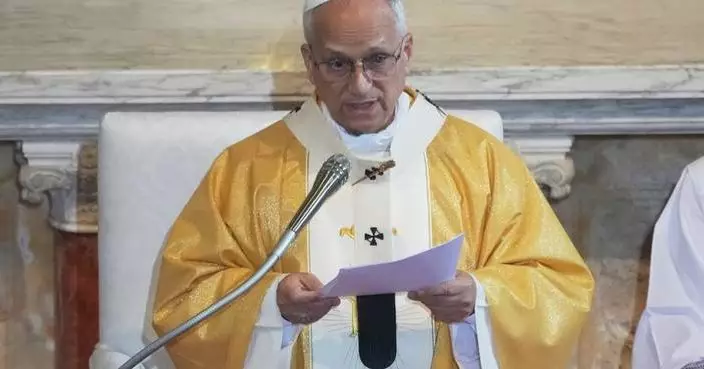
FILE - New York Mayor Zohran Mamdani and New York Governor Kathy Hochul arrive at a press conference at Sugar Hill Children's Museum of Art & Storytelling, March 3, 2026, in New York. (AP Photo/Yuki Iwamura, File)
SEASIDE PARK, N.J. (AP) — A long-lasting weather pattern is poised to blast hot air like a furnace across the eastern United States, with the unusual heat wave threatening to shatter record high temperatures Wednesday in big cities including New York, Philadelphia and Washington, D.C.
In the nation's capital, forecasters were calling for a high temperature of 93 degrees (33.9 Celsius) late Wednesday afternoon and another high of 93 on Thursday.
The heat is unusual for April, not only because it’s scorching much of the nation so early in the year but also for its expected duration. The near-record temperatures are expected to last into this weekend, forecasters say.
On the Jersey Shore, hundreds of people took advantage of the gorgeous spring day Wednesday to stroll along boardwalks. Temperatures soared into the 80s in some inland areas, but was about 15 degrees cooler along the water, as a slight breeze blew.
“After all the nasty cold and snow we had to deal with this winter, this is our payback,” New Yorker Javier Estrada, 19, said while taking a break from a beach football game in Seaside Park, New Jersey.
“I’m here with my buds, we’re having a blast and God is smiling on us,” he said. “What more can you ask for?”
The potentially dangerous heat comes as pieces of the roof of Yost Ice Arena, one of the nation's oldest college hockey arenas, were found scattered by a storm Wednesday in nearby yards in Ann Arbor, Michigan. That arena and another one in the same community — a city ice rink — were both damaged by the severe weather that struck Michigan overnight Tuesday into Wednesday morning. Severe storms earlier this week also tore through Kansas, Minnesota and Wisconsin.
While it's not unprecedented to see high temperatures climb toward 90 degrees (32 Celsius) on an April day, the length of such an April heat wave is rarely seen, experts say.
“That’s borderline unprecedented as far as the duration of it this time of year,” said John Feerick, senior meteorologist at the forecasting firm AccuWeather.com.
Feerick said that starting Wednesday “we're going to have records challenged from basically Georgia all the way up through the New York City area and back toward the Ohio Valley.”
The National Weather Service is projecting a high temperature of around 86 degrees (30 Celsius) for Central Park in New York City on Wednesday. The record high for the date is 87, set in 1941.
Even hotter weather is expected in Philadelphia, where Wednesday's high is expected to be 92 degrees (33 C). Other likely hot spots include Washington, D.C., which could see a high of 94 (34 C); and Atlanta, where the high is projected to be 88 (31 C).
“It's really some very impressive heat for the middle of April, for sure,” Feerick said.
“The good thing about this is that the humidity is not summertime levels,” he added. That means it won't feel as hot as a sizzling July day.
The early-season heat can be more stressful on people's bodies since they haven't had a chance to acclimate.
Heat is the No. 1 weather-related killer in the U.S., the weather service warns. Infants and young children; older adults, people with chronic medical conditions and pregnant women are especially vulnerable to heat-related injuries and death.
A strong ridge of high pressure fueling moisture into the southern plains was responsible for bringing the unusual heat to the eastern U.S., the weather service said.
Though Wednesday is a day when many records could fall, the heat wave will continue through Friday in many areas, forecasters said.
“Widespread lower to even middle 90s are expected Friday across the lower elevations of the Carolinas, which could set additional daily records and perhaps come close to some monthly records,” the agency's Weather Prediction Center wrote in a memo.
The heat wave should finally be breaking down by Sunday as a strong cold front moves toward the Eastern Seaboard, and then it should be “pleasantly cooler” by Monday with the front heading out to sea, the weather service said.
In Seaside Park, Tom Larkin, 48, of Toms River, New Jersey, and his 3-year-old Labrador retriever, Vader, were among those strolling on the boardwalk.
“He just loves to see people and get petted, so what should be a 20-minute walk usually ends up taking about an hour and a half at least,” Larkin joked as Vader made friends with passersby.
“But on a day like this I don’t mind the extra time here," he said. "The people are great and the scenery is gorgeous, and it’s not too crowded yet, like it will get after Memorial Day.”
—
Martin reported from Atlanta.
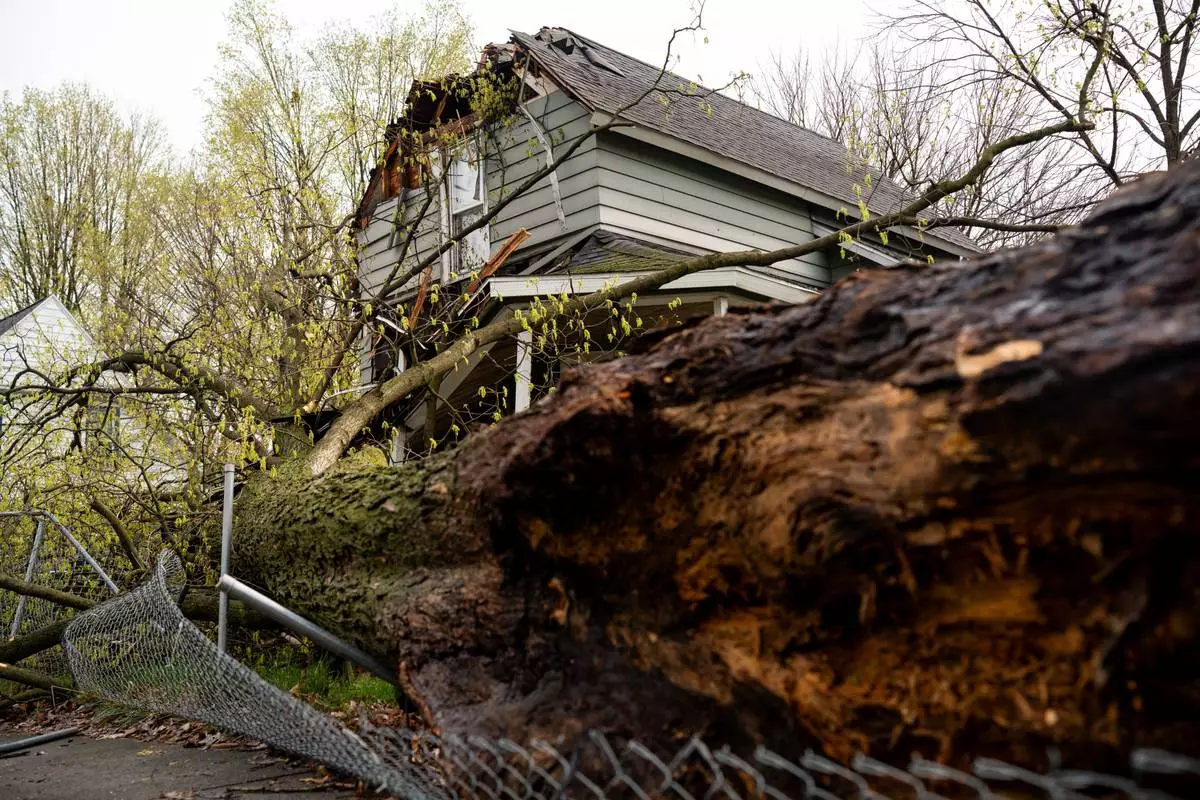
Damage from a severe storm is seen in Otesgo, Mich., on Wednesday, April 15, 2026. (Devin Anderson-Torrez /Kalamazoo Gazette via AP)
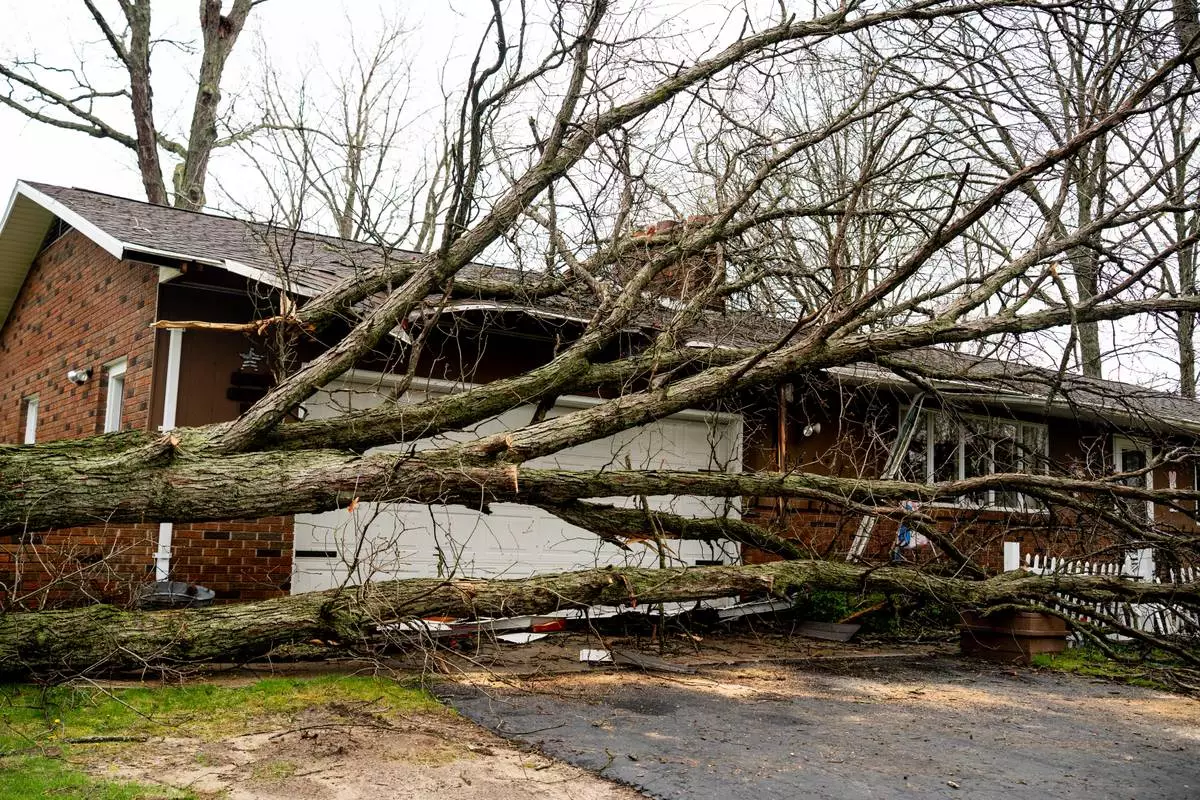
Damage from a severe storm is seen on Oak Street in Otesgo, Mich., on Wednesday, April 15, 2026. (Devin Anderson-Torrez /Kalamazoo Gazette via AP)
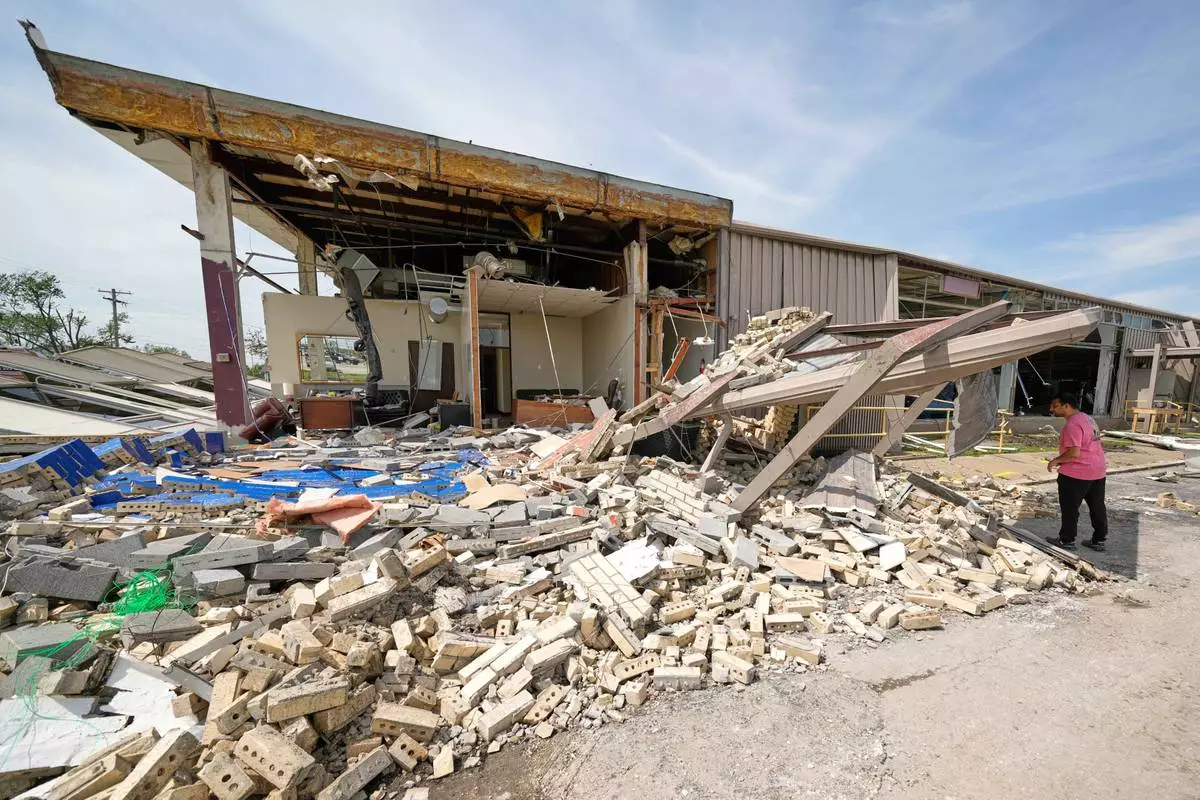
A man looks though debris Tuesday, April 14, 2026, at a pipe manufacturing facility that was damaged by a tornado Monday in Ottawa, Kan. (AP Photo/Charlie Riedel)
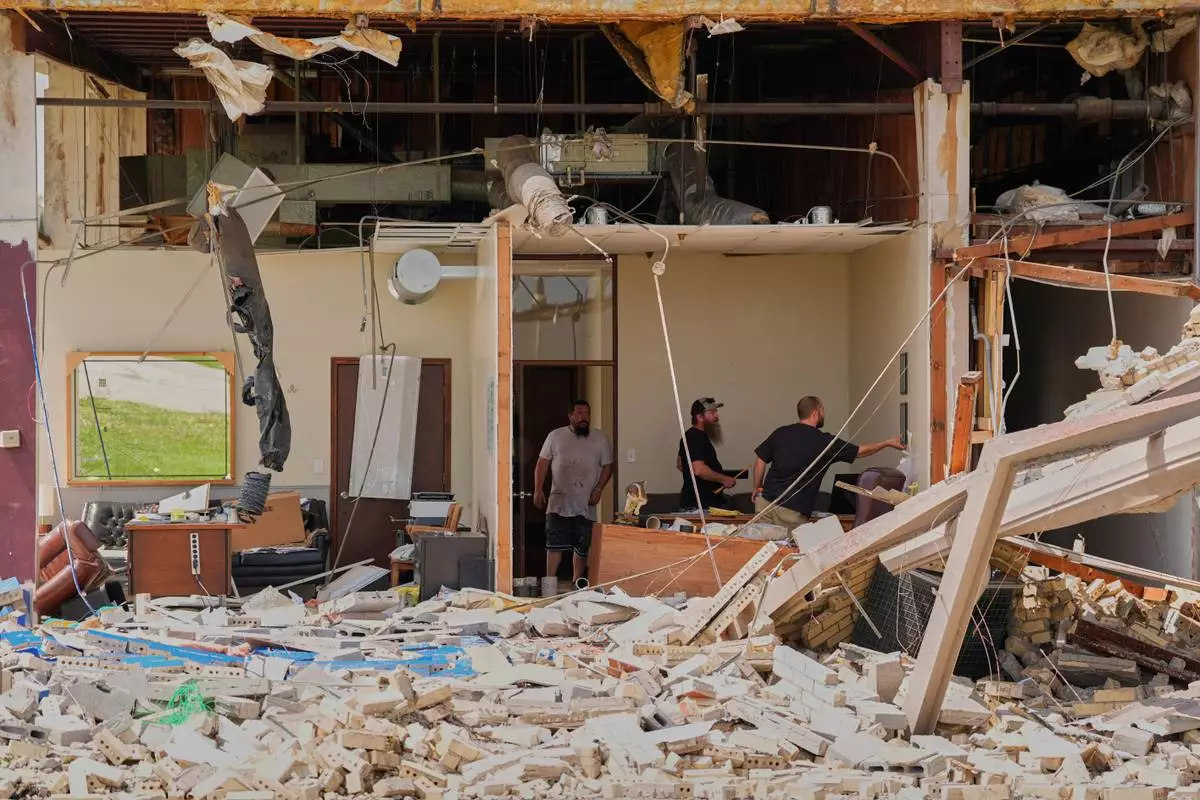
Workers salvage items Tuesday, April 14, 2026, at a pipe manufacturing facility that was damaged by a tornado Monday in Ottawa, Kan. (AP Photo/Charlie Riedel)
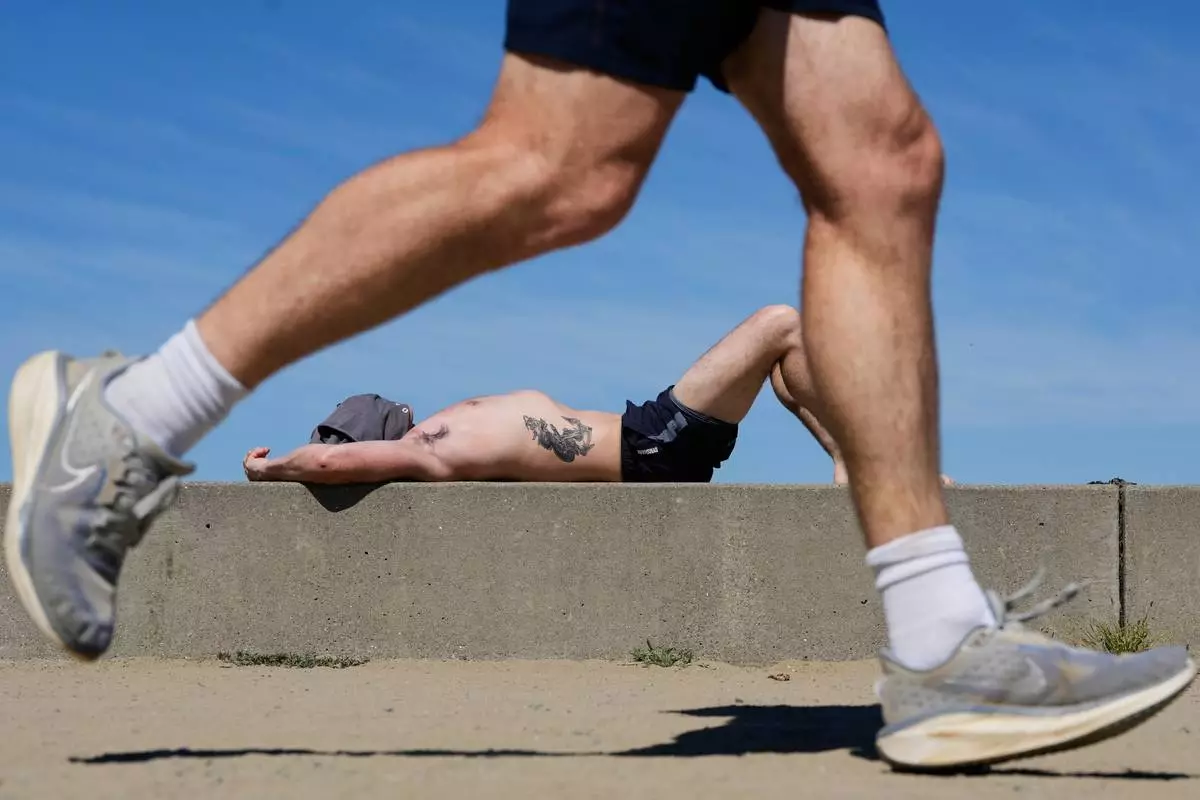
FILE - A jogger runs past as a man sunbathes on a hot day at Crissy Field in San Francisco, March 17, 2026. (AP Photo/Godofredo A. Vásquez, File)