Skip to Content Facebook Feature Image

Senate rejects effort to halt arms sales to Israel, but most Democrats vote to block them

News

Senate rejects effort to halt arms sales to Israel, but most Democrats vote to block them
News

News

Senate rejects effort to halt arms sales to Israel, but most Democrats vote to block them

2026-04-16 08:35 Last Updated At:09:01

WASHINGTON (AP) — More than three dozen Democrats supported an effort by Vermont Sen. Bernie Sanders on Wednesday to block arms sales to Israel, signaling a growing discontent in the party with Prime Minister Benjamin Netanyahu and the wars in Gaza and Iran.

The two resolutions to block U.S. sales of bulldozers and bombs to Israel were opposed by all Republicans and rejected 40-59 and 36-63. But Sanders has repeatedly forced votes on the issue to put pressure on his colleagues — both Democrats and Republicans — to oppose Netanyahu’s regime.

Similar resolutions forced by Sanders in 2024 and 2025 were also rejected, but the number of Democrats voting with the Vermont Independent has more than doubled in less than two years amid Israeli campaigns in Gaza, Iran and Lebanon and a stepped-up campaign by party activists who have increasingly seen support for Israel as a litmus test for support.

“It’s clear that Democrats are beginning to listen to the average American who is sick and tired of spending billions of dollars to support Netanyahu’s horrific wars when people in this country can’t afford housing or health care,” Sanders said after the vote.

Arizona Sen. Mark Kelly, D-Ariz., voted in support of the two resolutions after opposing some of Sanders’ previous efforts. In a speech just before the vote, Kelly said that “the reckless decisions being made by Prime Minister Netanyahu and President Trump” led him to his decision, which he said he did not take lightly.

“Under Prime Minister Netanyahu’s government, we’ve seen an expanded war in Lebanon that is putting innocent Lebanese civilians at risk, and ongoing violence against Palestinians and their homes being demolished in the West Bank,” Kelly said. “All of this has undermined the path forward for peace.”

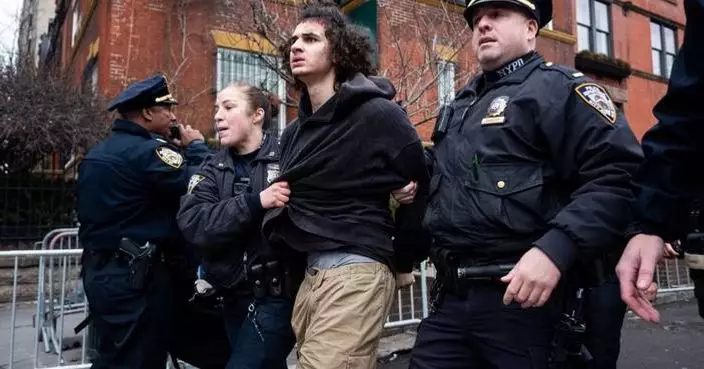
Among the Democrats voting against the resolutions were Senate Minority Leader Chuck Schumer and Sen. Kirsten Gillibrand. Nearly 100 protesters were arrested during a demonstration on Monday calling on the two New York senators to vote in favor of Sanders' two measures.

Led by the antiwar group Jewish Voice for Peace, the crowd of hundreds initially attempted to stage a sit-in inside the senators' offices as they said they were abetting Israel’s intensifying attacks in Lebanon and the U.S.-Israeli war on Iran. But they were blocked and many of the protesters were arrested.

“The majority of Americans and New Yorkers want a resolution to what the Israeli government is doing,” said the group’s communications director, Sonya Meyerson-Knox.

Democrats supported a resolution earlier on Wednesday to halt Trump's war in Iran, though that was also rejected, 47-52. Democratic Sen. Chris Coons, a Democrat who voted against Sanders' Israel resolutions, said he voted to end the Iran war but did not want to abandon Israel.

“My votes should be taken neither as an endorsement of the actions of the Netanyahu government nor as an abandonment of the state of Israel, the Jewish people, or the US-Israel relationship,” Coons said in a statement after the vote.

Republicans said the vote could hurt U.S. efforts in the Iran war.

Senate Foreign Relations Committee Chairman Jim Risch, R-Idaho, said the resolutions could embolden Iran and “send the message that the U.S. is prepared to leave our ally Israel vulnerable.”

“They will not help the United States of America,” Risch said ahead of the vote.
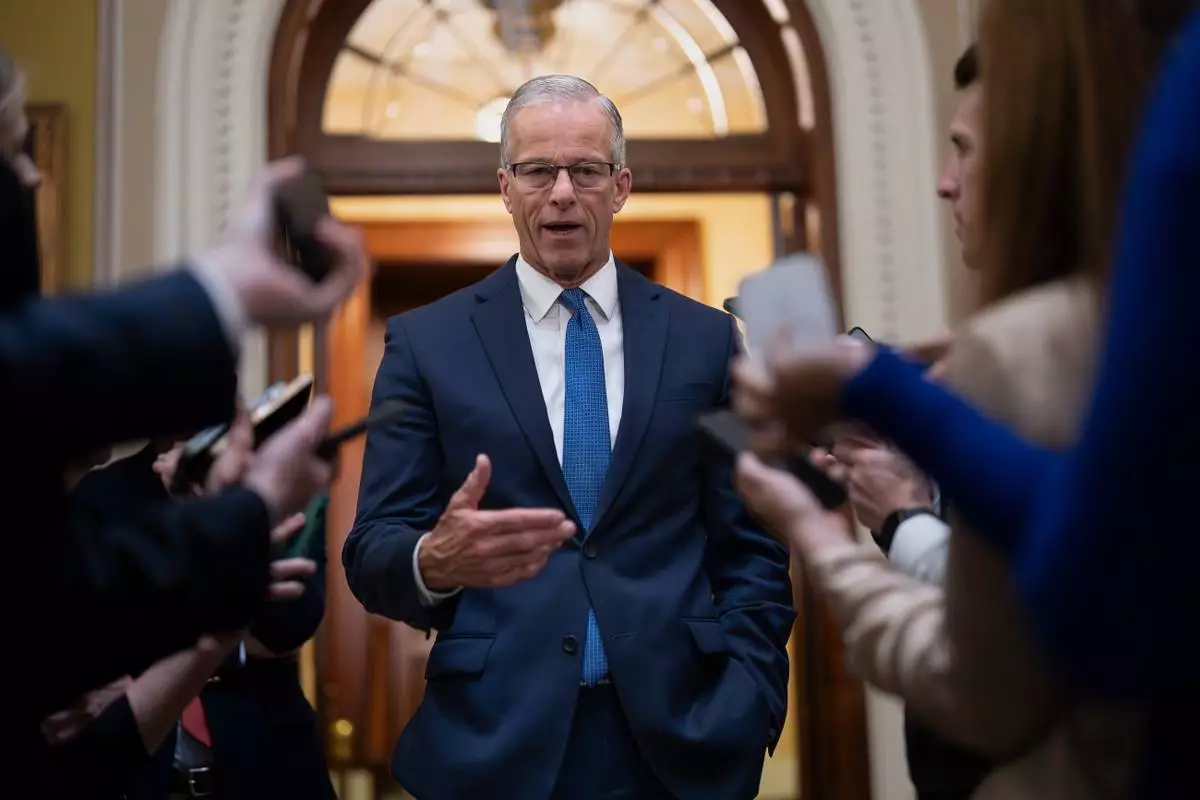
Senate Majority Leader John Thune, R-S.D., speaks to reporters outside the chamber after passing a measure by unanimous consent that would fund most of the Department of Homeland Security, if the House agrees, at the Capitol in Washington, Thursday, April 2, 2026. (AP Photo/J. Scott Applewhite)
Senate Majority Leader John Thune, R-S.D., speaks to reporters outside the chamber after passing a measure by unanimous consent that would fund most of the Department of Homeland Security, if the House agrees, at the Capitol in Washington, Thursday, April 2, 2026. (AP Photo/J. Scott Applewhite)

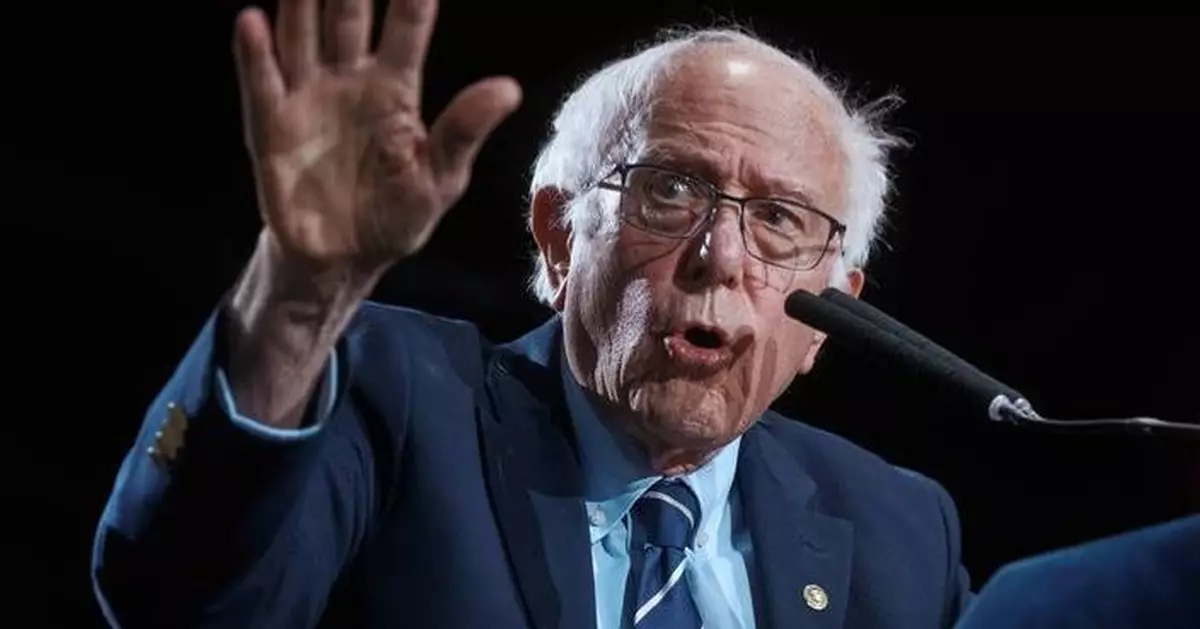
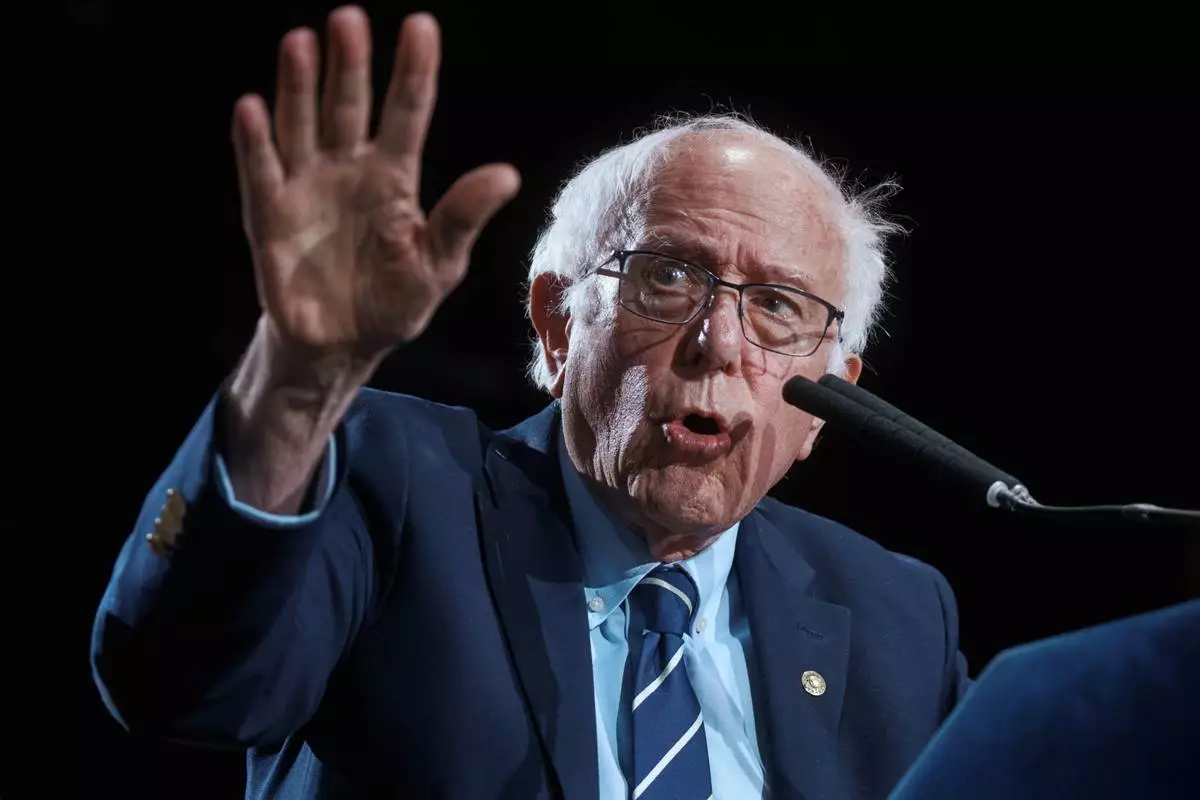
Rep. Bernie Sanders, I-Vt., speaks during an address marking New York City Mayor Zohran Mamdani first 100 days in office at the Knockdown Center, Sunday, April 12, 2026, in New York. (AP Photo/Andres Kudacki)

Rep. Bernie Sanders, I-Vt., speaks during an address marking New York City Mayor Zohran Mamdani first 100 days in office at the Knockdown Center, Sunday, April 12, 2026, in New York. (AP Photo/Andres Kudacki)

Music lovers who have complained for years about Ticketmaster fees for concert tickets are surely reveling in a jury verdict Wednesday that found its parent company Live Nation has been running a harmful monopoly over large venues across the U.S.

But they will have to wait to see if the verdict leads to changes that make concerts more affordable.

Here are some things to know about the verdict in the closely-watched antitrust battle:

The lawsuit, initially led by the U.S. government under former President Joe Biden, accused Live Nation of smothering competition and blocking venues from using multiple ticket sellers. Days into the trial, however, President Donald Trump’s administration announced it would settle its claims against the concert giant. Some states joined the $280 million settlement, which still needs a judge's approval, but more than 30 states pressed ahead with the trial.

A federal jury in New York found that Ticketmaster had overcharged customers $1.72 per ticket in 22 states, which a judge could order the company to pay back. That could cost Live Nation hundreds of millions of dollars.

“The jury’s verdict is not the last word on this matter,” Live Nation said in a statement Wednesday.

The verdict brings no immediate relief for concertgoers. But the states view it as a step toward opening the market to other companies in a way that will enhance competition and could slightly lower prices.

“There might be a few extra dollars that will come trickle down at consumers who bought tickets through Live Nation,” said Shubha Ghosh, a law professor at Syracuse University who focuses on technology and antitrust law. “Whether ticket prices will go down in the long run, I think it largely depends.”

The next step will be determining the penalties. Beyond the hundreds of millions that Live Nation could be ordered to pay, possible sanctions could force the company to sell off some of its venues. Live Nation owns, controls booking for or has equity in hundreds of venues, and its subsidiary Ticketmaster is the world’s largest ticket-seller for live events.

Live Nation has continued to insist that it is not a monopoly.

The company predicted that once the remedies phase of the case plays out and any appeals are resolved, the outcome likely won’t be much different from the deal it reached with the federal government.

U.S. District Judge Arun Subramanian told attorneys to meet and deliver a joint letter by next week that proposes a schedule for next steps.

A group of Democratic senators wrote to the judge Wednesday after the verdict, urging him to closely scrutinize the Trump administration's proposed settlement with Live Nation before he considers granting approval.

The deal includes a cap on service fees at some amphitheaters and new ticket-selling options that could allow promoters and venues to also use Ticketmaster competitors, such as SeatGeek, Eventbrite or AXS. However, it does not separate Ticketmaster from Live Nation, which was an original goal of the Justice Department's 2024 complaint.

U.S. Sens. Amy Klobuchar, Elizabeth Warren, Cory Booker, Richard Blumenthal, Mazie Hirono and Peter Welch argue the deal was “negotiated under suspicious circumstances” and does not go far enough in restoring competition or protecting customers, artists and independent venues.

The Justice Department has called the settlement a “win-win for everybody,” and Live Nation has said it is pleased with a deal that increases access for other promoters.

Associated Press journalists Wyatte Grantham-Philips and David Martin contributed.

FILE - The Ticketmaster logo is seen along the sideline of the field before an NFL football game, Sept. 15, 2024, in Jacksonville, Fla. (AP Photo/Phelan M. Ebenhack, File)

FILE - The Ticketmaster logo is seen along the sideline of the field before an NFL football game, Sept. 15, 2024, in Jacksonville, Fla. (AP Photo/Phelan M. Ebenhack, File)

Recommended Articles