KHARKIV, Ukraine (AP) — When a Ukrainian agricultural tycoon founded a volunteer unit of 30 people in the early days of Russia’s invasion, he had no certainty he would live to see what came next — but he did, and so did the force he created.
The group is now a 40,000-strong corps widely seen as one of Ukraine’s most effective fighting formations within official defense forces.
Click to Gallery
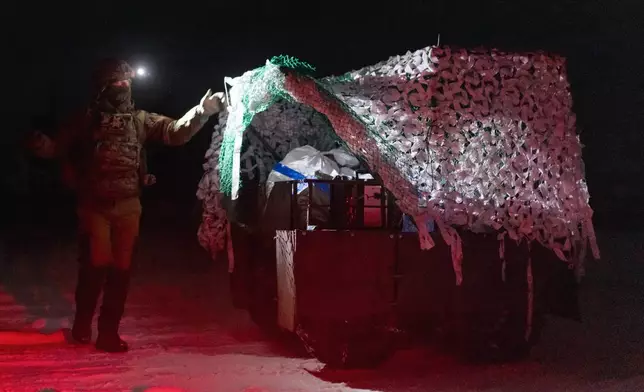
Soldiers from Ukraine's Khartia brigade load ammunition onto a combat ground drone bound for the front line in Kharkiv region, Ukraine, Jan. 27, 2026. (AP Photo/Nikoletta Stoyanova)
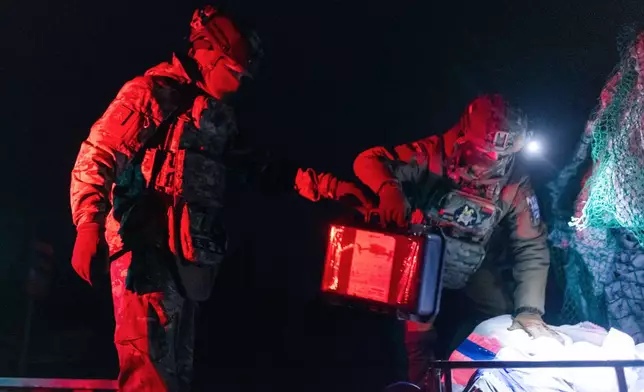
Soldiers from Ukraine's Armed Forces Khartia brigade load ammunition on a combat ground drone bound for the front line in Kharkiv region, Ukraine, Jan. 27, 2026. (AP Photo/Nikoletta Stoyanova)
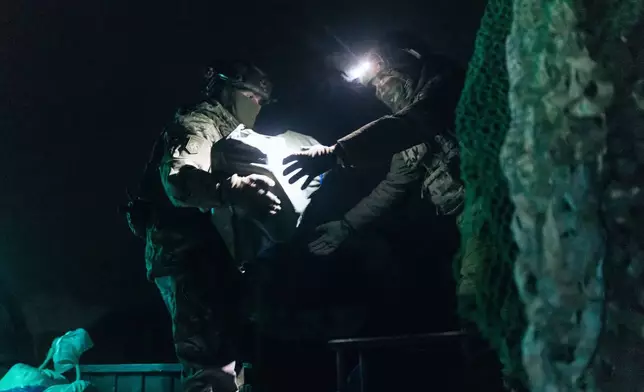
Soldiers from Ukraine's Khartia brigade load ammunition onto a combat ground drone bound for the front line in Kharkiv region, Ukraine, Jan. 27, 2026. (AP Photo/Nikoletta Stoyanova)
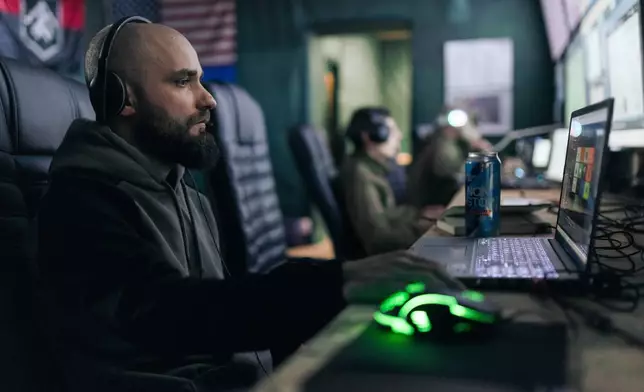
Soldiers from Ukraine's Khartia brigade operate drones from the Kharkiv region, Ukraine, Feb. 30, 2026. (AP Photo/Nikoletta Stoyanova)
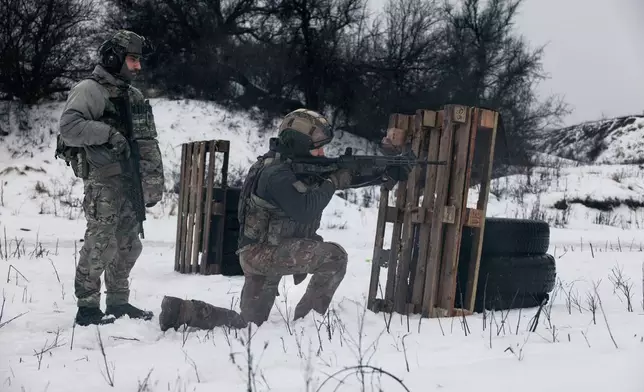
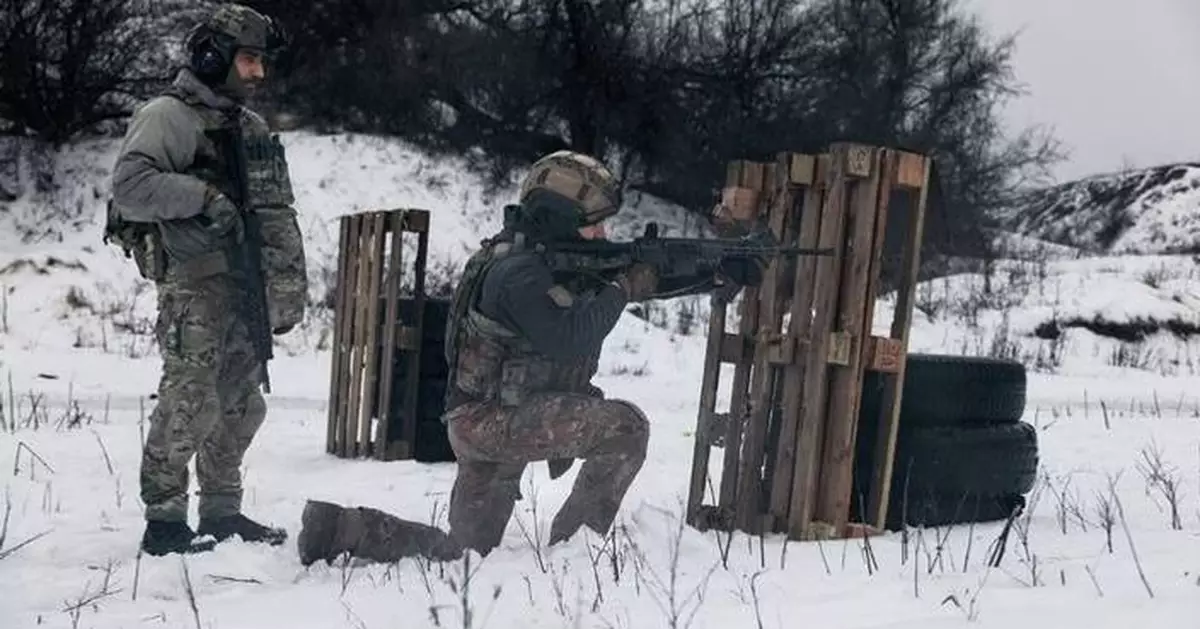
Soldiers from Ukraine's Khartia brigade practice shooting at a training ground in the Kharkiv region, Ukraine, Feb. 14, 2026. (AP Photo/Nikoletta Stoyanova)
“Ukraine needs to have an effective modern army. And this is our number one guarantee of the country’s security,” said Vsevolod Kozhemyako, owner of a large agricultural conglomerate and now an adviser to the Commander of the Khartiia Corps.
Its rapid expansion reflects a broader transformation of Ukraine’s military, part of a new wave of formations, alongside the Third Army and Azov Corps, breaking with Soviet-era practices long criticized by soldiers.
As talks on a potential peace settlement stall and global attention shifts to the Middle East, Ukraine continues to seek firm security guarantees from its allies, particularly the United States.
But for many in Ukraine, the war has reinforced a different conclusion: the country’s strongest guarantee may ultimately be its own army.
“We have kids, we have grandkids, and we will stay on this territory,” Kozhemyako said. “The future of this country depends on us.”
After the Soviet Union collapsed, Ukraine inherited a large military and arsenal. But by 2014, Russia’s annexation of Crimea and armed conflict in eastern Ukraine exposed weaknesses from underinvestment, corruption and a lack of clear strategy, prompting an influx of volunteers and long-overdue military reforms.
Those changes helped Ukraine withstand the 2022 invasion, but as the war dragged on, some of its deepest problems — rigid top-down leadership, excessive bureaucracy and a culture where bad news is often hidden out of fear of punishment — began to reassert themselves, with consequences on the battlefield.
From the outset, Kozhemyako said his unit would have to take a different path. He said he understood the shortcomings of the regular army as an active military member since 2014 who was surrounded by veterans.
“They didn’t want to join the post-Soviet army, but they wanted to fight,” Kozhemyako recalled.
Many of them were civilians with a background in business, he said. They brought their own leadership mindset and sought to build a structure that valued initiative.
It began with studying and applying U.S. Army planning methods, combining them with battlefield experience and adapting as the war evolved. The unit introduced Western protocols such as Troop Leading Procedures (TLP) and After Action Reviews (AAR), relying on in-house experts to refine them.
TLP allow lower-level units to plan operations faster, which is critical for exploiting narrow windows of opportunity on the battlefield. AAR push soldiers to identify what happened, why and how to improve, a process the corps has applied with particular rigor to its fast-evolving use of technology.
The Khartiia’s focus on rapidly evolving technologies has drawn attention beyond Ukraine’s borders. In an article published in Military Review, the U.S. Army’s professional journal, Maj. Gen. Curtis Taylor pointed to Khartiia’s December 2024 drone assault near Kharkiv as a landmark moment — the first all-robot attack on Russian positions. For the U.S. Army, he argued, it was a call to rethink how its own armored formations must adapt to survive on the modern battlefield.
That technology is now part of daily operations. When a 23-year-old platoon commander was transferred to Khartiia from a regular unit, he was put in charge of ground robotic systems used routinely for supply delivery and evacuation.
He and other soldiers quoted in this story spoke on condition of anonymity, in keeping with Ukrainian military protocol, although higher ranking officials can speak on the record.
The soldier said he was struck by how little emphasis was placed on rigid formalities that had defined his previous unit — from strict dress codes to repetitive routines unrelated to combat.
“People understand why we are here, and they don’t overload us with unnecessary tasks,” he said, having paced the military position just moments earlier in a pair of blue plush house slippers.
He also pointed to a different relationship with commanders, contrasting it with a rigid hierarchy he had experienced before, where fear of punishment often discouraged honest communication.
“When officers look at you from above, like in rear units, they become almost like enemies to you,” he said. “In Khartiia, relationships are different. When you go on a mission, you trust the people giving you orders.”
The results have been tangible on the battlefield. In December 2025, the Khartiia Corps led a counterattack in the Kupiansk direction, liberating several villages north of the city and pushing to the Oskil River. The Institute for the Study of War said that seizing Kupiansk had been a Russian priority since mid-2025, but despite months of effort, Russian forces were unable to make significant gains in that area.
The Khartiia Corps has had no major setbacks, and did not share the number of troops wounded or killed, as is customary for both sides of the war.
The Washington-based think tank assessed in December that the operation demonstrated Ukrainian forces remain capable of “conducting successful counterattacks and making tactically significant gains, particularly when Russian forces are overstretched.”
Relying largely on its own recruitment and fundraising, the corps has built a professional HR system and a strong brand, actively using YouTube and social media, partnering with public figures and making it easy to donate online.
A Ukrainian military officer involved in the public outreach for one of the Ground Forces’ units said the Third Army Corps, and then Khartiia, became trendsetters in this space whose campaigns others actively study when building their own. The two corps were among the first to build their own brands, something that now plays a critical role for the army as it faces a constant need to recruit.
“The approaches that work in the commercial sphere translate perfectly here — only you are competing not for profit, but for people, equipment and attention of the volunteers,” he said.
Stepping into one of Khartiia’s underground command posts, it feels more like a gaming room than a military hub. But instead of video games, large screens stacked wall-to-wall glow with real-time reconnaissance footage from the front line in Ukraine’s Kharkiv region. Overseeing it all is a former bodybuilding coach who rose through the ranks from soldier to senior officer, dressed in a Khartiia hoodie with an energy drink by his keyboard.
“One of our secrets is that we don’t spare people during training — we train them constantly,” he said. “But during combat, it’s the opposite. People come first. We don’t save drones or equipment at the expense of our people.”
It is a philosophy that Khartiia is now trying to spread by forging direct alliances with formations that share the same approach.
The Khartiia and the 3rd Army Corps recently launched a joint training initiative, sharing resources and expertise to build a common way of fighting.
For the commanders, who are also neighbors on the front lines, the motivation is practical: after months of exchanging tactics, both units identified the same critical vulnerability in the broader army — a desperate need to overhaul basic combat training for soldiers, sergeants and junior officers.
Ihor Obolienskyi, commander of the Khartiia Corps, estimated that about 300,000 troops are currently deployed along the front line, with the two corps accounting for roughly 80,000 — enough, he said, to drive meaningful change within the military, even as reform remains difficult in what he described as an inherently inert system.
Commanders from other units have already approached the corps to learn from their model, suggesting a growing demand within the army for change.
Yet it is unclear if senior command is ready to abandon its Soviet legacy.
“We want to give a tool to the General Staff,” said Andrii Biletskyi, the commander of 3rd Army Corps, during a joint briefing. “Whether they accept it or not — that is their decision.”
——
AP reporter Volodymyr Yurchuk contributed to this report.
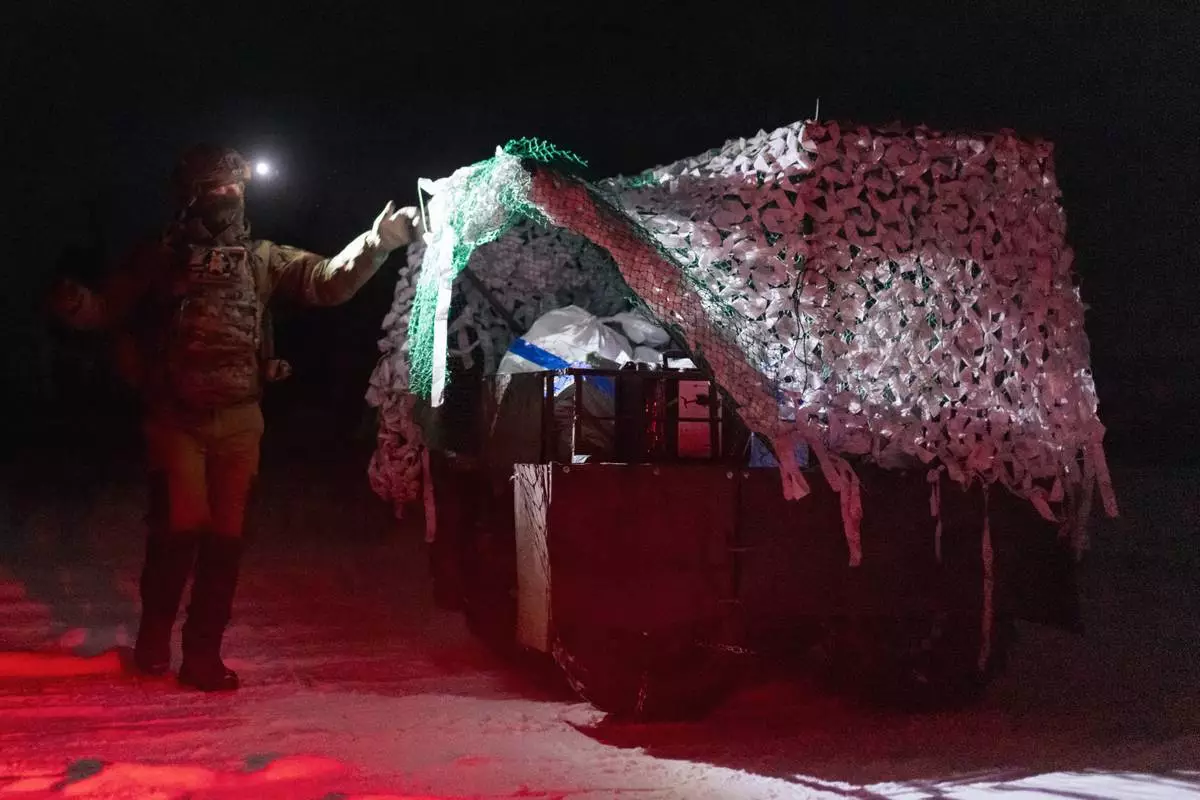
Soldiers from Ukraine's Khartia brigade load ammunition onto a combat ground drone bound for the front line in Kharkiv region, Ukraine, Jan. 27, 2026. (AP Photo/Nikoletta Stoyanova)
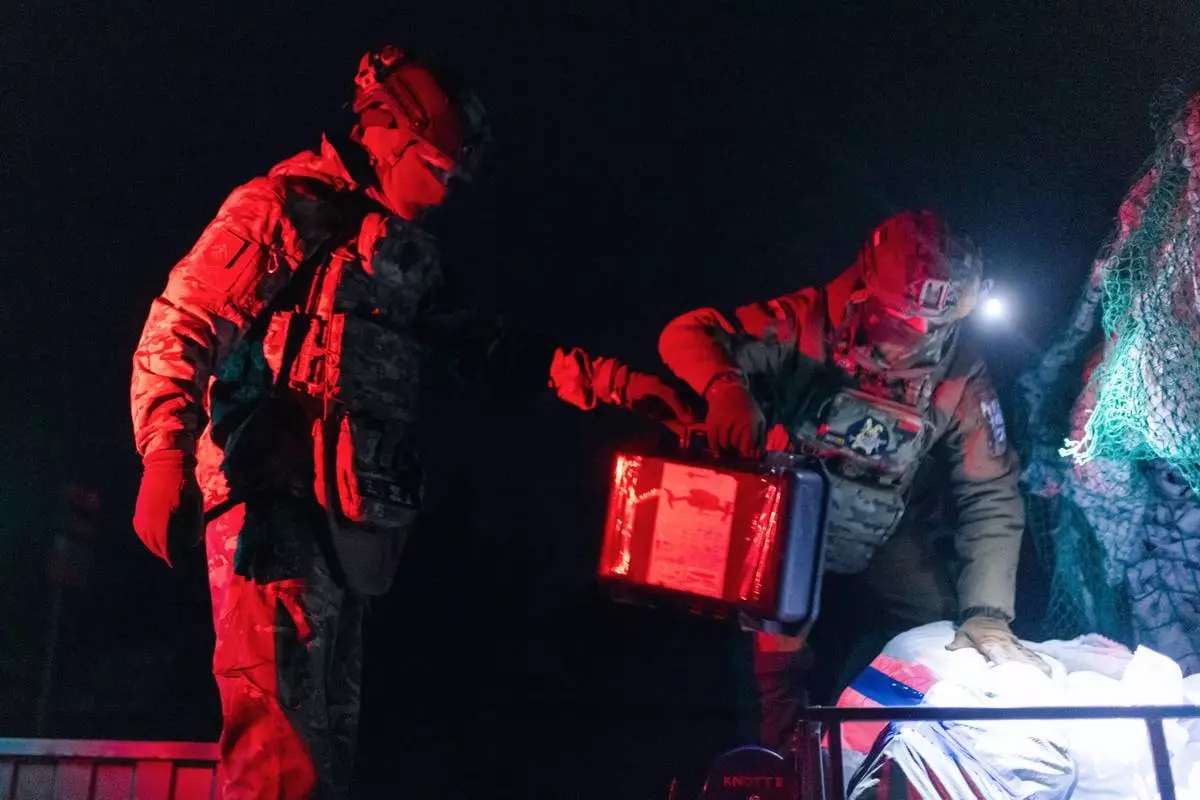
Soldiers from Ukraine's Armed Forces Khartia brigade load ammunition on a combat ground drone bound for the front line in Kharkiv region, Ukraine, Jan. 27, 2026. (AP Photo/Nikoletta Stoyanova)
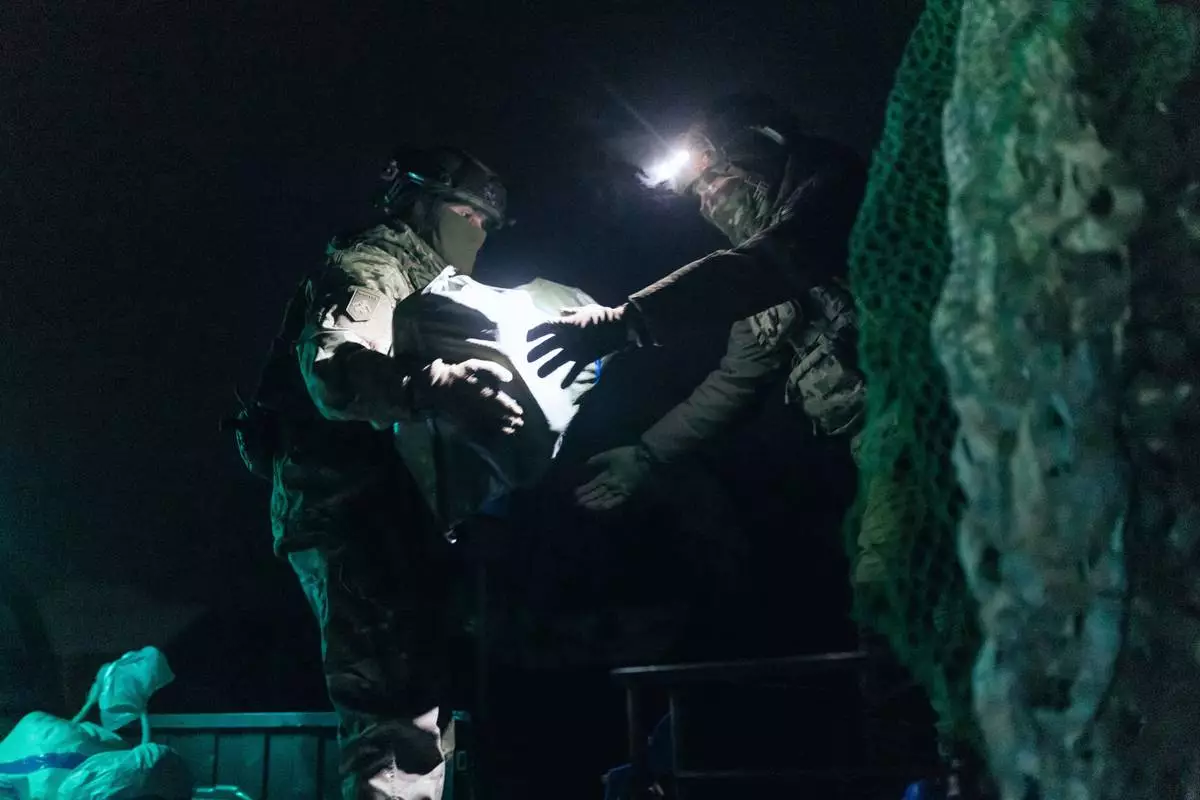
Soldiers from Ukraine's Khartia brigade load ammunition onto a combat ground drone bound for the front line in Kharkiv region, Ukraine, Jan. 27, 2026. (AP Photo/Nikoletta Stoyanova)
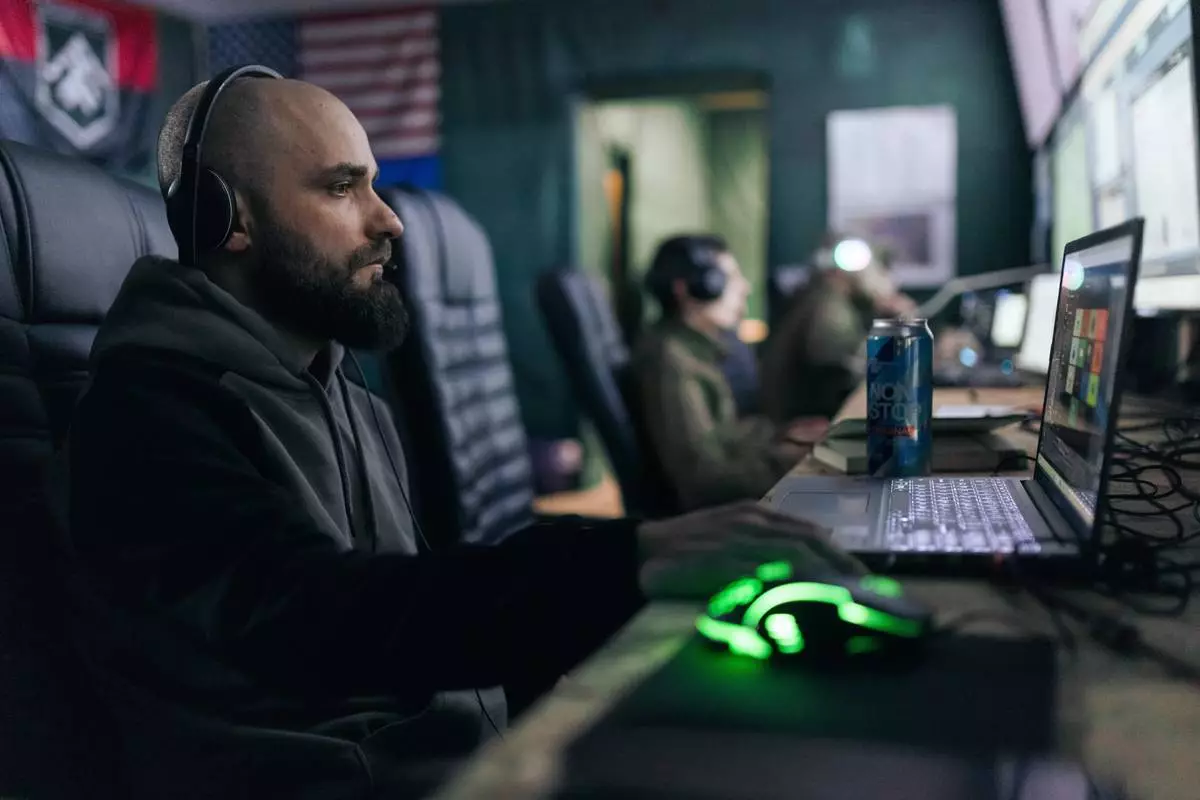
Soldiers from Ukraine's Khartia brigade operate drones from the Kharkiv region, Ukraine, Feb. 30, 2026. (AP Photo/Nikoletta Stoyanova)
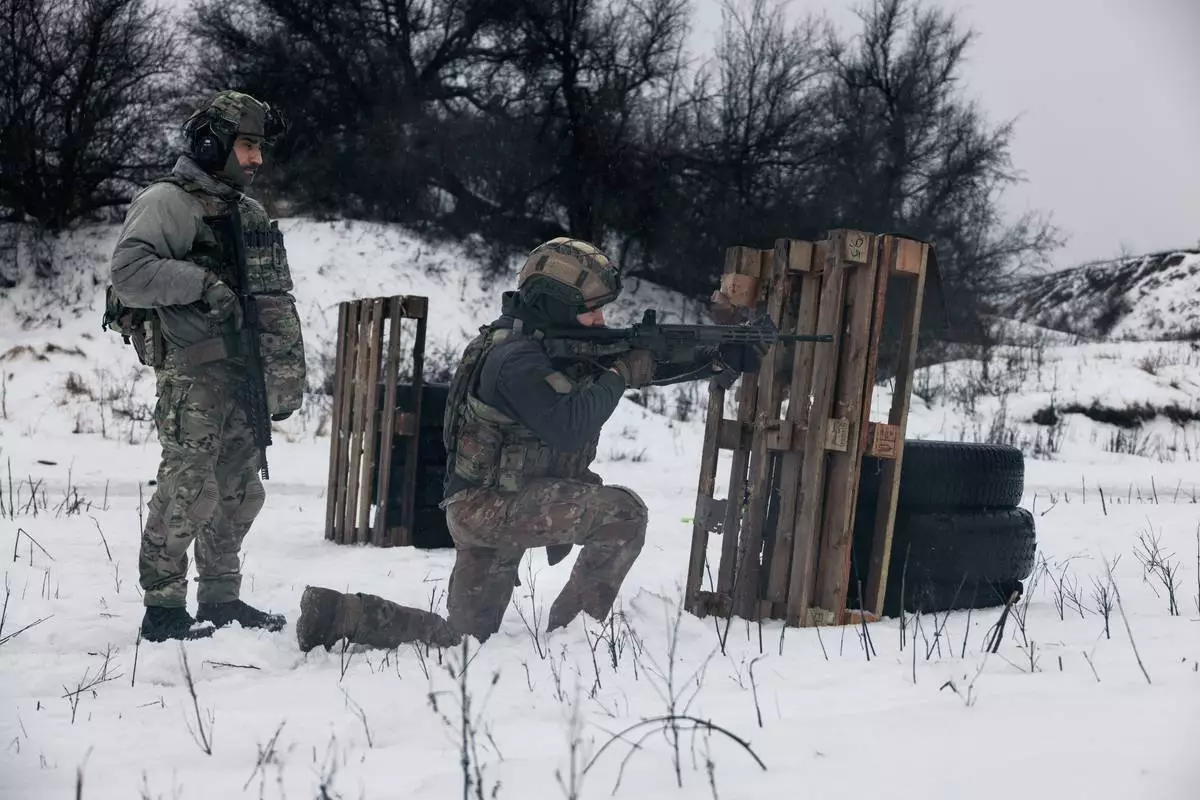
Soldiers from Ukraine's Khartia brigade practice shooting at a training ground in the Kharkiv region, Ukraine, Feb. 14, 2026. (AP Photo/Nikoletta Stoyanova)