Sixth-term Commission on Poverty convenes sixth meeting
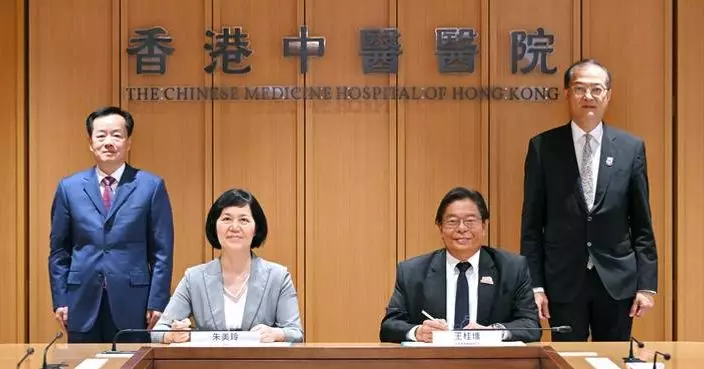
The sixth-term Commission on Poverty convened its sixth meeting this afternoon (April 16).
At the meeting, members noted that the Report on Impact of Targeted Poverty Alleviation Strategy in Hong Kong is being finalised. The Report will elaborate on the content and impact of the Government's targeted poverty alleviation measures. It will also reflect, from a macro perspective, how the Government's major policies alleviate, combat and prevent poverty, thereby effectively enhancing people's sense of achievement and satisfaction. The Report will also outline future strategies for relevant work. It is expected to be released by mid-2026.
Members also noted that the Government will continue to support vulnerable groups through the tripartite collaboration among the Government, the business sector and the community, including establishing a platform to encourage family offices involved in philanthropic endeavours to provide resources for implementing projects that benefit disadvantaged groups.

Source: AI-found images
Opening remarks by SED at LegCo Finance Committee special meeting
Following is the English translation of the opening remarks by the Secretary for Education, Dr Choi Yuk-lin, at the special meeting of the Legislative Council Finance Committee today (April 16):
Chairman,
Education is the key to nurturing talent. To proactively align with the National 15th Five-Year Plan, the Government of the Hong Kong Special Administrative Region (HKSAR) strives to develop Hong Kong into an international hub for education and high-calibre talent, and promote the integrated development of education, technology and talent, thereby contributing to the building of a leading country in education. In line with the national strategies of educational digitalisation and invigorating the country through science and education, we are also advancing digital education to cultivate a new generation of innovation and technology talent. The Government's expenditure on education is $112 billion in 2026-27, accounting for about 13.3 per cent of the total government expenditure. It includes $102.3 billion of recurrent education expenditure, around 17.1 per cent of the total recurrent government expenditure.
In order to consolidate and develop the unique advantages of Hong Kong's highly internationalised and diversified education system under "one country, two systems", we will continue to implement new initiatives in 2026/27 to promote the development of a high-quality education system.
For post-secondary education, we will make good use of the Task Force on Study in Hong Kong to promote Hong Kong's quality resources in academic studies, scientific research and international co-operation. The University Grants Committee (UGC) has allocated $40 million in the 2025-28 triennium to the eight UGC-funded universities to promote the "Study in Hong Kong" brand, with a view to attracting top-notch talent globally. Meanwhile, to further accelerate the development of the Northern Metropolis University Town, the Government will roll out three sites at the Hung Shui Kiu/Ha Tsuen New Development Area shortly for the UGC-funded universities and the universities of applied sciences to apply for development of campuses and related supporting facilities. The Government has also earmarked $10 billion for providing loans to support such projects in the Northern Metropolis.
The Education Bureau (EDB) has also intensified its efforts to promote digital education. In the 2025-28 triennium, the UGC-funded universities will introduce a total of 27 undergraduate programmes related to STEAM (science, technology, engineering, arts and mathematics), including AI, creative industries, and data science, to create opportunities for young people to make the most of their talent, and nurture professionals across various aspects by integrating technology with traditional disciplines through interdisciplinary curricula.
Regarding self-financing post-secondary education sector, starting from the 2027/28 academic year, we will give priority consideration to AI-related programmes under the Study Subsidy Scheme for Designated Professions/Sectors to encourage institutions to be more proactive in offering such programmes to nurture innovation and technology talent for the digital era. We also support the Vocational Training Council in incorporating AI applications and related content into the compulsory generic information technology module of all Higher Diploma programmes, ensuring that the talent nurtured are equipped for future development trends.
For primary and secondary education, the EDB will release the Blueprint for Digital Education Development in Primary and Secondary Schools this year. This will encompass strategies such as optimising the interface between primary and secondary curricula of information technology and innovation and technology education, setting out an AI literacy learning framework, and enhancing AI training for teachers to foster a digital education atmosphere on campus. In addition, the EDB has set aside $2 billion in the Quality Education Fund to support digital education in primary and secondary schools, covering curricula optimisation, teacher training enhancement, digital infrastructure optimisation, and provision of resource support to schools, etc, of which, approximately $500 million is earmarked for the AI for Empowering Learning and Teaching Funding Programme, a three-year initiative starting from the 2025/26 school year. Each successful publicly funded school applicant will receive a one-off funding of $500,000 to acquire essential equipment and tools for integrating AI into learning and teaching, implement school-based AI education projects, and subsidise students' participation in activities related to AI literacy.
The EDB set up the Task Force on Optimising Grants for Schools last year to reform and integrate various subsidies to schools in an innovative approach. Over the past year, the Task Force has deliberated on the usage of the various subsidies and consulted the education sector extensively. Based on the principles of streamlining administration and delegating authority; removing barriers and restrictions; enabling flexible deployment; increasing efficiency as well as using public funds prudently, the Task Force has come up with various enhancement measures to facilitate the development needs and long-term planning of kindergartens, primary and secondary schools.
We will continue to enhance and optimise education quality, while taking care of students' physical and mental well-being. We have regularised the Three tier School-based Emergency Mechanism in secondary schools and extended it on a trial basis to Primary Four to Six, to strengthen support for students in need. We will also continue to step up promotion of school mental health through the 4Rs Mental Health Charter, encourage more school personnel to receive training related to mental health first aid, and continue to provide "gatekeeper training" for parents.
Teachers are the key to providing quality education. We have been enhancing the professional competencies and broadening the horizons of teachers and school principals through diversified professional development programmes and activities. In addition, we will enhance the teacher registration mechanism, and explore amending the Education Ordinance to introduce the practising certificate and regular renewal requirements, so as to ensure that all school teachers in Hong Kong are fit and proper persons, thus upholding the professionalism of the teaching force.
The Government is now drawing up a macroscopic, strategic and forward-looking five-year plan for the first time for Hong Kong. In the area of education development, we will map out more comprehensive and precise strategies, so as to strengthen Hong Kong's ability to attract high-calibre talent, promote high-quality development of education, and better integrate into and serve the overall national development by contributing with Hong Kong's strength.
This concludes my introduction. Thank you, Chairman.
Source: AI-found images