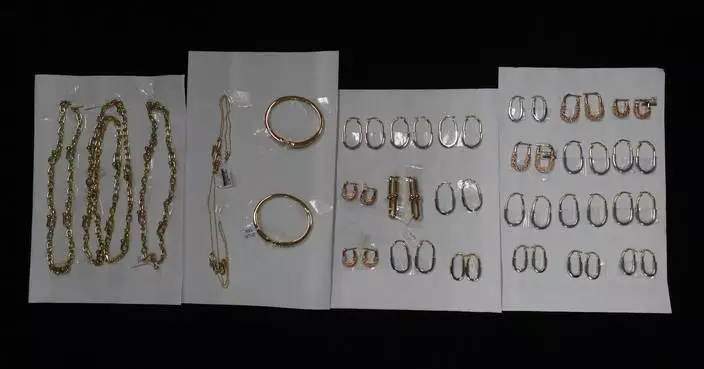
AFCD lays charges against local coxswain and four Mainland fishermen deckhands suspected of using snake cages for fishing
The Agriculture, Fisheries and Conservation Department (AFCD) today (April 16) laid charges against a local coxswain and four Mainland fishermen deckhands suspected of engaging in fishing using snake cages on a local vessel in waters off Lamma Island.
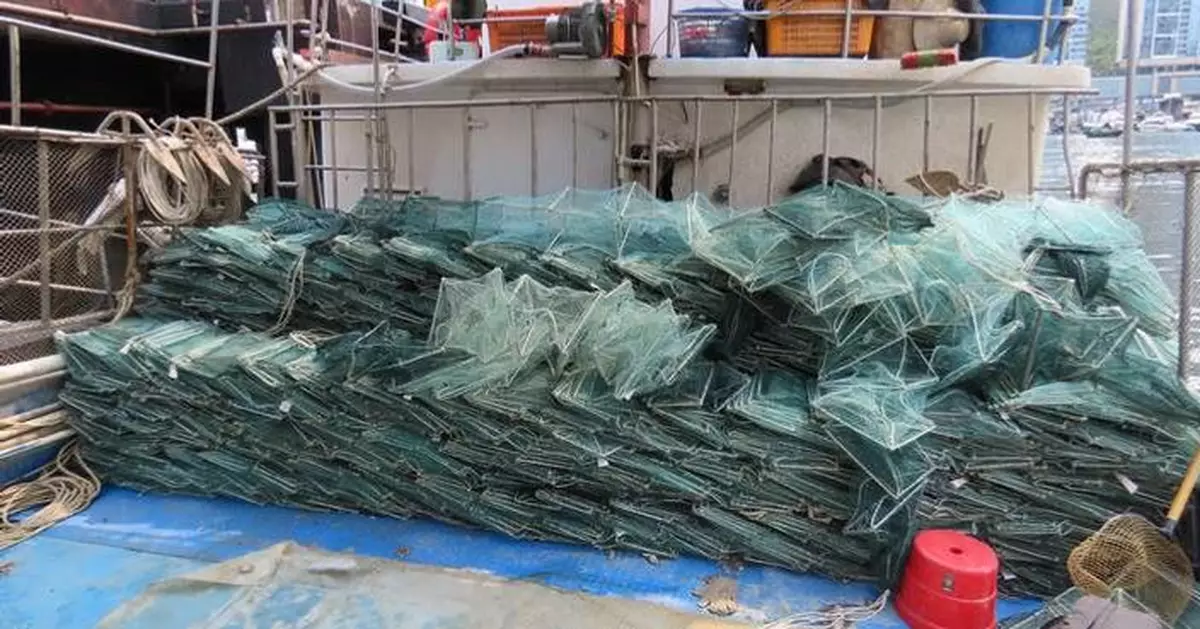
During a joint operation with the Police yesterday (April 15), the AFCD intercepted a local vessel suspected of engaging in fishing using snake cages at around 9pm for investigation. Some fishing gear, including snake cages and winches, was seized by the AFCD officers from the vessel.
After investigation, the five persons were charged with contravening the Fisheries Protection Ordinance (Cap. 171). They will appear at the Eastern Magistrates' Courts tomorrow (April 17).
Only a vessel registered under the Ordinance can be used for fishing in Hong Kong waters and only the fishing methods listed on its Certificate of Registration of Local Fishing Vessel can be employed for fishing by the vessel. The conditions of the Certificate of Registration of Local Fishing Vessel regarding cage traps also stipulate that any collapsible cage traps should not be connected in any way to another; or should not exceed five metres in any of its extended dimensions. Hence, it is unlawful to fish using snake cages. Offenders are liable to a maximum fine of $100,000 and six months' imprisonment upon conviction.
An AFCD spokesman stressed, "The Government is committed to combating illegal fishing activities in Hong Kong waters. The AFCD will continue to step up patrols and take stringent enforcement action."
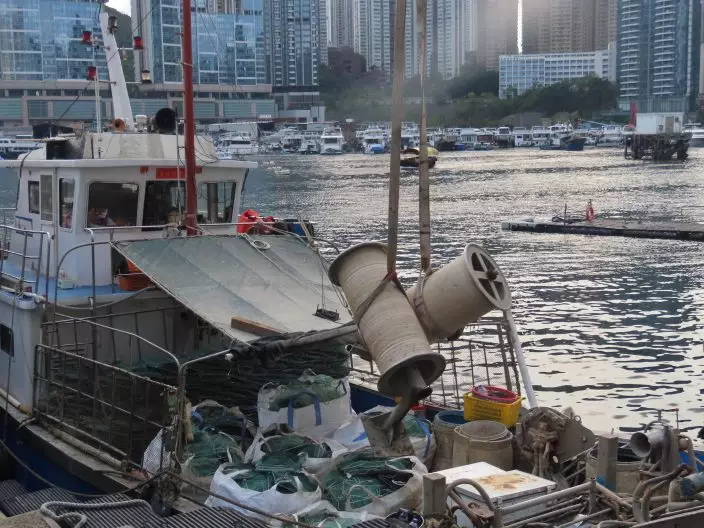
The Agriculture, Fisheries and Conservation Department today (April 16) laid charges against a local coxswain and four Mainland fishermen deckhands suspected of engaging in fishing using snake cages on a local vessel in waters off Lamma Island. Photo shows some of the winches seized. Source: HKSAR Government Press Releases
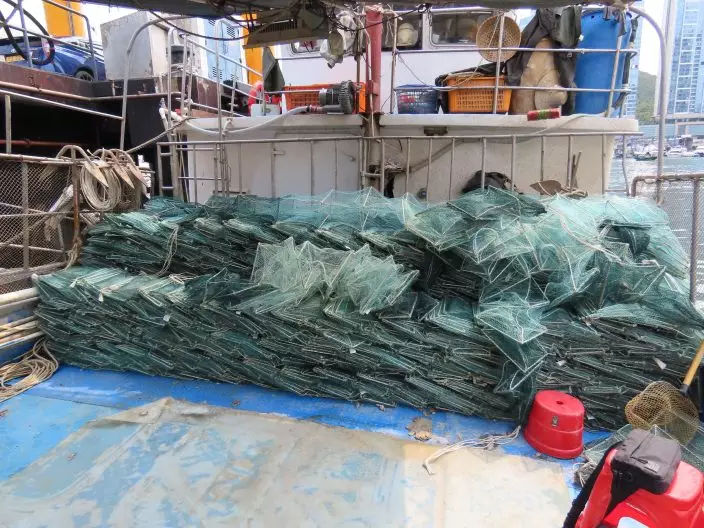
The Agriculture, Fisheries and Conservation Department today (April 16) laid charges against a local coxswain and four Mainland fishermen deckhands suspected of engaging in fishing using snake cages on a local vessel in waters off Lamma Island. Photo shows some of the snake cages seized. Source: HKSAR Government Press Releases
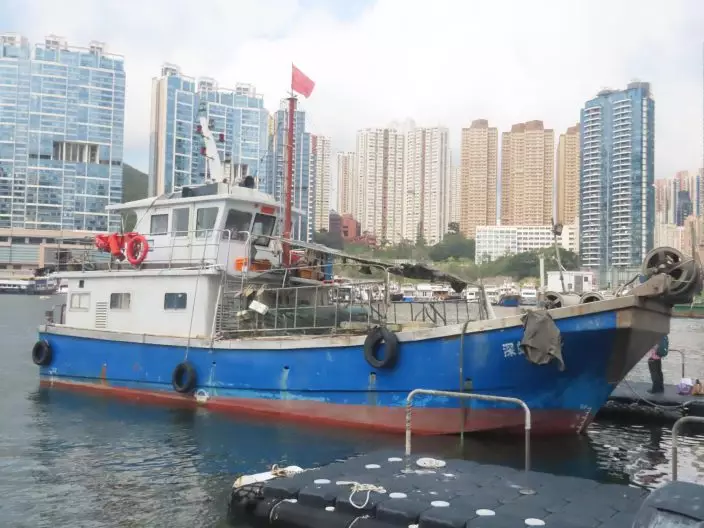
The Agriculture, Fisheries and Conservation Department today (April 16) laid charges against a local coxswain and four Mainland fishermen deckhands suspected of engaging in fishing using snake cages on a local vessel in waters off Lamma Island. Photo shows the local vessel concerned. Source: HKSAR Government Press Releases
Free use of leisure and cultural facilities on October 1 for National Day celebration
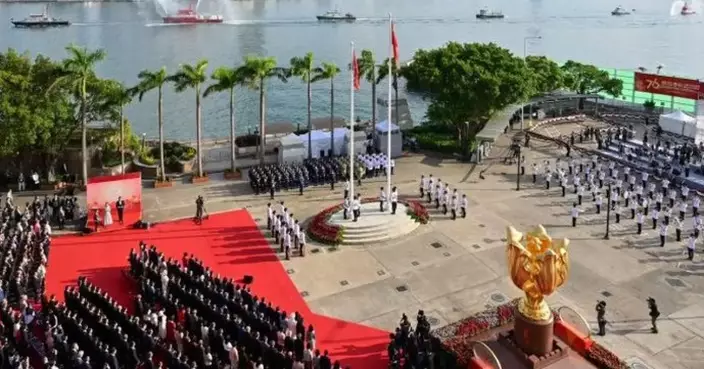
To celebrate the 77th anniversary of the founding of the People's Republic of China, the Leisure and Cultural Services Department (LCSD) will open a number of fee-charging facilities for free use by members of the public on October 1 (Thursday), including:
- Indoor leisure facilities: badminton courts, basketball courts, netball courts, volleyball courts, squash courts, table tennis tables, American pool tables, billiard tables, sport climbing walls*, bowling greens, golf facilities, fitness rooms*, activity rooms, a cycling track*, tennis courts and dance rooms;
- Outdoor leisure facilities: tennis courts, tennis practice courts, bowling greens, batting cages, archery ranges* and golf facilities (excluding camp facilities, sports grounds as well as artificial and natural turf pitches);
- Public swimming pools (excluding Wan Chai Swimming Pool; and swimming pools temporarily closed for annual maintenance, namely, the Island East Swimming Pool, Tai Kok Tsui Swimming Pool, Ho Man Tin Swimming Pool, Tsing Yi Southwest Swimming Pool, Tung Cheong Street Swimming Pool and Ping Shan Tin Shui Wai Swimming Pool); and
- Crafts at water sports centres* (recreational kayaks, pedal-driven boats, sampans and colour boats at Chong Hing Water Sports Centre are available for free use by campers only).
(* Users are required to possess the relevant qualification certificates.)
The free-of-charge sessions will be allocated through balloting. Details are as follows:
| Date of free use | Submission of balloting application | Announcement of balloting results | Announcement of remaining sessions | First come first served for remaining sessions |
| October 1 | September 22 (From 0.00am to 11.59pm) | September 23 | September 24 | September 25 |
(From 0.00am to 11.59pm)
Members of the public may make ballot applications via the SmartPLAY system as individual users in accordance with the above timetable. Each application may cover a maximum of three choices. Applicants may revise the choices in their lodged applications via the SmartPLAY system before the application closing time (i.e. 11.59pm on September 22). Successful applicants will be notified by the SmartPLAY system.
SmartPLAY users who have not been allocated any free session by ballot or have not made any application may book the remaining sessions on a first-come, first-served basis in accordance with the above timetable (i.e. on September 25) through the following channels:
(i) "iAM Smart" users: to log into the My SmartPLAY mobile app with priority to make bookings from 7am;
(ii) Users not using "iAM Smart": to log into the My SmartPLAY mobile app, the official SmartPLAY website, smart self-service stations or service counters at various leisure venues to make bookings from 7.15am; and
(iii) Users aged under 11: as "iAM Smart" is for use by persons aged 11 or above, SmartPLAY users aged under 11 may make bookings through the My SmartPLAY mobile app from 7am.
Each successful applicant will only be allocated one free session, whether through balloting or first-come, first-served booking.
The LCSD appeals to successful applicants to arrive on time to make the best use of the booked facilities. All users should observe the Conditions of Use of LCSD Recreation and Sports Facilities (the Conditions) as set out on the LCSD website www.lcsd.gov.hk/en/condition/index.html (including the "no-show/not present during the use of the booked sessions" penalty). If a successful applicant fails to take up a booked session on time, the arrangements stipulated in the Conditions will apply. For enquiry, please call 2414 5555 or visit the dedicated website www.lcsd.gov.hk/en/freeuseday/index.html.
No prior application will be required for using public swimming pool facilities. Members of the public may line up at the entrances of swimming pools before the start of a session. Free admission is offered on a first-come, first-served basis, while the quota lasts.
On October 1, admission to all museums and art spaces of the LCSD will be free. The Space Theatre of the Hong Kong Space Museum will screen the Sky Show "Shenzhou 13 - Space Travel" for five free sessions at 11am, 12.15pm, 1.30pm, 2.45pm and 4pm respectively. From 10am on September 22 to noon on September 23, members of the public may make ballot applications on URBTIX. Each application covers one session with two tickets. Applicants who make duplicate applications will be disqualified from the balloting. Successful applicants from computer balloting will receive their e-tickets via email on September 24. For details, please visit the website of the Hong Kong Space Museum at hk.space.museum.
To facilitate the Police's implementation of special crowd management measures at the Tsim Sha Tsui promenade area for the National Day fireworks display on October 1, the Hong Kong Museum of Art and the Hong Kong Space Museum will close at 5pm on that day.
Source: AI-found images