Skip to Content Facebook Feature Image

A 10-day ceasefire in Lebanon goes into effect

News

A 10-day ceasefire in Lebanon goes into effect
News

News

A 10-day ceasefire in Lebanon goes into effect

2026-04-18 05:31 Last Updated At:15:15

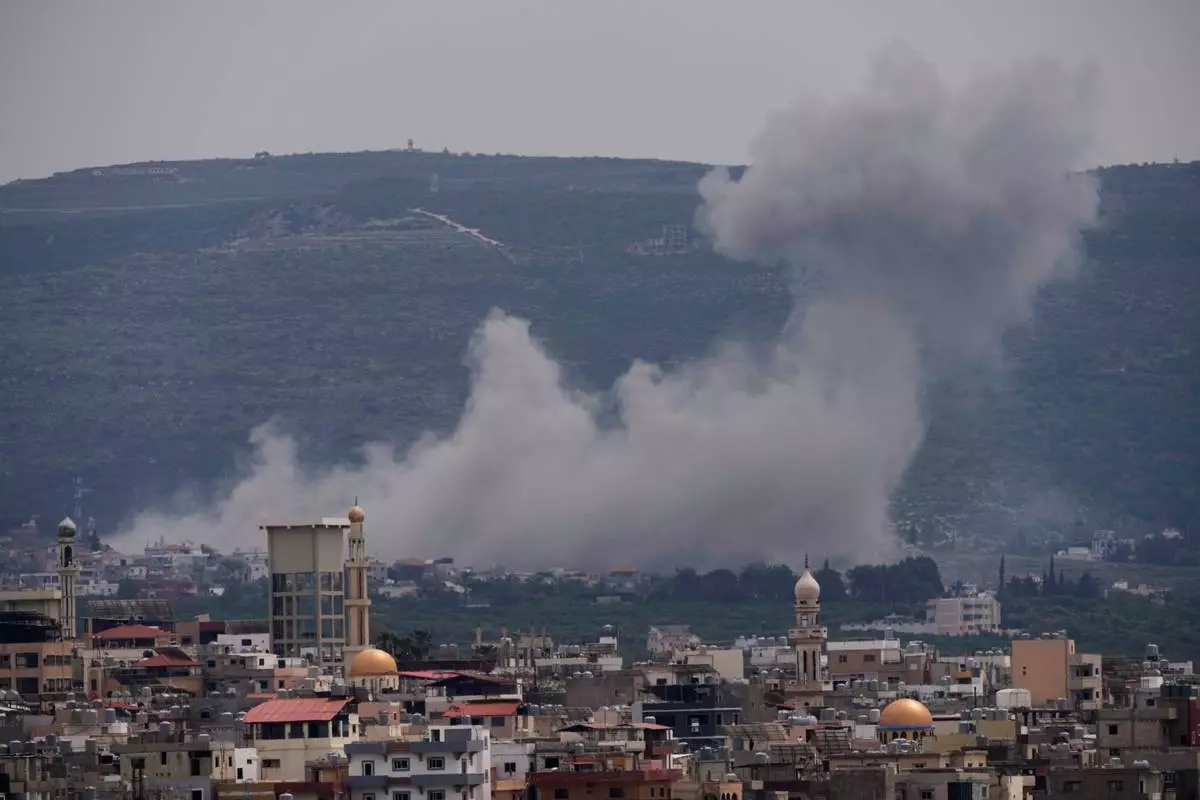
BEIRUT (AP) — A 10-day truce appeared to be holding in Lebanon early Friday, promising a pause in fighting between Israel and the Hezbollah militant group and possibly clearing one major obstacle to a deal between Iran and the United States and Israel to end weeks of devastating war.

But it remained unclear whether Israel would completely stop strikes on Hezbollah, and whether the militant group would recognize a deal it did not play a role in negotiating and which will leave Israeli troops occupying a stretch of southern Lebanon.

More Images
A woman member of the Basij paramilitary, affiliated with Iran's Revolutionary Guard, holds her gun during a state-organized rally in support of the supreme leader marking National Girl's Day in Tehran, Iran, Friday, April 17, 2026. (AP Photo/Vahid Salemi)

A woman member of the Basij paramilitary, affiliated with Iran's Revolutionary Guard, holds her gun during a state-organized rally in support of the supreme leader marking National Girl's Day in Tehran, Iran, Friday, April 17, 2026. (AP Photo/Vahid Salemi)

An Iranian Jewish man prays in a memorial for the slain Iranian Supreme Leader Ayatollah Ali Khamenei and other victims, who were killed in the U.S. and Israel strikes, at Yousefabad Synagogue, in Tehran, Iran, Thursday, April 16, 2026. (AP Photo/Vahid Salemi)

An Iranian Jewish man prays in a memorial for the slain Iranian Supreme Leader Ayatollah Ali Khamenei and other victims, who were killed in the U.S. and Israel strikes, at Yousefabad Synagogue, in Tehran, Iran, Thursday, April 16, 2026. (AP Photo/Vahid Salemi)

Residents inspect damage at the site of buildings destroyed in Israeli airstrikes, in Jibchit, southern Lebanon, Friday, April 17, 2026, following a ceasefire between Israel and Hezbollah. (AP Photo/Hassan Ammar)

Residents inspect damage at the site of buildings destroyed in Israeli airstrikes, in Jibchit, southern Lebanon, Friday, April 17, 2026, following a ceasefire between Israel and Hezbollah. (AP Photo/Hassan Ammar)

A displaced man gestures lying over belongings on a mini pickup, in Qasmiyeh near Tyre city, south Lebanon, as he returns with his family to their village following a ceasefire between Hezbollah and Israel, Friday, April 17, 2026. (AP Photo/Mohammed Zaatari)

A displaced man gestures lying over belongings on a mini pickup, in Qasmiyeh near Tyre city, south Lebanon, as he returns with his family to their village following a ceasefire between Hezbollah and Israel, Friday, April 17, 2026. (AP Photo/Mohammed Zaatari)

Displaced residents drive back to their villages following a ceasefire between Israel and Hezbollah, in Jiyeh, near Saida, southern Lebanon, Friday, April 17, 2026. (AP Photo/Hassan Ammar)

Displaced residents drive back to their villages following a ceasefire between Israel and Hezbollah, in Jiyeh, near Saida, southern Lebanon, Friday, April 17, 2026. (AP Photo/Hassan Ammar)

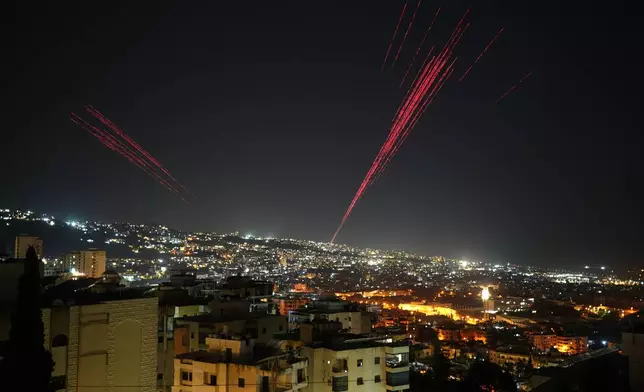
Tracer rounds illuminate the night sky as people fire live ammunition and fireworks into the air following a ceasefire between Israel and Hezbollah, in Beirut, Lebanon, early Friday, April 17, 2026. (AP Photo/Hassan Ammar)
Tracer rounds illuminate the night sky as people fire live ammunition and fireworks into the air following a ceasefire between Israel and Hezbollah, in Beirut, Lebanon, early Friday, April 17, 2026. (AP Photo/Hassan Ammar)

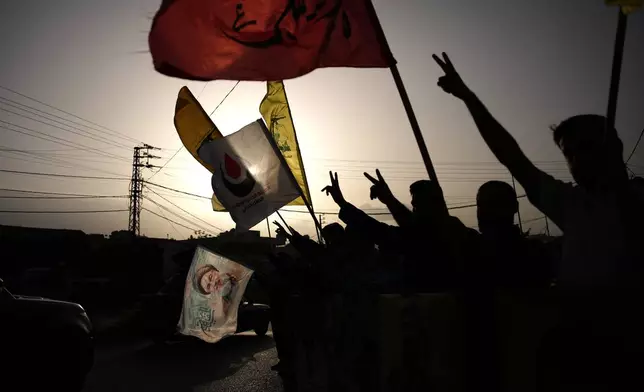
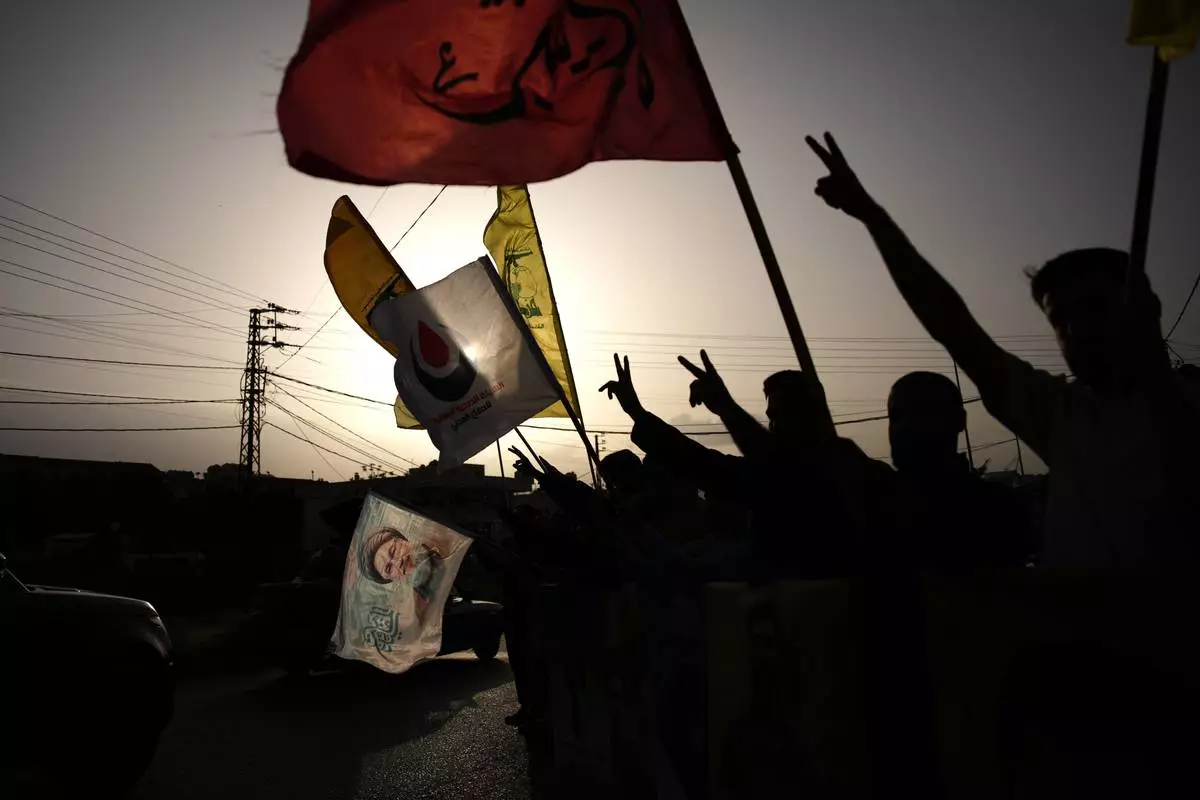
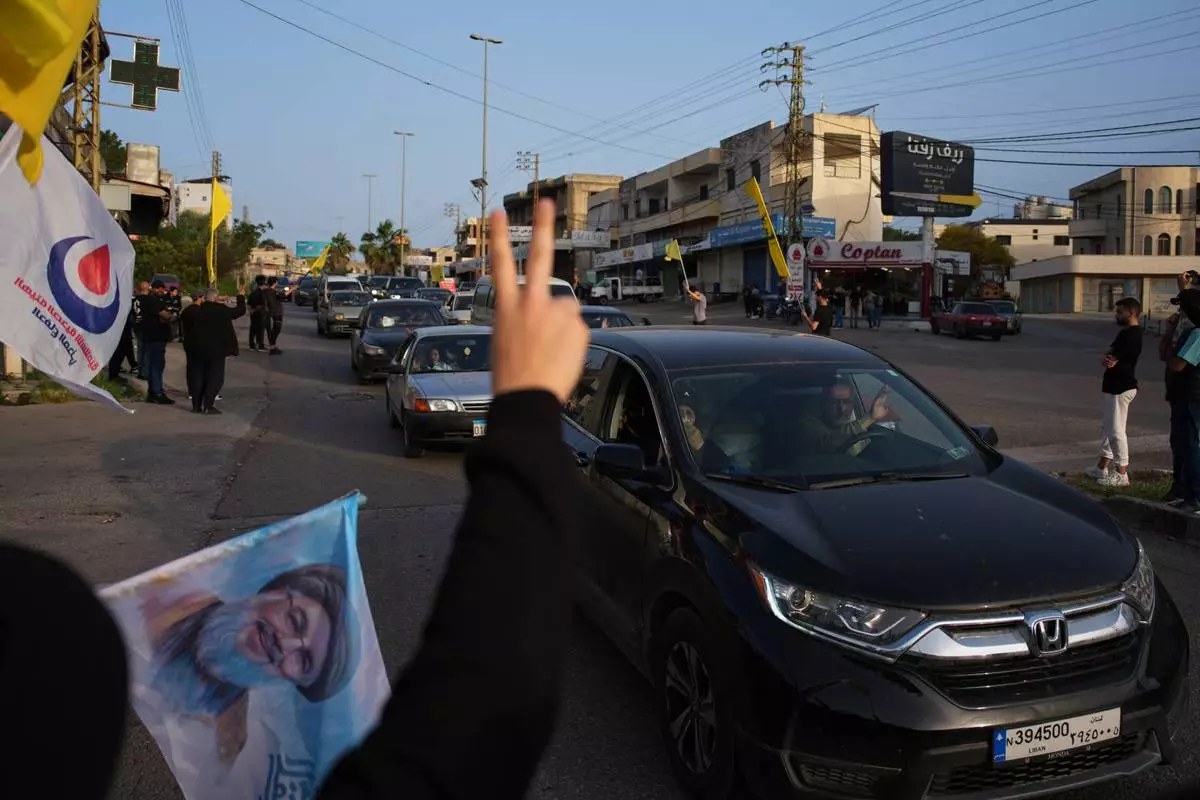
People wave Hezbollah flags and an image of late Hezbollah leader Hassan Nasrallah, in Zefta, southern Lebanon, Friday, April 17, 2026, as displaced residents drive back to their villages following a ceasefire between Israel and Hezbollah. (AP Photo/Hassan Ammar)
People wave Hezbollah flags and an image of late Hezbollah leader Hassan Nasrallah, in Zefta, southern Lebanon, Friday, April 17, 2026, as displaced residents drive back to their villages following a ceasefire between Israel and Hezbollah. (AP Photo/Hassan Ammar)

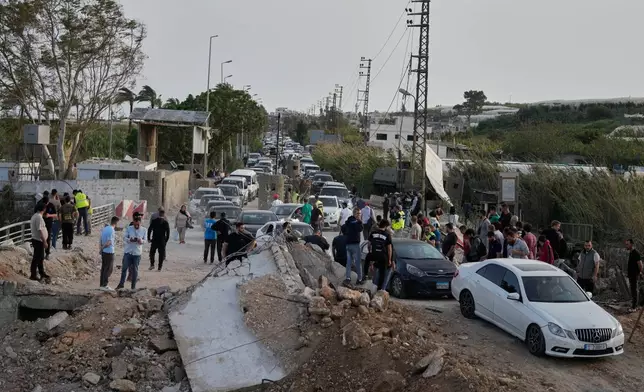
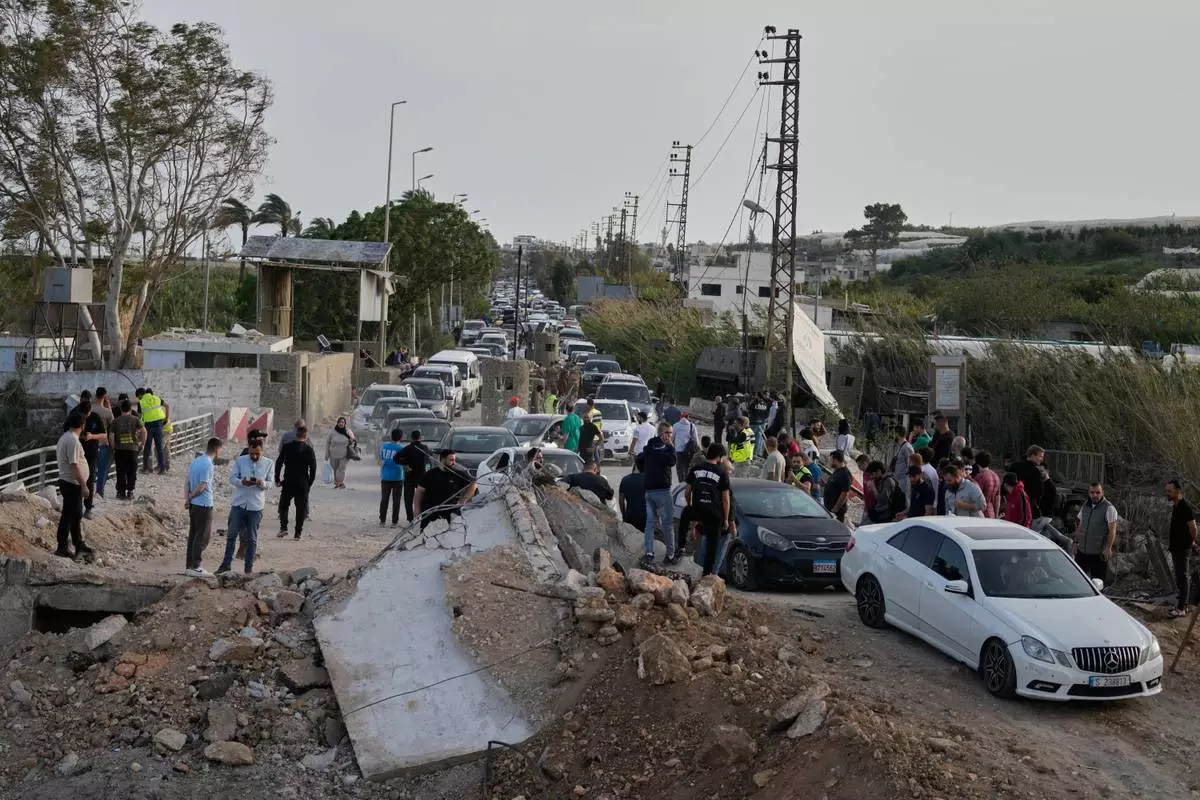
Displaced people returning to their villages following a ceasefire between Hezbollah and Israel, cross the destroyed Qasmiyeh bridge near Tyre city, south Lebanon, Friday, April 17, 2026. (AP Photo/Mohammed Zaatari)
Displaced people returning to their villages following a ceasefire between Hezbollah and Israel, cross the destroyed Qasmiyeh bridge near Tyre city, south Lebanon, Friday, April 17, 2026. (AP Photo/Mohammed Zaatari)

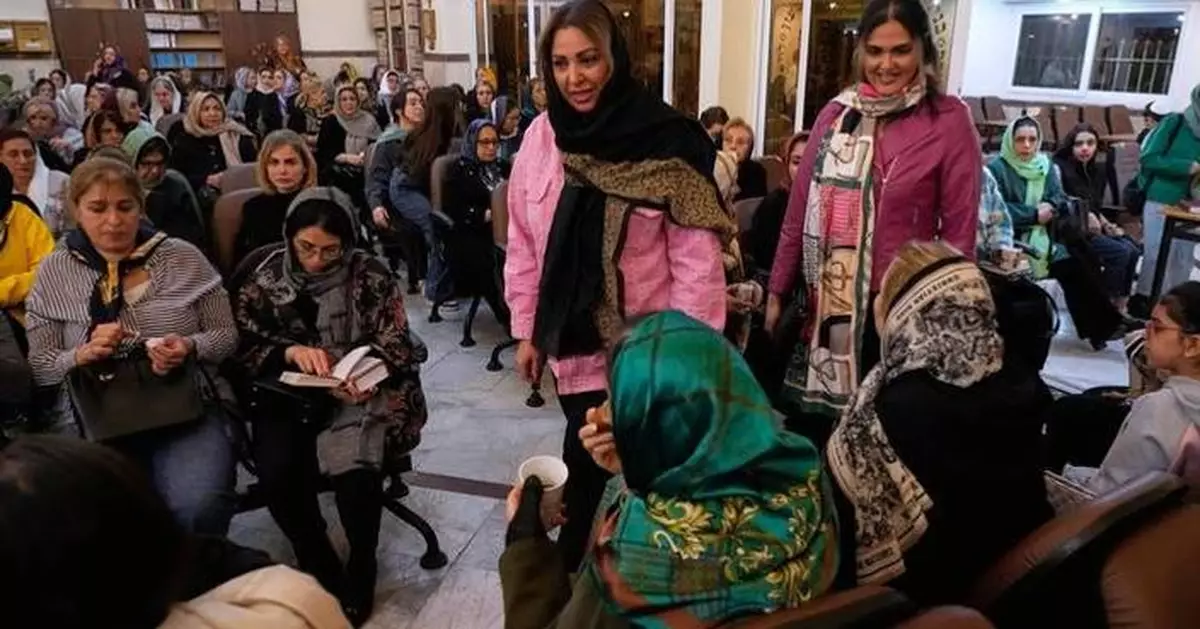
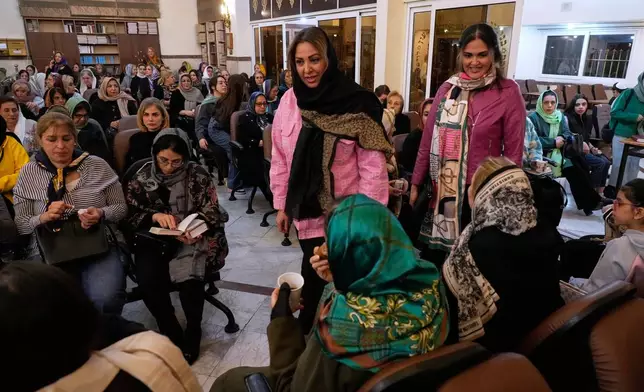
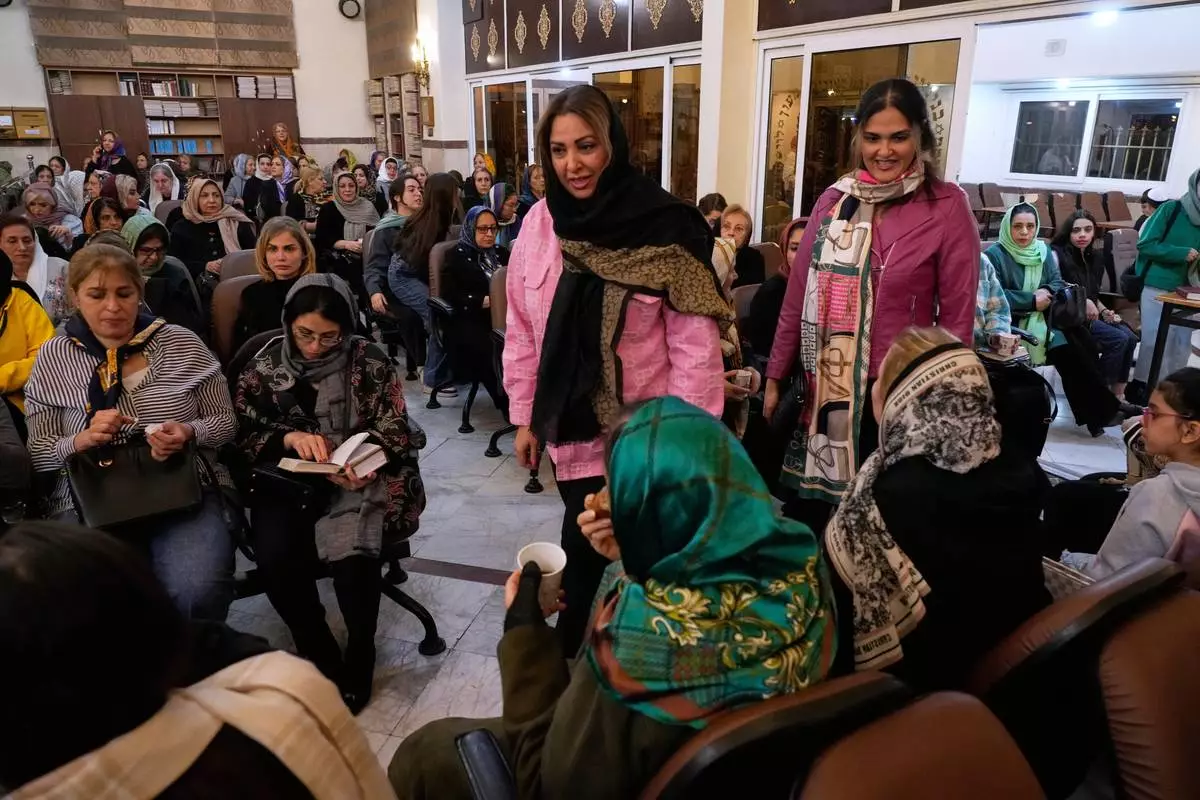
Iranian Jews attend a memorial for the slain Iranian Supreme Leader Ayatollah Ali Khamenei and other victims, who were killed in the U.S. and Israel strikes, at Yousefabad Synagogue, in Tehran, Iran, Thursday, April 16, 2026. (AP Photo/Vahid Salemi)
Iranian Jews attend a memorial for the slain Iranian Supreme Leader Ayatollah Ali Khamenei and other victims, who were killed in the U.S. and Israel strikes, at Yousefabad Synagogue, in Tehran, Iran, Thursday, April 16, 2026. (AP Photo/Vahid Salemi)

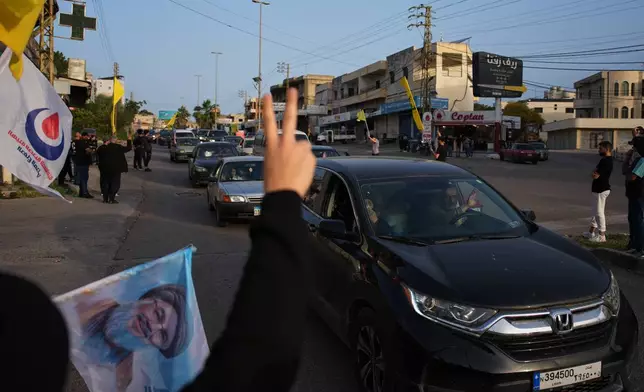
Displaced residents drive back to their villages as locals wave Hezbollah flags and an image of late Hezbollah leader Hassan Nasrallah, in Zefta, southern Lebanon, Friday, April 17, 2026, following a ceasefire between Israel and Hezbollah. (AP Photo/Hassan Ammar)

Displaced residents drive back to their villages as locals wave Hezbollah flags and an image of late Hezbollah leader Hassan Nasrallah, in Zefta, southern Lebanon, Friday, April 17, 2026, following a ceasefire between Israel and Hezbollah. (AP Photo/Hassan Ammar)

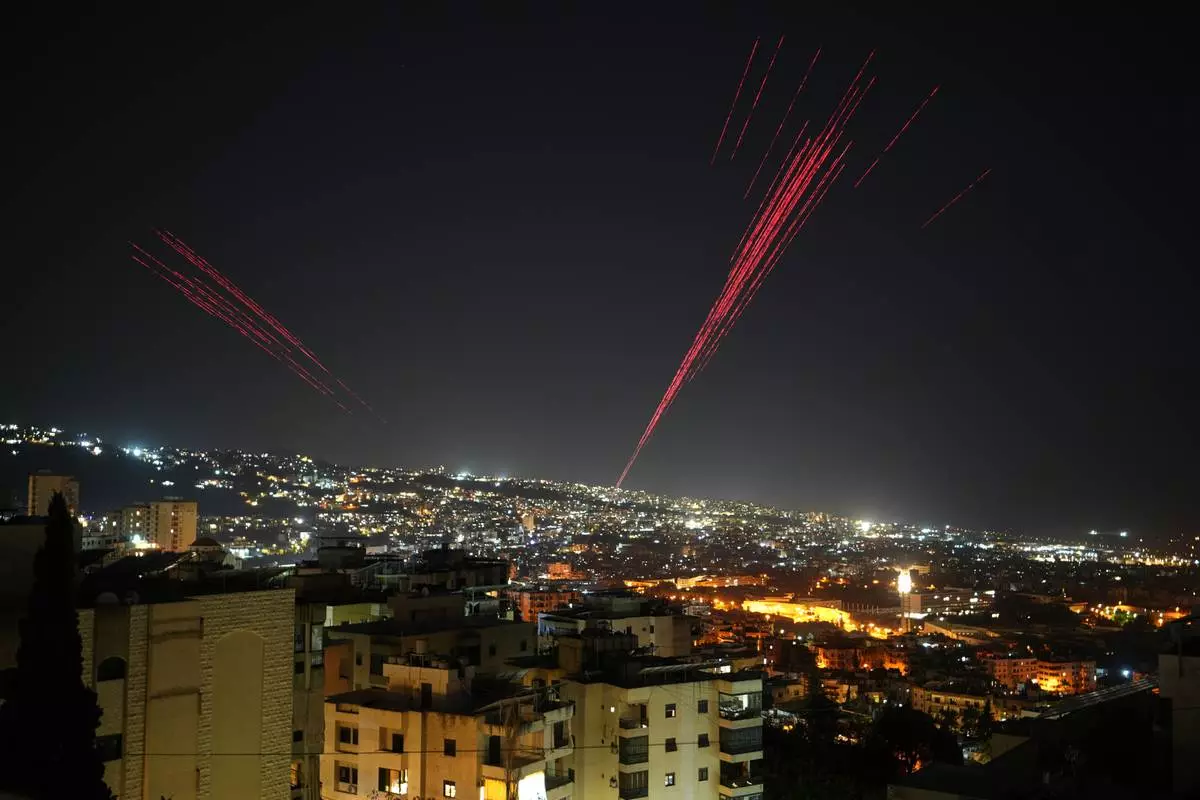
Barrages of gunshots rang out across Beirut as residents fired into the air just after midnight to celebrate the beginning of the truce, and displaced families began moving toward southern Lebanon and Beirut’s southern suburbs despite warnings by officials not to attempt to return to their homes until it became clear whether the ceasefire would hold.

U.S. President Donald Trump heralded the deal a “historic day for Lebanon,” even as he expressed confidence that the war with Iran would soon end in a Las Vegas speech.

“I will say the war in Iran is going along swimmingly,” Trump said. “It should be ending pretty soon.”

An end to Israel’s war with Hezbollah was a key demand of Iranian negotiators, who previously accused Israel of breaking the current ceasefire deal with strikes on Lebanon. Israel said that deal did not cover Lebanon.

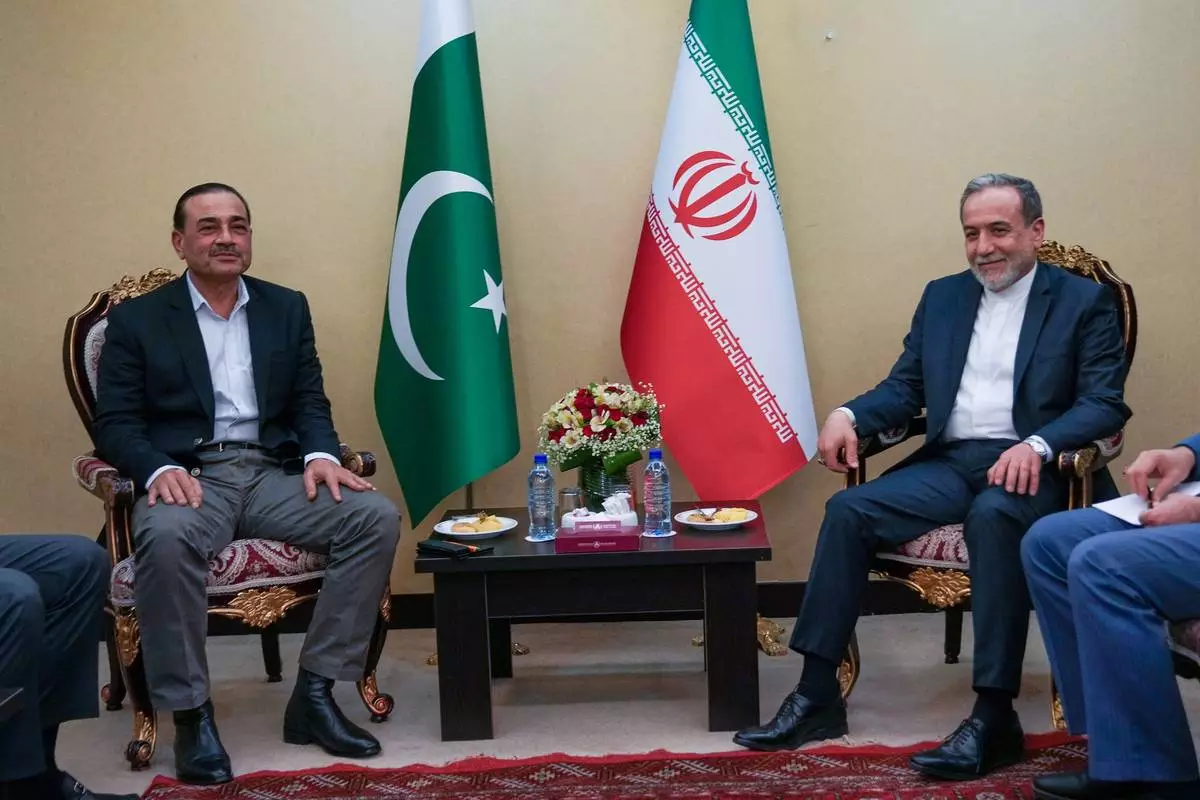
Pakistan’s army chief met Thursday with Iran’s parliament speaker as part of international efforts to press for an extension of the ceasefire.

While oil prices fell on hopes of a deal, the head of the International Energy Agency warned that energy shocks could get worse if the Strait of Hormuz doesn’t reopen soon. Iran closed the crucial waterway, through which a fifth of the world’s oil normally passes, shortly after the war began. Europe has “maybe six weeks or so” of jet fuel left and broader economic consequences will grow the longer the strait is closed, IEA Executive Director Fatih Birol told The Associated Press on Thursday.

The leaders of France and the U.K. will gather dozens of countries — but not the United States — on Friday to push forward plans to reopen the strait.

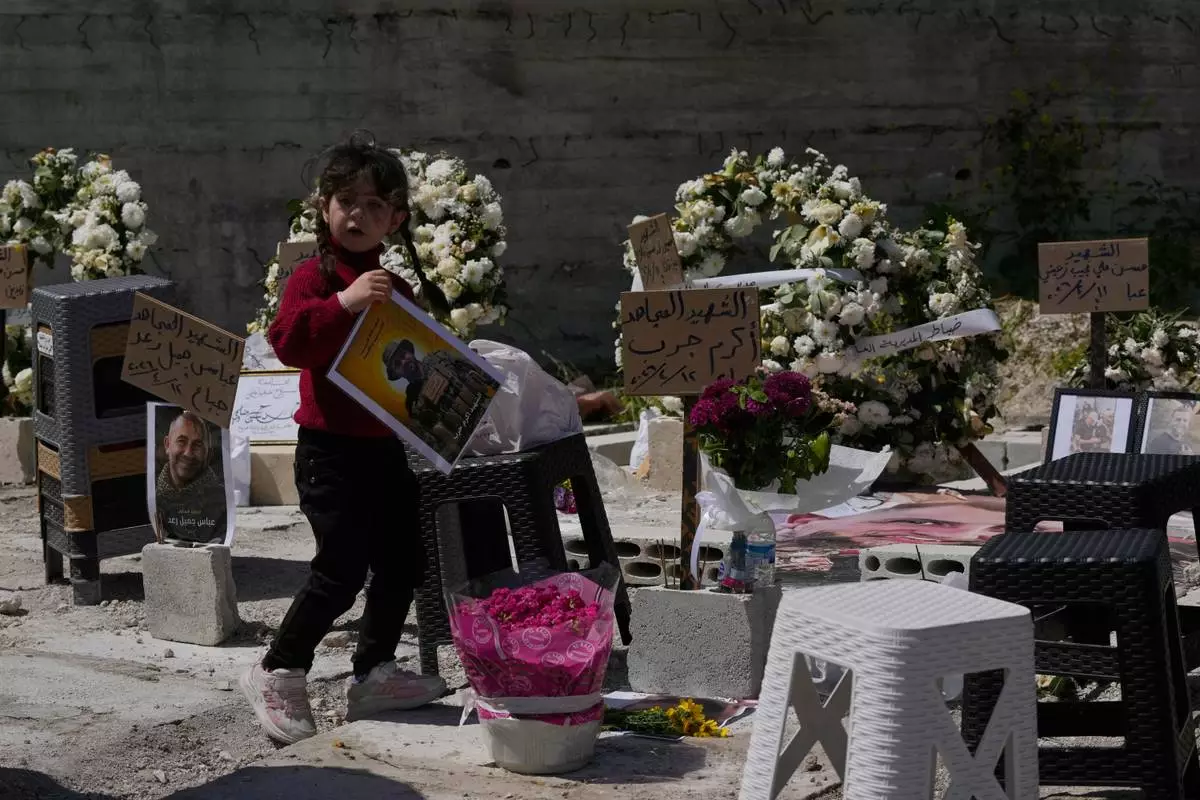
The fighting has killed at least 3,000 people in Iran, more than 2,100 in Lebanon, 23 in Israel and more than a dozen in Gulf Arab states. Thirteen U.S. service members have also been killed.

Earlier, Israeli Prime Minister Benjamin Netanyahu said he agreed to the ceasefire “to advance” peace efforts with Lebanon, but he said Israeli troops would not withdraw.

Israeli forces have engaged in fierce battles with Hezbollah in the border area as they pushed into southern Lebanon to create what officials have called a “security zone.” Netanyahu, in his video address, said it will extend 10 kilometers (6 miles) into Lebanon.

“That is where we are, and we are not leaving,” he said.

Hezbollah has said that Lebanese people have “the right to resist” Israeli occupation of their land and that their actions “will be determined based on how developments unfold.”

The U.S. State Department said that according to the agreement, Israel reserves the right to defend itself “at any time, against planned, imminent or ongoing attacks.” But otherwise, Israel “will not carry out any offensive military operations against Lebanese targets, including civilian, military, and other state targets.”

Trump announced the agreement as a ceasefire between Israel and Lebanon, but a Hezbollah official said the ceasefire was a result of negotiations between the U.S. and Iran. The official spoke on condition of anonymity because he was not authorized to speak publicly.

Israel and Hezbollah have fought several wars and have been fighting on and off since the day after the start of the Gaza war. Israel and Lebanon reached a deal to end that war in November 2024, but Israel has kept up near-daily strikes in what it says is an effort to prevent the Iran-backed militant group from regrouping. That escalated into another invasion after Hezbollah again began firing missiles at Israel in response to its war on Iran.

The agreement came after a meeting between Israel's and Lebanon’s ambassadors in Washington and a flurry of subsequent phone calls from Trump and Secretary of State Marco Rubio, according to a White House official.

They were the first direct diplomatic talks between the two countries in decades. Hezbollah had opposed direct talks between Lebanon and Israel.

Trump spoke Wednesday evening with Netanyahu, who agreed to a ceasefire with certain terms, according to the official, who was not authorized to comment publicly and spoke on condition of anonymity.

Rubio then called Lebanon’s president, Joseph Aoun, who got on board. Trump then spoke with Aoun, and again with Netanyahu.

The State Department worked with both governments to formulate a memorandum of understanding for the truce.

Pakistan’s army chief met Thursday with Iran’s parliament speaker as part of efforts to press for an extension to a ceasefire that has paused almost seven weeks of war between Israel, the U.S. and Iran.

Even as the U.S. blockade on Iranian ports and renewed Iranian threats strained the ceasefire, regional officials reported progress, telling AP the United States and Iran had an “in-principle agreement” to extend it to allow for more diplomacy. They spoke on condition of anonymity to discuss sensitive negotiations.

Mediators are pushing for a compromise on three main sticking points: Iran’s nuclear program, the Strait of Hormuz and compensation for wartime damages, according to a regional official involved in the mediation efforts.

Trump suggested the ceasefire could be extended.

“If we’re close to a deal, would I extend?” Trump said in an exchange with reporters. “Yeah, I would do that.”

Lidman reported from Tel Aviv, Israel. AP journalists Matthew Lee and Ben Finley in Washington, Samy Magdy in Cairo and Munir Ahmed in Islamabad contributed to this report.
A woman member of the Basij paramilitary, affiliated with Iran's Revolutionary Guard, holds her gun during a state-organized rally in support of the supreme leader marking National Girl's Day in Tehran, Iran, Friday, April 17, 2026. (AP Photo/Vahid Salemi)

A woman member of the Basij paramilitary, affiliated with Iran's Revolutionary Guard, holds her gun during a state-organized rally in support of the supreme leader marking National Girl's Day in Tehran, Iran, Friday, April 17, 2026. (AP Photo/Vahid Salemi)

An Iranian Jewish man prays in a memorial for the slain Iranian Supreme Leader Ayatollah Ali Khamenei and other victims, who were killed in the U.S. and Israel strikes, at Yousefabad Synagogue, in Tehran, Iran, Thursday, April 16, 2026. (AP Photo/Vahid Salemi)

An Iranian Jewish man prays in a memorial for the slain Iranian Supreme Leader Ayatollah Ali Khamenei and other victims, who were killed in the U.S. and Israel strikes, at Yousefabad Synagogue, in Tehran, Iran, Thursday, April 16, 2026. (AP Photo/Vahid Salemi)

Residents inspect damage at the site of buildings destroyed in Israeli airstrikes, in Jibchit, southern Lebanon, Friday, April 17, 2026, following a ceasefire between Israel and Hezbollah. (AP Photo/Hassan Ammar)

Residents inspect damage at the site of buildings destroyed in Israeli airstrikes, in Jibchit, southern Lebanon, Friday, April 17, 2026, following a ceasefire between Israel and Hezbollah. (AP Photo/Hassan Ammar)

A displaced man gestures lying over belongings on a mini pickup, in Qasmiyeh near Tyre city, south Lebanon, as he returns with his family to their village following a ceasefire between Hezbollah and Israel, Friday, April 17, 2026. (AP Photo/Mohammed Zaatari)

A displaced man gestures lying over belongings on a mini pickup, in Qasmiyeh near Tyre city, south Lebanon, as he returns with his family to their village following a ceasefire between Hezbollah and Israel, Friday, April 17, 2026. (AP Photo/Mohammed Zaatari)

Displaced residents drive back to their villages following a ceasefire between Israel and Hezbollah, in Jiyeh, near Saida, southern Lebanon, Friday, April 17, 2026. (AP Photo/Hassan Ammar)

Displaced residents drive back to their villages following a ceasefire between Israel and Hezbollah, in Jiyeh, near Saida, southern Lebanon, Friday, April 17, 2026. (AP Photo/Hassan Ammar)

Tracer rounds illuminate the night sky as people fire live ammunition and fireworks into the air following a ceasefire between Israel and Hezbollah, in Beirut, Lebanon, early Friday, April 17, 2026. (AP Photo/Hassan Ammar)
Tracer rounds illuminate the night sky as people fire live ammunition and fireworks into the air following a ceasefire between Israel and Hezbollah, in Beirut, Lebanon, early Friday, April 17, 2026. (AP Photo/Hassan Ammar)

People wave Hezbollah flags and an image of late Hezbollah leader Hassan Nasrallah, in Zefta, southern Lebanon, Friday, April 17, 2026, as displaced residents drive back to their villages following a ceasefire between Israel and Hezbollah. (AP Photo/Hassan Ammar)
People wave Hezbollah flags and an image of late Hezbollah leader Hassan Nasrallah, in Zefta, southern Lebanon, Friday, April 17, 2026, as displaced residents drive back to their villages following a ceasefire between Israel and Hezbollah. (AP Photo/Hassan Ammar)

Displaced people returning to their villages following a ceasefire between Hezbollah and Israel, cross the destroyed Qasmiyeh bridge near Tyre city, south Lebanon, Friday, April 17, 2026. (AP Photo/Mohammed Zaatari)
Displaced people returning to their villages following a ceasefire between Hezbollah and Israel, cross the destroyed Qasmiyeh bridge near Tyre city, south Lebanon, Friday, April 17, 2026. (AP Photo/Mohammed Zaatari)

Iranian Jews attend a memorial for the slain Iranian Supreme Leader Ayatollah Ali Khamenei and other victims, who were killed in the U.S. and Israel strikes, at Yousefabad Synagogue, in Tehran, Iran, Thursday, April 16, 2026. (AP Photo/Vahid Salemi)
Iranian Jews attend a memorial for the slain Iranian Supreme Leader Ayatollah Ali Khamenei and other victims, who were killed in the U.S. and Israel strikes, at Yousefabad Synagogue, in Tehran, Iran, Thursday, April 16, 2026. (AP Photo/Vahid Salemi)

Displaced residents drive back to their villages as locals wave Hezbollah flags and an image of late Hezbollah leader Hassan Nasrallah, in Zefta, southern Lebanon, Friday, April 17, 2026, following a ceasefire between Israel and Hezbollah. (AP Photo/Hassan Ammar)
Displaced residents drive back to their villages as locals wave Hezbollah flags and an image of late Hezbollah leader Hassan Nasrallah, in Zefta, southern Lebanon, Friday, April 17, 2026, following a ceasefire between Israel and Hezbollah. (AP Photo/Hassan Ammar)
WASHINGTON (AP) — President Donald Trump said he is holding off on a military strike on Iran planned for Tuesday because “serious negotiations” are underway to end the war.

“There seems to be a very good chance that they can work something out. If we can do that without bombing the hell out of them, I’d be very happy,” Trump said at the White House on Monday evening, after first making the announcement in a social media post.

Trump said he had planned “a very major attack” but put it off — “for a little while, hopefully, maybe forever." He said America’s allies in the Gulf asked him to wait for two to three days because they feel they are close to a deal with Iran.

Trump has been threatening for weeks that the ceasefire reached in mid-April could end if Iran did not make a deal, with shifting parameters for striking such an agreement. Over the weekend he warned, “For Iran, the Clock is Ticking, and they better get moving, FAST, or there won’t be anything left of them.”

The president has repeatedly set deadlines for Tehran and then backed off. But he’s also previously indicated he would hold off on military action to allow talks to continue — only to turn around and launch strikes. That’s what happened at the war’s outset, when he ordered strikes in late February shortly after indicating he would let talks play out.

Trump said the current pause for negotiations was a “very positive development," while acknowledging there were times in the past when a deal seemed close but nothing came of it. “But this is a little bit different,” he said.

The president, who had not previously disclosed that he was planning a strike for Tuesday, did not offer details about the planned attack but said in his social media post he had instructed the U.S. military “to be prepared to go forward with a full, large scale assault of Iran, on a moment’s notice, in the event that an acceptable Deal is not reached.”

Trump said he was calling off the attack at the request of allies in the Middle East, including the leaders of Qatar, Saudi Arabia and the United Arab Emirates.

Iran and allied Shiite militias in Iraq have launched drone attacks targeting the Gulf Arab states in the war. The United Arab Emirates has recently accused Iran of launching drone and missile attacks despite the ceasefire. On Sunday, a drone strike sparked a fire on the edge of the UAE's sole nuclear power plant in what authorities called an “unprovoked terrorist attack” while not assigning blame.

Trump in recent days has also spoken with Israeli Prime Minister Benjamin Netanyahu and Chinese President Xi Jinping about the Iran war.

Trump’s post quickly caused a fall in the price of oil, which had been rising on the prospect of a prolonged standoff that would keep the Strait of Hormuz effectively closed.

Minutes before the president’s announcement, petroleum futures had been trading at $108.83 a barrel. His word about negotiations almost instantly shaved more than $2 off the price, but it crept up again and ended on Monday at $107.25 a barrel.

Shortly after Trump’s post, Iranian state TV called it a “retreat” based on “fear” in its broadcast ticker and on its X account.

It reported earlier that defense systems were activated late Monday on Qeshm Island in the Strait of Hormuz. It added the situation was “under control” there, the largest Iranian island in the Persian Gulf, home to about 150,000 people and a water desalination plant.

Iran has effectively closed the Strait of Hormuz, a vital waterway for the shipment of oil, gas, fertilizer and other petroleum products. The U.S. is blockading Iranian ports and has redirected 85 commercial vessels from mid-April through Monday, U.S. Central Command said in a social media post.

Earlier Monday, Turkey's Foreign Minister Hakan Fidan said the immediate concern of the negotiations between the U.S. and Iran was keeping the Strait of Hormuz open, but Iran’s nuclear program remained a central issue.

Speaking during a joint news conference with his German counterpart in Berlin, Fidan said much of Iran’s enriched uranium that could potentially be used for a nuclear weapon was buried under collapsed tunnels following attacks in June that the U.S. launched with Israel. The U.S. has said it is closely monitoring any movements around the stockpile.

“At present, there isn’t a situation that poses a real threat," Fidan said. “But for this to continue, the parties must reach and conclude a nuclear negotiation among themselves.”

The Turkish minister said he believes Iran is not opposed in principle to complying with nuclear conditions, but added: “the question is what will be given in return, in what order, and under what conditions.”

With talks at a standstill last week, Iran's foreign minister said Friday that a lack of trust was the biggest impediment to negotiations.

Iran, which says its nuclear program is for peaceful purposes, was said to have included some nuclear concessions in its latest proposal to end the war. But Trump dismissed the proposal as “garbage."

Associated Press writers Josh Boak and Darlene Superville in Washington, Giovanna Dell’Orto in Minneapolis and Suzan Fraser in Ankara, Turkey, contributed to this report.

President Donald Trump speaks about prescription drug prices in the South Court Auditorium in the Eisenhower Executive Office Building on the White House campus, Monday, May 18, 2026, in Washington. (AP Photo/Julia Demaree Nikhinson)

President Donald Trump speaks about prescription drug prices in the South Court Auditorium in the Eisenhower Executive Office Building on the White House campus, Monday, May 18, 2026, in Washington. (AP Photo/Julia Demaree Nikhinson)

Bakhtiari nomads, wearing traditional dress, hold their guns during a pro-government gathering near the residence where former Iranian Supreme Leader Ayatollah Ali Khamenei, shown on a banner, was killed in U.S. and Israeli strikes on Feb. 28, in Tehran, Iran, Monday, May 18, 2026. (AP Photo/Vahid Salemi)

Bakhtiari nomads, wearing traditional dress, hold their guns during a pro-government gathering near the residence where former Iranian Supreme Leader Ayatollah Ali Khamenei, shown on a banner, was killed in U.S. and Israeli strikes on Feb. 28, in Tehran, Iran, Monday, May 18, 2026. (AP Photo/Vahid Salemi)

President Donald Trump gestures to reporters as he walks across the South Lawn of the White House, Friday, May 15, 2026, in Washington, on return from Beijing where he met with China's President Xi Jinping. (AP Photo/Jacquelyn Martin)

President Donald Trump gestures to reporters as he walks across the South Lawn of the White House, Friday, May 15, 2026, in Washington, on return from Beijing where he met with China's President Xi Jinping. (AP Photo/Jacquelyn Martin)

Recommended Articles