Skip to Content Facebook Feature Image

Wanna bet? Washington steps up scrutiny of prediction markets

News

Wanna bet? Washington steps up scrutiny of prediction markets
News

News

Wanna bet? Washington steps up scrutiny of prediction markets

2026-04-17 18:42 Last Updated At:21:01

WASHINGTON (AP) — As the United States was preparing a daring mission to rescue an airman whose fighter jet was shot down by Iran, there was money to be made.

Users on Polymarket, the world's largest prediction market, could place bets on when the airman would be rescued. When Rep. Seth Moulton, D-Mass., shared a screenshot of the activity on social media, an April 3 rescue was trading at 15% compared with 63% who were betting on April 4.

After Moulton posted the screenshot and blasted this “dystopian death market,” Polymarket stopped the betting, saying the market “does not meet our integrity standards.”

A former Marine who served four tours in Iraq, Moulton said he was “absolutely not satisfied with Polymarket's response” and blamed the site for being “completely unwilling to self-regulate when it comes to betting on the lives of our service members.”

“This is war profiteering and Congress needs to step in and stop it,” he said.

A confrontation is brewing in Washington over prediction markets, the online exchanges that allow users to bet on the outcome of everything from a baseball game to when Jesus Christ will return.

In a highly polarized Congress, the need to guard against the prediction markets being used for insider trading has become rare common ground. Members of both parties pressed the leader of a typically low-profile regulatory agency on the issue during a hearing on Thursday. The market debate is also drawing in the White House, potential presidential candidates and state leaders.

“It's a national conversation about what it means to have market integrity,” said Kristin Johnson, a former commissioner at the Commodity Futures Trading Commission, which regulates prediction markets in the U.S.

In a capital that was slow to respond to the perils of tobacco, opioids and social media, the push to put guardrails on prediction markets has been uncommonly swift.

The markets, which include Polymarket and its chief rival Kalshi, have been criticized for everything from undermining the integrity of sports to contributing to an online betting addiction crisis among young men. Polymarket has come under particular scrutiny as a venue for offshore trades that are beyond the reach of U.S. regulators.

Donald Trump Jr., the president's son, is on Polymarket's advisory board and is a paid adviser for Kalshi. 1789 Capital, the venture capital firm where Trump Jr. is a partner, has invested in Polymarket.

The Associated Press reported this month that a group of new accounts on Polymarket made highly specific, well-timed bets on whether the U.S. and Iran would reach a ceasefire on April 7, resulting in hundreds of thousands of dollars in profits for these new customers.

On the same day the report was published, the White House warned staff against using private information to trade on prediction markets.

Earlier this year, an anonymous Polymarket user collected more than $400,000 on a January bet predicting the ouster of Venezuelan President Nicolás Maduro, prompting concerns that someone with access to private U.S. government information may have engaged in insider trading.

Sen. Todd Young, an Indiana Republican and former Marine, said he had been concerned about trading in the sports market, “but I became especially concerned about market distortions, improper decision making, and undermining of public trust through self-enrichment after the news broke about Venezuela.”

Young and Sen. Elissa Slotkin, D-Mich., have introduced a bill that would bar federal employees from using nonpublic information to make bets on prediction markets. Their bill is among several bipartisan efforts in Congress to regulate prediction markets.

As he eyes a potential presidential campaign, Democrat Rahm Emanuel proposed a ban on prediction market bets by all federal employees and their families. On Wednesday, he suggested a 10% fee on those markets and online gambling to fund science and health research.

California Gov. Gavin Newsom, another potential Democratic presidential candidate, issued an executive order barring his appointees from using nonpublic information to trade on prediction markets.

For now, there's no immediate path to passage for any of the bills. But the scrutiny has drawn focus to the differing approaches of the main prediction markets.

Polymarket officials say little publicly and didn't comment for this story. The market, founded in 2020, operates largely offshore with limited functions in the U.S. that were allowed only after President Donald Trump returned to office.

Kalshi, meanwhile, says it already bans many of the most extreme betting markets and welcomes regulation.

“We support Congress and regulators taking action to police insider trading, keep prediction markets onshore and under federal regulation," said Kalshi spokesperson Elisabeth Diana. "Not all prediction markets are the same.”

White House spokesman Davis Ingle said Trump has been clear that "members of Congress and other government officials should be prohibited from using nonpublic information for financial benefit.”

The bet-the-event activity is drawing attention to the Commodity Futures Trading Commission, which oversees the vast trading contracts industry, including prediction markets.

Dennis Kelleher, the president and chief executive of Better Markets, a Washington nonprofit that has pressed for stronger oversight of prediction markets, said the agency "certainly has no experience, expertise, budget, technology to actually in any way supervise, regulate or police gambling on everything from whether it’s Iran, Venezuela, whether it’s reality TV, whether Christ is going to come back before the end of the year.”

The agency, which by law is supposed to have a five-member board including representatives of both political parties, is served now by only one member, Michael Selig, a former CFTC law clerk who went on to represent cryptocurrency clients before Trump appointed him to lead the agency.

That's sparked concern among congressional Democrats. Sen. Richard Durbin, D-Ill., sent Selig a letter in February noting that the number of enforcement attorneys at the agency's Chicago office had declined from 20 to zero.

During a Thursday hearing of the House Agriculture Committee, which oversees the CFTC, Selig said the agency was hiring new staff and operating more efficiently. He refused to hold off on completing new regulations until new members were added to the board but insisted he was taking the potential of insider trading seriously.

“Nothing is more important than protecting market integrity,” he said.

Still, the agency's enforcement authority extends only to prediction markets regulated in the U.S.

For now, that distinction largely applies to Kalshi, which was established in 2018 and promotes its status as a regulated prediction market. Eager to reach American customers, Polymarket has introduced a U.S.-only prediction market platform to conform with U.S. regulations, but that platform currently has a waitlist to participate and is a small fraction of the size of its offshore counterpart.

Asked at a recent Vanderbilt University forum about the CFTC's approach to insider trading in unregulated offshore prediction markets, Selig blamed the Biden administration for creating a regulatory environment that he said discouraged companies from operating in the U.S.

As the debate plays out in Washington, multiple states have tried to curtail prediction markets, arguing they are essentially operating as unlicensed gambling platforms. But the CFTC has responded forcefully to assert itself as the sole regulator, suing Connecticut, Arizona and Illinois this month.

That leaves Washington at a strange juncture, with widespread agreement among lawmakers that something should be done to address the issue of prediction markets. But there are differing thoughts on the scope of a solution.

Young acknowledged his proposal is just a first step, and said lawmakers have a lot to learn about prediction markets.

“But I think we can all agree at this early stage, as usage of these platforms grows and real money is put at stake, that this is a measure that should be taken immediately,” he said.

Sweet reported from New York. Associated Press writer Susan Haigh in Hartford, Connecticut, contributed to this report.
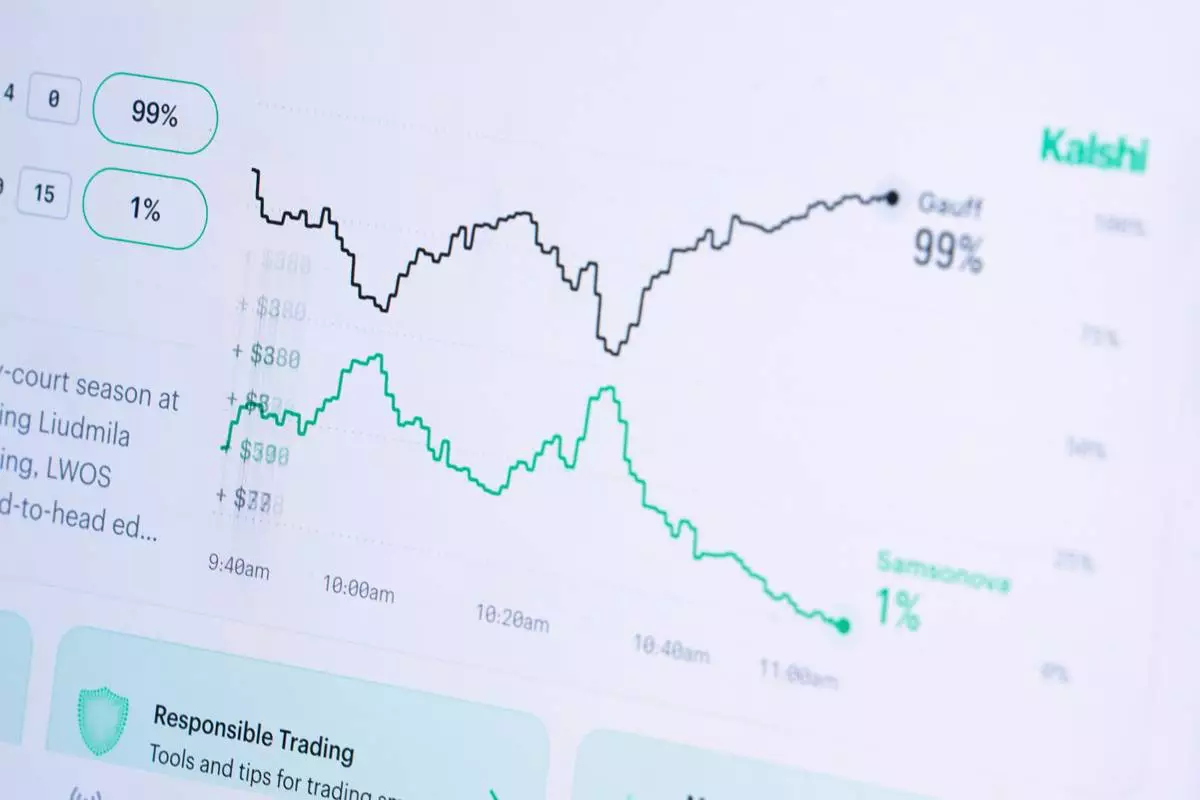
A laptop displays trades on the Kalshi website on Thursday, April 16, 2026, in Portland, Ore. (AP Photo/Jenny Kane)
A laptop displays trades on the Kalshi website on Thursday, April 16, 2026, in Portland, Ore. (AP Photo/Jenny Kane)

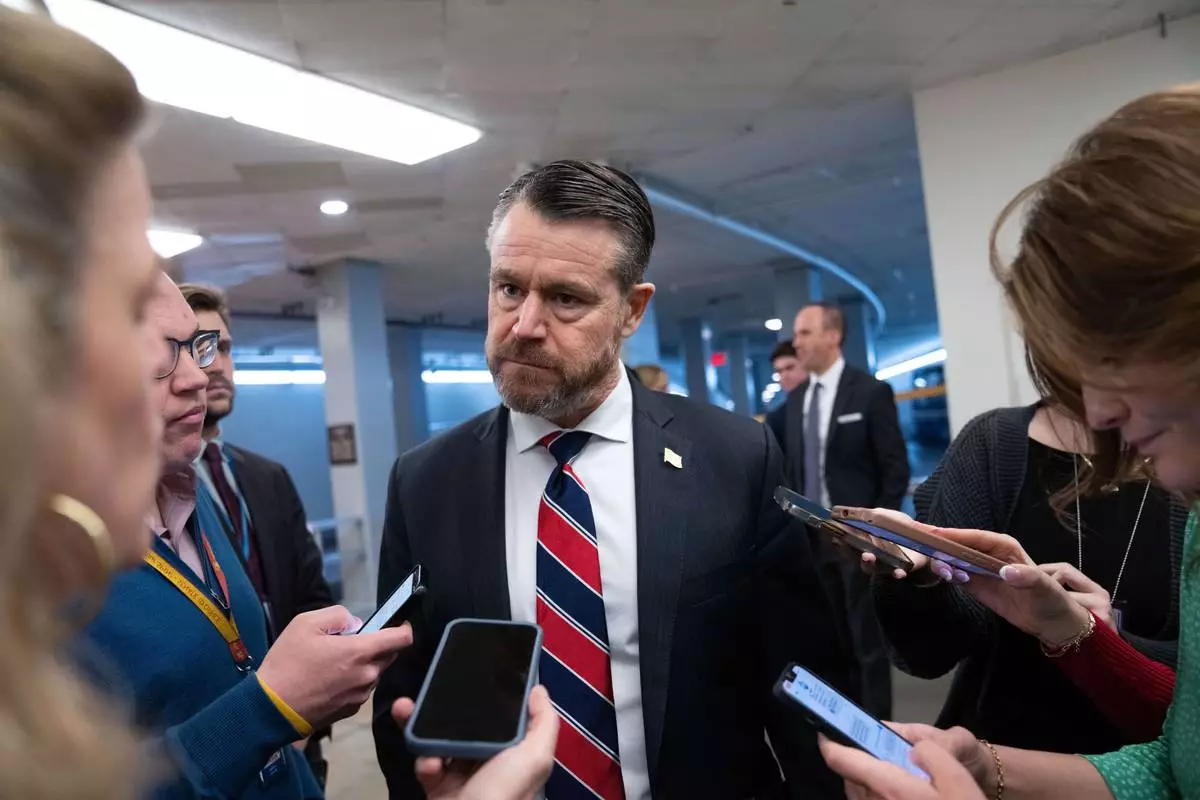
FILE - Sen. Todd Young, R-Ind., departs following votes at the Capitol, March 5, 2026, in Washington. (AP Photo/Allison Robbert, File)

FILE - Sen. Todd Young, R-Ind., departs following votes at the Capitol, March 5, 2026, in Washington. (AP Photo/Allison Robbert, File)
A 10-day ceasefire announced by U.S. President Donald Trump and agreed on by Lebanon and Israel appeared to be holding in Lebanon early Friday, potentially boosting efforts to extend a ceasefire between Iran, the United States and Israel.

It was unclear whether a lasting deal would be reached between the U.S. and Iran before the ceasefire ends next week, but the pause in fighting between Israel and Hezbollah could be an indication some progress has been made.

An end to Israel’s war with Hezbollah was a key demand of Iranian negotiators. Israel has not been fighting with Lebanon itself, but rather with the Iranian-backed Hezbollah militant group inside Lebanon, which said in a statement that “any ceasefire must be comprehensive across all Lebanese territory and must not allow the Israeli enemy any freedom of movement.”

Israeli Prime Minister Benjamin Netanyahu said he agreed to the ceasefire “to advance” peace efforts with Lebanon, but said Israeli troops would not withdraw.

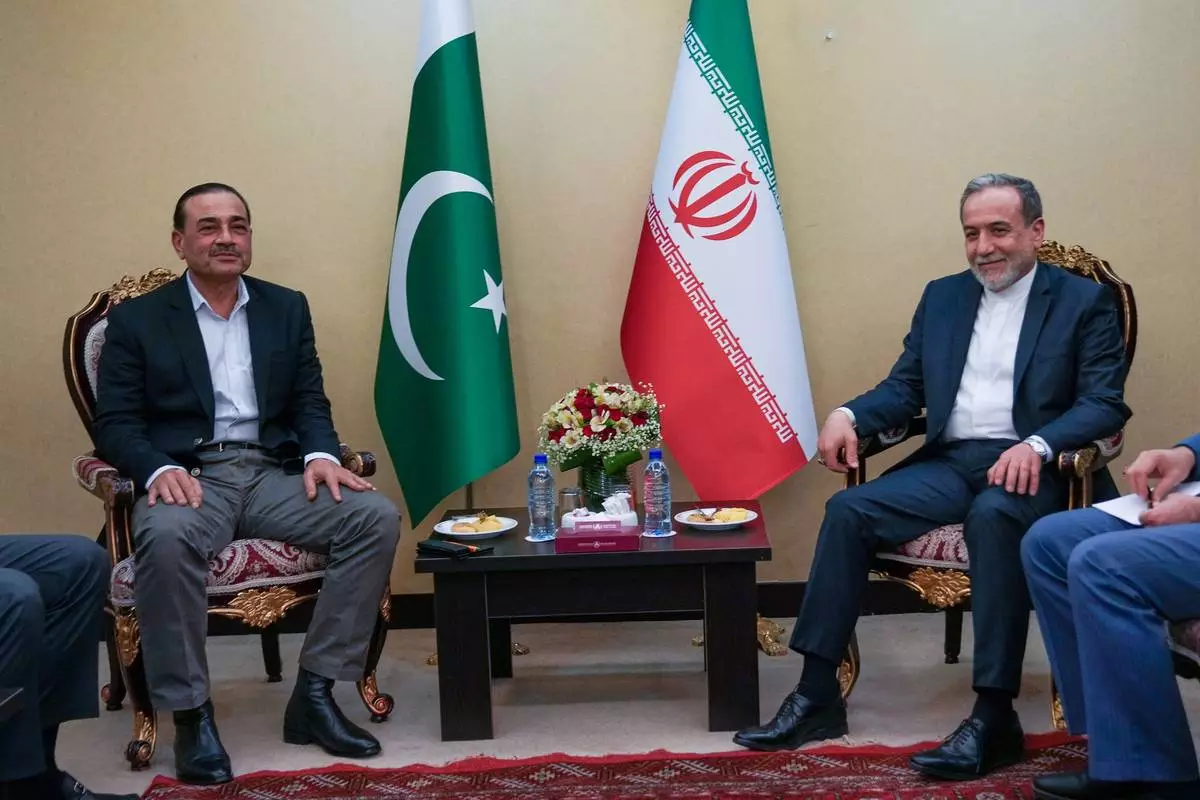
Pakistan’s army chief met Thursday with Iran’s parliament speaker as part of international efforts to press for an extension to the ceasefire that has paused almost seven weeks of war.

Mediators are pushing for a compromise on three main sticking points: Iran’s nuclear program, the Strait of Hormuz and compensation for wartime damages, according to a regional official involved in mediation efforts.

Reopening the strait is a key demand by the U.S. and the international community as a global energy crisis worsens daily because of the key oil route's closure. The leaders of France and the U.K. will gather dozens of countries Friday to push forward plans to reopen the strait, although the U.S. will not be included..

The fighting has killed at least 3,000 people in Iran, more than 2,100 in Lebanon, 23 in Israel and more than a dozen in Gulf Arab states. Thirteen U.S. service members have also been killed.

Here is the latest:

German Foreign Minister Johann Wadephul on Thursday welcomed the ceasefire between Israel and Lebanon and thanked the U.S. for its role as a mediator.

What is needed now, Wadephul said, are long-term agreements on securing the border, protecting civilians on both sides of the Blue Line, and ensuring the safety of UNIFIL peacekeepers.

He said the talks paved the way for a future reality in which the interests of both sides are equally taken into account: Israel’s legitimate security interests and Lebanon’s right to territorial integrity and sovereignty.

Long-term security in the region can only be achieved through the effective disarmament of Hezbollah, Wadephul added.

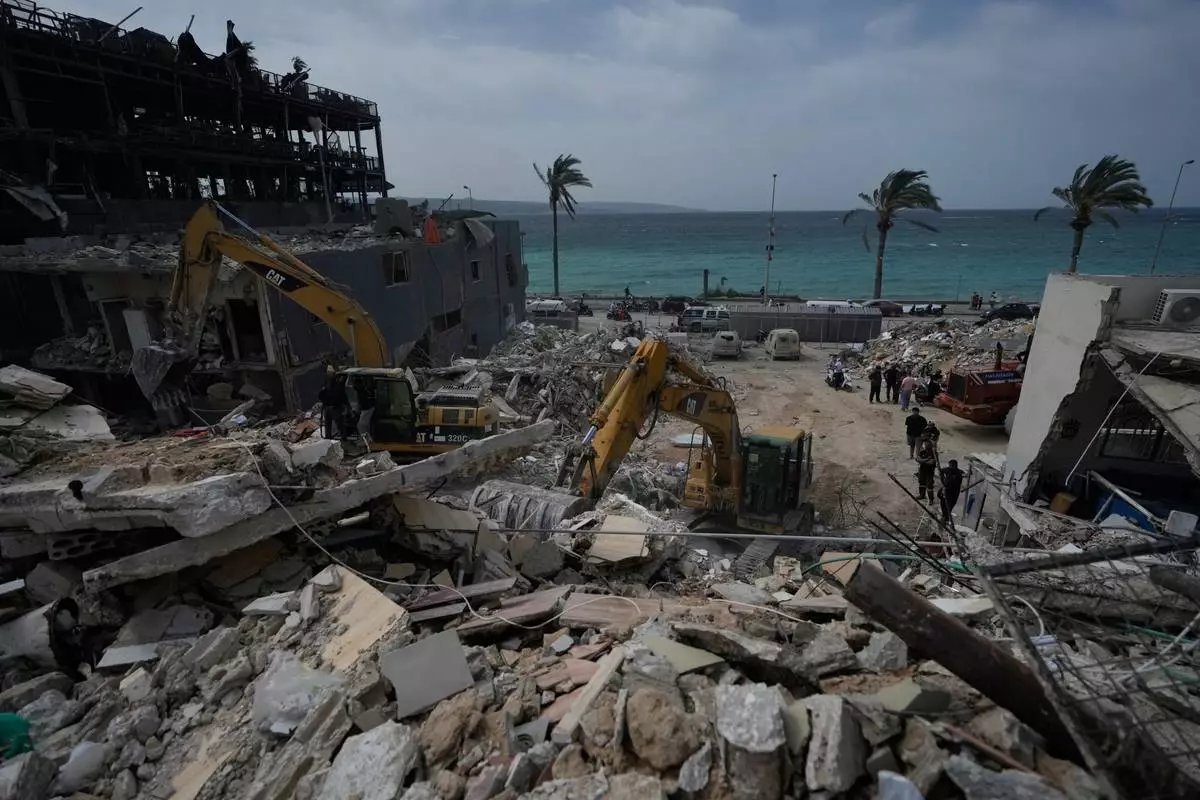
Relief at a ceasefire beginning in Lebanon on Friday was tempered by the destruction that many encountered upon returning to their homes.

In the southern village of Jibsheet, a trickle of residents returned to flattened apartment blocks and streets littered with chunks of concrete, twisted aluminum shutters and dangling electrical wires.

“I feel free being back,” 23-year-old Zainab Fahas said. “But look they destroyed everything: the square, the houses, the shops, everything.”

In the southern Beirut suburb of Haret Hreik, Ahmad Lahham, 48, waved the yellow Hezbollah flag. He stood on a mountain of rubble that was his apartment building and also housed a branch of Hezbollah’s financial arm, Al-Qard Al-Hassan.

Iran’s pressure in its talks with the U.S. brought the truce, condemning Lebanon’s direct talks with Israel, he said.

“Only the Iranians stood with us, no one else,” he said, calling Lebanon’s leaders “the leadership of shame.”

A South Korean-flagged tanker carrying crude oil from Saudi Arabia’s Yanbu port has safely exited the Red Sea, South Korean officials said.

The passage marks the country’s first such shipment since it began seeking alternative energy routes while Iran is largely blocking the Strait of Hormuz.

South Korean President Lee Jae Myung on Friday described the passage as a “valuable accomplishment” during the government’s efforts to overcome challenges posed by the war.

The Ministry of Oceans and Fisheries did not immediately say how many tankers would attempt to use the Red Sea route or when the vessel that passed would arrive in South Korea.

Officials say 26 of South Korea’s vessels remain stranded in the strait.

In two social media posts Thursday night, U.S. President Donald Trump said Thursday could have been “a historic day for Lebanon.”

In a separate Truth Social message after the ceasefire between Israel and Lebanon went into effect, Trump added that he hoped the Lebanon-based, Iran-backed Hezbollah militant group “acts nicely and well.”

“It will be an GREAT moment for them if they do,” Trump added.

BP has become a fifth company to strike a deal with the Australian government to underwrite fuel imports at prices inflated by the Iran war.

Prime Minister Anthony Albanese announced the BP deal on Friday at Viva Energy’s Geelong refinery, southwest of Melbourne, that was damaged by fire over Wednesday night. He said the damaged refinery continued to produce diesel and jet fuel at 80% capacity and gasoline as 60% capacity.

Viva on Thursday secured 570,000 barrels of diesel underwritten by the government in shipments from Brunei and South Korea at prices that might otherwise be commercially unviable.

Australia has sufficient fuel supplies contracted into May, but there are concerns that shortages could emerge in the months ahead.

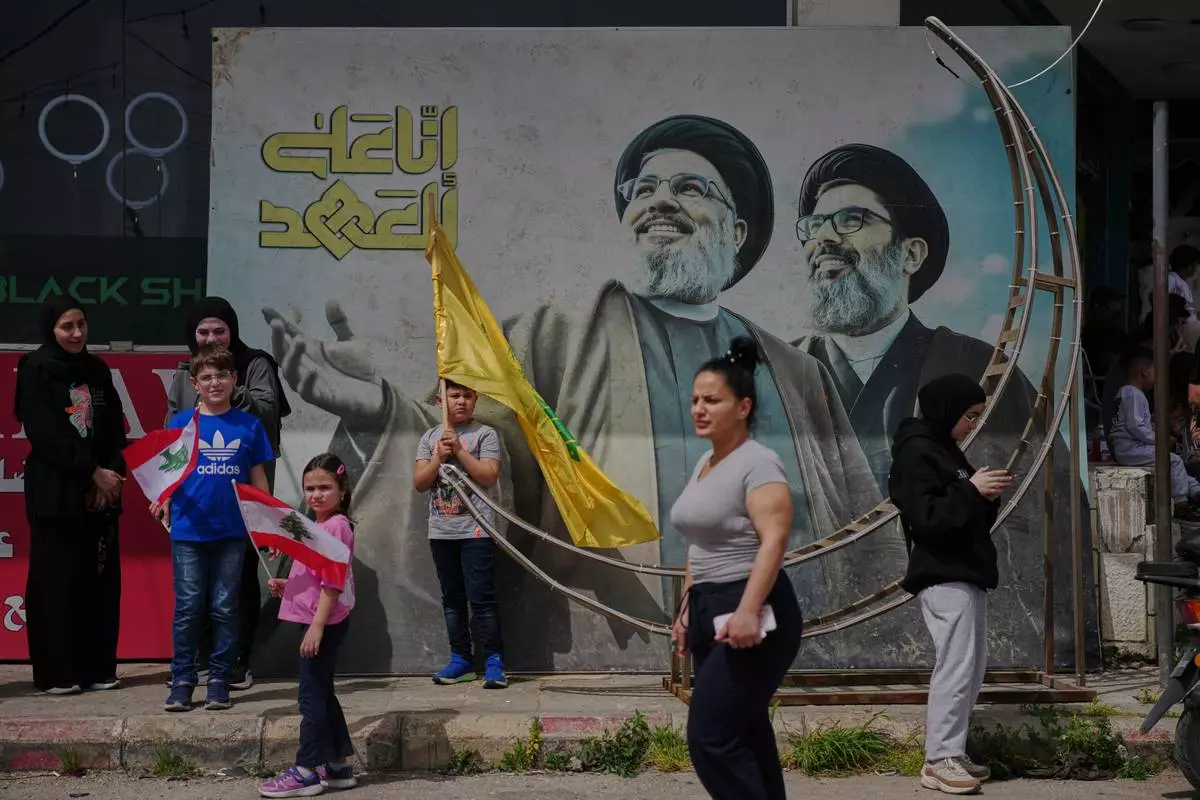
People stand next to a mural with the images of late Hezbollah leaders Hassan Nasrallah, left, and Hashem Safieddine as displaced residents return to their villages following a ceasefire between Israel and Hezbollah, in Zefta, southern Lebanon, Friday, April 17, 2026. (AP Photo/Hassan Ammar)

People stand next to a mural with the images of late Hezbollah leaders Hassan Nasrallah, left, and Hashem Safieddine as displaced residents return to their villages following a ceasefire between Israel and Hezbollah, in Zefta, southern Lebanon, Friday, April 17, 2026. (AP Photo/Hassan Ammar)

Two girls chant slogans as one holds an image of the late Hezbollah leader Hassan Nasrallah in Dahiyeh, Beirut's southern suburbs, Lebanon, Friday, April 17, 2026, following a ceasefire between Israel and Hezbollah. (AP Photo/Bilal Hussein)

Two girls chant slogans as one holds an image of the late Hezbollah leader Hassan Nasrallah in Dahiyeh, Beirut's southern suburbs, Lebanon, Friday, April 17, 2026, following a ceasefire between Israel and Hezbollah. (AP Photo/Bilal Hussein)

Rescuers search for victims in the rubble of a destroyed building that was struck in Israeli airstrikes in the city of Tyre, south Lebanon, Friday, April 17, 2026. (AP Photo/Mohammed Zaatari)

Rescuers search for victims in the rubble of a destroyed building that was struck in Israeli airstrikes in the city of Tyre, south Lebanon, Friday, April 17, 2026. (AP Photo/Mohammed Zaatari)

In this photo released by the Iranian Foreign Ministry, Iranian Foreign Minister Abbas Araghchi, right, meets with Pakistan's Army Chief Field Marshal Gen. Asim Munir in Tehran, Wednesday, April 15, 2026. (Iranian Foreign Ministry via AP)

In this photo released by the Iranian Foreign Ministry, Iranian Foreign Minister Abbas Araghchi, right, meets with Pakistan's Army Chief Field Marshal Gen. Asim Munir in Tehran, Wednesday, April 15, 2026. (Iranian Foreign Ministry via AP)

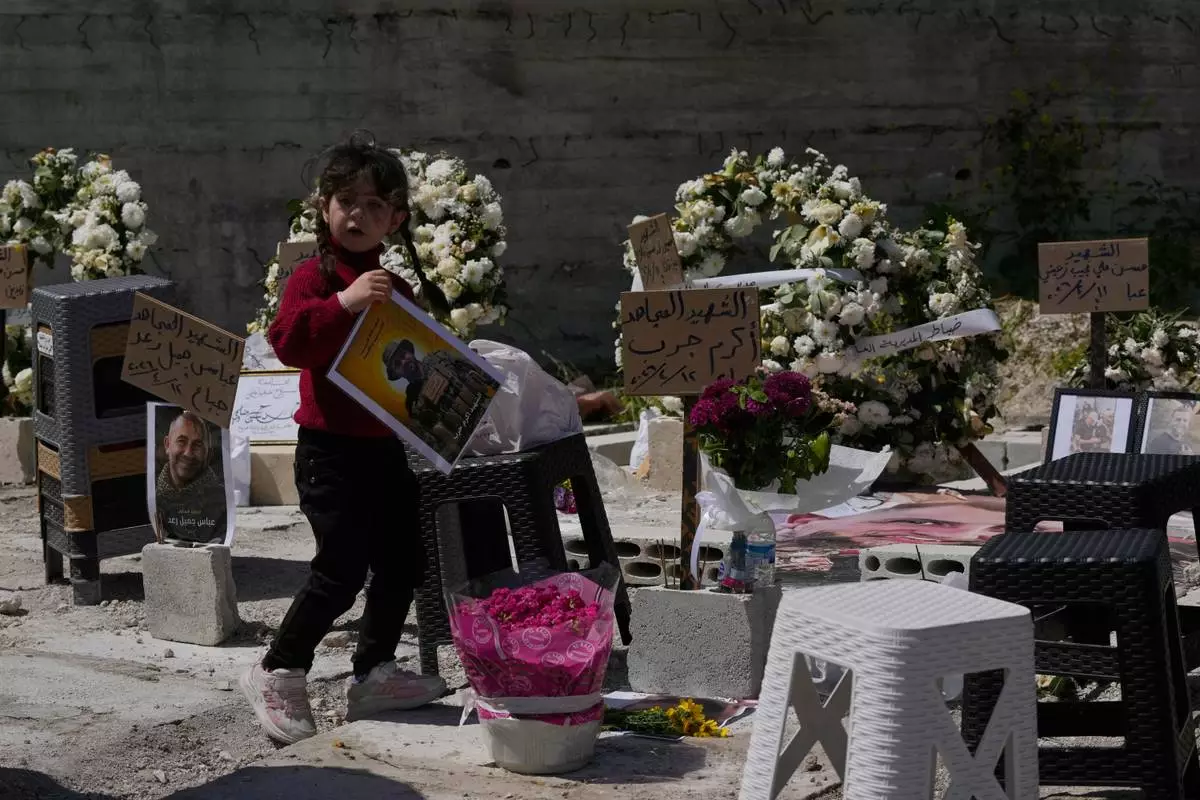
A young girl carries a portrait of a killed Hezbollah fighter at a mass grave where civilians and Hezbollah fighters killed in Israeli airstrikes are temporarily buried in the southern port city of Sidon, Lebanon, Tuesday, April 14, 2026. (AP Photo/Mohammed Zaatari)

A young girl carries a portrait of a killed Hezbollah fighter at a mass grave where civilians and Hezbollah fighters killed in Israeli airstrikes are temporarily buried in the southern port city of Sidon, Lebanon, Tuesday, April 14, 2026. (AP Photo/Mohammed Zaatari)

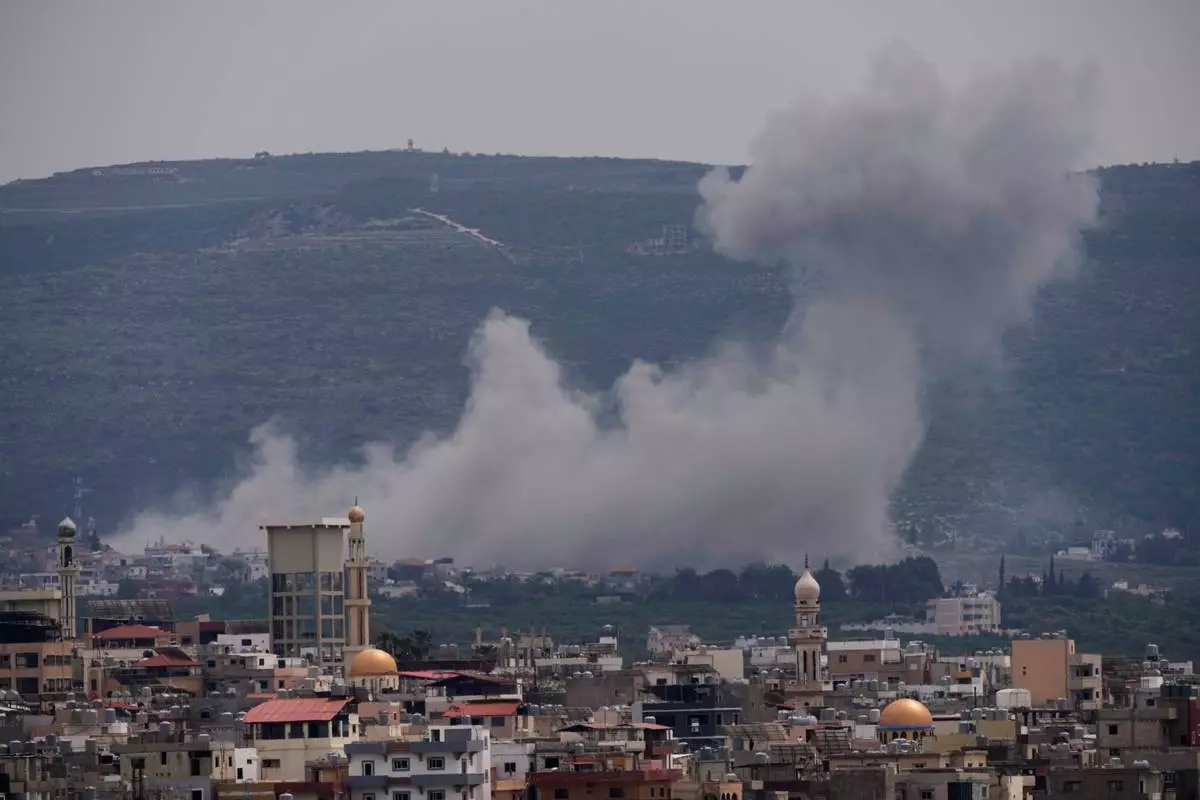
Smoke rises following an Israeli airstrike on the village of Qlaileh, as seen from the southern port city of Tyre, Lebanon, Wednesday, April 15, 2026. (AP Photo/Hussein Malla)

Smoke rises following an Israeli airstrike on the village of Qlaileh, as seen from the southern port city of Tyre, Lebanon, Wednesday, April 15, 2026. (AP Photo/Hussein Malla)

Girls chase bubbles next to their family's tents used as shelter after fleeing Israeli bombardment in Dahiyeh, Beirut's southern suburbs, in Beirut, on Wednesday, April 15, 2026. (AP Photo/Bilal Hussein)

Girls chase bubbles next to their family's tents used as shelter after fleeing Israeli bombardment in Dahiyeh, Beirut's southern suburbs, in Beirut, on Wednesday, April 15, 2026. (AP Photo/Bilal Hussein)

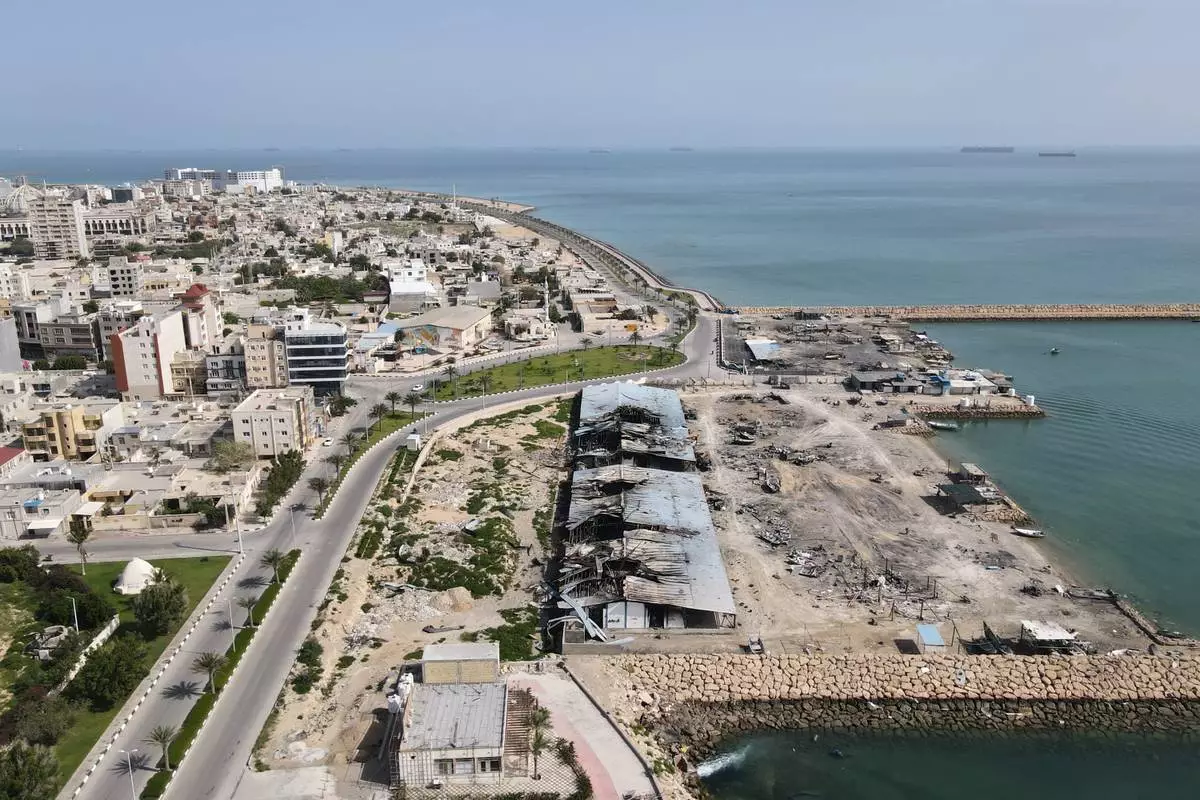
Backdropped by ships in the Strait of Hormuz, damage, according to local witnesses caused by several recent airstrikes during the U.S.-Israel military campaign, is seen on a fishing pier in the port of Qeshm island, Iran, Monday, April 13, 2026. (AP Photo/Asghar Besharati)

Backdropped by ships in the Strait of Hormuz, damage, according to local witnesses caused by several recent airstrikes during the U.S.-Israel military campaign, is seen on a fishing pier in the port of Qeshm island, Iran, Monday, April 13, 2026. (AP Photo/Asghar Besharati)

Recommended Articles