Chinese shares held firm above key levels on Friday, with the Shenzhen Component Index and the ChiNext Index closing higher despite lingering Middle East tensions, reported Timothy Pope, a market analyst for China Global Television Network (CGTN).
The benchmark Shanghai Composite Index slipped 0.1 percent to 4,051.43 points. The Shenzhen Component Index closed 0.6 percent higher at 14,885.42 points, while the ChiNext Index, tracking China's Nasdaq‑style board of growth enterprises, gained 1.43 percent to 3,678.29.
"Despite the release of the big-ticket economic data this week, the Middle East conflict is still the thing is moving markets the most unsurprisingly. But hopes of fresh peace talks which have emerged this week have really countered the 'everyone blockade the Strait of Hormuz' theme, which started the week. The Shanghai Composite Index was fractionally lower today, but it regained the key 4000-point level on Thursday and is still sitting above that mark now. The Shenzhen Composite Index too regained highs not seen since early 2022 - it's nearing 15,000 points as of today's close," Pope said.
"The stronger than expected GDP figures did also play a part in those gains. And what I think is really important to remember is that the 5 percent real GDP growth was managed without China being in a housing boom, so it does indicate that the shift to a more quality-driven growth model is underway. And as far as individual stocks go, we had some fairly strong performances as well. CATL continued its run of gains today, the big battery maker, that was after some very strong financial results released on Tuesday. Q1 revenue was up more than 52 percent and net profit up 48 percent to more than 20 billion yuan (about 2.9 billion U.S. dollars), that was ahead of analyst expectations," he said.
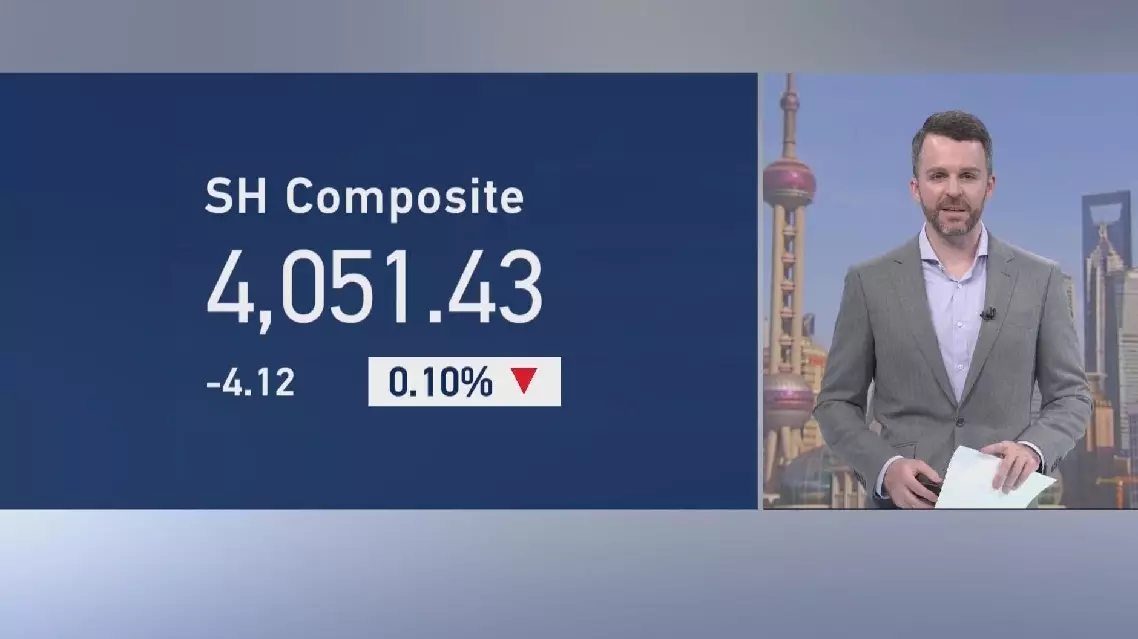
Chinese shares hold firm above key levels despite Middle East tensions
Hong Kong and Tokyo stocks capped a positive week on Friday, even as both markets pulled back slightly in the day's trading, as investors looked past initial selloffs triggered by escalating Middle East tensions.
Hong Kong stocks ended lower on Friday with the benchmark Hang Seng Index down 0.89 percent to close at 26,160.33 points.
The Hang Seng China Enterprises Index edged down 0.67 percent to end at 8,845.02 points, and the Hang Seng Tech Index lost 0.97 percent to 5,042.68 points.
Timothy Pope, a market analyst for China Global Television Network (CGTN), recapped the market performances.
"Hong Kong and Tokyo [markets] definitely had a positive week but they did slip back slightly today. The Hang Seng Index ended the session down 0.9 percent. But it is worth remembering that it's up a bit under 2 percent for the week, recovering substantially from the initial Iran war selloff. Chinese circuit board maker Shenghong Technology is continuing to prepare for its Hong Kong IPO. The debut on the Hong Kong exchange is scheduled for next week.It priced its listing today at the stronger end of the predicted range, a shade under 210 Hong Kong dollars per share. It's looking to make 17.5 billion Hong Kong dollars from the listing that's around two and a quarter billion U.S. dollars and could end up being one of the bigger listings that we see in Hong Kong this year. The news was good for its Shenzhen listing. It was up by seven and a half percent today," he said.
Tokyo stocks ended lower on Friday, as investors locked in gains after the benchmark Nikkei index hit a record high the previous day.
The 225-issue Nikkei Stock Average ended down 1,042.44 points, or 1.75 percent, from Thursday at 58,475.90.
The market was weighed down by selling of heavyweight technology shares that drove the Nikkei stock index to just below 60,000 on Thursday.
"Over in Tokyo, the Nikkei 225 slipped back a little bit too, as technology shares dragged on the index. It was down about 1.75 percent after hitting a fresh record high close yesterday. The Nikkei too has regained a lot of the ground that it lost when the U.S. and Israel launched their attacks on Iran, and 60,000 points once again looks within reach for the index," said Pope.
"The big Japanese chip firms - Advantest and Tokyo Electron - they led the losses today, along with the tech investor SoftBank, which shed more than 3 percent. They're big enough, the three of them together big enough heavyweights that they're enough to drag the Nikkei lower all on their own. But we also saw some fairly poor performances from other tech listings and appliance makers today," he said.
Hong Kong, Tokyo markets post weekly gains despite Friday pullback