Man convicted and jailed for importing duty-not-paid cigarettes using cross-boundary private car
A 52-year-old man was sentenced to three months' imprisonment with a fine of $1,000 by the Fanling Magistrates' Courts today (April 18) for importing duty-not-paid cigarettes using a cross-boundary private car, in contravention of the Dutiable Commodities Ordinance (DCO).
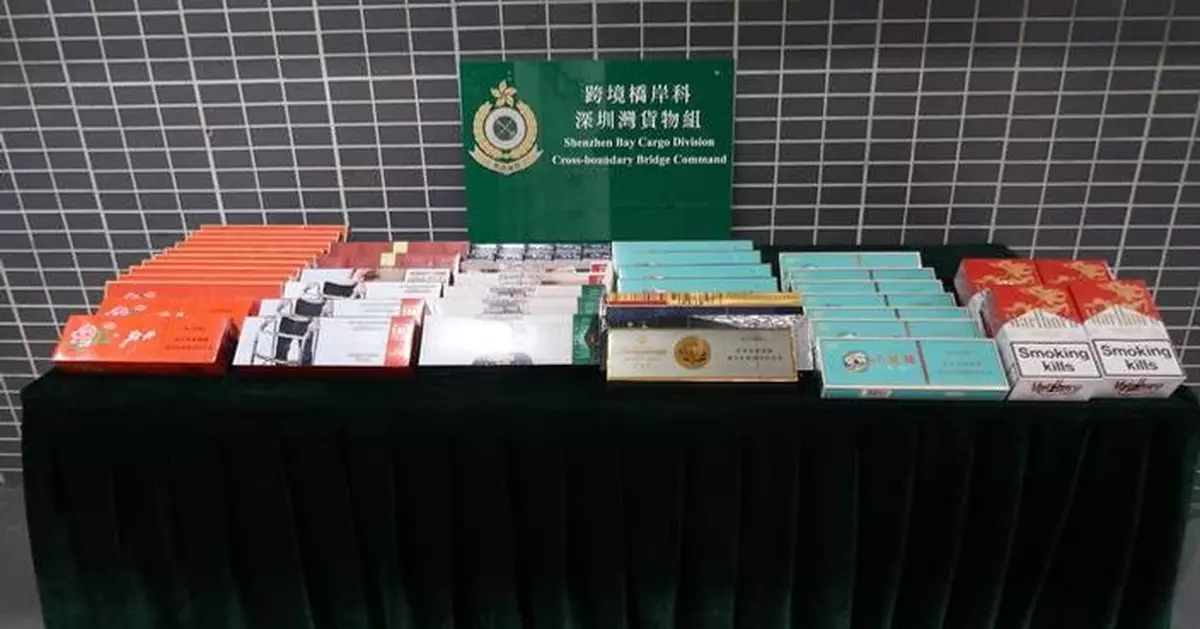
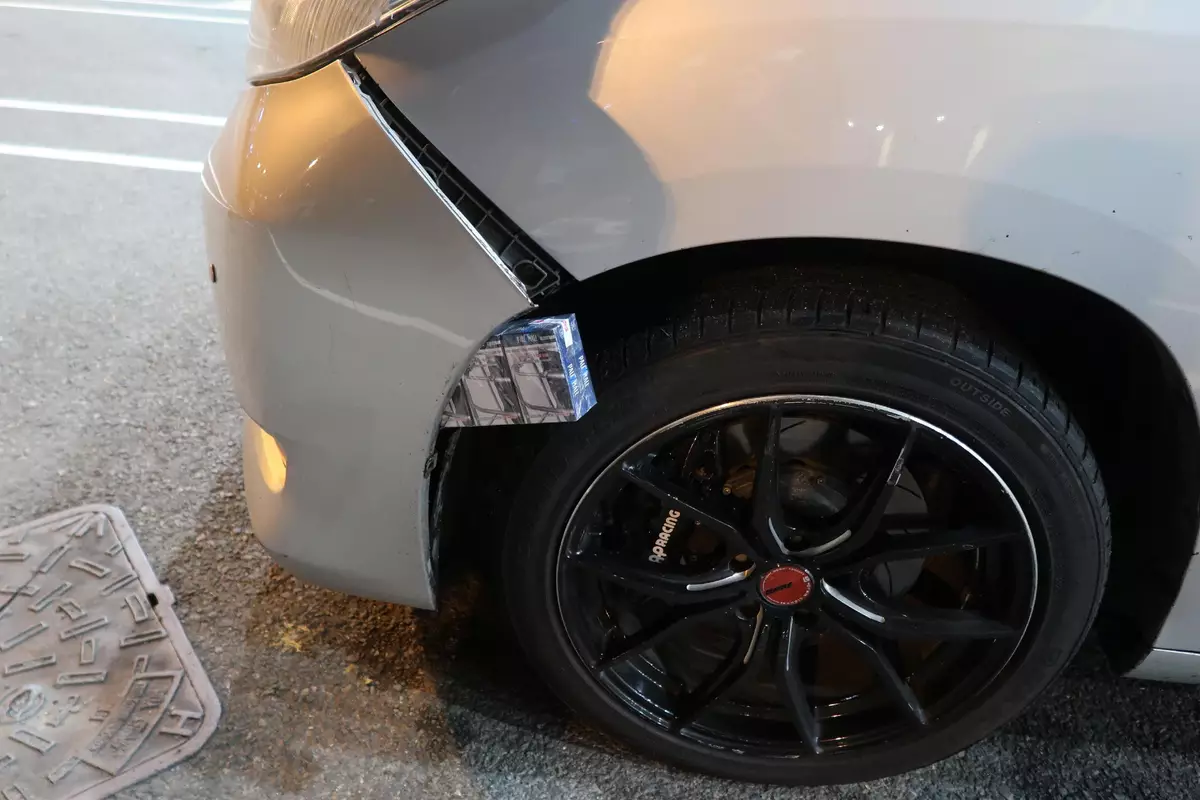
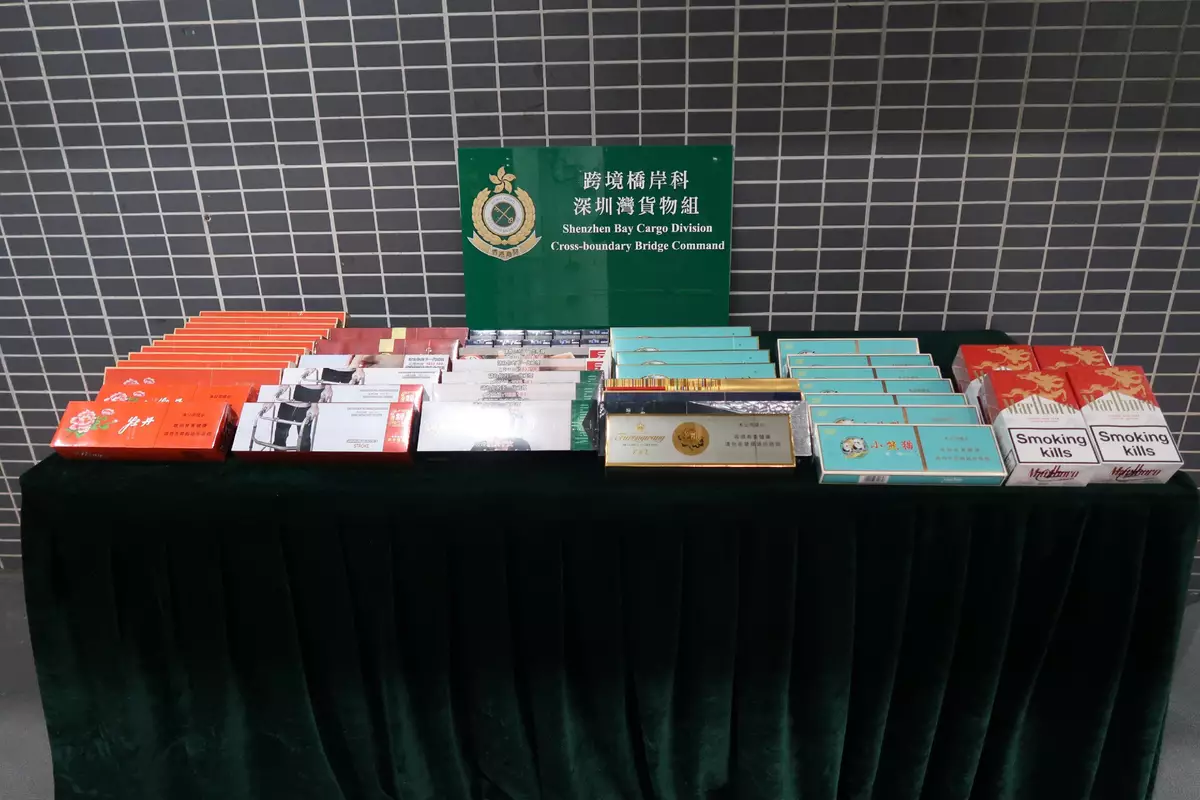
Through risk assessment and intelligence analysis, Hong Kong Customs intercepted an inbound private car at the Shenzhen Bay Control Point yesterday (April 17). Upon inspection, Customs officers seized a total of 8 520 sticks of duty-not-paid cigarettes inside the front bumper of the private car. The 52-year-oldmale driver was subsequently arrested. The estimated market value of the cigarettes seized in the case was about $42,000, and the duty potential was about $28,000.
Customs welcomes the sentence. The custodial sentence has imposed a considerable deterrent effect and reflects the seriousness of the offences.
Customs reminds members of the public that under the DCO, cigarettes are dutiable goods to which the DCO applies. Any person who imports, deals with, possesses, sells or buys illicit cigarettes commits an offence. The maximum penalty upon conviction is a fine of $2 million and imprisonment for seven years.
Members of the public may report any suspected illicit cigarette activities to Customs' 24-hour hotline 182 8080 or its dedicated crime-reporting email account (crimereport@customs.gov.hk) or online form (eform.cefs.gov.hk/form/ced002).
Man convicted and jailed for importing duty-not-paid cigarettes using cross-boundary private car Source: HKSAR Government Press Releases
Man convicted and jailed for importing duty-not-paid cigarettes using cross-boundary private car Source: HKSAR Government Press Releases
Remarks by SCS at media session
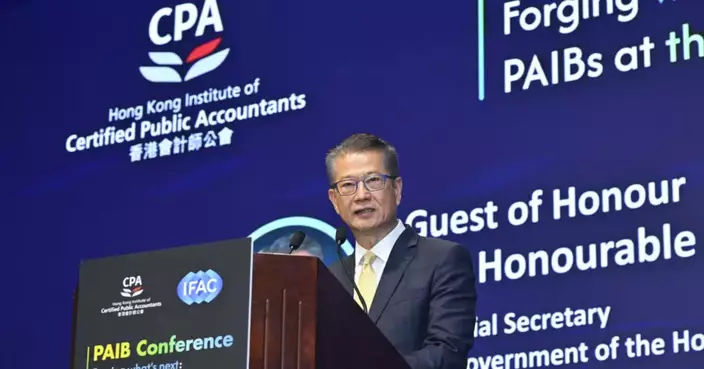
Following are the remarks by the Secretary for Civil Service, Mrs Ingrid Yeung, at a media session after attending a radio programme this morning (April 18):
Reporter: Why does the accountability system not involve Permanent Secretaries of bureaux? Would that lead to potential issues involving Permanent Secretaries being left unhandled? Secondly, under what circumstances will the second level of the investigation commence under the new system? What potential punishments would come into place and how would that be determined? And why does the new mechanism not involve serious incidents that happen prior to the implementation?
Secretary for Civil Service: The Heads of Department Accountability System is aimed at urging the senior management of departments to improve the day-to-day management of the departments, so that there would not be systemic problems going unnoticed. The department head and his senior staff will be able to have a very good grasp of what is happening daily in the department, what are the problems, pressure points that the departments are facing, so that these problems and pressure points can be dealt with expeditiously. The emphasis is on the day-to-day management of the department. The main responsibility of it rests with the department head and his senior team of management staff.
Permanent Secretaries in the bureaux are to assist the directors of bureaux to formulate and design mechanisms, systems or legislations to implement policies. It is very rare that they are involved in the day-to-day management of departments. That is why in the definition of heads of departments, Permanent Secretaries are excluded. But that doesn't mean that if in the unlikely event that a Permanent Secretary is involved in a problem in the management of a department and that problem is serious enough to warrant investigation, it does not mean that the investigation team would not point out the responsibility of the Permanent Secretary. The investigation team will be tasked to point out everyone involved - everyone having to be responsible for the problem, for causing the problem or not dealing with the problem quickly enough, including anybody, Permanent Secretary, or even the one who is in the most frontline, the one who has no management responsibility, if he or she has made a mistake or if he or she has a part to play in causing the problem. The investigation team will point out, this is their responsibility.
As regards how to define what is serious, what are systemic problems, what are problems that might implicate the department head himself or herself, it is very difficult to define it given the very diverse nature of departments. But I'm sure the one who triggers the investigation mechanism, i.e. the director of bureau, will have a very good grasp of the seriousness of the nature of the problem, as well as how the public see it. If there is any problem that the public see it as very serious, see it as very much of a concern to the community, the director of bureau will have a good grasp of it and will definitely take this into consideration when considering whether to trigger the investigation mechanism.
(Please also refer to the Chinese portion of the remarks.)
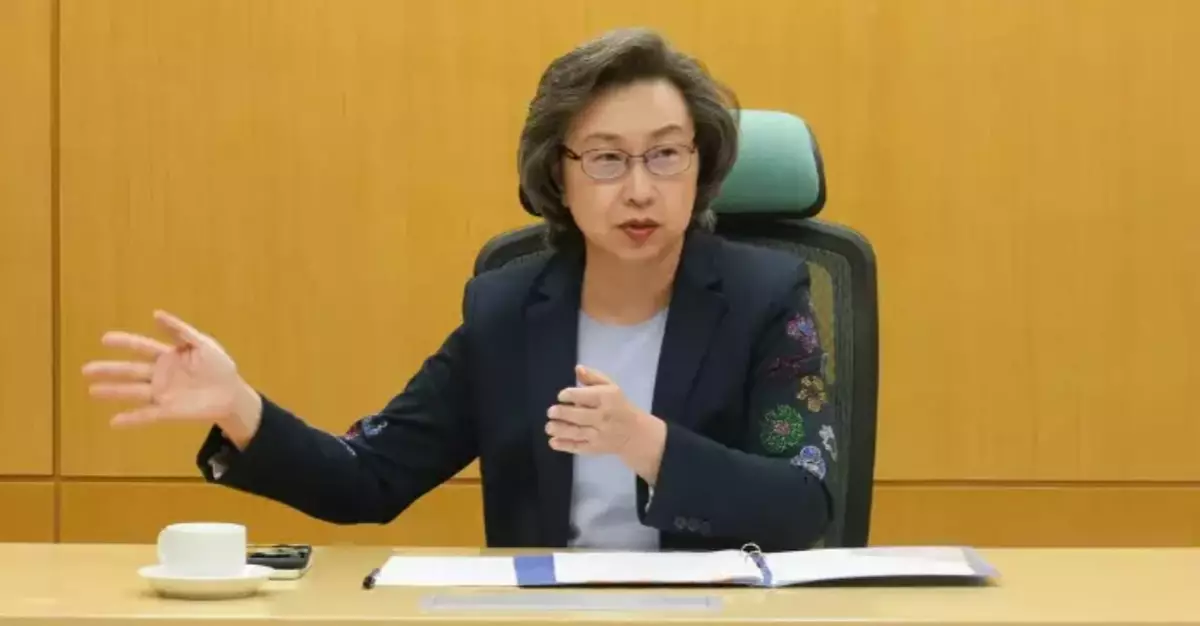
The Secretary for Civil Service, Mrs Ingrid Yeung, Photo source: FB@Ingrid Yeung