Skip to Content Facebook Feature Image

You can put beef tallow and salmon sperm on your face. But should you?

ENT

You can put beef tallow and salmon sperm on your face. But should you?
ENT

ENT

You can put beef tallow and salmon sperm on your face. But should you?

2026-04-18 22:22 Last Updated At:22:31

Bryan Vander Dussen spent years as a dairy farmer before shifting to selling farm-raised beef. In the past year, he and his wife have been making another transition: Cooking up recipes in their kitchen that turn organ fat from his animals into tallow balm that buyers are eager to slather on their skin.

One tricky bit: Coming up with formulas that don’t smell like pot roast.

“You see it everywhere, so we were like, ‘Why don’t we do this?’” he said. “Some of the feedback is, ‘We don’t want to smell like beef,’ so we add things like lavender and wild orange to kind of counter that potential beef smell.”

From moisturizers made with beef tallow to salmon sperm facials, consumers have become more interested in animal-based skin care products in recent years. Promoted as natural alternatives to synthetics, they're gaining popularity across social media and high-end spas as well as at farmers’ markets and in home kitchens.

Some experts connect the products' rise to an increased focus on the health impact of chemicals, as well as pro-meat messaging from the Make America Healthy Again movement.

“There’s been a movement in the last couple of years to embrace animal-based foods,” said Norah MacKendrick, an associate professor of sociology at Rutgers University who has studied why consumers are worried about chemicals in their personal care products. “I think some of that is probably spilling over into the cosmetic world.”

Natalee Keenan, 31, said she was looking for natural skin care products when she decided to give tallow a try. The first product she purchased felt beefy and heavy on her skin, but the western Pennsylvania woman said she recently found a whipped tallow balm scented with coconut that feels much lighter.

“I use it sparingly,” she said, adding a tiny bit has been enough to keep her skin feeling smooth.

Here’s what experts have to say about animal-based skin care, including cautions about a lack of medical evidence for their effectiveness.

The cosmetics industry moved away from many animal-derived ingredients decades ago amid concerns about animal testing and disease outbreaks like mad cow, said Perry Romanowski, an independent cosmetic chemist who studies how skin care ingredients are formulated.

For years, those concerns, along with the rise of vegan beauty products, pushed many brands to avoid animal-based ingredients altogether. But recently, some of those materials have started to reappear in skin care products and are often marketed as natural alternatives.

Jamie Moody, founder of Sonoma Mountain Beef in Northern California, said she started making tallow products in an effort to reduce waste. “Since the trend toward clean products remains strong, I believe the market will continue to grow,” she said.

Vander Dussen, the California rancher, said he and his wife are “just kind of jumping onto the fad that’s already there.” He added: “In today’s world, it’s very important not only what you are putting on your face but where it comes from.”

Kelly Pratt, who owns a spa in Tampa, Florida, said demand for treatments like salmon sperm DNA facials have surged because clients report improvements over time. Cassandra Hutchison, an aesthetician who gives the treatments at the spa, said the ingredient is intended to repair skin and keep inflammation down. She said it helps in hydration, making skin look healthier and repairing damage to the outer layer of skin that keeps moisture in and irritants out.

Prices vary, but a tub of tallow balm at Target costs about $15 more than a tub of petroleum jelly. And while there are some salmon sperm products like masks you can apply at home, many have to be applied at a spa, which comes with its own costs. Still, that hasn't deterred some consumers, whose searches for terms like “beef tallow for skin” have jumped in recent years and remained higher than ever before, according to Google Trends.

Turning waste from an animal product into something people use is certainly an example of sustainability, experts said.

But neither beef tallow nor salmon sperm have robust medical data to support their effectiveness, said Dr. Angelo Landriscina, a New York City dermatologist who has taken to social media to debunk what he sees as skin care misinformation.

Dr. Heather Rogers, a Seattle dermatologist, agreed there’s no medical evidence that tallow on your skin is helpful. She said it can be rancid and hard to use, and additives to make it smell more pleasant can be irritants.

Romanowski, the cosmetic chemist, said consumers should keep their expectations realistic. He said only a few skin care ingredients, including retinol, a vitamin A-derived ingredient commonly used to reduce fine lines and wrinkles, and niacinamide, a form of vitamin B3 that helps with redness and strengthens the skin, have strong evidence behind them. Others, he said, may offer only modest benefits that are difficult for consumers to notice.

Corrin Dial, 32, owns Lowcountry Family Farms with her husband in South Carolina. Neither of them grew up farming, she said, but decided to try it after he got out of the Marine Corps.

Dial said she was looking for a natural balm for her baby about two years ago and decided to try whipping tallow. She said she thinks many people are coming to it to avoid chemical products, citing one customer who had cancer and was told by her doctor to be careful of anything she puts on her skin. “A lot of people are moving away from the chemical stuff, they’re trying to get into healthy eating and using more products where they know exactly where it came from,” she said.

MacKendrick, the sociologist from Rutgers, speculated that mothers, who as a demographic have become increasingly aware of how chemical substances affect children, are driving some of the move toward animal-based cosmetic products.

“We find that mothers are making these decisions for the household,” MacKendrick said. “Buying cosmetics for children or personal care products for children is considered high-stakes work.”

Landriscina pointed out that ingredients like salmon-based skin care getting touted as “the hottest new thing” can be rooted in an idea that other cultures, especially in places like Korea, are somehow ahead of the curve or have more innovation in their skin care. That's a bit different than the “back to basics” mentality that can draw people to ingredients like beef tallow. But he said whether people are interested in something old or something new, their skin care choices should be rooted in evidence.

Romanowski said the beauty industry is under pressure to constantly introduce something new.

“You should think of the cosmetic industry more like the fashion industry because you can only do so much with the shirt, right?” said Romanowski. “You can change the color, you can do some aesthetics thing, but it’s still a shirt and it’s the same thing with cosmetics.”

Diab reported from Tampa, Fla., Taxin reported from Santa Ana, Calif. and Walling reported from Chicago.

Follow Melina Walling on X @MelinaWalling and Bluesky @melinawalling.bsky.social.

The Associated Press’ climate and environmental coverage receives financial support from multiple private foundations. AP is solely responsible for all content. Find AP’s standards for working with philanthropies, a list of supporters and funded coverage areas at AP.org.
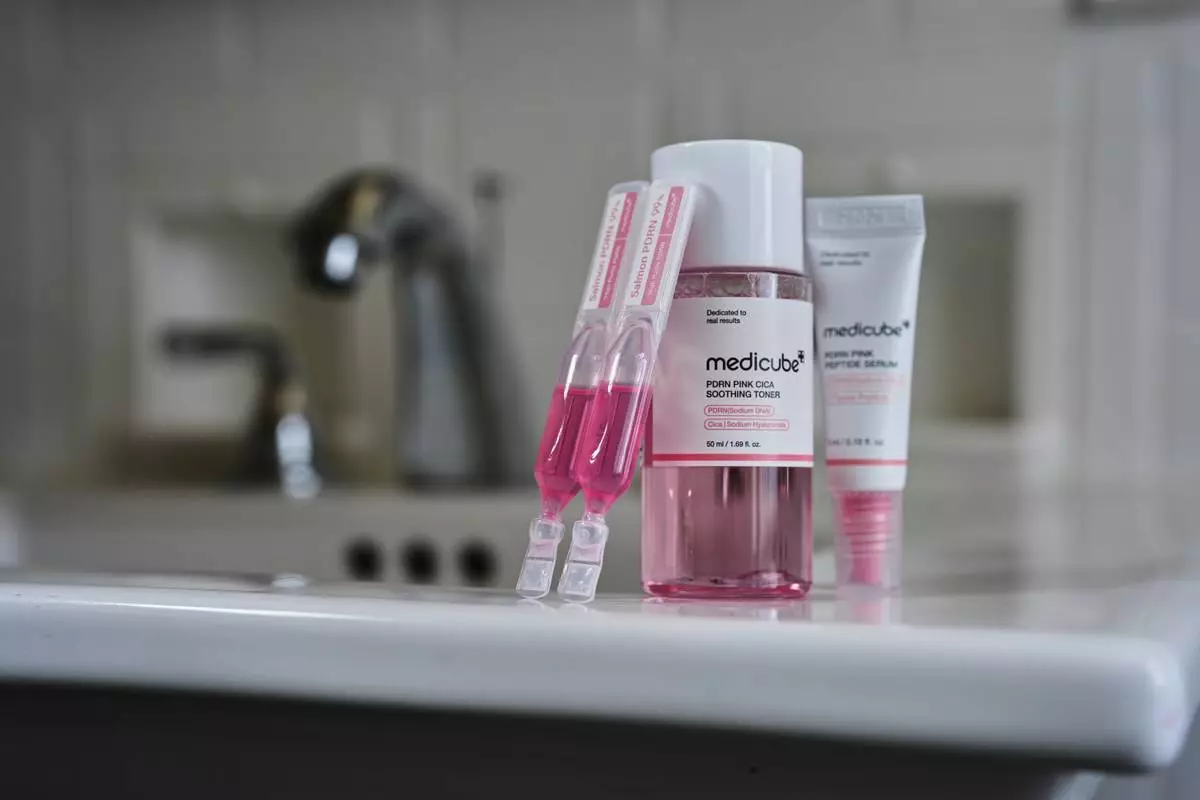
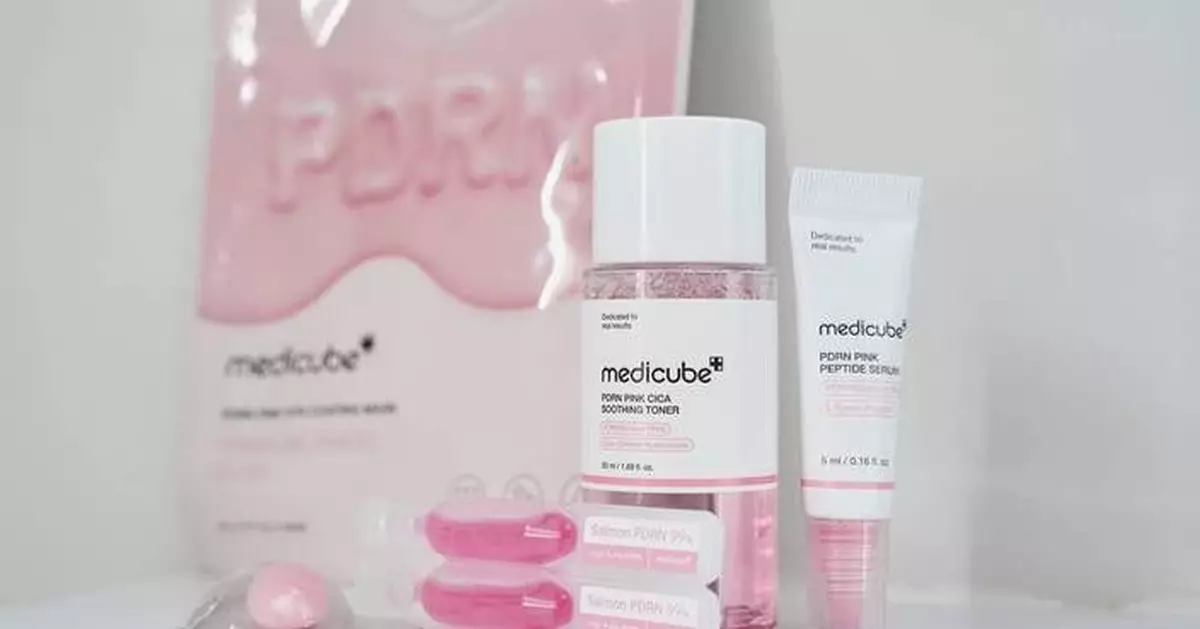
Skincare products made from salmon DNA are displayed Friday, March 6, 2026, in Cincinnati. (AP Photo/Joshua A. Bickel)
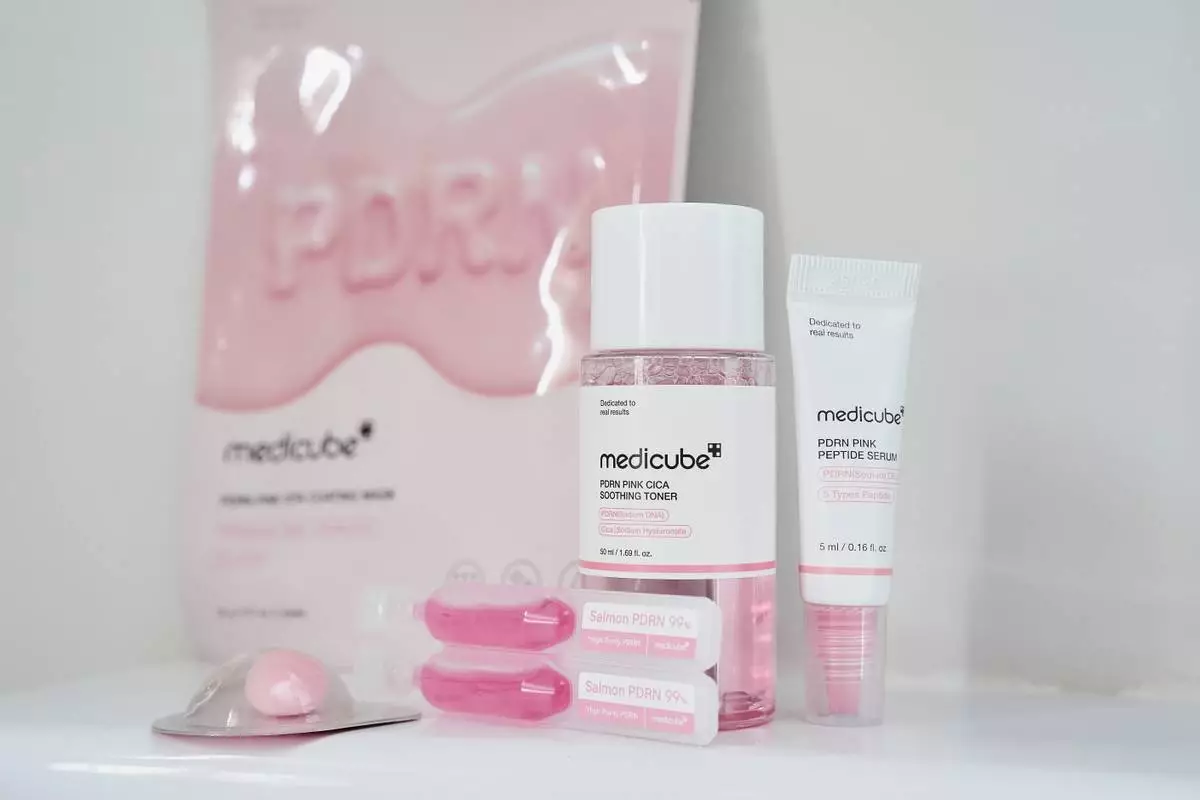
Skincare products made from salmon DNA are displayed Friday, March 6, 2026, in Cincinnati. (AP Photo/Joshua A. Bickel)

Skincare products made from salmon DNA are displayed Friday, March 6, 2026, in Cincinnati. (AP Photo/Joshua A. Bickel)

Skincare products made from salmon DNA are displayed Friday, March 6, 2026, in Cincinnati. (AP Photo/Joshua A. Bickel)

LUANDA, Angola (AP) — Pope Leo XIV arrived in Angola on Saturday, hoping to bring a message of joy and encouragement to its long-suffering people, as he opened the third leg of his four-nation trip through Africa.

Leo’s plane touched down at Luanda’s international airport after the flight from Yaounde, Cameroon, where he celebrated a morning Mass before an estimated 200,000 people.

En route, he had further comments about his ongoing back-and-forth with U.S. President Donald Trump over the Iran war, which began on Feb. 28 with joint U.S.-Israeli strikes followed by Tehran's retaliation. Leo said that it was “not in my interest at all” to debate the president, but that he would continue preaching the Gospel message of peace.

In Cameroon, Leo sought to encourage young people to have hope and demanded that elites stop exploiting the land and its people for profit. It’s a message he was expected to echo in Angola, another mineral-rich former European colony where many of the people live in poverty.

In his homily Saturday, delivered in French, Leo said that the respect for human dignity was a cornerstone of every society.

“For this reason, every community has the obligation to create and sustain structures of solidarity and mutual aid in which, when faced with crises — be they social, political, medical or economic — everyone can give and receive assistance according to their own capacity and needs,” he said.

In Angola, Leo will meet with President Joao Lourenco and deliver his first speech before Angolan government authorities.

Angola, a southern African country of around 38 million, gained independence from Portugal in 1975. But it still bears the scars of a devastating civil war that began straight after independence, and raged on and off for 27 years before finally ending in 2002. More than 500,000 people are believed to have been killed.

For years, the civil war was a Cold War proxy conflict, with the United States and apartheid South Africa backing one side and the Soviet Union and Cuba backing the other.

“I would like to hear a message of peace, a message of reconciliation," Luanda resident Sergio Jose said. "I would also like to hear good political messages, and I would also like to hear that the pope would also talk about the upcoming elections in Angola.”

Angola today is the fourth-largest oil producer in Africa and among the world’s top 20 producers, according to the International Energy Agency. It’s also the world’s No. 3 diamond producer and has significant deposits of gold and highly sought after critical minerals.

But despite its varied natural resources, the World Bank estimated in 2023 that more than 30% of the population lived on less than $2.15 a day.

In Cameroon, Leo had railed against the “chains of corruption” that were hindering development, as well as the “handful of tyrants” who were ravaging Earth with war and exploitation. He's expected to raise similar points in Angola.

Late former President Jose Eduardo dos Santos, who led Angola for 38 years from 1979 to 2017, was accused of diverting billions of dollars of public money to his family, largely from the country’s oil revenue, as millions struggled in poverty.

After Lourenco took over as president, his administration estimated that at least $24 billion was stolen or misappropriated by dos Santos. Lourenco's administration has vowed to crack down on corruption and has worked to recover funds allegedly stolen during the dos Santos era.

But critics note that Angola still has deep problems with corruption and have questioned if Lourenco’s actions were more aimed at political rivals so as to consolidate his power.

Angola, on the southwest coast of Africa, was considered to be the epicenter of the trans-Atlantic slave trade as a Portuguese colony. More than 5 million of the roughly 12.5 million enslaved Africans were sent across the ocean on ships departing from Angola, more than any other country, though not all of them were Angolans.

The highlight of Leo’s visit to Angola is expected to be his visit Sunday to Muxima, south of Luanda. It's a popular Catholic shrine in a country where around 58% of the population is Catholic.

The Church of Our Lady of Muxima was built by Portuguese colonizers at the end of the 16th century as part of a fortress complex and became a hub in the slave trade. It remains a reminder of the inextricable link hundreds of years ago between Roman Catholicism and the exploitation of the African continent.

Leo, history's first U.S.-born pope, has Black and white ancestors who included both enslaved people and slave owners, according to genealogical research. He's going to Muxima to pray the Rosary, in recognition of the site becoming a popular pilgrimage destination, after believers reported an appearance by the Virgin Mary around 1833.

Gerald Imray reported from Cape Town, South Africa.

Associated Press religion coverage receives support through the AP’s collaboration with The Conversation US, with funding from Lilly Endowment Inc. The AP is solely responsible for this content.

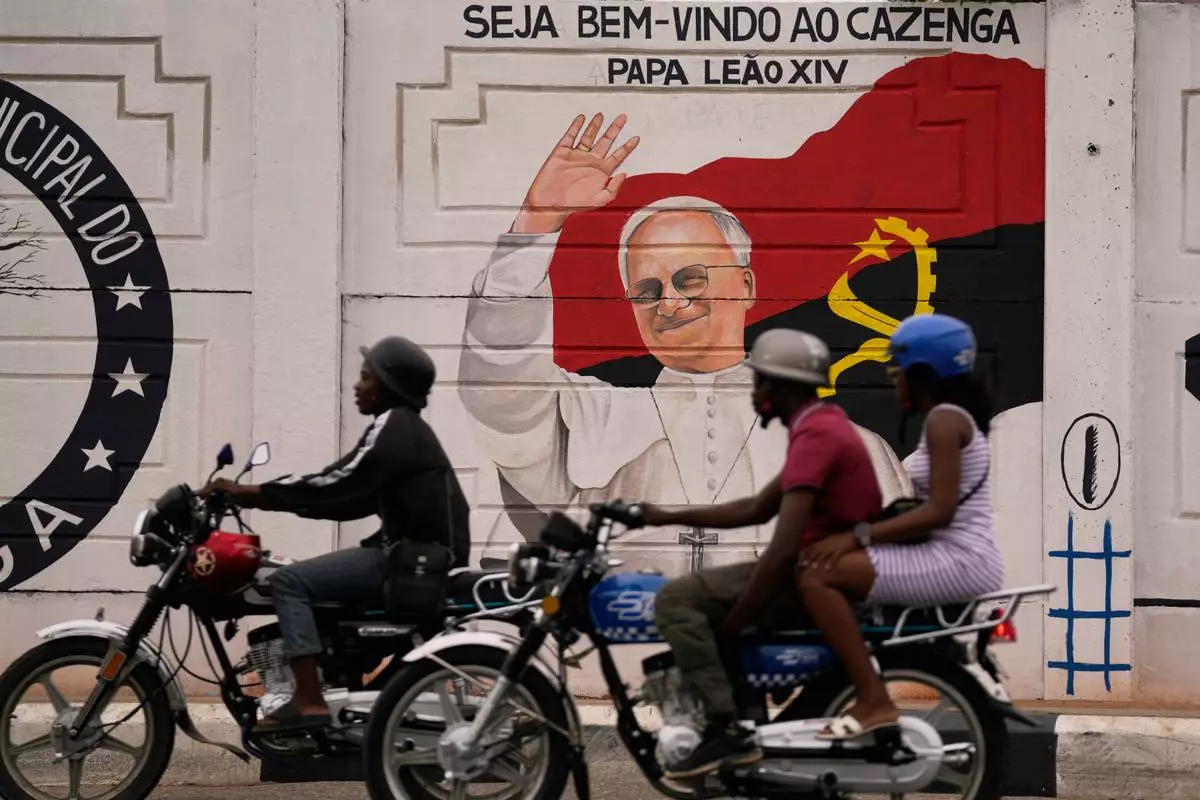
People traveling on a motorcycles ride past a mural featuring Pope Leo XIV, in Luanda, South Africa, Thursday, April 16, 2026. (AP Photo/Themba Hadebe)

People traveling on a motorcycles ride past a mural featuring Pope Leo XIV, in Luanda, South Africa, Thursday, April 16, 2026. (AP Photo/Themba Hadebe)

The plane carrying Pope Leo XIV arrives in Luanda, Angola, Saturday, April 18, 2026 on the sixth day of his 11-day pastoral visit to Africa. (AP Photo/Themba Hadebe)

The plane carrying Pope Leo XIV arrives in Luanda, Angola, Saturday, April 18, 2026 on the sixth day of his 11-day pastoral visit to Africa. (AP Photo/Themba Hadebe)

Pope Leo XIV arrives in procession to celebrate Mass at Yaounde Ville Airport, Cameroon, Saturday, April 18, 2026 on the sixth day of his 11-day pastoral visit to Africa. (AP Photo/Andrew Medichini)

Pope Leo XIV arrives in procession to celebrate Mass at Yaounde Ville Airport, Cameroon, Saturday, April 18, 2026 on the sixth day of his 11-day pastoral visit to Africa. (AP Photo/Andrew Medichini)

Cameroon's President Paul Biya, left, and his wife Chantal wait for the start of a Mass celebrated by Pope Leo XIV at Yaounde Ville Airport, Cameroon, Saturday, April 18, 2026 on the sixth day of his 11-day pastoral visit to Africa. (AP Photo/Andrew Medichini)

Cameroon's President Paul Biya, left, and his wife Chantal wait for the start of a Mass celebrated by Pope Leo XIV at Yaounde Ville Airport, Cameroon, Saturday, April 18, 2026 on the sixth day of his 11-day pastoral visit to Africa. (AP Photo/Andrew Medichini)

People wait for Pope Leo XIV at Yaounde Ville Airport, Cameroon, Saturday, April 18, 2026 on the sixth day of his 11-day pastoral visit to Africa. (AP Photo/Andrew Medichini)

People wait for Pope Leo XIV at Yaounde Ville Airport, Cameroon, Saturday, April 18, 2026 on the sixth day of his 11-day pastoral visit to Africa. (AP Photo/Andrew Medichini)

Pope Leo XIV arrives to celebrate Mass at Yaounde Ville Airport, Cameroon, Saturday, April 18, 2026 on the sixth day of his 11-day pastoral visit to Africa. (AP Photo/Andrew Medichini)

Pope Leo XIV arrives to celebrate Mass at Yaounde Ville Airport, Cameroon, Saturday, April 18, 2026 on the sixth day of his 11-day pastoral visit to Africa. (AP Photo/Andrew Medichini)

Pope Leo XIV arrives to celebrate Mass at Yaounde Ville Airport, Cameroon, Saturday, April 18, 2026 on the sixth day of his 11-day pastoral visit to Africa. (AP Photo/Andrew Medichini)

Pope Leo XIV arrives to celebrate Mass at Yaounde Ville Airport, Cameroon, Saturday, April 18, 2026 on the sixth day of his 11-day pastoral visit to Africa. (AP Photo/Andrew Medichini)

Recommended Articles