As the U.S. and Israel's war with Iran squeezes global oil supplies, travelers have valid reasons to worry about the cost and availability of flights as they plan their late spring and summer trips.
The head of the International Energy Agency has warned that European countries could run low on jet fuel within weeks, forcing the continent's airlines and carriers that fly to Europe to significantly reduce flights. Many airlines have already raised checked bag fees or added fuel surcharges as the global price of jet fuel increased from about $99 per barrel at the end of February to as high as $209 a barrel at the beginning of April.
In a sign of the conflict’s ongoing repercussions for travel, Air Canada said Friday it planned to suspend its service to New York’s John F. Kennedy International Airport from June 1 until Oct. 25 to lower its fuel costs. Other airlines, ranging from U.S. carriers like United and Delta to Air France-KLM, SAS, Philippine Airlines and and Cathay Pacific in Europe and Asia, have reduced routes and either increased ticket prices or said they would hike them if the war keeps oil from passing through the Strait of Hormuz.
“It’s very hard for the airlines to make predictions in this environment, so they’re going to be conservative, and that’s why it’s likely that their prices will remain elevated for some time until things really stabilize,” said Shye Gilad, a former airline captain who now teaches at Georgetown University’s business school.
With airfares and fees on the rise, consumers still can make choices that determine how much of their travel budgets will get taken up by paying to get to and from their destinations.
While consumers may be tempted to see if the war ends before buying airline tickets, the “wait-and-see" approach to booking flights is riskier this year, travel experts say, especially the longer the war goes on and the closer to summer and other peak travel periods it gets.
“Presuming there is a lasting ceasefire — or better yet, peace agreement — it will take a few months for normal levels of jet fuel production and delivery to resume,” airline industry analyst Henry Harteveldt, president of Atmosphere Research Group, said.
Iran's reversal on Saturday of its decision to reopen the Strait of Hormuz and President Donald Trump's insistence on maintaining a U.S. blockade of Iranian ports illustrated the shakiness of prospects for oil flowing reliably again from the Persian Gulf and with it, an easing of the price pressure on airlines and their customers.
“My advice to travelers is this: If you find a flight whose schedule fits yours, with a fare you can afford, and on an airline you can at least tolerate, book it,” Harteveldt said. “But — and I cannot emphasize this enough —do not book a Basic Economy fare,” the cheapest but also the most restrictive airline ticket class.
Along with charging for checked bags and seat selection, most North American airlines do not give refunds or travel credits to passengers with Basic Economy tickets if they don't cancel their trips within 24 hours of purchase. Policies may vary, but spending more for a Standard Economy ticket provides more flexibility, according to Harteveldt.
Paying more up-front for a refundable ticket also prove advantageous because “if the prices start to dramatically change, you can cancel and rebook for the better price,” Gilad said.
Travel experts say that for now, longstanding booking guidance offers a baseline for how early to reserve a flight to get the lowest airfare: international flights are typically the cheapest about two to five months in advance, and domestic trips about three to six weeks out.
Last-minute bookings and other situations that typically command higher prices are likely to keep climbing, Gilad said.
“Remember, especially if you’re traveling on the major airlines, they’re going to have more ability to adjust fares. If you book too close to your travel date, you’re going to pay more," he said. "The farther out you can book, the better.”
Travelers who don't want or need to reach a specific place at a specific time can find it easier to save on airfare. Shifting departure or return dates by a day or two — especially from peak weekends and holidays to midweek — often yields big price differences.
Choosing a different destination also may pay off. A flight from the U.S. may be significantly cheaper to one European city than another. Since budget airlines and trains connect much of Europe, and trains, an airport it cost less to get to can still provide easy access to a lot of other places.
Consumers not set on a certain arrival destination can try tools like Skyscanner’s “Explore Everywhere” feature to look for less-expensive options.
Looking beyond the closest airport for departures also can make a meaningful difference. Major hubs tend to offer more flights and lower fares than smaller regional airports.
In some cases, booking a separate short flight or train to a hub will unlock a cheaper long-haul airfare — think Milwaukee versus Chicago’s O’Hare International Airport.
Sticking to a carry-on bag, when possible, can help avoid the higher fees for checking luggage that many major U.S. airlines introduced recently, including Delta, American, United, Southwest and JetBlue.
If packing light is not an option, plan ahead because airlines typically charge more to add bags closer to departure, especially within 24 hours of a flight.
While fares are going up, the number of airline points needed for many flights has not increased at the same pace, said Adam Morvitz, CEO of points.me, a loyalty rewards redemption search platform.
Airlines still need to fill seats, Morvitz said, and offering more of them for fewer points is one way to do it.
Customers without enough frequent-flyer miles or credit card points for a round-trip ticket still can redeem their travel rewards for one leg of a journey and free up cash for other travel expenses.
Many travelers redeem points directly through their credit card’s booking portal, where they’re typically worth about 1 cent each, Morvitz said. Transferring points to airline loyalty programs often unlocks significantly better value because most major credit card issuers partner with a range of airlines.
Take American Express, whose points can be transferred to Air France’s Flying Blue program. Travelers who don’t want to book with Air France still can use those points with the airline's partner carriers, such as Delta, Morvitz said.
“Points are a form of wealth, and consumers should recognize that those points increase spending power," he said.
For those new to travel credit cards, sign-up bonuses may yield benefits that can be put to use as soon as this summer. Some bonuses are large enough to cover a flight after meeting a minimum spending requirement.
"Even if you were to travel the entire year, taking one trip per month, you would still earn more points simply by signing up for the card than actually sitting on a seat and flying,” Morvitz said.
Points and rewards can add up through everyday spending on groceries, dining and gas. Some cards include perks like free or discounted checked bags.
AP writers Dee-Ann Durbin in Detroit, Mae Anderson in New York and Lisa Leff in London contributed to this story.
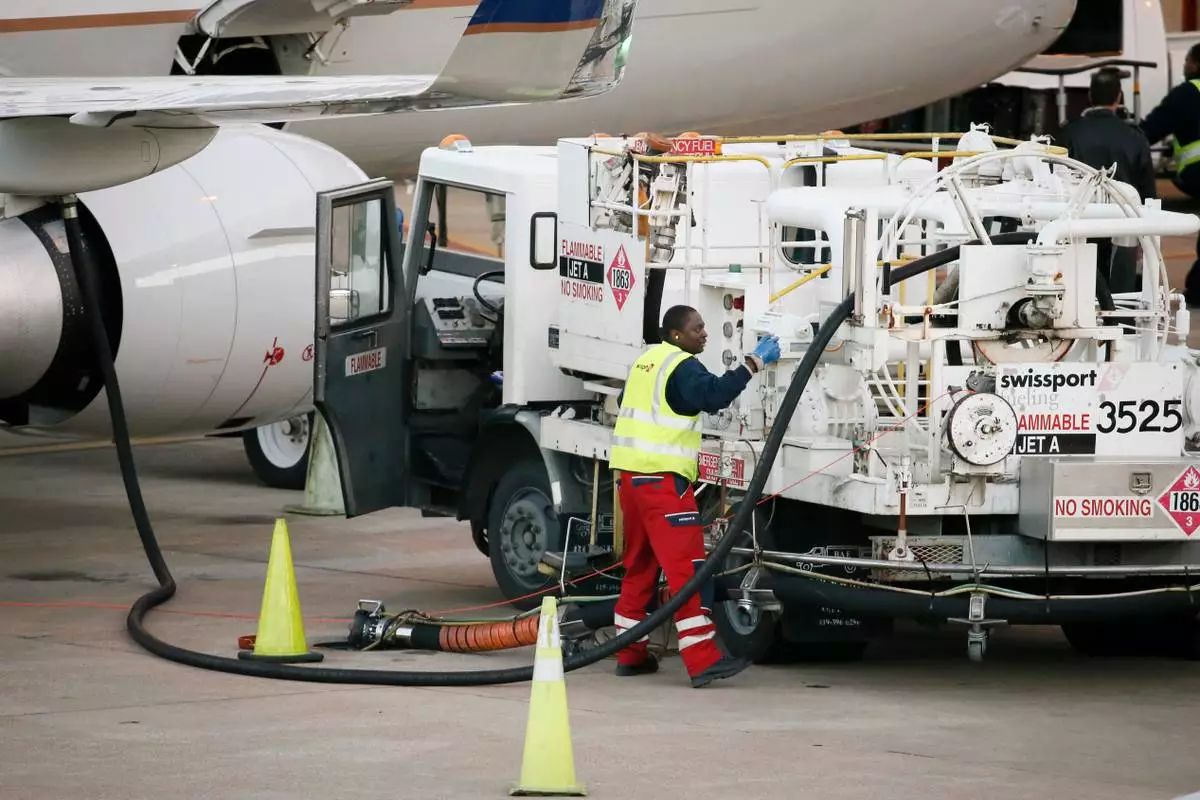
FILE - A worker prepares to fuel a United Express aircraft after it arrived at a gate at Dallas-Fort Worth International Airport, Thursday, Jan. 15, 2015, in Grapevine, Texas. (AP Photo/Tony Gutierrez, File)
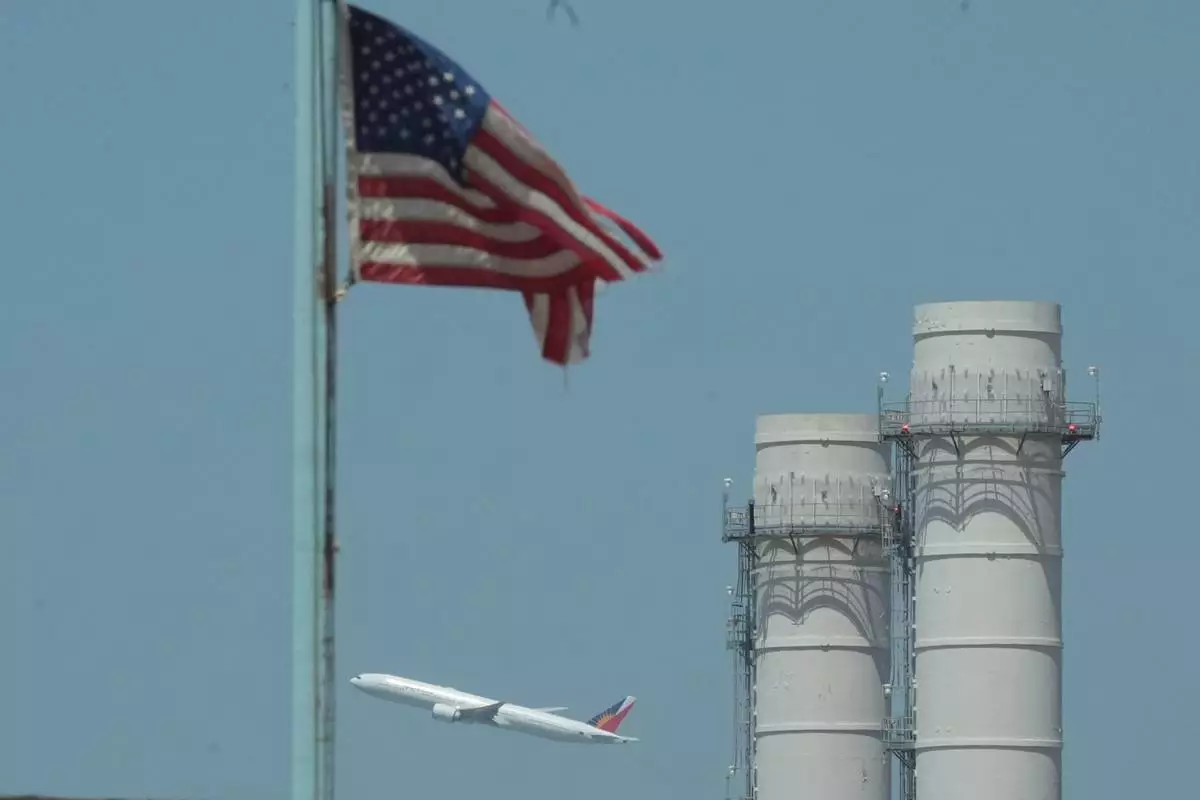
A Philippine Airlines plane takes off from Los Angeles International Airport in El Segundo, Calif., on Friday, April 17, 2026. (AP Photo/Damian Dovarganes)
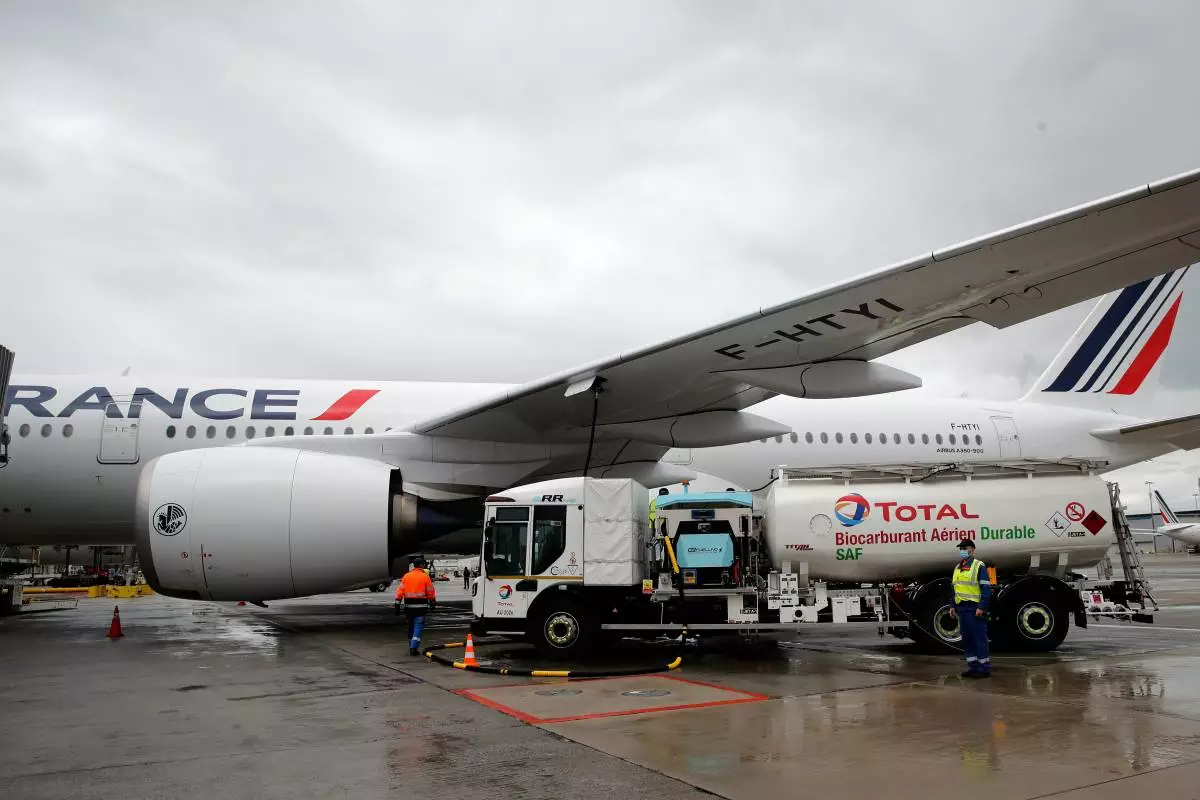
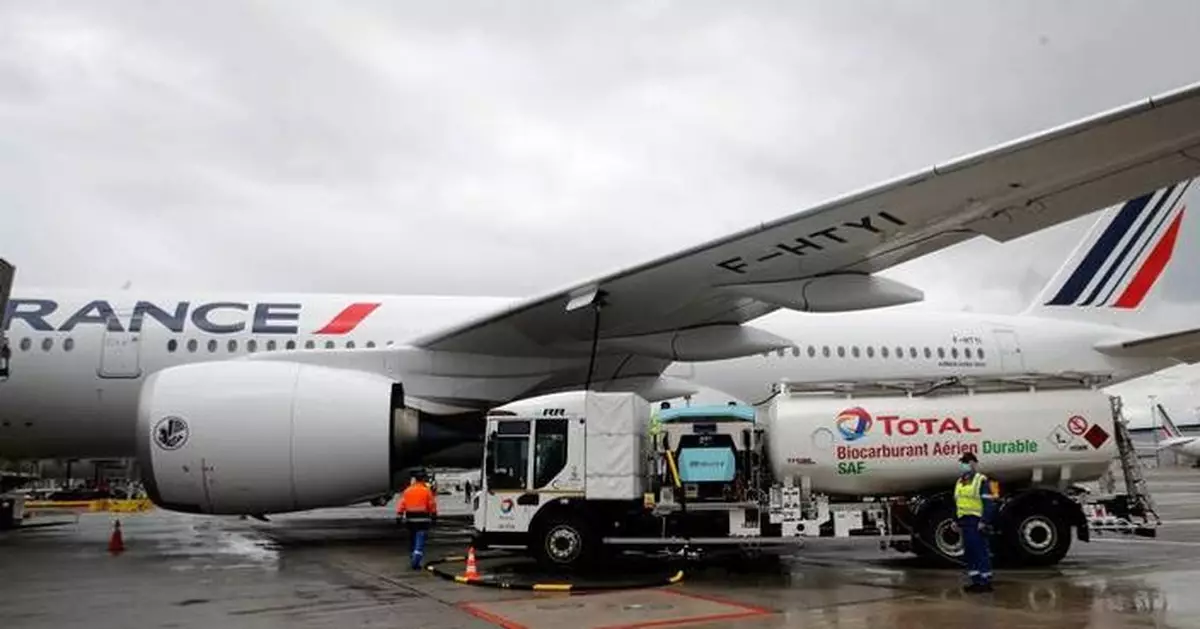
FILE - Workers refuel an Airbus A350 with sustainable aviation fuel at Roissy airport, north of Paris, Tuesday, May 18, 2021. (AP Photo/Christophe Ena, File)
OBBUERGEN, Switzerland (AP) — High-level negotiations in Switzerland seeking a permanent end to the Iran war ended early Monday, with lower-level talks planned for the rest of the week as Iran and the United States agreed to create a “de-confliction cell” to address the fighting in Lebanon.
A statement from mediators Pakistan and Qatar said the cell would include the Lebanese government and would “ensure the adherence of the termination of military operations in Lebanon." But it remains unclear whether that will be enough to stop fighting between the Iranian-backed militia Hezbollah and Israel, which occupies Lebanon and insists it must maintain a free hand to attack militants who are launching attacks into northern Israel.
The U.S. offered no immediate comment, while Iran praised the meditators' work.
The talks marked the start of a 60-day diplomatic process that seeks to reach a permanent deal to end the Iran war. But the fighting in Lebanon remains one of the key sticking points.
Meanwhile, Iran insisted it had again shut the Strait of Hormuz over the weekend, the narrow mouth of the Persian Gulf crucial to energy shipments, while the U.S. said traffic continued.
The negotiations had a tense start Sunday in Switzerland, when Tehran took offense at U.S. President Donald Trump's threat to attack and his warning that Iran's president should watch what he says.
“Iran must immediately stop their highly paid PROXIES in Lebanon from causing trouble,” Trump said on social media. “If they don’t, we’ll hit Iran very hard again, just like we did last week, only harder!!!”
The comments from afar — on social media and to news outlets — complicated efforts by Vice President JD Vance and mediators Pakistan and Qatar to keep Iran engaged in discussions.
“They would do better to be careful about their statements," Iran's lead negotiator, Mohammad Bagher Qalibaf, said on X after Trump's comments. "Our armed forces are prepared to respond to them in a different manner. They may keep talking, it is we who act.”
But later, Iranian Foreign Minister Abbas Araghchi wrote on X that “Tireless Pakistani and Qatari mediation has delivered major progress to end Lebanon War.” He said the first “real test” of negotiations would be whether the deconfliction cell succeeded in halting the fighting in Lebanon.
Vance and U.S. negotiators including Steve Witkoff and Jared Kushner, Trump’s son-in-law, had met with Qalibaf and Araghchi for what Iranian state media said was about 80 minutes.
Pakistan and Qatar after the meeting said lower-level technical talks would continue in Switzerland for the rest of the week. Such talks aim at producing the breakthroughs needed for high-level officials to return and sign agreements.
A senior U.S. diplomat engaged in the talks, speaking on condition of anonymity to describe private discussions, said the talks Sunday included clarifying what Iran meant by recent statements about the Strait of Hormuz. Negotiators also discussed “mechanisms” to ensure the strait remains open and that a ceasefire in southern Lebanon is enforced, along with “robust” discussions on the nuclear issue.
Negotiators are in a 60-day sprint to reach an agreement on the technical details that hold massive implications for the world economy and global security.
“The question before us now is how much more can we accomplish together? Can we turn over a new leaf?” Vance said as the talks began, and asked whether they could “change relations in the Middle East permanently.”
The U.S. wants Iran locked into negotiations over its nuclear program amid concerns it may be used for military purposes, which Iran denies. Vance also wants Tehran to commit to keeping open the Strait of Hormuz, which Iran on Saturday claimed to close. The U.S. has disputed that, saying shipping traffic continued Sunday.
A renewed ceasefire in Lebanon, brokered on Saturday, appeared to be holding, and Israel's military said it would lift movement restrictions for residents near the border with Lebanon on Monday morning — another sign of calm.
But neither Israel nor Hezbollah is a signatory to the U.S.-Iran deal, and Israeli Prime Minister Benjamin Netanyahu has vowed to keep his forces in southern Lebanon until any threat to Israel is eliminated. Hezbollah has refused to halt attacks unless Israel commits to withdrawing.
The agreement signed by Trump and Iranian President Masoud Pezeshkian immediately allows Tehran to sell its oil freely and paves the way for Iran to tap into billions of dollars in assets that are currently frozen. A member of Iran's negotiating team told state television that draft wording was reached about “temporary sanctions waivers for oil and petroleum derivatives."
The agreement also calls for Iran to dilute its stockpile of highly enriched uranium, believed to be buried under nuclear sites that were targeted in U.S. strikes a year ago.
Pezeshkian, however, declared Sunday that "we will never back down from the right to enrich uranium, and the other side is also forced to accept it,” according to Iran’s state media.
Trump, in a telephone interview with Fox News, later warned that the Iranian president should watch what he says and threatened to take over Iran, in comments relayed by a Fox correspondent.
Iran had cautiously approached the talks given its previous experience with U.S. negotiations on the nuclear issue, which twice in the past year were interrupted by military strikes.
Trump and Vance have come under searing criticism from parts of their own party for the deal, with Republican hard-liners unfavorably likening it to the nuclear agreement signed by the Obama administration that Trump and Republicans have insisted did nothing to terminate Iran’s nuclear program.
The new agreement says commercial vessels can pass through the Strait of Hormuz for 60 days without charge, but does not preclude future fees imposed by Iran. Trump made his own threat Saturday to levy U.S. tolls if there is no deal with Iran in 60 days, insisting that the money would be for “services rendered as the Guardian Angel to the countries of the Middle East.”
The Trump administration has been working to reassure global markets that the war has been merely a blip on oil prices, as Americans complain about high gasoline prices ahead of peak summer travel. After the deal was announced, oil futures dropped almost 8%.
Kim reported from Washington. Associated Press writers Munir Ahmed in Islamabad, Amir Vahdat in Tehran, Iran, and Melanie Lidman in Tel Aviv, Israel, contributed to this report.

A sign for the Lake Lucerne Summit at the Bürgenstock during a meeting between U.S. Vice President JD Vance and Pakistan's Prime Minister Shehbaz Sharif for high-level talks aimed at advancing a deal to end the Middle East conflict, in Obbuergen, Switzerland, Sunday, June 21, 2026. (Nathan Howard/Pool Photo via AP)
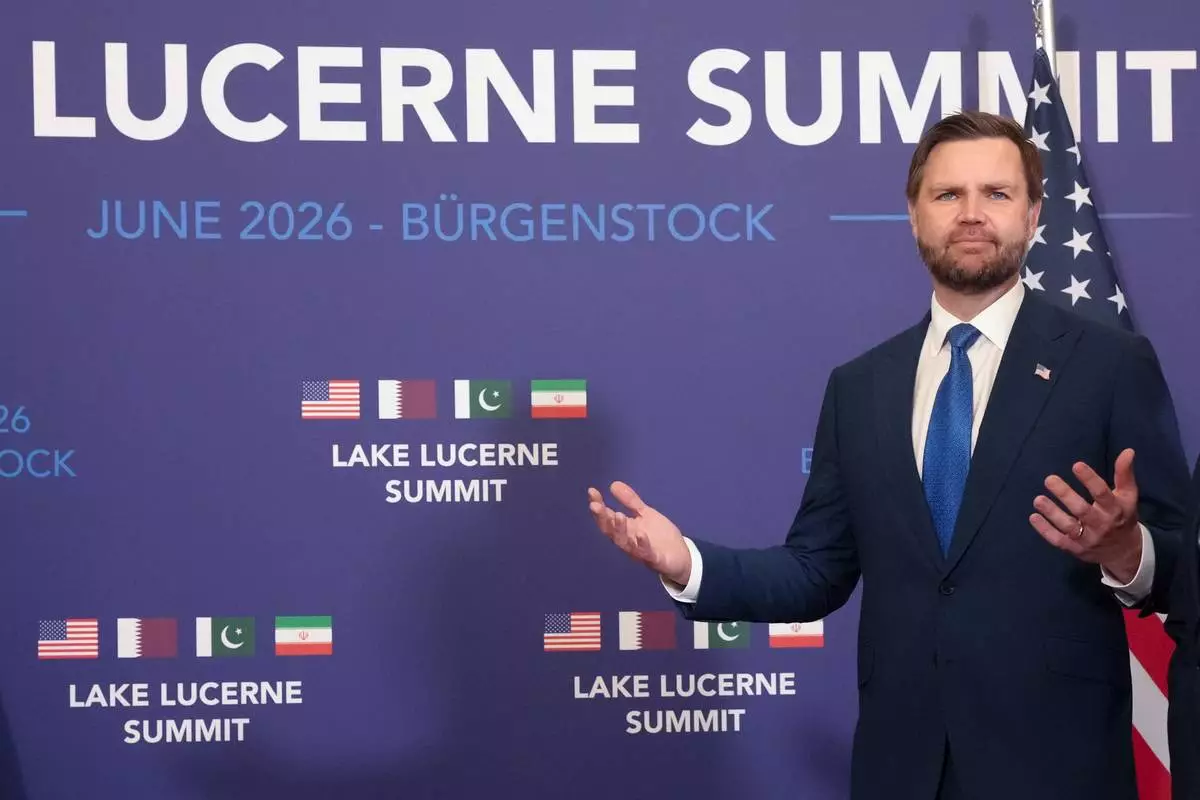
U.S. Vice President JD Vance waits to meet with Pakistan's Prime Minister Shehbaz Sharif during high-level talks aimed at advancing a deal to end the Middle East conflict, at the Bürgenstock Resort in Obbuergen, Switzerland, Sunday, June 21, 2026. (Nathan Howard/Pool Photo via AP)
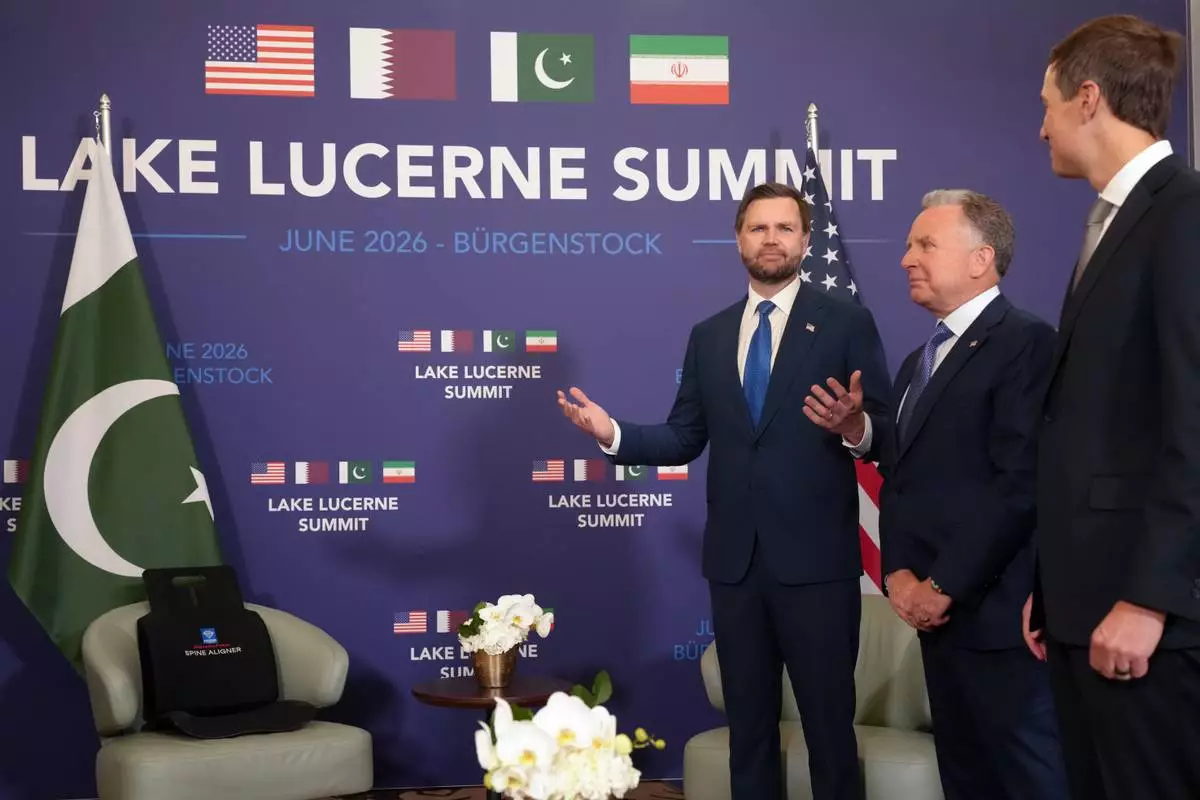
U.S. Vice President JD Vance, left, reacts next to U.S. President Donald Trump's envoys Steve Witkoff, second right, and Jared Kushner, right, while waiting to meet with Pakistan's Prime Minister Shehbaz Sharif for high-level talks aimed at advancing a deal to end the Middle East conflict, at the Bürgenstock Resort in Obbuergen, near Lucerne, in Switzerland, Sunday, June 21, 2026. (Nathan Howard/Pool Photo via AP)
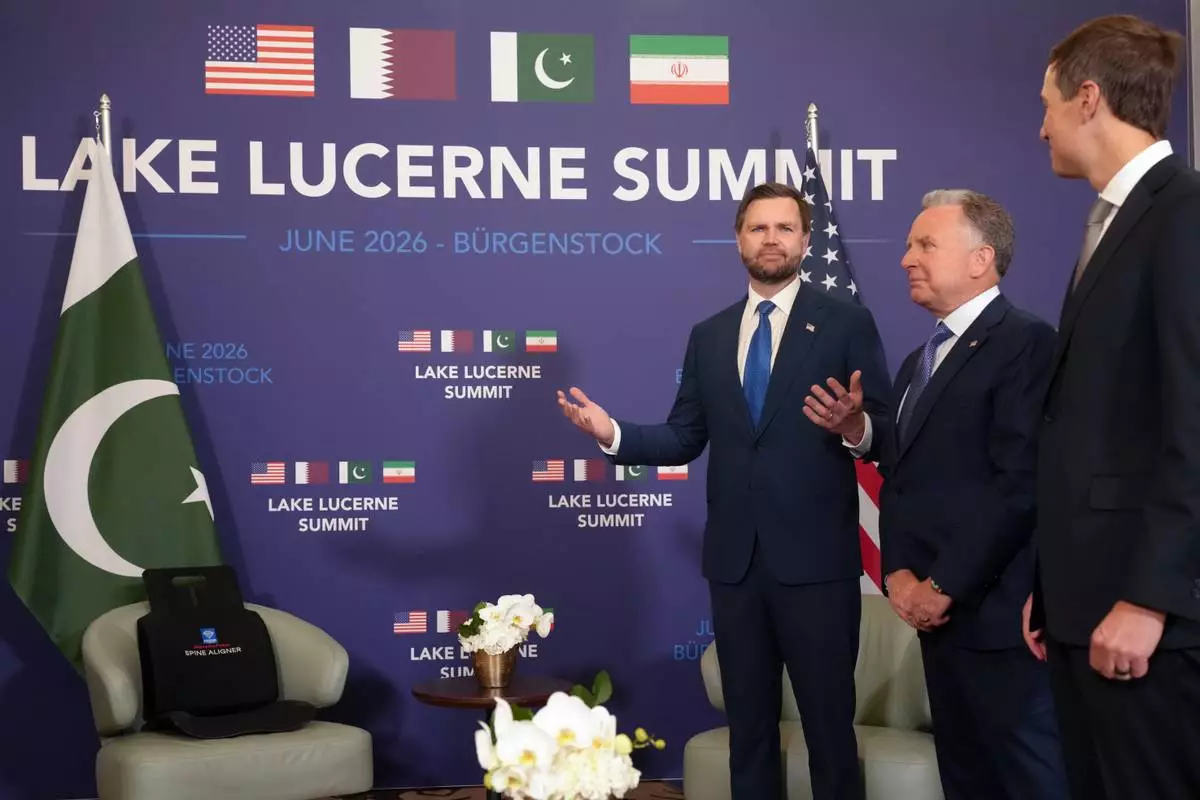
U.S. Vice President JD Vance, left, reacts next to U.S. President Donald Trump's envoys Steve Witkoff, second right, and Jared Kushner, right, while waiting to meet with Pakistan's Prime Minister Shehbaz Sharif for high-level talks aimed at advancing a deal to end the Middle East conflict, at the Bürgenstock Resort in Obbuergen, near Lucerne, in Switzerland, Sunday, June 21, 2026. (Nathan Howard/Pool Photo via AP)
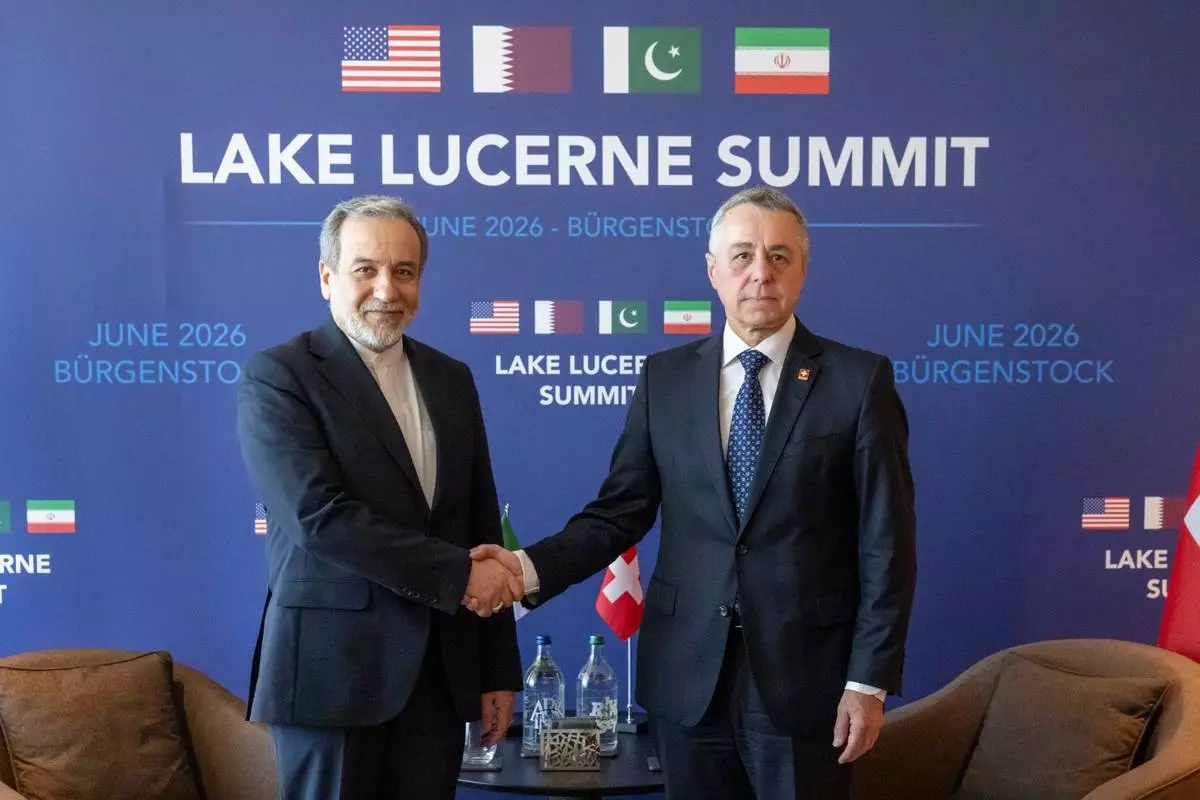
Iran’s Foreign Minister Abbas Araghchi, left, and Switzerland's Foreign Minister Federal councillor Ignazio Cassis, right, shake hands at bilateral discussions at the Buergenstock resort in Obbuergen, near Lucerne, Switzerland, Sunday, June 21, 2026. (Urs Flueeler/Keystone via AP)
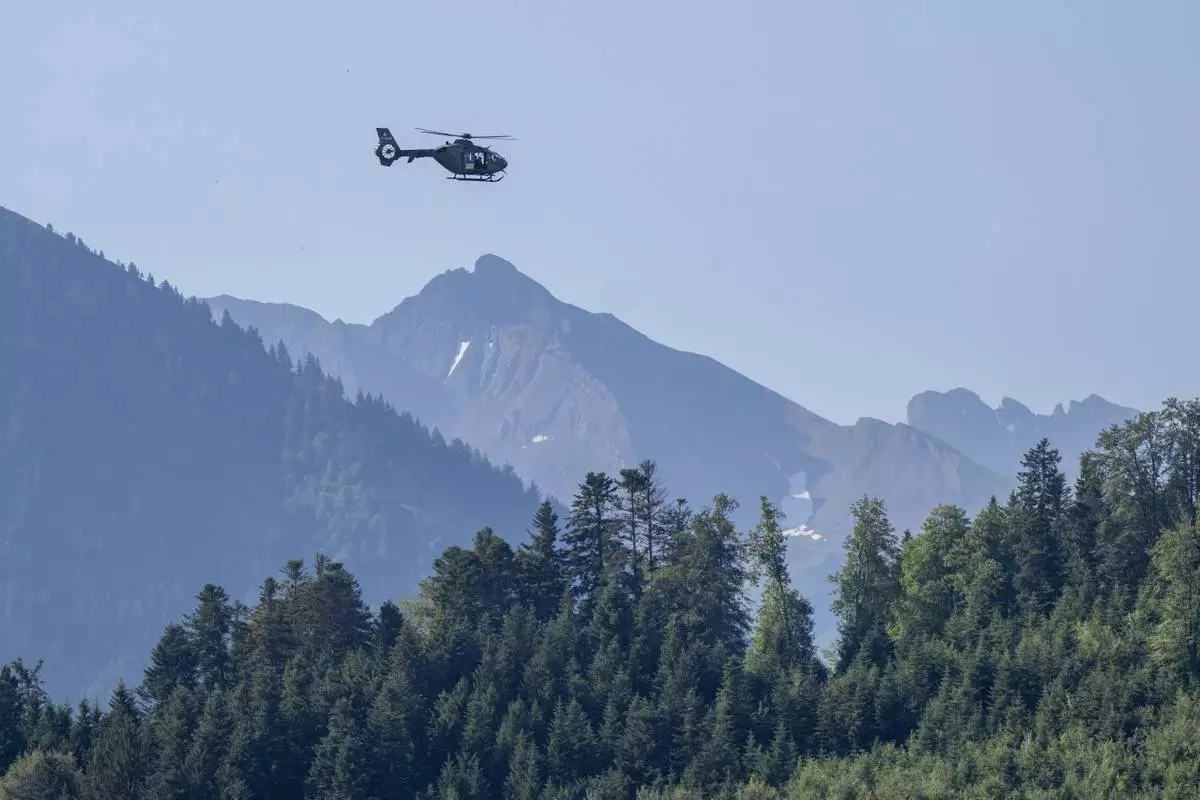
A Swiss Army Helicopter flies around the Buergenstock resort in Obbuergen, near Lucerne, Switzerland, Sunday, June 21, 2026. (Urs Flueeler/Keystone Pool via AP)
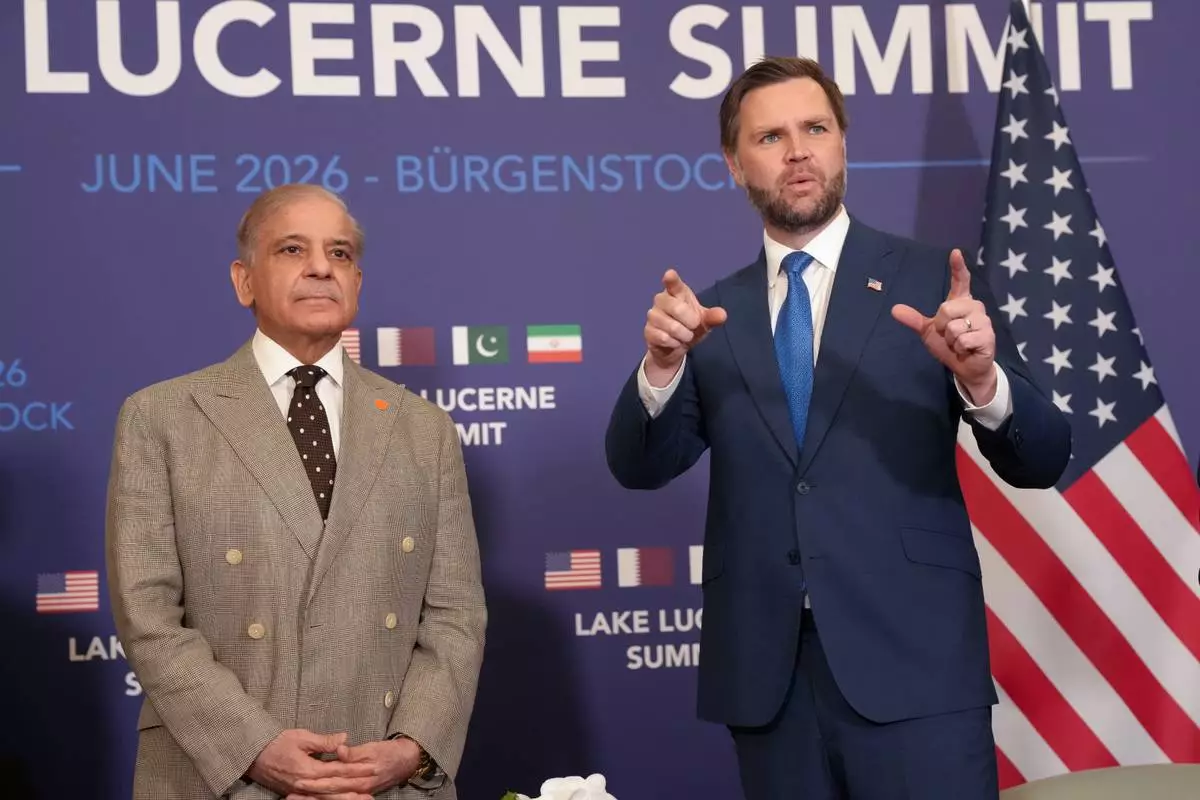
U.S. Vice President JD Vance, right, meets with Pakistan's Prime Minister Shehbaz Sharif, during high-level talks aimed at advancing a deal to end the Middle East conflict, at the Bürgenstock Resort in Obbuergen, near Lucerne, in Switzerland, Sunday, June 21, 2026. (Nathan Howard/Pool Photo via AP)

A convoy with U.S. Vice President JD Vance arrives at the Bürgenstock Resort in Obbuergen, near Lucerne, in Switzerland Sunday, June 21, 2026. (Urs Flueeler/Keystone, Pool Photo via AP)
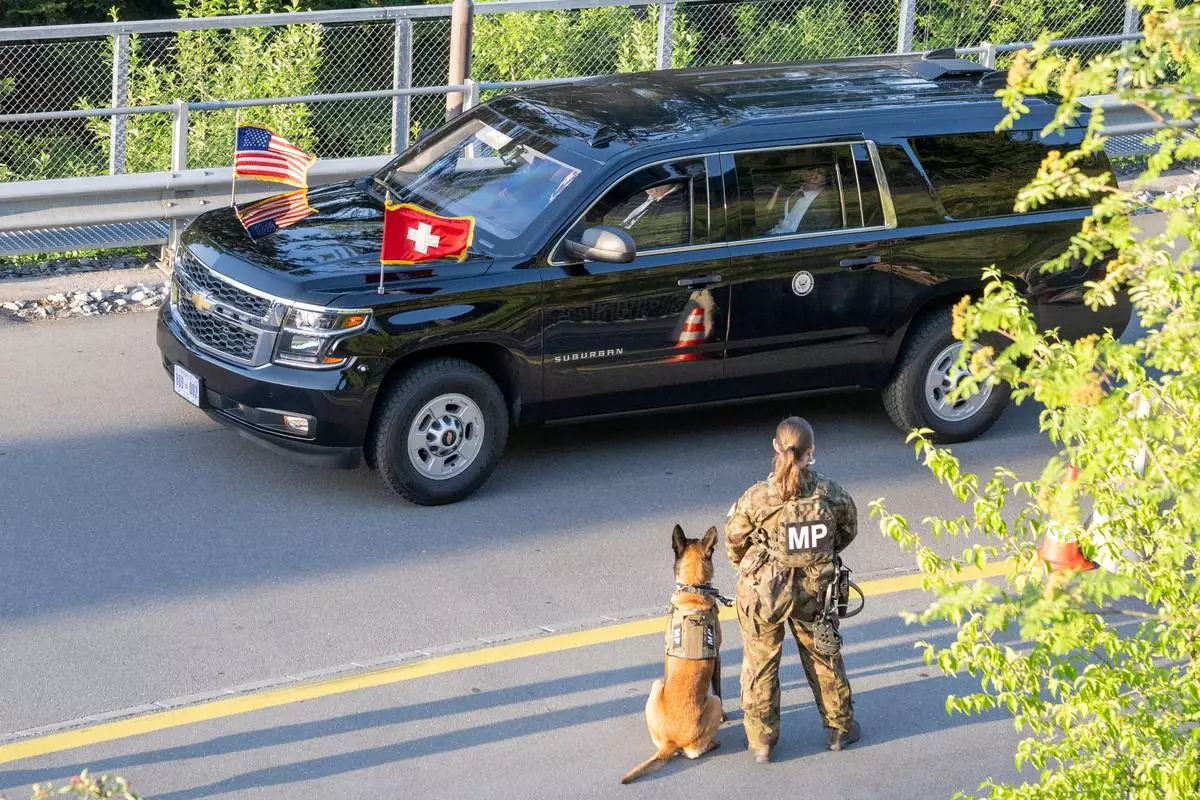
A convoy with U.S. Vice President JD Vance arrives at the Bürgenstock Resort in Obbuergen, near Lucerne, in Switzerland Sunday, June 21, 2026. (Urs Flueeler/Keystone, Pool Photo via AP)

A convoy with U.S. Vice President JD Vance arrives at the Bürgenstock Resort in Obbuergen, near Lucerne, in Switzerland Sunday, June 21, 2026. (Urs Flueeler/Keystone, Pool Photo via AP)
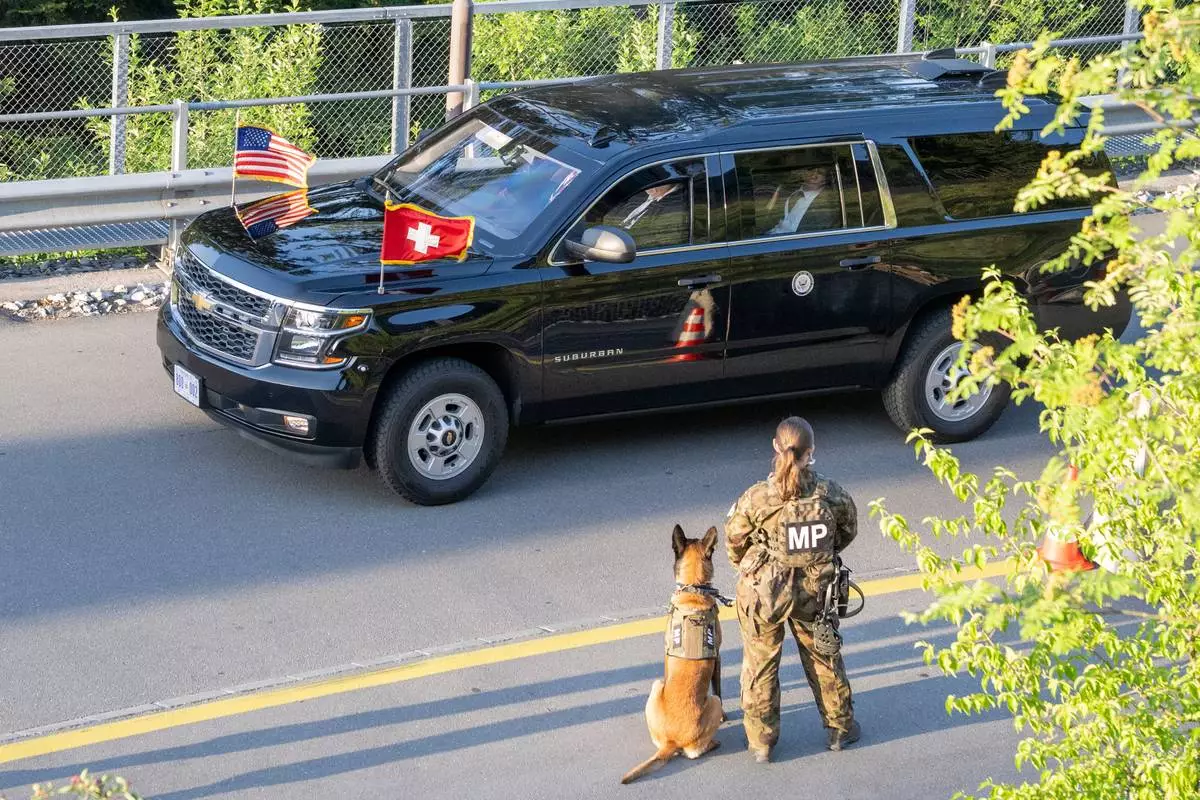
A convoy with U.S. Vice President JD Vance arrives at the Bürgenstock Resort in Obbuergen, near Lucerne, in Switzerland Sunday, June 21, 2026. (Urs Flueeler/Keystone, Pool Photo via AP)
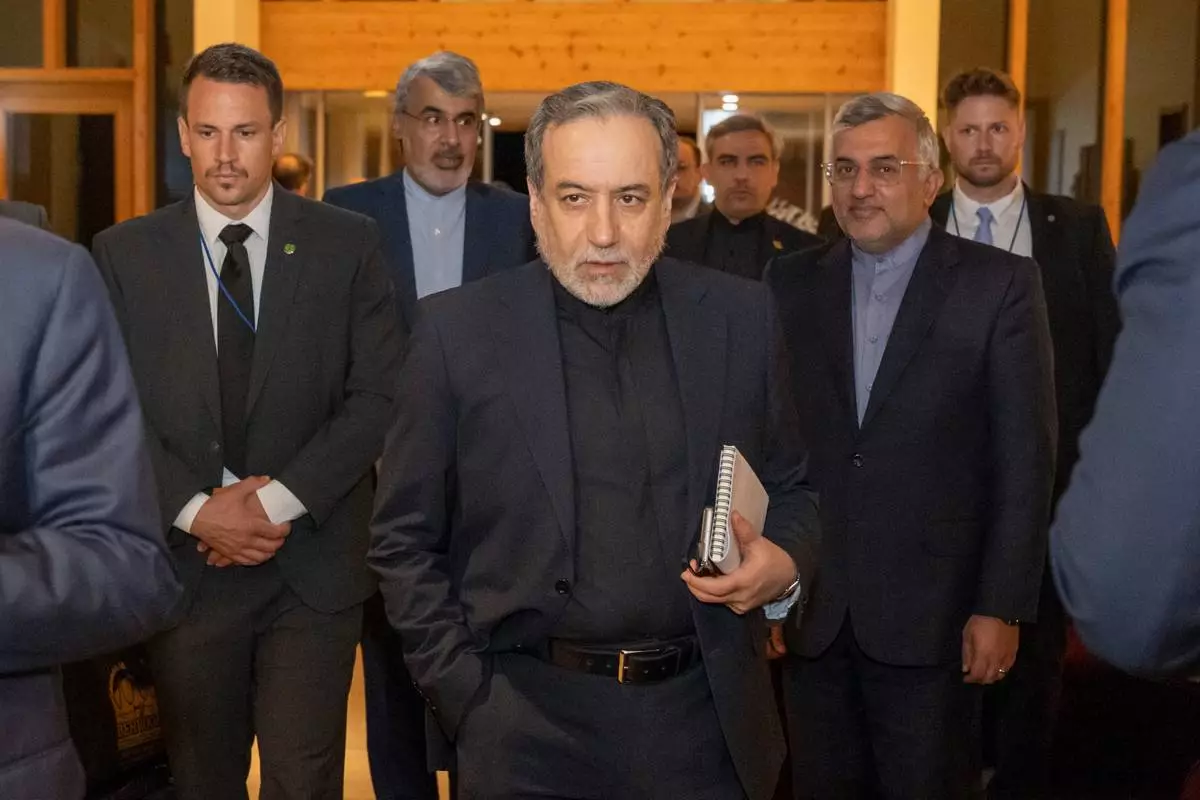
Iranian Foreign Minister Seyyed Abbas Araghchi, center, arrives at the Buergenstock resort in Obbuergen, near Lucerne, Switzerland, early Sunday, June 21, 2026. (Urs Flueeler/Keystone, Pool via AP)
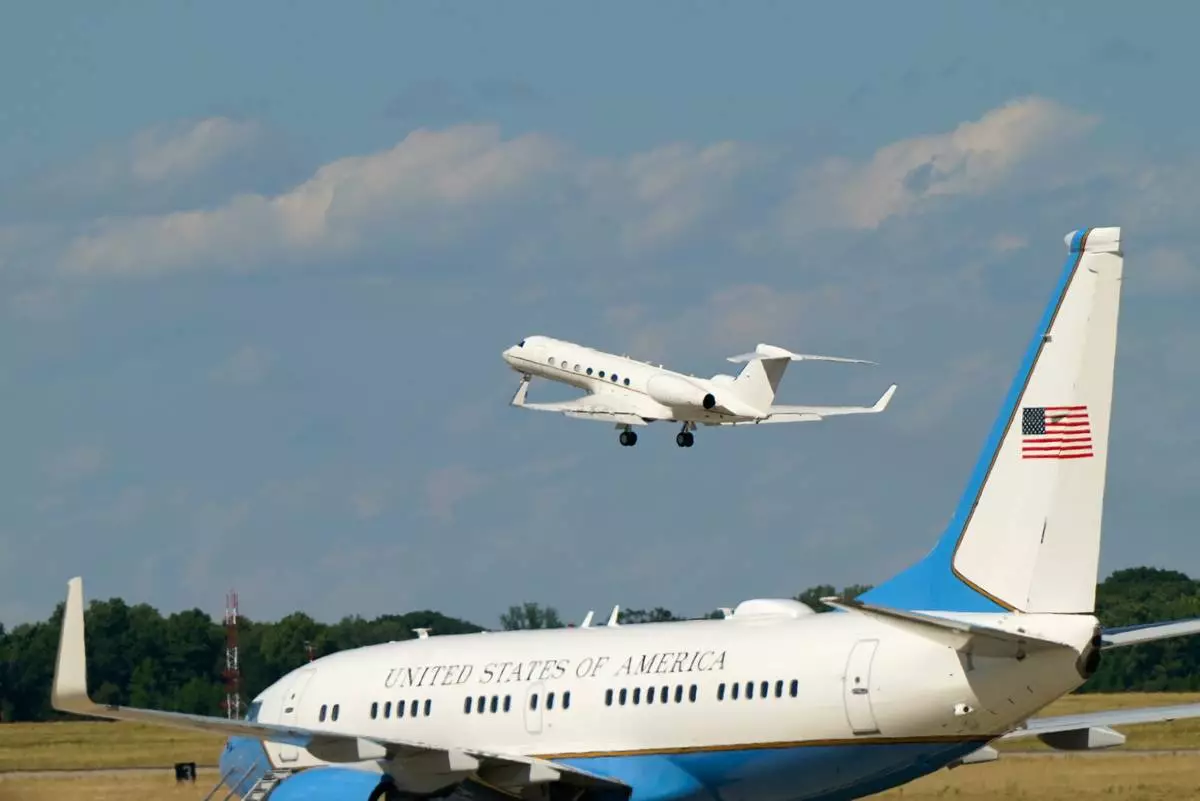
Air Force Two, with Vice President JD Vance and second lady Usha Vance on board, departs Joint Base Andrews, Md., Saturday, June 20, 2026, en route to Switzerland. (Elizabeth Frantz/Pool Photo via AP)

Vice President JD Vance speaks to reporters at Joint Base Andrews, Md., Saturday, June 20, 2026, en route to Switzerland. (Elizabeth Frantz/Pool Photo via AP)