Skip to Content Facebook Feature Image

Chernobyl's radioactive landscape is a testament to nature’s resilience and survival spirit

News

Chernobyl's radioactive landscape is a testament to nature’s resilience and survival spirit
News

News

Chernobyl's radioactive landscape is a testament to nature’s resilience and survival spirit

2026-04-20 03:27 Last Updated At:03:30

CHERNOBYL, Ukraine (AP) — On contaminated land that is too dangerous for human life, the world’s wildest horses roam free.

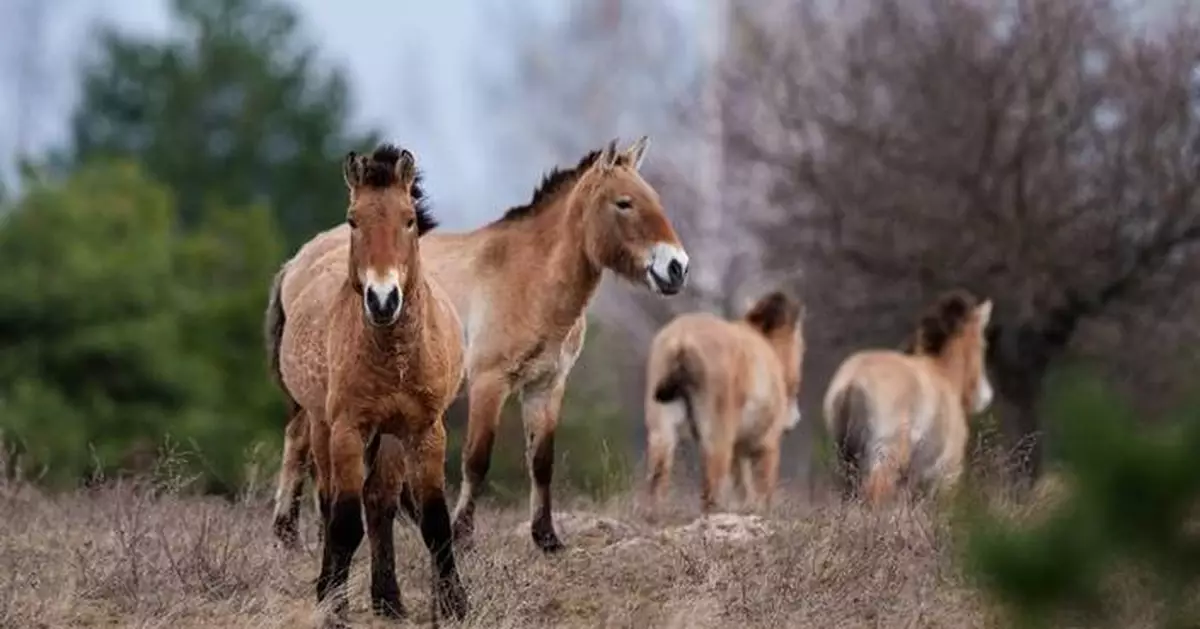
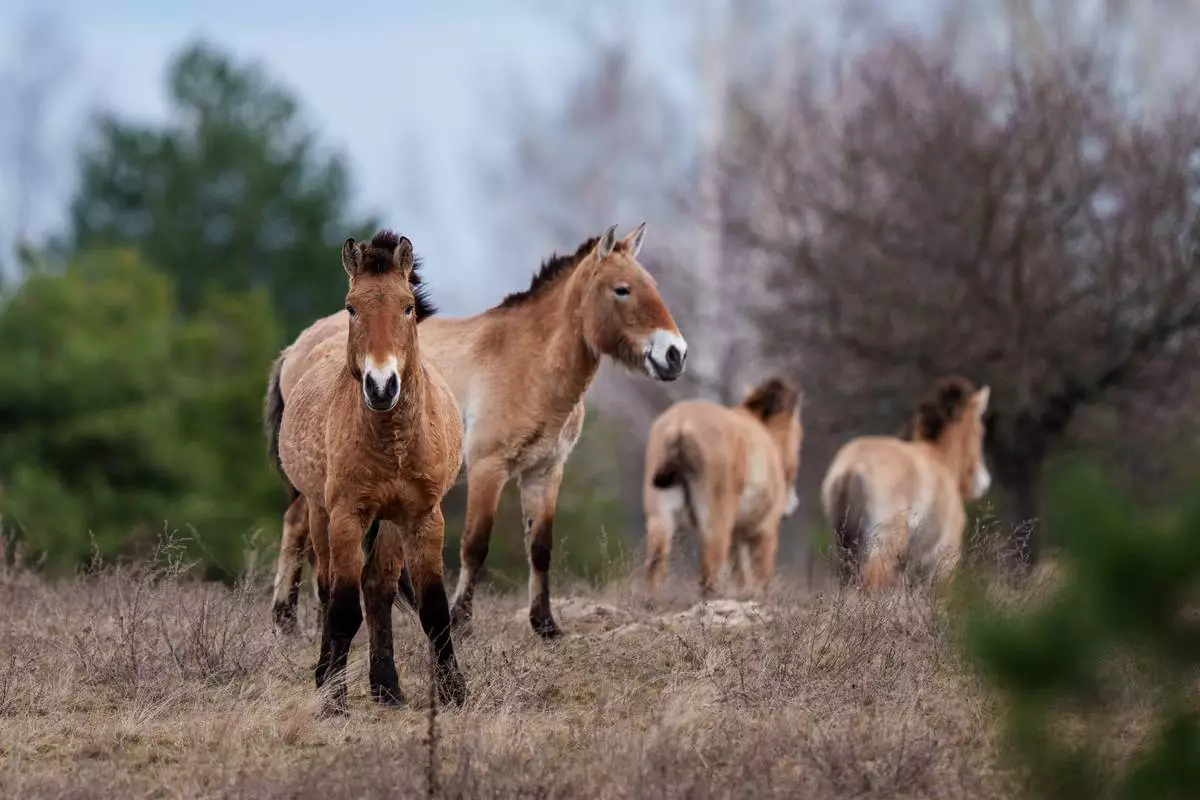
Across the Chernobyl exclusion zone, Przewalski’s horses — stocky, sand-colored and almost toy-like in appearance — graze in a radioactive landscape larger than Luxembourg.

On April 26, 1986, an explosion at the nuclear power plant in Ukraine sent radiation across Europe and forced the evacuation of entire towns, displacing tens of thousands. It was the worst nuclear disaster in history.

Four decades on, Chernobyl — which is transliterated as “Chornobyl” in Ukraine — remains too dangerous for humans. But the wildlife has moved back in.

Wolves now prowl the vast no-man’s-land spanning Ukraine and Belarus, and brown bears have returned after more than a century. Populations of lynx, moose, red deer and even free-roaming packs of dogs have rebounded.

Przewalski’s horses, native to Mongolia and once on the brink of disappearing, were introduced here in 1998 as an experiment.

Known as “takhi” in Mongolia (“spirit”), the horses are distinct from domestic breeds, with 33 pairs of chromosomes, compared with 32 in domesticated horses. The modern name comes from the Russian explorer who first formally identified them.

“The fact that Ukraine now has a free-ranging population is something of a small miracle,” said Denys Vyshnevskyi, the zone’s lead nature scientist.

With human pressure gone, parts of the exclusion zone now resemble European landscapes from centuries past, he said, adding: “Nature recovers relatively quickly and effectively.”

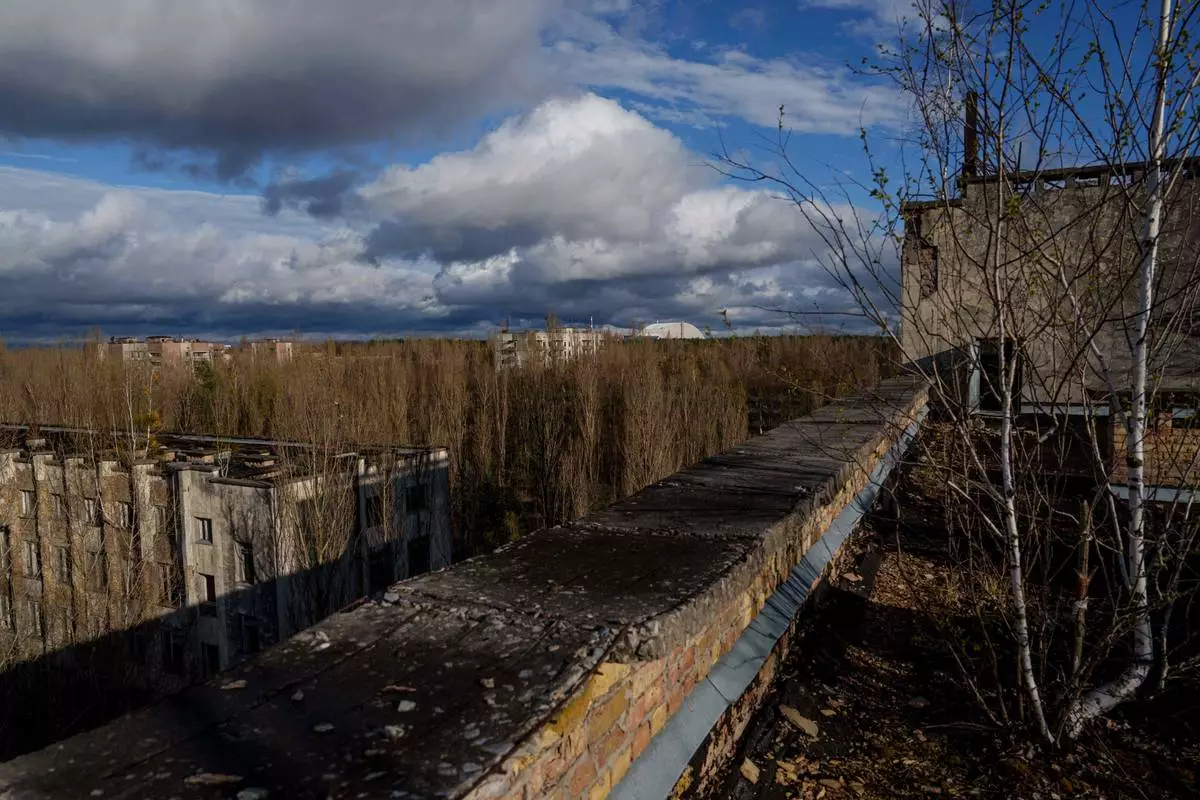
The transformation is visible everywhere. Trees pierce abandoned buildings, roads dissolve into forest, and weathered Soviet-era signs stand beside leaning wooden crosses in overgrown cemeteries.

Hidden cameras show the horses adapting in unexpected ways. They seek shelter in crumbling barns and deserted homes, using them to escape harsh weather and insects — even bedding down inside.

The horses live in small social groups — typically one stallion with several mares and their young — alongside separate bands of younger males. Many died after their introduction, but others adapted.

Declared extinct in the wild in 1969, Przewalski’s horses survived only through captive breeding before reintroduction efforts rebuilt a global population of about 3,000, according to Florian Drouard, an operations manager at a program for the horses at Cevennes National Park in southern France.

“This species is a remarkable example of successful reintroduction,” he said. “While it is still far from being fully secure, it has shown that with proper preparation, a species kept in captivity can regain the social and ecological behaviors needed to live freely.”

The horse, he said, has proved unexpectedly adaptable, adapted to open landscapes but now also thriving in Ukraine's partly forested environment.

Tracking the animals at Chernobyl takes time. Vyshnevskyi often drives alone for hours, setting motion-sensitive camera traps in camouflaged casings attached to trees.

Despite persistent radiation, scientists have not recorded widespread die-offs, though subtler effects are evident. Some frogs have developed darker skin, and birds in higher-radiation areas are more likely to develop cataracts.

However, new threats have emerged.

Russia’s 2022 invasion brought fighting through the exclusion zone as troops advanced toward Kyiv, digging defenses into contaminated soil. Fires linked to military activity swept through forests.

Harsh wartime winters have also taken a toll. Damage to the power grid left surrounding managed areas without resources, and scientists report increases in fallen trees and dead animals — casualties of both extreme conditions and hastily built fortifications.

“Most forest fires are caused by downed drones,” said Oleksandr Polischuk, who leads a firefighting unit in the zone. “Sometimes we have to travel dozens of kilometers to reach them.”

Fires can send radioactive particles back into the air.

Today, the zone is no longer just an accidental refuge for wildlife. It has become a heavily monitored military corridor, marked by concrete barriers, barbed wire and minefields — a landscape of what some describe as grim beauty.

Personnel rotate in and out to limit radiation exposure. Chernobyl is likely to remain off-limits for generations — too dangerous for people, yet full of life.

“For those of us in conservation and ecology, it’s kind of a wonder,” Vyshnevskyi said. “This land was once heavily used — agriculture, cities, infrastructure. But nature has effectively performed a factory reset.”

Associated Press writers Dmytro Zhyhinas and Vasilisa Stepanenko in Chernobyl, Ukraine, contributed to this report.
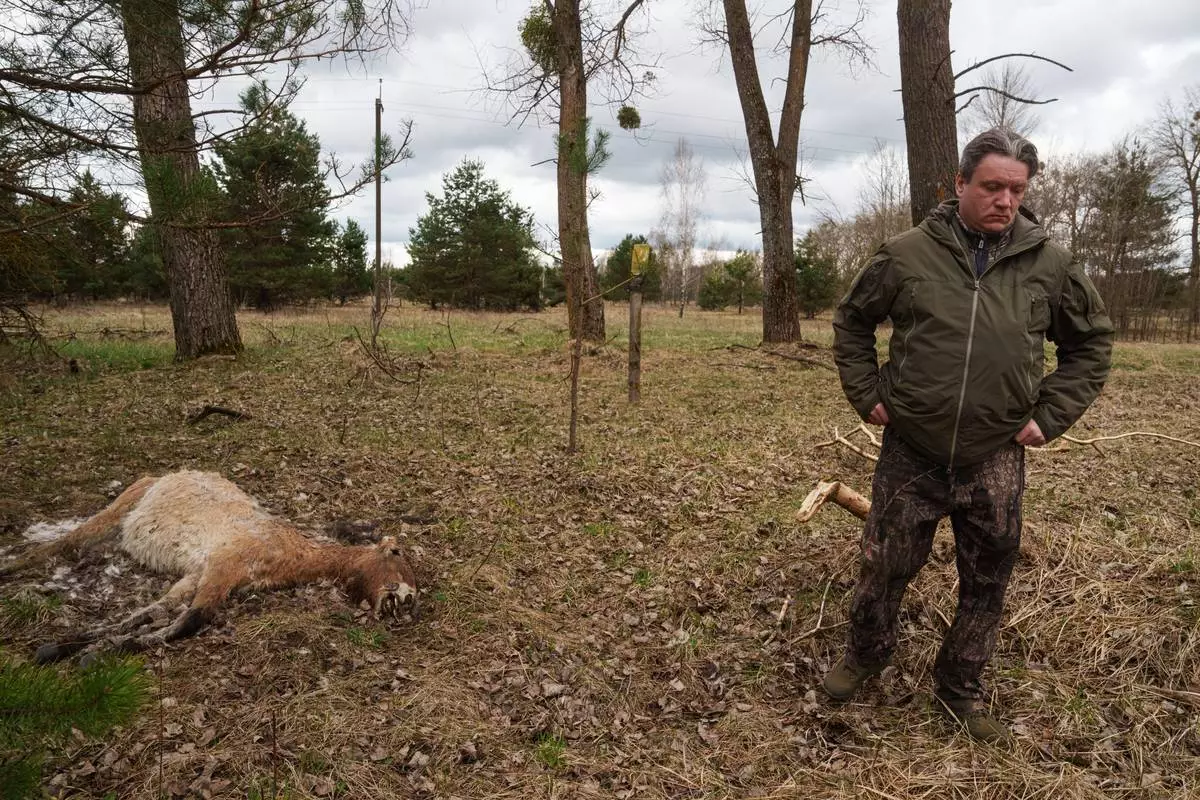
Denys Vyshnevskyi, researcher at the Chornobyl Radiation and Ecological Biosphere Reserve, stands in front of a dead wild Przewalski horse in a forest inside the Chernobyl exclusion zone, Ukraine, Wednesday, April 8, 2026. Chornobyl is the Ukrainian name for the city. (AP Photo/Evgeniy Maloletka)
Denys Vyshnevskyi, researcher at the Chornobyl Radiation and Ecological Biosphere Reserve, stands in front of a dead wild Przewalski horse in a forest inside the Chernobyl exclusion zone, Ukraine, Wednesday, April 8, 2026. Chornobyl is the Ukrainian name for the city. (AP Photo/Evgeniy Maloletka)

Abandoned houses are seen overgrown with vegetation at the Chernobyl exclusion zone in Prypiat, Ukraine, Monday, April 6, 2026. Chornobyl is the Ukrainian name for the city. (AP Photo/Evgeniy Maloletka)
Abandoned houses are seen overgrown with vegetation at the Chernobyl exclusion zone in Prypiat, Ukraine, Monday, April 6, 2026. Chornobyl is the Ukrainian name for the city. (AP Photo/Evgeniy Maloletka)

Wild Przewalski horses graze in a forest inside the Chernobyl exclusion zone, Ukraine, Wednesday, April 8, 2026. Chornobyl is the Ukrainian name for the city. (AP Photo/Evgeniy Maloletka)

Wild Przewalski horses graze in a forest inside the Chernobyl exclusion zone, Ukraine, Wednesday, April 8, 2026. Chornobyl is the Ukrainian name for the city. (AP Photo/Evgeniy Maloletka)

DENVER (AP) — Anthony Edwards scored 30 points, Julius Randle added 24 and the Minnesota Timberwolves rallied past the Denver Nuggets 119-114 on Monday night to tie their Western Conference playoff series at one game apiece.

Denver had won 13 straight since losing on March 18.

Edwards turned the ball over with 31 seconds left and Christian Braun got fouled at the other end, but he missed one of two free throws, leaving Denver trailing 115-114 with 19 seconds remaining.

After a Minnesota timeout, Randle sank two free throws and Donte DiVincenzo added a breakaway dunk to cap the comeback from a 19-point first-quarter deficit.

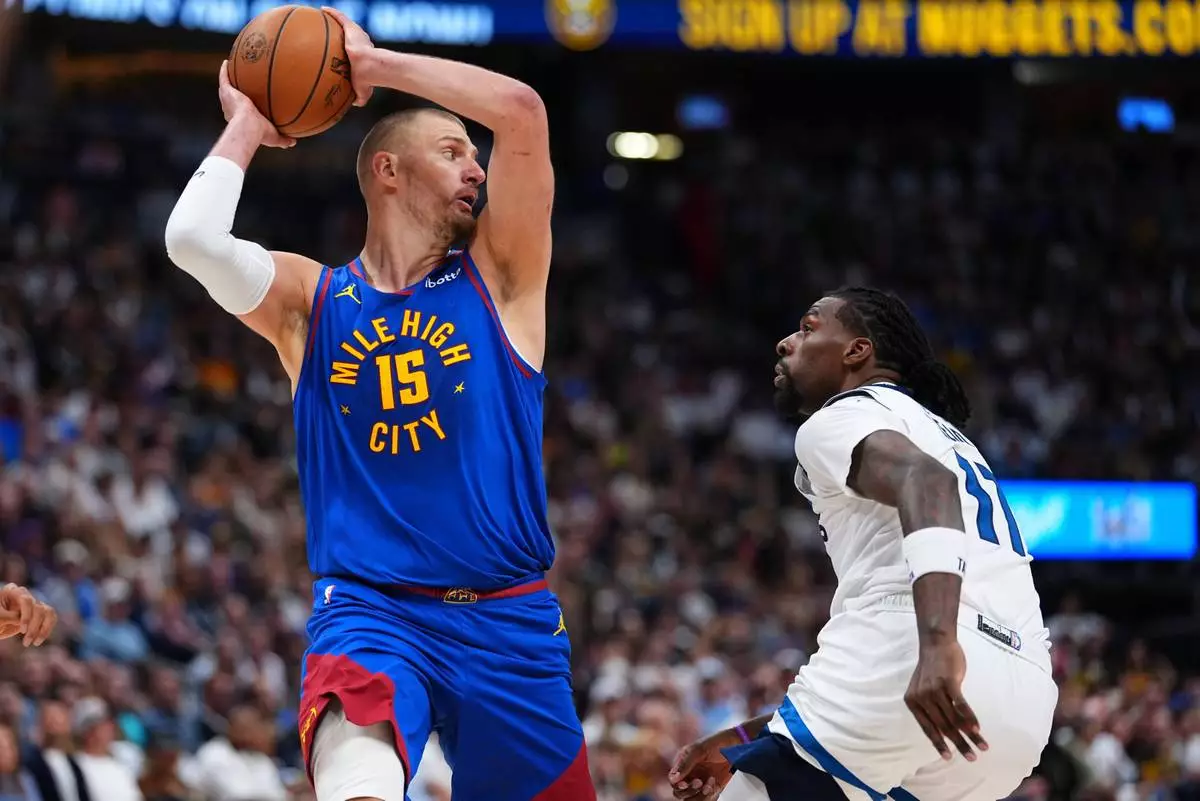
Jamal Murray scored 30 points and Nikola Jokic had 24 points, 15 rebounds and eight assists. But the Nuggets' All-Star duo shot a combined 2 for 12 in the fourth quarter, managing a measly four points as the Wolves evened a best-of-seven series that shifts to Minneapolis for Game 3 on Thursday night.

Denver blew a chance to take control against its Northwest Division rival. The Nuggets are 8-0 in their history when winning the first two games of a playoff series, and the Wolves are 0-8 when dropping Games 1 and 2.

Murray sank a 51-foot 3-pointer at the halftime buzzer to tie it at 64. Jokic came on strong after a quiet start, scoring 16 points in the third quarter when the Nuggets took a 93-90 lead.

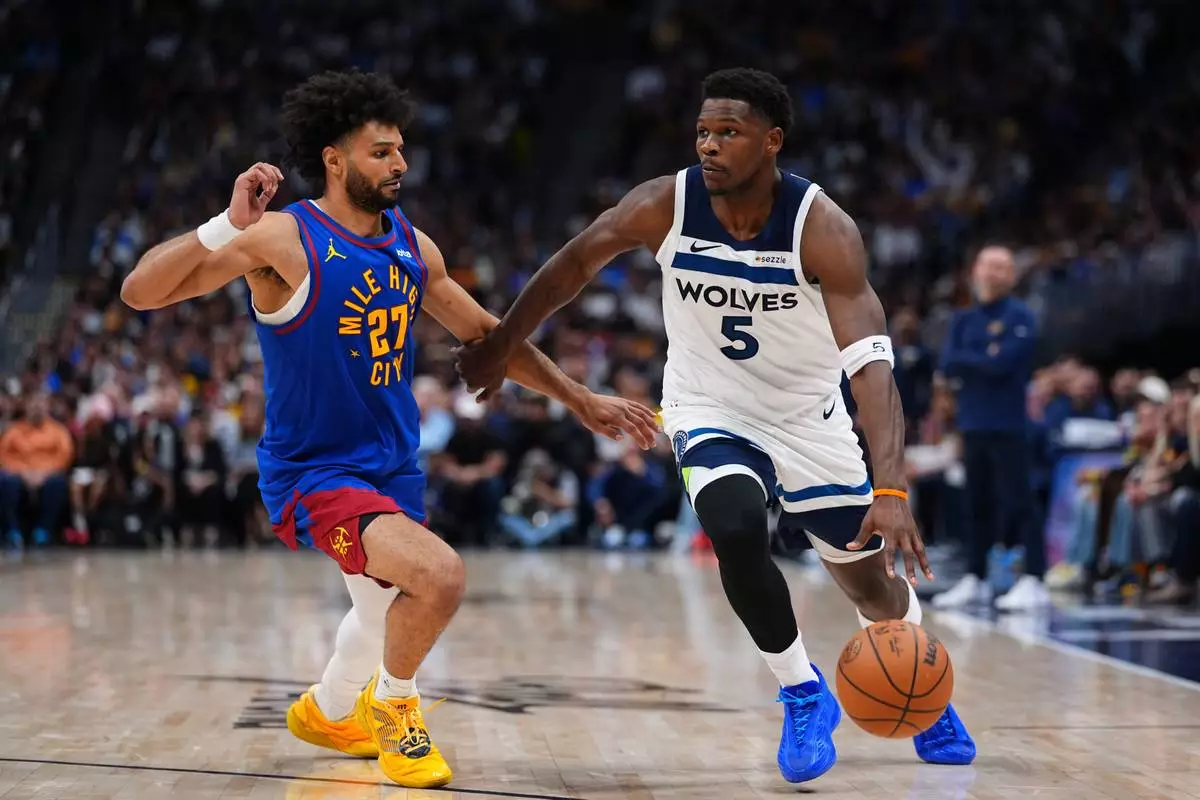
Edwards looked much better than he did during his 22-point effort in Game 1, when his rust from a bum knee was apparent. This time, he drove to the basket more instead of settling for jumpers.

Minnesota, which outscored Denver 20-3 in second-chance points, rallied from an early 19-point deficit and surged to a 64-56 lead only to watch the Nuggets score the last eight points of the first half.

Murray, who missed all eight of his 3-pointers in the series opener, started things off Monday night with a 3 and was 5 for 7 from deep before halftime. In the first quarter, he had a pair of four-point plays, fouled both times by Ayo Dosunmu.

Before tipoff, Wolves coach Chris Finch complained for a third straight day about the free-throw disparity in Game 1, when the Nuggets outscored Minnesota 30-14 from the stripe. He cracked that maybe his players need to “start flopping, too.”

Nuggets coach David Adelman pointed out that some of Murray’s 16 free throws — he made all of them — were because of flagrant and technical fouls by Minnesota in a particularly physical Game 1.

The Wolves, despite their coach's umbrage, settled for jumpers early on in Game 2 and were whistled for 11 fouls to Denver's four in the first quarter, when the Nuggets surged to a 44-25 lead.

Led by Edwards, they starting getting to the rim and that's what fueled their comeback.

Both teams shot 30 free throws this time, with the Wolves making 19 and Denver 23.

AP NBA: https://apnews.com/hub/nba

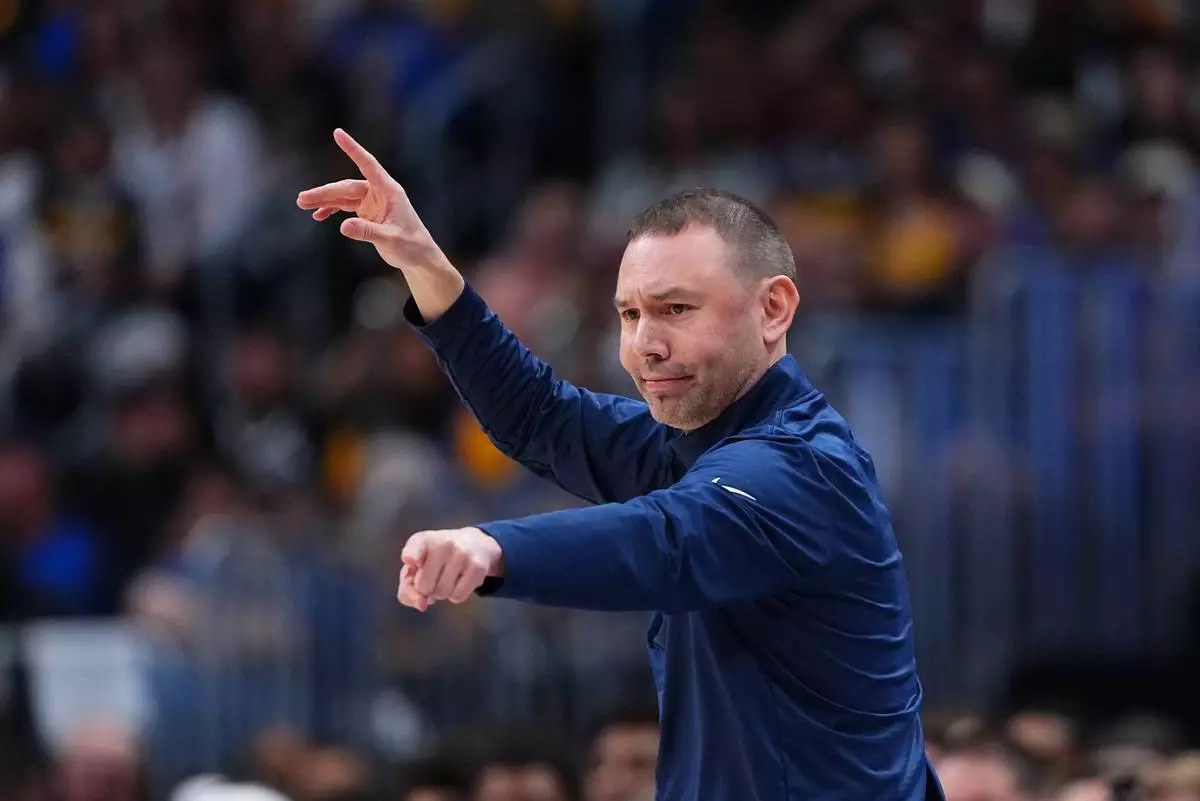
Denver Nuggets head coach David Adelman reacts during the first half in Game 2 of a first-round NBA playoffs basketball series against the Minnesota Timberwolves, Monday, April 20, 2026, in Denver. (AP Photo/Jack Dempsey)

Denver Nuggets head coach David Adelman reacts during the first half in Game 2 of a first-round NBA playoffs basketball series against the Minnesota Timberwolves, Monday, April 20, 2026, in Denver. (AP Photo/Jack Dempsey)

Minnesota Timberwolves head coach Chris Finch reacts during the first half in Game 2 of a first-round NBA playoffs basketball series against the Denver Nuggets, Monday, April 20, 2026, in Denver. (AP Photo/Jack Dempsey)

Minnesota Timberwolves head coach Chris Finch reacts during the first half in Game 2 of a first-round NBA playoffs basketball series against the Denver Nuggets, Monday, April 20, 2026, in Denver. (AP Photo/Jack Dempsey)

Denver Nuggets guard Jamal Murray prepares to shoot a 3-point basket against the Minnesota Timberwolves during the first half in Game 2 of a first-round NBA playoffs basketball series Monday, April 20, 2026, in Denver. (AP Photo/Jack Dempsey)

Denver Nuggets guard Jamal Murray prepares to shoot a 3-point basket against the Minnesota Timberwolves during the first half in Game 2 of a first-round NBA playoffs basketball series Monday, April 20, 2026, in Denver. (AP Photo/Jack Dempsey)

Denver Nuggets center Nikola Jokic (15) looks to pass the ball over Minnesota Timberwolves center Naz Reid, right, during the first half in Game 2 of a first-round NBA playoffs basketball series Monday, April 20, 2026, in Denver. (AP Photo/Jack Dempsey)

Denver Nuggets center Nikola Jokic (15) looks to pass the ball over Minnesota Timberwolves center Naz Reid, right, during the first half in Game 2 of a first-round NBA playoffs basketball series Monday, April 20, 2026, in Denver. (AP Photo/Jack Dempsey)

Minnesota Timberwolves guard Anthony Edwards (5) drives to the basket against Denver Nuggets guard Jamal Murray (27) during the second half in Game 2 of a first-round NBA playoffs basketball series Monday, April 20, 2026, in Denver. (AP Photo/Jack Dempsey)

Minnesota Timberwolves guard Anthony Edwards (5) drives to the basket against Denver Nuggets guard Jamal Murray (27) during the second half in Game 2 of a first-round NBA playoffs basketball series Monday, April 20, 2026, in Denver. (AP Photo/Jack Dempsey)

Recommended Articles