HKChat, the homegrown AI assistant developed by the Hong Kong Generative AI Research and Development Center (HKGAI), today announced a formal strategic partnership with JD Kai Bo Supermarket, the local retail arm of JD.com. By leveraging their respective core strengths, the two parties will embark on a deep collaboration focused on user growth, service upgrades, and technical integration. This initiative aims to drive the seamless fusion of AI within retail scenarios, providing citizens with a more convenient and intelligent shopping experience while accelerating the digital transformation of Hong Kong’s retail sector.

Dr. SHEN Jianguang, Vice President, Director of JD.com, Chief Economist (right), Mr. LAM Hiu Ngai, Head of JD Kai Bo Supermarket (left), and Prof. Yike GUO, Provost of the Hong Kong University of Science and Technology (HKUST), and Director of HKGAI (center), posed for a handshake photo together to start the partnership.
As Hong Kong’s locally developed AI chatbot application, HKChat currently boasts over 720,000 registered users. Recognized for its “biliterate and trilingual” capabilities and extensive local knowledge base, the application has become a trusted “AI assistant” for efficient interaction and information retrieval among Hong Kong citizens. Meanwhile, JD Kai Bo Supermarket has been rooted in the Hong Kong retail market for nearly 30 years. Supported by JD.com’s robust global supply chain, it has earned significant consumer trust while establishing a comprehensive “New Retail” presence across both online and offline channels. This partnership marks a milestone in resource sharing and synergy to build a new “AI + Retail” ecosystem.
Under the terms of the agreement, the strategic collaboration will focus on three core pillars:
• Mutual User Empowerment: Both parties will utilize their respective user bases and channel advantages to drive new user growth and achieve precise cross-segment marketing, thereby expanding market reach.
• Integrated Loyalty Systems: The points systems of HKChat and JD Kai Bo Supermarket will be fully integrated. This allows users to exchange points across both platforms, offering enhanced consumer benefits and convenience while fostering customer loyalty.
• Technical Scenario Integration: HKChat will deploy its mature intelligent dialogue technology to upgrade the AI features within JD Kai Bo’s shopping ecosystem. Users will be able to perform product inquiries, place orders, and seek consultations through natural language interaction, significantly improving shopping efficiency and experience.
This partnership represents a major step for HKChat in commercializing R&D achievements and expanding AI application scenarios. It is a critical strategic move to accelerate digital upgrades and enhance service competitiveness for JD Kai Bo Supermarket. By combining HKChat’s technological edge with JD Kai Bo Supermarket’s retail expertise, the collaboration will not only provide users with a dual experience of “intelligent interaction and convenient consumption” but also explore innovative AI-powered models for the retail industry.

Under the joint witness of Prof. Yike GUO, Provost of the Hong Kong University of Science and Technology (HKUST), and Director of HKGAI (1st left), and Dr. SHEN Jianguang, Vice President, Director of JD.com, Chief Economist (1st right), the representatives of HKChat and JD Kai Bo Supermarket formally announced a formal strategic partnership.
Representatives from both organizations stated that they will continue to deepen their cooperation, expand service boundaries, and optimize the overall user experience. This initiative is expected to inject new momentum into Hong Kong’s digital economy and support the city’s development as an international innovation and technology hub and a high-quality living circle.
NEW YORK (AP) — Another sell-off for artificial-intelligence stocks helped drag the U.S. market sharply lower Wednesday, as Wall Street’s former superstars continue to face heavy scrutiny for their success.
The S&P 500 dropped 1.6% for its first back-to-back drop in three weeks and is back to where it was in early May. The Dow Jones Industrial Average tumbled 953 points, or 1.9%, and the Nasdaq composite led the market lower with a 2% slide.
Wall Street has been shaky since last week, when AI stocks went from roaring to records to suddenly turning lower. Among the worries is that their prices have simply shot too high, too fast because of AI mania. The question now is whether the break lower has cleared out excessive optimism that may have built into their stock prices, or if it’s the start of a longer downturn.
Super Micro Computer, which sells AI servers, tumbled 28% after saying late Tuesday that it plans to raise $7 billion in cash by selling shares of stock and convertible preferred stock. Such moves raise the most money for companies when their stock prices are high, and they can dilute the ownership stakes of existing shareholders.
Micron Technology swung from an early loss of nearly 4% to a modest gain and back to a loss of 4.7%. It’s coming off a wild stretch where it sank 7.7% last Thursday, then plunged another 13.3% Friday and rallied 9.9% Monday. Despite all the swings, the computer memory maker’s stock is still up 212.5% for the year so far.
Nvidia, the chip company that’s grown into a nearly $4.9 trillion behemoth because of the AI boom, was the heaviest weight on the S&P 500 after falling 3.7%. The second-heaviest was another AI winner, Broadcom, which fell 5.1%.
Some of the pressure on AI stocks could also be coming from investors pulling cash out to prepare for high-profile debuts on the U.S. stock market for several AI giants. SpaceX’s initial public offering could come later this week, for example.
Weakening stocks for companies with big fuel bills also pulled the market lower. United Airlines sank 6.2%, and cruise-operator Carnival fell 6.3% after oil prices rose due to the latest fighting in the war with Iran.
The price for a barrel of Brent crude oil rose 1.8% to $93.10 after President Donald Trump warned Iran would “pay the price” for stalled negotiations between the two on their war. The war has been keeping the Strait of Hormuz effectively shut to oil tankers, which has prevented the delivery of crude from the Persian Gulf to customers worldwide.
High oil prices have sent inflation higher, and a report on Wednesday showed that prices for U.S. consumers jumped in May at the highest speed in three years.
But Treasury yields nonetheless held relatively steady in the bond market because the figures were pretty much exactly what economists had forecast. The rise in an important underlying measure of inflation, meanwhile, was not as bad from April through May as economists expected.
The yield on the 10-year Treasury edged up to 4.54% from 4.53% late Tuesday. The two-year Treasury yield, which more closely tracks expectations for what the Federal Reserve will do with its overnight interest rates, held at 4.13%.
Traders have been building bets recently that the Fed will have to hike its main interest rate at least once this year, given how high inflation is and how strong the U.S. job market remains. Wednesday’s inflation update didn’t sway them much, according to data from CME Group.
High yields can slow entire economies and undercut prices for all kinds of investments, including stocks and cryptocurrencies. They hit investments seen as the most expensive in particular, and some critics are calling AI a bubble where investment inflated too far.
All told, the S&P 500 fell 119.66 points to 7,266.99. The Dow Jones Industrial Average dropped 953.33 to 49,918.78, and the Nasdaq composite sank 509.32 to 25,169.50.
In stock markets abroad, indexes in Europe were mixed following sharper drops in Asia.
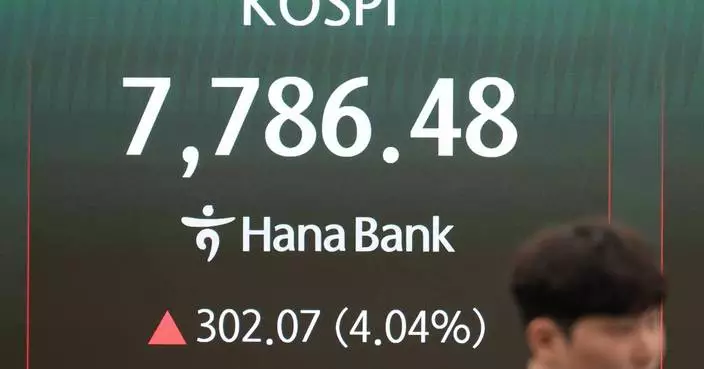
South Korea’s Kospi tumbled 4.5%, hurt by losses for tech giants Samsung Electronics and SK Hynix.
Tokyo’s Nikkei 225 sank 1.9% after data showed Japan’s producer price index, a measure for prices at the wholesale level, rose in May at the fastest pace in more than three years. Shares of technology and telecommunications giant SoftBank Group, which has a strong AI focus, lost 8.3%.
AP Business Writers Chan Ho-him and Matt Ott contributed to this report.
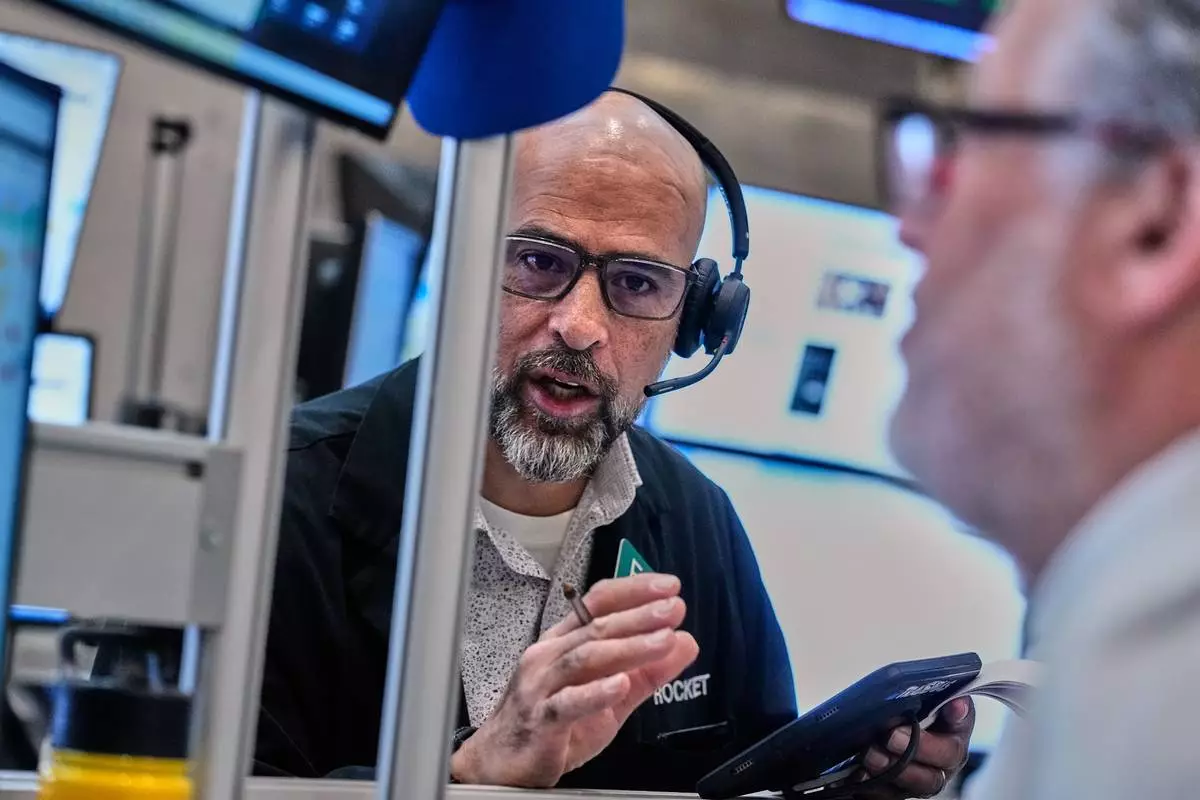
Options traders Steven Rodriguez, left, and Marty Handler work on the floor of the New York Stock Exchange, Wednesday, June 3, 2026. (AP Photo/Richard Drew)
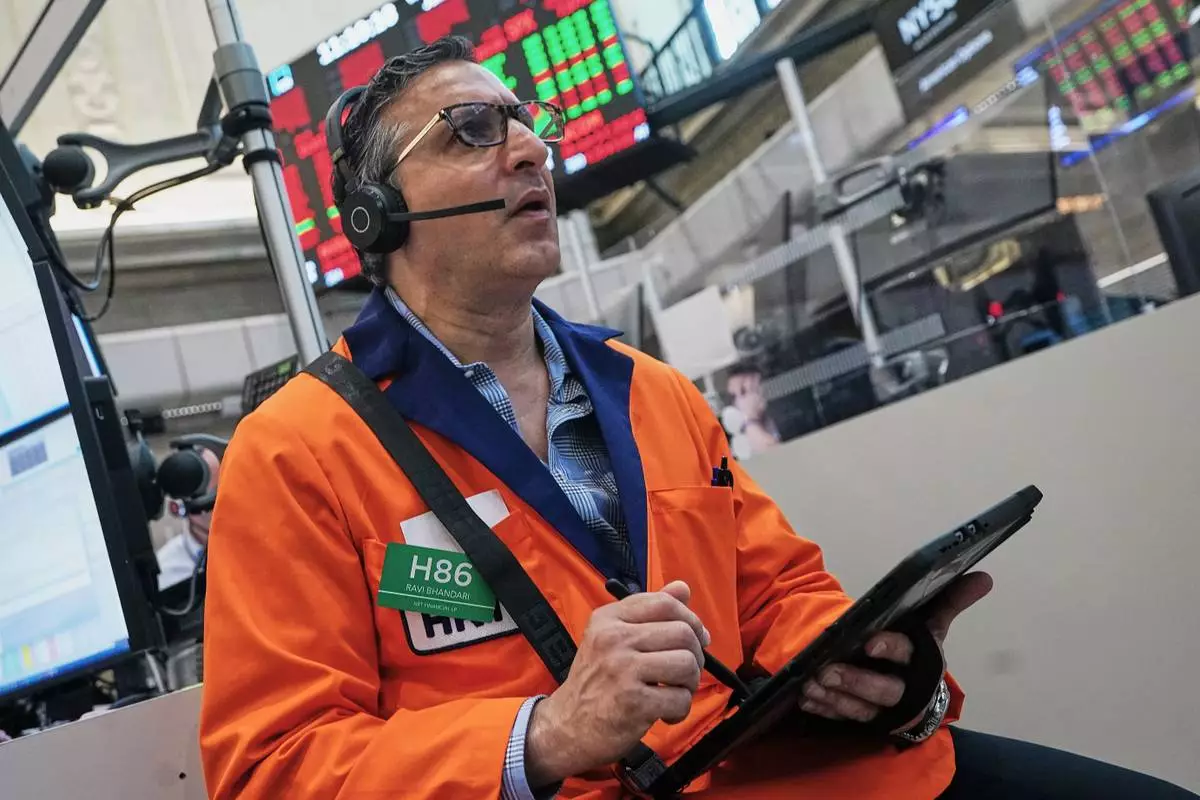
Options trader Ravi Bhandari works on the floor of the New York Stock Exchange, Wednesday, June 3, 2026. (AP Photo/Richard Drew)
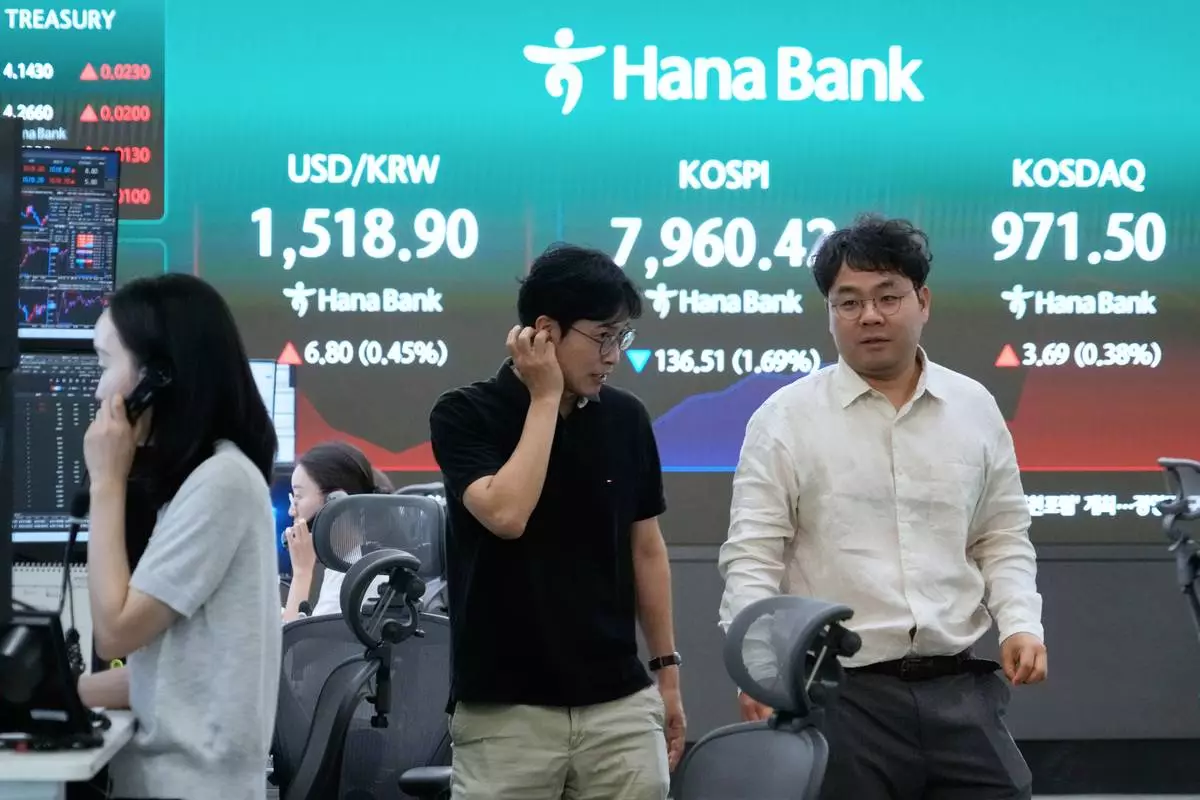
Currency traders pass by a screen showing the Korea Composite Stock Price Index (KOSPI) and the foreign exchange rate between U.S. dollar and South Korean won at the foreign exchange dealing room of the Hana Bank headquarters in Seoul, South Korea, Wednesday, June 10, 2026. (AP Photo/Ahn Young-joon)
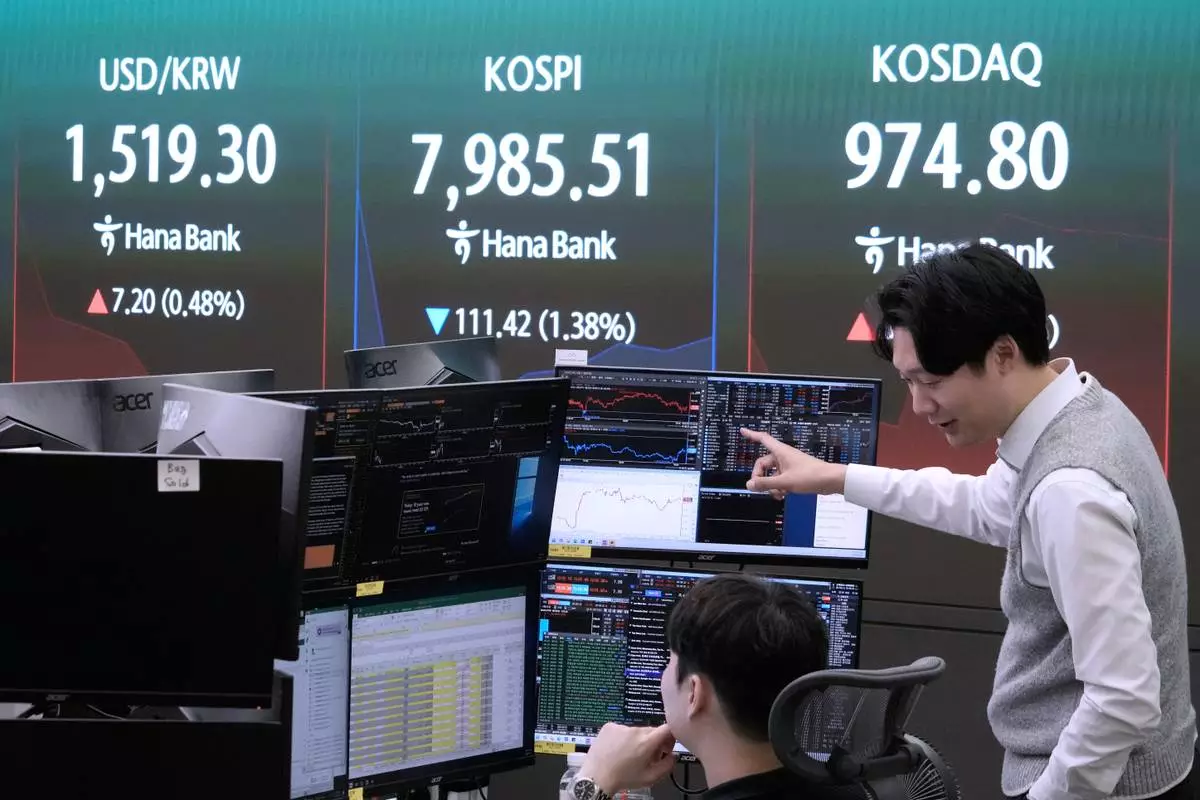
Currency traders work near a screen showing the Korea Composite Stock Price Index (KOSPI) and the foreign exchange rate between U.S. dollar and South Korean won at the foreign exchange dealing room of the Hana Bank headquarters in Seoul, South Korea, Wednesday, June 10, 2026. (AP Photo/Ahn Young-joon)
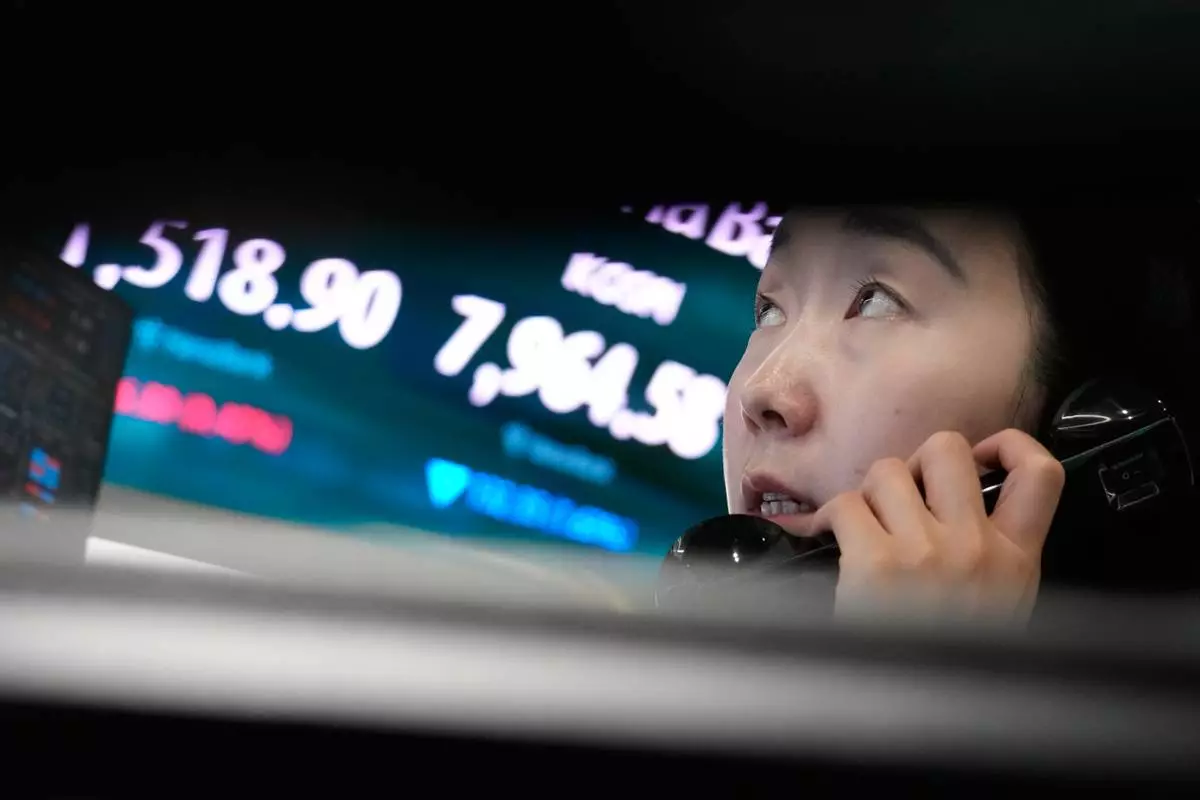
A currency trader talks on the phone near a screen showing the Korea Composite Stock Price Index (KOSPI) and the foreign exchange rate between U.S. dollar and South Korean won at the foreign exchange dealing room of the Hana Bank headquarters in Seoul, South Korea, Wednesday, June 10, 2026. (AP Photo/Ahn Young-joon)