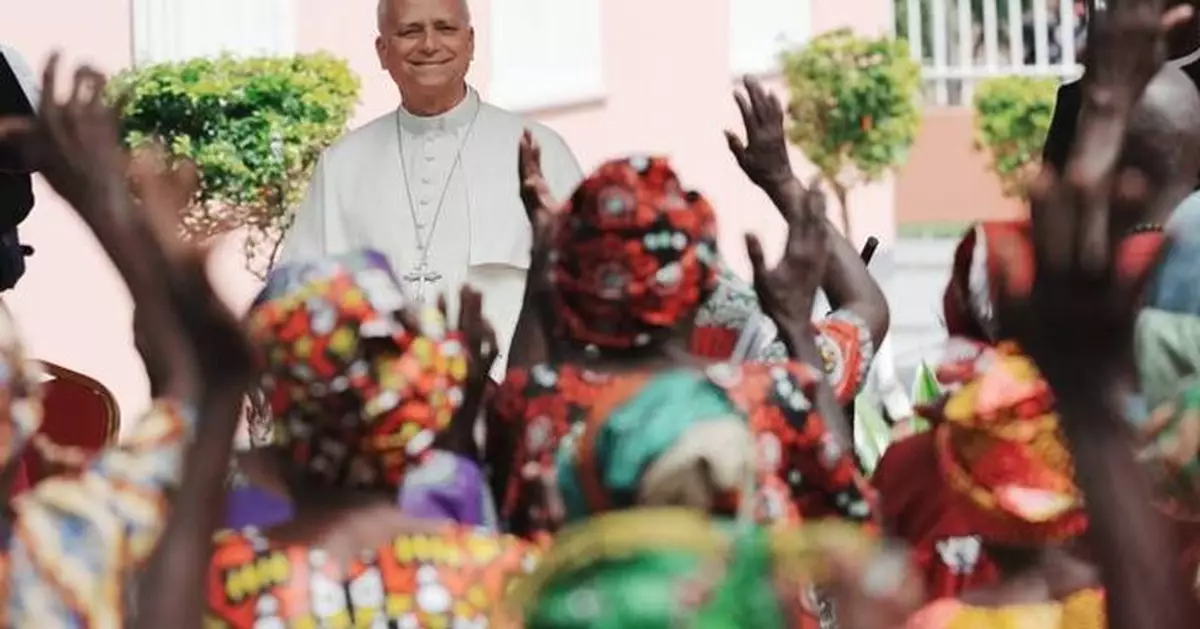
LUANDA, Angola (AP) — And in Africa, the lion roared.
There is a case to be made that Pope Leo XIV, the careful, reserved, Midwestern Augustinian, found his voice on his epic trip through Africa, blasting the “handful of tyrants” and “chains of corruption” that have held parts of the continent hostage for centuries.
Click to Gallery
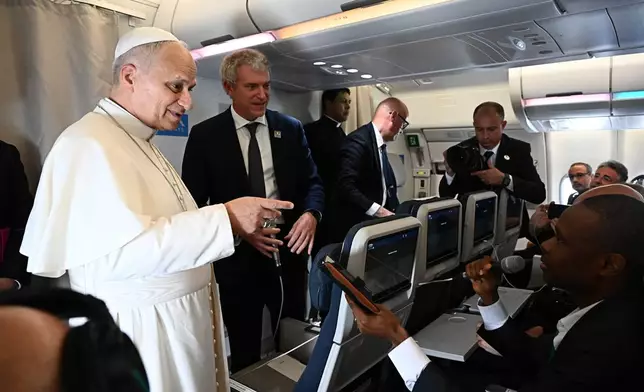
Pope Leo XIV answers journalists' questions during his flight from Yaounde, Cameroon to Luanda, Angola, Saturday, April 18 2026. (Luca Zennaro/Pool Photo via AP)
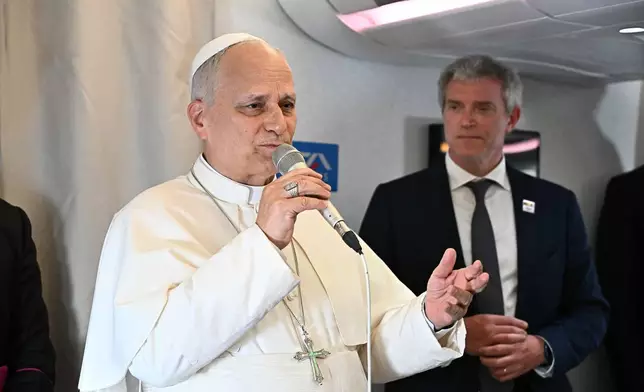
Pope Leo XIV answers journalists' questions during his flight from Yaounde, Cameroon to Luanda, Angola, Saturday, April 18, 2026. (Luca Zennaro/Pool Photo via AP)
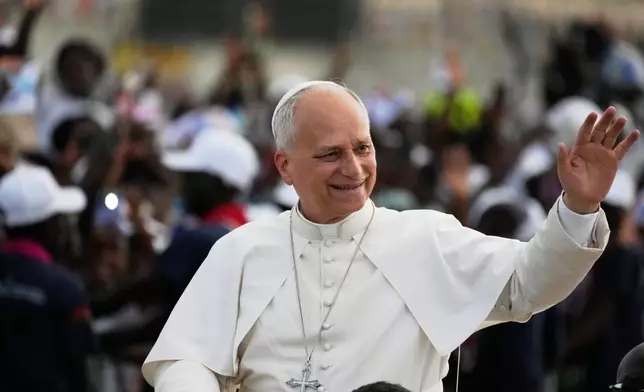
Pope Leo XIV arrives at the esplanade in front of the Sanctuary of Mama Muxima, in Muxima, Angola, Sunday, April 19, 2026. (AP Photo/Themba Hadebe)
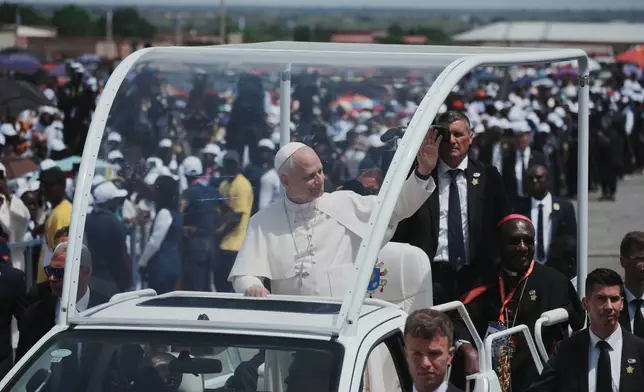
Pope Leo XIV is cheered by faithful as he arrives to celebrate a mass at Saurimo esplanade, Angola, Monday, April 20, 2026. (AP Photo/Andrew Medichini)
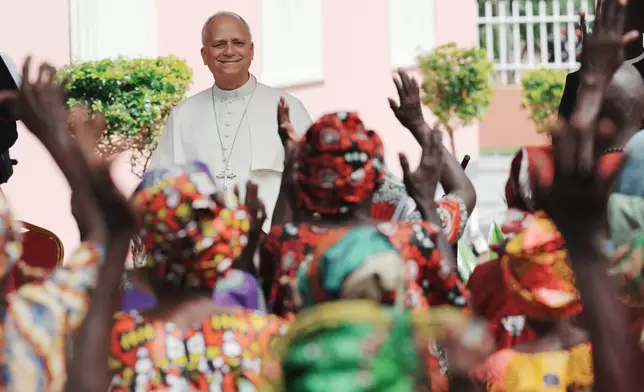
Pope Leo XIV is cheered by faithful on the occasion of his visit to a nursing home, in Saurimo, Angola, Monday, April 20, 2026. (AP Photo/Andrew Medichini)
But the fact is, Leo has been preaching this kind of message for a while now, including in the context of the U.S.-Israeli war in Iran. It just took U.S. President Donald Trump’s unprecedented broadside and Vice President JD Vance's claims of theological superiority for many people to pay attention, especially American Catholics.
“Yes, Pope Leo might give the impression that he is engaging, in his quiet way and with authority, and this is how it looks to the world press and social media,” Cardinal Michael Czerny, a top Vatican official and aide to Leo, told The Associated Press.
“But in fact the Holy Father’s homilies and talks in Africa have been prepared, well in advance, in terms of the local African reality and the church," Czerny said. "So, if they seem relevant to the current wars, controversy, this reminds us of Jesus saying, ‘Whoever has ears to hear, let them hear!’”
Leo tried to make that point when he came to the back of Air Pope One on April 18, en route from Cameroon to Angola, and complained that “a certain narrative” had taken hold suggesting he was in a feud with Trump over the Iran war and his peace messages in Africa were directed at the president.
Leo insisted his words about tyrants and the religious justification for war had been wrongly interpreted and he was referring only to the African context, and to a separatist conflict in western Cameroon, in particular.
But Leo also was trying to have it both ways. Yes, he was talking about the separatist conflict at a peace meeting in Bamenda. Yes, he was preaching the Gospel message of peace and fraternity. But he also has been talking about Trump, a lot.
“That distancing of Pope Leo from some interpretations was really a move to de-escalate a very dangerous situation,” said Massimo Faggioli, a professor of theology at Trinity College Dublin. “Because the Vatican needs the United States to restore some kind of peaceful — not order — but a horizon of peace, a hope of peace.”
Leo criticized Trump, directly, before he got to Africa. And in one remarkable comment two weeks ago, he encouraged the faithful to contact their congressional representatives to demand an end to the war.
The headline from the April 7 encounter outside Leo's country house in Castel Gandolfo was that Leo had called Trump’s threat to annihilate Iranian civilization “truly unacceptable.”
But the more significant message followed. “I would invite the citizens of all the countries involved to contact the authorities, political leaders, congressmen, to ask them, tell them to work for peace and to reject war,” Leo said.
Faggioli termed the comment “the Vatican’s nuclear option,” making a direct appeal to U.S. voters to take a stand, because it genuinely feared Trump was about to take the Iran war in a vastly more catastrophic direction.
The Holy See had never resorted to such a directly political message from a pope even at the height of the Cuban Missile Crisis, when a Catholic president — John F. Kennedy — was on the verge of a nuclear confrontation with the Soviet Union, Faggioli said.
At that moment, Pope John XXIII did make a public appeal — his famous Oct. 25, 1962, radio address — with a strong, direct plea for peace including to “those who have the responsibility of power” to “do everything in their power to save the peace.”
The pope also sent private letters to Kennedy and Soviet Premier Nikita Khrushchev and worked behind the scenes through diplomatic channels to de-escalate the situation. But he didn't urge U.S. voters to essentially choose which Catholic to listen to: their president or their pope.
“What is at stake now is that at a time of war, loyalties of Catholics are tested in a particular way,” Faggioli said. He added that however the situation ultimately resolves itself, the tension will complicate any future political aspirations of Catholics seeking high office, whether Vance on the Republican side or California Gov. Gavin Newsom on the Democratic side, as long as a U.S.-born pope is still in Rome.
Kathleen Sprows Cummings, director of the Global Catholic Research Initiative at the University of Notre Dame, said Leo has consistently operated “on a higher plane” but American Catholics are used to church discussion of morality in the context of sexuality, gender and abortion, and it's jarring to process foreign policy through a moral lens.
“So JD Vance can say the pope should stick to morality," she said, “but war and peace are ancient moral issues.”
The Rev. Antonio Spadaro, the under-secretary in the Vatican’s culture department, said Leo is continuing in the tradition of popes past to preach the Gospel message of peace. What has changed, he said, was how Trump reacted.
“The strong reaction arrived from America," he said. "It was America that reacted to Leo’s words, and not vice versa.”
Even with his direct comments about Trump, Leo was not engaging in an attack, Spadaro said.
“It’s very dangerous to imagine that the pope is fighting with Trump, because it means demeaning the pope to a level of contrast, one against the other, which Trump may want but that the pope has no intention of doing," he said.
Spadaro added that from his perch, Leo hasn't changed at all from when he was known as Robert Prevost, the Chicago-born missionary priest.
“I see the Prevost I’ve always seen,” Spadaro said. “Let’s say it’s the backdrop that has changed, so his calm yet very direct style stands in stark contrast to a chaotic scenario, and that’s why it’s striking.”
For better or worse, the incredible saga of Trump, the war and geopolitics seems far removed from Leo’s day-to-day ministering to his flock in Africa, who have turned out in droves to welcome the American pope in each stop on his four-nation tour.
The polyglot pope has made it easy for them to hear his words, delivering speeches, homilies and prayers in the languages of the faithful: French in Algeria, English and French in Cameroon, Portuguese in Angola and, starting Tuesday, Spanish in Equatorial Guinea.
Lucineia Francisco left her family behind on Sunday so she could see Leo at the Shrine of Mama Muxima, Angola’s most popular pilgrimage destination. Some 30,000 people turned out for Leo’s rosary prayer.
“My kids were crying to come, but I said no,” Francisco said. “This is a spiritual journey that I’m really going to face on my own.”
Associated Press religion coverage receives support through the AP’s collaboration with The Conversation US, with funding from Lilly Endowment Inc. The AP is solely responsible for this content.
This version corrects the title for Rev. Antonio Spadaro, the under-secretary in the Vatican’s culture department
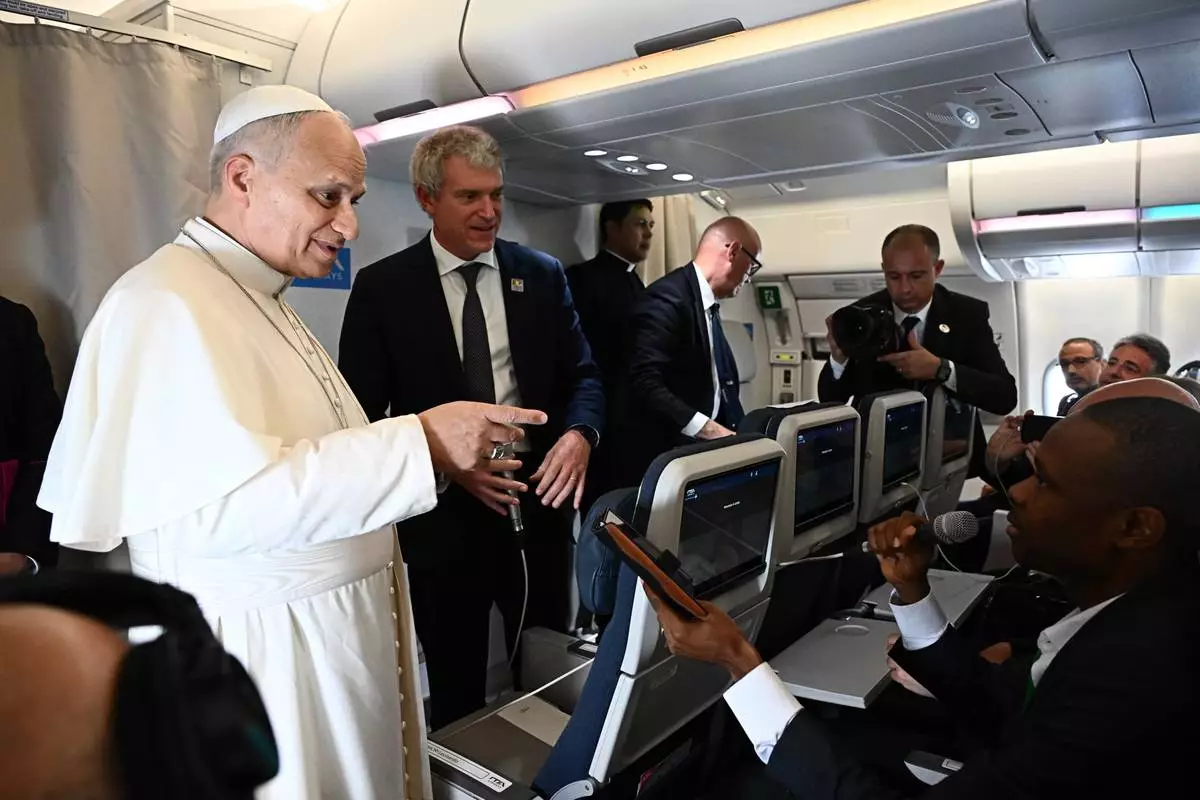
Pope Leo XIV answers journalists' questions during his flight from Yaounde, Cameroon to Luanda, Angola, Saturday, April 18 2026. (Luca Zennaro/Pool Photo via AP)
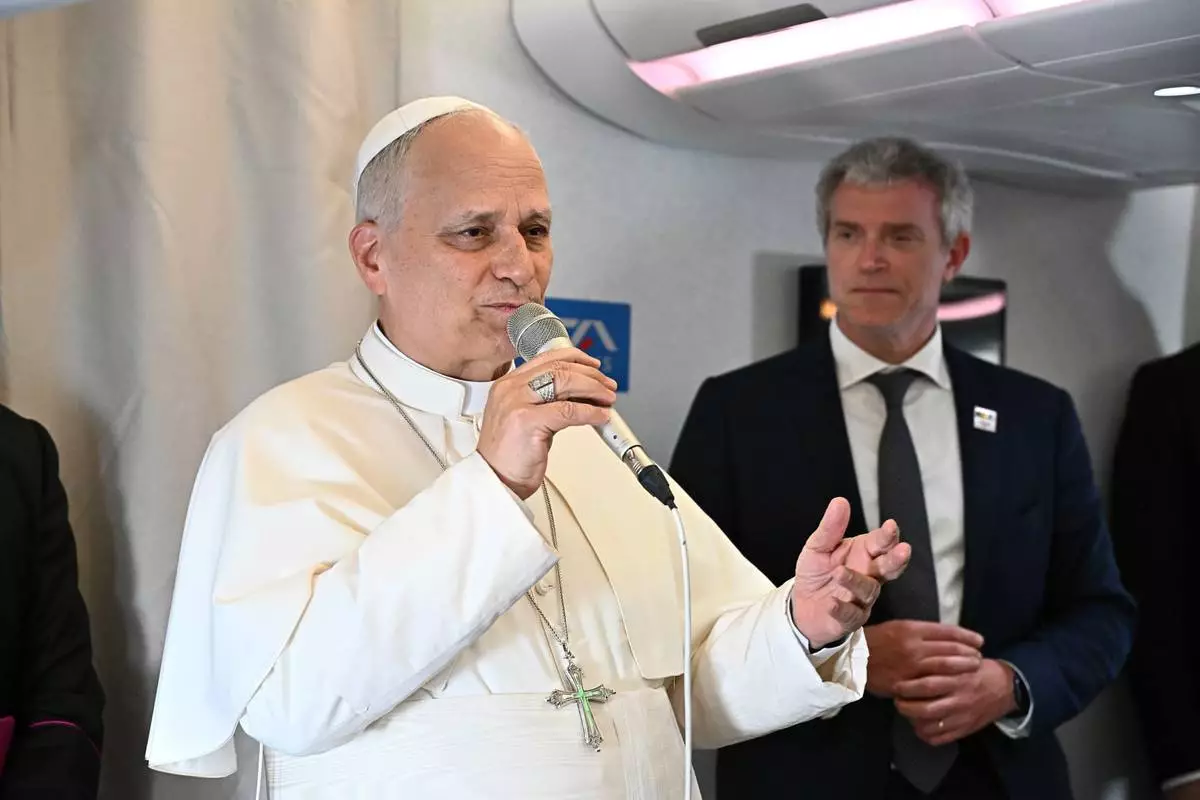
Pope Leo XIV answers journalists' questions during his flight from Yaounde, Cameroon to Luanda, Angola, Saturday, April 18, 2026. (Luca Zennaro/Pool Photo via AP)
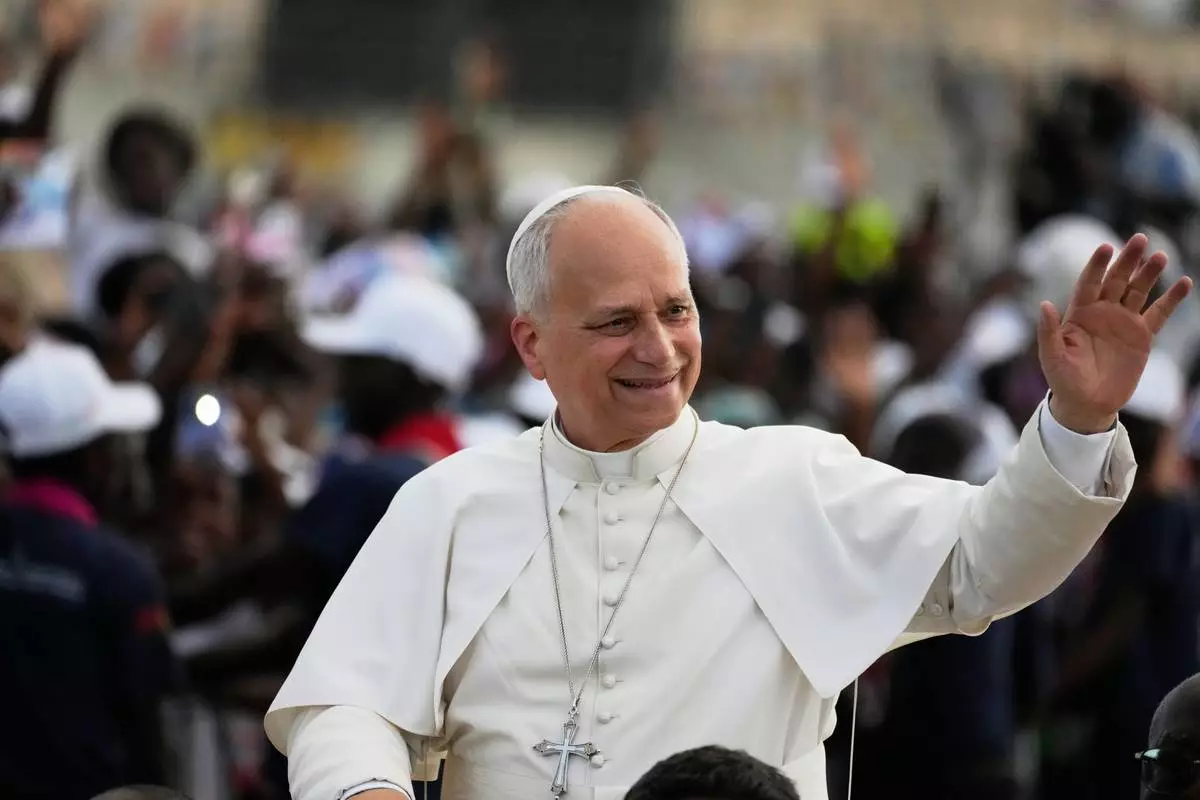
Pope Leo XIV arrives at the esplanade in front of the Sanctuary of Mama Muxima, in Muxima, Angola, Sunday, April 19, 2026. (AP Photo/Themba Hadebe)
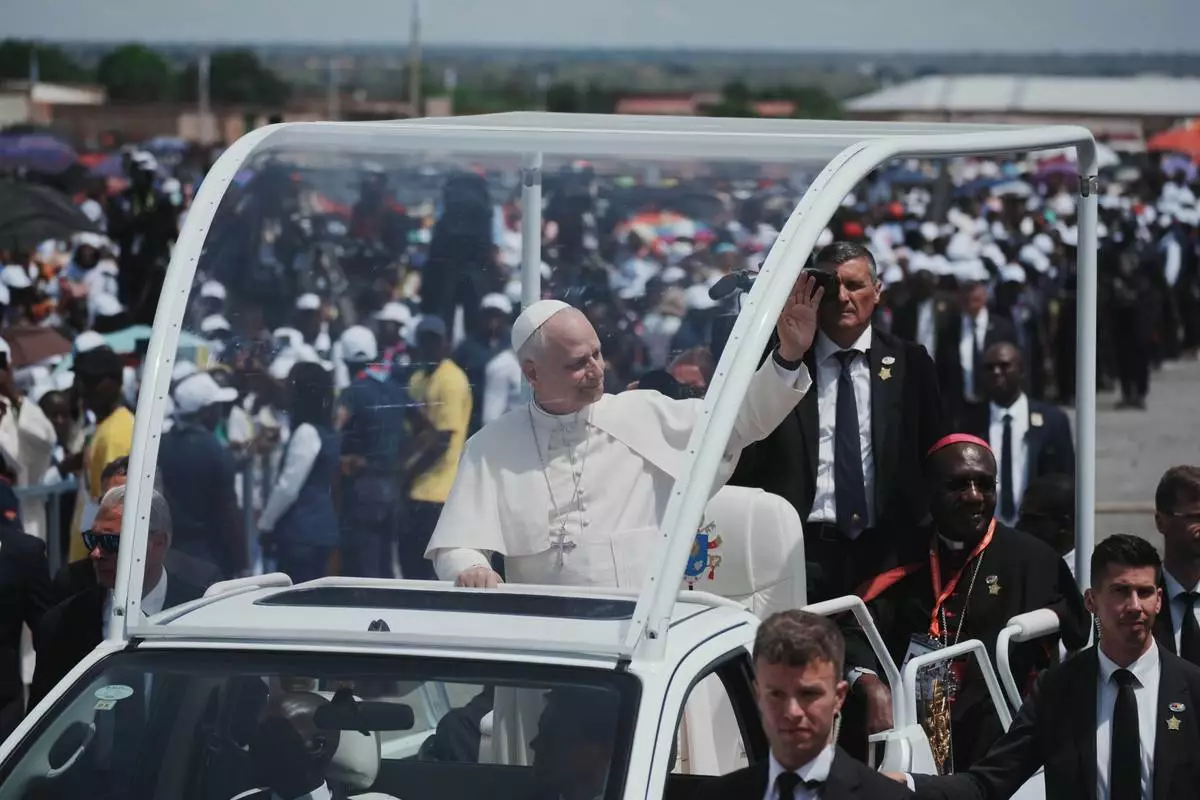
Pope Leo XIV is cheered by faithful as he arrives to celebrate a mass at Saurimo esplanade, Angola, Monday, April 20, 2026. (AP Photo/Andrew Medichini)
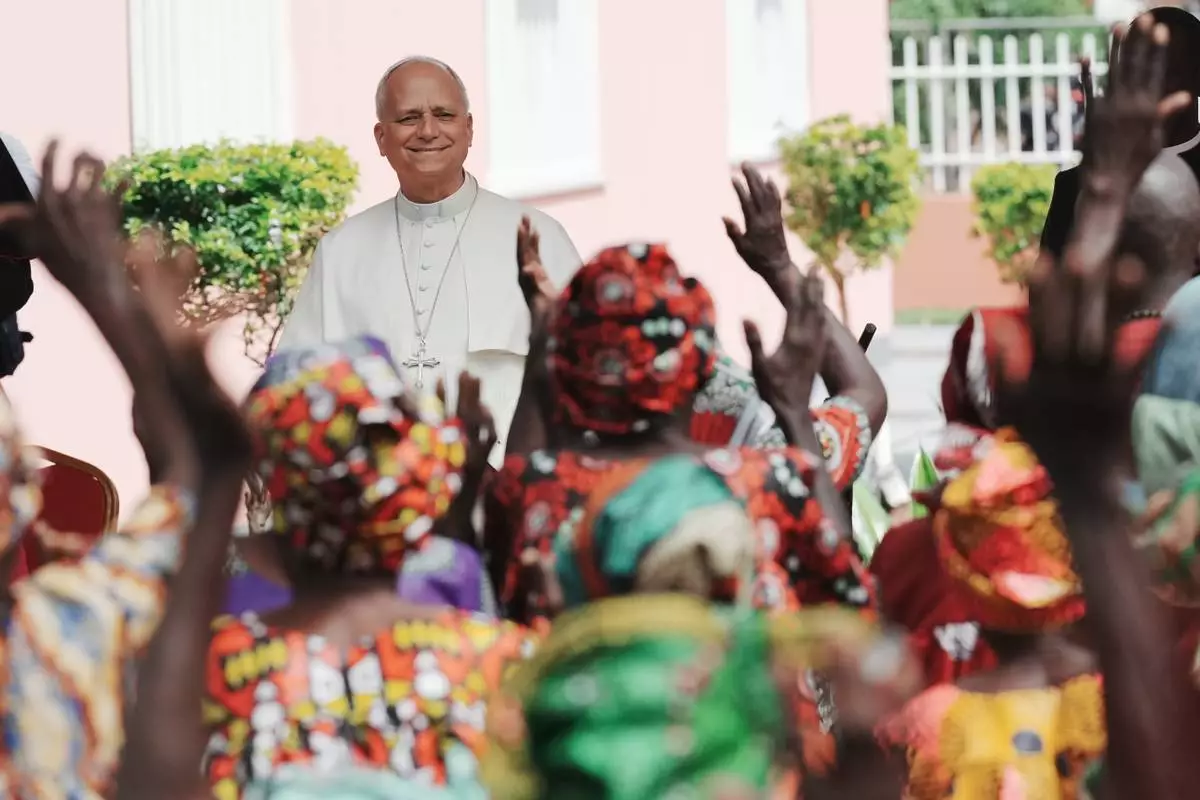
Pope Leo XIV is cheered by faithful on the occasion of his visit to a nursing home, in Saurimo, Angola, Monday, April 20, 2026. (AP Photo/Andrew Medichini)