BERLIN (AP) — The remains of Timmy, the humpback whale whose life and death captivated Germany for months, will be turned into biodiesel as some of the mammal's bones are set to go to a Danish museum.
A series of failed rescue attempts split the scientific community and a private initiative over whether it was more humane to let the weakened and sick animal die on its own or continue the efforts.
Click to Gallery
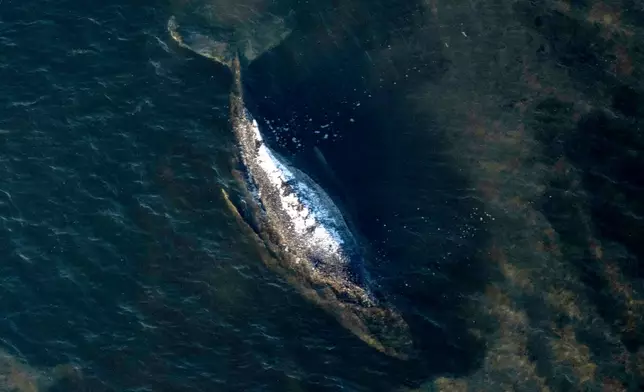
FILE - The humpback whale lays in a washed-out tub off the island of Poel, Germany, April 22, 2026. (Philip Dulian/dpa via AP, File)
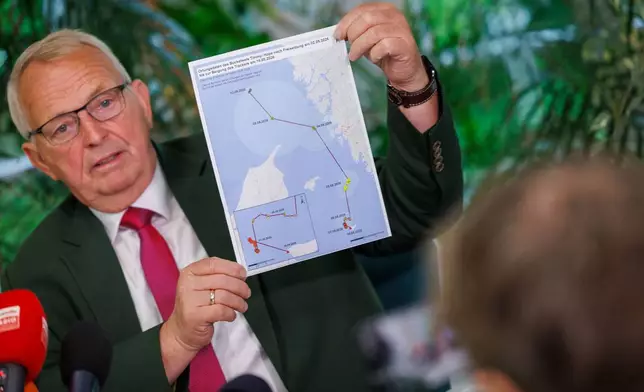
Till Backhaus (SPD), Minister of Agriculture, Environment, and Climate Protection for Mecklenburg-Western Pomerania, answers questions from media representatives at a press conference to present the tracking data from the humpback whale, in Schwerin, Germany, Friday, June 12, 2026. (Jens Buettner/dpa via AP)
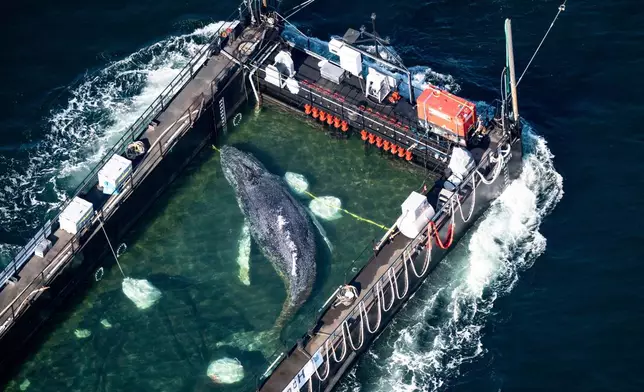
FILE - The humpback whale recovered from a shallow bay off Wismar is being transported towards the North Sea in a flooded cargo ship just before the Danish border in Fehmarn, Germany, April 29, 2026. (Philip Dulian/dpa via AP, File)
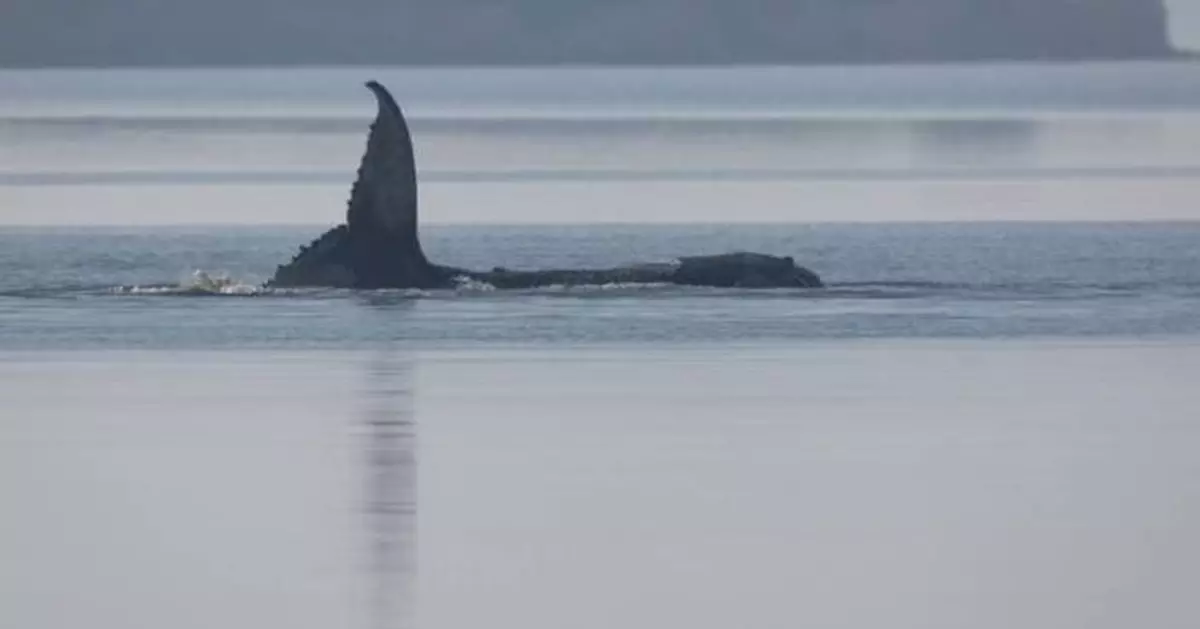
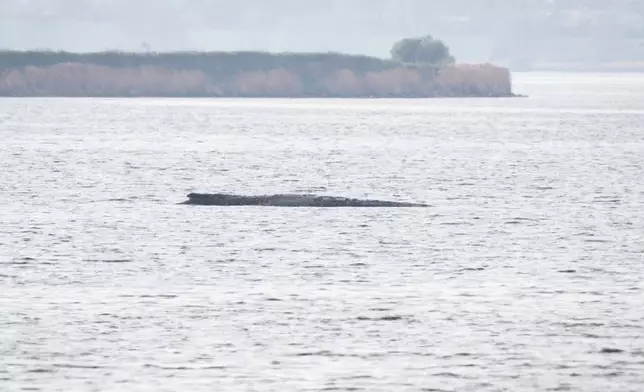
A humpback whale is stuck off near the island of Poel, Weitendorf-Hof, Germany, Thursday, April 16, 2026. (Philip Dulian/dpa via AP)
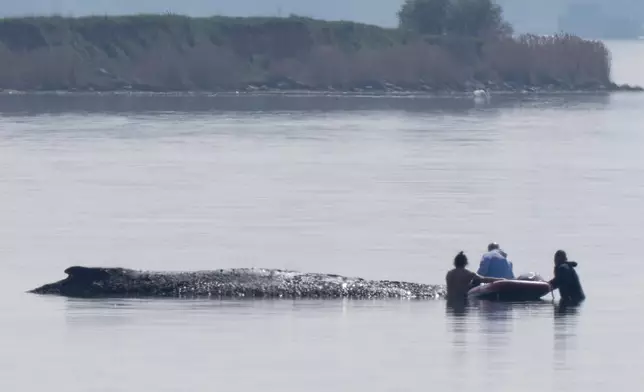
Helpers approach a humpback whale that is stuck off near the island of Poel, Weitendorf-Hof, Germany, Thursday, April 16, 2026. (Philip Dulian/dpa via AP)
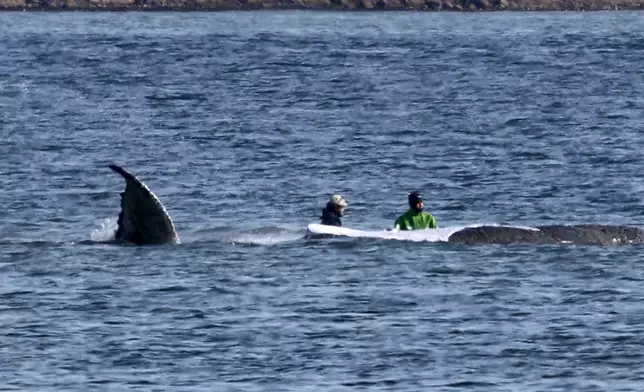
Two helpers approach the humpback whale off the island of Poel, Germany, Friday, April 17, 2026. (Bernd Wüstneck/dpa via AP)
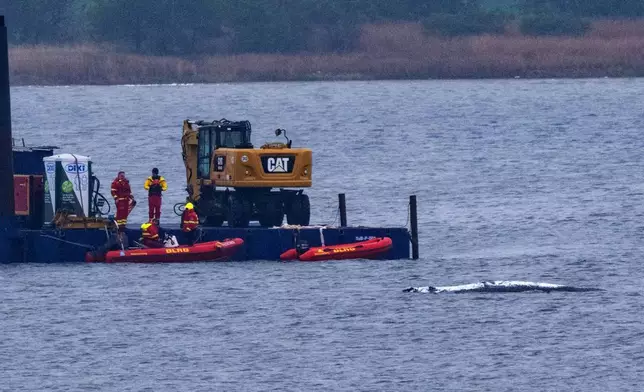
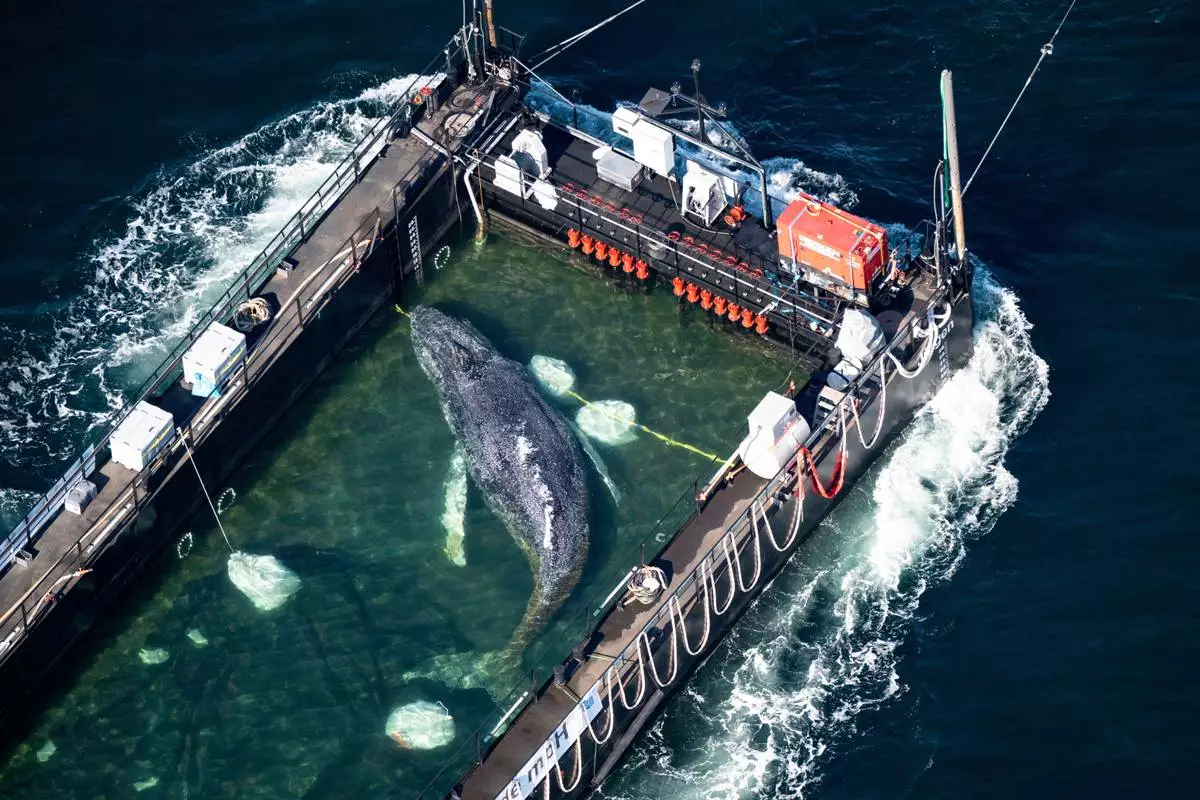
A work pontoon with a special excavator and smaller escort boats are in use near the stranded humpback whale off the island of Poel, near Wismar, Germany, Sunday, April 19, 2026. (Stefan Sauer/dpa via AP)
The humpback whale, nicknamed Timmy, remains trapped near the island of Poel, Germany, Friday, April 17, 2026. (Jens Büttner/dpa via AP)
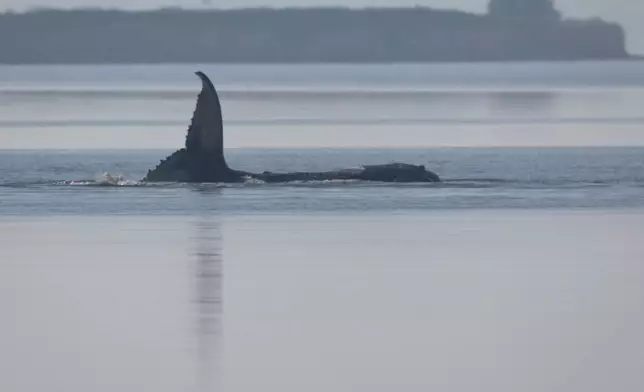
The whale, nicknamed “Timmy” and “Hope” by German media, was found dead on May 14, stranded just off the small island of Anholt in the Kattegat, the broad strait between Denmark and Sweden that connects the Baltic Sea to the North Sea.
Here's what to know:
Timmy, measuring 12 to 15 meters (39 to 49 feet) long and weighing 12 metric tons (nearly 26,500 pounds), was first spotted swimming off the German coast on March 3. It's not clear why the whale swam into the Baltic Sea, far from its natural habitat in the Atlantic Ocean. Some experts say the animal may have lost its way while swimming after a shoal of herring or during migration.
The mammal then became repeatedly stranded in shallow waters. It was in clear distress, breathing irregularly and mostly barely moving for days.
Timmy also suffered from a bad skin condition, related to the Baltic Sea’s low salt content, and rescuers applied zinc ointment.
Tracking data from a transmitter on its dorsal fin showed that it had likely lived roughly five days after the final controversial rescue attempt failed on May 2, when the mammal was transported toward the North Sea in a barge. It had swum roughly 215 kilometers (around 135 miles) over the five days and was heading back toward the Baltic Sea, which is the wrong direction for it to reach the Atlantic Ocean.
An autopsy of the carcass hasn't yet determined the cause of death, though officials were able to figure out that Timmy was a female whale after months of assumptions that it was male.
No serious injuries were discovered during the autopsy, as well as no indication of violence or any foreign objects that would have caused its death.
Local media produced dayslong livestreams to feed the outsized public attention over the fate of the whale. Online newspapers blasted push alerts with the smallest developments about Timmy’s health.
Activists staged protests on the beach in the German town of Wismar calling for the animal’s liberation, while influencers debated whether the best way to help the animal is to let it die in peace or keep trying to assist its return to the Atlantic Ocean.
Interest was so strong that police put up a 500-meter (1,640 foot) protection zone to keep curious bystanders from getting too close and stressing the stranded whale even more.
Despite those efforts, a 67-year-old woman jumped off a boat trying to get close to the whale before she was stopped.
After Timmy's death, Danish news outlet “News5” published a livestream of the carcass being dragged onto the shoreline by a cable attached to a truck on the beach.
Attempts to refloat the mammal with the help of police boats, excavators and inflatable boats had temporarily freed it in German waters, but none of the endeavors were ultimately successful.
Experts then came up with a sophisticated plan to use air cushions to lift the animal onto a tarp, which would have been secured to two pontoons and attached to a tugboat. State officials approved the private initiative, but the whale started swimming again as the tide rose. Boats attempted to guide the mammal toward the right path, though that didn't work either.
Even as some scientists said that the further rescue efforts would in themselves cause the ailing and exhausted animal severe stress, the May 2 barge operation went ahead and Timmy was released 70 kilometers (about 45 miles) from the coast of Skagen, Denmark.
The whale's body was found nearly two weeks later. It was then dragged onto a Danish beach after roughly two weeks after that, during which the body languished in shallow waters.
Some of the remains will be turned into biodiesel in Denmark, according to German news agency dpa. Some of the bones will go to a Danish museum.
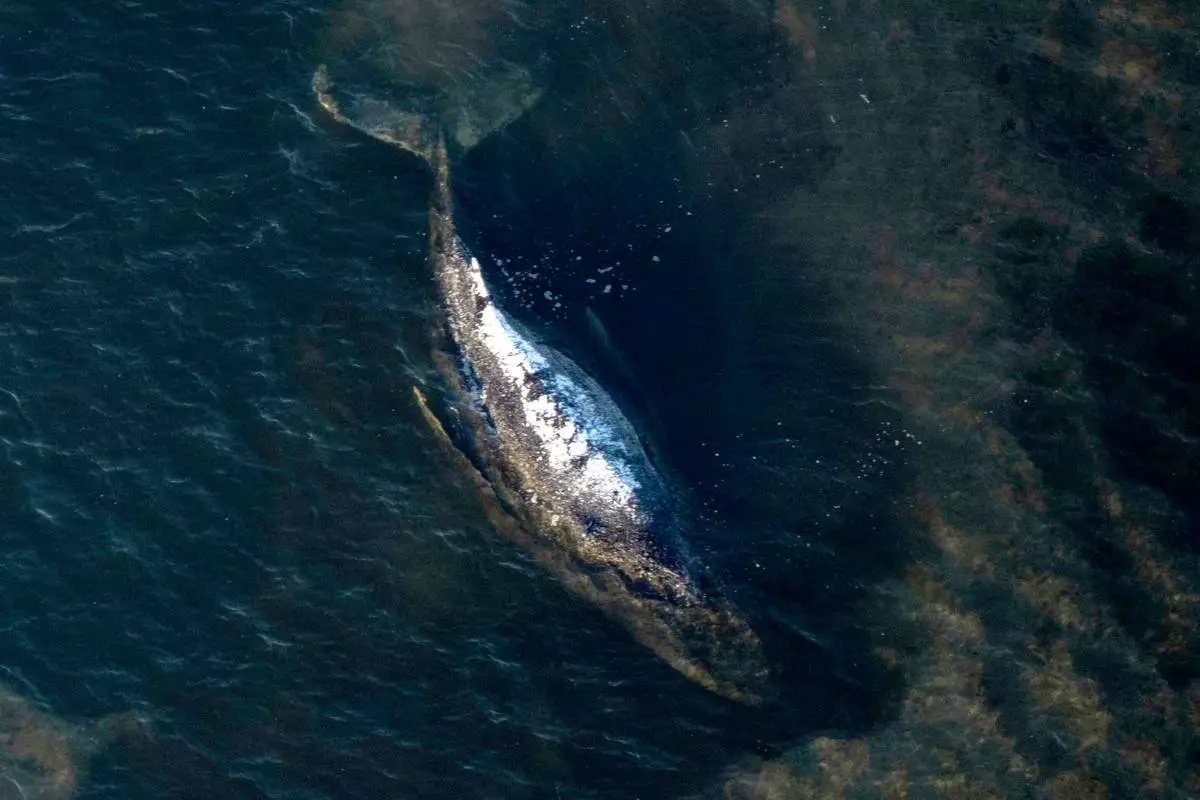
FILE - The humpback whale lays in a washed-out tub off the island of Poel, Germany, April 22, 2026. (Philip Dulian/dpa via AP, File)
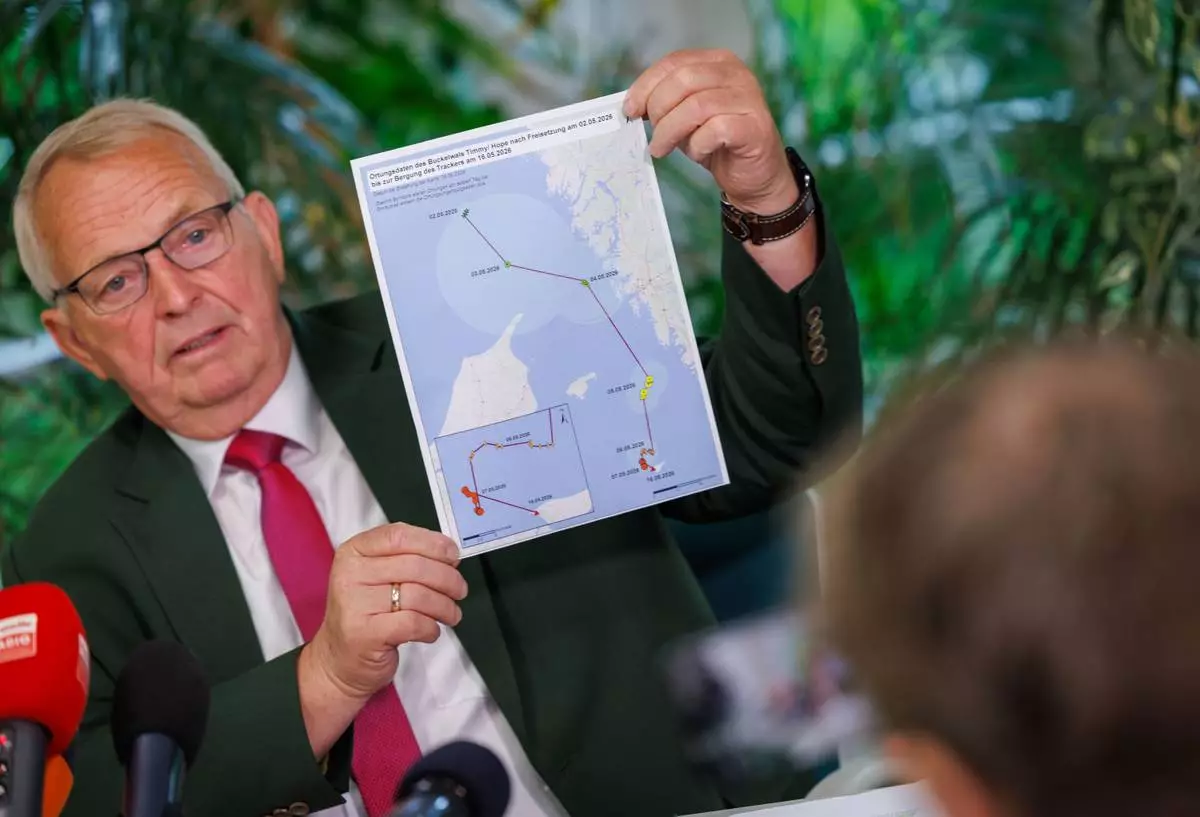
Till Backhaus (SPD), Minister of Agriculture, Environment, and Climate Protection for Mecklenburg-Western Pomerania, answers questions from media representatives at a press conference to present the tracking data from the humpback whale, in Schwerin, Germany, Friday, June 12, 2026. (Jens Buettner/dpa via AP)
FILE - The humpback whale recovered from a shallow bay off Wismar is being transported towards the North Sea in a flooded cargo ship just before the Danish border in Fehmarn, Germany, April 29, 2026. (Philip Dulian/dpa via AP, File)
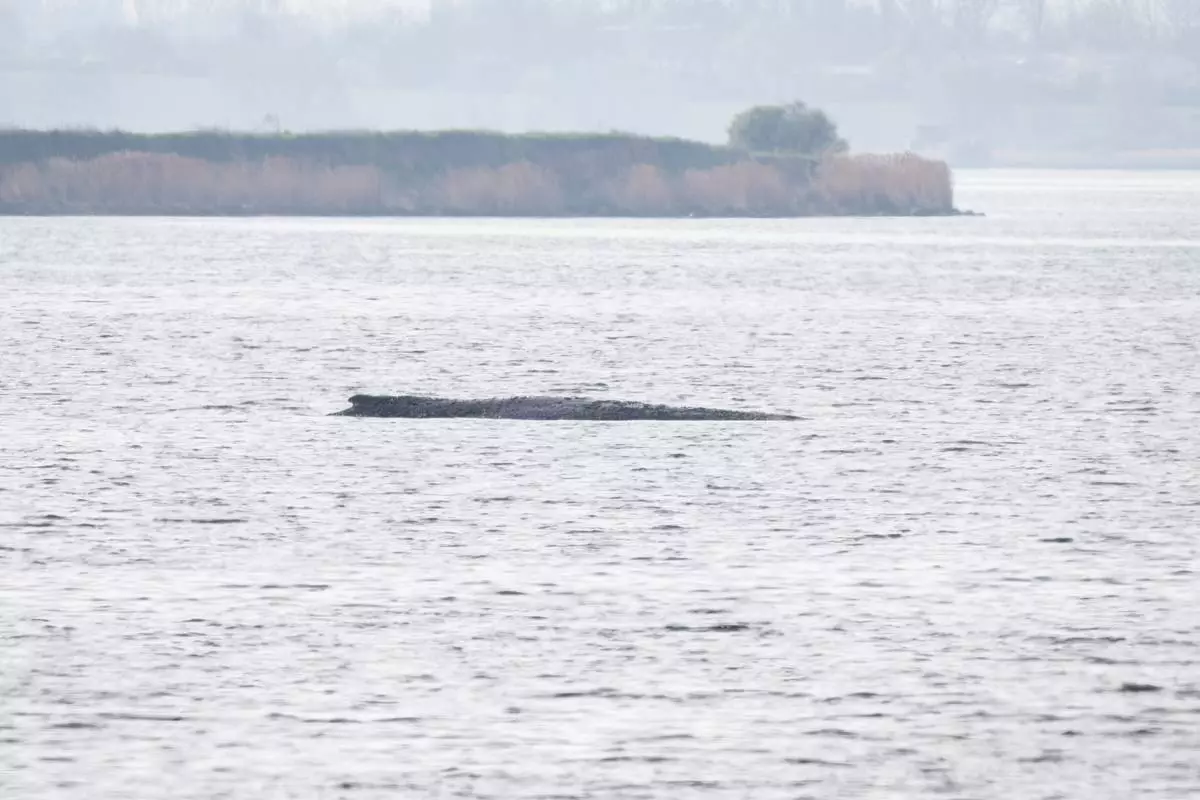
A humpback whale is stuck off near the island of Poel, Weitendorf-Hof, Germany, Thursday, April 16, 2026. (Philip Dulian/dpa via AP)
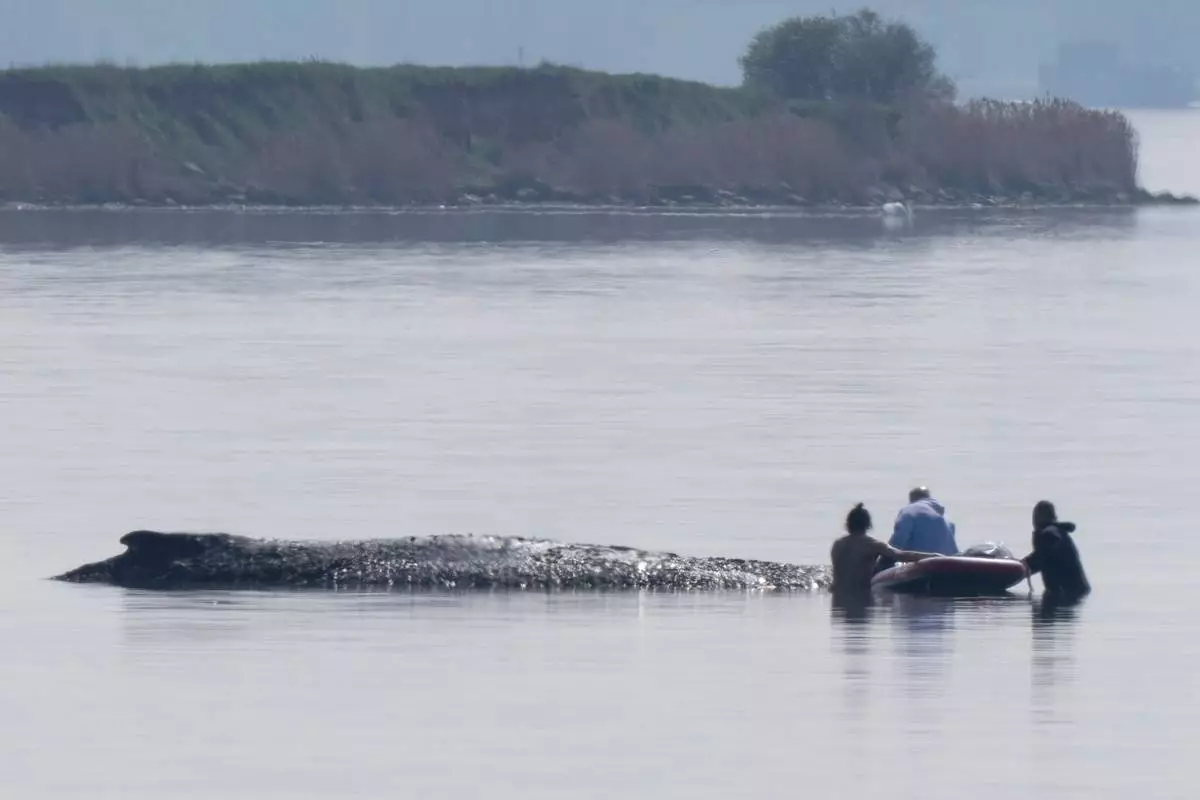
Helpers approach a humpback whale that is stuck off near the island of Poel, Weitendorf-Hof, Germany, Thursday, April 16, 2026. (Philip Dulian/dpa via AP)
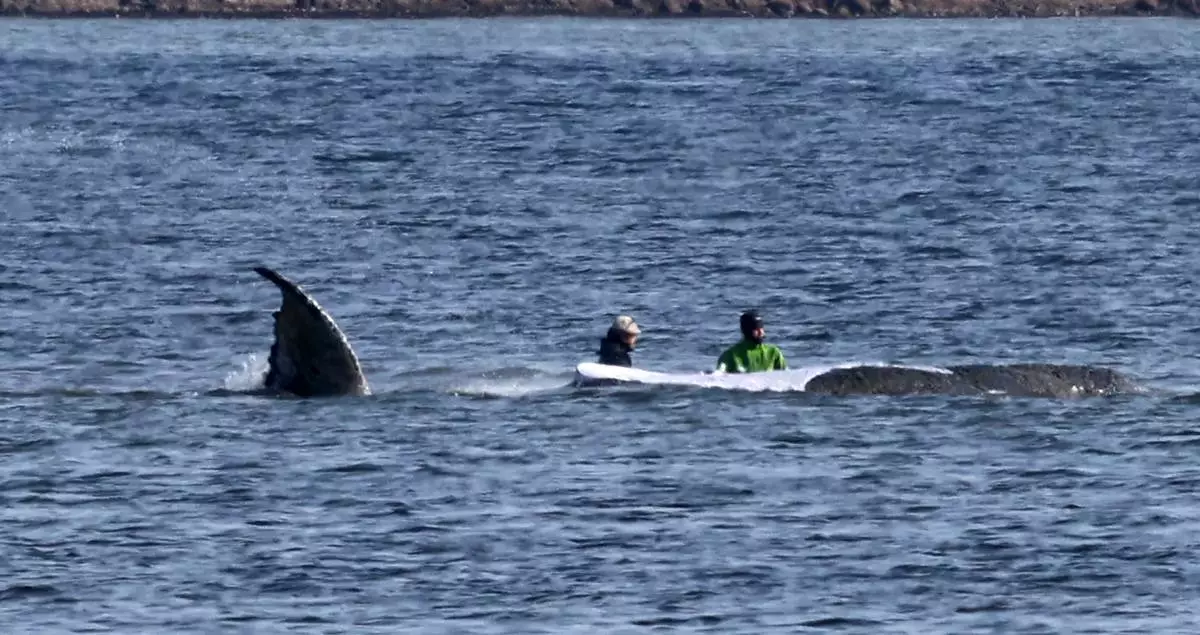
Two helpers approach the humpback whale off the island of Poel, Germany, Friday, April 17, 2026. (Bernd Wüstneck/dpa via AP)
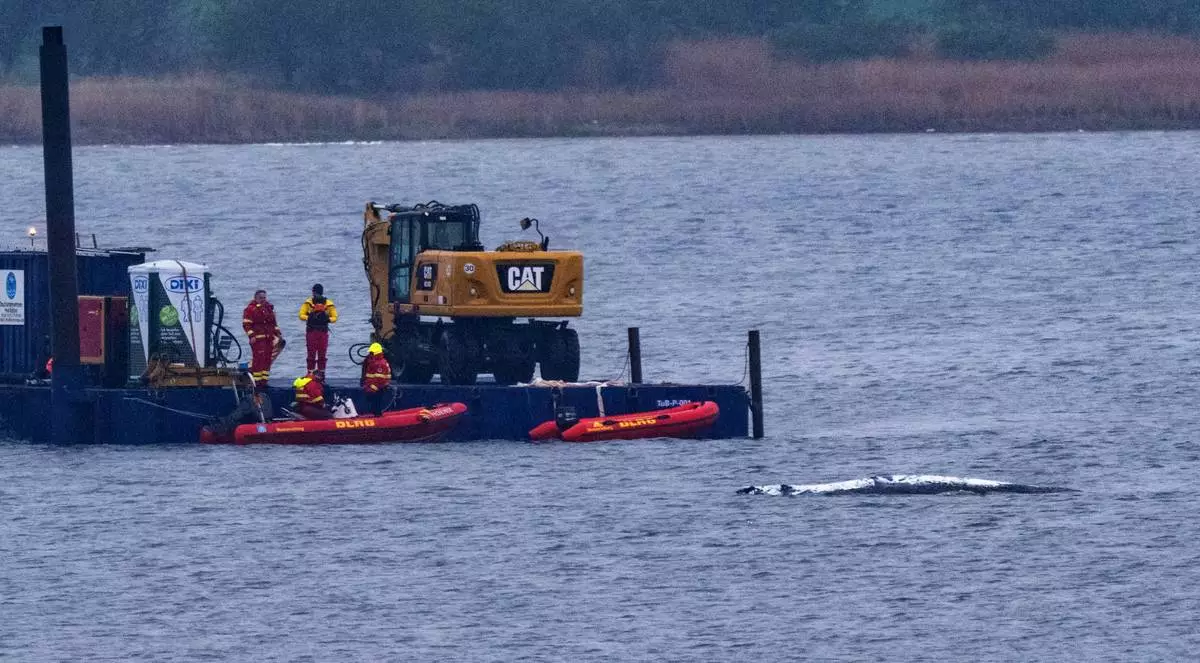
A work pontoon with a special excavator and smaller escort boats are in use near the stranded humpback whale off the island of Poel, near Wismar, Germany, Sunday, April 19, 2026. (Stefan Sauer/dpa via AP)
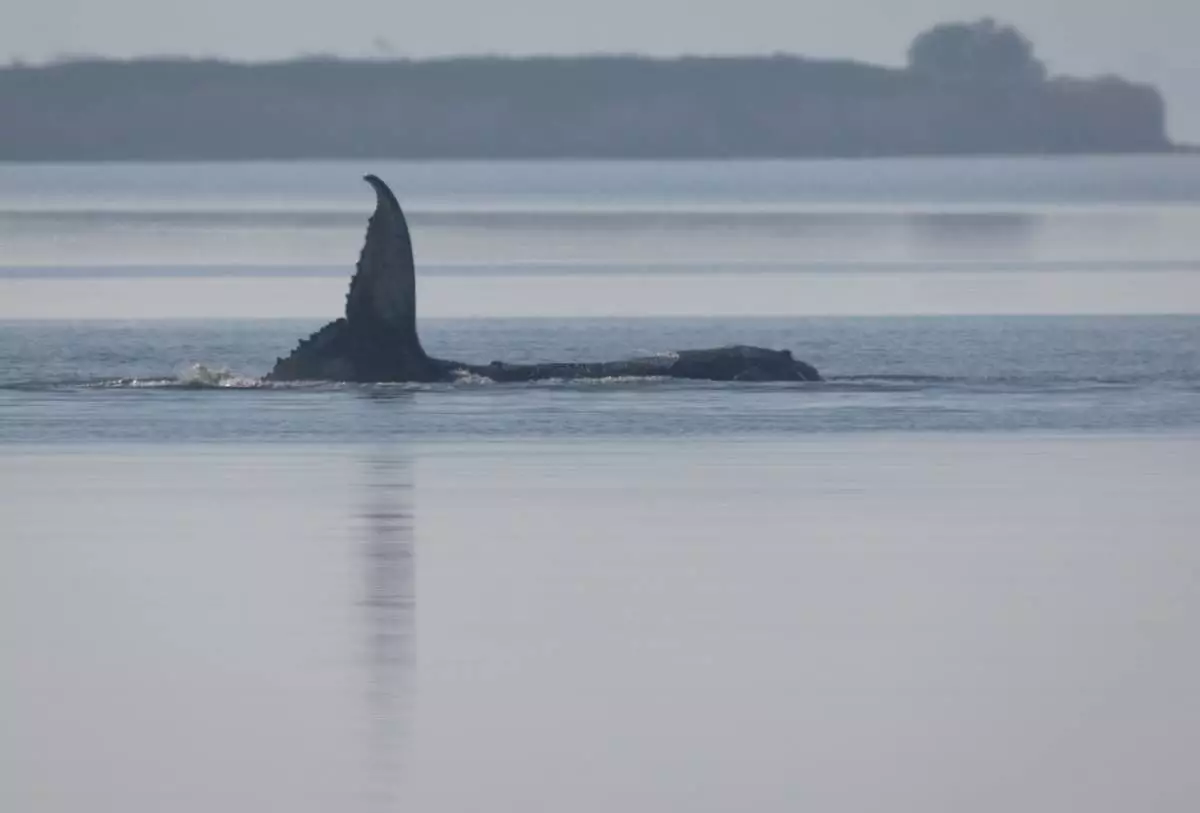
The humpback whale, nicknamed Timmy, remains trapped near the island of Poel, Germany, Friday, April 17, 2026. (Jens Büttner/dpa via AP)
President Donald Trump has long been looking for this weekend to be a big one for his presidency.
The World Cup returns to the U.S. on Friday. On Sunday, his 80th birthday, he hosts a UFC fight night at the White House. Hours later, he’s scheduled to jet off to the G7 summit in the French Alps. But Trump set expectations even higher when he announced that the U.S. and Iran could come to terms this weekend on an agreement that would end the war.
Meanwhile, a new AP-NORC polling analysis finds independents have grown increasingly unhappy with Trump during his second term, particularly those without a college degree.
Here's the latest:
The federal judge agreed Friday to extend a court-ordered block on the Trump administration’s creation and operation of a $1.8 billion settlement fund for compensating people who claim to be victims of a weaponized government.
Earlier this month, acting Attorney General Todd Blanche told Congress the government is scrapping its plans for the fund in the face of a fierce bipartisan backlash. Government attorneys have argued that lawsuits challenging the fund are now moot, but plaintiffs’ attorneys aren’t satisfied by Blanche’s assurances that the fund won’t move forward.
President Trump, meanwhile, has not publicly and unequivocally endorsed its cancellation.
▶ Read more
A senior U.S. official said there are five key terms in the agreement: Iran’s nuclear material will be destroyed and removed, its nuclear program will be dismantled, none of its frozen money will be released until it meets certain demands, the Strait of Hormuz will be open, and Iran must not fund terrorist groups.
The official spoke on condition of anonymity because they were not authorized to provide details about the sensitive talks.
Trump on Friday lashed out at Iranian officials on social media and said, “They better get their act together, and FAST!”
NATO’s top military officer is weighing alternative plans to defend Europe should it come under attack from Russia, after the United States announced it’s cutting the number of aircraft and warships it would provide in a security crisis.
The so-called NATO Force Model is Plan A for making forces from the 32 member nations available in times of peace, crisis or war. It sets out the military assets commanders can call on in phases over the first six months of any conflict.
But last month, the Pentagon warned its NATO allies it would be scaling down its commitment to focus on potential threats elsewhere, notably from China in the Indo-Pacific region.
European countries and Canada had waited impatiently for over a year for the Trump administration to detail its plans after it warned that Europe is no longer a top U.S. security priority. They knew cuts were coming, but not how big, fast or what kind.
▶ Read more
The relationship between Trump and French President Emmanuel Macron started simply enough, with a handshake, nearly a decade ago.
But even then, there were signs of strain in their relationship — tensions that could be on full display during next week’s G7 summit in France.
Back in 2017, Trump was a brash businessman just elected to America’s most powerful office, and Macron was an upstart politician who had won his race in a landslide. At a NATO summit in Brussels, they clinched hands far longer than most people do when they meet for the first time. Neither seemed to want to be the first to break a grip so tight that it exposed white knuckles.
Nevertheless, a friendship was born. And early on, Macron seemed to be the one European leader with a knack for managing his mercurial, three-decades-older counterpart.
But by the end of Trump’s first term, the bromance had faded. And in his second term, the leaders now openly trade barbs, disagreeing over tariffs, Ukraine and the Iran war.
▶ Read more
The surveillance tool seen as vital in preventing terror attacks and catching foreign spies is set to expire Friday after congressional efforts to temporarily extend it failed in bipartisan fashion.
It’s a significant lapse for the program known as Section 702, and even as President Donald Trump nominates a new national intelligence director more palatable to both Republicans and Democrats than his initial pick, it’s unclear how soon lawmakers — set for recess — would be able to revive the spy program.
Still, there may not be an immediate drop-off given that a court order from March authorized these government surveillance powers to remain in effect for another year.
▶ Read more
Canadian Prime Minister Mark Carney became a symbol of middle power resistance after a celebrated speech earlier this year, but he is expected to be more muted in his criticism of Trump at an upcoming summit in Europe.
Carney’s speech at the World Economic Forum in Davos, Switzerland, helped make him an international political star in January, when he declared the global rules-based order over and condemned coercion by great powers on smaller countries. The prime minister received widespread praise and attention for his remarks and upstaged Trump at the gathering.
But the Group of Seven summit of industrialized democracies that begins Monday in France comes ahead of the scheduled July 1 review of the U.S.-Mexico-Canada Agreement, or USMCA, the latest iteration of the North American free-trade pact that has intertwined the economies of the United States, Mexico and Canada since the early 1990s. It is a crucial moment in trade talks, and Trump said this week that he may not renew the deal.
▶ Read more
Trump’s handpicked board at the Kennedy Center is mounting a last-minute effort to keep his name on the facade of the iconic performing arts facility before a court-ordered deadline to remove it by Friday.
The board voted Thursday to seek a stay of U.S. District Judge Christopher Cooper’s May 29 ruling that said Trump’s name was illegally added to the Kennedy Center, according to a person familiar with the move who requested anonymity to discuss a private meeting. The formal request was filed late Thursday.
Cooper ruled that only Congress could institute a change to the Kennedy Center’s name and ordered references to Trump be removed by Friday. He also blocked the administration from closing the cultural and arts venue for major renovations that had been planned to start in July and last for two years.
▶ Read more
Independents have grown increasingly unhappy with Trump during his second term, a new AP-NORC polling analysis finds, particularly those without a college degree.
The analysis from researchers at The Associated Press-NORC Center for Public Affairs Research shows that while about half of independents without a college education had a positive view of Trump around the 2024 election, his approval with that group fell to about one-quarter this spring. That shift has erased the large education gap that existed among independents in the months before Trump took office for his second term, with independents now holding similarly negative views of the president regardless of their level of education.
The analysis was conducted by aggregating nearly two dozen AP-NORC polls conducted between July 2024 and April 2026, allowing for a deeper look at how support for Trump changed during several distinct periods, including the last six months of 2024, the first 100 days of Trump’s presidency, the summer of 2025 when the Big Beautiful Bill passed, last fall’s government shutdown and the beginning of the Iran war.
▶ Read more
Trump has long been looking for this weekend to be a big one for his presidency.
The World Cup returns to the U.S. on Friday for the first time in 32 years after Trump threw himself into winning the bid to co-host the soccer tourney during his first term. He’ll be feted Sunday, his 80th birthday, during a UFC fight night that’s expected to draw thousands to the White House grounds. Hours after the final bout, he’s scheduled to jet off to the G7 summit in the French Alps for talks with several world leaders he’s been beefing with over war and tariffs.
But Trump set expectations even higher for the coming days when he announced Thursday that the U.S. and Iran could come to terms this weekend on an agreement that would set the pathway to end the three-month-old war that’s been broadly unpopular with Americans and has rattled global oil markets. He said he plans to dispatch Vice President JD Vance to the signing of the agreement.
▶ Read more
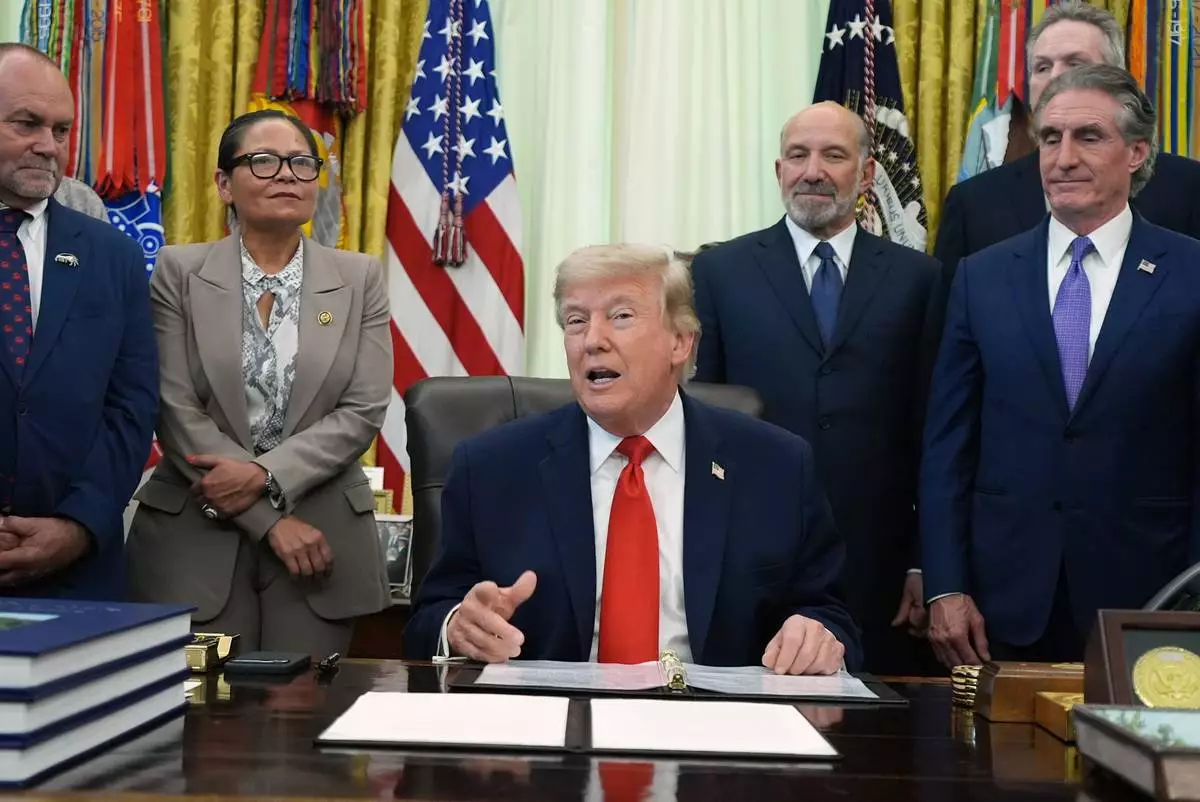
President Donald Trump speaks before signing a proclamation about the fishing industry, in the Oval Office of the White House, Thursday, June 11, 2026, in Washington. (AP Photo/Jacquelyn Martin)
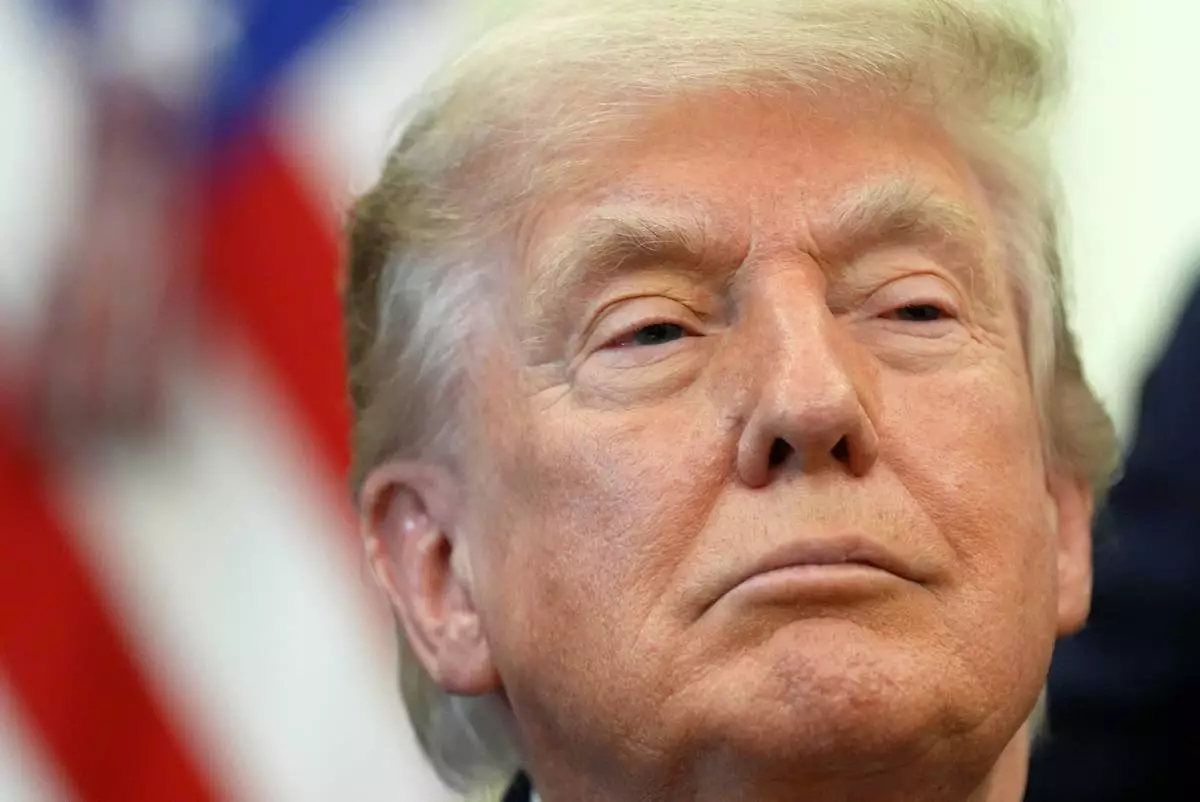
President Donald Trump is pictured during an event where he signs a proclamation about the fishing industry, in the Oval Office of the White House, Thursday, June 11, 2026, in Washington. (AP Photo/Jacquelyn Martin)